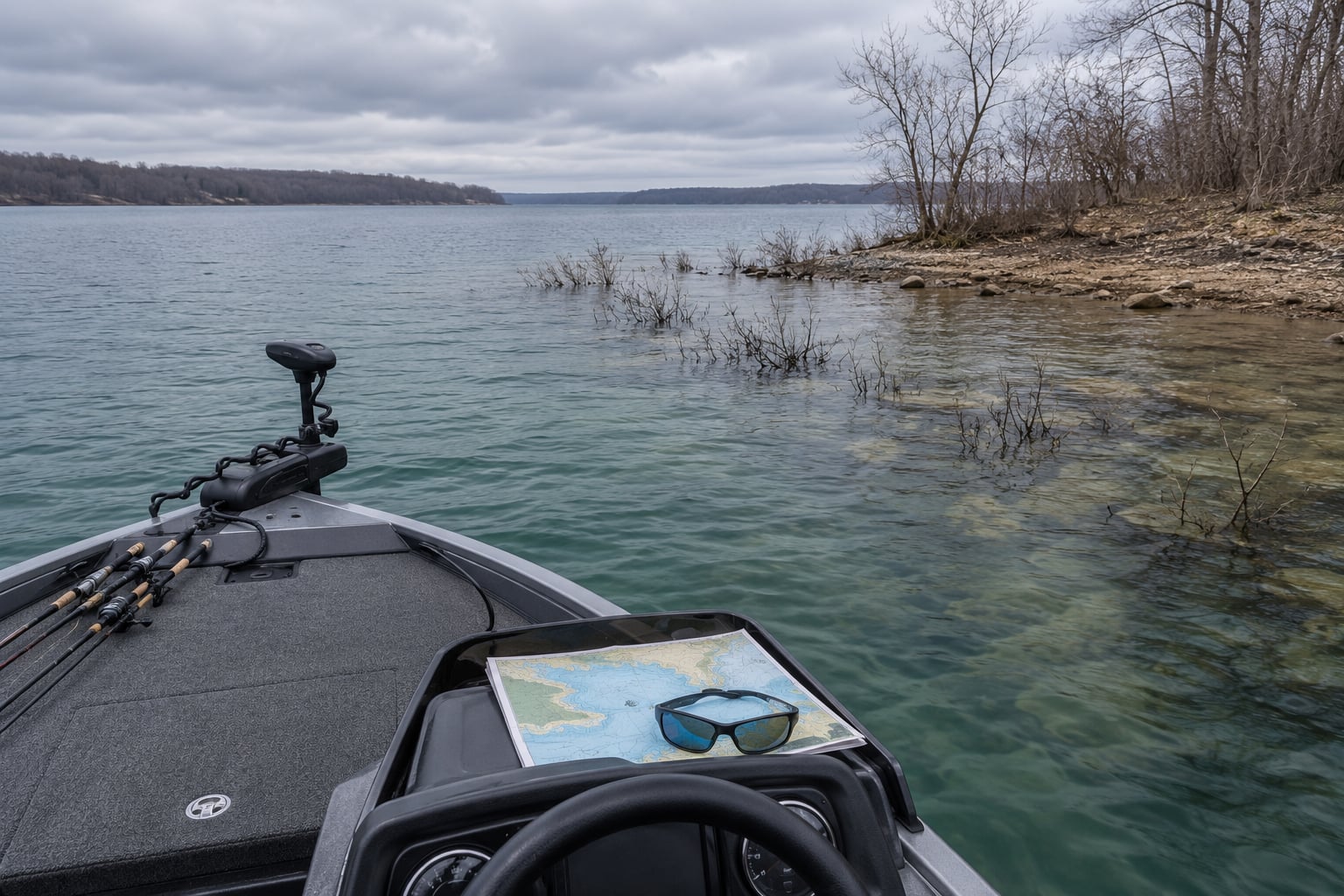
To fish a lake in early spring, find the warmest water, work the route between deep wintering areas and the shallow spawning flats, and retrieve everything slower than feels comfortable. Cold-blooded fish in cold water eat less and chase less, so the fast casting and fast retrieves that work in June stop working almost overnight.
Most productive early spring sessions run three to five hours and cover three or four water types. That is enough time to see the lake change hour to hour, which is the whole game: sun warms a north-facing point, a cold front drops the temperature eight degrees overnight, and the fish move a quarter mile in a direction you did not plan for.
The rest of this guide walks through the process in order — what to bring, how to read conditions, where the fish hold, which bait matches the water temperature, how to work cover, and what to change when nothing is happening.
Table of Contents
- What You Need
- Step-by-Step: How to Fish a Lake in Early Spring
- 1. Check Weather, Water Temperature, and Access
- 2. Read the Lake for Warm, Shallow Feeding Areas
- 3. Match the Bait to the Conditions
- 4. Fish the Productive Cover and Transition
- 5. Use a Retrieval That Matches the Water
- 6. Watch for Bites and Adjust Quickly
- 7. Fish the Conditions You Find, Not a Fixed Rule
- Common Mistakes
- Frequently Asked Questions
- What is the best place to fish a lake in early spring?
- Should I fish shallow or deep water in early spring?
- What bait works best for early-spring lake fishing?
- Are lures better than live bait in cold water?
- How does weather affect fishing in early spring?
- What should I bring for an early-spring fishing trip?
- Conclusion
What You Need
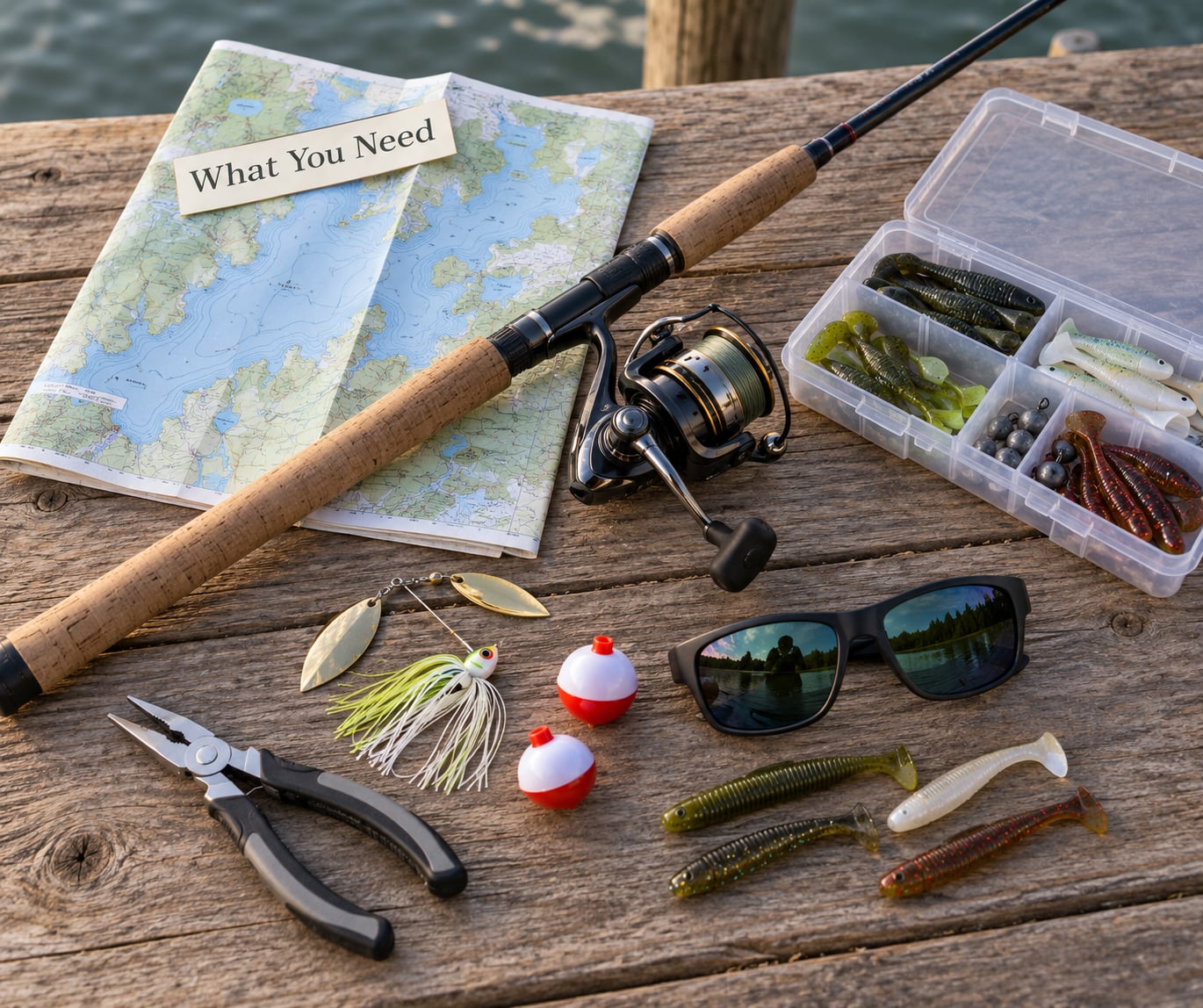
The gear list for early spring is short, and most of it you already own. What changes is the setup: lighter line for cold, sluggish fish, and lures with a slow, tight wobble rather than wide action.
- Rod and reel. A 6-foot-10-inch to 7-foot medium-heavy spinning combo handles a bladed jig, a chatterbait, and a live bait rig without needing a specialty rod. A baitcasting setup is worth adding once you are throwing reaction baits for walleye or smallmouth, where a 7.3:1 gear ratio helps you wind the slack out of a hookset.
- Line and leader. 10 to 15 pound fluorocarbon on a spinning rig, or braid with a 10 to 15 pound fluorocarbon leader for reaction baits. Cold water makes line stiffer and less visible; keep a spool of each and match the leader to the bait weight.
- Cold-water lures. A lipless crankbait for searching, a bladed jig, a spinnerbait, a shallow-running crankbait in a 5 to 7 foot diving depth, a suspending jerkbait, and a few finesse pieces — a 1/8 ounce jig head with a craw or a Ned-rigged plastic.
- Live bait. Nightcrawlers, minnows, and crawfish where you can get them legally. A worm under a bobber and a twister tail jig are the two most reliable cold-water rigs, and both are cheap to rig.
- A lake chart or depth finder. Either one marks the drop-offs, channels, and creek mouths that hold fish this time of year. A handheld water temperature gauge matters more than most people expect — it tells you whether to fish deep or shallow before you launch.
- Polarized sunglasses. They cut glare off open water so you can see weed edges, timber, and rock that you would otherwise cast over blind.
- Cold-weather safety gear. A properly fitted personal flotation device, neoprene gloves or a liner glove under regular gloves, wool or synthetic base layers, windproof shell, and a spare dry layer in the boat. A whistle and a charged phone go in the same pocket as the PFD.
- The usual small items. Pliers, a line cutter, a hook, a lighter, a spare battery, and a valid state fishing license. Regulations in many states close baitfish season or restrict it this early, so check before you buy minnows.
Step-by-Step: How to Fish a Lake in Early Spring
1. Check Weather, Water Temperature, and Access
Cold-water fishing is a temperature game, so temperature and weather come before location. Check the forecast for the three-day window, then read the actual water temperature from a gauge or a launch report, because air temperature is a poor stand-in for water temperature.
A warming trend with sunny afternoons is the best early spring weather you can get. Sun hits the water, the shallows warm a few degrees, and fish move up to feed on baitfish that got there first. A cold front pushes those same fish back down into the deeper structure and turns off the bite for a day or two. Rain has a mixed effect: it raises the lake level a little, stains the water, and often makes fish feed harder in the stained shallows.
Wind matters more in early spring than it does in summer, because it pushes warm surface water and concentrates bait against the windward bank. A steady 10 to 15 mph wind is a gift. Flat calm water means slow retrieves and a lot of fishing effort for very few fish.
How you tell whether the day is worth it: water in the low 40s is marginal, the high 40s is workable, and once it passes 50 degrees the shallow bite starts to build. In the 30s, most anglers are wasting boat fuel and risking hypothermia for nothing. Check access conditions too, since many boat ramps stay closed or unmaintained until the ice clears.
2. Read the Lake for Warm, Shallow Feeding Areas
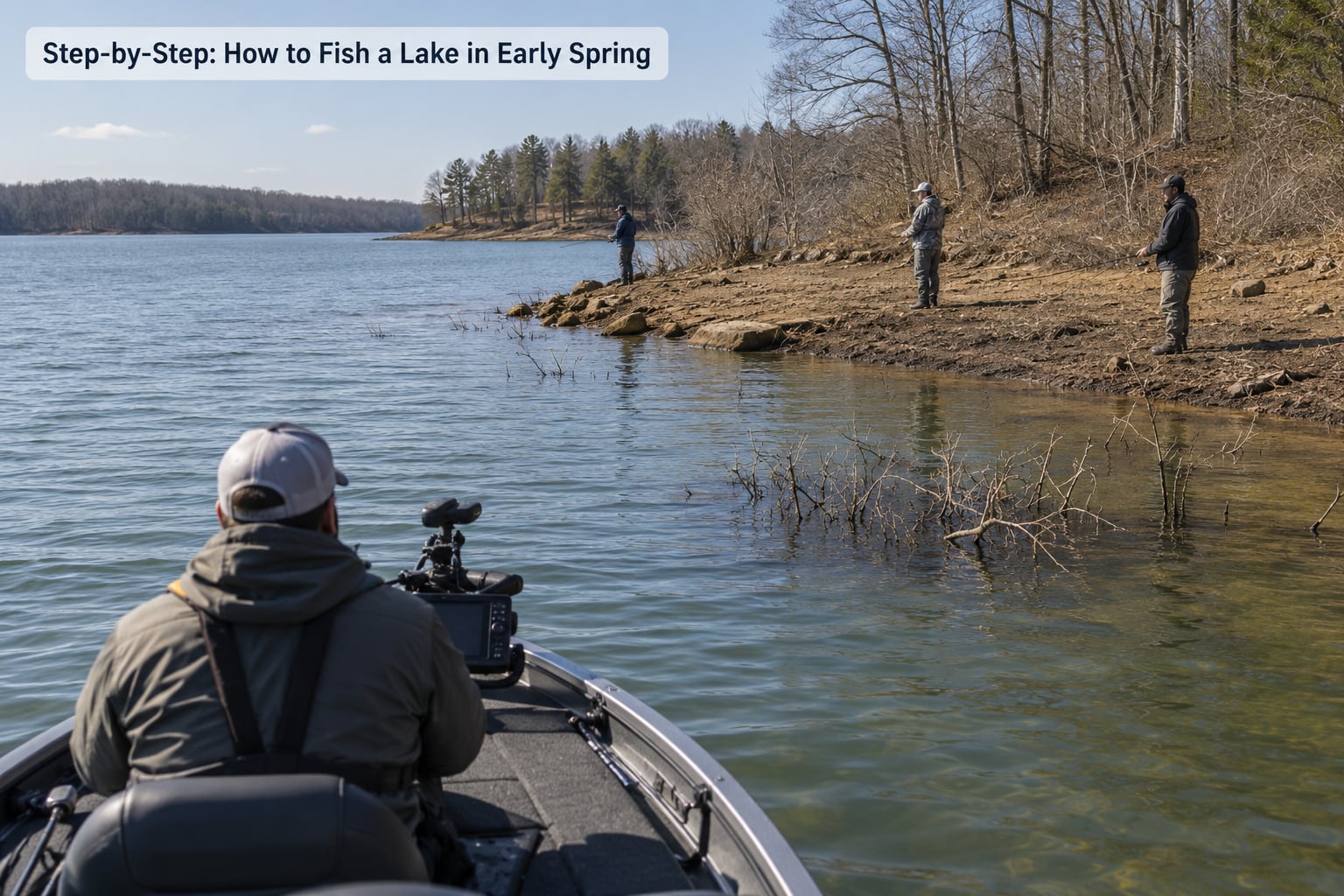
Look for the water that warms first: shallow points and bays on the north and west sides of a lake, creek mouths where current brings in food, muddy and silt flats that absorb heat quickly, and any pocket that has a thin dark bottom and shallow water over it.
The reason is simple. Sun warms shallow water, baitfish follow the warmth, and the predator fish follow the baitfish. More fish sit in shallow water in winter and early spring than most people expect, for exactly that reason.
Do not confuse warm shallows with spawn flats. Fish use the warm shallows to feed long before they use them to spawn. If you jump straight to a spawn bay when the water is still in the 40s, you will be fishing ahead of the fish.
At the same time, keep working the route between deep and shallow. The wintering area — a deep creek channel, a steep drop-off, a mud point, riprap on a dam — and the spawning area are connected by edge structure: the extended points, laydown trees, rock shelves, and the 1 to 2 foot channel lips that funnel fish as they move. Those transition zones pay well even when the shallows are still cold.
A useful habit is to start deep, work in. Cast to the deep end of a point on a suspending or shallow crankbait, then work up the point as the boat moves, then finish in the pocket where the point meets the flat. Covering water in that order means you never spend the whole trip in one spot.
3. Match the Bait to the Conditions
Match your presentation to the water temperature, the clarity, and the species in front of you, not to the calendar. Use these bands as a starting point and adjust from what the water is doing that day.
- 38 to 42 degrees. Slow, deep, and patient. Smallmouth on a live bait or a jig head over a rock shelf, pike on a twitch bait, walleye jigging a channel. Largemouth are usually still in the wintering area and hard to locate.
- 43 to 48 degrees. Lipless crankbait and bladed jig over the deepest edges, a crawfish or a twister tail jig near the bottom, and a bobber with a worm over deep grass in low light. This is the band where most early season fish come from.
- 49 to 54 degrees. Chatterbait and spinnerbait along riprap and gravel, a shallow-running crankbait on the mud points, and a jig with a soft plastic worked across the flats. Smallmouth start showing on the rock in this range.
- 55 to 60 degrees. Spawn-group lures start working: a wagging or squarebill crankbait over the gravel near a feeder creek, a diving crankbait on a bluff edge, and a frog or a wobbly soft plastic over matted vegetation.
- 61 degrees and above. The fish are on the beds. Fish the edges of the spawn area and then work back to the post-spawn pattern once the water keeps climbing.
Water clarity changes the color choice. In stained water from rain, use brighter baits — chartreuse, white, or a solid red or orange jig. In clear water, match the forage: a natural green pumpkin, a craw, or a shad color with a flash blade on the back. Pick a natural for clear water and a brighter bait for dirty water, and change it when the water color changes, not when the day changes.
Bait size follows the same logic. Early season fish eat smaller meals, so go down a size on the crankbait and pick up a 3 inch grub over a 5 inch swimbait.
4. Fish the Productive Cover and Transition
Fish the places where fish stop on their way between deep and shallow water. That is the edge of a mud point, the tip of a rock shelf, a laydown tree in a shallow bay, a flooded creek channel, the drop-off along a riprap bank, and the standing dock where a winter angler parked a boat.
Accuracy beats distance this time of year. A cast that lands two feet past a rock pile is a different trip than one that lands ten feet short, because fish are stationary and cold. Pick a spot with polarized glasses, decide what you are hitting, and make one good cast rather than eight sloppy ones.
Keep the lure in the strike zone. On the edge of a drop-off, work a shallow crankbait so it runs just below the surface and bumps the wall. On a channel lip, let a jig fall with the current rather than dragging it across the bottom. Against submerged wood, drag a jighead slowly so the plastic bumps the branch instead of shooting under it.
When wind or obstacles block a clean cast, switch to the bank. A pocket that is unreachable from a boat is often reachable from shore, and early spring bank fishing on a point that gets sun all afternoon will outproduce the whole boat ramp.
5. Use a Retrieval That Matches the Water
Slow retrieves are the single most common failure point. In cold water, most fish will not swim ten feet to chase a lure, so a lure that covers water fast will not be in front of a fish long enough to be seen.
- Stop and go. A two-foot stop, a two-second pause, then two more feet of retrieve. Cold water bass often eat on the pause when they will not chase movement.
- Twitch and pause. A soft plastic with two sharp rod-tip twitches, held still until it drifts back down. This is the most productive technique in cold, clear water.
- Drag. Press into a bladed jig or spinnerbait and pull it steadily along the bottom. Keep it in contact and let the vibration do the work rather than the sound.
- Steady crank. A medium retrieve that keeps a crankbait nose-down just below its diving depth, with two or three contact bumps on every cast.
- Drop and let it fall. Cast past the fish and let the lure settle into the strike zone. This works well for a suspending jerkbait paused in the water column, and for a jig fished under a ledge.
Adjust the speed to where the fish are holding. A deep fish will not chase a lure moving fast across its face, while a fish pinned in 18 inches of water at a mud point will. If the water is stained, speed up a little; if it is glass-clear, slow down until you doubt yourself — that is usually about right. Moving baits work in spring, but as slow as you can make them.
6. Watch for Bites and Adjust Quickly
Most missed fish in early spring come from setting the hook too early or too late. A cold-water bite is often a soft load instead of a hard thump, and the angler who reacts to every tick will pull half of them off.
Learn the difference between a take and noise. A fish taking the lure will move the line, pull against slack, or change the weight of the line when you lift the rod tip. Drift looks like the lure moving without any pull. Bumping the bottom feels like a jolt but comes back at the same spot every time.
When you feel the load, sweep the rod to the side to take up slack, then reel up the slack before you set. That order matters. Setting first at that low angle means you lift the bait away from the fish’s mouth. Give the hook ten seconds to come through the pad before you touch the line again.
If you get a fish, note the depth and the temperature of that strike. The same lure at the same depth on a nearby point will usually produce again, and the depth of the first bite is often the best depth reading you will get all day without a chart.
7. Fish the Conditions You Find, Not a Fixed Rule
Every rule in this guide is a starting point, and the water overrides all of them. When a cold front passes, drop back to the deep wintering areas and slow down again; the fish are not feeding but they are usually holding somewhere findable. On a bright, sunny, post-front afternoon with the water in the low 50s, the shallow mud points and inside corners turn on and the windward bank fills with baitfish.
Watch the birds. Herons working a shoal, diving birds feeding on a shallow flat, or an eagle making repeated passes over one spot all say the same thing: fish are concentrated in that area. Once an eagle starts working a spot, the fishing underneath it usually goes quiet.
Give a quiet window thirty to forty minutes before you decide the day is over. Early spring bites are spaced out, and a slow one right as you are ready to quit is common. When the wind builds, the front arrives, or the boat and the cold have had enough, leave and come back. A three-hour session with a limit and a change of scene beats an eight-hour grind in a hail storm.
Common Mistakes
Almost every empty early spring boat traces back to one of these. The fix is usually a small change, not a different lake.
Fishing water that is too deep for the temperature
When the water is still cold, a fish holding deep is not a fish that is easy to find; it is barely eating. Fix: drop a foot or two and cover the inside edge of the structure instead of the face of it. Tip: start deep and work in — it keeps you in fish-holding water for the whole day instead of the first hour.
Ignoring the wind and the forecast
A sunny day after a front is worth more than a sunny day before one. Fix: check the three-day trend, then choose the day after the front passes, not the day it arrives. Tip: fish the windward bank early in the morning — it holds the warmest, calmest water with the baitfish pushed into it.
Choosing the wrong bait size
Cold fish eat small. Fix: drop one size on your crankbait and reach for a 3 inch soft plastic instead of a 5 inch swimbait. Tip: if you get a fish on the smaller profile, stay on it for the rest of the trip rather than switching to the bigger bait everyone else is throwing.
Retrieving too fast
This is the mistake nearly everyone makes on a cold, sunny day. Fix: use a stop-and-go retrieve or a drag, and count your pauses out loud for the first few casts. Tip: fish a cadence you can hold for twenty minutes. Anything faster is just covering water.
Casting over the best cover
The best water is often the edge of it. Fix: land the lure just short of the rock, the timber, or the grass line, and bump the cover on the way out. Tip: on clear water, look for the submerged shadows first — they are fish before they are structure.
Treating every bite the same
Cold bites run light, so setting the hook on every tick loses fish. Fix: wait for weight on the line, then sweep, reel, and set. Tip: if you feel a soft load you are not sure about, reel slowly rather than setting — a hooked fish that is fought gently comes off the hook rarely.
Failing to check local regulations
Some states close the baitfish season into spring and cap the number of fish you may keep. Fix: read the regulations before the season starts and again before you keep a fish. Tip: when you release a spawning smallmouth in the shallows, it swims off with its fins healthy if you keep it out of the air for under a minute — wet hands, no gloves, quick release.
Frequently Asked Questions
What is the best place to fish a lake in early spring?
Start with the water that warms first: shallow mud and silt points on the north and west sides, creek mouths, and sheltered bays with dark bottoms. Then work the route between the deep wintering areas and those shallows, because the transition edges along drop-offs, channels, riprap, and laydown trees concentrate fish all season.
Should I fish shallow or deep water in early spring?
Both, in a specific order. Start deep and work in. When the water is in the low 40s, fish are stacked on wintering structure such as deep channels, mud points, and riprap. As it passes 50 degrees on a sunny day, move to the shallow mud points, inside corners, and flat edges where the baitfish concentrate. The transition between the two is the best water on the lake.
What bait works best for early-spring lake fishing?
A lipless crankbait and a bladed jig to cover water at the coldest end, then a chatterbait or spinnerbait along gravel and riprap as the water reaches the low 50s. For a reliable bite in cold, clear water, a 1/8 ounce jig head with a craw or a Ned-rigged plastic works better than anything larger. Live bait — nightcrawlers, minnows, crawfish — stays effective across the whole window.
Are lures better than live bait in cold water?
Neither one wins outright. Anglers who fish live under a bobber report consistent catches in the 40s, and crawfish and minnows are hard to beat for smallmouth and walleye. Artificial lures have one real advantage: they can be worked at the exact depth and speed the fish are holding at, and a fish that bites a crankbait on a drop-off usually bites the same depth on the next point.
How does weather affect fishing in early spring?
Weather decides the trip more than the lake does. The best windows are sunny days on a warming trend, especially the day after a cold front, because the shallows warm and the fish feed. A front moving in drops the temperature and pushes fish back to deep structure, where fishing is slower and the bites are further apart. Rain usually helps by staining the water and lifting the baitfish.
What should I bring for an early-spring fishing trip?
A fitted personal flotation device, warm layers that you can add and remove, gloves or a liner glove, and a spare dry layer in the boat. On the fishing side, bring a chart or depth finder, a temperature gauge, polarized sunglasses, a spinning rod with fluorocarbon, and a handful of small lures and live bait. Add pliers, a spare battery, a whistle, and your license.
Conclusion
Do these four things first: check the forecast and the actual water temperature, pick one shallow feeding area and one transition zone on the chart, put one live bait and one reaction lure in the boat, and start with a slow stop-and-go retrieve. Start deep, work in, and let the water temperature tell you when to move up.
The rest is adjusting. Stay warm, wear the flotation device, follow your local rules, and let the fish behavior on the water overrule anything you read online — including this guide.