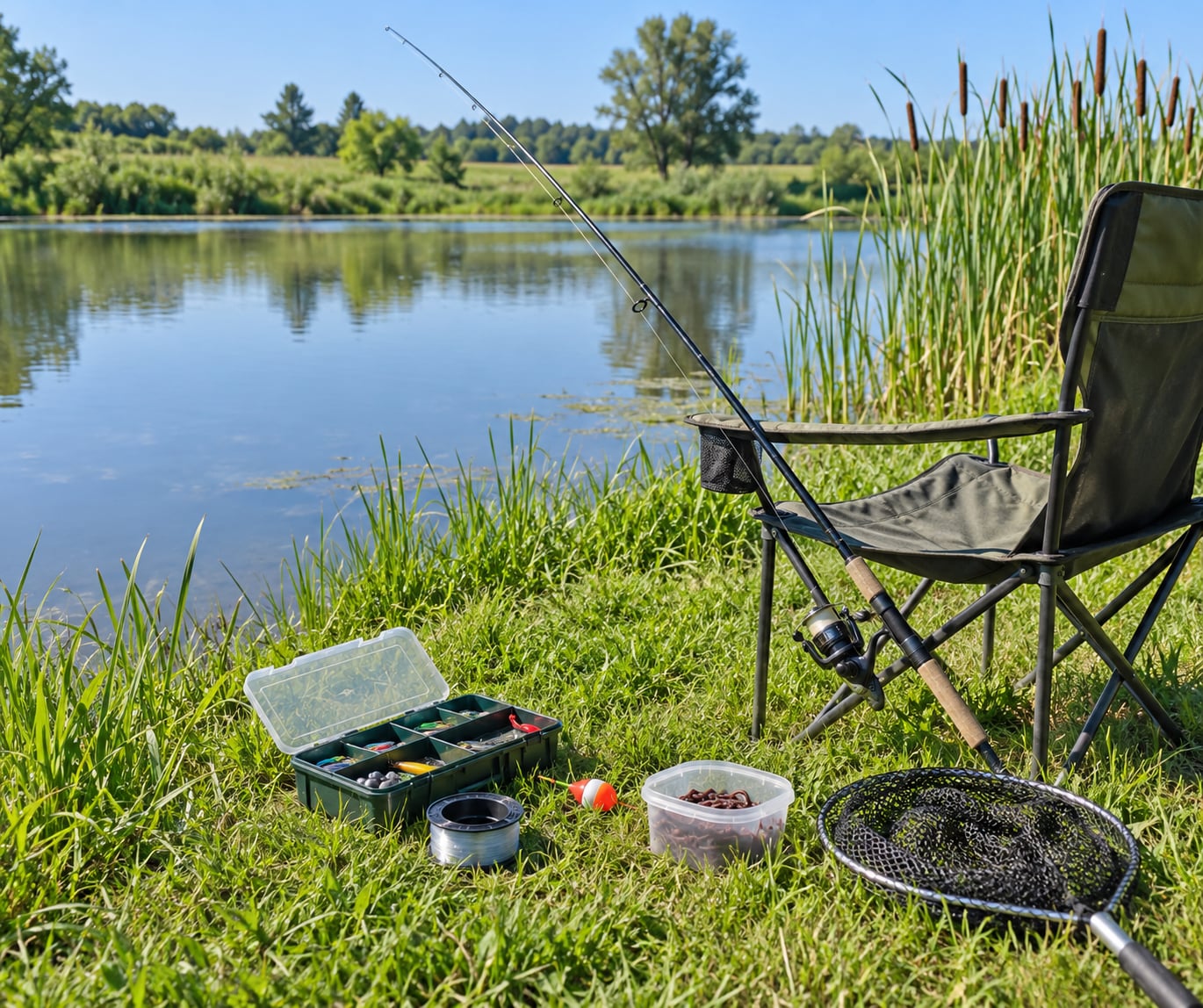
If you want the short version of how to fish a shallow pond: take the lightest spinning setup you can find, walk the bank slowly, and cast tight to the edges of structure instead of out into open water. Shallow water puts fish and anglers in the same small box, and the fish almost always see you first.
The good news is that this is the easiest fishing there is once you understand the water. A first trip needs no boat, takes about an hour, and works with a spinning rod, a handful of nightcrawlers and a little patience. A pond holds more catchable fish per acre than most lakes, and one of the estimated three million ponds in the United States is usually within a ten-minute drive of wherever you live.
Table of Contents
What You Need
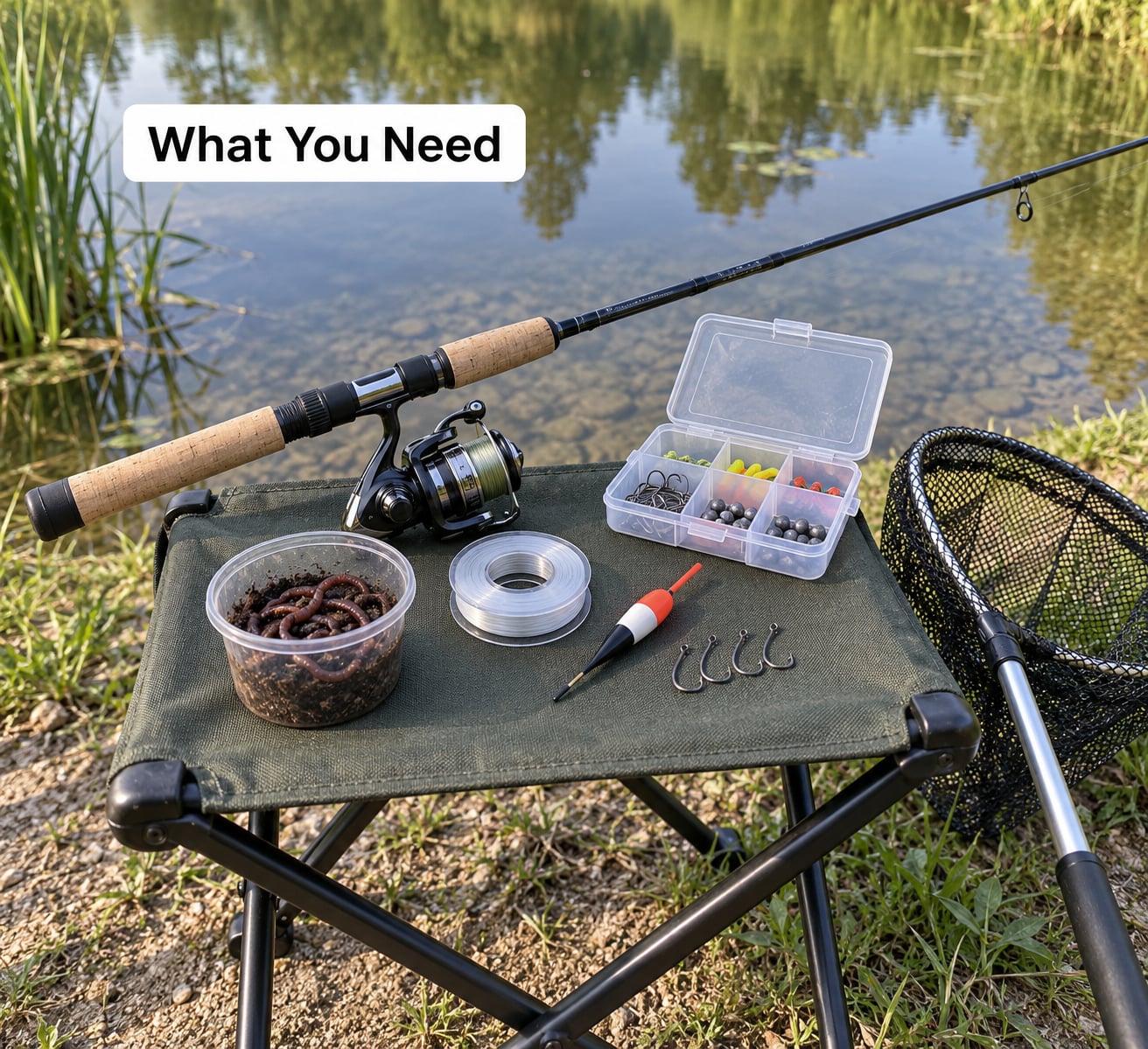
Beginners get buried under tackle lists for pond fishing, and most of that gear is aimed at lakes. Shallow water rewards simplicity, because a light setup lets you feel a bite before the fish knows you are there.
- Rod and reel: A 6 to 7 foot medium-light or medium-action spinning rod with a 500 to 1000 size spinning reel. This size casts accurately in tight quarters and still bends enough to land a good fish.
- Line and leader: 6 to 12 pound monofilament for most ponds. In clear water or heavy brush, a short fluorocarbon leader adds stealth where it matters.
- Floats and terminal tackle: A slip sinker and float for still-water work, plus a small assortment of hooks sized 1 through 4. Bring enough terminal pieces that losing one does not end the trip.
- Baits: Nightcrawlers, small minnows where they are legal, and a couple of soft plastics such as a straight-tail worm or a creature bait.
- Pliers, line cutters and a landing net: Long-handled pliers make removing a hook fast and safe. A net keeps you from dragging a fish across rocks.
- Sun protection, water and insect repellent: On a pond you are standing still, so sunburn and mosquitoes arrive before the fish do.
- Optional: Polarized sunglasses cut glare and help you see submerged grass and rock edges, and a small depth finder or an old phone app helps on a featureless pond.
A wading boot matters more than it sounds. Farm pond banks are often soft, uneven and ringed with submerged rock, and rubber soles with good grip save more sessions than any lure in the box.
Step-by-Step: How to Fish a Shallow Pond
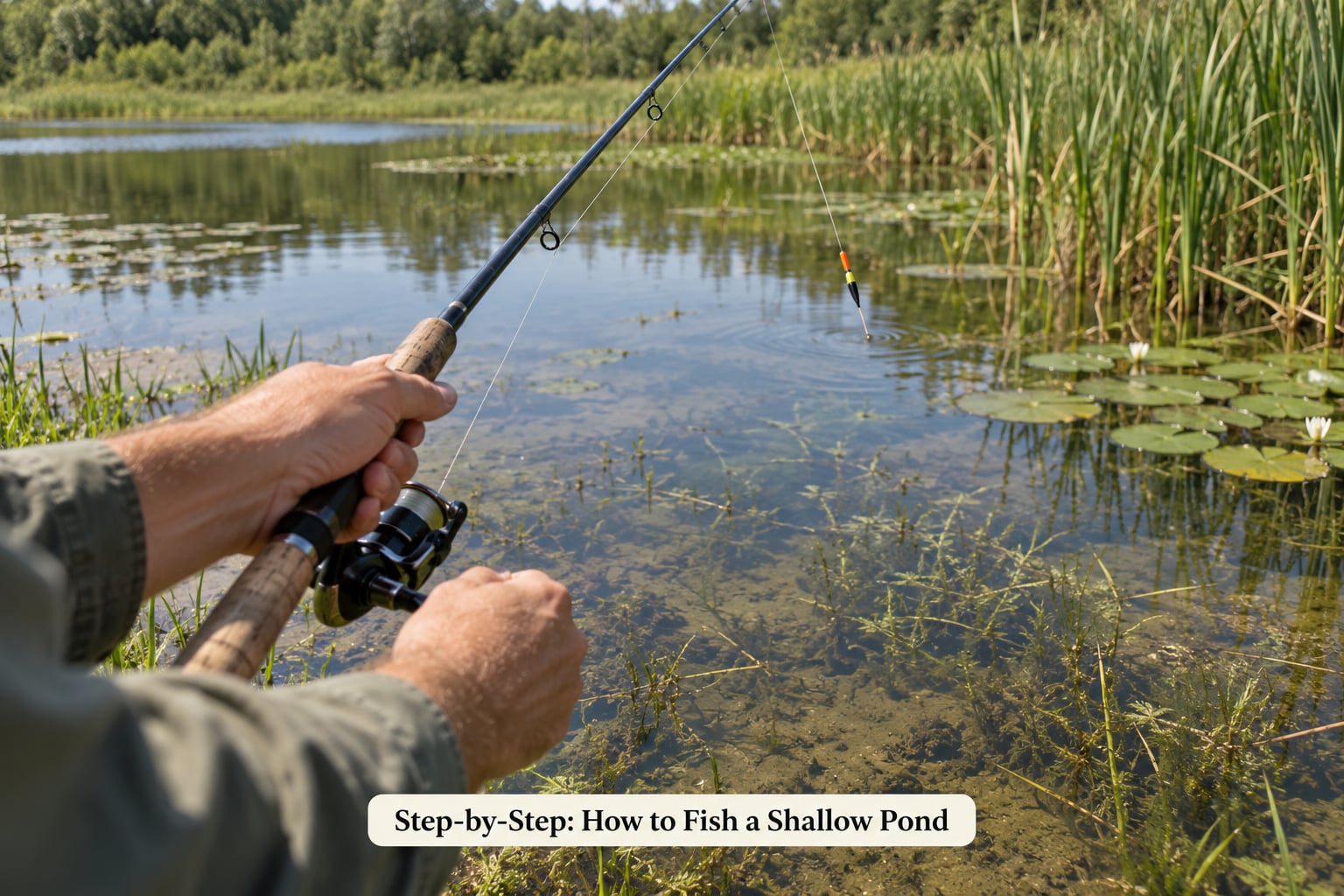
The sequence below takes about an hour start to finish and works from the bank, a kayak or a small boat. Each step has a visible sign that it worked, so you can tell early whether the plan is holding.
Check the Rules, Water, and Fish Holding Areas
Before you unpack a rod, learn how to fish a shallow pond from the ground itself. Confirm that bank fishing is allowed, check the local regulations for what you can keep and what the size limits are, and if the pond sits on private, farm or apartment property, ask the owner first. Access you did not ask for is the fastest way to end a good day.
Then read the water while you walk. Stand back a few feet from the bank so your shadow does not fall across the surface, and look for the places where something changes: grass giving way to bare bottom, a seam, a rock, a fallen limb, or water moving in from a creek. Those edges are where the forage gathers and where the fish wait.
In a typical pond, the two features worth memorizing are the earthen dam, which is almost always the deepest water, and the headwater where a creek or storm drain empties in. The inlet carries current, oxygen and baitfish, so it stays productive even on a hot afternoon.
Note the water too. Clear water means the fish are watching you and you need stealth and smaller lures. Green or stained water lets you push a heavier lure and fish faster. Muddy water after rain is a good excuse to fish structure slowly with scent and soft plastics.
Choose a Rod, Reel, and Line for Close Casting
A medium-light spinning rod in the 6 foot range is the right default for shallow pond fishing. Shorter rods cast accurately with less line in the air, which matters when you are standing under trees or casting along a bank that ends in a stump.
Pair it with a 500 to 1000 size spinning reel filled with 6 to 12 pound monofilament. Fluorocarbon in 8 to 15 pound is a good call for clear water and heavy pads because it is less visible and sinks faster on the same diameter. Keep the drag light enough that a small fish does not take line, and heavier line only when you are working thick grass or a riprap dam.
Sensitivity is the part to care about. A tip that feels every tap lets you set the hook on a fish that has barely moved the float, which happens constantly in water a foot or two deep. Balance that against a rod with enough backbone to bring a fish in over a lip you may not be able to see.
Match the Bait or Lure to the Conditions
Match the presentation to what the pond is made of. A few terms first, because these are the words other anglers use: a Texas rig is a hook, a soft plastic and a bullet weight that slides down the line to the weight so the bait rides above the bottom. A weightless rig is the same thing with no weight at all, so the bait sits on top of grass. A chatterbait is a compact, clattering vibrating lure that works well over rock and gravel.
- Grass or algae bottom: Work a weightless Texas rig on top of the growth. Anglers on r/FishingForBeginners recommend a fatter bait such as a creature-style worm for exactly this reason: it sinks through the film without diving into the grass. On very short grass, add a light weight and hop it.
- Clear, glassy water: Go smaller and slower. A 1/8 ounce green pumpkin or black and blue jig with a straight-tail worm, or a weightless stick bait, reads well in low light and does not spook fish that are already watching you.
- Rock, gravel or a clay dam: Drag a 1/8 to 1/4 ounce jighead across the bottom until you feel the change. On brand-new water with no visible structure, anglers on r/bassfishing run 3/8 or 1/2 ounce jigs and drag them around to feel what is down there.
- Weed edges and lily pad seams: A weedless frog or a chatterbait pulled along the pad edge covers a lot of water with no snagging. r/MarylandFishing puts it plainly: never underestimate a simple grub on a jig head, and fish slow.
- Open water with no cover: A drop shot rigged near the bottom or a small crankbait that runs just deep enough. If the pond bottoms out at four feet, do not reach for a deep-diving crankbait.
Topwater has a place, with one warning. A popper or small propeller plug is hard to beat on a spring morning, but on a pond of an acre or less the surface noise alone can push every fish to the far bank. Sidearm cast it and keep the retrieve short and soft.
Cast Close to Structure and Cover
Work the edge, not the middle. In water this shallow, the most productive cast is usually the one that lands on the seam between grass and bare bottom, alongside a stump, or just past a rock so the lure pulls the fish out of cover. Cover is where the fish are, and the edge is where the fish commit.
Set up on a spot and fish it thoroughly before moving. A good first fifteen minutes on a featureless pond looks like this: pick a stretch of bank, cast along it in one direction, work back with the same lure, then switch to a different weight or color before you leave. If nothing bites in fifteen minutes on a spot, something about the presentation is wrong, not the pond.
Two cast habits prevent most problems. Sidearm casting keeps the lure low and lands it softly instead of skipping it onto the bank, and a pinched line or a controlled roll cast keeps a slack loop from dropping straight down and tying a knot in the weeds. Keep the rod tip low and the line as straight as you can manage.
When the bottom is close and cover is thick, change the rig. A float keeps the bait at a fixed depth and shows you everything that moves. A slip sinker runs along the bottom and ignores the grass. A weightless rig does neither, which is why it is the most forgiving setup in a pond full of vegetation.
Set the Hook and Handle the Fight
Most missed fish in shallow water come from setting too early. The first move is often the fish repositioning, not eating, and a hook set on that move pulls the lure right out. Let the fish take it, and watch the line instead of the rod.
Keep the line semi-slack so the fish feels nothing but the hook set. Advice repeated on r/bassfishing is worth repeating: stay loose until the fish tells you it is committed. On a float, that means the float slides under or vanishes rather than dipping twice.
When you do set, sweep the rod to the side and reel down hard enough to drive the hook but not hard enough to snap 6 pound line. From there, keep steady light pressure, pump the rod a little on the way up, and never drag a fish across rock or through a stump.
Lead the fish instead of fighting it. Turn the rod handle away from you so the line comes in from a different angle than it went out, and step sideways along the bank toward deeper water. Slide the net under the fish, wet the net first, and lift with two hands. Then work the hook out with pliers, hold the fish horizontally for a moment, and let it swim off strong.
Leave the catch if it is small, and remember that the same spots hold the next visit. A pond that gives up its fish gets fished harder next time.
Common Mistakes
Nearly every beginner problem on shallow water has a simple cause, and nearly all of them are fixable in the first fifteen minutes.
Casting into the middle of open water. There is nothing out there to hold a fish. Fix: pick one piece of cover and put your lure right on the edge of it.
Fishing too fast. A steady retrieve says you are in a hurry, and a bass in a clear pond will not chase. Fix: stop, pause, and reel only on the fall, giving the lure three or four seconds of stillness between movements.
Carrying more tackle than the situation needs. A heavy rod and thick line in three feet of water are handicaps. Fix: one rod, one line weight, two lures, and change only when the reason is clear.
Pulling instead of waiting. Setting the hook on a nudge is the most common miss in shallow water. Fix: watch the line, keep it slack, and set on a committed move.
Snagging vegetation on the way to the fish. Weightless and floating rigs solve most of this. Fix: match the sink rate to the bottom, and when a pond is solid grass, work the top instead of pushing through it.
Ignoring water clarity and weather. The same lure that worked on Monday can be too big and too bright on clear Wednesday. Fix: match lure size and color to what you can see, and re-read the water after rain, cold fronts, or a hot still afternoon.
Disturbing wildlife or walking someone else’s bank without permission. Fix: keep noise down, carry out what you bring in, stay off private property unless you have said yes, and check the rules for protected species, size limits and gear restrictions before you keep anything.
A few habits that pay off: stand a few feet back from the waterline so your shadow stays off the fish, move along the bank rather than across it, keep your rod tip low between casts, and put the net in the water before you think you need it. On small water, patience is the technique that produces the most fish.
It is also worth being honest about small ponds. A heavily fished neighborhood pond can hold skinny, stunted fish that top out well under a pound, as anglers on r/Fishing describe. That is a fact of the water, not a failure of your technique, and it is another good reason to release what you catch.
Frequently Asked Questions
What bait works best for fishing a shallow pond?
Live bait still does most of the work in a shallow pond. Nightcrawlers work over almost any bottom, small live minnows or cut shad match the forage where a pond holds bass and crappie, and crickets and small panfish lures catch bluegill in the shallows. On a grass bottom, pick a fatter worm or creature bait that floats on top instead of burying in the growth.
Should I use a float when fishing a shallow pond?
A float is a good call in a shallow pond, especially near vegetation, because it keeps the bait at a set depth and stops it from burying in the grass. It also shows you every small movement, which matters in water only a foot or two deep. Use a slip sinker if you want the bait to run along the bottom, and drop the float entirely for a weightless presentation.
Where should I fish in a shallow pond?
Start with the places where something changes: grass meeting bare bottom, the rock edge, a fallen limb, a stump field, the seam beside lily pads, and the inlet where a creek or storm drain empties in. The dam usually holds the deepest water, so it is the reliable fallback when the shallows go quiet. Work the edge of cover rather than the middle, and give each spot a full fifteen minutes before moving on.
How do I stop my line from getting tangled in weeds?
Most tangles are caused by a slack line, not by the weeds themselves. Pinch the line or use a controlled roll cast so it lands straight, keep the rod tip low, and pick the line up as soon as the lure lands. Match your rig to the bottom: a weightless or lightly weighted Texas rig lies over grass, a slip sinker runs along it, and a weedless frog or chatterbait skips across the top.
What fishing line is best for clear, shallow water?
For clear shallow water, use 6 to 10 pound monofilament and add a short fluorocarbon leader where the line is most visible. Fluorocarbon sinks faster and is harder to see than the same diameter mono, which helps on bright sunny afternoons and around heavy pads. Move up to 12 to 15 pound only when you are casting into thick grass or riprap where abrasion is the bigger risk.
Conclusion
Shallow pond fishing is simple once you accept that the fish see you first. Check the regulations and ask permission where it is needed, walk the bank reading for edges and structure, and carry the lightest spinning setup that will still land a fish.
Then do this on your first trip: pick one cover edge, work it for a full fifteen minutes with a weightless worm or a small jig, and only change the bait when you know why. Keep the line slack until the fish commits, net it instead of dragging it, and let it go. That approach works on a muddy farm pond, a clear suburban pond and a grass-choked city pond, and it keeps the water worth coming back to. If you want more on the water itself, keep an eye on the lake and pond reports for your area through 2026.