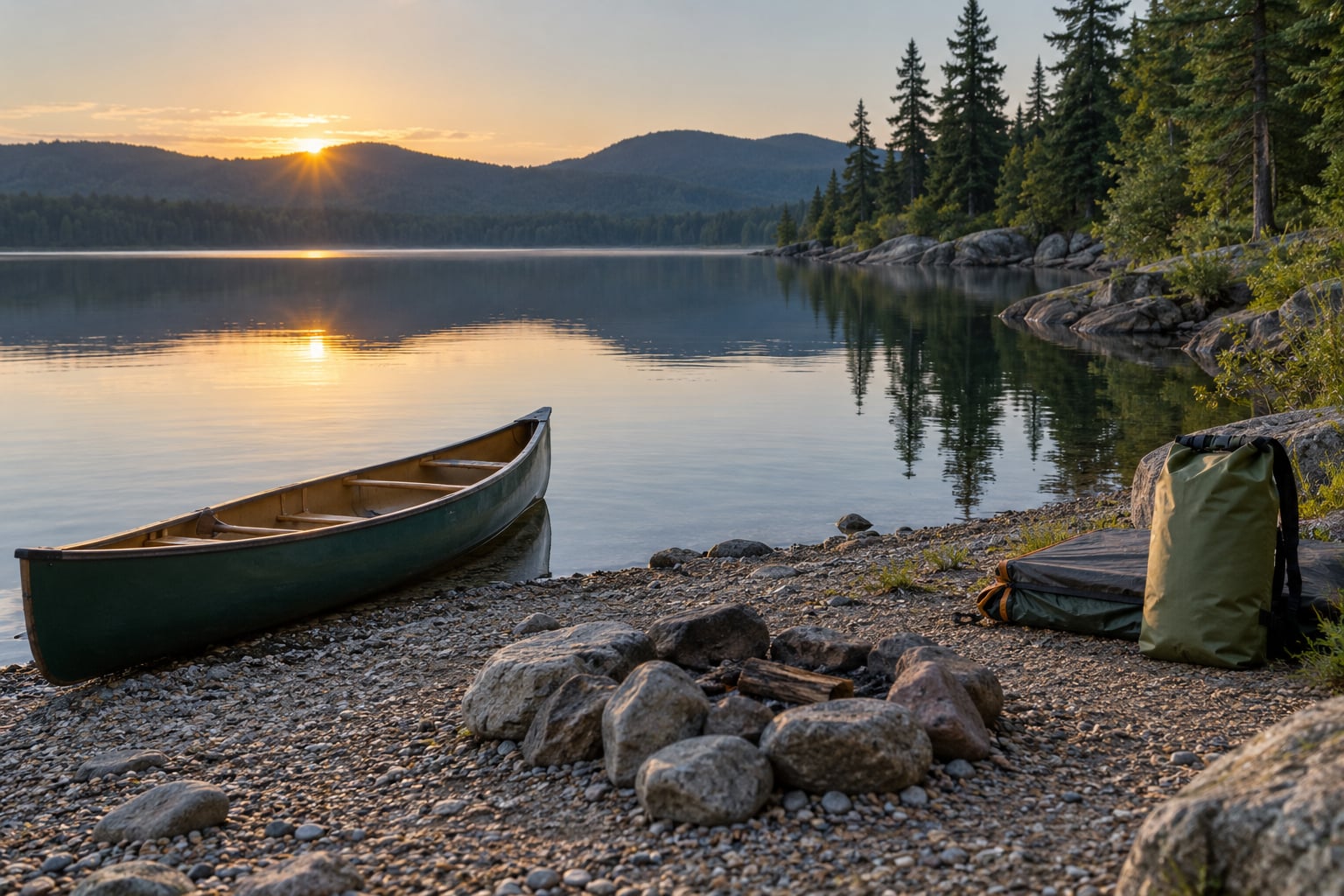
To leave no trace at a lake, pack out everything you brought in, camp and travel on rock, gravel or bare soil at least 200 feet (about 70 steps) from the water, keep soap and food out of the lake, store food so wildlife never connects people with a meal, drown your fire to cold, and walk out with your trash bag heavier than it went in. The seven Leave No Trace principles were built for backcountry campsites, so most guidance stops at the trailhead. A lake adds water you can pollute, a boat that can carry invasive species between basins, a shoreline that erodes from one careless step, and usually no ranger to remind you. This guide covers the whole trip: what to pack, what to do while you are there, and what to check before you drive away.
One framing note first, because the name sets people up for failure. Very few lakes let you leave literally nothing. A tire track on a boat ramp and a compressed patch under a tent are unavoidable when you carry a cooler and a canoe. Forum users who camp on remote lakes say the honest goal is the minimum trace, not a zero-trace fantasy, and that is the version I use here: cut the damage you can avoid, repair what you can repair, and haul out what you carried in.
Table of Contents
- What You Need
- How to Leave No Trace at a Lake Step by Step
- Common Mistakes
- Frequently Asked Questions
- Do I have to camp 200 feet from the lake, or is 100 feet enough?
- What do I do with trash when there is no bin at the lake?
- Can I wash dishes or take a shower at the lake?
- Can I burn trash in my campfire at a lake?
- How do I keep wildlife away from my food at the lake?
- Is Leave No Trace just for hikers and backpackers?
What You Need
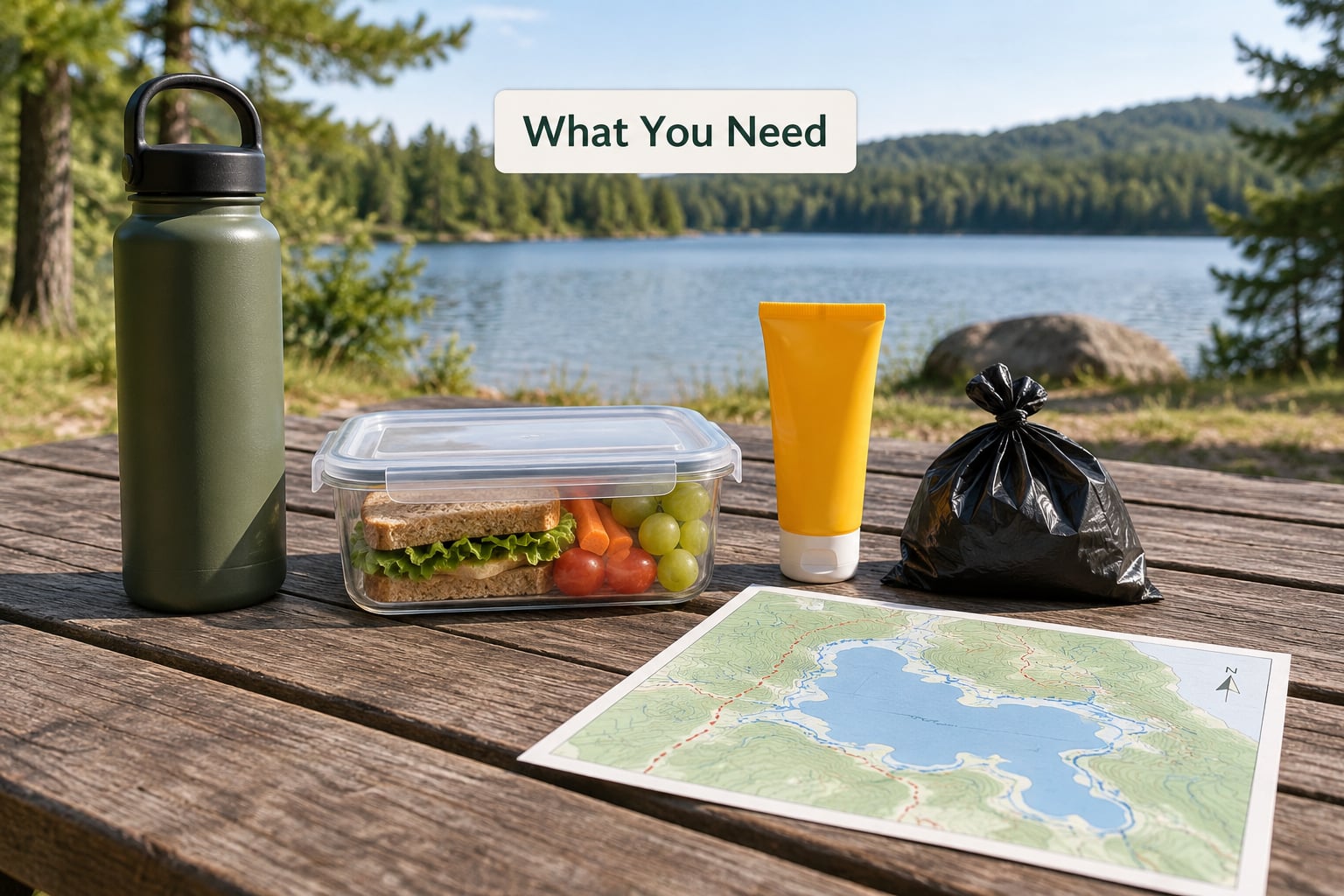
Most of this is ordinary gear you likely own already, reorganized. The point is that the items live together in one dry bag so you do not have to make decisions in the dark at the ramp.
- Planning items. A paper or offline map of the lake, your permits, and a screenshot of the local fire ban status. Check the state DNR or forest service page for that waterbody, not a generic camping forum post.
- A pack-out bag. A sturdy duffel or dry bag sized to hold a full trip’s waste. A contractor trash bag works inside it, doubled if you are camping several nights.
- Reusable everything. Refillable water bottles or a bladder, a hard-sided cooler or lunch container, a plate and flatware set, a mug, and a cloth towel. This is the single biggest reduction in trash volume.
- A scoop or trowel for catholes if you will be camping where there is no vault toilet, plus a human waste bag as the backup for high water or frozen ground.
- Biodegradable soap and a collapsible wash basin. You will use them well back from the shoreline, not at the water.
- Food storage. A bear canister or a bear box when the local rules require one, plus odor-proof bags for backups and scented items like toothpaste.
- Cleanup kit. A small hand brush for the fire ring, a broom for the tent site, a bottle of sanitizer, and a trash grabber if you plan to collect what others drop.
- Safety gear. A life jacket for everyone on the water, water shoes for wading, sunscreen, a first aid kit, and a tick check tool before you sit down at camp.
How to Leave No Trace at a Lake Step by Step
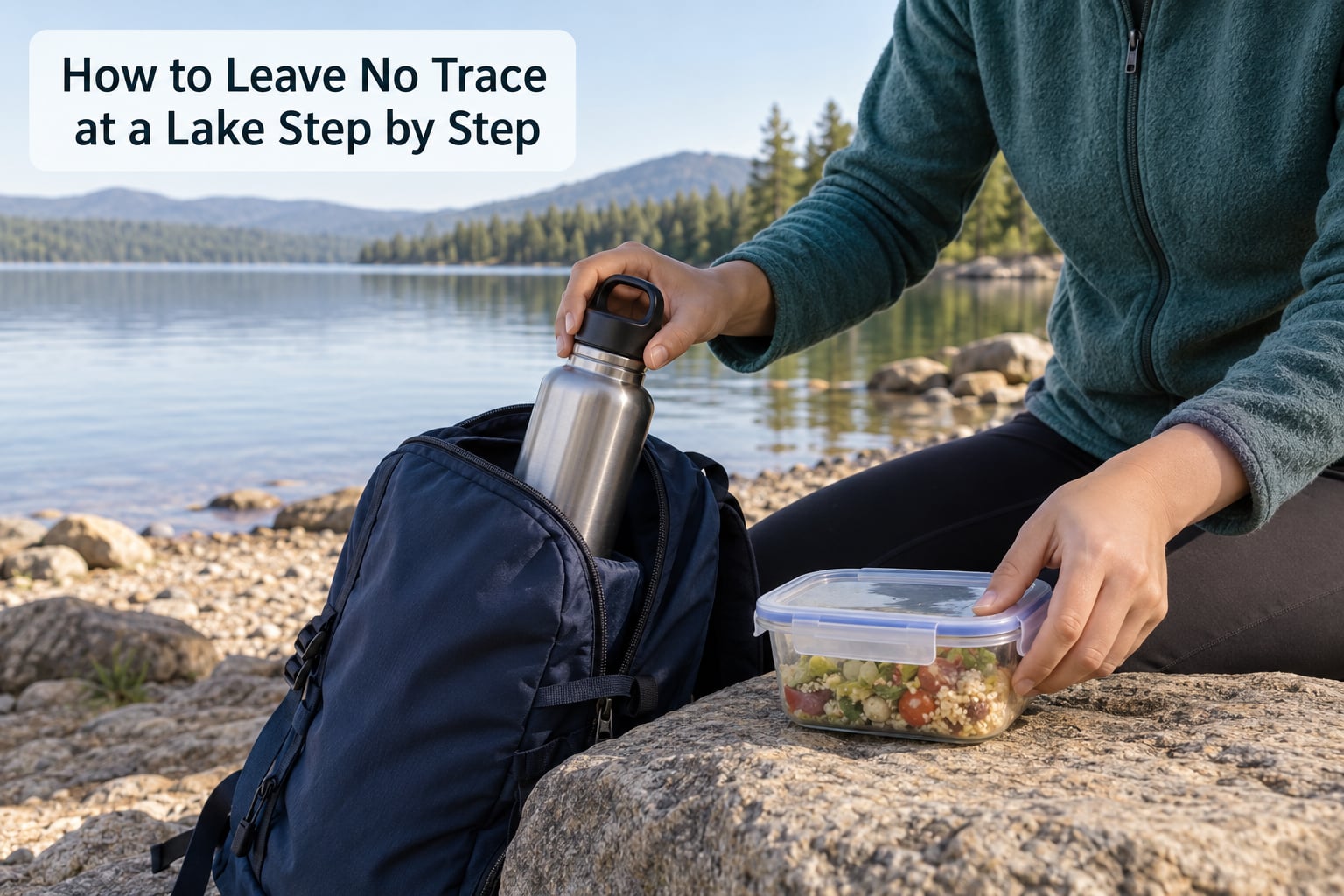
Four phases cover the whole visit: plan it before you go, manage waste while you are there, protect water and wildlife during the day, then reset the site on your way out. Work them in that order and the cleanup part takes minutes instead of an hour.
How to plan your lake visit
Almost every rule you might break is visible before you leave home. Fire bans, permits, boat inspection requirements, drinking water advisories, motorized access rules, and whether live bait is allowed all change by waterbody and by season.
Three decisions matter most. First, pick a durable campsite: bare soil, gravel, rock or hardened shoreline beats a tent on turf every time, and using an existing fire ring is better than cutting a new one. Second, count your trash honestly. Four people fishing for three days generate more than people expect once wet paper, food scraps, and packaging are counted.
Third, check the weather and the forecast for your departure day, and pack for the worst version of it. A camp you pack out in a downpour is a camp that gets left behind. Tell someone your route and your return time if you are going alone, and carry a second way to get water in case the boat ramp is the only reliable one.
If the lake is under a harmful algal bloom advisory, decide before you go whether you are swimming at all, because that changes what you bring. Keep children and dogs out of green water entirely.
How to leave no trace at a lake when there is no trash can
Pack it in, pack it out applies everywhere, but at a remote lake it is literal: the nearest bin may be two miles up the trail at the trailhead, and nothing you leave gets cleaned up by anyone else. Plan for the whole load leaving with you.
Split the weight before the trip so the return is easier. A cooler that goes out half full of food comes back full of bags, and that balance is exactly when people quit and stash things under the picnic table.
If you find litter that is not yours, most of it should come with you too. Thin plastics and fishing line are the priority because they persist for decades and cut into wildlife. Bulky items like tires and propane cylinders are a judgment call: take small things, note the location of large things for an organized cleanup, and never leave a full trash bag behind.
How to reduce waste around the lake
Start before you load the car. Reusables are not a slogan, they are the whole strategy: if food never enters a wrapper, it never has to be picked out of the weeds or picked up by a duck.
Compostable and biodegradable packaging is not a license to scatter. A banana peel or a paper napkin in the woods attracts wildlife, draws animals into camp, and slowly disappears into a place that never wanted it. Compostable items get packed out with the rest of the trash unless you are in a place with compost facilities that actually process them.
Never bury and never burn trash. Burying food scraps attracts rodents and bears, and burning plastics and treated wood releases fumes that people near the fire breathe in. If a fire ban is on, skip the fire entirely and use a battery lantern for light, which most campers end up preferring anyway.
For animals and children, carry a small bag and use it. The shortest distance between you and the road is a dropped glove, a plastic fork, or a used wipe, and none of those belong in a place with no bins.
Separate waste only when the local rules actually provide sorting. Most boat ramps and day-use areas do not, so sorting into bins that do not exist creates spill and confusion. When a site does have recycling, rinse containers before they go in so a single food film does not spoil the load.
How to protect the water, shoreline, and wildlife
The shoreline is the fragile part of a lake, and shallow water is where fish spawn and where sun and water reach bottom. Walk on rock, gravel, mudflats, or pavement rather than on grass and marsh plants, and step instead of driving when you are at a shallow launch.
Wash at least 200 feet back from the water, not 200 steps of shoreline. That setback keeps soap, sunscreen, and food grease out of the water and keeps trampled bank from becoming eroded bank. If there is no good wash spot at that distance, you wash with cold water and no soap, or you accept a less clean trip. That is the real trade-off, and it is a small price for a lake that still works next season.
Give wildlife distance and a way out. From a boat, slow down near nesting birds and give a sitting duck or a family of geese a wide berth. An animal that learns to associate people with food loses its fear of people, and habituated animals get relocated or destroyed. That is the worst possible outcome for the animal and the reason food storage rules are written the way they are.
Keep dogs leashed near water and on trail near other campers, and pack out pet waste. A dog that swims at a bird colony is a wildlife problem, not just a nuisance.
Photography has its own version of this. Keep back from nests and dens, use a zoom lens instead of walking closer, and think before you geotag a fragile spot. Posting coordinates for a remote inlet or a rare plant can bring a crowd to a place that had none.
How to leave campsites and picnic areas clean
Run the pack-out like a routine, in order, every single time. Clear the site of all trash and food residue, bag it, then deal with the fire, then the bathroom, then a final sweep. Doing it the same sequence means you stop forgetting steps.
For the fire: drown it, stir it, drown it again, and put your hand near the ashes to feel for heat. If it is too hot to touch, it is too hot to leave. Scatter cold ash only if the local rules allow it, and leave the ring in good shape for the next group, because the next group is often you.
For human waste where there is no toilet, use a cathole: dig 6 to 8 inches deep, well back from water, trail, and camps, do it when you need to, and pack out toilet paper. On high water, frozen ground, or in rock country, a human waste bag is the fallback. Read the local rules first, because some lakes require that waste be carried out entirely.
Do not move rocks, cut branches, pull plants, or build a rock cairn. Water bars, benches, and stacked stones get built by well-meaning people and end up permanent on the shoreline. Leave what you find, take only photos.
Finally, do a second look the next morning if you can spare ten minutes. A single scan in daylight catches the bottle cap under the picnic table and the food scraps at the water line that a tired evening sweep missed. It is the cheapest ten minutes in the whole practice.
Common Mistakes
These are the ones I see most often at lakes, with the correction that actually fixes each one.
Camping at the water because it is pretty. A tent at the shoreline is the single most common lakeside impact, and it is usually a hard one to repair. Pick a spot 200 feet back, or at least well above the high water line, and walk the extra distance.
Treating the picnic table area as a campsite. Developed tables are for day use. Sleeping there concentrates wear in one place and usually breaks a rule you did not read.
Washing dishes at the edge of the lake. It feels considerate because you are right there. It puts detergent, grease, and food particles into shallow water where they spread and do not break down. Move 200 feet with a basin.
Burning trash and food scraps. Fires are for wood. Burning trash is illegal at most sites, is bad for anyone nearby, and always leaves unburnt bits behind. Pack it out.
Burying food scraps and, worse, the trash bag. Bears and rodents find buried food, which ends in a destroyed tent and a habituated bear. Carry it.
Leaving the fire ring hot. Cold to the hand, no smoke, no glow. Drown, stir, drown, and check.
Assuming the boat is clean. Aquatic invasive species ride on hulls, trailers, boots, and bilge water. Clean, drain, and dry before launch and again before you go home, and do not move water or live bait between lakes unless the rules at both ends allow it.
Leaving line, hooks, and tackle behind. Monofilament is nearly invisible and deadly to birds and fish. Cut it into short pieces and bin it, keep a spool in the boat, and check the ground around your spot before you leave.
Only leaving camp in a hurry because of weather. The conditions that force you out are exactly when litter gets abandoned. Five extra minutes in the rain prevents it.
Believing that footprints do not count. The old slogan says take only pictures, leave only footprints, and it quietly excuses a lot. Wet mud, marsh grass, and shallow water are damaged by the step itself, not just by a tent.
Frequently Asked Questions
Do I have to camp 200 feet from the lake, or is 100 feet enough?
Aim for 200 feet, which is roughly 70 adult steps, and treat 100 feet as a hard minimum rather than a target. The setback keeps people and campfires away from eroding shoreline, keeps animals an open path to drink, and keeps soap and waste out of the water. Sites near a lake may have a stricter local number, so check the rules for that specific waterbody before you pick a spot.
What do I do with trash when there is no bin at the lake?
Pack it out. Bring a bag sized for the whole trip, and keep the return load manageable by cutting weight where you can. Take thin plastics, line, and food packaging with you every visit. For bulky items like tires or large debris, note the location for an organized cleanup instead of moving it yourself. A bag left behind is never acceptable, even a full one.
Can I wash dishes or take a shower at the lake?
Wash well back from shore, ideally 200 feet, using a basin and biodegradable soap. Do not soap directly in the lake, and skip soap entirely if there is no suitable spot at that distance. Keep the basin and towel with you so nothing is left at the water line. Washing with plain water only is better than contaminating the shoreline for convenience.
Can I burn trash in my campfire at a lake?
No. A campfire is a wood fire, and burning plastic, treated wood, foil, or food packaging is illegal at most sites and harmful to people nearby. Unburnt fragments end up in the dirt regardless. Pack trash out instead, and if a fire ban is in effect, skip the fire and use a battery lantern. Never bury trash either, because animals find it.
How do I keep wildlife away from my food at the lake?
Use a bear canister or bear box whenever local rules require one, and keep toiletries, pet food, and anything scented inside it rather than in your tent. Never store food where campers can see it, and never feed wildlife, even birds or ducks, because an animal that learns to expect food from people loses its fear and becomes a removal problem.
Is Leave No Trace just for hikers and backpackers?
No, it applies to anyone spending time outdoors, and lakes are where it is easiest to break without noticing. Anglers, boaters, paddlers, swimmers, families at a day-use area, and people working a drone over a cove all affect the same water and the same wildlife. The habits are the same in every case: pack out waste, stay on durable surfaces, keep food sealed, and leave the site as you found it.
Start with the part that costs you nothing: check the fire ban and the local rules for that lake before you load the car, and pack a bag big enough for everything. Then walk the 200 feet back from the water and keep your soap with you. Everything after that is habit, and habit is the whole reason leaving no trace at a lake is a practice rather than a rule you follow for one weekend.