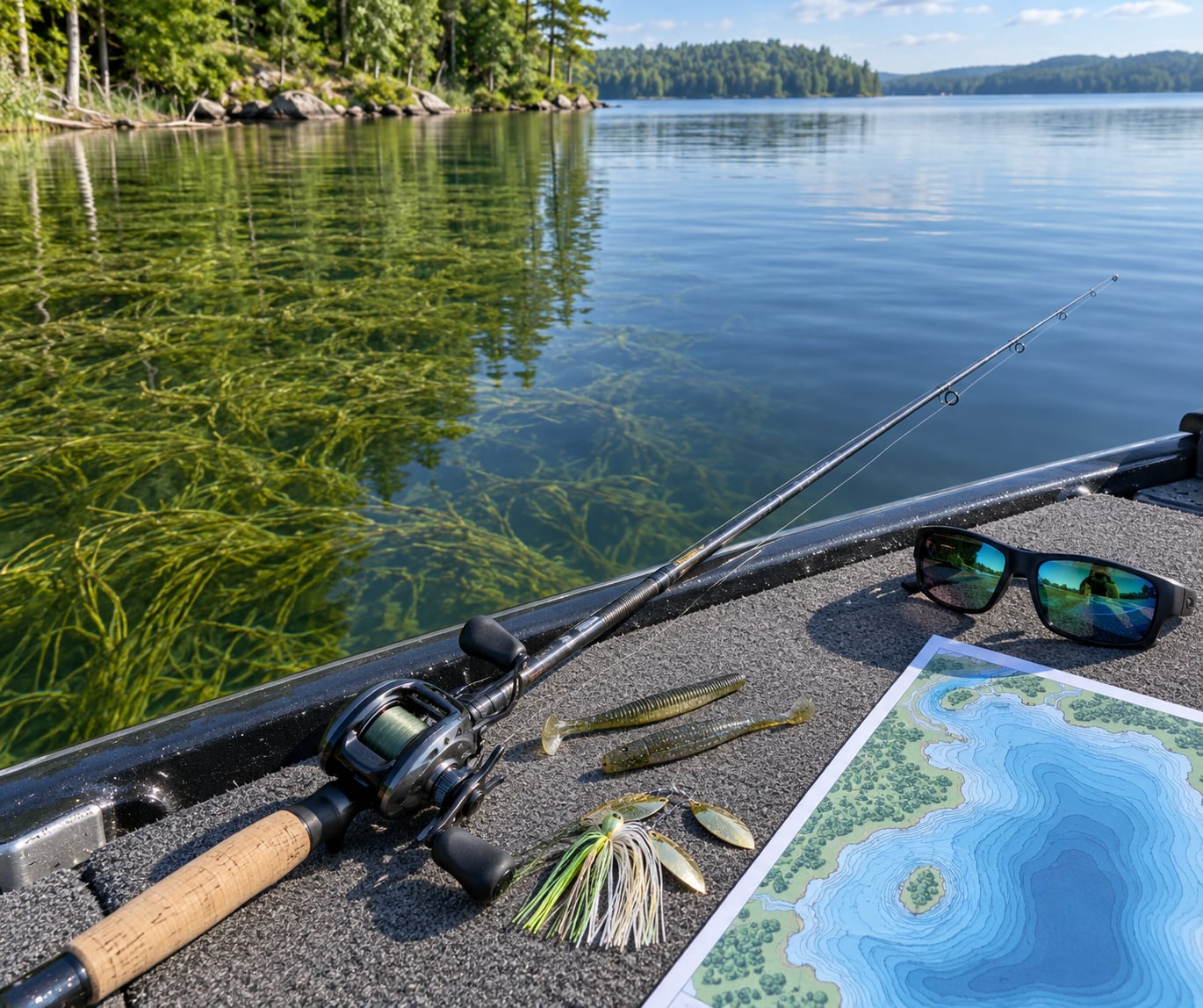
How to fish weed beds in a lake comes down to three habits: work the outside edge instead of casting into the middle, match your lure profile to the height and density of the vegetation, and change bait when the weeds change. Almost every lost lure and bent hook comes from pushing a bait through the heart of a mat that was only ever holding fish along its rim.
The techniques here take about an hour to learn and a season to get good at. Beginners can catch fish on their first trip if they pick a spot with a defined edge and stay on it instead of working the whole weed bed.
Updated for 2026.
Table of Contents
- What You Need
- How to Fish Weed Beds in a Lake: Step by Step
- Common Mistakes
- Frequently Asked Questions
- What is the best lure for fishing weed beds in a lake?
- How deep should I fish when targeting weeds?
- Should I fish the edge or the middle of a weed bed?
- What retrieve works best for fish holding near weeds?
- How can I fish heavy vegetation without losing too many lures?
- Are weed beds good fishing spots throughout the year?
- Conclusion
What You Need
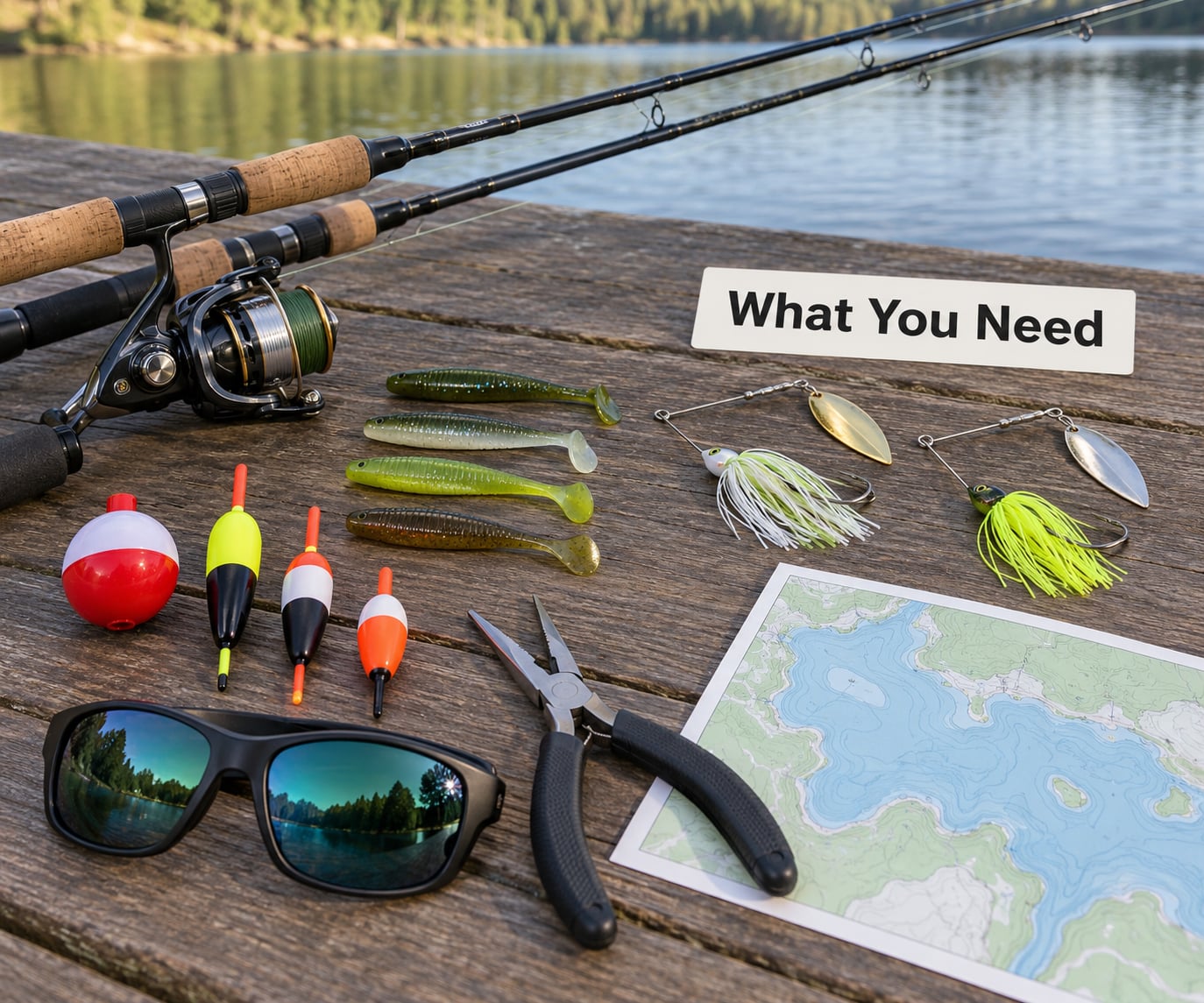
You do not need a full boat and a forward-facing sonar rig. You need gear that survives contact with vegetation and a way to find a clean edge to work. Here is what actually earns its place in the boat.
- Rod and reel: A 7-foot medium-heavy or heavy spinning rod paired with a size 2500 to 4000 reel gives you enough power to pull a fish out of a thick mat and enough sensitivity to feel the small hole in the weeds. A medium-heavy fast-action rod is the usual choice for heavy cover; a lighter rod only makes sense if you are casting long distances over open water.
- Line: Braid main line with a 12 to 18 inch fluorocarbon leader. Braid has almost no stretch, so you set the hook the instant you feel anything, and the fluorocarbon takes the abrasion that shredded monofilament leader.
- Lures: A weedless jig head with a single hook and a creature or compressed soft plastic, a shallow-running crankbait, a weighted swimbait with a large paddle tail, a spinnerbait, and one or two lipless cranks in bright colors.
- Terminal tackle: Single-hook weedless heads, a few offset hooks in case you switch to live bait, and a stopper or bead you can slide up the leader to hold bait just above the weed tops.
- Safety and odds: A properly fitted life jacket worn the whole time, polarized sunglasses so you can see the drop-off and weed edge through glare, a line cutter and pliers clipped somewhere you can reach with wet hands, and a spare hook or two in a dry pocket.
- Lake knowledge: A local lake map or printed depth chart with vegetation noted, and a fish finder or sounder if you have one. Even a phone with a bathymetry app beats nothing when you have never fished the lake.
If you are fishing from a kayak, most of that list still fits in a dry bag. Drop the anchor early, keep the paddle in your hand when you drift, and give yourself a clean line to paddle away from.
How to Fish Weed Beds in a Lake: Step by Step
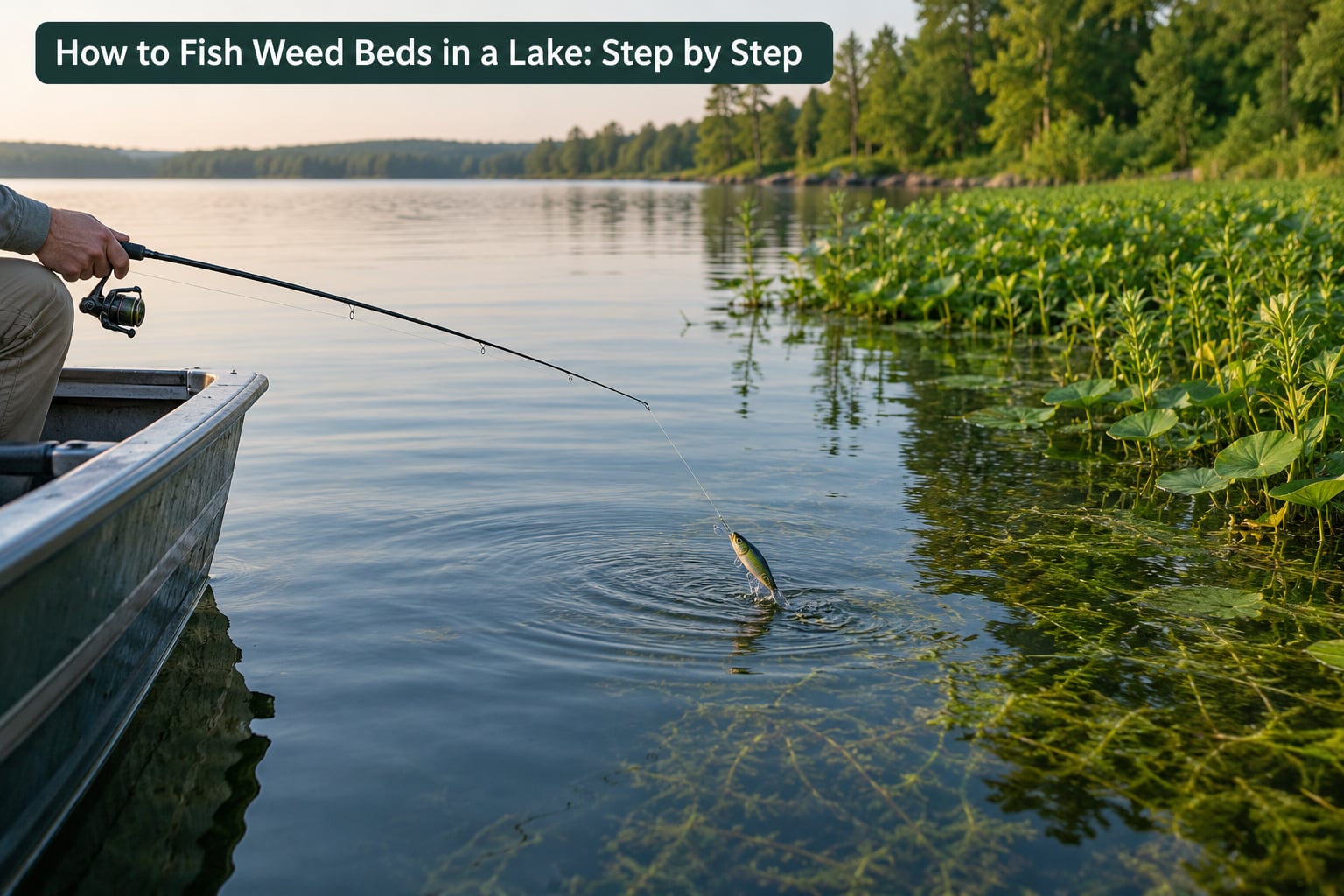
Step 1: Locate the Best Weed-Bed Structure
Most productive weed beds are not solid circles. They are broken patches with clean sand, rock, or a channel running through them, and fish slide off the weeds onto that clean bottom to move.
Look for four things in this order:
- The edge. The line where tall weeds stop and open water begins is where ambush fish sit and where you can cast without a snag. Work this before anything else.
- Inside corners and points. Where a weed mass creates a pocket in an L-shape, two currents and two weed lines meet. Those corners consistently hold more fish than the open edge.
- Lanes and channels. Bare corridors running through weeds let bigger fish move without exposing themselves. A cast that lands in a lane often pulls a second fish.
- Depth transition. Productive weed beds sit in roughly 4 to 8 feet of water with deeper water close by. Weeds without a nearby drop-off rarely hold much.
With a chart or sounder, look for a hard bottom change next to a soft, weedy bottom. Without electronics, wear polarized glasses and fish the color change between brownish vegetation and blue-green water; that line is the edge.
Step 2: Choose the Right Lure for Weed Beds in a Lake
Match the lure to the weed, not to your favorite bait. Tall dense weeds need a shorter, thicker profile that sits up off the bottom. Sparse, low weeds can be worked with anything, including a jerkbait or a stick bait.
| Presentation | Best For | Working Depth | Retrieve | Snag Risk |
|---|---|---|---|---|
| Weedless jig plus creature plastic | Tall dense beds, bass and pike | 3-8 ft | Crawl, bounce, pause | Low |
| Weighted swimbait | Mid-depth edges, bass and walleye | 4-8 ft | Steady swim with stops | Medium |
| Shallow-running crankbait | Covering long weed edges fast | 2-6 ft | Steady, contact with structure | Low on trebleless models |
| Spinnerbait | Mid-depth pockets, visible bottom | 4-10 ft | Slow roll with pauses | Medium |
| Slip bobber with live bait | Sparse weed, panfish, carp, walleye | Set by depth | Dead drift, occasional twitch | Very low |
| Lipless crankbait | Covering water fast in stained water | Shallow, 0-4 ft | Stop and go | Very low |
Size matters more than most beginners expect. A small swimbait in thick weeds usually gets pinched or buried in the first foot of retrieve, so go bigger than feels right.
Step 3: Fish the Edge Instead of the Center
Cast past the weed edge and reel the lure back just far enough to land on the first stalks, then work parallel to the line of weeds. You are covering the strip where fish transition between cover and open water.
When you do push inside, do it deliberately. Jig the lure so it falls through a gap in the canopy, let it hit the clean bottom, then work it slowly from that pocket. You should feel the drop; that instant of free fall is how you know you found a hole rather than solid mat.
Patchy weed with sand showing through beats a solid carpet nearly every time. A full mat with no bottom visible is usually a place fish pass through rather than live.
Step 4: Control the Lure’s Presentation
The retrieve does as much work as the bait. What looks natural to you looks like dinner to a fish that has never seen a lure, provided you vary the speed and add pauses.
- Bass: Drag the lure across the weed tops, then pause for two or three seconds. Repeat. That stop-and-go pattern covers a lot of water and triggers most of the strikes.
- Walleye: Swim a swimbait over the tops and along the edge, then snap the rod tip so the bait pops off the bottom. Popping and snapping imitate a panicked baitfish.
- Pike and muskie: Work the edge with a hard body or chatterbait with a steady, mechanical retrieve. These fish commit to a bait that is moving with purpose.
- Panfish and crappie: Hold a lure still in a pocket. Jig it an inch off the bottom, drop it into the hole, and let it sit.
Control depth with rod position, not just your reel. A high rod retrieves shallow; lowering it as you reel lets a shallow-running bait dive a little deeper. When in doubt, watch your line: if it is bending, the lure is at the wrong depth.
Step 5: Set the Hook and Land the Fish
Different species tell you different things. Bass give a heavy thump that feels like a bump on the bottom. Walleye tap like a door closing. Pike and panfish give almost nothing and just start moving sideways.
Set the hook the first time you feel weight, and set it by sweeping the rod to the side rather than pulling straight up. A swept hookset keeps the line outside the weeds and pulls a hooked fish toward clean water instead of back into the mat.
After the hookset, keep the rod pointed at the fish and pump the reel only when the line is tight. Pinching the line with one hand while you work a fish off a weed edge saves a lot of tackle.
Step 6: Adjust When the Fish Are Not Biting
Work through the changes in this order, one variable at a time. Changing three things at once is why beginners never learn what works.
- Move depth. Drop down to the clean bottom inside the bed or rise to the weed tops.
- Change retrieve. If you have been crawling, add pauses. If you have been pausing, reel steadily.
- Change size. Go up one size on the profile before you go down.
- Change color. Bright and natural in stained water, dark and natural in clear water.
- Move along the structure. Fish the next point, the next pocket, or the other side of the bed.
- Change the hour. Low light and the first hour after dark are when weed edges draw more traffic from baitfish, and carp anglers regularly report catching fish either side of midnight.
If you have made all those changes with no response, check the local regulations and confirm the species is open, then move to clean structure and come back when the fish are feeding.
Common Mistakes
Almost every avoidable lost lure traces back to one of these. Each has a simple fix.
- Casting into the middle of the bed. Fix: cast past the edge and work back to it. Fish hold the rim, not the center.
- Retrieving too fast through the transition. Fix: slow down as the lure enters the weeds and hold the rod more vertical to keep it riding on top.
- Using treble hooks. Fix: switch to a single-hook weedless head or a rig with the hook pinched up under the plastic. Trebles find every stem in the lake.
- Ignoring water clarity. Fix: in clear water, fish shallower and use darker natural colors, since fish see the lure in sunlight. In stained water, drop deeper and use bright chartreuse or bold striped colors that push light.
- Forcing the hookset upward through weeds. Fix: sweep the rod sideways and reel the fish toward open water.
- Treating every weed bed the same. Fix: note the weed type and thickness first. A stiff cabbage weed holds fish differently than a soft milfoil bed, and bare rock inside a bed is usually better than the weeds themselves.
- Fishing the same spot all season. Fix: re-learn the lake every few weeks. Weeds can grow several inches in a few days at the peak of summer, so a spot that held fish in June may be a solid mat by late July.
- Running the boat over the beds at speed. Fix: lift the motor or troll at idle speed in weed-filled water, and hold a steady slow boat speed along the edge so the prop does not bury itself in vegetation.
- Skipping the rules check. Fix: confirm local limits, protected species, and any restriction on fishing or boating in specific bays before you launch.
Frequently Asked Questions
What is the best lure for fishing weed beds in a lake?
A weedless jig head with a single hook and a creature-style soft plastic is the safest all-round choice for thick weeds, because the hook tucks into the plastic and slides over stalks. For covering a long edge quickly, a shallow-running crankbait on a single-hook or split-ring-free model works well. For fish holding just off the bottom, a weighted swimbait with a large paddle tail gets the bait down into the edge faster.
How deep should I fish when targeting weeds?
Most productive weed beds sit in roughly 4 to 8 feet of water with deeper water close by, and the fish use the edge where the weeds drop into that deeper channel. Work the weed tops at 2 to 4 feet and the clean bottom inside the bed with a jig or swimbait. If nothing is biting, change depth before you change bait.
Should I fish the edge or the middle of a weed bed?
Fish the edge first, almost every time. The line where weeds meet open water is where fish ambush baitfish without being exposed, so it holds more fish than the middle. When you do work the inside, drop the lure through a gap in the canopy, feel it drop onto clean bottom, and work that small pocket slowly instead of dragging through solid vegetation.
What retrieve works best for fish holding near weeds?
Speed changes with pauses is the most reliable weed retrieve for bass, because it mimics a wounded or fleeing baitfish and covers a lot of ground. Walleye respond to swimming a swimbait over the weed tops and then popping or snapping the bait when it crosses the edge. Panfish and crappie want the lure sitting still in a pocket, so jig it an inch off the bottom and wait.
How can I fish heavy vegetation without losing too many lures?
Use single hooks, weedless jig heads, and short fluorocarbon leaders, and keep the lure riding on the weed tops instead of below them. Compressing the soft plastic over the hook and pinching the hook point upward both reduce fouling. Work the edge parallel to the weeds rather than casting deep into the mat, and expect to lose a few lures anyway; bring extras.
Are weed beds good fishing spots throughout the year?
They are best from late spring through early fall, when fish are in shallow water and the weed tops are within easy casting distance. Spring works as fish push into the shallows to spawn and feed. In midsummer the best action is usually at the weed edge rather than the middle, and in fall the dying weeds draw baitfish and make the beds even easier to read on a sounder.
Conclusion
Start with the edge, not the middle. Find a weed line where clean water meets vegetation in about 4 to 8 feet of water, tie on a single-hook weedless jig or a shallow crankbait, and retrieve it with pauses until you find the pocket the fish are using.
Match the lure profile to the weed height, change depth before you change bait when nothing bites, and give a bare-looking spot a second look every few weeks, because a spot with no weeds in June can be a full bed by August.