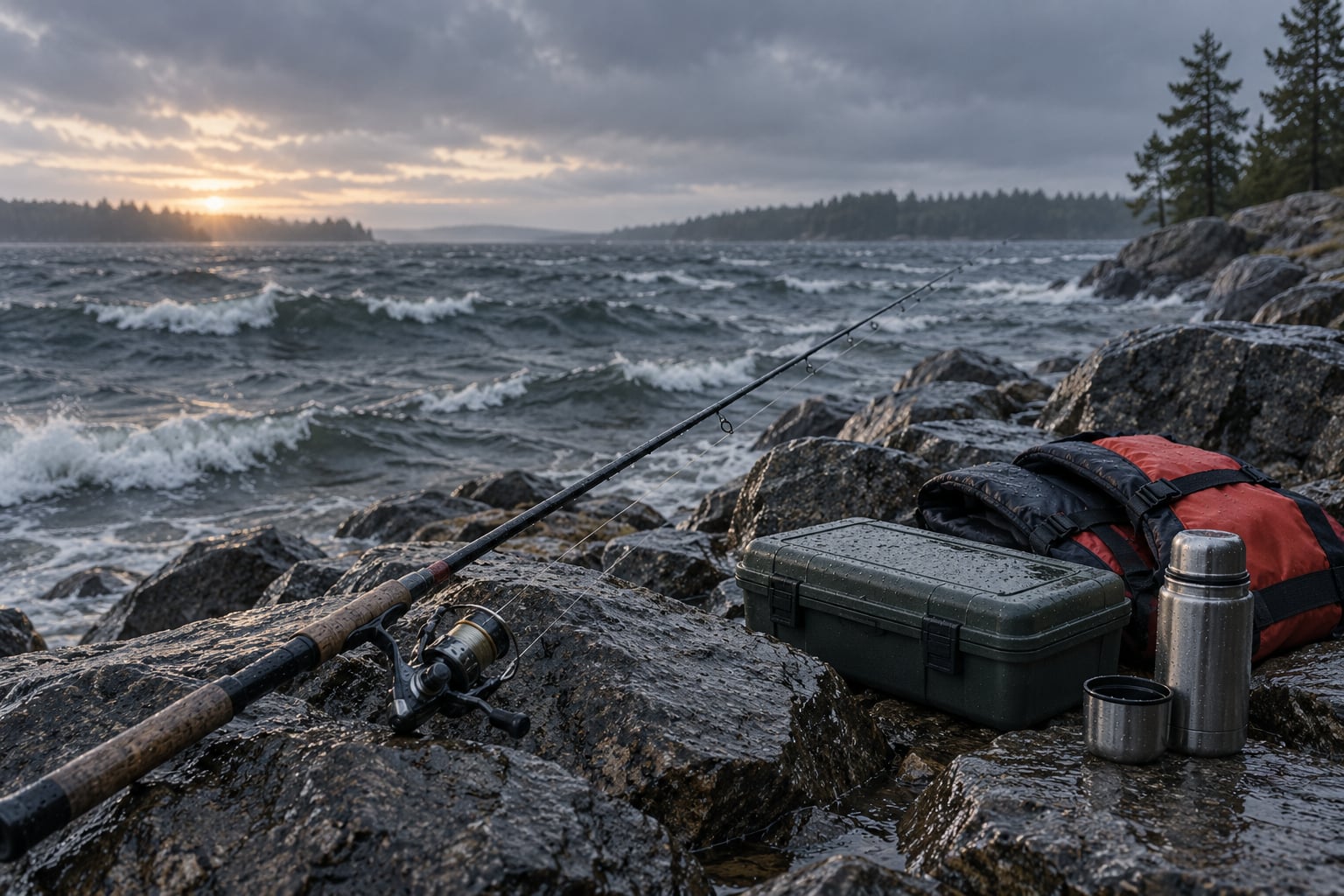
A cold front does not shut fishing down, it changes the game. To learn how to fish a lake during a cold front, plan for slower presentations, smaller baits, deeper water and structure that holds warmth, then work the sheltered, sun-exposed spots most anglers skip. Most of it comes down to preparation and patience.
Cold-blooded fish slow with the water. Their metabolism drops, they conserve energy, they feed far less often, and they stop chasing things they would have chased an hour earlier. The bite shrinks rather than disappears, which means a front day is really a low-competition day.
Here is the sequence I use: read the forecast, dress for wind and rain, pick structure by wind direction and solar exposure, match the lure to the water you are actually looking at, work it slowly, and know your exit time before you launch.
Table of Contents
What You Need
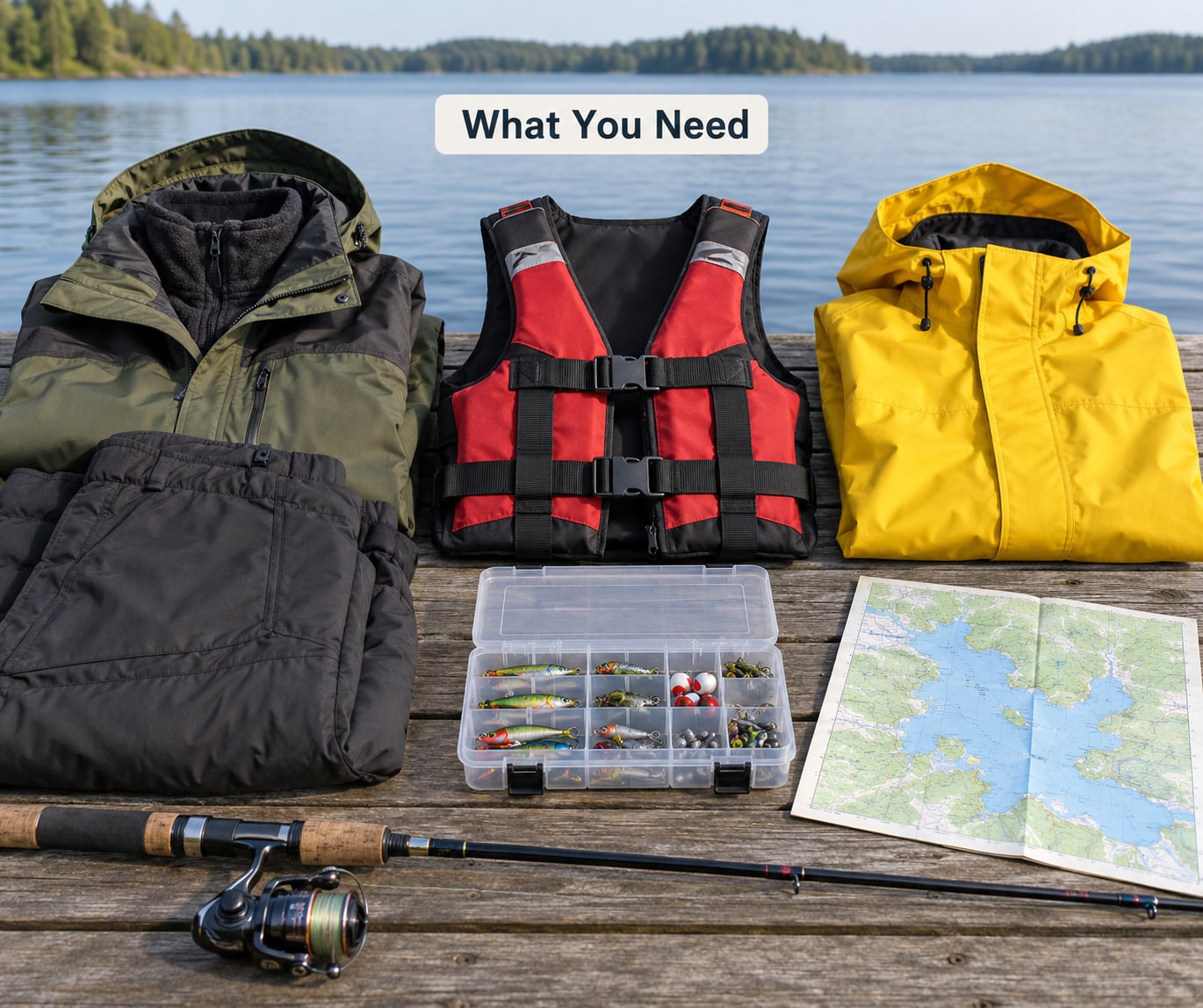
Cold-front trips fail on gear far more often than they fail on technique. Rain gear that leaks, a boat without a bailer, and a phone at four percent are all avoidable, so treat the checklist as part of the fishing plan, not an afterthought.
Clothing and safety gear
- Layers: a wicking base layer, a fleece or grid mid layer, and a waterproof shell with a hood. Remove a layer before you get soaked rather than trying to warm up after.
- A personal flotation device: worn, not stowed. Cold water shock is faster and more dangerous than most anglers expect, and a front-day wind can push a small boat over before you have finished packing.
- Non-slip footwear with good grip: wet riprap, boat carpet and algae-covered rocks are the three most common ways anglers get hurt on a front day.
- Head protection and a spare dry layer: keep both in the boat, sealed in a bag. Wind at 20 mph with sleet makes a hat feel like a safety item.
Tackle
- Finesse rod and reel: ultralight to light, spooled with 6 to 10 pound line. Cold fish are often spooked by line they can see.
- A jig and a shaky head in small sizes, plus a lipless crankbait for covering water quickly.
- Live bait options: live shad, crawfish or a minnow if you can keep them. Live bait gives off an odor and vibration plastic cannot match.
- Extra tackle: cold hands drop hooks. Bring more of everything than you think you need, and put it in a tackle box that opens with cold fingers.
- Electronics: depth finder or side imaging, a spare battery, and the power for a trolling motor. Fish holding tight to structure in murky water are hard to find without them.
Information to check before you leave
- Hourly forecast for wind speed, gusts, precipitation and the timing of the pressure shift
- Any small-craft advisory, wind advisory or flood watch posted for the lake
- Recent water temperature and how much it has moved in the last week
- Wind direction, which tells you which shoreline will be blown into and which stays calm
- A fallback: a sheltered cove, a wind-blocked bay or a shorter trip you can finish early
Step-by-Step: How to Fish a Lake During a Cold Front
Check the Weather and Lake Conditions Before You Leave
A cold front is the leading edge of a cooler, denser air mass that wedges under warmer air. It brings a pressure rise, a wind shift, a temperature drop and often a change in precipitation, and it is the combination that matters rather than any single reading.
Look at the hourly forecast rather than the daily icon. A front may pass overnight and leave you with bluebird conditions by 8 a.m., or it may stall and leave you fishing in a cold drizzle for six hours. The difference is worth fifteen minutes at the kitchen table.
Then check the water. Aim for the nearest live reading from a temperature buoy, a ramp gauge or a local report. That number, not the air temperature, sets how the fish are behaving.
On the pressure question, there is a simple rule worth keeping. Anglers repeat a 30.00 inHg threshold, but the useful signal is when pressure, wind and temperature agree. If pressure climbs while the wind lies down and the water stays stable, many lakes fish better than the reading suggests. If pressure climbs into a cold, gusty blow, the bite will be shut down regardless of what the barometer says.
Dress for Wind, Rain, and Slippery Shorelines
Dress in layers you can adjust while the front moves through, because you may start the trip in a hoodie and end it in a shell with everything underneath soaked.
Watch your footing more carefully on a front day than any other. Rising water floods the shoreline and undercuts the bank you normally walk. Shoreline vegetation dies back late in the season, which hides holes and drop-offs that were obvious in July.
Give yourself a warm drink and a dry layer to change into before you leave the boat. On the water, small craft and cold water are a bad combination when the gusts arrive, and the PFD is the item you cannot replace in time.
Choose the Right Lake Area and Structure
Fish do not disappear, they concentrate. Look for the two kinds of water that hold warmth during a front: places where sunlight still reaches and places with enough depth to stay temperature-stable.
- Wind-protected banks: the leeward side of a point, a cove behind a hill or a bay with timber blocking the wind. Calm water lets you cast accurately and keeps the surface from blowing apart.
- West-facing banks: in the afternoon these still take sun, and a warm bank draws fish to a place you can actually see.
- Downwind structure: blowing water pushes baitfish and concentrate them along the wind-blown shoreline. Fish face into the wind and feed there.
- Secondary points and channel bends: the first break in a straight shoreline, and the inside bend of a creek channel, are the two most consistently productive shapes on most lakes.
- Steep drop-offs near the deep refuge: on a stratified lake, fish often sit just under the thermocline where the water has not fallen as far.
Skip the middle of the lake. Open water and mid-lake flats usually go empty, and you will burn the whole day casting where nothing is holding.
Water temperature is the fastest way to pick a spot and a presentation on a front day:
- 65F and warmer: fish hold on shallow flats, weed edges and sunny banks. Normal retrieves, live bait and topwater early in the morning all work.
- Around 60F: fish move to transition zones, secondary points and moderate depth. Slow jigs and twitch-pause soft plastics are the reliable choice.
- Around 55F: fish drop to deeper structure and channel bends. Work them with vertical jigging, a slow lipless or live bait.
- 50F and colder: fish are on deep water and the steepest drop-offs. Go small, keep the jig tight to the bottom, and live bait becomes the best bet.
If you have no electronics and no local knowledge, start at the deepest drop-off you can find near an access point and work outward. Anglers on crappie and panfish forums often report that front days actually improve their bite in southern lakes, because shallow warm water gives up and the fish move off the flats onto structure within casting range.
Match Lures and Bait for Fishing During a Cold Front
Cold fish will not chase. A lure has to be placed where a fish is already holding and then given enough time to trigger a strike. Downsizing is the single most useful change most anglers can make.
- Slow jigs: drop one on a spot, work it in short lifts and let it sit. Let the lure fall another foot before the next lift.
- Lipless crankbaits: best on the way to the fish, not on the fish. Popping or slow rolling covers water without telling you anything when a front is passing.
- Suspending jerkbaits: effective on suspended fish in the transition zone. Soak it for ten seconds between twitches rather than working it continuously.
- Jig and shaky head: a small weight worked along the bottom works well where fish are locked onto structure.
- Live bait: shrimp, crawfish or a lively shad right on their nose is the most reliable option when the water is cold and clear.
Match color to water. Stained water wants brighter lures with more contrast. Clear water wants muted natural colors, and in the murk a front often leaves behind, reach for chartreuse or white because flash cuts through it.
Fish the Water at a Controlled Pace
Pick one piece of cover and commit to it. Cast to the same spot, watch the lure fall all the way, and let it sit before the next move. On a front day, patience outproduces casting speed every time.
Change one variable at a time. Raise the bait a foot, then slow the retrieve, then drop to a smaller jig. If nothing works after a few minutes, move the boat a hundred yards rather than working one spot for half an hour.
Learn to tell a real bite from a reaction strike. A fish that follows and then stops was not feeding, it was defending or curious. Follow-up bites, weight on the line and a fish turning away before the lure lands all point to a fish that is eating. Walleye anglers describe the front-day rule best: slow down and put it on their nose.
Watch the clock, not just the clock on your fish finder. A midday warming window can produce more fish than an early start once the cold has settled in, since fish move to shallow flats that have had several hours of sun. Many anglers plan the second half of the trip around that window.
Know When Changing Weather Means Leaving
Decide your exit conditions before you launch and say them out loud to whoever is on the boat. The list is short.
- Thunder or lightning anywhere near the lake, or a forecast cell tracking your way
- Wind and gusts beyond what your boat can hold, or any small-craft advisory
- Water rising fast, flooding at the access or the ramp closing
- Loss of safe footing, ice of uncertain thickness, or a shoreline you cannot climb back onto
- Cold exposure: shivering you cannot stop, numbness, confusion or slurred speech
- Dead electronics and dead phone with weather turning
A steady cold drizzle with low wind is uncomfortable and manageable. An approaching line of storms with gusts is not, and the second one does not care about how much time you spent on the water.
Common Mistakes
Cancelling the trip out of habit. If the front is mild and the wind stays under 15 mph, go. You will have the lake to yourself for the reason other anglers stay home. Reschedule instead when the forecast shows thunderstorms or sustained wind in the 20s.
Casting fast and loud. Cold fish have slowed down and they see line. Cutting retrieve speed and going down a size fixes more empty trips than any new lure.
Covering water and calling it fishing. Running a deep crankbait across a cold flat in cold water wastes a morning. If you cannot see anything on the sonar and do not know the lake, fish a known piece of structure until you find the depth the fish are holding.
Ignoring wind direction. Fish the sheltered side of the lake, not the exposed one you happen to launch from. The wind-blown shoreline gets the bait, but you cannot cast into it reliably.
Fishing water that is too warm for the depth you are at. In clear shallow water, fish can be in two feet and still refuse anything artificial. Drop to the nearest drop-off, go deeper than feels necessary, and slow down again.
Fishing through the safety call. A front that arrives ten minutes early is normal. Anchor in a protected cove, wait it out and reassess, or head in by the shortest route to the ramp.
A few habits help more than gear. Keep the first hour slow and quiet, change to the sunny bank once the sun is up, and treat a quiet first hour as information rather than failure. Fish are usually still there.
Frequently Asked Questions
How cold is too cold for fishing?
There is no temperature where fishing stops, but activity falls off a cliff below about 50F on most lakes. Below that, fish feed rarely and mostly hold on structure in deep, stable water. Trout, which tolerate colder water, keep feeding in the low 40s in northern lakes and stocked rivers, and catfish stay active through winter because their metabolism runs at a much lower baseline. Judge the trip by what you are chasing, not by the number alone.
Do fish bite right before a cold front?
Usually yes, and that window is the best fishing of the whole cycle. Ahead of a front, barometric pressure often dips slightly and the air warms, which many anglers interpret as fish feeding up ahead of the weather change. The pre-front bite is unpredictable in length, sometimes a few hours and sometimes most of a day, so plan to be on the water early and fish your best spots first rather than starting a long cast pattern.
Do fish bite better during a cold front?
During the passage itself, most anglers see the bite slow. Fish are conserving energy, water temperature is dropping, and if wind picks up the surface becomes hard to fish accurately. The exception is panfish, crappie and bluegill on shallow southern lakes, where the cooling water can pull fish off dead-flat water and onto reachable structure. Treat the front day as a low-opportunity, low-competition outing and go for quality fish rather than numbers.
How long after a cold front do you wait to fish again?
Wait about 24 hours before expecting much, and 48 to 72 hours for a normal rebound. Fish will often bite within a day of a mild front if the water is still relatively warm. After a strong front that drops the water ten degrees or more, give it two full days. The first day back, work deep structure with slow presentations; by the third day you can return to shallower cover with more normal retrieves.
Is rising barometric pressure bad for fishing?
Not by itself. The popular idea that a specific pressure reading such as 30.00 inHg stops fishing is folklore, because pressure readings that matter often run well below that. Pressure has a real effect on fish, but wind, water temperature and light usually explain more than the number does. Trust the pressure only when the wind and temperature agree with it. A rising barometer during calm, stable weather can mean better fishing than a flat reading in a cold blow.
What is the 80/20 rule in fishing?
The 80/20 rule is a way of describing effort, not a scientific rule about fish. The idea is that a small share of your spots, lures or techniques produces most of your catches, so you would be better off putting your time into the productive group instead of spreading effort evenly. In practice, look at your last ten trips and see how much of the success came from a few repeat patterns. Then fish those patterns before inventing new ones.
Final Advice
If you do one thing differently, check the hourly forecast and the lake’s water temperature before you load the boat, then build the day around sheltered, sun-exposed structure with the smallest tackle you own. Slow everything down, give the bite time, and set a hard departure time so the trip ends well before the weather does. Fishing during a cold front is not about finding a magic bait. It is about being the angler who adjusted.