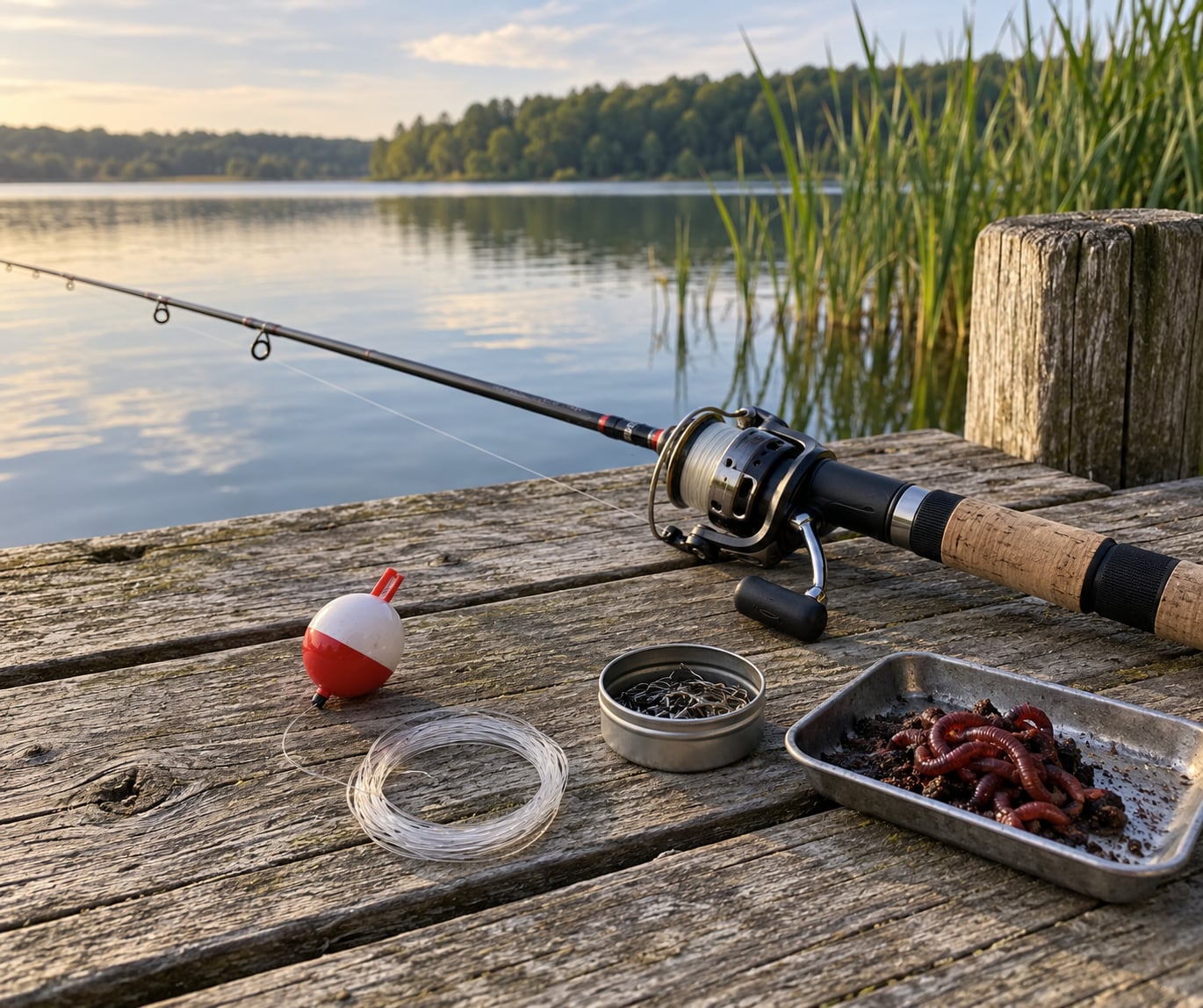
Learning how to fish with live worms for panfish is mostly about three things: a small hook, a bait that matches what panfish actually eat, and the patience to wait for the bobber instead of striking at the first twitch. Thread a whole red worm or a nightcrawler chunk onto a size 3/0 long-shank hook, set a bobber two to three feet above it, drop the bait near cover, and take the hook away only when the float goes under. A beginner can be catching bluegill within an hour of getting to the bank.
Live worms work because bluegill, redear sunfish, pumpkinseed, yellow perch and crappie feed heavy on bottom-dwelling invertebrates all season long. A live worm adds two things a plastic bait cannot: a scent trail that drifts a couple of feet off the bottom, and constant movement that reads as food rather than as a threat.
It also has to be said plainly, because it is the number one complaint I see from beginners: most early misses have nothing to do with the fish being shy. The fish simply pulled the worm off and spat the hook. Fixing that one habit will double your catch rate before you change anything else in your tackle box.
Table of Contents
- What You Need
- How to Fish With Live Worms for Panfish: Step-by-Step
- Common Mistakes
- Frequently Asked Questions
- How do I hook a live worm so bluegill don’t steal it?
- What size hook and worm should I use for panfish?
- Should I use a bobber when fishing with worms?
- How deep should I set the bobber for panfish?
- Is it possible to catch crappie on live worms, and when do they bite best?
- What do I do when panfish stop biting?
- Conclusion
What You Need
Panfish are small mouths. Matching your tackle to that mouth is most of the battle, and you need less gear than most beginners assume.
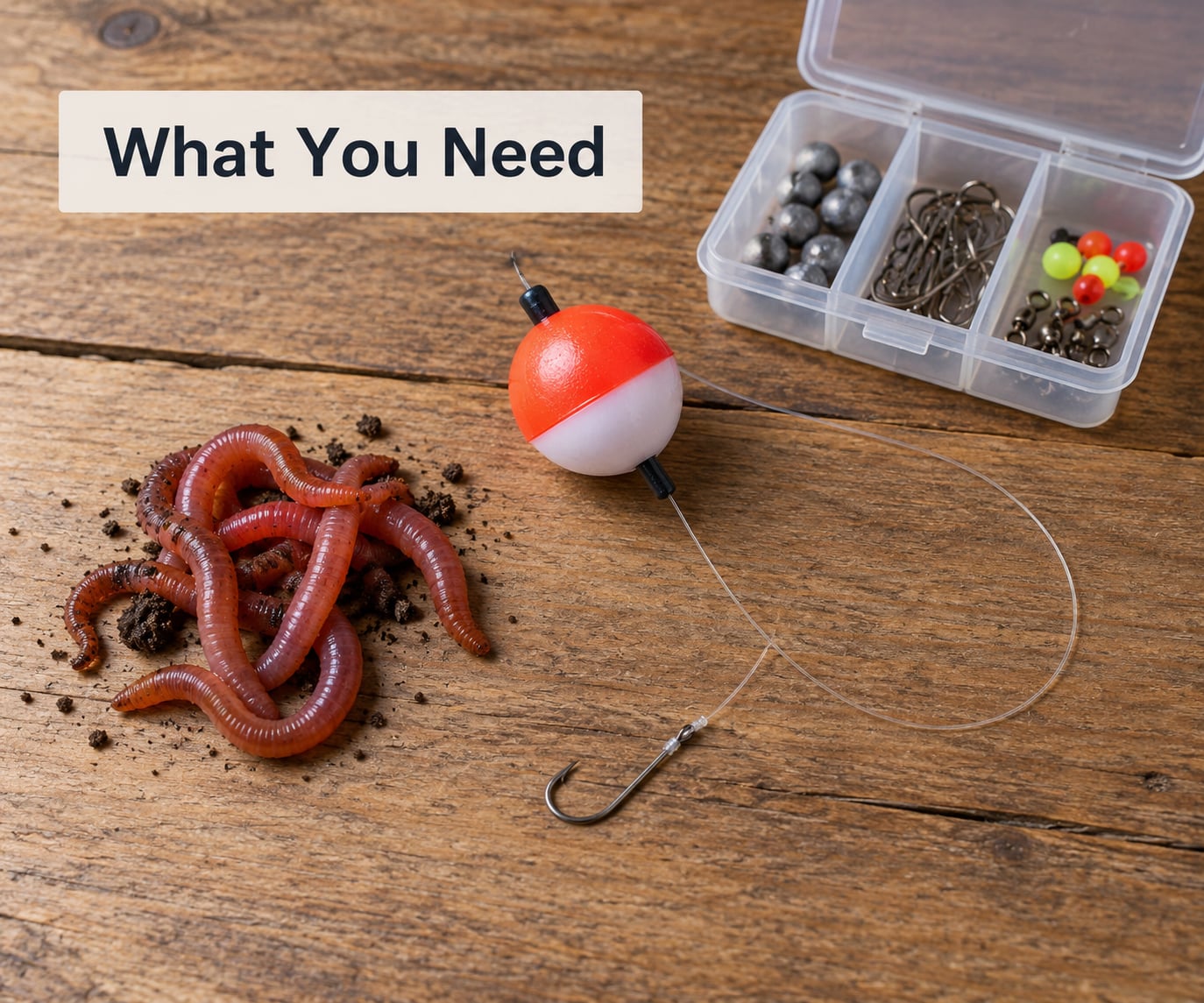
- Rod and reel: A 6 to 7 foot ultralight or light-action spinning rod. The light rod is not a detail. It transmits the soft take-a-bite-and-drift signal that tells you when to set the hook, which a heavy rod smothers completely.
- Line: 4 to 8 pound fluorocarbon or clear monofilament. Clear line matters more in stained water than most anglers expect.
- Hooks: Size 3/0 to 5/0 long-shank or Aberdeen hooks for bluegill and crappie. Aberdeen hooks ride up in the mouth of a sunfish that is hitting sideways rather than head-on.
- Bobber: A round slip bobber in plain red and white. Slip bobbers let you set depth in seconds instead of retying a fixed cork every cast.
- Split shot: A few 1/8 ounce split shots in your pocket. They pin the worm in place when the current is heavy or the water is deep and clear.
- Bait container: A small sealed tub or a worm box with damp soil and a lid.
- Worms: Red wigglers, nightcrawlers or garden earthworms. Details in the next section.
- Hand planer or scissors: For cutting nightcrawlers into chunks. Optional, but it changes your results on bigger panfish.
| Target | Hook | Line | Bobber above hook | Rig |
|---|---|---|---|---|
| Bluegill, redear, pumpkinseed | Size 3/0 to 4/0 long shank | 4 to 6 lb clear mono | 2 to 3 ft | Corked, split shot optional |
| Crappie | Size 4/0 to 5/0 Aberdeen | 6 to 8 lb clear mono | 3 to 5 ft | Double dropper or drop shot |
| Yellow perch | Size 2/0 to 3/0 long shank | 4 to 6 lb clear mono | 1.5 to 3 ft | Corked or free lined |
| Clear, deep water | Same as above | Fluorocarbon, 4 to 8 lb | As above | Add split shot above the worm |
How to Fish With Live Worms for Panfish: Step-by-Step
1. Choose fresh, active worms
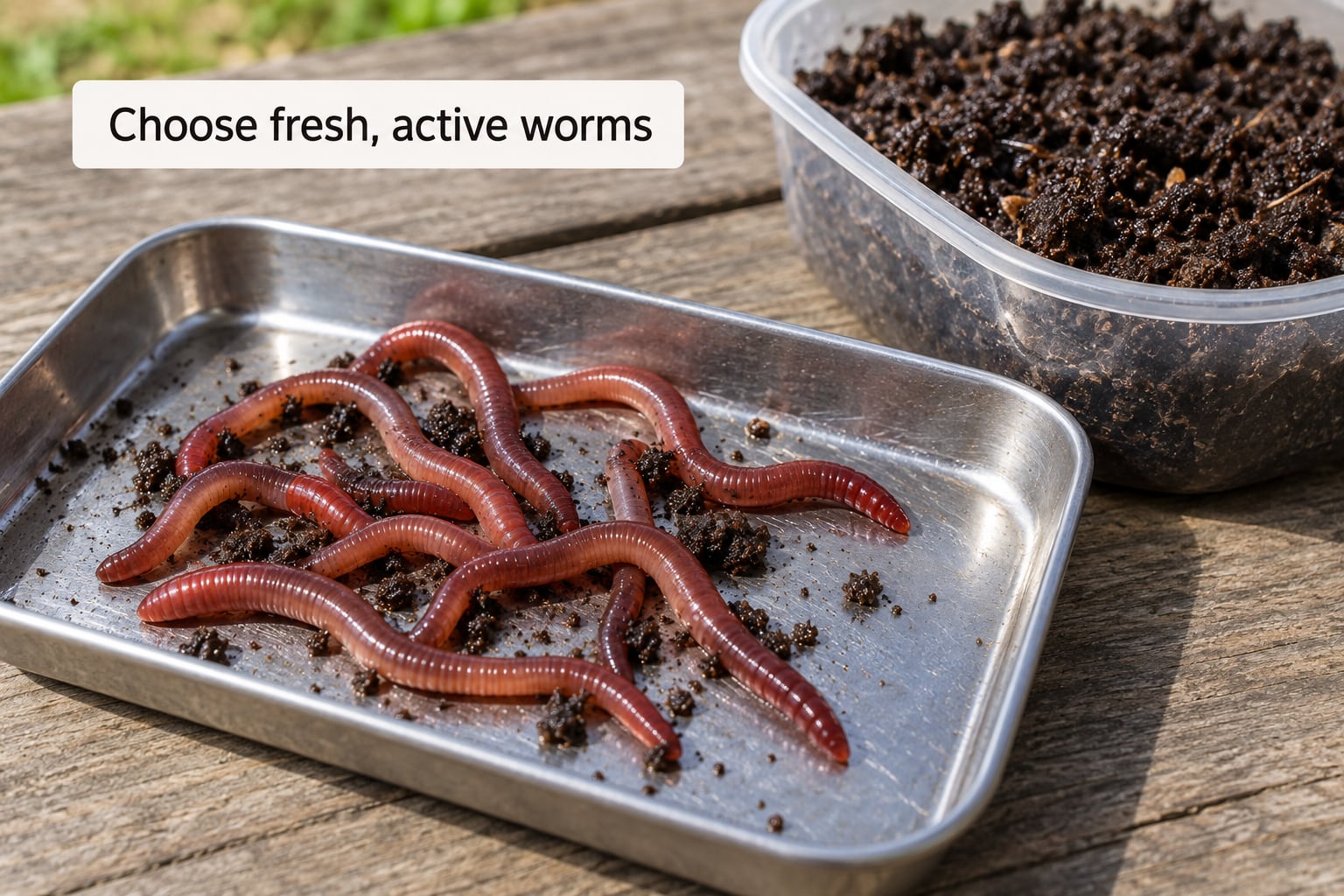
Pick worms that move when you touch them. Healthy red wigglers squirm away from the light and curl up tight when disturbed, and a nightcrawler should feel heavy and firm rather than limp and hollow.
Buy red wigglers in cups of bedding soil, since they store well that way for days. Nightcrawlers sold in cups of soil will keep for a week or more if you keep them cold and dark. Store either one in a sealed tub in the shade, or in a cooler with an inch of ice. Chilling firms the worm up, which makes threading easier, and it also slows the worms down when you are ready to fish.
Skip the bag of worms that have been sitting in a hot truck all afternoon. Once worms are dried out and overheated, they stop moving on the hook, and a dead worm on a hook is simply a piece of rubber. If they are crawling in the cup at home, they will still be wiggling when you get to the water.
2. Match the hook and line to panfish
Use a size 3/0 to 5/0 long-shank or Aberdeen hook with 4 to 8 pound clear line, and keep the rod light. Anything heavier than a size 3/0 gives a bluegill room to feel the bait without committing to it.
Tie the line to the hook with a clinch knot, pull it snug, and trim the tag end close. A loose tag sticking out of the bait is a fish’s shortcut. If you are fishing deep water or water with any current in it, add a split shot one to two inches above the worm to keep the bait from drifting up to the surface.
Set the bobber before you bait the hook. A slip bobber goes on the line, you pull it down to the depth you want, then pinch the wire and slide it up to the knot. Aim for a slack line between the bobber and the worm, because a dead-straight line is a dead bite.
3. Thread the worm on so panfish cannot steal the hook
Thread the worm onto the shank two to three times near the bend, leaving a piece of worm dangling past the eye, and push the point through the body near the tail end. That dangling piece is what a fish grabs first and the reason the hook comes out with it attached.
Most bait theft happens because the worm is threaded loosely and hangs like a loose ribbon. Push each pass of the hook through the full thickness of the worm and skip the skin on the first pass. The worm should sit tight against the shank with no loose loop.
Leave roughly one-quarter to one-third of the worm’s body exposed past the point. If there is a long tail flapping off the hook, a bluegill will grab the tail, pull backward, and slide the whole bait off. Cut the tail off for smaller panfish rather than leaving a lure for theft.
For bigger bluegill, redear and crappie, cut the nightcrawler into a chunk instead of using the whole body. A chunk threaded on the same hook leaves less to pull free, and it matches the forage these fish are actually chasing in the spring and summer.
4. Fish the worm near cover panfish actually use
Cast to the edge, not into open water. Bluegill hold tight to dock pilings, riprap, weed edges, fallen timber and mucky bottoms, and crappie sit near brush piles and deep structure. The closer the bait lands to cover, the less work a panfish has to do to decide to eat it.
Depth matters more than distance. Most panfish are feeding within a foot or two of the bottom, and a bobber set to put the bait just above the bottom in three feet of water means your slip bobber sits about three to four feet from your rod tip.
| Species | Best worm | Size | Typical depth | Best water temperature |
|---|---|---|---|---|
| Bluegill | Red wiggler or worm chunk | 1.5 to 3 inch | Bottom to 3 ft off bottom | 55 to 80 F |
| Redear sunfish | Nightcrawler chunk | 1 inch chunk | Bottom, near gravel and shells | 60 to 80 F |
| Pumpkinseed | Small red wiggler | 1 inch or less | Shallow, 1 to 3 ft | 55 to 78 F |
| Yellow perch | Cut nightcrawler | 1 inch chunk | Bottom, often over structure | 45 to 70 F |
| Crappie | Red wiggler or chunk | 1 to 2 inch | 6 to 20 ft, suspended over structure | 55 to 75 F |
Time of day matters less than temperature, but mornings and evenings do concentrate the feeding. In the heat of midsummer, panfish often quit during the middle of the day and pick up again near sundown.
5. Set the hook when the bobber moves, not before
Wait for the bobber to go all the way under, or for the line to pull steadily away, then snap the rod back with a short controlled motion. Setting the hook at the first twitch is the single biggest reason beginners catch nothing while watching other people fill a bucket.
A panfish rarely takes the bait and immediately swims away. It will suck the worm in, hover, turn the bait over in its mouth, and often back off a few inches before deciding. That sequence is why the wait for the nod matters. If you strike on the first bump, you set the hook against the outside of a closed mouth and pull the worm free.
The hardest habit to break is pulling the bobber out of the water by reflex. Let it dip, let it go under, and only then move. In my own experience one clean hookset after a full nod lands about as many fish as five premature ones, and it keeps the bait on the hook for the next cast.
Common Mistakes
Almost every frustrating afternoon on the water traces back to one of a short list of fixable errors.
| Mistake | Why it fails | The fix |
|---|---|---|
| Hook too large | A size 1 or larger hook gives a small bluegill room to feel the bait and reject it | Drop to a size 3/0 long shank or Aberdeen |
| Too much worm | A bluegill grabs the loose tail, pulls backward, and the hook slides out clean | Use one worm, thread it tight, or cut a one inch chunk |
| Striking at the first twitch | The fish has not closed its mouth or turned the bait yet | Wait for the bobber to submerge or the line to pull away |
| Bobber set too shallow | The bait drifts over open water where no fish is feeding | Slide the slip bobber down so the worm sits just off the bottom |
| Bobber set too deep | The line is tight and the fish feels the drag before it ever picks up the worm | Shorten the depth by a foot and leave a belly of slack |
| Fishing fast water | A current of any strength carries the worm out of the strike zone | Add a split shot above the hook and fish cross-current or perpendicular to it |
| Casting into open water | Panfish relate to cover and will not cross open water for one small bait | Work the edge of the weed bed, the pilings and the riprap |
| Crowded spot with only small fish | Small panfish shred the worm in a couple of seconds before anything bigger commits | Move to clearer water or deeper structure rather than fighting the crowd |
| Worms left in the sun | Hot, dry worms stop moving on the hook and the bite dies | Keep them in a shaded bucket or on ice in the cooler |
Tips
Watch how the bait hangs before you cast. If the worm is bunched up against the shank or twisted around the bend, rethread it. A straight, lightly dangling worm moves with a slow natural undulation that a tight bunched worm cannot match.
Change depth before you change bait. Move the bobber up a foot, then down a foot, and give each position a few minutes. Panfish rarely shut off at every depth at once, so sliding the depth usually restarts the bite when the worm itself still looks perfect.
Read the water temperature rather than the calendar. Bluegill and redear are active in the mid-70s, perch bite well in the 50s, and crappie slow down sharply once the water pushes past about 75 F. When the bite stops in the summer heat, moving to cooler, deeper water beats changing bait.
Night fishing works well for panfish, since they feed heavily after dark. Fish shallower and slower, work around lighted docks and riprap, and keep a headlamp or a light on your hands so the hookset stays clean. A small bell on the rod tip helps you spot the bobber without staring at it.
Handle the fish fast and keep it in water. Wet your hands before you touch a panfish so the slime coat stays intact, and release it as soon as you have decided whether it is a keeper. The catch-and-release etiquette of thumb, time in the water, and back in the water still applies no matter how small the fish is.
Frequently Asked Questions
How do I hook a live worm so bluegill don’t steal it?
Thread the worm onto the shank two or three times near the bend, pushing through the full body of the worm each pass and skipping the skin on the first one. Leave only about a quarter to a third of the worm past the point and trim the long tail off. For bigger bluegill and redear, use a one inch nightcrawler chunk instead of a whole worm, since there is far less to pull off the hook.
What size hook and worm should I use for panfish?
A size 3/0 to 5/0 long-shank or Aberdeen hook with 4 to 8 pound clear line covers bluegill, redear, pumpkinseed, yellow perch and crappie. For bluegill and pumpkinseed use a red wiggler of about one inch. For perch and crappie use a one inch nightcrawler chunk. Bigger panfish in clear water usually need the chunk presentation, because a whole worm gives them too much to steal.
Should I use a bobber when fishing with worms?
Yes, for most situations, and it is the simplest way to control depth. A slip bobber set two to three feet above the hook keeps the worm within reach of panfish and lets you see the take clearly. Fish without one when you are casting to shore, working the surface, or drifting with the current in water shallow enough to see the bottom, where a bobber is only in the way of the bait.
How deep should I set the bobber for panfish?
Set the depth so the worm sits just off the bottom, one to two feet above it for bluegill, redear and perch. In three feet of water that usually means a bobber three to four feet from the rod tip, adjusted for the current. Crappie are the exception, holding higher in the water column, so move the bobber up to three to five feet above the hook when you are working brush or timber in six feet or more.
Is it possible to catch crappie on live worms, and when do they bite best?
It is possible, and a red wiggler on a size 4/0 to 5/0 Aberdeen hook will catch crappie, though minnows and small jigs produce more of them. Crappie bite hardest when the water runs roughly 55 to 75 F, which in most northern lakes means spring into early summer and a second push in the fall. They suspend over structure, so fish the bait a few feet above the brush rather than on the bottom.
What do I do when panfish stop biting?
Change one variable at a time before you pack up. Slide the bobber up or down a foot and wait a few minutes, then move to a different type of cover, since panfish shift between depth and structure as the day warms. If the water is hot, fish earlier or later. Finally, rehook with fresh bait, because the worm often looks fine to you while sitting motionless on the hook.
Conclusion
If you remember one thing from this guide, start with the simplest version of it: pick a worm that is actively moving, thread it tight on a size 3/0 long-shank hook with about a third of the body past the point, drop it near a dock piling or a weed edge just off the bottom, and wait for the bobber to go under before you set anything. Cast that close to cover and wait a little longer than feels comfortable, and the fish will come. Everything else, rigs and split shots and depths, is a refinement you can add once the basic method is filling your bucket.
Worm fishing for panfish is the most forgiving method in freshwater, and the habits above are what separate an afternoon of frustration from an afternoon of fish.