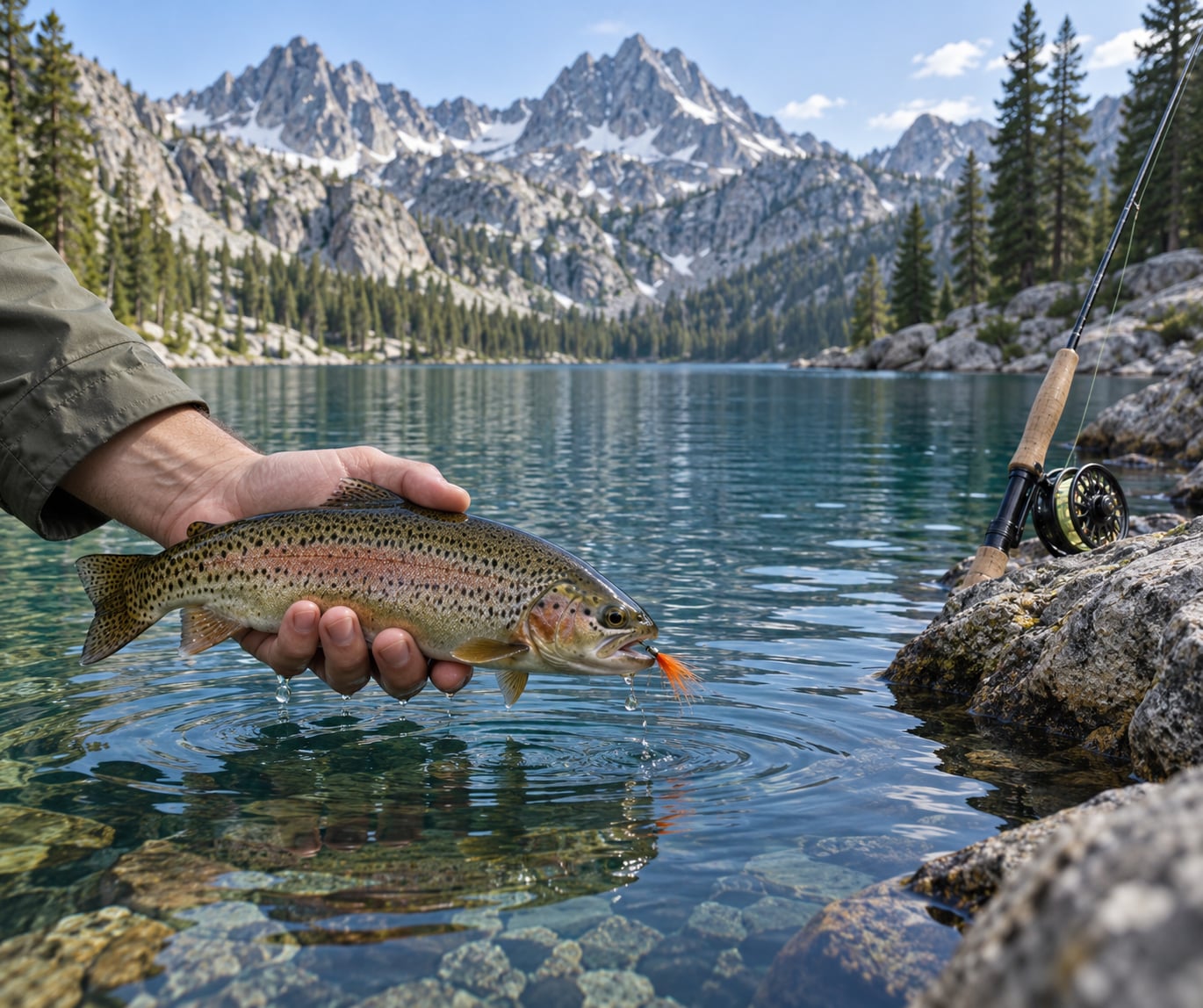
To catch trout in a mountain lake, find the cold, oxygen-rich water first, then match your bait to the depth where trout are holding. Small spoons, spinners and worms work for most beginners, and a light spinning rod lets you feel the soft take that high-elevation trout give. A first trip takes about an hour of walking in, a couple of hours on the water, and a lot more patience than gear.
Mountains add three things a lowland lake does not: cold water that keeps trout in tight temperature bands, clear water that punishes an unnatural retrieve, and weather that can turn in twenty minutes. Learn to read those three things and the fish become a lot easier to find.
Table of Contents
What You Need
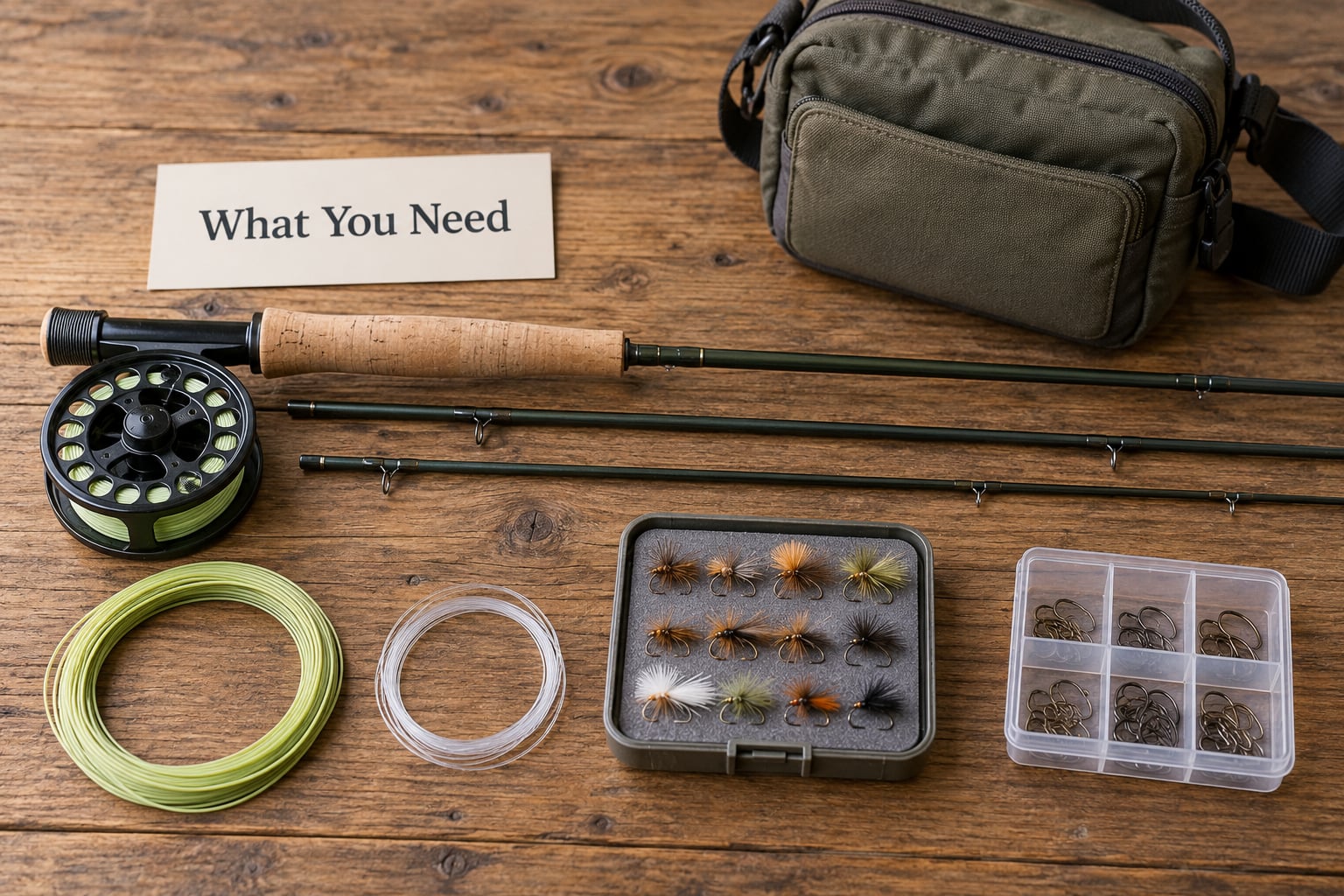
For most people, a light or ultralight spinning rod in the five to seven foot range with a small reel is the single most useful tool at a mountain lake. It is light enough to carry on a hike, sensitive enough to detect a take most people miss, and strong enough for a two-pound rainbow. A 4 to 6 weight fly rod is the better tool if you already own one, but carrying a fly line into a wading can be its own argument.
What the rest of the kit looks like depends on how you get there.
- Rod and reel: light-action spinning outfit, or a 4 to 6 weight fly rod with a reel if you plan to fish flies.
- Line: 4 to 8 lb monofilament for spinning. Fluorocarbon or tough trilene on the terminal end if you are fishing rock and structure.
- Terminal tackle: barrel swivel, split-shot sinker, size 8 to 10 hooks, and a bobber for bait fishing. Small treble hooks on spoon and spinner lures.
- Baits and lures: garden worms or nightcrawlers, a small spoon, a spinner with a 4 to 6 lb blade, a few soft plastics, and a couple of marabou or bucktail streamers for fly fishing.
- Clothing: layers, a waterproof shell, and either insulated waders or warm waterproof boots with neoprene or wool socks. Mountain air drops fast after the sun goes behind the ridge.
- Tools: polarized sunglasses so you can watch a shadow follow your lure, a headlamp for the walk out, a pack that keeps gear above the waterline, and a topo map downloaded offline with the trailhead coordinates saved.
- Safety kit: first aid kit, whistle, extra food and water, a satellite messenger or a paper map with a plan, and a headlamp with spare batteries. Tell somebody your route and your return time.
Two rules save weight on a hike-in. If you will not use it, leave it, and a four-piece travel rod in a hard case beats a two-piece rod you have to lash to the side of a pack. Also check the license and gear rules for the lake before you leave the trailhead. Some high-elevation waters restrict bait, some restrict lead sinkers, and some close entirely for part of the year.
How to Catch Trout in a Mountain Lake, Step by Step
Here is the sequence that works, in order: check the rules, read the water, find the structure, pick the method for the depth, present the bait quietly, set the hook, and release the fish. Most beginners fail at step three, casting at random water instead of at structure where trout are already holding.
Check the Lake, Weather, and Fishing Rules
At elevation, water temperature decides where the fish are before depth does. A shallow mountain lake in early summer can sit in the low 50s Fahrenheit and warm slowly, so trout hug the cold inflows and shaded banks rather than spreading across the basin. Confirm the species present, then check the license, the bag or slot limit, the season dates, and whether bait is allowed before you unpack anything.
Check the weather twice. The morning forecast tells you what the fish will do, and the afternoon forecast tells you whether you can walk out safely. Afternoon thunderstorms build fast over ridgelines, and a small alpine lake is exactly the kind of open water to stay out of when that happens.
Choose a Productive Area and Depth

Trout are looking for cold, oxygen-rich water and something to eat, so you fish the seams between the two. Start at a cold inflow, seep or shaded bank in the shallows, then work out to the first drop-off, the rock ledge that runs out from shore, the weed edge, and any submerged timber. Depth changes matter more than open water because trout patrol the edge of a drop-off all season.
As a rough guide, cast to the first 3 to 6 feet in the spring and in the fall, work 10 to 20 feet along the edge of a ledge through the summer, and go deeper than 30 feet or drop to 40 feet of water when the surface is flat and hot. In a high mountain lake, the summer thermocline often caps the productive zone, because trout sit just under it where the water is still cold.
A useful shortcut is the 80/20 rule anglers mention: spend about 80 percent of your effort on the places most likely to hold fish, and the rest experimenting. On a lake you have never fished, that means one deep contour, one ledge, and one inflow, worked thoroughly, beats an entire afternoon scattered around the basin.
Select Bait or Lures That Match the Conditions
Match the lure to the depth and the clarity. In clear, cold water, small and slow beats big and fast every time.
- Worm on the bottom: the best beginner method for shallow, slow fish feeding near a shelf. Use a split-shot rig with the sinker 12 to 18 inches above the hook and let the bobber sit slack, because trout that cannot pull the bobber under still take bait.
- Worm under a bobber: more forgiving, works in slightly deeper water, and the bobber tells you when something moves even if you do not feel it.
- Small spoon: the best choice for trout holding 10 to 25 feet deep along a drop-off. Let it sink, then reel with pauses.
- Spinner: works on hatchery rainbows in open water and in wind. A 4 to 6 lb blade is plenty; bigger blades wash out in clear water.
- Soft plastic on a jighead: a slow, twitching retrieve along the bottom for fish that ignore a bobber rig.
- Small streamer or dry fly: best at dawn, dusk and during a hatch, especially on wild native trout in unpressured water.
Brook trout deserve their own note because they behave differently. They are more likely to sit in cold, shaded, low-oxygen pockets and strike fast, so fish them shallow near structure with a small spoon or a bright spinner, and expect a hard take rather than a soft one.
On the question that comes up constantly, a fly can be fished on a conventional rod and reel. Tie a small bead-head streamer to a 12 to 18 inch leader with a barrel swivel, drop the fly just under the surface, and twitch it with a quick rod-tip lift every couple of seconds. It is less delicate than a fly line, so the fish rarely sees you, and it saves carrying a whole fly setup.
Present the Bait or Lure Naturally
Mountain water is clear and cold, so presentation does more work here than anywhere else. Cast short, aim at the edge of structure rather than the center of it, and let the lure fall the extra foot or two before you start retrieving.
Keep the retrieve slow and broken. A few inches of reel, then a pause, then a few more inches. On a soft plastic, twitch and stop. On a fly, flick the tip every two to three seconds. If you see a shadow follow the lure and then vanish, you are moving it too fast or the lure is too large.
If you are fishing a bobber rig, the drift does the work. Cast slightly upstream, let the bait move with the current, and reel only when the bobber is pulled under or the line goes slack.
Set the Hook and Keep the Line Tight
Trout takes are soft, and this is where beginners lose fish. Watch the bobber, watch the line, and treat any change in tension as a take. A snap swivel instead of a quiet bell gives you a second signal.
When you feel the take, sweep the rod to the side and set the hook. Do not lift straight up, and do not wait for a second bump. With a bobber rig, wait until the bobber actually goes under before setting, or you will pull the bait away from a trout that has not committed yet.
Once hooked, keep the line tight without dragging it through structure. Reel with the rod tip high, lift as the fish comes near, and if it heads for a rock, give line rather than forcing it. Broken line on a mountain lake is almost always a slack line or a leader cut on rock.
Handle and Release the Trout Responsibly
Trout at altitude are often thin, and a hooked fish carried around in a warm hand is a dead fish. Wetting your hands in the lake before touching the fish keeps the protective slime intact, and keeping it in the water while you remove the hook is the best release you can do.
Limit air exposure. Unhook in the water, hold the fish horizontally by the tail and the bottom of the jaw, and if the current is gentle you can simply let it swim away. In very cold water, a fish that is deeply hooked may not recover, so use barbless or treble hooks with flattened barbs where the rules allow, and force yourself to release fish you cannot unhook quickly.
Do not handle fish you plan to keep with dry hands or a dry towel either, and revive a fish in the water with a slow, gentle rocking motion before you let it go.
Common Mistakes
Fishing in bad weather. Fishing through a building afternoon storm over an exposed lake is how people get hurt. Fish early, and leave the water when the sky changes.
Ignoring the rules. A license and a bag limit take ten minutes to check online. Species you cannot identify, bait you cannot use and fish over the limit are all avoidable with one visit to your state fisheries website.
Casting into open water. Open water is where trout are not. Cast at the seam, the drop-off, the inflow and the shadow line instead.
Using tackle that is too heavy. A heavy rod and thick line hide the take, pull hooks out of light mouths and make a bad fight. Drop to a lighter rod and 4 to 8 lb line and bite the hook more often.
Retrieving too quickly. Cold, clear water is where speed kills bites. Slow it down, add a pause, and try again on a different cast.
Setting the hook too late. By the time you feel a trout, it is often turning away. Set on the first change in tension, and for a bobber rig, set when the bobber goes under.
Dragging line through rocks. Shorten the leader, tighten your knots, and keep the rod tip high so the line runs over the bottom rather than through it.
Leaving the fish out of the water. A fish in a full net sitting in the sun has minutes left. Unhook it in the lake and let it go.
Tips for Success
Change the time, not just the spot. Dawn light finds trout in shallow water, midday pushes them to the drop-off, and a windy afternoon concentrates them in wind-blown bays where the surface is disturbed and the water is oxygenated. Overcast and cold conditions are frequently better than bright sun.
Watch before you cast. Polarized glasses let you see a fish hold just off a ledge, which tells you more in ten minutes than an hour of blind casting. Moving between two or three good spots beats working one spot for an hour, especially when nothing is happening.
Log the conditions. Note the date, the lake, the water temperature if you can read it, the weather, the depth that produced fish and the lure. The second trip to a mountain lake should be twice as productive as the first, and the notes are why.
Keep off the shoreline you are not fishing. Alpine lakes are small and pressure builds fast, and staying on the established path keeps fragile banks and spawning areas intact for the next angler.
Frequently Asked Questions
What is the best bait for trout in a mountain lake?
For most beginners, a garden worm or nightcrawler on a split-shot rig with a bobber is the most reliable choice, especially in shallow water near a cold inflow or a drop-off. Small spoons and spinners with a 4 to 6 lb blade work better for trout holding 10 to 25 feet deep in clear water. Check local rules first, because some mountain lakes restrict bait or ban lead sinkers.
When is the best time to fish a mountain lake for trout?
Early morning and the last two hours of daylight are the most reliable, and a windy or overcast afternoon often beats bright midday sun. Season matters more than time of day: trout work shallow ledges and inflows in spring and fall, and hold near the thermocline in deep water through midsummer. Check whether the lake is closed for part of the season before you plan the trip.
Do trout bite better in cold water?
Trout bite well in cold water, but they concentrate instead of spreading out. In a mountain lake that means fewer fish holding in a much smaller area, often within a narrow temperature band near cold inflows, seeps and shaded banks. The fishing is often better than in warm water; finding the band is the hard part. A small slow lure presented quietly does most of the work.
Should I use live bait or artificial lures?
Both work, and the choice is usually a rules question rather than a preference one. Live bait such as worms is simple and forgiving, but many high-elevation lakes restrict or prohibit it. Artificial lures are legal almost everywhere and let you match depth and cover precisely. If the lake allows bait, carry a small box of worms as a backup for slow days and keep lures as your primary plan.
How do I catch trout when they are not biting?
Change one variable at a time: move to different structure, change depth, slow the retrieve right down, or switch from a bobber rig to a spoon fished on the drop-off. A change in weather or time of day works better than working the same water. Cast where you see a shadow or a rise, and give the spot ten minutes of slow presentation before you abandon it.
How should I release a trout caught in a mountain lake?
Wet your hands in the lake before touching the fish, unhook it in the water, and keep air exposure to a minimum. Hold it horizontally and let it kick away in the current rather than lifting it into the air. Use barbless or flattened-barb hooks where the rules allow, because trout at altitude are often thin and recover slowly. Do not keep fish in a full net in the sun.
Start at the cold inflow, cast the edge of the nearest drop-off, and give it ten slow retrieves before you move. The anglers who do well at mountain lakes are the ones who read the water first and fish a small area properly, not the ones carrying the most tackle.