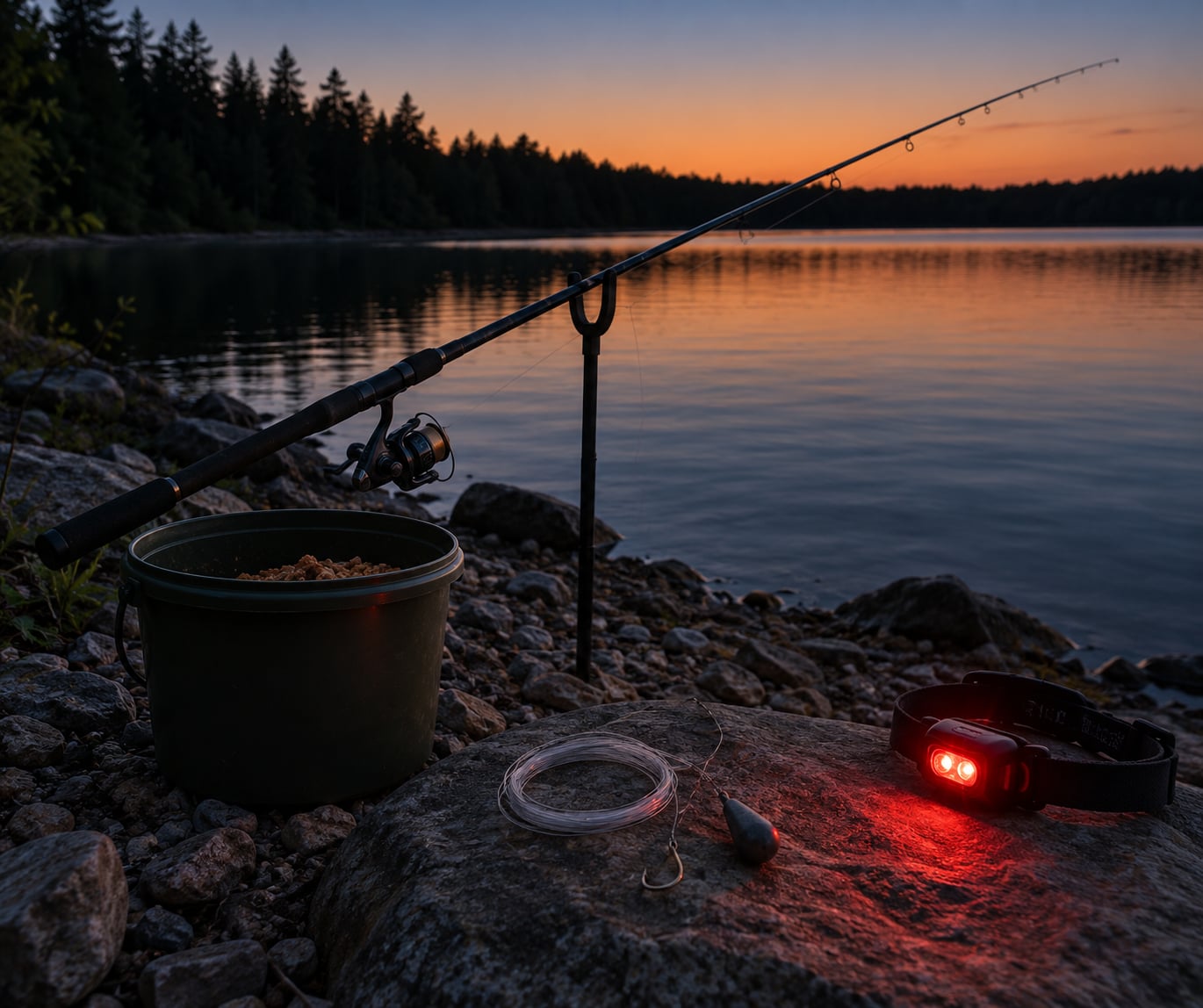
To catch catfish in a lake at night, you do three things well: pick a spot where deep water meets a depth change, use a strong-smelling bait like chicken liver or cut shad, and set a rod in a holder with a clicker so you notice a bite without watching the line. Most of the work happens before dark, in the scouting.
Catfish are not creatures of the night. They feed around the clock, and plenty of anglers catch them in broad daylight. What changes after sunset is the competition: fewer boats, fewer hooks in the water and fewer birds picking food off the surface, so a piece of bait that would be shredded at 2 p.m. sometimes survives until a cat finds it at 2 a.m.
The rest of this guide walks through the gear, the lake spots that produce at night, the baits, the rigs and the safety habits that keep a solo trip trouble-free. Budget about 30 minutes to rig up after you arrive, and expect the first fish to show anywhere from sunset to midnight.
One more thing worth clearing up early. Catfish are not attracted to your light. They find food with barbels and scent organs, not eyesight, which means a headlamp is a safety tool and nothing else. Anglers on the catfish edge debate whether night is even worth it, and honestly, on a pressured weekend lake, sometimes it is not. On a quiet one, it usually is.
Table of Contents
- What You Need
- Step-by-Step: How to Catch Catfish in a Lake at Night
- How to catch catfish in a lake at night: Choose the right location
- How to catch catfish in a lake at night: Match your bait to the water
- How to catch catfish in a lake at night: Set the hook and rig correctly
- How to catch catfish in a lake at night: Set up safely and wait for the bite
- How to catch catfish in a lake at night: Land and release the fish
- Common Mistakes
- Frequently Asked Questions
- Start With the Right Spot and Reliable Bait
What You Need
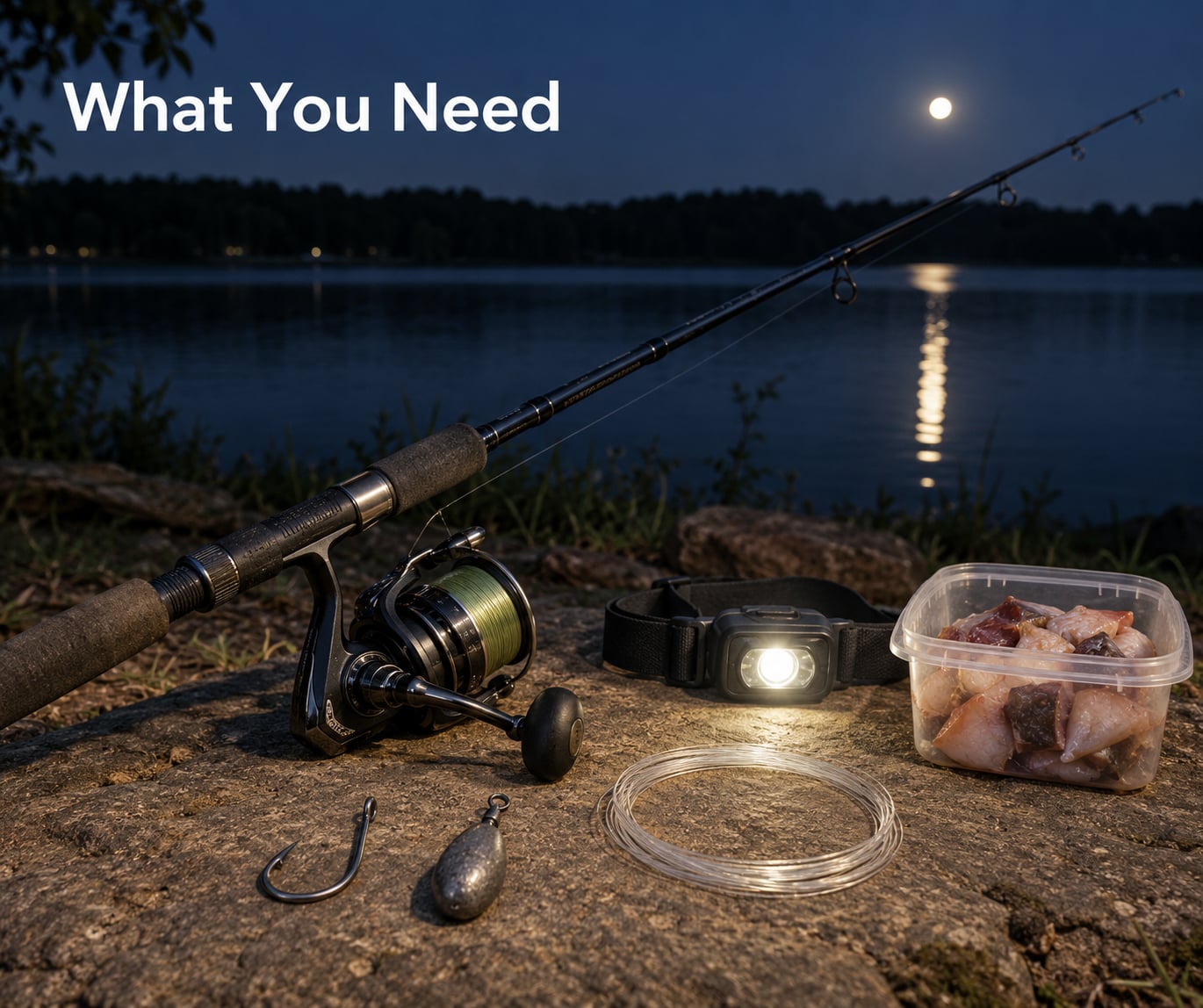
Bank and boat anglers need almost the same core kit. The difference is how many rods you can run and whether you have a deck to lean a light on.
Rod and reel. A 7-foot medium-heavy rod pairs well with a baitcaster that has a clicker, or with a bait runner or level-wind reel if you want a level of indirection between you and a heavy fish. Do not go ultralight after dark. You cannot see a line part, and thin line on a rod with no backbone is how rods end up in the water.
Line and leader. Braid in the 30 to 50 pound range gives you a good night bite sensor because it transmits taps you would miss in the dark. Pair it with a 2 to 3 foot leader of 20 to 30 pound mono or fluoro, which takes the abrasion from rocks, shell and wood that will chew through braid.
Hooks and weight. Size 1 through 2/0 circle hooks cover most night work; go to 3/0 or 4/0 if you are after flatheads or fishing heavy structure. Bring an assortment of slip sinkers or egg weights from 1 to 3 ounces, plus barrel swivels. Match the weight to the current and how hard the bottom is pulling.
Rods that hold themselves. At least two rod holders, and I mean the kind you can drive into dirt or clamp to a boat rail. A bank stick holder pushed into soft mud at the shoreline is fine, as long as you get it deep enough that a walking catfish does not take the whole setup with it.
Bite detection. A reel with a clicker, a clip-on strike alarm, or both. This is the single most important night item. A tap you cannot see is a tap you will sleep through, and most missed fish are missed bites rather than missed hooksets.
Light and safety. A headlamp with a red mode, a second flashlight or a lantern for the boat, pliers on a lanyard so your hands stay free, insect repellent, a stringer, a first-aid kit, a charged phone, water, and a buddy if you can get one. Wear closed-toe shoes with grip. The bank at midnight is a lot of uneven, wet, unfamiliar ground.
Boat extras. If you are on the water, add an area light or spotlight, anchor line, a bail or net, a wet rag, and a dry bag for your phone and keys. Check whether your lake closes ramps or launches at dusk before you plan around a boat trip.
Step-by-Step: How to Catch Catfish in a Lake at Night
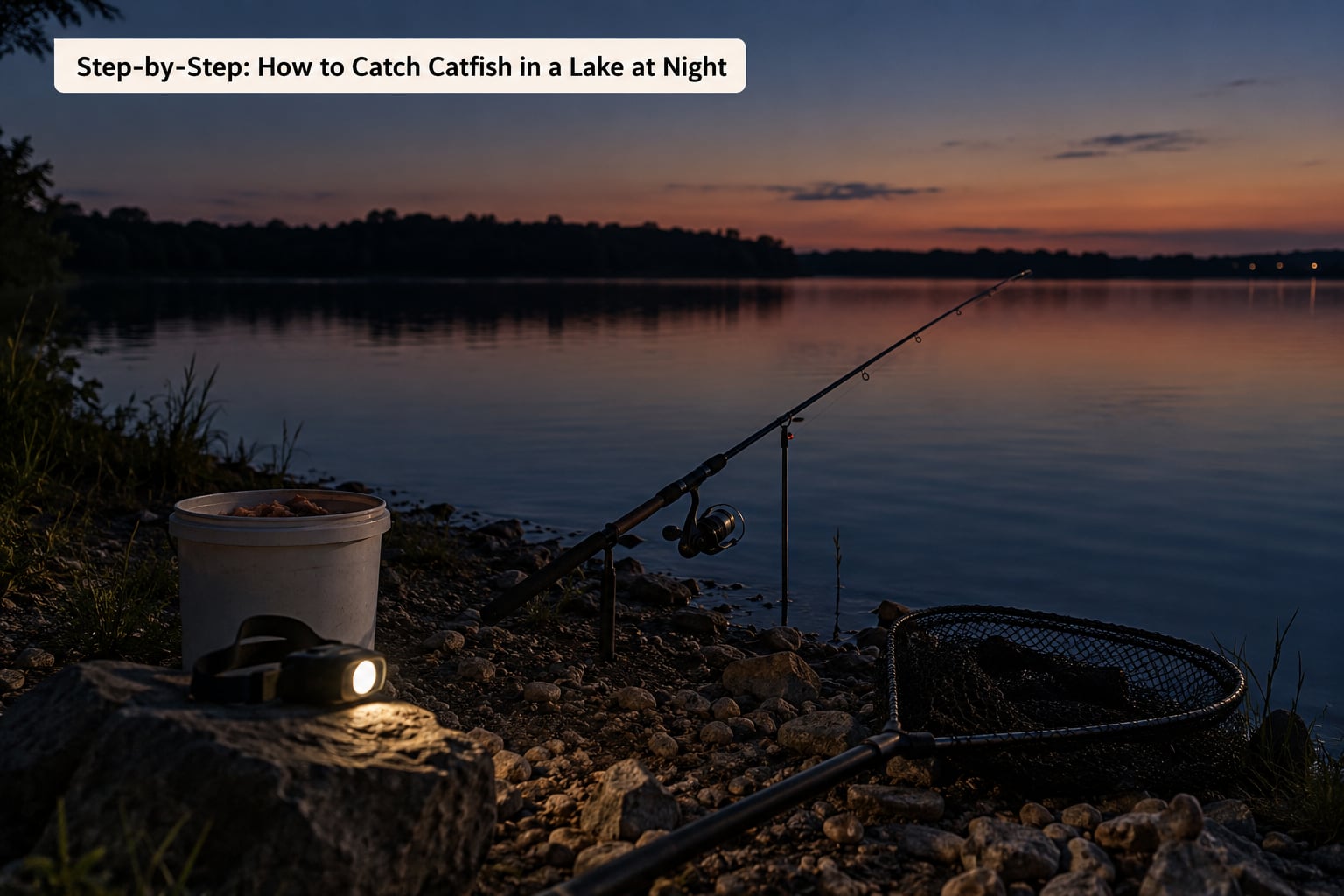
How to catch catfish in a lake at night: Choose the right location
Catfish hold near depth changes, and on a lake that means a handful of specific places. Work down this list and pick the one you can reach without wading into trouble in the dark.
- Channel edges and inside turns of the main channel. A channel running out of a river into a lake is a highway, and the edge where it turns shallow is where a cat waits for food to stop.
- Feeder creek mouths. Small creeks dumping into the lake push current and small forage against the bank. The seam just outside the mouth is usually better than the mouth itself.
- Dam and outlet areas. Flowing water concentrates food and oxygen. Check access rules first, since many are closed after dark.
- Sandbars and points next to a deep hole. Fish sit on the drop beside the bar, not out on top of it.
- Undercut banks, boulder piles and fallen timber near deep water. Cover with an escape route beats open flat.
Scout during daylight if you can. Walk the bank, note where the water turns from shallow to deep, and cast a heavy weight to check the depth and the bottom. On a boat, run the same lane twice so you can find it by feel in the dark.
Two myths to drop before you set up. Cats are not drawn to light, and they are not all sitting in six inches of water after sunset. Most fish stay near the structure that held them all day, with a smaller group moving up to feed before true dark.
How to catch catfish in a lake at night: Match your bait to the water
Chicken liver is the most reliable night bait in most lakes, and cut shad or oily baitfish is the best second option. Everything else is a variation on strong smell and staying on the hook.
- Chicken liver. Smells, and a cured version soaked in garlic salt keeps its shape so panfish cannot shred it. Some anglers wrap the liver in a strip of old pantyhose so it holds together on the hook.
- Cut shad or herring. Fresh cut and oily, which is why blue catfish take it. Cut the bait into a wedge rather than a fillet so it fits the hook and does not fall off.
- Stink bait. Pre-mixed or homemade, fished on a spoon or a treble with a piece of sponge. Strong smell, and it holds on well in current.
- Nightcrawlers and catalpa worms. Workable, especially early in the evening before small bluegill figure you out and strip the hook bare.
- Live bait for flatheads. A live shad, bluegill or crawfish on a larger hook, especially near timber in June and July.
On the smell question specifically: catfish rely on scent, not light. Liver, natural fish oil and fermented bait all work because odor molecules travel through the water and hit the olfactory pits and barbels. Washed bait is nearly worthless at night, so rinse your hands before you touch it and keep it out of the sun.
Timing your bait to the hour works better than changing baits every twenty minutes. Here is the pattern most night anglers report on lakes.
| Window | What is happening | What to do |
|---|---|---|
| Last hour before sunset | Fish often feed off the bottom and along the shallow drop | Get rods in the water before the light goes; this is the most productive hour of the whole night |
| Sunset to 90 minutes after | Good feeding as light fades, fish still visible in open water | Cast to the edge of the channel or the sandbar drop |
| Full dark to midnight | Bites slow for many anglers; the ones that come are committed | Lean back, run a clicker, and let the nightcrawlers or float work |
| 2 to 4 a.m. | The best window on many lakes, especially on a rising or falling barometer | Check the clickers every 20 minutes, then sleep in short blocks if you can |
| Pre-dawn | A second feeding push, often shallow | Have the rod ready; the last hour before light can be the best of the night |
A steady rising or falling barometer in the 30s tends to make catfish feed harder, and a fast storm front will shut them down entirely. A bright moon changes little for fish but ruins your night vision, so use a red headlamp mode when you need to see.
How to catch catfish in a lake at night: Set the hook and rig correctly
The sliding bottom rig is the simplest thing that works. Tie a barrel swivel to the end of your main line. Attach a 1 to 3 ounce egg sinker to one side of the swivel and a 2 to 3 foot leader to the other. Tie a size 1 or 2/0 circle hook to the leader, hook your bait so it covers the whole hook, and cast out and let the sinker slide down to the bottom.
Why the swivel matters: it lets a fish pull line without dragging the sinker toward you and burying the hook in the bottom. Pull the slack out of the line, set the reel in free spool, and close the bail or flip the switch. You want the line to pull off the spool, not the spool to stop and dump the line.
Bait placement depends on where you are. On a hard bottom, let the sinker sit on the bottom. On mud or in current, run the sinker above the bait so a light fish does not tear the bait off. Anglers fishing flat sandbars at night often slip float the bait a foot or so off the bottom, which lets them feel a hit before the weight lands.
Keep the drag loose enough that a running fish takes line before the hook tears free, and point the rod at the fish. A rod pointed at the water at 45 degrees puts a lot of pressure on the tip; a low rod with the line straight to the fish pulls with the blank and the reel instead.
How to catch catfish in a lake at night: Set up safely and wait for the bite
Turn the clicker on before you sit down. Rest your line on your finger or your forearm, and check every rod on a timer rather than whenever you happen to look up. Two alarms is not paranoia, it is a second set of eyes for the rod you are not holding.
The bite is usually a series of light taps, then a hard pull. Wait through the taps. Fish that swallow the bait on the first nibble are already heading somewhere; the ones you want are rolling the bait in their mouth, and the tap-tap-pull is how they tell you they are doing it. Set the hook on the hard pull by sweeping the rod to the side, not straight up.
Do the boring safety work at the start of the night rather than the end. Tell someone where you are and when you expect to be back. Set the area light now, while you can see your hands. Keep the phone charged and in your pocket, not in a boat console that is a two-hour walk from the ramp. Check the bank ahead of you with the light before you move, and look for snakes and wasp nests with the beam before you step over anything.
A few practical numbers for a first trip: 30 to 50 pound braid, 20 to 30 pound leader, size 1 to 2/0 circle hooks, two rod holders, one clicker or alarm per rod, and 1 to 3 ounces of weight. If you are on a boat, plan on at least one hour from the ramp back to the ramp in the dark before you launch, and a second hour at the end.
How to catch catfish in a lake at night: Land and release the fish
Never lift a fish by the line at night. If you are playing a fish you cannot see, bowline the line and guide it to you. Keep the rod low so it is not lifting the fish against its weight, and let the drag do the work.
Use a net or a lip gripper if you can. A catfish in the dark will find your fingers first, and a fish that costs you a set of knuckles is not a good trade. Have the net rigged and in your hand before you set the hook, not after the fish is halfway up.
Remove the hook with pliers while the fish is still in the water or in the net, ideally with the fish partly submerged. If a big flathead is deep-hooked, cut the leader and leave the hook; the hook rusts out or works free far more often than the fish dies from it. Either way, wet your hands before you touch the fish.
Follow the rules for the water you are on. Some states have a creel limit, a size limit, a bait restriction, or a night closure on a specific ramp or park. Check the regulations before you launch, and note the species limit on the lake sheet. If you release, revive the fish in the net in moving water until it kicks off, and treat the spawning season according to your local rules.
Common Mistakes
Almost every bad night catfishing trip is one of these seven things. The fix is usually cheap.
- Ultralight tackle. You cannot see a light line part in the dark, and the fish you are fishing for do not care. Go medium-heavy, 30 pound braid, and a leader.
- Fishing flat water with no depth change. Catfish are lazy about working structure. Move to the edge of a channel, the drop beside a bar, or a creek seam.
- Pinned bait on a soft bottom. The fish lifts the bait and you lose it. Run the sinker above the bait, or slip float it.
- Washed or sun-bleached bait. Liver and cut fish need shade and a cool bucket. Keep a second batch so you are not fishing spoiled bait at midnight.
- No clicker and no alarm. This is the one that costs the most fish. Every rod gets a sound or light cue.
- Casting into unknown water at night. Scout in daylight, or stick to water you already know. Losing a rod to a rock at midnight is a bad way to learn.
- Waiting out the quiet hours. The midnight lull is normal. Check the rods on a timer, then rest. The 2 to 4 a.m. window is where most of the fish come.
If two hours pass with nothing, run through this in order: check that the clicker is actually working, then check the depth by hand-lining the sinker back to the boat, then move 20 to 30 yards along the drop or try the opposite side of the channel. If the rod is coming back and the bait is intact, the problem is location, not presentation. A minority of anglers swear bites stop entirely once it is fully dark, and they plan their best hours for the evening and pre-dawn instead of the middle of the night.
Frequently Asked Questions
What is the best bait for catfish at night?
Chicken liver is the most dependable all-around night bait in most lakes, especially cured so it holds its shape on the hook. Cut shad or herring is the best alternative because it is oily and works well for blue catfish. Stink bait on a spoon covers stinky meat lovers, and live shad or bluegill earn their place when you are after flatheads near timber. Put out two different baits and see which one the fish commit to.
Where do catfish like to hang out in a lake?
Catfish hold near depth changes and cover, not in open water. The best lake spots are the edges of the main channel, the seams just outside feeder creek mouths, dam and outlet areas, the deep drop beside a sandbar or point, and undercut banks, boulder piles and timber near deep water. You want structure with an escape route into deeper water within a few feet.
What time of night do catfish bite the most?
For most lake anglers the best bites come in the last hour before sunset, again around 2 to 4 a.m., and during the pre-dawn push. The stretch from full dark to midnight is often the slowest, with committed fish that will bite. A steady 30s barometer reading makes the middle-of-the-night window better, and a fast-moving storm front shuts fishing down.
What smell attracts catfish the most?
Catfish find food with scent, not sight, so the strongest smells work best. Chicken liver, fermented stink bait, and oily cut fish like shad or herring all carry odor that travels through the water. Keep bait out of direct sun, rinse your hands before handling it, and never use washed or bleached bait, because once the smell is gone there is nothing left for a barbel to find.
Do catfish become more active at night?
Not really. Channel, blue and flathead catfish all feed at all hours, and many are caught in daylight. What changes after dark is competition, since fewer boats, hooks and birds are working the same water, so a scented bait lasts longer. That quiet window is why night fishing pays off, and why a pressured weekend lake can be better fished during the day.
Start With the Right Spot and Reliable Bait
Pick the edge of the channel, the drop beside a sandbar, or a feeder creek seam you scouted in daylight, and get your rods in the water before the light goes. Bait it with a cured chicken liver and a piece of cut shad, rig it sliding bottom with a 1 to 3 ounce sinker and a 2 foot leader, and put the rod in a holder with the clicker running.
Then watch the line. Check the rods on a timer, wait through the taps, and set the hook on the hard pull.