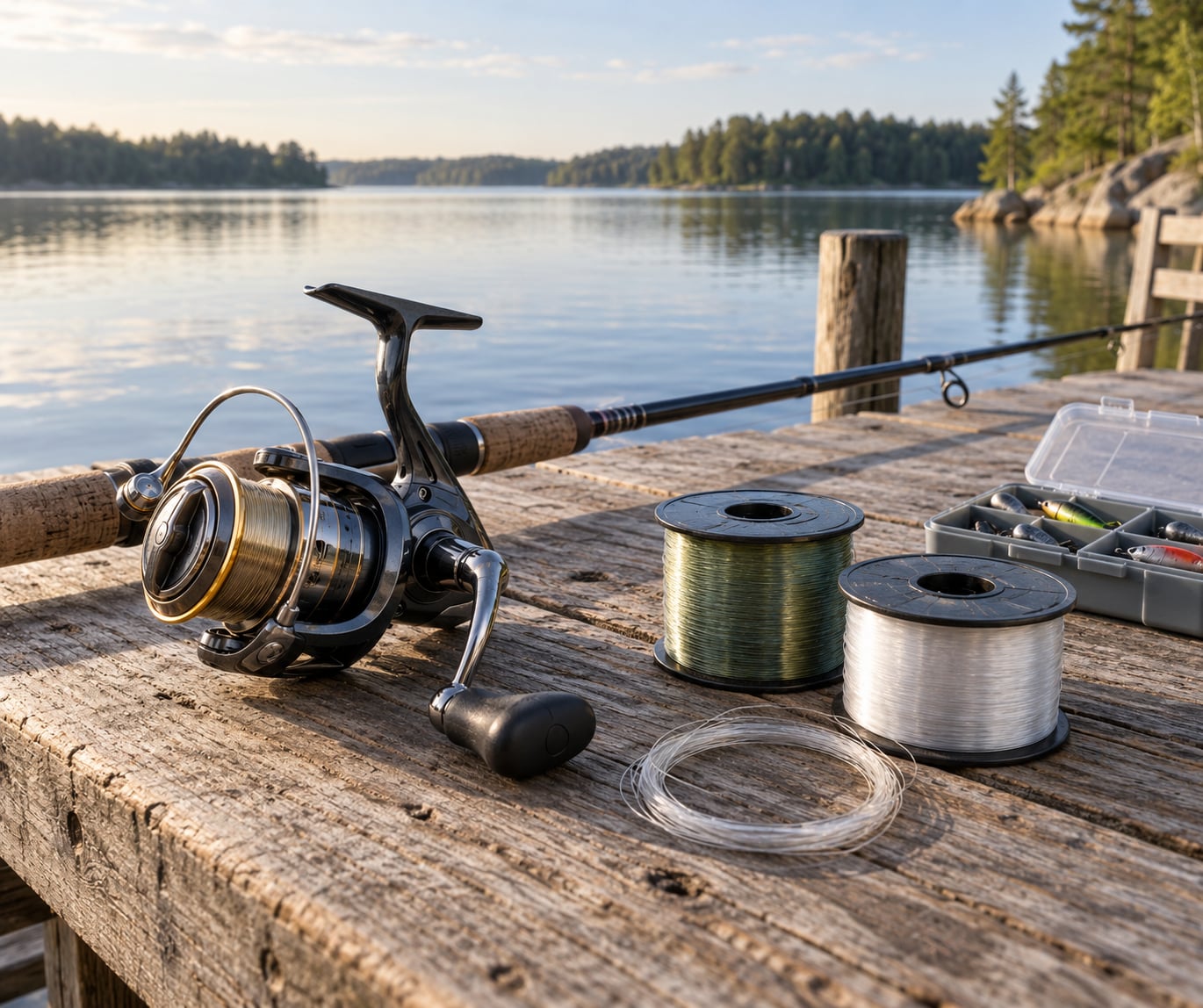
Choosing fishing line for lake fishing comes down to four things: material, strength, visibility, and whether your reel can handle it. For most beginners a single spool of 8lb to 10lb monofilament covers the widest range of lake situations, and you can move to braid or fluorocarbon once you know the water you fish. The whole decision takes about ten minutes if you work through it in the right order, which is what this guide sets out.
If you have picked a lake and know roughly what you are chasing, you are already halfway there. If you have not, start with the questions in the next section before you open a spool.
Table of Contents
- What You Need
- Step-by-Step: How to Choose Fishing Line for Lake Fishing
- Common Mistakes
- Frequently Asked Questions
- What type of fishing line is easiest for beginners fishing in a lake?
- Should I use clear or colored fishing line in a lake?
- How do I know what fishing line strength I need?
- Can I use braided line with a spinning reel?
- How often should I replace fishing line?
- What knot should I use when joining braided or fluorocarbon line?
- Conclusion
What You Need
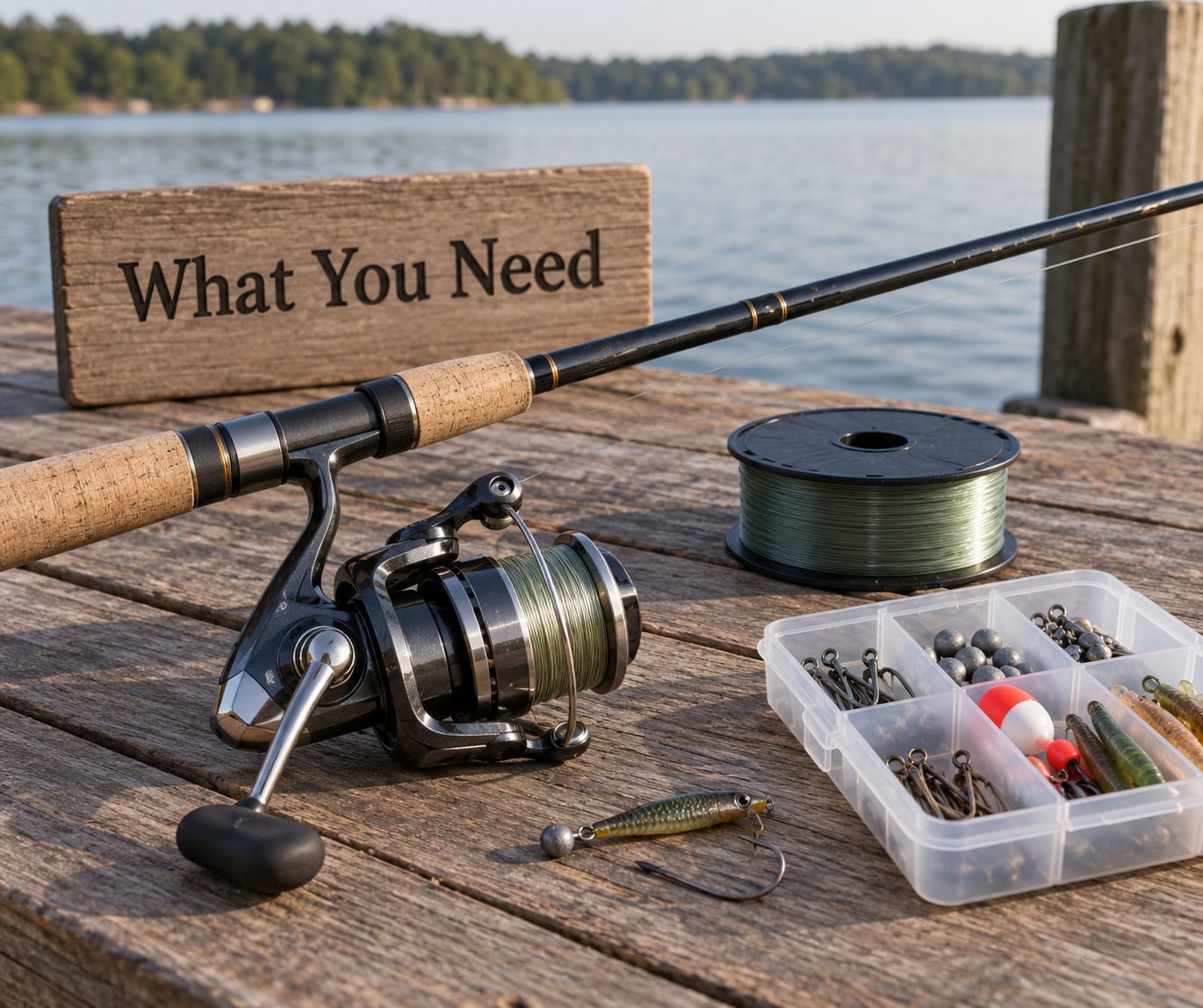
You do not need a full tackle inventory to make this decision. You need enough information to answer six questions, and most of it is already in your head or on your lake’s fishing report.
The first thing to pin down is your target species. Largemouth, smallmouth, walleye, northern pike, crappie, trout, and salmon all sit in different weight brackets, and the pound test you buy should be sized to the fish you expect, not the one you hope for.
Next, describe the water itself. Is it clear enough to see your own lure in three feet, or is it stained from rain? Is the bottom rock, sand, mud, or a weed bed that reaches the surface? Those three answers narrow your options faster than any brand name will.
Write down the reel you will actually fish with and whether you are casting from shore, a dock, or a boat. A baitcaster, a spinning reel, and a trolling reel have different spool capacities and different tolerances for line diameter, and that alone can rule a type in or out.
Then decide how much line strength you want and how visible you are willing to be. A lake with pressured fish in clear water asks for less visibility, while heavy structure asks for abrasion resistance. Finally, check the local regulations for line limits, since some waters restrict wire or specify single-hook barbless tackle.
Step-by-Step: How to Choose Fishing Line for Lake Fishing
Work through these in order. Each step depends on the one before it, which is why jumping straight to a pound test usually ends in a mismatch.
1. Identify the Fish and Fishing Situation
Start with the species and the depth you expect to fish. A crappie angler working 25 feet over a mud flat and a pike angler working the same weed edge need very different lines, and the depth is what tells you which you are.
Depth drives buoyancy. Fluorocarbon and braid are dense and sink, so they reach the bottom faster and hold a deep jigging presentation. Monofilament floats, which is useful for floating plastics in the top layer and a nuisance when you want a lure to stay down in cold water.
Casting distance matters too. Braid cuts through the air with almost no stretch, so it delivers long casts to structure on a windy lake. Mono absorbs some of that energy, which keeps your knots from snapping on a long cast but costs you distance.
Finally, note where you are standing. Pier and shore anglers cast shorter and fight fish at close range, so a medium weight works. Boat anglers casting to open-water structure usually want the extra sensitivity and diameter control that braid and fluorocarbon give.
2. Choose a Line Type That Suits the Reel
Monofilament, braid, and fluorocarbon behave differently enough that one cannot simply replace the other. Here is the short version, and the reasoning behind each pick.
Monofilament is a single extruded strand with noticeable stretch, usually around 20 to 30 percent. That stretch is the reason it is forgiving: it absorbs the shock of a fish hitting a hook and of a lure snapping into cover, so beginner mistakes rarely cost you the line. It casts smoothly, ties easy knots, floats, and handles well on every reel. What it lacks is abrasion resistance and low visibility, and it stretches enough that you feel bites late.
Braided line is woven from many thin strands, often 4 to 16 of them. Fewer strands means a rounder, harder-wearing braid. It has near-zero stretch, which is the best bite detection on a lake and the reason it casts so far. It is also the most abrasion-resistant option, which matters around rock and structure, and it fits a lot more line on a spool because of its thin diameter. The trade-offs are backlash on a baitcaster, poor knot strength if you tie it badly, and near-invisibility, which can spook pressured fish in clear water.
Fluorocarbon is a dense, stiff line that sinks and refracts light less than water does, so it disappears under the surface. It has less stretch than mono and holds an edge well, which makes it a strong choice for clear water, deep jigging, and panfish. It costs more, knots less easily than mono, and spools roughly half the amount of line that mono of the same pound test does.
Copolymer sits in the middle. It is a tougher, lower-visibility relative of mono with slightly less stretch and better abrasion resistance, and it is a reasonable step up for anglers who want mono handling with more durability.
Reel compatibility is where beginners get caught. Braid on a spinning reel works well if the reel is sized for it, but too thin a braid causes wind knots on a long cast. Braid on a baitcaster means being able to clear backlash without worrying about wind knots, which is exactly the anxiety that shows up in forum threads. Fluorocarbon and mono fit both reel types without drama. Before buying, check that the line fits your reel’s line rating range.
| Property | Monofilament | Braided | Fluorocarbon |
|---|---|---|---|
| Stretch | High (20-30%) | Near zero | Low to moderate |
| Buoyancy | Floats | Sinks | Sinks |
| Visibility | Visible, tinted options | Near invisible | Least visible |
| Abrasion resistance | Lowest | Highest | High |
| Line per spool | High | Very high | Low |
| Easiest for beginners | Yes | No | Partly |
The forum advice that keeps repeating is worth taking seriously: cover type, not preference, is the deciding variable. Anglers fishing clear, open water with sparse grass tend to settle on one material, while those working light to moderate cover tend to land on another. Decide where the fish are before you decide what you like.
3. Select the Right Strength and Diameter
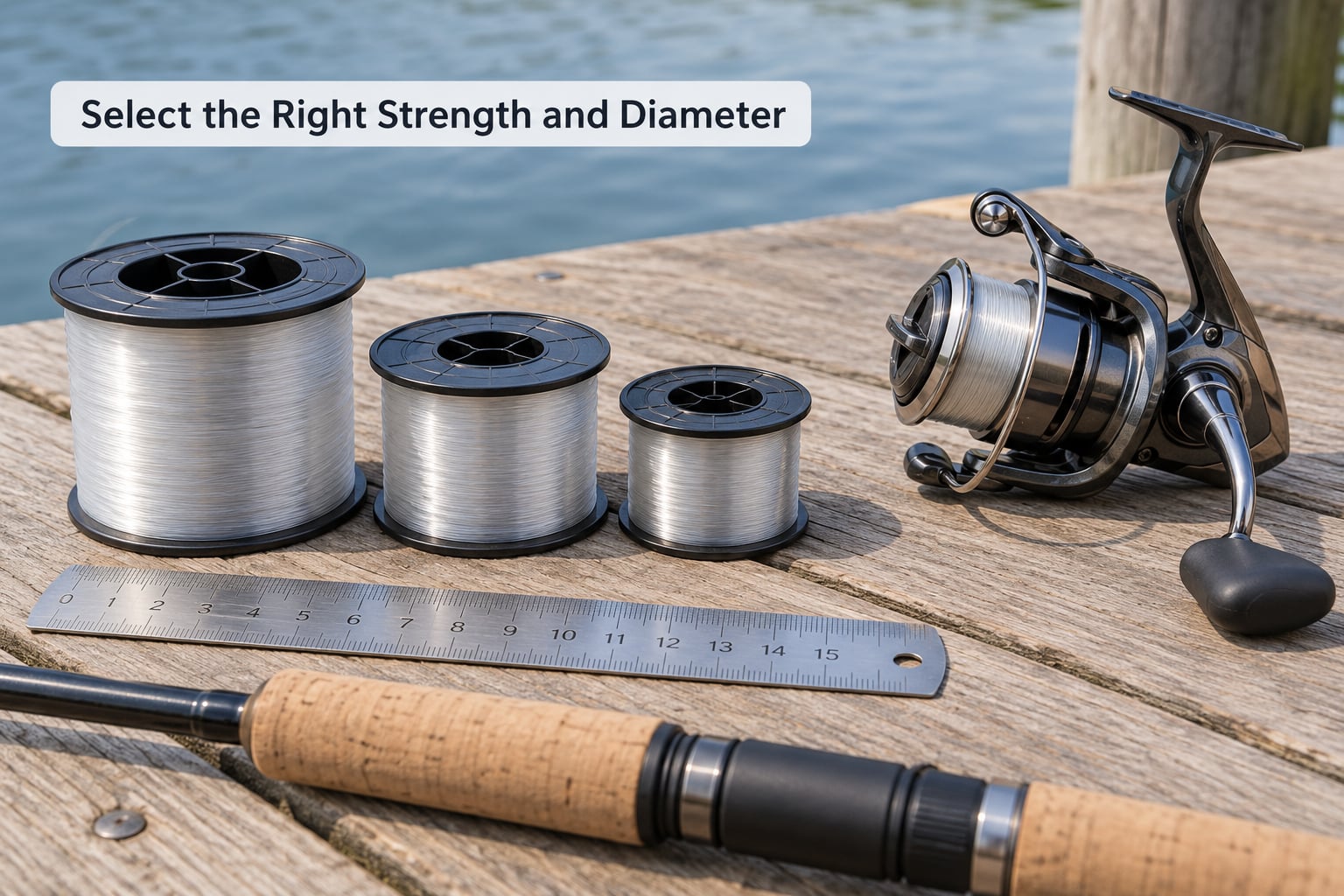
Pick a pound test that matches the fish and the water, then stay as light as you can. Heavier line is not safer in the ways beginners expect. It reduces sensitivity, can be visible in clear water, and makes a cast lumpy at the lure when there is wind.
A 12lb line is a solid all-rounder for lake fishing. It handles largemouth and smallmouth bass up to a few pounds, most walleye fishing, and light jigging, and it is thick enough to resist a stray sharp edge. The trade is that 12lb is more than most panfish need, so crappie anglers usually drop to 6lb or 8lb.
Compare the same test rating across materials before you decide. A 20lb braid and a 20lb mono are not the same line. Braid of a given test is thinner, casts much further, feels nothing under a fish, and ties a weaker knot; mono of the same test is thicker, softer on the drag, and stretches, but it is far kinder to beginner knots. A common lake setup pairs 6lb to 10lb braid with an 8lb to 10lb fluorocarbon leader, which gets braid’s sensitivity with a knot-friendly end that resists rock.
Diameter is the number to watch, because it drives both spool capacity and whether a line slips through your guides. Thinner is not automatically better. Check the diameter printed on the spool and make sure your reel is rated to handle it.
4. Match the Line to Water Clarity and Cover
In gin-clear water and around pressured fish, visibility is the whole game. Fluorocarbon is the least visible option, and a low-visibility tinted mono is the budget version of the same idea. In stained or murky water, visibility stops mattering and abrasion resistance takes over, which is where mono can struggle and braid or fluorocarbon hold up.
Match the line to the bottom. Rock points and riprap near dams demand abrasion resistance, so reach for braid or fluorocarbon. Sand and mud flats are kinder to everything, and mono presents the most natural action there. Dense weed beds need a line that will not cut or stretch, and for lily pads you want a heavier test than the fish weight suggests, because line can be lost to stems before a fish ever sees it.
Color is a secondary decision. Bright yellow, chartreuse, and red read well against dark water and heavy vegetation, and a clear or ghost-green line disappears against pale water. Match the line to the background more than to the lure, and change it with the season as the water color changes.
5. Test the Complete Setup Before Fishing
Spool the line properly and everything downstream is easier. Strip the old line, close the bail or level wind, and tie a line to a sturdy anchor such as a large swivel or a fixed object. Turn the handle slowly while keeping light tension so the line lays down in even wraps, and leave a small gap at the spool rim instead of filling it completely. Over-spooling is a common cause of erratic casting and line twist.
Set the drag so the line pulls before the spool loses no more than a quarter of a turn at the test you are using, then check it on a real pull. If the spool backspins when you pull hard, the drag is too light. If you cannot set the hook when a fish pulls, it is too heavy.
Tie every connection twice and wet the knot before tightening it. Mono and fluorocarbon need a knot you can trust under drag; braid needs a longer wrap and a proper finishing knot, because it grips poorly. Then do a few practice casts, check that the line is running through every guide, and look at the line where it runs through the rod for flat spots or fuzz.
Final check before the first cast: tug the line hard with a pair of gloves on, then inspect the first few feet coming off the spool. Line that has been sitting open in a hot boat or in direct sun gets brittle, and a nicked or faded spool tells you to move down a few pounds test or change the material.
Common Mistakes
Nearly every wrong line choice comes from skipping one of the steps above. These are the ones I see repeated, with the fix for each.
Choosing by strength alone. The heaviest spool is not the safest option, because thick line cuts sensitivity and shows the fish. Fix: set the pound test from the species chart, then go one step lighter than your gut says if the water is clear and the cover is light.
Ignoring the reel. A thin braid on a spinning reel set up for a much heavier line will wind-knot during a long cast. Fix: check the reel’s line rating before you buy, and stay inside that range.
Using the wrong color for the lake. A bright line on clear water is a live giveaway. Fix: pick a low-visibility mono or fluorocarbon for pressured clear water, and save the bright colors for stained water and weeds.
Over-spooling. Packing the spool to the rim causes the wraps to cross, which shows up as line twist, a loose cast, and stripped line. Fix: leave a small gap and check the lay on the spool as you wind.
Mixing line types without a proper knot. A directly tied mono-to-braid connection is the classic beginner failure. Fix: use a leader connection such as an FG knot for braid to fluorocarbon, a double uni for mono to fluoro, or a Bimini twist when you want a looped shock leader.
Leaving the drag alone. Most lost fish on a lake are drag problems, not line problems. Fix: set it deliberately at the start of the trip and re-check it after a break-in period.
Letting the label decide. Popularity tells you nothing about your lake. Fix: work from species, clarity, cover, and reel, then let the brand be whatever fits that answer.
Frequently Asked Questions
What type of fishing line is easiest for beginners fishing in a lake?
Start with monofilament in the 8lb to 10lb range on a spinning reel. It casts without fuss, ties the simplest knots, floats, and its stretch absorbs the shock of beginner mistakes instead of snapping. Move to braid or fluorocarbon later once you know which water you are fishing and how your reel handles it.
Should I use clear or colored fishing line in a lake?
Match the line to the water, not to the lure. In clear or pressured water, a low-visibility tinted mono or a fluorocarbon leader keeps the line from giving the fish away. In stained, murky, or weedy water, visibility is not the problem, so a brighter chartreuse or red line is easier for you to watch and easy to find if something tears. Change with the season, since water color changes.
How do I know what fishing line strength I need?
Match the test to the species and the cover. Panfish and trout work well in 4lb to 8lb. Largemouth and smallmouth bass, plus most walleye fishing, sit comfortably in 8lb to 12lb. Pike and heavy structure push toward 15lb to 20lb, and lily pads or rock call for one step heavier than the fish weight suggests. Then adjust for water clarity, since thick line is easier to see.
Can I use braided line with a spinning reel?
Yes, as long as the reel is sized for it. Braided line is thin, so it can dump more than the drag star and spool capacity expect, which causes backlash and wind knots. Choose a braid thickness inside the reel line rating range, fill the spool to the manufacturer capacity, and start with a filled spool of mono on that reel to learn the drag. Keep the rod tip under control to avoid wrapping the line around it.
How often should I replace fishing line?
Replace mono and fluorocarbon about once a year, and sooner if it lives in a hot boat or gets handled often. Braid lasts longer, but sunlight and abrasion still fade it, so a common trick is to flip or reverse the spool after about a year, since only the first section is used. Replace any line that is frayed, flat, kinked, or has lost its stretch, no matter how new it looks.
What knot should I use when joining braided or fluorocarbon line?
Use an FG knot for braid to fluorocarbon, a double uni knot for mono to fluorocarbon, and a Bimini twist when you want a looped shock leader. Braid grips poorly, so it needs a knot with a long friction-based wrap rather than a standard overhand. Fluoro is stiffer and slippery, so it needs more wraps and a slow, deliberate tighten. Always wet the line and the knot before pulling it down.
Conclusion
Start with the reel. Pick a line type it can actually handle, size the test to the species and the cover, and let water clarity decide between low-visibility and bright line. Then spool it evenly, set the drag deliberately, and run a few test casts before you leave the dock. If you only remember one thing, remember this: match the line to where the fish live, not to the fish you wish you were catching.