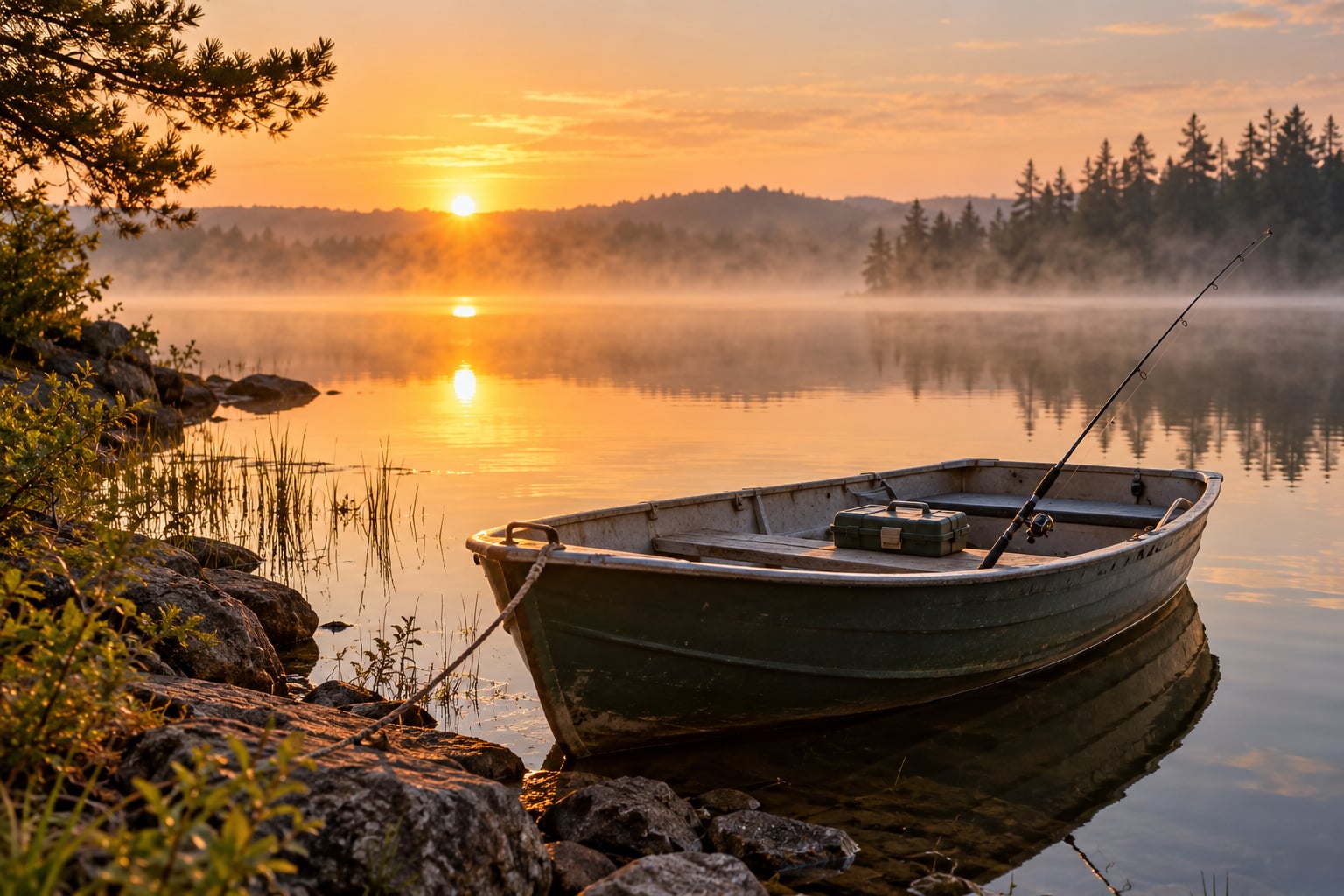
Fish in a lake bite hardest in low light, so the best time of day to fish a lake runs from about 30 minutes before sunrise to an hour after it, with the last hour before sunset a close second. Those two windows are short, and that is exactly the problem: if you spend the whole day casting, you spread your effort thin and catch less than someone who worked only the two good hours.
Timing is not the whole story, though. Water temperature can move the bite to the middle of the day or push it into the dark, and a falling barometer or thick cloud cover can flatten the difference between windows entirely. Here is how the day actually breaks down on a typical lake, and how to turn it into an actual plan rather than a vague idea about getting up early.
Table of Contents
- Best Time of Day to Fish a Lake at a Glance
- What Determines the Best Time of Day?
- Why Dawn Is Often the Most Productive
- How to Fish During the Morning
- Is Midday Fishing Worth It?
- Why Late Afternoon and Evening Can Be Strong
- How Weather and Seasons Change the Answer
- Best Times for Common Lake Fish
- A Practical Fishing Schedule for Most Lakes
- How to Adjust Your Tactics With the Light
- Frequently Asked Questions
- Conclusion: Start Before Sunrise
Best Time of Day to Fish a Lake at a Glance
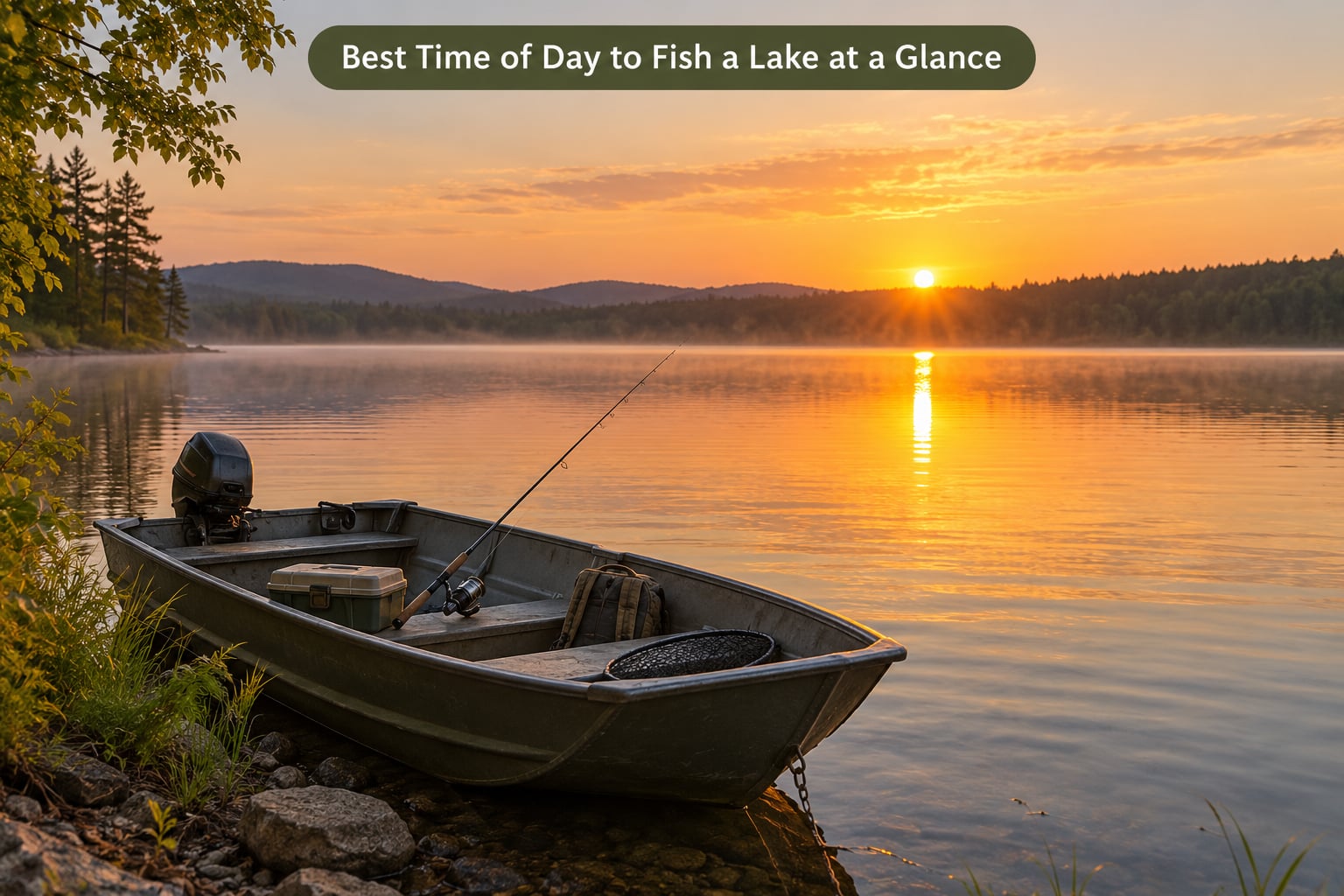
Ratings below assume a normal spring-through-fall day with stable weather. Overcast days, cold fronts, and winter water all break this pattern, and I flag those later.
| Time block | Activity | What is happening | Where to look |
|---|---|---|---|
| Pre-dawn, 30-60 min before sunrise | Excellent | Baitfish move into the shallows; gamefish follow | Creek channels, weed edges, shallow drop-offs |
| First light to 90 min after sunrise | Excellent | Confident surface feeding, then fish pull deeper as light builds | Flats, then drop-offs and secondary structure |
| Mid-morning, roughly 90 min after sunrise to noon | Good | Bite tapers; fish hold at mid-depth near structure | Points, humps, channel edges |
| Midday, noon to 3 PM | Slow | Bright light, warm surface, fish pushed down and tight | Deep structure, shade, heavy cover |
| Afternoon, 3 PM to last light | Fair to good | Surface cools, feeding picks back up | Same spots, worked shallower again |
| Sunset to 30 min after | Excellent | Second feeding push; many species feed hardest here | Shallow points, grass edges, docks at dusk |
| After dark | Species-dependent | Catfish, walleye, and crappie keep feeding; bass mostly stop | Dock lights, deep ledges, channel bends |
The two Excellent rows are the whole reason most anglers fish at dawn. Everything between them is filler, and if you only have three hours, those are the three hours.
What Determines the Best Time of Day?
Light is the biggest lever, but it is not the only one, and it is not always the strongest. Five things move the bite around.
Light. Low light limits how far a baitfish can see an approaching predator, and it makes line, leaders, and lure hardware harder to pick out. Prey stops being cautious, predators commit, and both move into water they would avoid in full sun.
Water temperature. Fish are cold-blooded, so their digestion and their willingness to chase a bait both track the water they sit in. A lake at 48 F and a lake at 80 F are two different fishing trips, and the hour that works changes with it.
Wind and surface disturbance. A choppy surface breaks up the shadow a fish can see from below and hides surface film and bait activity. Wind also pushes baitfish toward the windward shore, which concentrates the feeding.
Barometric pressure. A falling barometer usually beats a rising one. Fish sense pressure change through the swim bladder and the lateral line, and many anglers report better feeding in the hours after a front passes rather than before it.
Moon phase and cloud cover. Solunar tables put a major window around moonrise and moonset and a minor window at the solar noon and midnight crossings. Treat these as a nudge, not a promise. Cloud cover does something different and bigger, which I get to below.
One honesty note before the numbers below: the specific degree thresholds anglers quote for when the bite flips are consensus, not published science. The mechanism around them is real and documented. Treat the temperatures as rules of thumb and watch your own water. Nobody can hand you the best time of day to fish a lake in a single sentence, because the honest answer changes with every launch.
Why Dawn Is Often the Most Productive
Dawn wins for one reason: night has ended but the sun has not burned off the shallows yet. Overnight, the water cools fastest at the surface and the plant life that has been taking oxygen all day starts producing it again. Cooler, oxygen-richer water sits at the top, baitfish gather there, and the predators that were holding deep follow them up.
Add low light, and the shallow flats that looked like empty glass an hour ago become the most productive water on the lake. Bass that would not leave a stump in full sun will cruise it at first light. Trout that hug the cold seams all night start working the surface at daybreak.
It also helps you. Your line is harder to see, your boat’s shadow is a soft smudge instead of a hard outline, and the noise of the trailer, the ramp, and the anchor gets buried under insect noise and boat traffic. You are effectively fishing with the deck lights off.
Dawn is not automatically the better of the two low-light windows. Late evening wins often because of heat: surface water has been sitting in the sun all afternoon, so the fish are already up in the warm layer and they feed on cue rather than needing to move first. Morning fish start cold and compressed. Evenings start warm and comfortable. That single difference is why experienced anglers pick the window that matches the season and the lake’s clarity.
Getting the terminology right helps more than it sounds. The light phases run in order:
- First light, the earliest skyglow before the sun’s edge appears, often called the shooting star.
- Civil twilight, when you can read comfortably outdoors and the horizon is clearly defined. Most anglers mean this when they say dawn.
- Golden hour, the roughly hour after sunrise and the roughly hour before sunset, when the sun is low and light turns warm and sideways.
- Blue hour, the short stretch when the sun is down but the sky still glows. Often the best fishing of the whole evening.
When someone asks what the golden hour for fishing is, they usually mean that low angled light. It is the best-looking light of the day and it is also genuinely productive, for the reasons above.
How to Fish During the Morning
The morning window has two phases, and most anglers only plan the first one.
From the first decent light to about an hour after sunrise, work shallow. Topwater, a spinnerbait worked with a stop-and-go retrieve, a swimbaits or frog over grass and timber edges. The strike window is short and fish are often visible, which means you can confirm activity without catching anything. If you are casting at nothing for 20 minutes at first light, you are probably in the wrong water, not at the wrong hour.
Then fish leave. As the sun clears the treeline, gamefish drop from the flats to the nearest drop-off and hold a few feet down through the morning. Move deeper with them rather than working the same water harder.
Two things forum anglers repeat and most articles skip. Size down your bait in low light, because the system that lets a fish see a lure in full sun does not work at dawn, so oversized lures read as nothing at all. And if you are getting nothing in the first hour, check your depth before you check your lure, since depth is the usual failure point at first light.
Is Midday Fishing Worth It?
Usually no, but not always, and the exceptions are worth knowing.
Midday is slow on most lakes in summer because bright light and warm surface water both push fish down and tight. An experienced angler will tell you not to count out the midday frog bite. Under a weedy bank during a big rain, or over a bed of PVF in the middle of a June afternoon, the fishing can be as good as anything at dawn. It just is not the default.
Midday wins in three situations. In winter, the surface layer hits its daily temperature peak around 11 AM to 2 PM, and trout and some other species will move up to take it, which is unusual enough that anglers plan around it. On a heavily overcast day, the light never gets bright enough to shut the bite down, so the whole day becomes usable. And on a pressured lake with deep structure, daytime jigging and live bait trolling can produce fish that are simply not feeding on a schedule.
If you fish midday, commit to it. Pick a depth, a structure type, and a bait, and work them consistently instead of covering water and hoping.
Why Late Afternoon and Evening Can Be Strong
The evening window works because it reverses the morning. Through the afternoon the surface layer has been absorbing heat all day, and as the sun comes down that layer starts cooling. Bass and panfish track that cooling water, which also means oxygen levels recover as the water loses the heat that holds less of it.
Insect activity ramps up in the last hour before dark, and that alone can put a food source right on top of the lake for the first time in days. Watch for a hatch of small insects and you will see surface activity from fish you could not see an hour earlier.
Species preference matters here. Walleye, crappie, and catfish often do more of their feeding in the evening and at night than largemouth bass do, and on a hot summer night a bank or boat anchored over a deep channel edge can out-produce the whole dawn trip. Trout and salmon in a tailwater are a special case, since these fish often feed hardest during the low, dim hours and again during overcast afternoons, and not at all in bright sun.
How Weather and Seasons Change the Answer
Weather and season routinely beat the clock.
Cloud cover. Thick overcast is the best reason to abandon the dawn-only plan. Light stays low all day, so a mid-morning window can be as productive as the first hour. This is also the variable behind the angler who reports that on clear mornings the fishing runs 8 AM to noon and on cloudy days it runs all day.
Rain. Light rain and drizzle help. The surface noise masks line and movement, and the cloud cuts the light. Heavy rain on a small body of water shuts the bite down, and any thunder means you are off the lake.
Wind. A west wind pushes bait toward the windward shore and puts fish on that bank. East wind gets the worst reputation among lake anglers, for whatever combination of clarity and surface conditions comes with it. North and south wind get far less discussion and considerably less planning, which is its own argument. Fish the bank the wind is blowing toward, not the one you drove to.
Fronts. Fish after a cold front passes rather than before it arrives. Rising pressure with a windy, ugly morning in front of a front is the classic day to skip.
Spring. Fish are shallow and warming, so dawn and dusk both produce, and the windows stretch as the water climbs. Midday gets more usable as the water warms.
Summer. Compress to two windows and fish them well. Add nights for catfish, walleye, and crappie if the heat is index-off-the-chart dangerous.
Fall. The window starts moving toward midday as the surface cools, and trout and salmon typically hold on it until the water gets genuinely cold. Fall is the season where the dawn-only rule breaks hardest.
Winter. Midday becomes the best window. Trout often feed near the surface on the warmest water in the lake around 11 AM to 2 PM, and ice-adjacent fishing rarely cares about the clock at all. Anglers targeting species that are barely active should fish when the water is warmest, not when the light is prettiest.
Best Times for Common Lake Fish
Here is where the general rule earns its keep. The flip triggers are angler consensus figures, useful as starting points rather than facts.
| Species | Best window | Breaks the dawn rule? | Consensus flip trigger |
|---|---|---|---|
| Largemouth bass | First light, then sunset | Yes, toward midday as water cools in fall | Surface near 55 F |
| Smallmouth bass | Dawn and dusk, deep structure by midday | Yes, earlier and harder than largemouth | Surface near 52 F |
| Trout (lake or tailwater) | Dawn, overcast afternoons, dusk | Least of all cold-water species; holds dawn longest | Feeding slows near 70 F |
| Walleye | Dusk and after dark | Yes, strongly light-driven | No clean temperature flip; time rule dominates |
| Crappie | Mid-morning and late afternoon | Yes, and the window is short | Surface near 55 F |
| Channel catfish | Night, especially in summer | Yes, almost completely | Warmer water extends feeding later |
| Panfish (bluegill, perch) | Midday through evening | Yes, they are daytime feeders | Active above about 50 F |
Walleye deserve a note because the mechanism is genuinely documented. They have a reflective layer behind the retina that lets them see in very low light, and they hunt primarily by sight, which is why they feed so heavily around dusk and into the dark and why a bright overcast day can produce them at noon. Anglers who miss the evening window and then are surprised by a midday walleye are not seeing a contradiction.
Crappie do the opposite. Their window is short and they commit hard to structure, so a group hanging on a deep point in the afternoon can shut down completely within an hour of dark. If you are fishing a known crappie spot, the clock matters more than it does for almost anything else on this list.
A Practical Fishing Schedule for Most Lakes
How to find the best time of day to fish your lake before you go
Three steps, and the whole thing takes two minutes.
1. Look up sunrise and sunset for the lake, not your house. Longitude matters more than most people expect. A lake 40 miles east of your front door can rise 15 minutes later than the clock on your phone says at home. Use the lake’s actual coordinates.
2. Subtract 30 minutes from sunrise. That is your start time. Ninety minutes after sunrise is the end of the peak window.
3. Work backwards from launch. Add your trailer hitch-to-water time, the parking lot walk, rigging, and the time it takes to find the spot you want. Most anglers who complain about an early start actually get to the ramp after the window has opened, and then rush. Set the alarm so you are at the water before the water is working.
One thing to verify before a pre-dawn start: whether the ramp is even open. Many ramps have gates that stay locked until sunrise, and state park entrances close at dusk. A locked gate turns a great plan into a wasted morning, so check the hours and any gate codes the night before.
The rest of the day, if you stay
Work the window. That is the honest answer, and putting 80 percent of your effort into the two best blocks is the 80/20 rule anglers talk about.
From late morning through the afternoon, pick one of three jobs. Fish deep structure with a jig or live bait. Troll a ledge or a channel edge for walleye and trout. Or sit on a productive spot you already found at dawn and work it again as the light drops, because a spot that produced at first light frequently produces again at sunset.
Leave before you are exhausted rather than after you have fished the flat part of the curve. Two strong windows beat ten mediocre ones, and a day that ends while you are still willing to fish is one you will repeat.
How to Adjust Your Tactics With the Light
Match the presentation to the visibility, because the same lure that works at 6 PM in March fails at 6 PM in July. If you are still stuck on the calendar question, the best time of day to fish a lake gets decided before you pick a lure.
Color. In low light, clear water especially, fish see contrast before they see color. Brighter baits and anything with a strong silhouette or flash reads better at dawn and dusk than a natural bait does. In stained water the advantage flips: visibility is high all day and color matters less than vibration and scent.
Sound and vibration. Low light means you often cannot tell whether fish are there. Rattles, blades, and a stop-and-go retrieve let you locate them by feel. This is why chatterbaits and swimbaits work so well at first light.
Size. Downsize in low light, at least on clear water. A big profile that reads as a threat at dawn reads as nothing.
Distance. You will see less, so you will want longer casts at known structure. Cast to the shadow line and tighten up your line because you cannot see slack the way you can at noon.
Depth. Shallow at first light, mid-depth through the morning, deep and tight through midday, back up in the evening. Write it on the side of the boat; it is the single most useful habit.
Safety. Dusk means you will be on the water in the dark. Wear a life jacket, and not the one in the bottom of the locker. Carry a headlamp with a red mode so it does not wreck your night vision, check that your boat lights and bilge pump work before you leave the ramp, tell somebody your route and when you expect back, and check the local rules for running lights and required equipment on small craft. On big water, add a second person.
Before a first trip of the season, it is worth checking your local rules for required equipment and daylight limits rather than assuming the lake near your house is the same as the one 30 minutes further east.
Frequently Asked Questions
Do fish bite more at dawn or dusk?
Both work, but for different reasons. Dawn is strongest when the lake was cool overnight and fish start the day compressed and hungry, so they move shallow as the light comes up. Evening is stronger when surface water has absorbed heat all day, since fish are already in the warm, comfortable layer and feed right away. Pick dawn in spring and on clear water, and lean on evening in midsummer.
Is midday fishing worth it?
Occasionally, yes. Midday is the slowest window on most lakes in summer, but it becomes productive in winter around 11 AM to 2 PM when the surface layer hits its daily peak. Thick overcast keeps light low enough that mid-morning and afternoon stay usable. Deep structure and heavy cover also hold fish that are simply off the shallow feed. Do not plan a midday trip as your only option.
What barometric pressure do fish bite more at?
A falling barometer generally produces better feeding than a rising one, and the trend matters more than any absolute number. Fish detect pressure changes through the swim bladder and lateral line, and the hours after a front passes are often better than the hours before it arrives. A high, steady pressure on a clear, cold morning is a good day to skip and reschedule.
Do fish bite at night?
Yes, for certain species. Channel catfish, walleye, crappie, and night-stalking trout feed well after dark, and dock lights reliably gather both crappie and baitfish. Largemouth bass are the exception, since they mostly stop feeding once the sun is well down. Night work needs a working spotlight, a charged headlamp, a life jacket, and a buddy on anything larger than a pond.
What wind direction do fish bite best in?
Fish the shore the wind is blowing toward. Wind pushes surface film and baitfish toward the windward bank, which concentrates the feeding there and breaks up the shadow a fish sees from below. A west wind gets most of the attention and a bad reputation for east wind, but the useful rule is not the compass point, it is the bank the chop is working.
What is the 80/20 rule in fishing?
It is a way of budgeting effort, not a law of nature. Put roughly 80 percent of your time into the two best windows for the day, dawn and evening, and use the remaining 20 percent for travel, repositioning, and a change of pace. Anglers who fish flat out from first light to dark usually catch less than anglers who worked two solid hours at each end of the day.
Conclusion: Start Before Sunrise
Short version: the best time of day to fish a lake is 30 minutes before sunrise, and the last hour before sunset is your second chance. Set the alarm so you are on the water early, with your best shallow spot picked out the night before. That is the single change most likely to improve your lake fishing this year, and it costs nothing but sleep.
Then adapt. Warm water and clear skies lean toward evening. Cold water and midwinter skies point at midday. Walleye, catfish, and crappie pull you toward the dark end. Heavy cloud and falling pressure mean the whole day is fair game.
And keep two numbers every trip: the surface temperature and the clock time of every fish you catch. Ten trips of that beats any rule on this page, because your lake will eventually tell you something the general advice never could.