To fish from shore without a boat, you need three things: a legal spot on the bank with structure near it, a rod short enough to cast accurately from where you stand, and bait matched to the fish holding there. Pick your spot, read the water for where fish feed, cast along the shoreline rather than straight out, and set the hook when you feel the bite. It takes a whole afternoon and no launch ramp, trailer hitch, or fuel bill.
The honest part is that shore angling limits how much water you can reach. Everything else about it works exactly the way it does from a boat, and a lot of anglers never leave the bank at all. You can put in a full weekend of fishing with a rod, a reel, a bait bucket, and a thermos in a shoulder bag.
Table of Contents
- What You Need
- Step-by-Step
- Step 1: Check the license and the rules before you pick up a rod
- Step 2: Where to fish if you do not have a boat
- Step 3: Read the water before you make your first cast
- Step 4: Rig for the fish you actually expect to catch
- Step 5: Cast along the bank instead of straight out
- Step 6: Spot the bite and set the hook on the right signal
- Step 7: Land the fish and let it go quickly
- Common Mistakes
- Frequently Asked Questions
- Start With a Simple Setup
What You Need
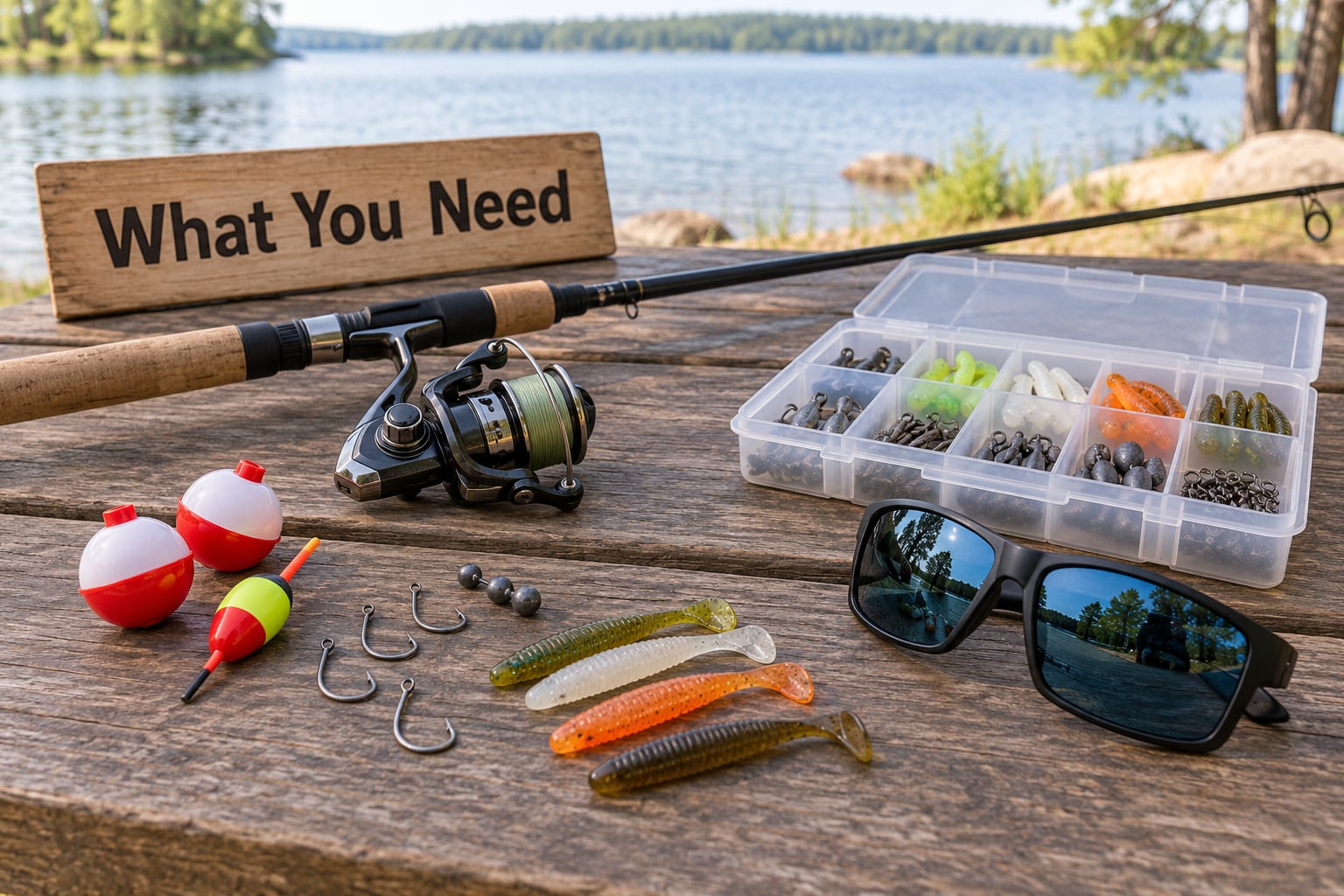
The gear list for shore fishing is short, and almost all of it is stuff you already own or can borrow. What matters is that each piece does a job you understand, not that it is the newest version.
Rod length and power decide how well you can fish from land
A 5 to 6 foot rod is the workhorse for bank fishing. Short rods cast accurately from a fixed spot, which matters far more on the bank than the extra distance you give up. Most anglers who fish from land settle somewhere between 5 feet 6 inches and 6 feet 6 inches.
Power matters as much as length. Medium power handles most freshwater work, medium-heavy gives you enough backbone for bass and catfish, and spinning rods run lighter than their baitcasting counterparts. Beginners usually do fine with a medium-power spinning rod paired with a size 2500 or 3000 reel.
Reel, line, and the terminal tackle that matters
A spinning reel with a smooth drag is easier on the learning curve than a baitcaster. Fill it with 6 to 10 pound fluorocarbon or braid-to-fluoro, and add a 20 to 30 pound leader when you are fishing rock, riprap, or mussel beds.
The rest is small stuff: a swivel, a sinker matched to the current, a hook or jig head, and a pair of split-ring pliers. You can rig everything in this guide with those four pieces. Add a landing net if you are targeting fish that run near you, and a pair of needle-nose pliers so you are not picking a hook out with your fingers.
Bait and lures that work from a standing position
For beginners, live bait wins. Night crawlers, mealworms, and minnows work on nearly everything, and you can buy them by the dozen at a tackle shop or a bait house near the ramp.
Artificial options cover a lot of ground from land. Jigs and soft plastics get you into cover along a drop-off, a crankbait covers open water on a cast-and-retrieve, and a spinnerbait or spoon is forgiving when you are still learning how to land a lure exactly where you want it. Bring three or four options rather than the whole tackle box.
Clothing and safety items for a shoreline trip
Dress for the bank, not for the boat. You are standing still most of the time, so the wind will find every gap in your clothing. Layer up, wear a brimmed hat, and bring a waterproof shell even on a clear morning.
Non-slip footwear matters more than any other safety item, because shorelines are usually mud, loose rock, or algae-covered slab. Carry a life jacket when kids are along or the water drops off steeply near your position. A small first aid kit, a full water bottle, and a trash bag for pack-out take up no room and settle most of the arguments people have about shore etiquette.
What to leave behind so your hands stay free
Leave the bulky chair, the cooler, and the heavy tackle crate in the car if you can. A small bucket of water to keep bait alive, a shore sling if you plan to move along, and a rod strap are the only convenience items I would argue for.
The gear that helps most on a bank is a rod you can hold one-handed while you fight the line in the other. Most lost fish at a reservoir bank come from snags, and most lost lures come from a loose spool and a panicked hand.
Step-by-Step
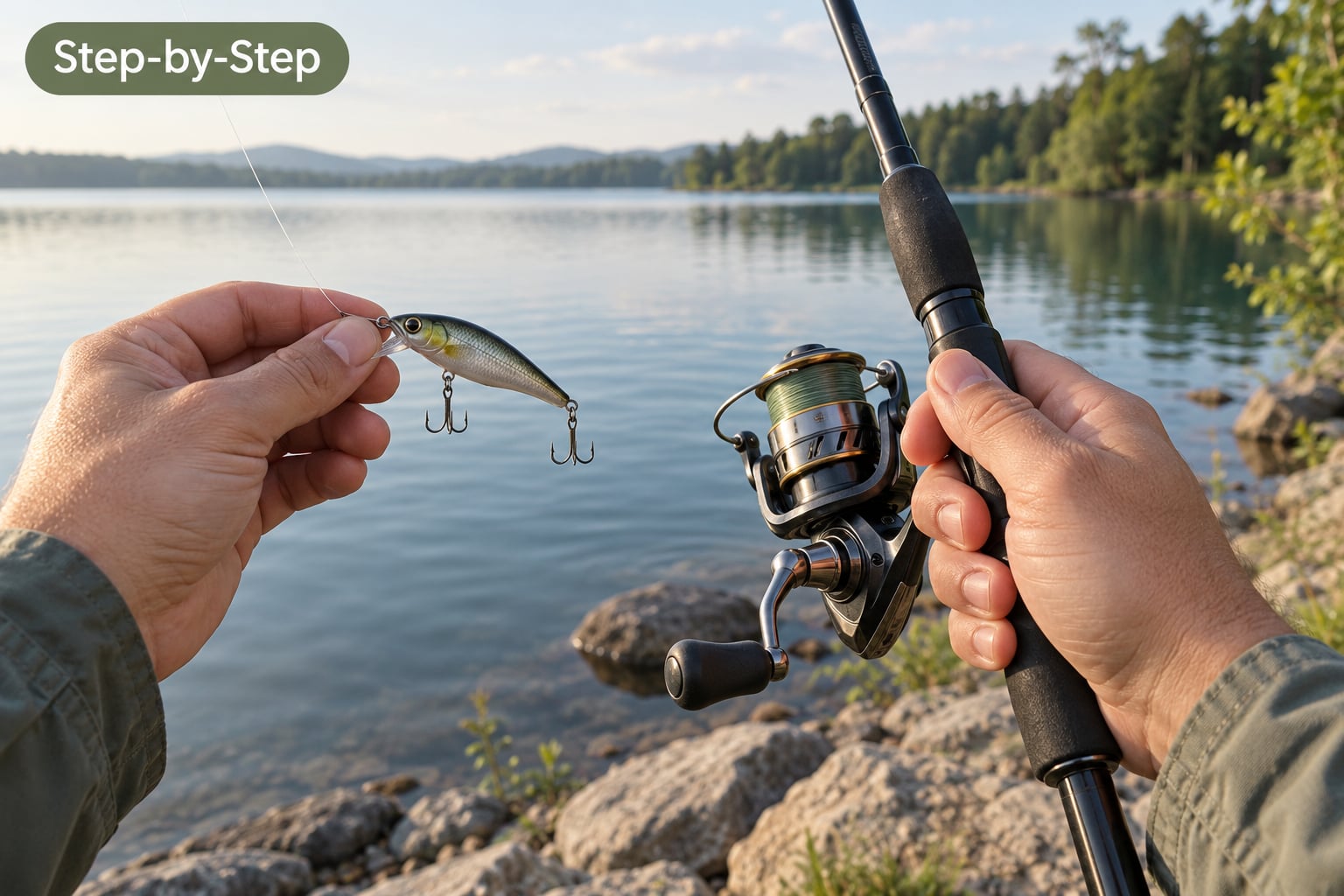
Here is the whole process in order, from the parking lot to the fish in the water.
Step 1: Check the license and the rules before you pick up a rod
A fishing license is required in nearly every state or province, and most anglers over the age of 16 need one to fish from a public bank. Some water bodies are stocked or regulated differently, so check the local wildlife agency site before you leave home. Bag limits, size limits, and season dates change from year to year, so confirm the current rules for 2026 before you fish.
Step 2: Where to fish if you do not have a boat
Good bank fishing spots share one feature: something fish-holding within casting range. That something is called structure, and it can be almost anything solid. Ranked from the ones that produce the most fish for beginners, here is where to look.
- Docks and piers. Pilings, crossbeams, and the shade line under a deck hold panfish and bass. Stand at the end and work the corner where the dock meets the bank.
- Spillways and dam outflows. Flowing water carries oxygen and food, and fish stack up below the break. Cast just below the seam and let the current do the work.
- Riprap and rock dams. The gaps between boulders are shelter. Use a weedless jig head and a shorter rod to keep the lure from getting stuck in the rock.
- Undercut banks and fallen trees. A single laydown log in shallow water will hold bigger fish than the open water next to it. Work the shadow line along its edge.
- Tailouts below a pool. On rivers and spillway reservoirs, the slow water at the end of a fast run is where tired fish stop. Drift bait through it.
- Creases and bends in the bank. A sudden change in direction usually means a drop-off. Cast just past the corner and let the lure fall past it.
- Bridge and culvert areas. Flow under a bridge concentrates bait. Check posted rules first, since some bridges prohibit fishing.
If you do not know the lake, look for a state or provincial access map online, then cross-check it with a satellite view so you can see the shape of the bank before you arrive. Local tackle shops are the best source of current information. Ask the person behind the counter where the fish are holding this week; the answer is usually more current than anything you can read online.
Step 3: Read the water before you make your first cast
Reading water from shore is a matter of looking for where the flow or the temperature changes. A current break is any line where moving water meets still water, and it is the single most reliable place to put a lure. Eddies behind rocks, seams behind weed lines, and pinch points where the bank narrows all act as breaks.
On a lake, you are looking for depth and temperature instead of current. A cloudy water color against clear water usually marks a depth change. Weed lines that stop, a sudden patch of wind chop on otherwise glassy water, and birds diving or circling all tell you fish are feeding somewhere below.
A head with a polarized pair of sunglasses makes this dramatically easier. Cut the glare and you can see the weed edge, the rock line, and the shadow of a submerged brush pile from 100 feet away.
Step 4: Rig for the fish you actually expect to catch
Match the rig to the fish, not to the tackle in your car. Four setups cover almost all of it.
- Float rig. A bobber, a leader, and a hook with a worm under it. Set the bobber just deep enough that only the top shows. This is the default for panfish, trout, and bass in shallow water.
- Texas rig. A bullet sinker slides freely on the line above an offset hook, so a fish feels the bait without the weight pulling it into the bottom. Fish it tight to structure.
- Carolina rig. A bead and a sinker above a leader and hook. Better suited to open water and slightly heavier cover because the bait rides higher and stays cleaner.
- Drop shot. A small sinker with the hook above it, bait floating just off the bottom. It keeps the lure off rocks and puts it right in front of fish that are barely moving.
In saltwater, the change is mostly tackle scale. Use a heavier sinker, a larger hook, a wire or brush jig head to survive the rocks, and a spoon or a bucktail jig that glows when water moves over it. Set the hook inside the wire rather than tying it to the head, so the point is exposed.
Step 5: Cast along the bank instead of straight out
This is the habit that separates people who catch fish from the bank. Casting straight out covers a big circle of water and hits it shallow. Casting parallel to the shoreline follows the edge where fish travel, and it puts your lure through the strike zone the entire length of the cast.
Pick out a weed line, a rock edge, a drop-off corner, or the shadow line under a dock and cast beside it, not to it. Aim slightly past the target so the lure enters the edge and turns toward you on the retrieve.
Keep the rod tip low during the retrieve. Slack line lets a fish eat the bait without feeling it, and from a bank position you often get one chance.
Step 6: Spot the bite and set the hook on the right signal
The most common mistake in shore fishing is reeling on the pickup. As the lure lands, the reel starts turning before the lure even reaches the water, which pulls it away from the target and strips the hookset out of the bite.
With a bobber, watch it. A dip, a slow pull under, or a lift-and-flick all mean fish. Set the hook on the movement, not on the float going under, and do not wait for a second confirmation. With a lure, you are looking for the load stop and the tap of something moving off-line. Hold the rod and give a short sweep, then reel.
Step 7: Land the fish and let it go quickly
Use a net if you can reach one with the rod, and keep the fish out of the air as briefly as possible. For a catch-and-release fish, keep it in the water while you remove the hook, then let it kick off.
Respect the slot and size limits for the water you are on, and take only what you will eat. Pack out your line, hooks, and plastic wrappers. Angling spots with good public access are not common, and most of them are open because other people took care of them.
Common Mistakes
Every one of these shows up in beginner conversations, and every one of them is fixable the same day.
Casting straight out instead of along the shoreline
Casting perpendicular to the bank covers the most water and usually the least interesting water. Fish hold tight to structure along edges, not in the middle of open water where they have to swim to feed. Turn your body until you are casting down the shoreline, and pick a target edge to work rather than a distance to reach.
Carrying gear you cannot control in the wind
A shore angler is casting from a fixed position, so wind pushes every cast and puts slack in the line. Long rods, heavy line, and a full tackle box make it worse. A shorter rod, a lighter load, and wind-resistant lures like a spoon or a spinnerbait will land where you point them when everything else is fighting you. If the wind is strong enough to bend the rod tip on the forward cast, move to the lee side of a point or a tree line.
Reeling on the pickup instead of setting the hook
The retrieve that starts the moment the lure lands does two bad things. It shortens your cast, and it strips the tension you need to feel a bite. The best fix is a free-floating spool or simply to lower the rod tip and watch the line for a full beat before the reel starts. Slack line plus a slack rod is how fish get away with the lure still in their mouth.
Standing too close to the water in poor footing
The bottom of a bank is slick, broken, and often undercut. A slip there usually means a rod in the water, not a swim. Pick a position on flat, firm ground and only step to the edge when you are handling a fish. Steep banks with sudden deep water deserve a life jacket, and any bank with children on it deserves one regardless.
Choosing a spot full of cover you cannot fish
A fallen tree looks promising from the car and is a snag farm from a bank position. You cannot drop a lure behind a brush pile or work the far side of a log at 15 feet. That is not a bad spot, it is a boat or kayak spot. From land, pick the edge nearest you and fish along it.
Changing presentations every five minutes
Beginners often work a lure for four casts and abandon it. Give any presentation a real run. Cast the same spot, work the same retrieve, and change only after a serious attempt. If nothing bites after twenty minutes at a good spot, then move, change depth, or change lure, in that order.
Frequently Asked Questions
What is the easiest shore fishing setup for a beginner?
A 5 to 6 foot medium-power spinning rod, a size 2500 or 3000 reel, 6 to 10 pound fluorocarbon, and a float rig with a night crawler. That combination casts accurately from a fixed position, handles panfish, trout, and most bass, and needs almost no explanation to use. Add a sinker, swivel, and jig heads when you move to structure. Buy the rod first, because it decides how well everything else works.
What are the best shore fishing spots on a lake?
Look for anything that breaks the open water: the end of a dock, the corner of a creek channel, a riprap dam, a fallen tree lying in shallow water, and the shaded edge of a weed line. Fish concentrate along these edges because food and oxygen collect there. Arrive early and pick a position before the good spots fill, and remember that current breaks below spillways and tailouts below pools are the best bets on moving water.
When is the best time to fish from shore?
Early morning and the last hour before sunset are consistently the best windows. Low light levels make fish less cautious, and both periods put feeding fish near structure. In summer, dawn also wins on temperature because shallow water cools faster than the deep water nearby. Midday is the hardest stretch, especially on bright, still, hot days, though a heavy overcast can make it workable. Night fishing also works well with a light source on the rod tip.
Can you still catch fish when it is windy?
Yes, and wind is often an advantage. Blowing water stirs the surface and can carry the smell of bait to fish, and it pushes both birds and fish toward structure. The drawbacks are that casts travel, the line goes slack, and a shoreline with waves gets slippery. Use a shorter rod and lighter line, pick lures with vibration like a spoon or spinnerbait, and stand back from the edge where the bank is undercut.
Is shore fishing different in saltwater?
The technique is the same but the scale changes. Use heavier sinkers, larger hooks, and wire or brush jig heads that hold up to rocks and shells. Strip baits and lures cast along a jetty, a shallow reef, or the drop beside a channel are more productive than open sand. Check tide times and local rules first, because many saltwater species are only active on a moving tide, and check closures for shellfish and nesting birds.
Is shore fishing a good activity for families with kids?
It is one of the best, because the gear is simple and the fish are usually close. A float rig with a worm gives a child immediate feedback, and a bobber makes the bite visible from a distance. Pick a park shoreline with flat ground, keep everyone within arm’s reach of the water, and put a life jacket on any child near a bank that drops off. Bring snacks. Most of the day is waiting, and that is the honest part of fishing with kids.
Start With a Simple Setup
On your first trip, do less than you think. Pick one legal access point on a lake you know, arrive before the good spots fill, and find a shoreline position with a single piece of structure you can reach. Then set up one rig and work it properly for an hour before you change a single thing.
That is how to fish from shore without a boat, and it works because the method is simple and the mistakes are easy to fix. Cast along the bank instead of out into open water, keep your line tight enough to feel a bite, and give one presentation a real run before you give up on it. The rest of the learning happens on the water.