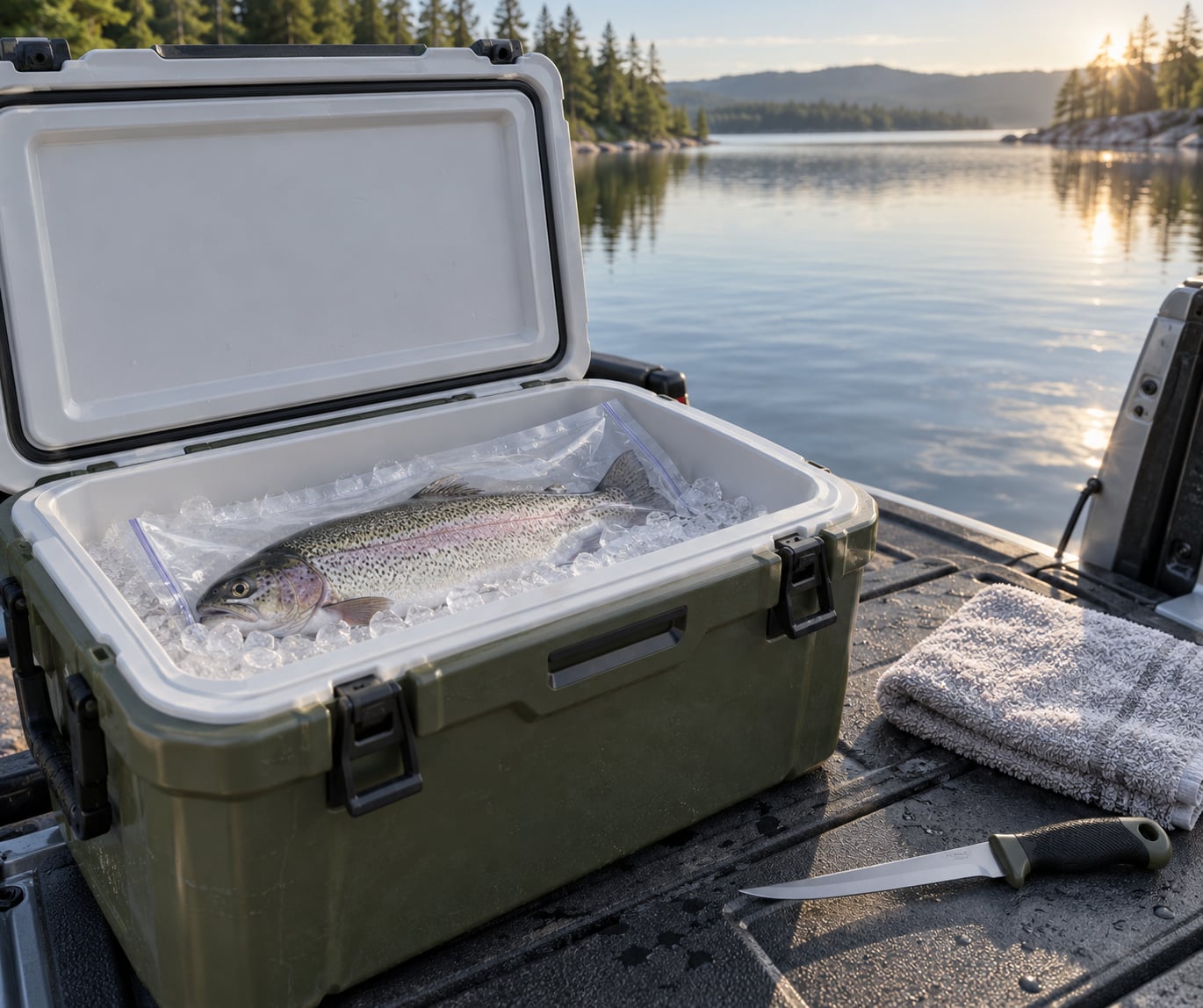
To keep fish fresh after catching, kill and bleed it right away, bury it in crushed ice or an ice slurry inside an insulated cooler, and keep the cooler drain plug open so meltwater drains away. Gut it as soon as you are back, dry the flesh thoroughly, then refrigerate for two to five days or vacuum-seal and freeze. The whole routine takes about fifteen minutes on the water and ten in the kitchen.
The reason it matters is simple. Fish flesh spoils because of heat, bacteria and air, and the three of them work together. Get the core temperature down into the 32 to 38 F range within minutes and you buy yourself a couple of days of good eating. Skip the ice and the same fish can taste dull and soft before the weekend is over.
A fish that took twenty minutes to die also gives you a duller fillet than one dispatched in two seconds, because the stress drains blood and glycogen into the muscle. A slow death is not just unkind, it is also bad eating, which is why the first step takes care of both at once.
Table of Contents
What You Need
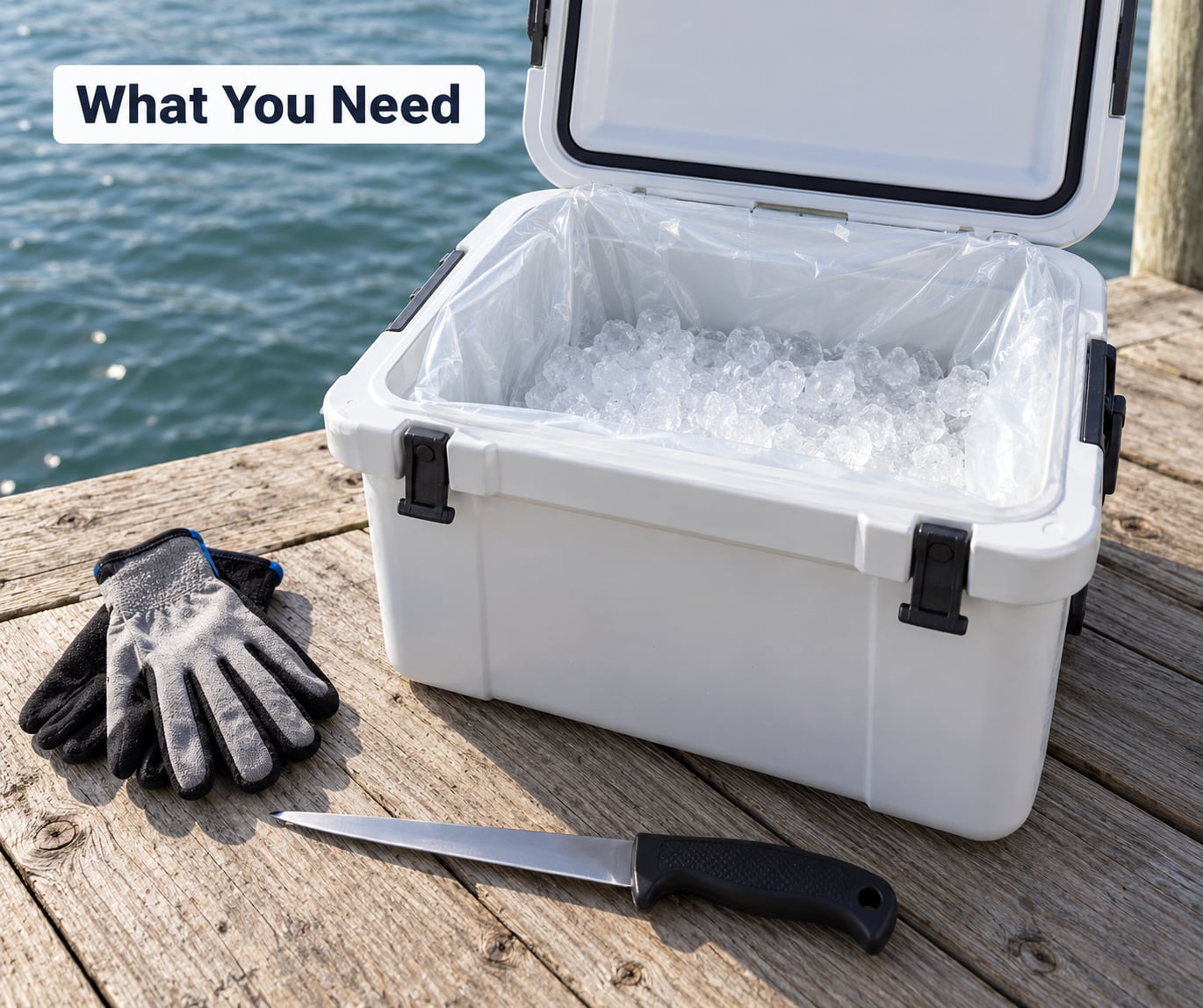
Most of this kit costs nothing beyond a cooler and a bag of ice from the gas station. Pack it in the car the night before and the whole boat-side routine becomes boring.
- An insulated cooler or fish box. A cheap rotational-moulded one holds a working temperature of 32 to 38 F for a full day. Bigger is better than more ice, because air space is what lets a cooler warm up.
- Two bags of block ice per fish, plus crushed or flake ice for packing around the fish. Angling guides often budget around a 1:1 ice-to-fish ratio by weight for a single day, and closer to 2:1 in summer heat or on a two-day trip.
- Food-safe bags. Heavy-duty freezer zip bags work for the cooler and again in the freezer. A leakproof catch bag or fish bag gives you one more layer between the fish and the meltwater.
- A sharp fillet knife and a cutting board. A dull knife tears the belly and rips the skin, which opens a path for bacteria.
- Clean gloves or a towel. Fish skin carries bacteria, and a damp towel wipes the slime off a fish before it goes into a bag.
- Frozen gel packs for anyone who cannot buy ice on the way to the ramp.
- Paper towels for the home stage. Drying the fillet is the single most skipped step in home storage, and it is the one that decides whether your fish tastes fishy.
- A small insulated bag or soft cooler if you are bank fishing or kayaking and cannot carry a full-size box.
If you plan to freeze more than a day of fish, add a vacuum sealer. Plain bags and foil work fine, they just do not hold quality as long once the fish has been in the freezer a few weeks.
Step-by-Step
How to Keep Fish Fresh After Catching With Ice
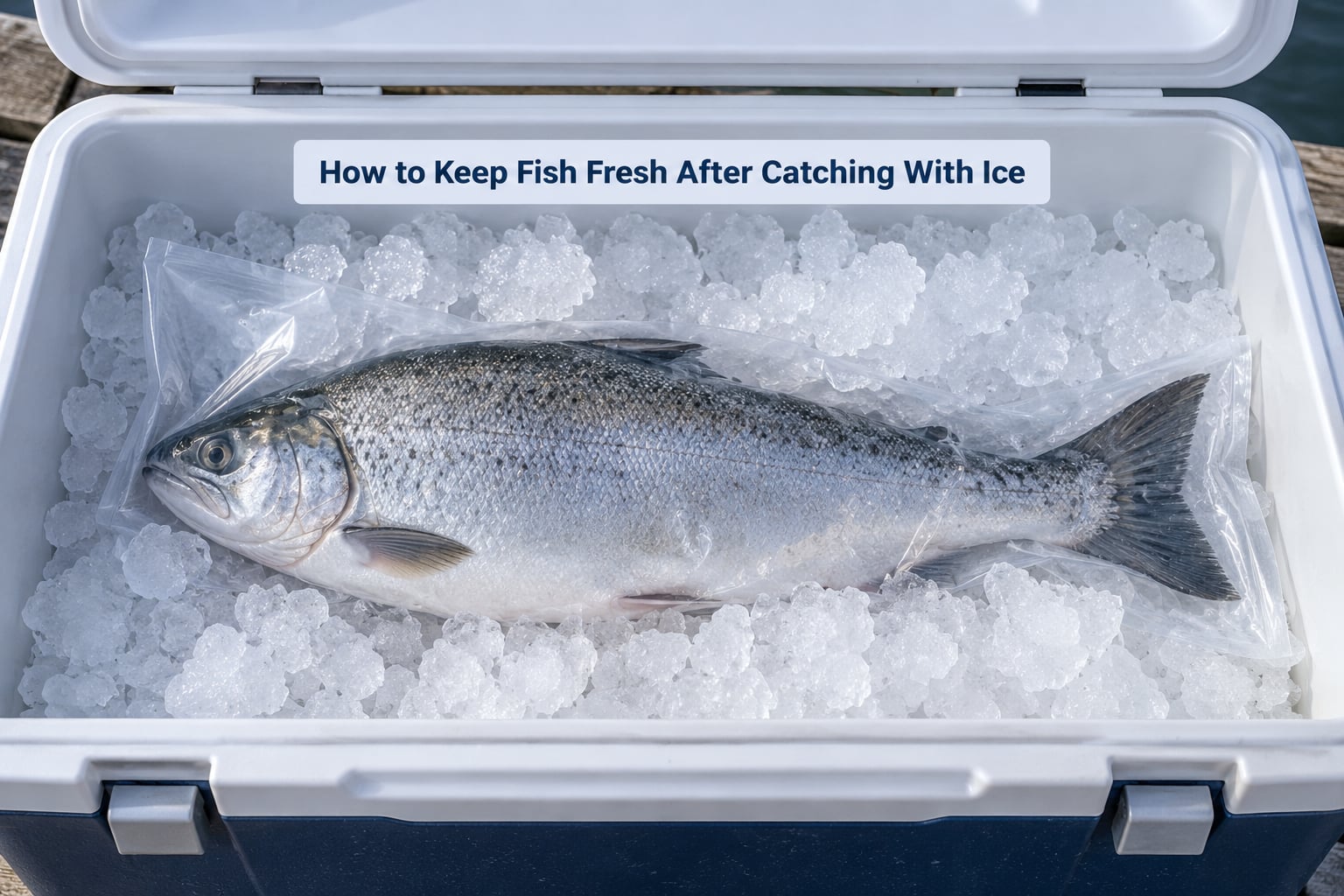
Put the fish on ice the moment it is dead, and put it on more ice than feels reasonable. A good starting point is about two bags of ice for every fish, and you want the fish buried rather than resting on a slab.
Here is the setup that works best. Fill the bottom of the cooler with a few inches of ice, bag the fish or lay it directly on the ice, then pack loose ice all around and over the top until the fish is completely covered. The loose ice is doing two jobs at once: it chills the fish fast by conduction and it lets meltwater drain down into the ice instead of pooling around the flesh.
An ice slurry is even better. Mix crushed ice or ice chips with just enough cold water to fill the gaps, roughly three parts ice to one part water, and lay the fish into that slushy mix. The fish sits surrounded by cold liquid instead of air, and heat transfers far faster. Anything that spills or leaks simply becomes part of the slush rather than a warm puddle under the fish.
One rule matters more than the rest: keep the drain plug open. A closed plug traps every drop of meltwater, and that water soon sits above 40 F while the fish soaks in it. Meltwater is the single biggest reason a well-iced fish tastes bad, because it washes blood and body fluids out of the flesh and turns the texture mushy. Anglers on the big sport fishing forums describe cutting the gills and dropping the fish into a kill bag with ice as their standard routine, and they all come back to the same point about drainage.
At the ramp, before the lid closes, make sure the plug is actually open. It is the easiest thing to forget once the cooler is loaded and the hatch is down.
You can check the temperature with an inexpensive cooler thermometer, aiming for fish sitting at 32 to 38 F. Without a thermometer, press your hand into the ice for ten seconds. If your hand stays comfortably cold and the ice packs are still solid or slushy rather than water, the catch is holding temperature. If the ice is a puddle and your hand warms on contact, you need more ice or a trip to a store with a freezer.
On multi-day and offshore trips, saltwater ice is worth hunting down because it is colder and melts more slowly than freshwater ice. Anglers on saltwater forums report using dry ice in a large cooler to hold a catch for days, and brine baths hold a temperature in the high twenties for around ten days if you keep adding salt whenever you add ice. Both are more fuss than most weekend trips need, but they are the options for anyone running several days offshore.
How to Clean and Prepare Fish for Cooling
Gutting early is the better choice when you can do it cleanly, because the entrails carry the highest bacteria load and start breaking down right away. Fish anglers on the water often choose to gut on shore rather than in a wet, moving boat, and both routes work as long as it happens the same day.
If you gut in the field, cut from the vent forward to the gills, pull the entrails out with the organs attached, and scrape the rib cage and spine clean. Rinse the cavity with cold water and move on. Do not wash the fish all over and do not soak it. Full body washing pushes surface bacteria into the flesh, and a quick rinse of the cavity is enough until you are ready to cook.
Bleeding is the step beginners miss, and it matters most for blood-rich species such as tuna, trevally, mahi and kingfish. Cut behind the gill plate and sever the artery there, then for pelagic species also cut behind each pectoral fin so the blood runs out of the shoulder muscle. Give it a minute, then put the fish straight on ice.
Some anglers skip bleeding on freshwater species such as walleye and trout without much loss. It costs you thirty seconds, though, and on a fatty fish the difference shows up in the finished plate.
Pat the fish dry with a clean towel before it goes into a bag. Slime is not just ugly, it holds warmth against the flesh and traps meltwater, which is exactly the condition you have been trying to avoid.
Keep the fish off dirty surfaces. A fish box that got mud, bait or a wet net is a contaminated surface, so wipe it down before the fish goes anywhere near it, and keep raw fish away from the sandwiches and drinks in the same cooler. Separate coolers or a sealed bag for food is the tidy fix.
How Long Fish Stays Fresh in a Cooler
The numbers below assume the fish was bled, kept cold and not sitting in meltwater. Once the cold chain breaks, none of them apply.
| Storage method | Safe temperature | How long it stays good | Quality notes |
|---|---|---|---|
| On ice in a drained cooler | 32 to 38 F | 1 to 2 days | Best field method, drain plug open, loose ice packed around the fish |
| On ice in a bucket of water | 32 to 38 F | About 1 day | Works for a short trip, but change the water as it warms and keep it shaded |
| In an iced brine bath | 28 to 29 F | Up to about 10 days | Add salt every time you add ice, use on multi-day trips |
| Live well with a flow-through | Water temperature | Days if the fish are alive and unstressed | Only for fish you intend to release or eat alive |
| Refrigerated on ice, gutted | 32 to 38 F | 2 to 5 days | Keep the fish on a plate or tray in case it leaks, and use it in the order you caught it |
| Refrigerated, fatty fish such as salmon or tuna | 32 to 38 F | 1 to 3 days | Fattier species oxidise faster and pick up fridge flavours sooner |
| Frozen in a vacuum-sealed bag | 0 F or below | 3 to 12 months | Vacuum sealing removes the air that causes freezer burn |
| Frozen in a styrofoam cooler | 0 F or below | As long as the cooler stays frozen solid | A good trip freezer if it is still solid block ice at the end of the trip |
| No cooling at all, warm shade or a hot car | Above 60 F | A few hours at best | Cook it the same day or do not count on it |
Lean fish such as walleye, trout, bass and panfish tolerate the fridge better than fatty fish. Walleye iced and gutted straight off the boat is generally good for two days in a refrigerator at 38 F or below, and five days is the outer limit before the texture starts to go. Fatty fish and pelagic species want to be eaten sooner, and shelled shellfish and crustaceans are the ones that go wrong fastest of all.
To freeze without freezer burn, dry the fillets completely, lay them in a freezer bag with a sheet of paper towel, press out the air and seal it. A vacuum sealer does the same job better. Push the air out of a plain bag by running a wet spoon down the seal or submerging the bag in a sink of water with the top open, then seal it. Double bagging helps too. Label the bag with the date and the species so you eat the oldest first.
Thawing belongs in the refrigerator overnight, in a sealed bag on a plate. Room-temperature thawing and microwaving are the two ways to waste a good catch, and neither is needed under any circumstances.
For food safety, cook fish to an internal temperature of 145 F, or 63 C, measured at the thickest part. That figure comes from USDA guidance for fish, and it applies to fresh and frozen catch alike.
Common Mistakes
Not enough ice. Two people hauling a full bin of ice for two trout is the classic over-packed cooler, and under-icing is far more common. Fix it by packing ice above the fish as well as under it, and treat the fish as fully buried rather than resting on top.
Leaving the cooler drain plug closed. Meltwater pools and warms, then soaks the fish. Open the plug and put a layer of loose ice under the fish so anything that drains falls into ice instead of sitting against the flesh.
Sealing warm fish into the cooler. Fish packed straight off a hot deck raises the temperature of the whole load of ice. Let it cool in open air or in a slurry for a few minutes first.
Waiting a day to gut. Leaving entrails in overnight at fridge temperature is a bacteria hand-off. If you cannot gut on the water, gut the moment you hit shore, not the next morning.
Mixing raw fish with food and gear in one cooler. Keep fish bagged and sealed, and keep coolers separate when you can.
Freezing fish without removing the air. Air on the surface means freezer burn, and you find out about it after thawing. Squeeze the air out, seal carefully, and freeze promptly with no gaps.
Believing ice ruins the fish. This one comes up constantly with beginners, and it is backwards. Ice preserves fish. Water that has already gone warm is what ruins it.
Frequently Asked Questions
How long can fish stay fresh without ice?
A bled fish kept cool and shaded is generally usable for a few hours, and the safe window shrinks fast as the temperature climbs. Below about 40 F you have real time on your side. Sitting in a warm car or on a hot bank in summer heat, you have hours rather than hours and a half. The rule of thumb anglers use is that fish should never sit above 40 F for more than two hours, or one hour in 90 F heat.
How long can fish be kept in a cooler?
One to two days in a properly iced cooler held between 32 and 38 F, with the drain plug open and ice packed around the fish. That figure assumes the fish was bled and kept cold from the moment it died. If the ice has melted into a pool by the time you open the lid, treat that catch as unrecoverable rather than working out how long it has been sitting in warm water.
Do you have to put fish on ice after catching?
You do not have to, but you should. Ice is the only reliable way to hold fish in the safe 32 to 38 F range for more than a few hours. Without cooling, a fish is competing with bacteria in the 40 to 90 F danger zone from the moment it dies. If ice is impossible, shade the fish, wet it down, keep it out of the sun and get home quickly.
How long can you keep fish before cleaning it?
On ice you can get away with gutting at the end of the day, so somewhere under 8 to 10 hours is practical. Without ice, clean it immediately. The entrails are the fastest source of spoilage, and once body heat raises the flesh above 40 F the clock is already running against you. If you cannot reach a shore or a dock, gut and bleed as soon as the fish is dead.
Is fish still good after 5 days in the fridge?
Only just, and only if the fish went in immediately. USDA guidance points to about two days for fresh seafood in a refrigerator at 40 F or below, and many anglers treat two to five days as the practical outer range for a bled, gutted fish kept on ice at 38 F. Past that, plan to freeze it instead of eating it, and discard anything that smells sour or ammonia-like.
How long will fish stay frozen in a styrofoam cooler?
As long as the contents of the cooler stay frozen solid, the fish stays frozen. Over a weekend trip a well-loaded styrofoam cooler keeps fish solid throughout, and frozen fish thaws safely in a cooler the same way frozen food does in a picnic chest. Open the cooler too often and you cut that time short. Thawing should happen in the refrigerator overnight, not on the tailgate.
Conclusion
The first thing to do is dispatch the fish, bleed it and bury it in crushed ice or an ice slurry in an insulated cooler with the drain plug open. That single habit covers most of what separates a great meal from a disappointing one.
Everything after that is follow-through. Gut the fish the same day, dry it properly, and keep it continuously cold: two to five days in a refrigerator at or below 38 F, or three to twelve months in the freezer once you have squeezed the air out of the bag. Cook it to 145 F and throw out anything that smells off.