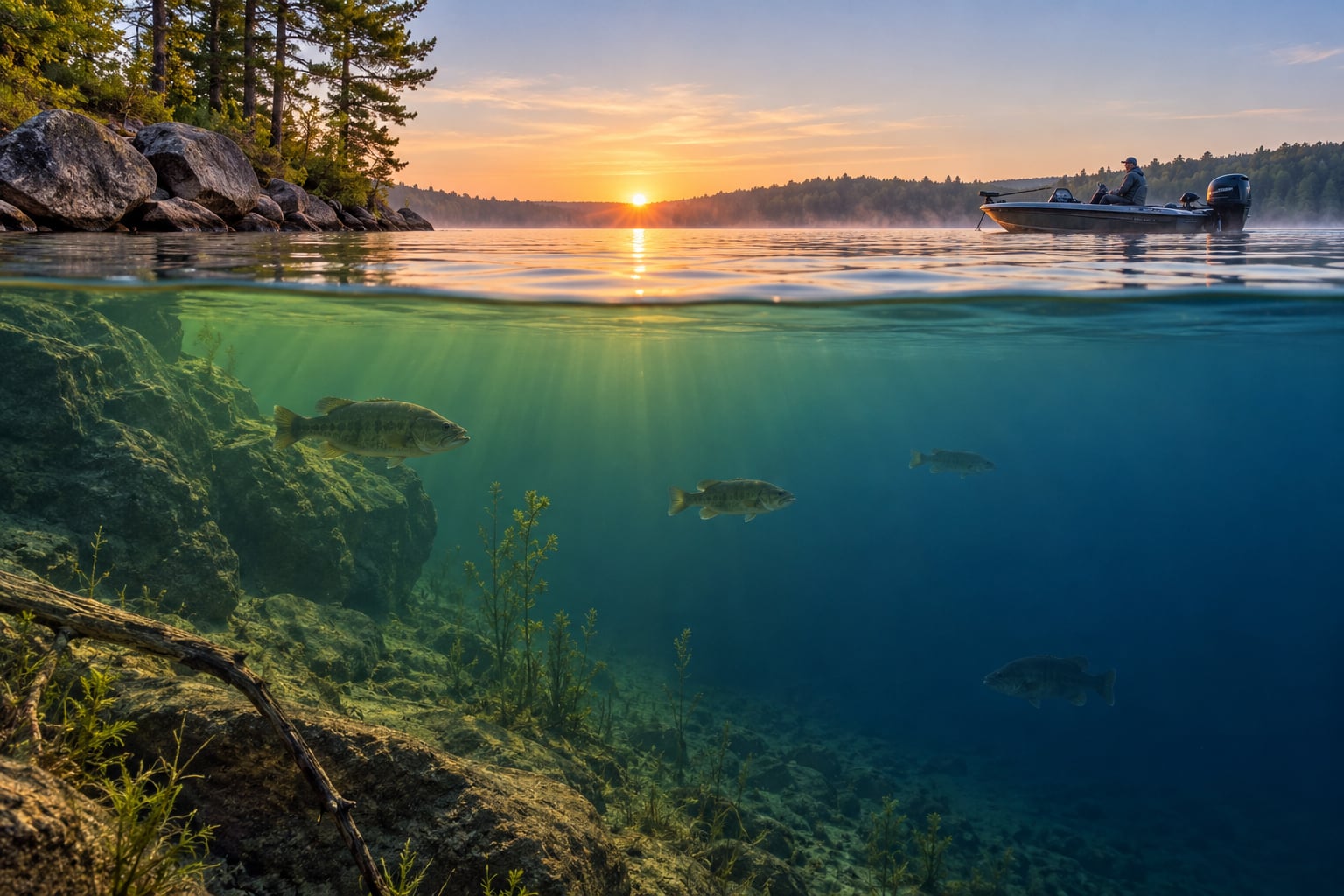
Water temperature affects fishing because fish are ectothermic, meaning their body temperature, metabolism and oxygen demand all track the water around them. A warm-water fish is not lazy and a cold-water fish is not dead. They are working at a speed the thermometer sets, and your job is to match your depth, pace and presentation to that speed.
The catch is that no single number wins. A productive temperature band on a shallow southern pond in February has nothing to do with a productive band on a deep northern reservoir in July. What follows is how to read the reading, then use it.
Table of Contents
- How Water Temperature Affects Fishing at a Glance
- What Water Temperature Does to Fish
- Why Dissolved Oxygen Matters
- How Seasons, Weather, and Depth Change the Picture
- How to Measure and Use Water Temperature
- How Temperature Should Change Your Fishing Tactics
- What a Water Temperature Reading Does Not Tell You
- Frequently Asked Questions
- What to Do First
How Water Temperature Affects Fishing at a Glance
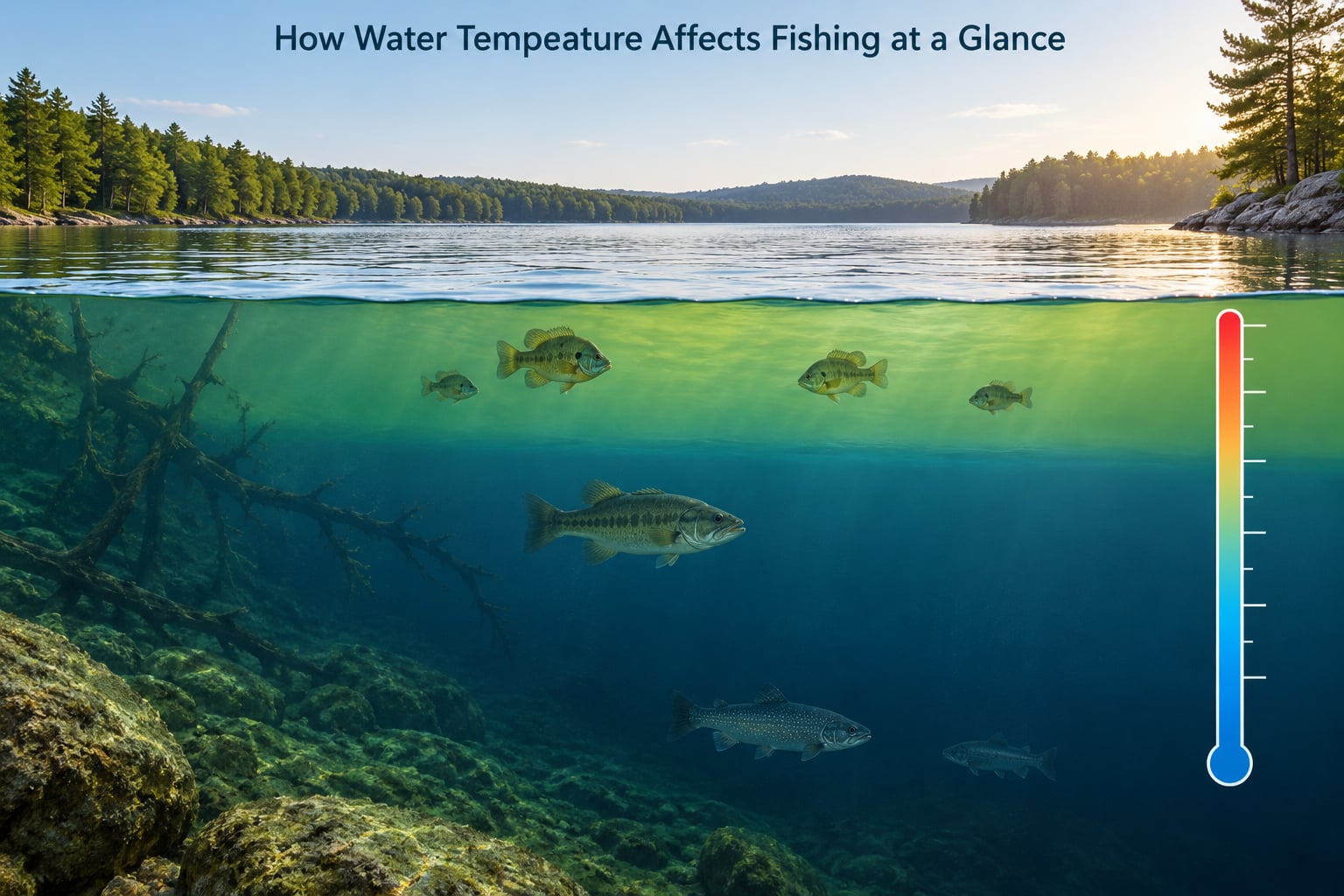
The table below is guidance, not a rulebook. Depth, weather, time of day and what species you are after can move any band up or down.
| Water temperature | Likely fish response | Where fish hold | Best approach |
|---|---|---|---|
| 34 to 40F (1 to 4C) | Very slow digestion, bites are small and spaced out | Deepest available water, tight to structure | Bottom contact, tiny jigs, live bait near the fish |
| 40 to 50F (4 to 10C) | Slow but consistent feeding for trout, walleye, carp | Deep water near drop-offs and weed edges | Slow retrieves, jigging spoons, small live bait |
| 50 to 60F (10 to 16C) | Cool-water species pick up; warm-water species still sluggish | Mid-depth near the thermocline | Steady moderate retrieves, spinnerbaits, cranks |
| 60 to 70F (16 to 21C) | Good feeding for most warm-water species | Mid to shallow, structure and shade | Normal retrieves, topwater early and late |
| 70 to 80F (21 to 27C) | Most active feeding of the year, but oxygen starts to matter | Deeper structure during the heat of the day | Longer retrieves, deeper cranks, heavier cover |
| 80F and up (27C and up) | Stress below the surface, fish compress toward cool water | Deep water, shaded pocket, refuge areas | Target cool refuges early, fish deep midday and late |
Notice that the “where fish hold” column changes more often than the “fish response” column. That is the whole game in a single line.
What Water Temperature Does to Fish
Fish regulate their body temperature by borrowing it from the water. Warmer water means a faster metabolic rate, which means more energy burned, more oxygen pulled through the gills, more food digested and more growth put on the calendar.
Cold has the opposite effect. Digestion slows, the fish spends less between meals, and most of what it does eat goes into staying alive rather than growing.
That single mechanism explains most of what anglers call “the bite being off.” A bass at 42F is not ignoring your lure. It may simply not digest another meal for six hours.
Three broad groups help you sort this out:
- Cold-water species such as trout, char and grayling are built for near-freezing conditions and lose interest as water climbs past the low 60s.
- Cool-water species such as walleye, pike and carp peak somewhere in the 50s and low 60s and get sluggish well before bass do.
- Warm-water species such as largemouth bass, channel catfish and bluegill feed hardest from the upper 60s into the upper 70s, then need cooler, deeper water in the heat.
Up near the freezing point, freshwater simply cannot stay liquid and solid at the same time, so lakes usually bottom out around 34 to 36F under ice. Fish do not freeze solid. Their cells are protected by solutes, and they simply slow down instead.
How Water Temperature Affects Fish Feeding
In many warm-water species, warmer temperatures mean faster digestion, which compresses the feeding window into shorter, more intense bursts rather than longer stretches. A bass in late July may eat hard for an hour after a sunrise drop-off, then go quiet for the rest of the day.
Cold-water fish reverse that logic. Trout and char stay workable well below temperatures where a bass barely registers interest, and anglers on cold streams and tailwaters fish them precisely because the fish are still feeding while everything else has slowed.
Panfish follow bass, just earlier in the season. Bluegill start showing interest once water clears the upper 40s, and they pick up sharply through the 50s and 60s. If you are after sunfish during a warming spring, you can often see the bite turn on before larger fish get going.
Spawning breaks the pattern. Bass and bluegill move into specific temperature windows in spring regardless of how much food is available, and crappie spawn on their own schedule later in the season. When you are in that window, temperature matters less than location.
Why Dissolved Oxygen Matters
Temperature alone decides very little. The number anglers should watch alongside it is dissolved oxygen, and the two work against each other. Colder water holds more oxygen; warmer water holds less.
So as a lake warms, fish need more oxygen while the water can supply less. That squeeze is the reason fish concentrate rather than spread out in the summer, and it is why shade, seeps and deep holes become valuable water.
Oxygen gets scarcer in a few predictable situations. Algal blooms consume oxygen when they die and decompose. Plants respire overnight and stop producing oxygen after dark, so dawn readings are the worst of the day. Low-flow rivers and shallow ponds can go anoxic in hot, still weather.
If you fish a lake that regularly has algae problems, treat early mornings on shallow flats as low-value and put the boat on the deep structure instead.
How Seasons, Weather, and Depth Change the Picture
Deep lakes separate into layers as spring turns to summer. The warm surface layer, the cold deep water and the transition between them, called the thermocline, become a set of separate fishing environments within a few feet of each other.
Wind and rain flatten or destroy that structure quickly. A two-day blow will mix a stratified lake and drop the temperature right where the fish were holding, sometimes in a single afternoon.
Cold fronts compress the bite windows rather than closing them. Before a front, warm water pushes fish shallower and feeding looks frantic. After the front drops, fish go deep and digestion slows, so bites are fewer but each one tends to be committed.
Here is the seasonal shorthand for a temperate northern lake:
| Lake type | How fast temperature changes | What that means for you |
|---|---|---|
| Shallow, vegetated lake or pond | Fast, both directions, within days | Fish stay shallower; expect bigger swings overnight |
| Deep lake or reservoir | Slow at depth, quick at the surface | The deep layer lags weeks behind the air |
| River and tailwater | Moderate, driven by flow and air | Seams and cold-water pockets matter more than depth |
| Farm pond, heavily stocked | Very fast, often poorly oxygenated | Frequent stocking can mask what temperature alone would tell you |
Air temperature is the number most anglers check first, and it is the least useful. Surface water can lag the air by a week or more in spring, and it can stay warm for days after a cold spell in autumn. If you only check the forecast app, you are guessing with extra steps.
How to Measure and Use Water Temperature
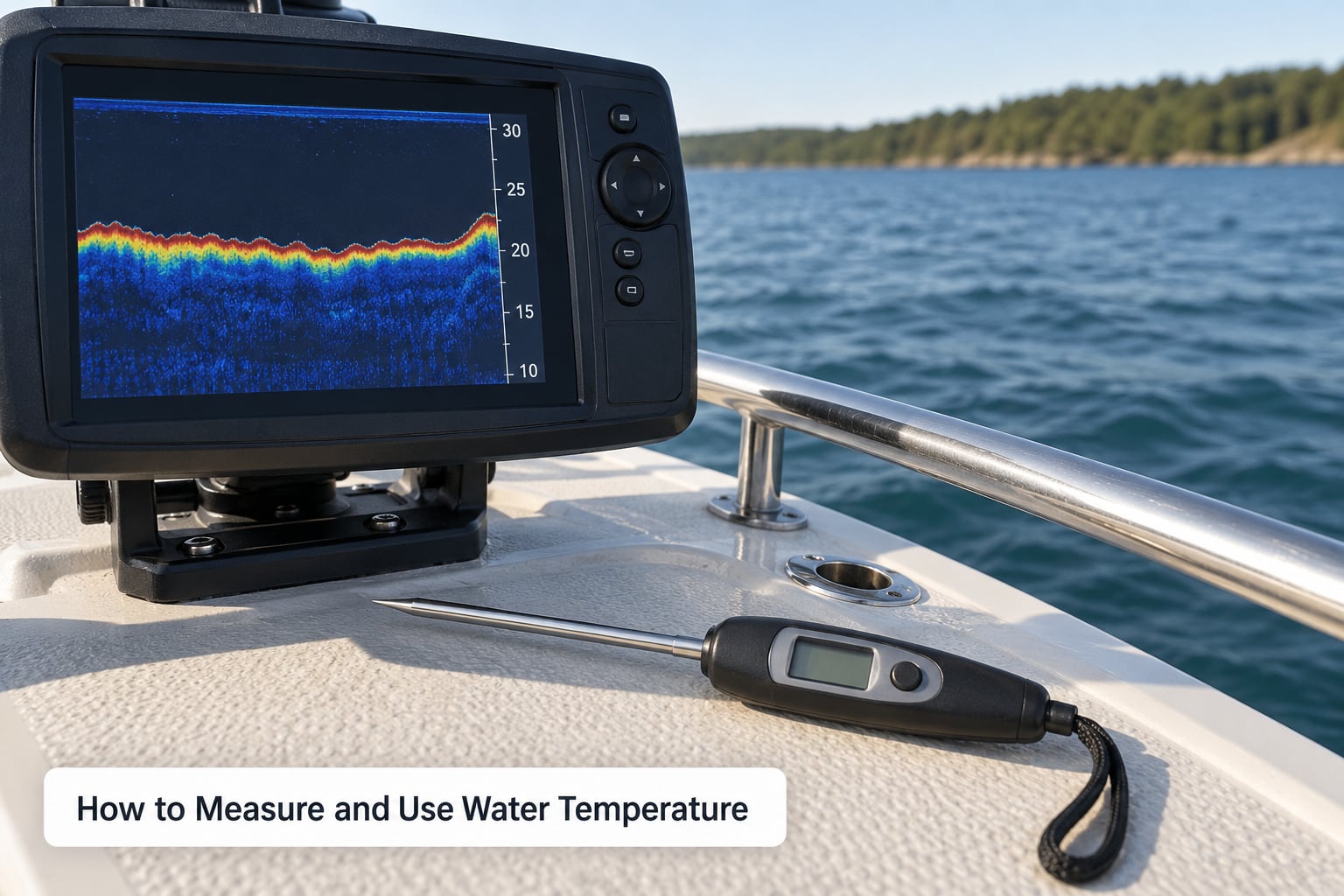
A surface reading is the most common mistake anglers make, and it is the one lake researchers keep circling back to. Lakes have little current, so water separates into layers and a warm reading off the boat tells you almost nothing about the water twenty feet down.
Here is the repeatable process:
- Get a reading from a fish finder transducer if you own one. Most units draw a scrolling temperature trace showing the whole column from surface to bottom in a few seconds.
- Carry a cheap handheld thermometer if you do not. Lower it on a line, let it settle for 30 seconds, and read it back up. It costs less than a tank of gas and tells you more than the forecast does.
- Record the reading and the depth immediately. A bare number means nothing; a number with a depth attached is a fishing plan.
- Look for the transition, not the surface number. Where the trace flattens or bends, that is the depth layer worth fishing.
- Match your presentation to that layer, then move up or down one depth band if the first hour produces nothing.
If you keep a small log of readings by date and depth, you build something better than any chart: a record of your own lake. Forecasts and historical records help, but your own trend line is what tells you whether this spring is running two weeks ahead or behind.
How Temperature Should Change Your Fishing Tactics
Once you know the number and the depth, five things usually adjust.
Location. In cold water, fish hold tight to structure: drop-offs, rock, the base of weed beds. In hot water, they hold in deep water and in shade near the surface. In spring, they move up toward the warmest water they can find.
Depth. Cold pushes fish down and makes them stationary. Heat pushes them off the surface into cover. The productive depth band is usually where the water is changing fastest, because fish have to cross it to move between food and shelter.
Pace. Cold fish do not chase. Slow everything down: long pauses on a jigging spoon, a slow crawl on a blade bait, light line where the fish cannot see well. Warm fish will chase, so fast presentations and reaction lures come back into the rotation.
Lure and bait size. Match the hatch or the forage rather than the temperature. In practice that usually means smaller profiles and slower natural movement when the water is cold, and bigger baits with more vibration when it is warm.
Pressure. Fish under heat stress tolerate handling badly. If the forecast calls for a 95F afternoon, an early start is a better plan than an afternoon start, both for the fish and for you.
When the temperature reads right and the fish still will not bite, suspect digestion rather than location. A fish that just ate a large meal in 50F water may be off the bite for hours. That is biology, not stubbornness.
What a Water Temperature Reading Does Not Tell You
A thermometer is one input among several, and over-trusting it causes its own mistakes.
- Dissolved oxygen. Two lakes at 74F can be completely different to fish if one has a seep and a reed bed and the other is a flat pan.
- Current. On rivers, the productive spot is a seam or a pocket far more often than it is a specific temperature.
- Forage. A cold front can push an entire lake onto a specific shallow mud point regardless of the reading.
- Which species are present. A productive temperature for trout tells you nothing about the walleye sharing the same reservoir.
- Recent stocking or regulations. Your state wildlife agency publishes both, and a stocked fish will bite at a temperature that wild fish would ignore.
Combine the reading with the weather, the lake’s structure, the season and whatever local knowledge you have. The number narrows the field. It does not pick the spot for you.
Frequently Asked Questions
What is the best water temperature for fishing?
It depends on the species. Largemouth bass feed best from the upper 60s into the upper 70s, trout and walleye peak in the 50s and low 60s, and panfish pick up from the upper 40s. There is no universal best temperature, because depth, time of day and dissolved oxygen can move the productive band. Read the species you want, then read the temperature at the depth you will fish.
Do I need a thermometer to catch more fish?
Not to catch fish, but to stop missing the ones that are already feeding. Most anglers read the surface and decide the lake is too cold or too hot, then leave or stay home while fish feed a few feet below. A handheld thermometer on a line or a fish finder temperature trace takes seconds and tells you what the surface reading cannot. It is the cheapest upgrade to a fishing plan you will make.
Should I fish near the surface or deep when water is warm?
Deep, or at least cool. When surface water is warm, it holds less oxygen and sunlight drives the temperature higher, so fish leave it during the day. Early morning and late evening are exceptions when the surface cools enough to hold them. Work shaded structure, drop-offs and deeper water, and treat a flat pan in the afternoon as a place to leave rather than a place to fish.
Can rain change fishing activity even when temperature stays the same?
Yes. Rain raises water levels, floods vegetation and shoreline cover with current and stained water, and often drops oxygen in the shallows before the lake can replenish it. Fish often feed harder right after the rain stops, then shift away from flooded cover if it stays turbid. The thermometer may not change much, but where the fish are and how much pressure they can handle often does.
How deep should I fish when the water temperature is rising?
Start where the temperature is changing fastest rather than at a fixed depth. In spring that usually means the upper half of the water column as it warms, moving toward weed edges and rocky points. Watch the temperature trace on your fish finder for the bend where warm water overlays cool water, because that transition concentrates both fish and forage. Start there and adjust by one band rather than fishing the whole column.
What to Do First
Check the water temperature at more than one depth before you decide anything, and compare it with the last week of weather. Find the band your target species feeds in, then start at the depth where the temperature changes rather than at the assumed warm-water zone.
One more note for the cold months: a PFD, a buddy and a check on ice thickness matter more than any reading on the thermometer. Cold water and thin ice end trips quickly, and no bass is worth that.