Lake trout are visual ambush predators that hunt by sight in open water, so how to pick flies for lake trout comes down to four numbers: how deep the fish are holding, how bright it is down there, how big the forage is, and how fast you are moving the fly. Get those four right and the pattern almost picks itself. Get them wrong and a beautiful fly will drift past a fish that never looks at it.
The trap most anglers fall into is applying stream-trout rules to a lake fish. Matching a hatch with a size 14 dry matters on a creek. It does nothing for char that are looking for a 4-inch cisco against a grey wall of open water.
Here is the process I use, and the numbers that go with it.
Table of Contents
- 1What You Need
- 2How to Pick Flies for Lake Trout Step by Step
- 3Match the Fly to Water Temperature and Depth
- 4Choose the Right Fly for the Season and Hatch
- 5Use Size, Color, and Presentation to Refine the Choice
- 6Common Mistakes
- 7Frequently Asked Questions
- 8What is the best fly for lake trout?
- 9Are lake trout easier to catch in cold or warm water?
- 10What size fly should I use for lake trout?
- 11Should I use mayflies, caddisflies, or baitfish imitations for lake trout?
- 12How deep should I fish for lake trout?
- 13Should I fish lake trout during the daylight or at night?
- 14Conclusion
What You Need
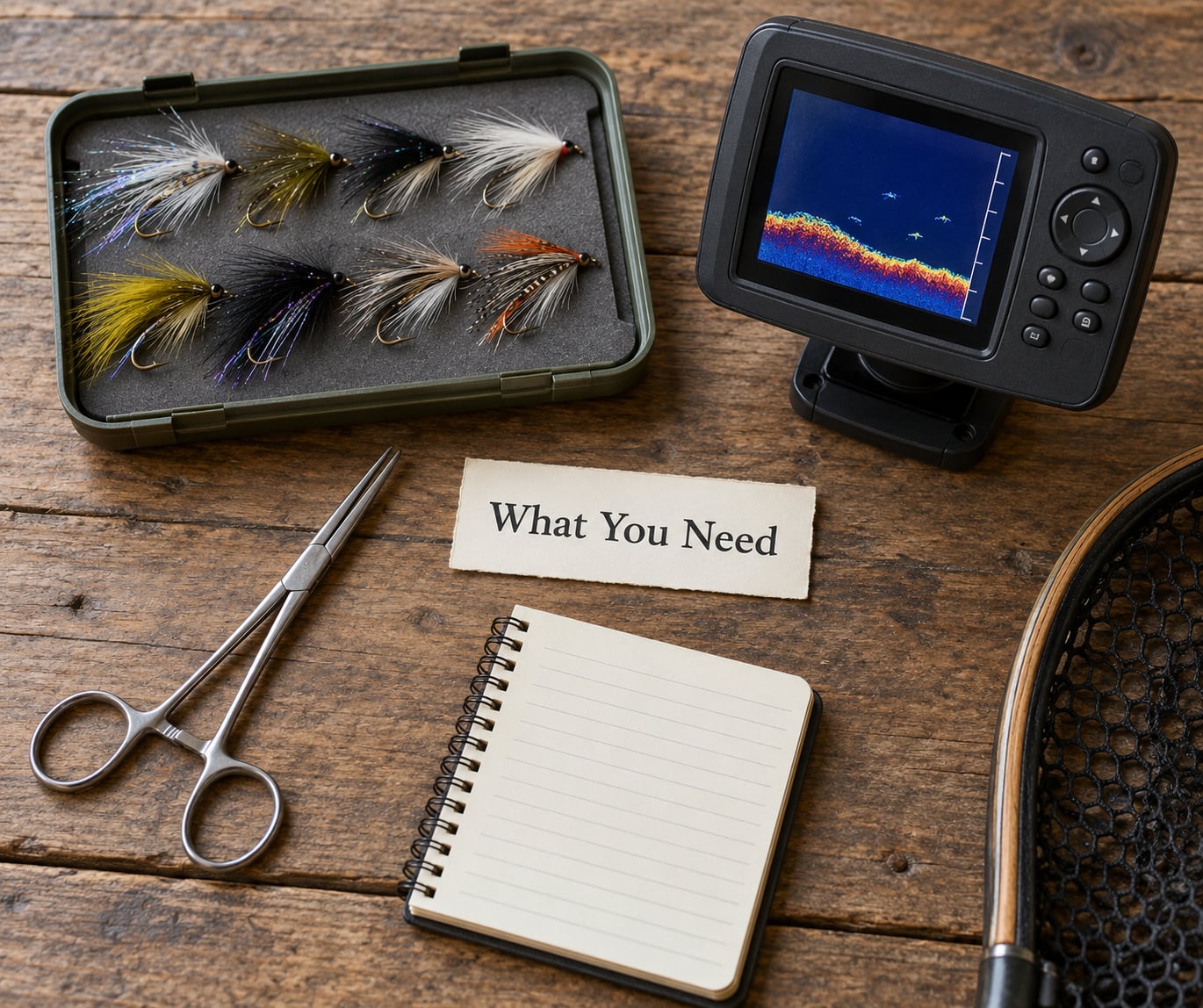
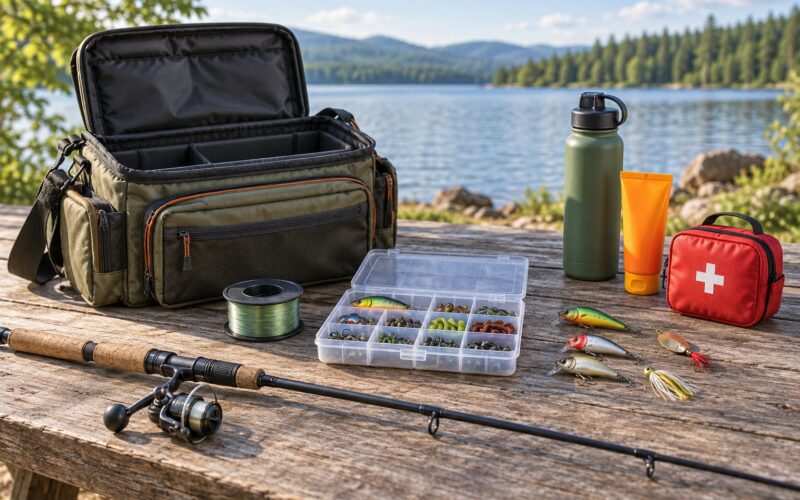
Before you tie anything on, you need five pieces of information and a box that covers them. The information is what narrows the choice; the box is what you reach into once the narrowing is done.
- Water temperature at depth. A surface reading from the boat ramp is nearly useless in July. Get a thermometer reading at the depth you plan to fish, or read the lake’s temperature chart before you leave home.
- Depth of the fish. A bathymetric map, a depth finder, or a season-based assumption. Drop-offs, shoal tops, and break-lines give you the depth before the fish do.
- The lake’s forage base. Cisco, lake whitefish, herring, smelt, leeches, or zooplankton. If you do not know what lives in the lake, you are guessing at fly size.
- Water colour and light level. Clear and bright, stained and dim, or overcast. This decides contrast, not attractiveness.
- Hatch reports and observation. Bugs on the windshield, fish working shallow, birds diving. Cheap, immediate, and more reliable than any pattern list.
On the gear side, a 6-weight to 8-weight rod covers nearly all lake trout work. A large arbor reel with a sealed drag matters more than the brand name, because the drag is what keeps a 15-pound fish from spooling you when you are mid-count on the retrieve. For leaders, an intermediate or sinking line gets a weighted fly to depth without a shooting head, and a 12-foot tapered leader ending in 3x to 5x fluorocarbon covers the tippet range. Heavier wire tippet only earns its place when you are throwing swim baits or the fish are genuinely pressured.
How to Pick Flies for Lake Trout Step by Step
Run these in order. Each step narrows the field, and most anglers who skip a step end up changing patterns when they should have changed depth.
- Identify the lake and the fish you are after. Glacier-fed, inland, or reservoir changes everything downstream, because it sets the forage and the temperature range.
- Measure temperature and depth. This is the step that decides the trip. Char compress into cold, oxygen-rich water and drop as it warms.
- Determine the season and the likely forage. Spring whitefish and Cisco, summer forage pushed deep, fall spawning fish keyed on anything that moves.
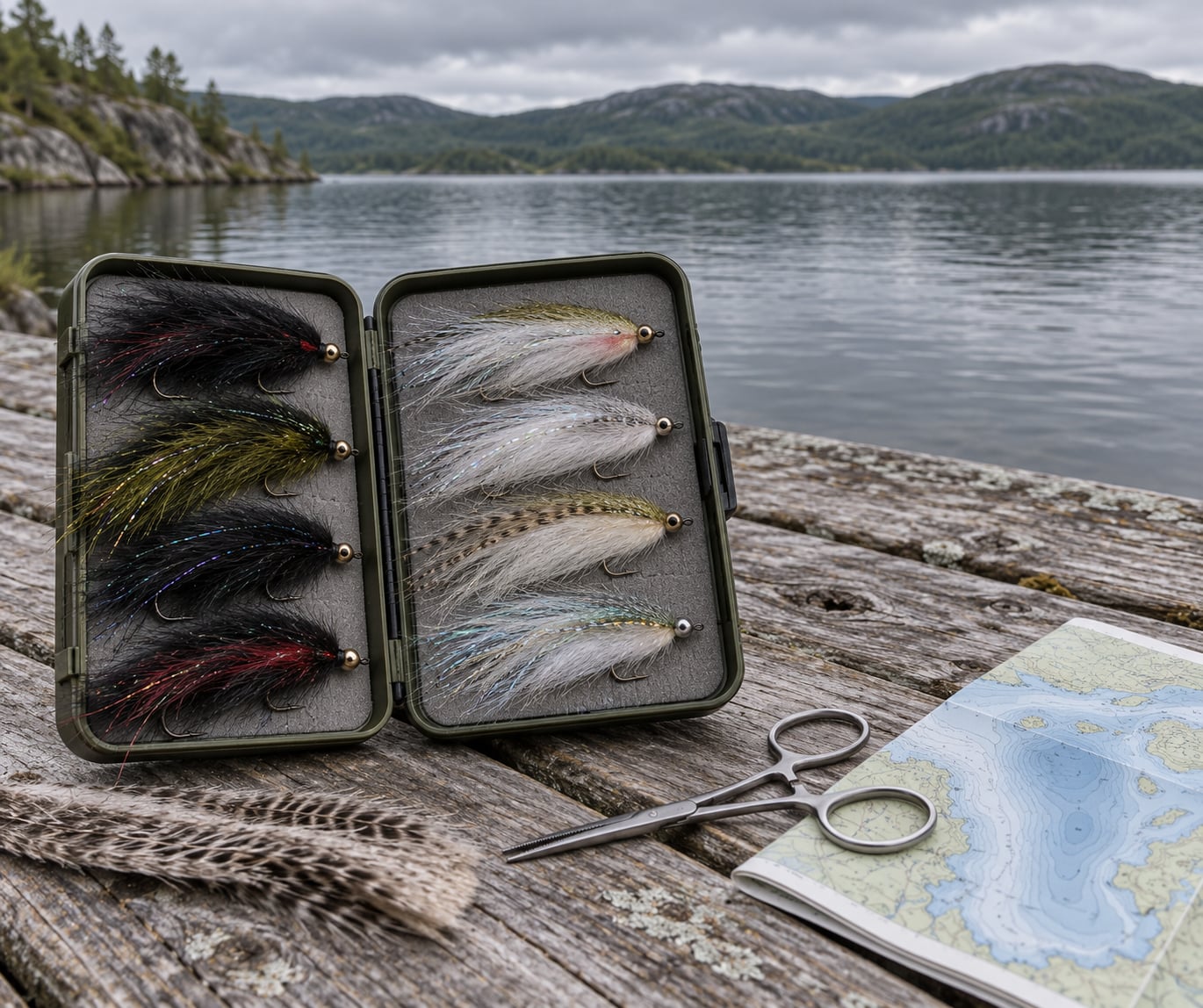
- Select a fly family. Baitfish imitation, leech, soft plastic, terrestrial, or an attractor fly built to be seen.
- Choose the size. Match the forage, not the fish. Big lake trout regularly take flies far lighter than their body size suggests.
- Decide how the fly gets to depth. Floating line and a long leader, weighted fly on an intermediate line, or a sink tip.
- Confirm with fish activity. If nothing follows after a few deliberate casts at the right depth, the depth or retrieve is wrong long before the pattern is.
Match the Fly to Water Temperature and Depth
Depth is the single biggest driver of fly choice, and it sets the size and weight of the fly at the same time. A fly that sinks too slowly spends the whole retrieve in the wrong water column, which is why so many anglers report “no interest” when the fish were right there.
| Depth of the fish | Fly length | Fly type | Line and leader |
|---|---|---|---|
| 2 to 8 feet | 2 to 4 inch | Baitfish, leech, small streamer | Floating line, long leader |
| 8 to 20 feet | 3 to 6 inch | Bead head or lightly weighted streamer | Intermediate line |
| 20 to 40 feet | 4 to 8 inch | Weighted leech, articulated bait | Intermediate or sinking line |
| 40 to 80 feet | 6 to 10 inch | Heavy weighted fly, swim bait | Sinking line or sink tip |
Cold water, in the low 40s Fahrenheit or below, keeps char shallow and close to the bottom where the water stays cold. Those fish are often less fussy, so a size 10 to 12 black or olive woolly bugger with a gold cone head is a genuinely good answer. As water warms into the 50s, fish drop off the shoals and push toward the break-line where the thermocline forms.
Once the lake passes the low 60s, most of the lake is too warm and the fish sit deep, tight to structure, often in the last few feet before the bottom. That is the hardest fishing of the year and the most common place beginners quit. Flies have to get there quickly and sit still, so weighting and a sinking line stop being optional.
Light matters as much as temperature. At 50 feet on a clear day, a natural-coloured brown fly is nearly invisible against the background. Contrast beats realism down deep: white, chartreuse, silver, and hot pink give a fish something to lock onto. In stained water the opposite is true, and muted greys and naturals stop looking like a mistake.
Choose the Right Fly for the Season and Hatch
Season sets the depth, and depth sets the fly. Use this calendar as a starting point, then adjust for the individual lake, because a shallow inland lake and a 300-foot glacial basin will never behave the same way.
| Season | Water temperature | Typical depth | Key prey | Fly to reach for |
|---|---|---|---|---|
| Ice-out to early spring | Just above freezing to the low 40s | Shallow, near structure | Whitefish, cisco, leeches in the shallows | Woolly bugger, Clouser minnow, small leech stripper |
| Late spring | 45 to 55F | 10 to 25 feet | Cisco and herring shoals | Rabbit fur strip leech, 4 to 6 inch white baitfish |
| Summer structure | 60 to 70F | 30 to 80 feet | Forage fish pushed deep, zooplankton | Weighted leech, articulated bait, contrast-coloured streamer |
| Fall pre-spawn | Cooling toward 45F | Shallow again | Anything moving, fish keyed aggressively | Deceiver, 6 to 10 inch streamer, bright attractor |
Lake trout are not known for rising to a dry fly the way a brook trout is. When there is a hatch, it is usually a midge or damselfly hatch in June and July, and even then the fish are usually taking them below the surface rather than on top. A bead head damsel or a small dark nymph drifted deep on the fly line is a legitimate choice on a calm afternoon. It is not the reliable default.
Terrestrials matter more than most lake trout literature admits. Ants, beetles, and hoppers blown onto the lake in midsummer get picked up in open water, and a foam hopper with a dark body is an easy fly to see and easy to fish slowly.
Outside of that early-season hatch window, the honest answer for most of the season is a baitfish or leech pattern in the right size at the right depth. Everything else is a variation on that.
Use Size, Color, and Presentation to Refine the Choice
Size first. A fly much larger than the forage in the lake gets ignored, and this is the most common beginner error, because anglers look at a 10-pound fish and assume it wants a 10-inch fly. Community reports are consistent on the opposite point: big lake trout take surprisingly light for their body size.
Second, think about how big the fly looks at depth. Water compresses your apparent view of the fish, but the fish sees the fly against a lit background much the way you see a fly against the sky. A 4-inch fly at 30 feet does not need to be 8 inches long; it needs enough contrast to hold its shape in dim light.
Third, retrieval beats pattern selection more often than not. Slow, short strips with a pause between each one are what trigger the bump and slap that precedes almost every take. Striping fast strips the action out of the fly and the fish loses interest before it commits. When nothing is happening, change the retrieve before you change the pattern. Stop-and-go, a slow hand retrieve, or a dead drift under a boat likely does more than a fresh box of patterns.
Colour is the last lever, not the first. In stained or tannin water, go bright and flat. On clear water under a low overcast, go natural and darker. On a bright sunny day in June, silver and white patterns carry light into the fish’s window. If you are changing colour, change something else at the same time so you know which one did the work.
Common Mistakes
- Choosing a fly because the label says lake trout. Fix: pick by depth first. A pattern name tells you nothing about whether it will reach the fish.
- Fishing too shallow in warm water. Fix: when the surface temperature passes the low 60s, assume the fish are below the thermocline and start deep.
- Applying stream-trout rules. Small, drab, matching the hatch flies produce nothing from char. Fix: match the profile of the forage in the lake instead.
- Ignoring temperature and hatch data. Fix: check the lake temperature chart and note what is on the windshield before you make one cast.
- Using the wrong size for the depth. Fix: use the depth-to-fly-size table above and add weight before you add length.
- Changing patterns too quickly. Fix: make six or eight casts at the same fly before you decide it is wrong. Then change the retrieve, not the pattern.
- Relying on colour alone. Fix: colour is the final adjustment. Depth, then size, then movement, then colour.
One more worth naming: confusing lake trout with brook trout. Brook trout are stream fish that take small flies and dries. Lake trout are open-water fish that take forage imitations. The flies that catch one are close to useless for the other, and the two rarely live in the same water.
Frequently Asked Questions
What is the best fly for lake trout?
For most lakes and most of the season, a weighted rabbit fur strip leech in olive, brown, or white, sized 3 to 6 inches, is the most dependable single choice. It sinks on its own, lands quietly, and looks like the forage lake trout feed on in spring and summer. In clear shallow water in the fall, a white or silver baitfish imitation in the same size range is harder to ignore. There is no universal winner, but starting with a weighted leech and a contrast-coloured baitfish pattern covers most conditions.
Are lake trout easier to catch in cold or warm water?
Cold water, generally anything below 50F, is easier. Char stay shallow, close to cold structure, and feed hard when the ice is going off and again before spawning. As water warms past the low 60s they drop below the thermocline, stop chasing surface food, and turn into slow, energy-conscious fish sitting in the last few feet above the bottom. Warm-water fishing is possible but demands weighted flies, slower retrieves, and more patience.
What size fly should I use for lake trout?
Match the forage, not the fish. In shallow water at ice-out, size 8 to 12 flies work well. At 10 to 25 feet, go 3 to 6 inches. At 30 to 50 feet, step up to 4 to 8 inches. Beyond 50 feet, 6 to 10 inch weighted flies and swim baits make more sense. Big fish routinely take flies lighter than their size suggests, so match what lives in the lake rather than what you expect the trout to want.
Should I use mayflies, caddisflies, or baitfish imitations for lake trout?
Baitfish and leech imitations for most of the year. Lake trout feed on cisco, whitefish, herring, smelt, minnows, and leeches depending on the lake and the season, and they take those prey below the surface. Insect patterns such as midge and damselfly imitations work on calm afternoons when a hatch is visible, especially early in the season. Caddisflies are not a productive choice on most lakes. If you only tie two flies, tie a weighted leech and a white baitfish imitation.
How deep should I fish for lake trout?
Find the fish before you pick the fly, and the depth decides everything else. At ice-out they hold in the 2 to 15 foot range near shoals and creek mouths. Through late spring they work 10 to 30 feet along drop-off edges and break-lines. In midsummer most fish sit 40 to 80 feet down, tight to the bottom on the cold layer. Read the lake’s temperature chart, watch your depth finder, and set your fly’s sink rate to match the depth rather than the other way around.
Should I fish lake trout during the daylight or at night?
Daylight covers more situations, and it is far easier to find structure and see your line when the sun is up. That said, char feed more actively in low light and at night, so evening and early morning are prime windows, especially in stained water and during summer when fish hold deep by day. Night fishing also brings the fish closer to the surface and puts them on sonar, so topwater and surface presentations become viable. Whichever window you pick, the depth and forage rules do not change.
Conclusion
Start with the water, not the fly box. Check the temperature at depth, find where the fish are holding, work out what forage that lake supports, and pick one fly that matches that prey at that depth and light level. Fish it with slow strips and real pauses.
When it fails, change depth first, then retrieve, then size, and only then pattern. That order is the whole of how to pick flies for lake trout, and it will get you into fish far faster than working through a box of patterns.