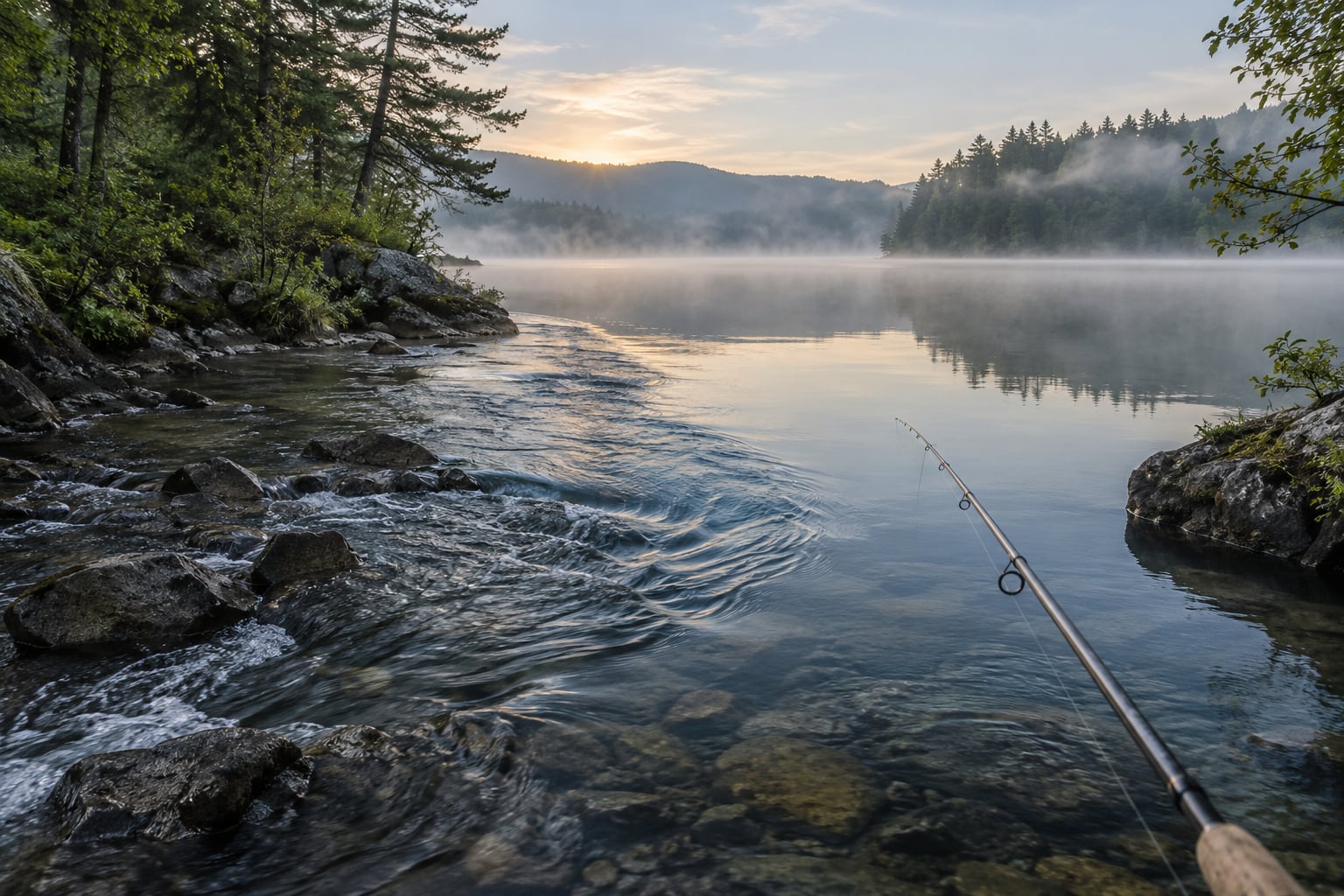
To fish a lake inlet and outlet well, target the place where the current changes speed and cast on the slow side of that line. An inlet is where a creek or river pushes into the lake; an outlet is where the lake drains out through a channel, falls, or dam.
Both spots funnel bait, and both reward the same skill: reading moving water. If you can find the seam between fast and slow, you can catch fish on almost any lake, in about an hour, with a rod and a few lures.
It is a moderate-difficulty skill. The casting is easy; the reading is the work. Most anglers who struggle at inlets and outlets are fishing the wrong side of the current, not casting badly.
Table of Contents
What You Need
Start with a rod you can lean on. A medium-heavy spinning rod or a baitcasting outfit in the 6-foot to 7-foot range handles the casting distance you need and still has enough backbone to keep a rod tip loaded when current pulls the line sideways.
Line choice is a decision, not a default. If the inflow is moderate, 10-pound or 12-pound fluorocarbon works with a plastic or crankbait. If you are wading a creek that is pushing hard, drop to 6-pound or 8-pound and put your weight in the sinker instead of the line.
Heavier flow needs real weight on the bottom. Anglers fishing heavy inflow current report dropping anywhere from 12 ounces to a full pound of sinker, and they pair it with a heavier rod and reel so they can reel against the flow rather than just hold the line.
- Rig: rod, reel, sink-tip or bottom-walking line, fluorocarbon leader, sliding sinker, egg or sinker, weighted hook or swimbait hook.
- Lures: crankbaits that dive past the seam, jigs, spinnerbaits with a slow blade, soft plastics worked along the bottom, and a beadhead or weightless soft plastic for the slow seam.
- Bait: live or frozen minnows and shiners for walleye, trout, and catfish; a night crawler or crawfish tail for smallmouth in stained spring water.
- Fish-finding: a depth finder or fish finder with side-scan, a mapping app with bathymetry contours, and a handheld thermometer you can drop in the inflow.
- Safety: a properly fitted life jacket, cleated nonslip boots, a hooked knife you can reach with one hand, and a second person if you wade.
On gear escalation, make it before the trip, not during the first hour. Trying to hold bottom with too light a setup is the reason beginners think an inlet is unfishable.
How to Fish a Lake Inlet and Outlet Step by Step
Fish the edge of the current, not the middle of it. Working the transition in order — from the fastest water to the slowest — is what turns a good-looking spot into fish.
1. Scout before you cast. Stand where you can see the water and look for the line where the surface texture changes from rough to smooth. That visible break is the current seam. Check your depth finder for the contour underneath it.
2. Check the inflow temperature first. Put a thermometer in the incoming water. A creek fed by snowmelt can run well below the lake temperature and shut a productive inlet down for weeks.
3. Position upstream or across, never straight into the flow. Cast upcurrent or perpendicular so the current carries the lure back toward you. That free drift is what puts the lure in front of a fish that is facing upstream.
4. Present the lure at the depth of the fish. Watch your depth finder. If the seam sits over a shelf in 8 feet, a floating crankbait is a waste, and if fish are stacked at 20 feet, dropping to the bottom is the whole trip.
5. Fish the slow side first, then push into faster water. Give the seam 10 to 15 minutes before you decide anything about the spot.
6. Move downstream along the edge. If nothing happens, work down the seam in 20-to-30-foot increments instead of casting randomly or leaving.
7. Fight and handle with the current in mind. Keep the rod pointed downstream and never bring a fish up under the boat until it stops moving. Use a net.
How to Fish a Lake Inlet
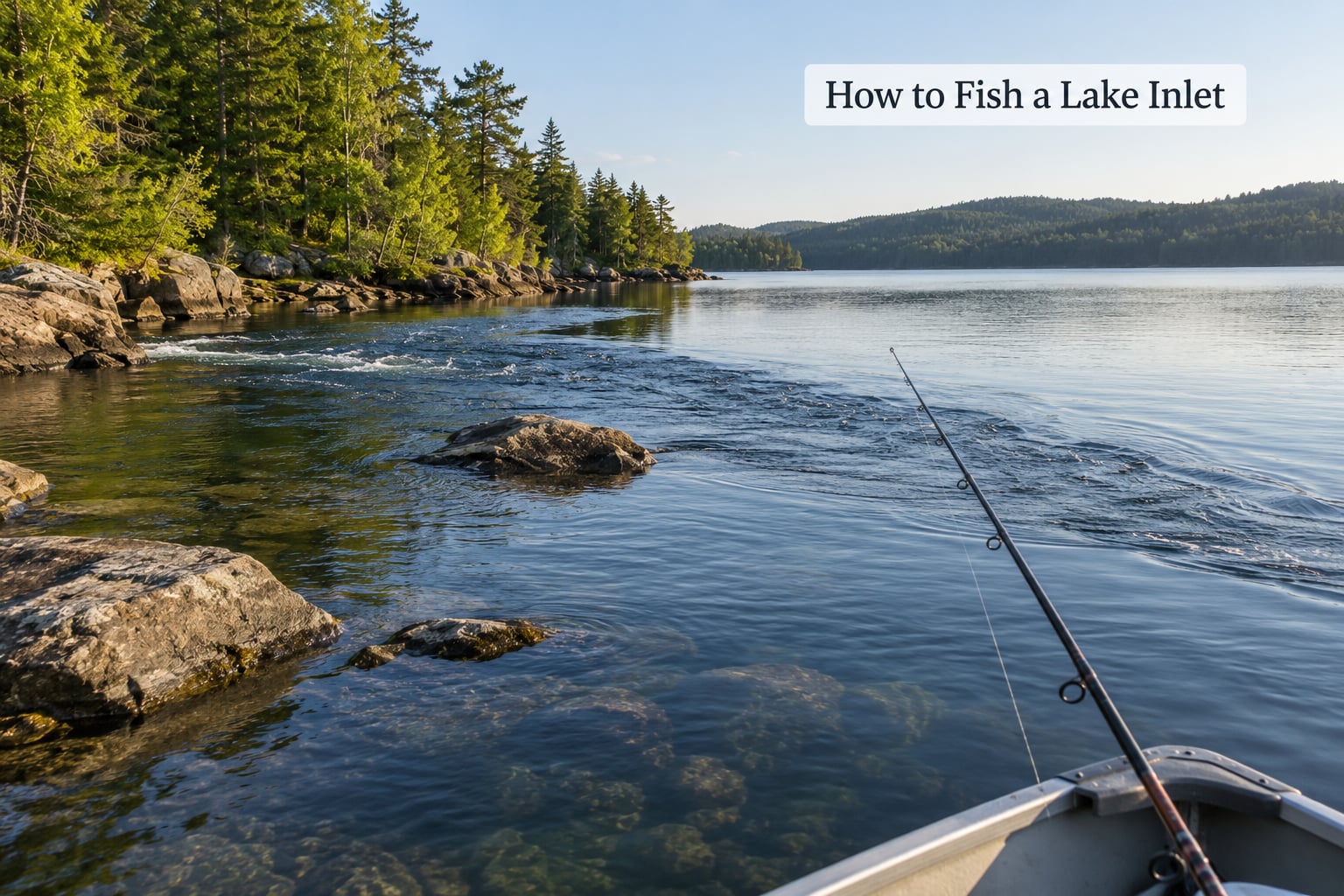
An inlet works as a conveyor belt. Water brings plankton, insects, and small baitfish in from the creek, and fish station themselves on the edge of that delivery, just inside the slow water, where they can pick off what comes through with the least effort.
That is the whole secret. The fish are not sitting in the jet. They are sitting next to it, in a pocket of reduced flow where the current has just lost strength, and they are facing into it.
Look for four things when you get to an inlet:
- The current seam, the visible line where rough water meets smooth water. Work it in short hops with a jig or a slow crankbait.
- Boulders and rock piles, which break the flow into pockets. More rocks means more holding spots behind them.
- Inside bends and dog legs, where current sweeps into a corner and slows down.
- The drop just inside the mouth, where the creek channel falls away from the shallows.
For the retrieve, let the current do the work. Cast upcurrent, hold the rod tip low, and let the lure come back to you. Then reel the slack out and make one short pull to reposition. Repeat that pattern down the seam.
Trout feed hard at inlets in spring and fall when the water is cool and clean. Walleye and smallmouth prefer the same seam with a live bait or a jighead dragged along the bottom. Bass work the slower eddies behind the rocks rather than the open seam.
How to Fish a Lake Outlet
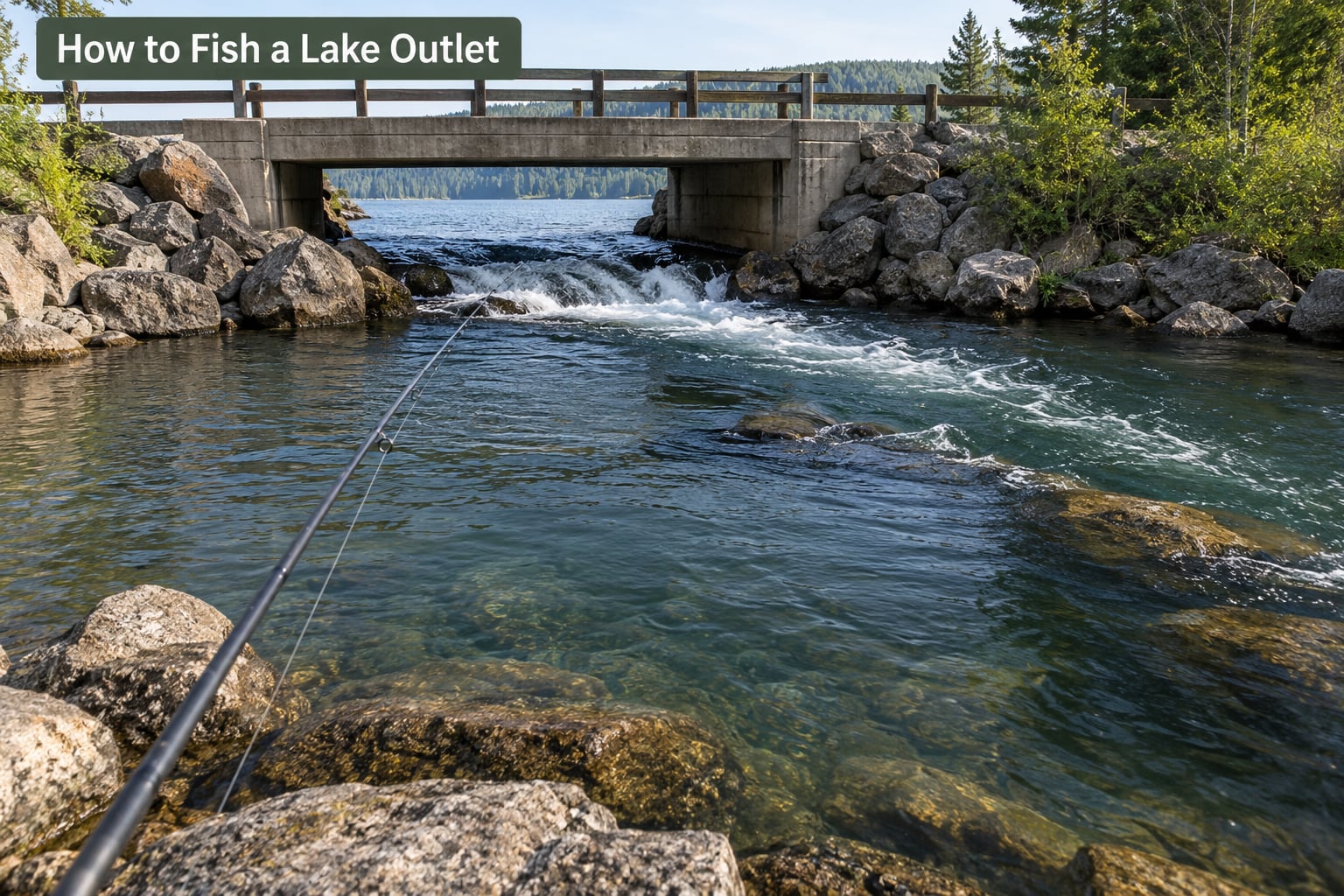
An outlet is harder to read because the water is leaving, not arriving. There is no food conveyor running into the lake. What an outlet has instead is a drop-off where the flow piles up and pushes down.
The target is called the lip current. Right at the edge of the drop, where the water goes over, flow drops in speed and stacks up before the deeper water pulls it down. Fish collect in that pocket because it is where the current finally breaks up.
Set up below the outlet rather than in it. Position the boat downstream where you can cast up at the lip current and the broken water above the drop. Pick up any fish holding in the pool below and along the riprap, then work the vegetation and the seams around the boulders in that pool.
Do not stand in the shallow mouth of the outlet. That advice comes straight from ice anglers who learn it the hard way: by late ice and at ice out, the shallow outlet holds almost nothing, and the action moves to staging areas near the outlet. Patterns develop on those staging areas, and that is where the numbers are.
Two other outlet situations are worth knowing. If the outlet runs through rapids, a falls, or below a dam, fish the river portion below the barrier rather than the lake side, where the water has any depth and structure to hold against. And an outlet on a windy day can be fished as an inflow, because wind-driven current can move as much water as a small stream.
How to Fish a Lake Inlet and Outlet From a Position That Holds
Boat and bank positioning decides whether you can fish a spot at all. At an inlet, set up on the downstream side of the seam so you can cast upstream and drift back. At an outlet, set up below the lip current so you can cast up into the pocket of reduced flow.
From shore or wading, stand far enough back to reach the whole edge with one or two casts. Wading straight into an inflow channel is how people get swept off their feet, and it puts you in the one place on the seam where you cannot see your own line.
| Inlet or outlet | Water movement | Best season | Key structure to target | Typical targets |
|---|---|---|---|---|
| Inlet | Flowing into the lake | Early ice through early summer; strongest right after ice out | Current seam, boulders, inside bends, the drop inside the mouth | Trout, walleye, smallmouth bass, panfish |
| Outlet | Flowing out of the lake | Late ice and ice out, then fall | Lip current at the drop-off, staging areas, pool below rapids or a dam | Walleye, trout, smallmouth bass, channel catfish |
If you can only fish one, pick the inlet while the water is cold and the bait is moving. Pick the outlet when water temperatures even out in midsummer, when the outlet’s broken water and drop-offs are holding fish that the shallows have pushed off.
Common Mistakes
Fishing the jet itself. The fastest water at an inlet or outlet has very few fish in it. Correction: move your casts to the slow side of the seam, just inside the break, and leave the middle alone.
Standing in the shallow outlet mouth. Late in the season that spot is empty, and the water there moves fast. Correction: work the staging areas near the outlet instead.
Ignoring the inflow temperature. A creek running well below the lake temperature will hold few fish no matter how good the structure looks. Correction: drop a thermometer in the incoming water before you commit the trip.
Under-rigging for the current. Lighter than you need means you spend the day watching your line float past you. Correction: heavier sinker, stronger rod, and let the weight hold bottom while the rod handles the pull.
Casting into the flow instead of letting it work. Correction: cast upcurrent or across, keep the tip low, and let the current carry the lure back.
Fishing blind in stained water. Spring runoff plumes kill visibility and make structure hard to read. Correction: trust the finder, slow down, and switch lure colors to something with contrast against tea-colored water instead of matching it.
Leaving too early. A seam often takes 20 to 30 minutes to produce the first fish. Correction: work the edge in order, downstream, for a full pass before you move.
Ignoring rules and bank hazards. Inlet and outlet creeks are often regulated separately from the lake, with their own bag limits, bait restrictions, and gear bans. Outlet banks can be undercut from years of high water. Correction: check the rules for the specific water before you fish, wear a life jacket, and stay off undercut edges.
Frequently Asked Questions
Are inlets or outlets better for fishing?
Inlets usually produce more fish and more holding spots, so most anglers fish them first, especially while the water is cold and bait is moving with the inflow. Outlets take over later, particularly around late ice and ice out, and when summer pushes fish off the shallows onto deeper drop-offs. If you can only pick one spot for a trip, match the feature to the water temperature and what the fish are eating that week.
Should I fish with the current or against it at an inlet?
Cast across or upstream so the current carries the lure back toward you. That drift is what puts your bait in front of a fish that is facing upstream into the flow. Fighting the current by reeling upstream all day burns your hands and loses the fish you could have drifted over. Keep the rod tip low and downcurrent, and let the water do the retrieving for as long as you can.
How do you fish when there is a strong current?
Use a heavier rod and reel, drop your line weight, and put the weight in the sinker. Anglers fishing heavy inflow report 12 ounces to a full pound, which lets you hold bottom without a heavy line. Cast upstream or across so the drift works for you, and keep the rod pointed downstream so the line pulls straight. If you cannot hold bottom at all, move to the eddy line rather than fighting it.
How do you catch fish in a spillway?
Treat a spillway as a high-energy outlet. Fish the broken water and riprap on the downstream side, then work the pool at the tail where the current dissipates. Position yourself below the structure so you can cast up into the reduced flow, and target the seams between boulders where fish pause to rest. Stay clear of the concrete itself and of the current pulling into the gate.
How cold is too cold for fish at an inlet?
The question is not how cold the lake is, it is how cold the inflow is compared with the lake. Water coming off snowmelt can run well below the surrounding lake temperature, and fish will move away from the mouth entirely. Put a thermometer in the incoming water before you fish. If the inflow is markedly colder than the lake, work the edges away from the mouth or wait for the runoff to slow.
Is shore fishing an inlet effective?
It can be, especially for trout, panfish, and smallmouth, and it avoids the boat cost entirely. Stand far enough back that you can reach the whole seam with a short cast, and fish the seam from downstream so the drift runs toward you. Wading straight into the inflow channel is the main mistake, because the current there can knock you down and you lose sight of your own line.
Conclusion
Find the line where the water changes speed, and that line is where the fish are. Put a thermometer in the inflow before you commit. Set up on the downstream side so the drift works for you, pick one lure matched to the depth and the clarity, and work the edge methodically from fast water to slow.