Rinse the reel in fresh water while the drag is screwed tight, wipe it down, let it dry completely, oil the moving parts, back the drag off, and store the reel somewhere cool and dry. Ten minutes after a saltwater trip, a good bit longer if you are doing the seasonal version.
Salt sitting in the drag stack, sand grinding around the gear head, and a drag washer held at full pressure for half a year do more damage than actual fishing does. That is the short version of how to clean and store a fishing reel: get the salt off, get the metal dry, oil the friction points, and take the pressure off before the reel goes in the truck.
The detail is where most people go wrong, usually by dunking a sealed reel in a bucket or reaching for WD-40.
Table of Contents
- 1What You Need
- 2How to Clean and Store a Fishing Reel Step by Step
- 3Step 1: Prepare the Reel and Remove the Line
- 4Step 2: Clean the Spool and Line Area
- 5Step 3: Clean the Drag and Gears
- 6Step 4: Dry and Lubricate Moving Parts
- 7Step 5: Reassemble, Test, and Store the Reel
- 8Common Mistakes to Avoid When You Clean and Store a Fishing Reel
- 9Frequently Asked Questions
- 10How often should I clean a fishing reel?
- 11Can I soak a fishing reel in freshwater after saltwater fishing?
- 12What oil should I use on a fishing reel?
- 13How do I store a fishing reel for a long time?
- 14Should I remove the line before storing a fishing reel?
- 15When does a fishing reel need professional servicing?
- 16Conclusion
What You Need
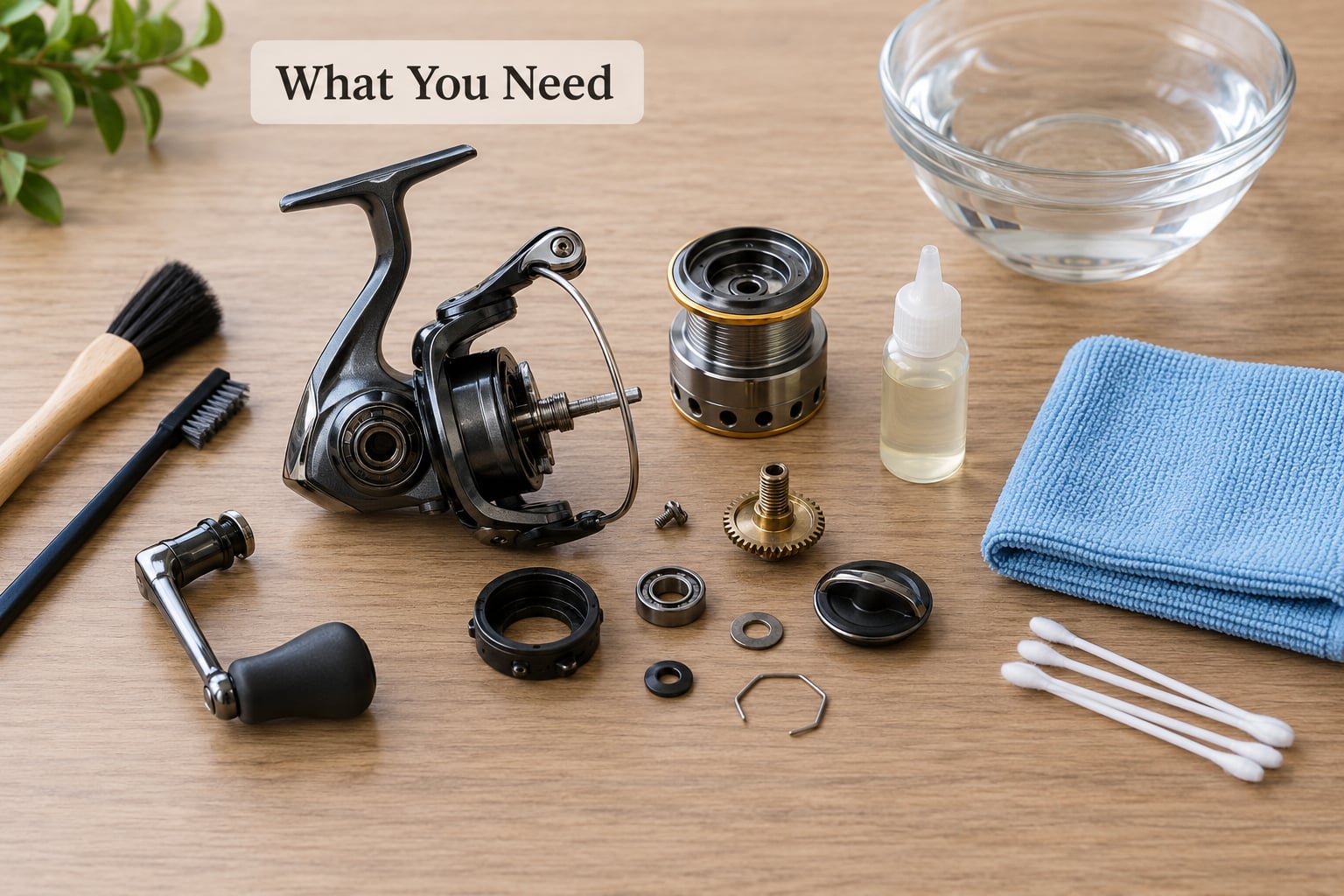
Most of the post-trip clean needs gear that is already in the tackle bag. A full teardown wants a couple more.
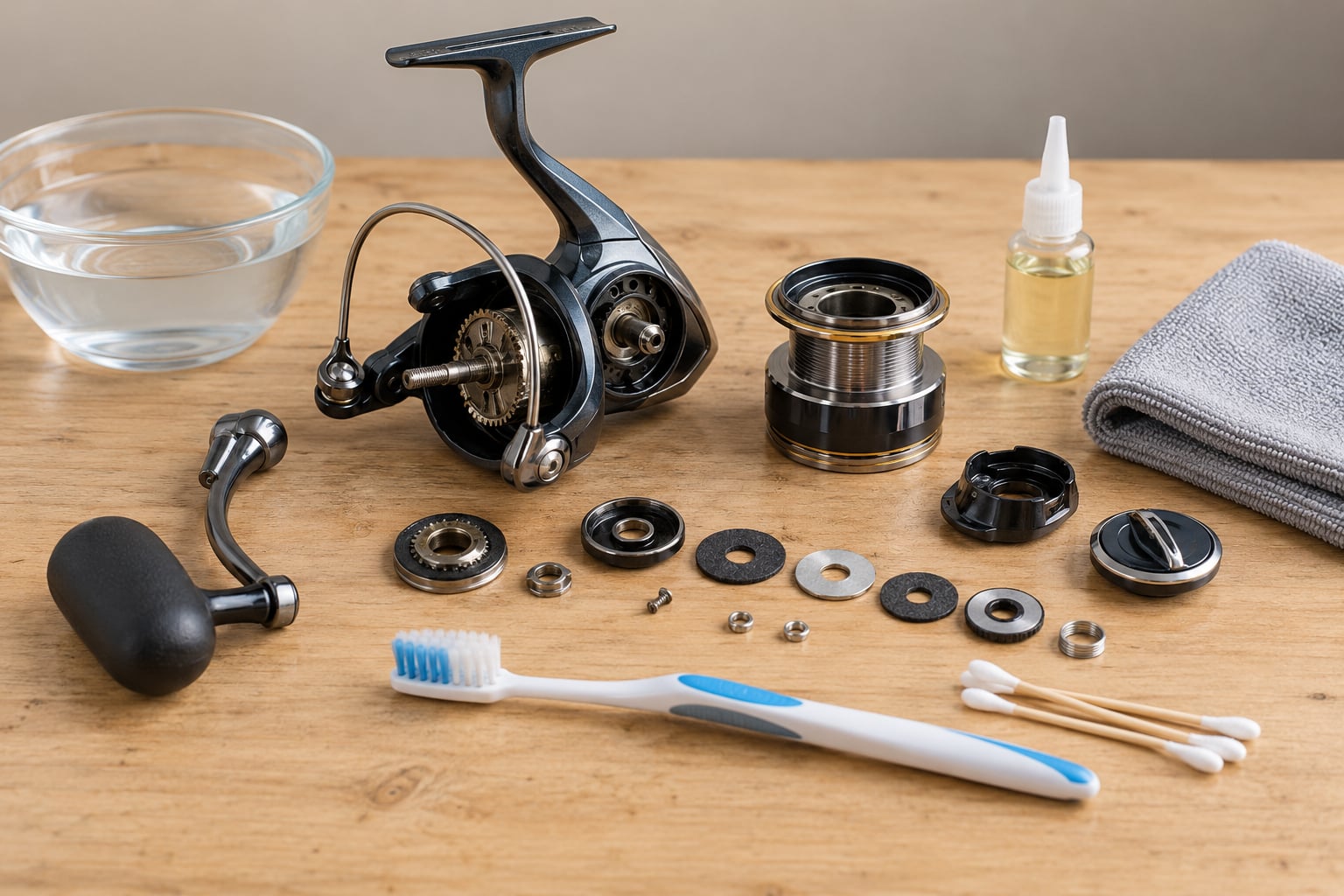
- Fresh water and a bowl or bucket. Cool or lukewarm. Hot water warps plastic parts and thins the grease that came with the reel.
- Mild dish soap. A drop in the water loosens salt film, grime, and fish oil.
- A spray bottle and soft hose nozzle. This is your rinse tool, and it is the reason you never need a pressure washer.
- Soft nylon toothbrush and cotton swabs. Nothing stiff enough to scratch anodizing, nothing metal in the drag stack.
- Microfiber cloths. The main drying tool, and the one that decides whether a reel stays spot-free.
- Isopropyl alcohol. For sticky drag washers and light grease residue. Use 90 percent or higher.
- Reel oil and reel grease. Two separate products, not one. More on that below.
- Small Phillips and flat-blade screwdrivers, plus the manufacturer manual. Shims for spool washers come in handy if your reel has them.
- Storage gear: a breathable reel pouch or rod sleeve, and a silica gel pack for a humid closet or garage.
Two rules before you start. Use cool water only, and keep the manual within reach if you plan to open the reel up. Shimano, Daiwa, Penn, and Abu Garcia all publish their own lubricant points and service intervals, and those instructions beat anything you read online, including this page.
How to Clean and Store a Fishing Reel Step by Step
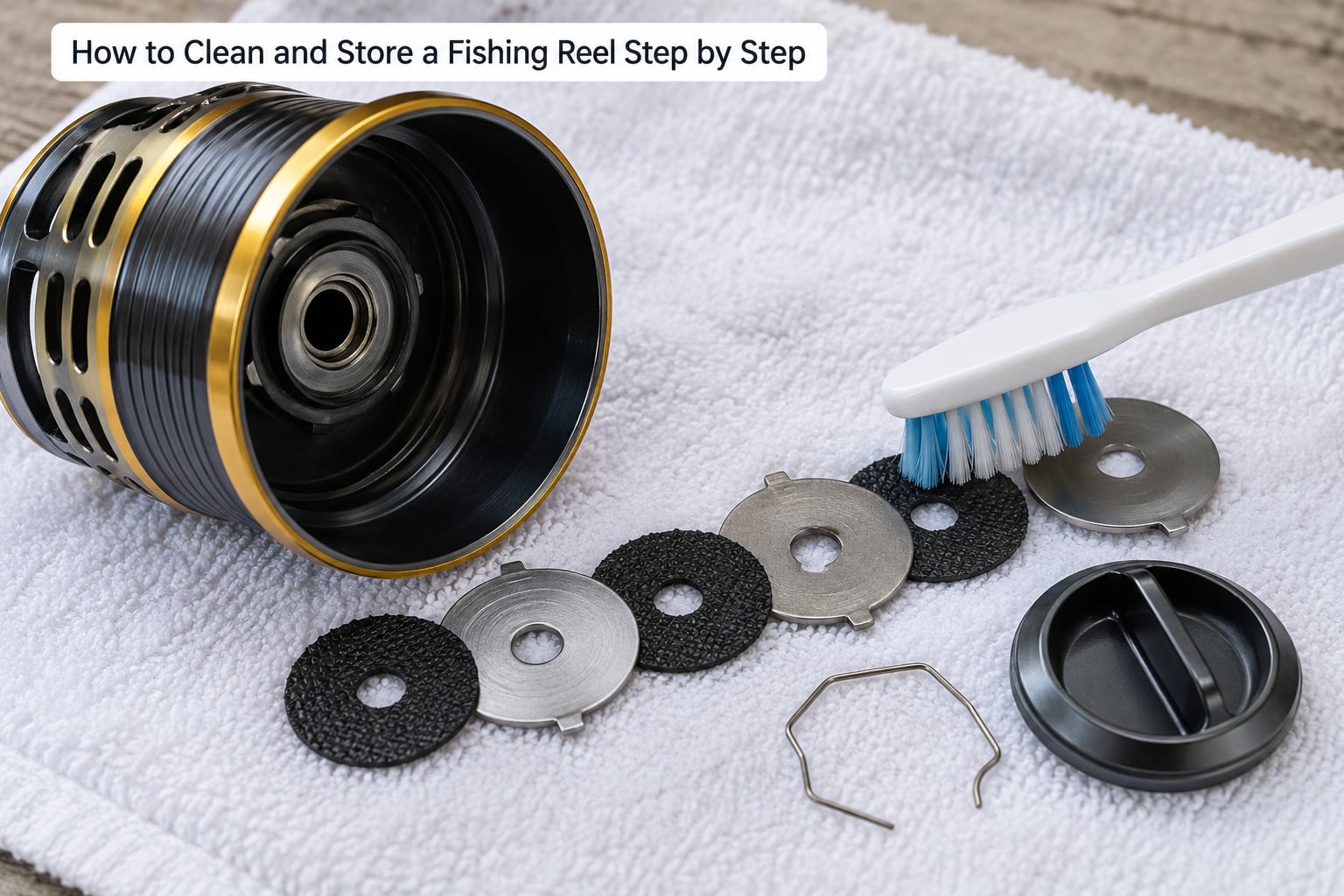
Work in this order. The order matters, because water left in the housing and loose parts cause more trouble than any grit does.
Step 1: Prepare the Reel and Remove the Line
Turn the drag star clockwise until it stops. Tight drag closes up the gaps in the spool, which keeps water pressure from forcing water into the drag stack. Anglers on saltwater forums almost all mention this one, and it is the single highest-value thirty seconds of the whole routine.
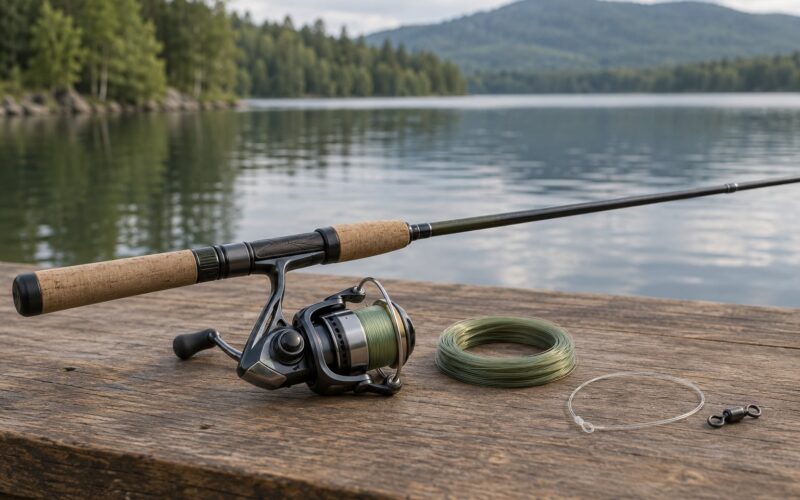
Now deal with the line. Strip it off the spool, either wind it back on the original spool or transfer it to a spare, and clip the leader if the trip is over. Line stored under tension for months takes a set, and that set shows up as uneven line lay the next time you fish.
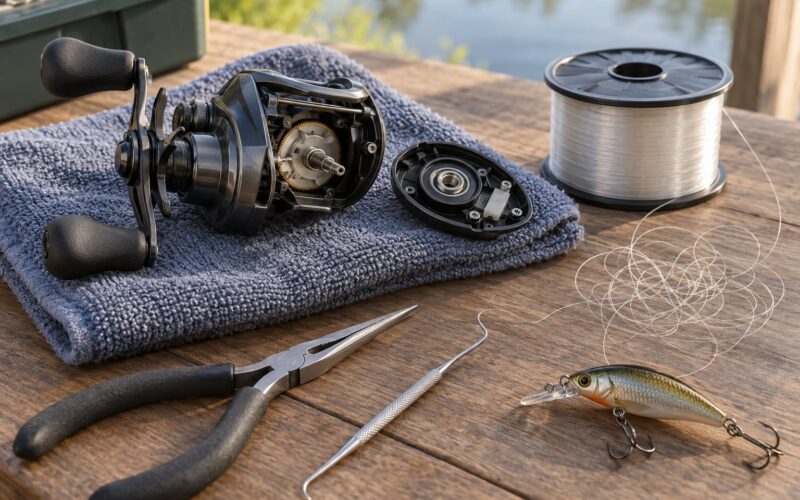
Baitcasters have one extra step. Press the spool release, drop the spool out, and separate the levelwind from the frame so you can reach the exposed spool shaft and the spool tension knob.
Step 2: Clean the Spool and Line Area
Run cool fresh water over the spool and the body while you turn the handle and spin the spool by hand. Direct the water toward the bail opening and away from the handle knob so grit leaves instead of settling inside.
Work the line roller, the bail arm, the bail wire, and the screws around the rotor with a soft nylon toothbrush. Sand sticks hardest to exactly those parts, and those are the parts most people never touch. On a spool, run the brush along the grooves rather than across the rim so you clear the line channels without scaring the finish.
Add a drop of mild dish soap to the water first if the reel has been in surf, a barnacle-covered piling, or a mackerel dock. Avoid a pressure washer and avoid a full-blast garden hose. That pressure drives saltwater past the seals, and corrosion from the inside is the kind you cannot clean out later.
Step 3: Clean the Drag and Gears
Back the drag off completely and separate the washers. Rinse both faces in the soapy water, brush them gently with your fingers or the soft brush, and wipe them with a cloth dampened with isopropyl alcohol if the coating feels sticky or gummy.
Look at each washer in good light before you go further. A shiny flat patch means it has been over-tightened and needs replacing. A carbon fiber washer that has gone fuzzy and ragged has lost its bite and is finished. Neither one gets better by cleaning harder.
For the gear side, only open the side plate if your manual says to. Brush the pinion gear and main shaft with a dry toothbrush and check the bail spring wire for cracks or kinks. Grease only the points the factory greased. Daiwa service guidance is blunt about this: grease where the manufacturer did not put grease collects grit and makes the drag feel uneven.
Step 4: Dry and Lubricate Moving Parts
Shake out the excess water, wipe everything with a microfiber cloth, then let the reel air dry fully before anything goes on it. Thirty minutes for a post-trip clean, overnight after a teardown. Oil applied over damp metal traps moisture in a film, and that film is what rust starts in.
Oil goes where metal rubs metal: the handle crank bearings, the bail hinge, the bail arm pivot, the line roller, the anti-reverse bearing, and the main shaft. Reel oil is thin and fluid, built for fast pivots and high-speed bearings. Reel grease is thick and belongs on the main gear, pinion gear, and spool shaft only. Using one for the other’s job is the most common lubrication mistake I see.
One drop at a time, applied with the tip of the applicator so you can see it land. A bead where you wanted a film picks up dust and turns the handle gritty. Keep oil off the drag washers entirely, and keep grease away from the bail and line roller. Wipe off anything that runs or drips before you put the reel back together.
Step 5: Reassemble, Test, and Store the Reel
Rebuild in reverse order, thread the line back on, and set the drag for your next trip. A good starting point is roughly a third of your heaviest line’s breaking strain, then adjust from there for the species and cover you actually fish.
Test it before it goes in the truck. Open and close the bail a dozen times, crank the handle under a bit of load, and cast from a clear area. Any grinding that shows up here means grit is still in the gear head, and it comes out with more cleaning rather than more oil. A drag that slips erratically after a clean usually means grease got onto a washer.
Then back the drag off fully for storage. Constant pressure over months is what flattens washers and slows bail closure, and most anglers know this and almost nobody does it.
The storage spot itself matters as much as the cleaning. Aim for dry, room temperature, out of direct sunlight, and off the bare concrete floor of an unheated garage, which sweats when the temperature swings. A breathable reel pouch or a rod sleeve beats a sealed plastic tackle box, because a sealed box traps whatever moisture was still inside the reel. Silica gel packs help in a humid closet. Store rods vertically where you can, since it keeps the blanks from warping and keeps reels from resting against other gear.
Common Mistakes to Avoid When You Clean and Store a Fishing Reel
All of these come up repeatedly on fishing forums, and none of them teach anything worth the cost of a new drag stack.
- Using WD-40 or silicone spray on the internals. WD-40 is a water displacer and a fine rust inhibitor for bare steel, and a poor lubricant inside a reel. If you want it on a stubborn bolt, put it on the rag, never on the reel itself.
- Soaking the reel body. Sealed bearings and sealed drag washers can hold water for weeks inside a housing. Rinse under cool running water or wipe with a soapy cloth instead of dunking the whole reel in a bucket.
- Storing with the drag screwed tight. The fix takes five seconds: turn the drag star counterclockwise until the line gives freely.
- Greasing or oiling the drag. Contaminated washers give a jumpy, unpredictable drag exactly when you are fighting a fish.
- Sealing a damp reel in a tackle box. Any residual moisture plus no airflow equals pitting on the spool shaft and bail wire by midwinter.
- Using household oils. Cooking oil, 3-in-1, and motor oil gum up over a season and smell for weeks. Reel oil and reel grease are formulated for the job.
- Leaving the reel in a hot car or a sunlit garage. Heat bakes residue into the housing and softens line. Twenty degrees is a fine storage temperature.
Frequently Asked Questions
How often should I clean a fishing reel?
Rinse and wipe down every reel after every trip, especially any trip in salt or brackish water. A soap-and-water clean with a toothbrush once a month covers freshwater anglers who fish weekly. Do a full disassembly, clean, and lubricate once a season, and after any trip where the reel took a dunk in salt water. Frequency matters more than technique: salt that sits for a day starts pitting that a same-day rinse would never touch.
Can I soak a fishing reel in freshwater after saltwater fishing?
Do not submerge the reel itself. Sealed bearings and drag washers can trap water inside the housing for weeks, and that trapped saltwater keeps working on the metal. Hold the reel under cool running tap water, turn the handle and spin the spool as the water runs, and aim the stream at the bail opening so grit leaves rather than settles. For heavier salt, a drop of mild dish soap in the water does the job without any soaking.
What oil should I use on a fishing reel?
Use a dedicated reel oil, the thin kind, on bearings and pivots: the handle crank, bail hinge, bail arm, line roller, anti-reverse bearing, and main shaft. Use reel grease, the thick kind, only on the main gear, pinion gear, and spool shaft. Skip WD-40, silicone spray, and household oils, none of which lubricate properly and several of which gum up within a season. Follow your reel maker’s own lubricant instructions where they differ from this.
How do I store a fishing reel for a long time?
Clean and dry the reel first, then back the drag off completely and put it in a breathable reel pouch or rod sleeve somewhere dry, room temperature, and out of sunlight. Avoid sealed plastic boxes and bare concrete floors, and add a silica gel pack in a humid garage or closet. Storing rods vertically is better for the blanks. Check on the reels once a month or so, because dry air in an unheated garage in winter can still pull moisture out of bearings and seals.
Should I remove the line before storing a fishing reel?
Yes, for any storage longer than a week or two. Line held under tension for months takes a set and comes off the spool as uneven lay, which costs casting distance and trips bail problems. Winding the line back onto the original spool keeps it conditioned better than transferring it to a fresh spool. For short trips in between, leave the line on but keep the drag loose so nothing pulls hard against a spool that is not under any tension.
When does a fishing reel need professional servicing?
Send it in when the handle grinds or feels rough in a way cleaning did not fix, when the drag will not hold steady after you have cleaned the washers, when the bail wire is bent or the spring is weak, or when you notice wobble in the rotor under load. Repairs to the bail, the drag stack, and worn bearings are bench jobs. If you hear a noise you cannot trace to grit, or if water got into the housing after a dunk, a full strip, clean, and regrease costs far less than the drag and bearings it replaces.
Conclusion
If you do one thing, make it the rinse. Hold the reel under cool running water with the drag screwed tight, turn everything while the water runs, wipe it down, and let it dry. Do that before salt has time to sit, and most of the corrosion, drag wear, and gritty handle feel never start.
After that, oil the thin points with reel oil, grease only where the manufacturer says, back the drag off before storage, and put the reel somewhere dry and breathable. How to clean and store a fishing reel is not complicated; it is just easy to postpone until the reel is already gritty.
Follow your reel maker’s service instructions where they differ from anything here, and get a bent bail or a failing drag stack looked at before the season rather than during it.