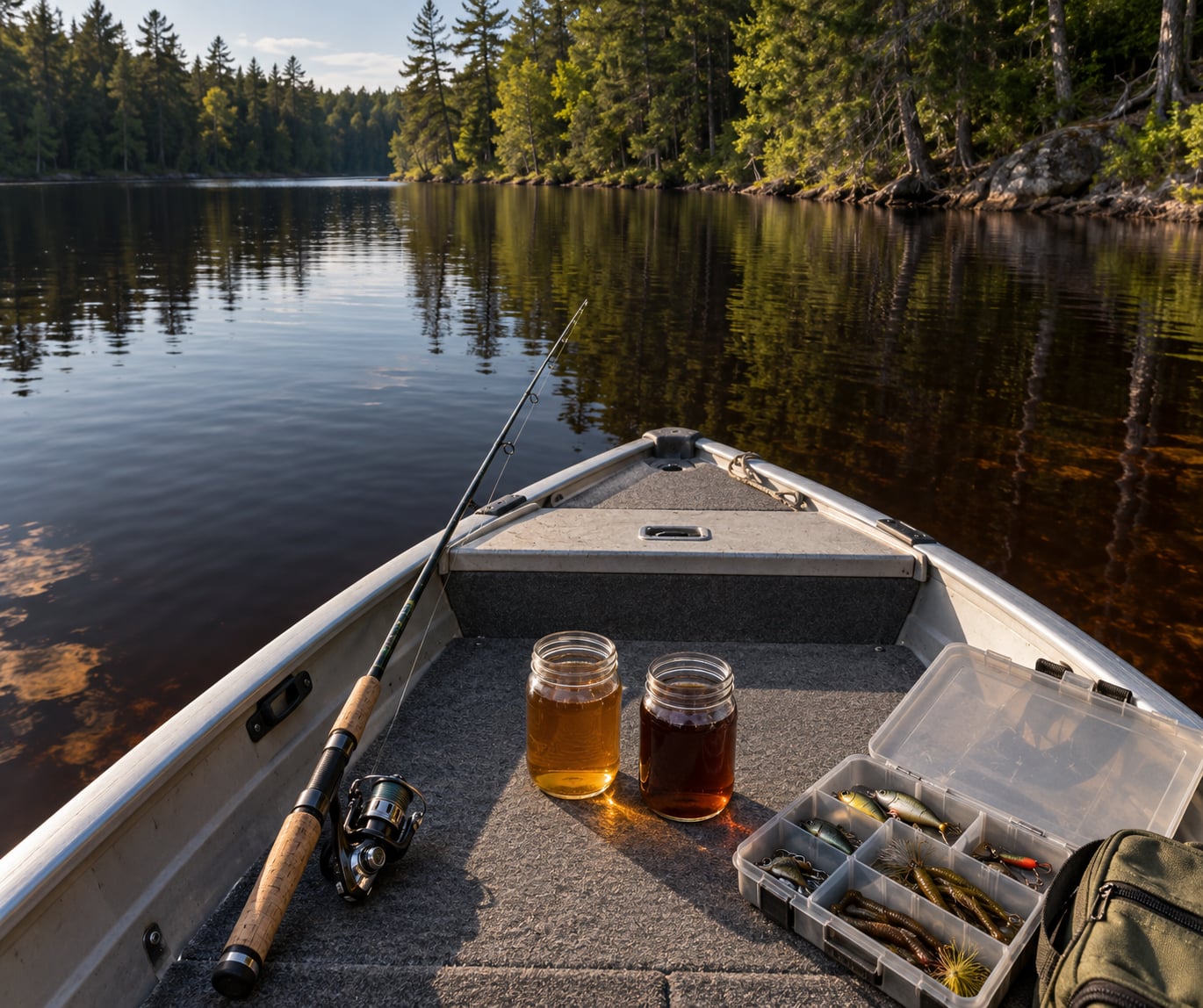
When you cannot see your own lure, you stop relying on sight and start relying on contrast, vibration, and patience. Knowing how to catch fish in stained water means picking a bait that reads through the murk, putting it on fish-holding structure instead of open water, and retrieving it slowly enough that a fish never has to commit to a chase. Expect to fish shallower than normal, and expect the trip to reward you.
If the plan came together in about an hour at the ramp, this is a straightforward technique change, not a new hobby. You will spend most of your time reading water color and cover instead of chasing sight-fishers in open water.
Table of Contents
- What You Need to Catch Fish in Stained Water
- Step-by-Step: Seven Tactics for Stained Water Fishing
- 1. Identify What Is Causing the Stain Before You Pick a Tactic
- 2. Fish Structure and Water-Color Transitions Instead of Open Water
- 3. Choose Scented or High-Visibility Baits
- 4. Use Sound and Vibration to Find Fish
- 5. Fish Slower Than You Think You Need To
- 6. Detect Bites Through the Rod and Line
- 7. Adjust One Variable at a Time
- Common Mistakes Anglers Make in Stained Water
- Frequently Asked Questions
- Conclusion
What You Need to Catch Fish in Stained Water
Gather these before you leave the ramp, because the trip itself is harder to change your mind about once you are on the water.
- Two contrasting baits. A dark body with a bright accent (black and chartreuse) and a bright body with a dark accent (white and black) cover opposite ends of the visibility spectrum.
- One noise-maker. A rattling crankbait, chatterbait, buzzbait, or a spinnerbait with a big blade. In low visibility, vibration carries further than color.
- Scent. A bottle of scented soft plastic, a soaked worm, or a jar of pumpkin oil. Scent works in cloudy water because it does not depend on light at all.
- Good line and a leader. Clear or bright braid and fluoros blend into a tea-colored background and stop fish seeing a line in open water.
- A fish finder if you own one. Not because you will need it for every cast, but because finding structure blind is far easier on sonar than by guesswork.
- A jar and a pair of polarized glasses. Fill the jar at the ramp to check the stain, and keep the glasses on so you can read what light is doing before the boat gets moving.
- Standard safety kit. PFD, first aid, water, and a check on the weather. Stained water after heavy rain usually pairs with rising water, wind, and lightning.
Keep it simple: bait, noise, scent, and a way to judge the water. Everything else is optional.
Step-by-Step: Seven Tactics for Stained Water Fishing
1. Identify What Is Causing the Stain Before You Pick a Tactic
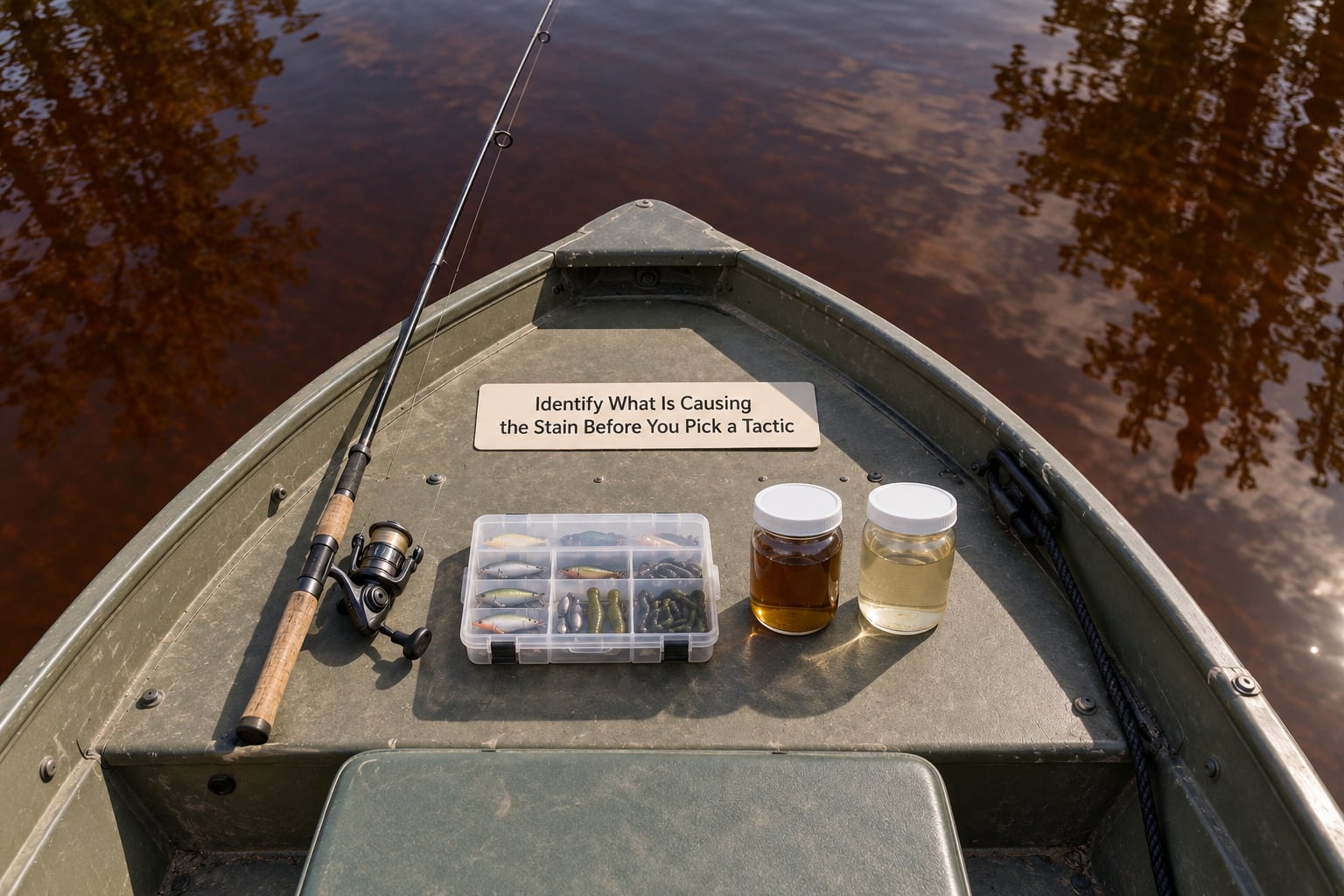
Tea-colored but see-through means tannins from decaying leaves. Milky green means an algae bloom. Brown and opaque with no bottom visible means silt and clay runoff. That thirty-second read matters, because anglers on the BassResource forum argue about it constantly, and they are right that the tactics differ.
Here is the field test. Fill a jar to the top and hold it at arm’s length with the sun behind it. Tannin water is uniformly tea-colored and you can still make out your fingers through it. Silt-choked water goes dark and flat, and details disappear at any depth. Then look at the bottom near the boat: if you can pick out individual rocks or a shadow at three feet, you have color, not silt, and sight feeders are still hunting.
What changes with the diagnosis? Tannic water blocks light gradually and fish stay shallow near cover. Silt and sediment stress some species and push the better feeders deep or off the lake entirely, so a catfish or sauger plan often beats a bass plan in heavy sediment. Anglers on Reddit make the same split in plain words: tannin water is fishable, silt-choked water is a tough day.
2. Fish Structure and Water-Color Transitions Instead of Open Water
Fish do not disappear in stained water. They tighten up near cover and stop roaming. On BassResource threads the most repeated tip is not a lure at all: fish as close to structure as you can, because a fish that cannot see well is not traveling far from home.
Work drop-offs, creek channels, feeder ditches, points, rock, wood, and thick vegetation edges. Watch for a color break where the shallow tea water meets the darker deep channel; that seam is where baitfish pile up. Boat traffic matters too: wake and prop wash stir fresh sediment, and anglers repeatedly report a productive feeding lane along the edge of that new mud.
When visibility is near zero, structure plus electronics beats open water plus good intentions. Find the drop-off on sonar, then work the same contour that sight-fishing anglers would have cast blind.
3. Choose Scented or High-Visibility Baits
Contrast wins in low visibility, with one honest caveat: the go-bright rule is only half true. Some of the most popular color guides argue for matching the bottom color instead, and on a soft-bottomed lake that is not a crazy call. The practical version is to run both and let bites decide.
| What you can see | Reading of the water | Colors and baits that read |
|---|---|---|
| Bottom at 8 to 10 feet | Lightly stained, still plenty of light | Green pumpkin, purple flake, white, natural baits |
| Bottom at 4 to 5 feet | Moderately stained, sight feeders still working | Chartreuse, red, white, pumpkin with orange accents |
| Nothing past 2 feet | Heavily stained, fish are on structure not color | Black and chartreuse, blue and black, white, yellow |
| Nothing at all, opaque | Silt or algae, fish hugging cover | Black, chartreuse, and anything you can smell |
Species matters too. Bass go to black and chartreuse or blue and black. Crappie tighten shallow and respond to white, chartreuse, and any small bait with a bright head. Walleye and sauger barely notice the stain because they hunt by scent and vibration at night, so a natural or dark lure with strong tail action still works. Catfish do not care at all. Panfish in stained ponds are usually caught on anything yellow, bright, or scented.
Add scent to any of it. A soaked worm or a scented soft plastic carries further than color when light fails, and very few of the forum threads mention it at all.
4. Use Sound and Vibration to Find Fish
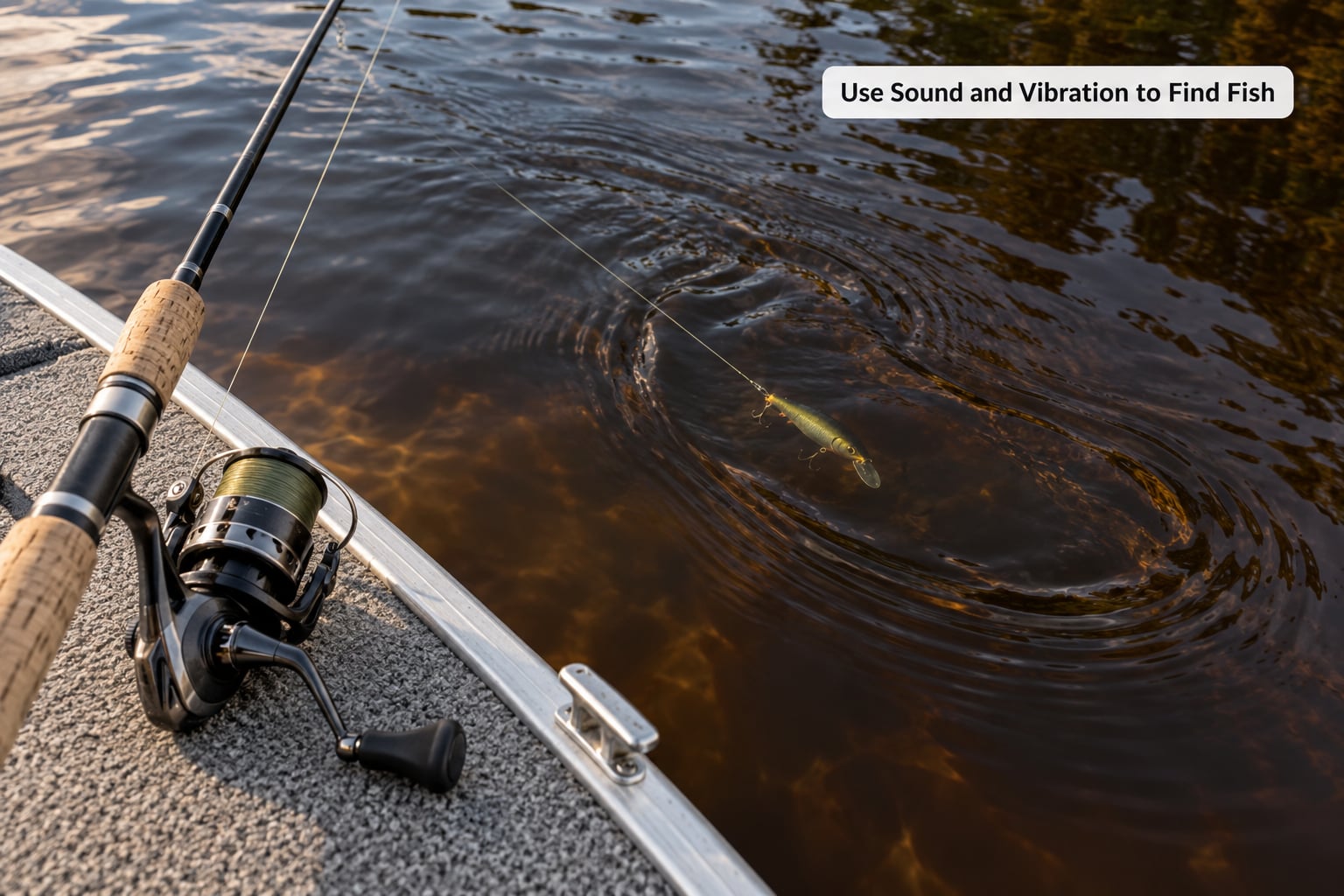
A fish that cannot see the bait can still feel it. Vibration travels through the water column and tells a fish something is moving, which is why vibration bait gets named more often than any other tactic in stained-water threads. A bullfrog blade on a chatterbait, a rattling crankbait run at a walking pace, a buzzbait over grass, or a spinnerbait with a broad blade all make noise a bass can locate long before it can identify the lure.
Keep the noise tied to the bait. Vibration attracts fish to a spot; then scent, color, and a believable hold still matter once they arrive. Stripping a chatterbait so it crawls and thumps along a rock ledge is a common pattern in dirty water on BassResource, where a black spinnerbait with a willow blade over a dark body is the most frequently recommended setup. A Colorado blade in the same combo trades vibration for flash, which is a reasonable swap on stained water that still catches some light.
Noise also solves the searching problem. A quiet plastic dragged through stained water tells a fish nothing. The same lure buzzing past a channel edge tells it where you are.
5. Fish Slower Than You Think You Need To
Slow the retrieve down until it feels wrong. Experienced anglers say the same thing in different words: in low visibility the fish will not move far to chase, so you have to bring the bait to them. A lure that traveled twenty feet to reach a fish’s face is a lure most fish will never commit to.
Practical patterns to cycle: a slow steady wind with a pause every few feet, a stop-and-go where the lure hangs motionless for two or three seconds, and bottom bouncing so the lure taps rather than slides. Bass, which ambush rather than chase, tolerate a pause better than almost any other fish.
Lower visibility is not the only reason to slow down. Dissolved oxygen and temperature both push fish toward a lazier response, and low-pressure frontal days do the same. Keep the speed honest by counting a slow retrieve in your head and then slowing it another third.
6. Detect Bites Through the Rod and Line
This is the part beginners miss. Without a visible lure, your rod and line are the only sensors you have, so learn them before the water gets this dark.
- Load on the line that was slack a second ago. Weight without movement usually means a fish is sitting on the bait or has moved slowly.
- The line stops moving. A retrieve that suddenly stops and will not restart is the classic first sign of a pickup.
- Sudden pressure and give. The fish commits, the line goes tight, and the rod loads in a different direction than a normal retrieve produces.
- A twitch in the rod tip that repeats on the same cycle, from a fish nudging or repositioning.
Set the hook on the feel of weight, not on a guess about what the lure is doing. Keep your rod tip low enough that a light bite still bends it, and drag the line lightly after each cast so the first signal is not a slack-line surprise.
7. Adjust One Variable at a Time
Change one thing at a time or you learn nothing. A useful sequence: hold location and run one bait for ten to fifteen minutes with no bites, then switch only the retrieve speed, then only the color, then only the depth. Any cast pattern at all is better than switching everything after every miss.
Write down what happens, including the failures. A short log of lake, clarity, bait, depth, and result turns into a personal stain diary, and after three or four trips you know your water far better than any general rule can tell you.
Common Mistakes Anglers Make in Stained Water
Most skunked trips here come down to five habits, and all five have an easy fix.
Casting only at visible open water. If you can see the surface and nothing below, you are watching water you cannot fish. Move to structure, seams, and edges instead.
Trusting a lure that works only by sight. A slow-plastic craw that relies on the fish seeing it at range will sit untouched. Swap to something with vibration, contrast, and scent.
Retrieving too fast. You are asking a fish that can barely see three feet to chase a lure from twenty. Cut the speed by a third and pause.
Ignoring the weather and the runoff. Rising water after a big rain moves fish to creek mouths and feeder ditches and creates new feeding lanes at the edge of fresh mud. Check the forecast and fish the water the rain made, not the water you scouted last week.
Changing everything on every cast. Chasing a new setup after one miss leaves you with no useful information at the end of the day. One variable, then another.
The Stained Water Cheat Sheet
Keep this in your head while you fish:
- Check the water in a jar: tea-colored and see-through, or opaque and silted.
- Pick contrast: dark with a bright accent, or bright with a dark accent.
- Add vibration and noise to whatever you tie on.
- Add scent, because scent does not need light.
- Fish shallower and as close to cover as you can.
- Retrieve slow, with pauses, and bring the bait to the fish.
- Watch the rod and line instead of the lure, and set on feel.
- Change one variable at a time and write it down.
Frequently Asked Questions
What is the best bait for fishing in stained water?
A bait that makes noise and carries scent wins in stained water, because neither depends on sight. A chatterbait, buzzing or rattling crankbait, or a black spinnerbait with copper blades are the most frequently named options across fishing forums, and adding a scented trailer or a soaked worm extends the window. Keep one darker lure with a bright accent and one bright lure with a dark accent in the box.
Does stained water make fishing better or worse?
It depends on what is causing the stain. Tannin coloring blocks light gradually and tends to push bass and crappie toward shallow cover where they stay catchable. Heavy silt or an algae bloom is usually worse, since it cuts visibility to nothing and can leave fish hunkered or off the lake entirely. Bank on silt-choked water being a catfish or sauger day, or a day to skip.
What color lure should I use in murky water?
Contrast beats subtlety. In stained or turbid water, black and chartreuse, blue and black, white, and bright yellow are the colors most often recommended, largely because the dark body gives the fish a silhouette and the bright part gives the eye something to lock onto. That said, one popular color guide argues for matching the bottom color instead, and on soft-bottomed lakes that advice has real support, so run both.
Should I fish faster or slower in stained water?
Slower. Fish that cannot see well rarely travel far for a meal, so they hold position and wait for prey to come close. Use a slow wind with pauses, a stop-and-go, or a bottom bounce that taps the lure along the bottom instead of sliding it. Anglers who say otherwise usually describe a productive exception, not the default, and the correct speed still depends on species and water temperature.
Is it safe to fish after heavy rain when the water is stained?
Staining itself is not the safety issue. Rising water, wind, lightning, cold water, and debris are. Check the forecast for thunderstorms and avoid the water during an active frontal band, wear a properly fitted life jacket as always, and be cautious around flooded creek mouths and submerged obstacles that a normal lake map will not show. Tell someone your route and your expected return time before you launch.
Conclusion
Next time you see tea-colored water, do three things in order. Grab a jar and work out whether you have tannins or silt, then move the boat to the closest structure you can find and stop casting open water. Tie on a high-contrast bait with vibration and scent, retrieve it slow with pauses, and keep your eyes on the rod tip instead of the water. That sequence alone separates a skunked trip from a full box in stained water. Updated for 2026.