Some lakes are clearer than others because the amount of suspended material in the water column is different. Light travels farther through water with little algae, silt, clay or dissolved organic matter in it, and stops quickly where those particles are thick. Depth, nutrient supply, sediment, geology and what drains into the lake all feed into that one number.
That number has a name. Secchi depth, measured in feet or meters, is how far down you can see before the water swallows the light, and scientists have tracked it in citizen-run lakes across North America for decades. Understanding the drivers behind it changes how you read a lake before you put a boat in it.
I have spent enough summers comparing clear tarns against green shallows to know that appearance and quality are not the same thing. Some of the bluest water I have ever swum in would never pass a nutrient test, and some tea-colored lakes are among the healthiest around.
Table of Contents
- 1What Determines Lake Clarity?
- 2Why Some Lakes Are Clearer Than Others
- 3What a Secchi disk actually measures
- 4How Do Nutrients Affect Water Clarity?
- 5Reading a lake’s trophic state
- 6How Does Sediment Make Lakes Look Cloudy?
- 7Why Do Some Lakes Stay Clearer?
- 8Does Depth, Temperature, and Wind Change Clarity?
- 9How Do Algae, Plants, and Dissolved Organic Matter Affect Visibility?
- 10What Role Do Human Activities and Nearby Land Play?
- 11Ways people make a clear lake murkier
- 12How Can You Tell Whether a Lake Is Clear or Polluted?
- 13Run a jar test
- 14Take your own Secchi reading
- 15Frequently Asked Questions
- 16What lake has the clearest water in the US?
- 17Why are some lakes crystal clear?
- 18What factors can affect the clarity of water?
- 19What makes a lake foggy?
- 20Is clear lake water safe to swim in?
- 21Why does lake water look blue if it is so clear?
- 22What to Do First When Comparing Lake Clarity
What Determines Lake Clarity?
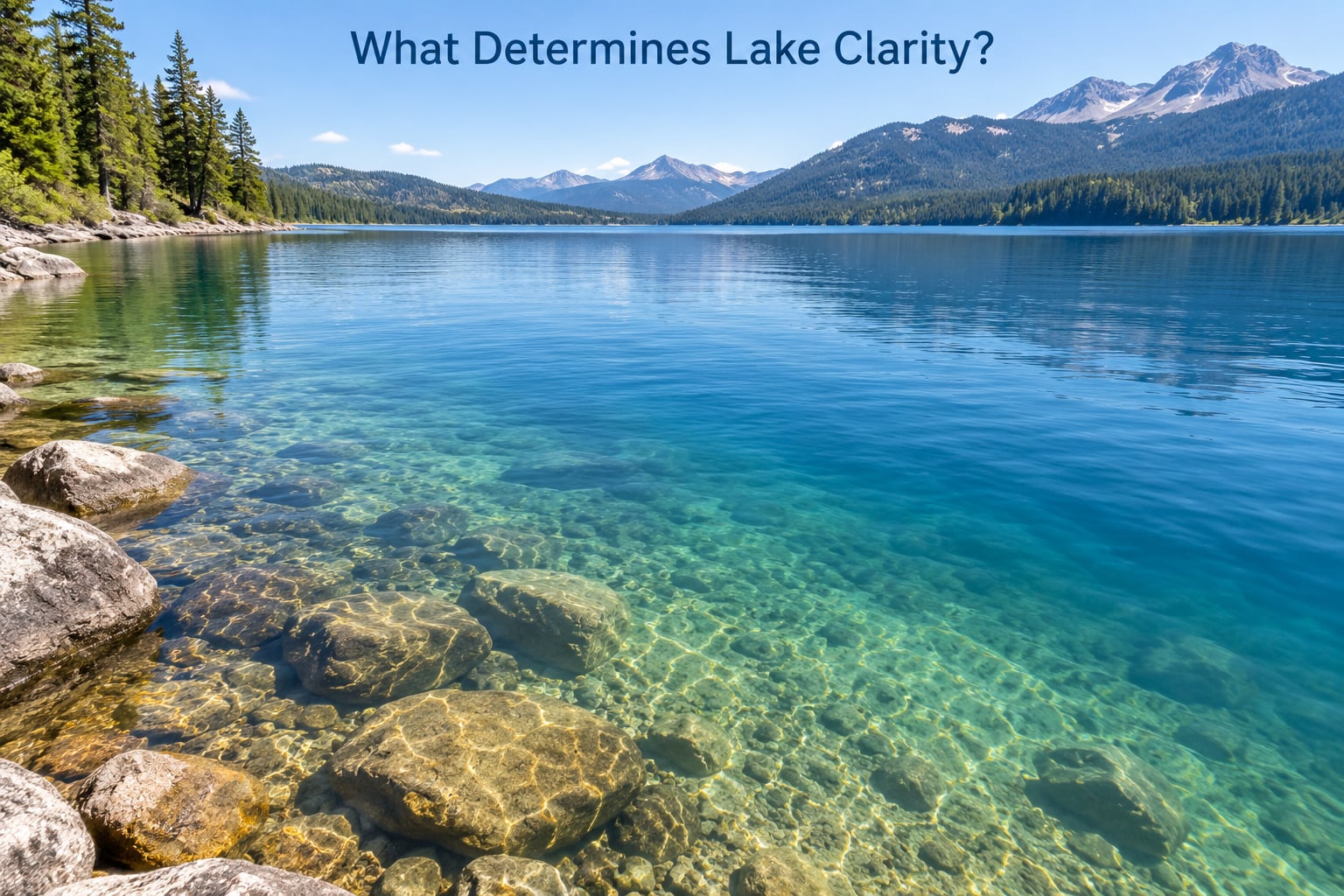
Clarity is how deep light travels before it scatters away, and it depends almost entirely on what is floating or dissolved in the water. Anything small and pale scatters light: algae cells, clay particles, silt, decaying plant matter. The fewer particles in a column of water, the deeper the light goes.
Clear water and clean water are different measurements. A lake can be perfectly transparent and still carry excess phosphorus, bacteria, or mercury, and a lake stained brown by tannins can be low in nutrients and chemically boring. Clarity tells you how much light reaches plants and swimmers. It does not tell you what is dissolved in the water.
Why Some Lakes Are Clearer Than Others
Here is the short version, and it comes down to six drivers that show up in nearly every clear-versus-murky comparison:
- Nutrient supply. Phosphorus and nitrogen feed algae. Lakes with fewer nutrients in them grow less algae.
- Incoming sediment. Soil, clay and organic matter washed off nearby land cloud the water.
- Lake depth and mixing. Deep lakes keep fine sediment settled on the bottom instead of hanging in the water.
- Flushing rate. Water that moves through a lake quickly gets less time to accumulate particles.
- Shoreline and watershed geology. Soil, bedrock and plants around the lake tint and feed the water.
- Algae, plants and dissolved organic matter. Living growth and stained water both cut the light path.
What a Secchi disk actually measures
A Secchi disk is a black-and-white pattern on a line, lowered until it vanishes, then raised until it reappears. The depth halfway between those two points is the reading. Anything below roughly 15 feet of disk visibility is unusually clear; anything under 3 feet is close to opaque.
The method is simple enough that homemade disks, cut from a white bucket lid or an old table top, land within about 10 percent of a professional reading. That is good enough to track your own lake year over year, which is exactly what volunteer monitoring programs ask volunteers to do.
Long-term citizen data shows how ordinary clarity is. One study drew on more than 140,000 Secchi readings from 3,251 lakes between 1938 and 2012. Readings ran from 0.2 meters to 16 meters, with a median near 2.1 meters. Very clear lakes are the exception, not the rule.
How Do Nutrients Affect Water Clarity?
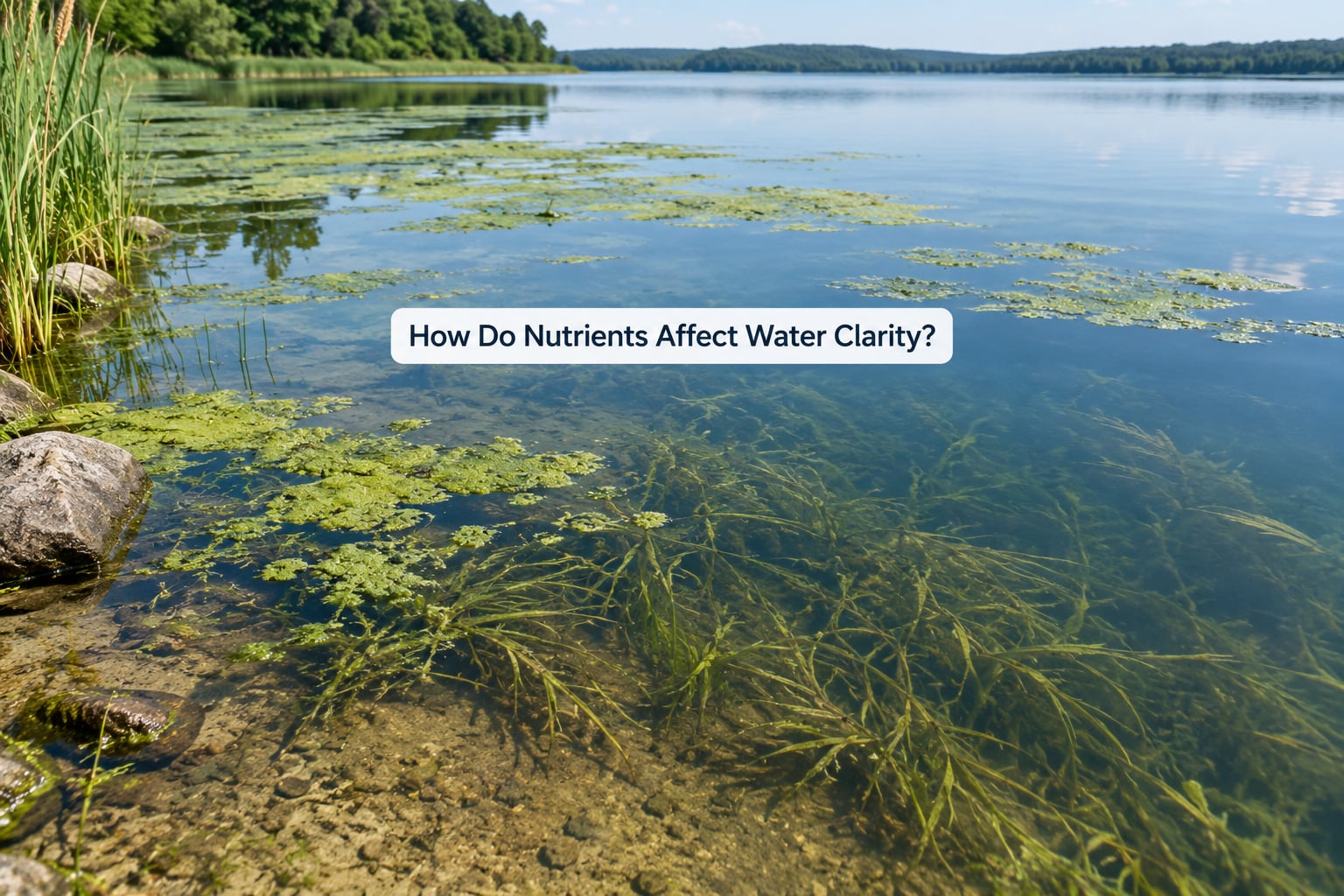
Nutrients are the food supply algae live on, and where that supply is rich, the water grows green. Phosphorus is usually the limiting nutrient in freshwater lakes, meaning whatever phosphorus arrives first tends to set how much algae the lake can support. Nitrogen plays a similar role in lakes that are naturally high in phosphorus.
Every gram of phosphorus matters more than it sounds. Even a modest rise in phosphorus can push algae from a visible scrim to a full bloom, because algae reproduce fast in warm, sunlit, nutrient-rich water. That is the process called eutrophication, and the color people notice is chlorophyll-a, the pigment inside the algae cells.
This is why water clarity gets used as a proxy for lake productivity. Anglers read it that way without realizing it: a lake where the disk disappears in 6 to 8 inches is a lake full of food, and the fish follow. Anglers on crappie and bass forums describe exactly this range, from murky productive water to clear water where the disk is still visible past 20 feet.
Reading a lake’s trophic state
Limnologists sort lakes into bands based on nutrients, algae and clarity together, called trophic state.
| Trophic state | Typical Secchi depth | Color and feel | What drives it | What it means for you |
|---|---|---|---|---|
| Oligotrophic (clear) | Over 15 ft (4.5 m) | Deep blue, cold, low algae | Rocky or alpine watershed, low nutrient supply, often deep | Great visibility, fewer fish, excellent boating water |
| Mesotrophic (moderately clear) | 8 to 15 ft | Blue-green with some algae in summer | Balanced nutrients and flushing | Good fishing, occasional algae bloom |
| Eutrophic (murky) | 4 to 8 ft | Green, opaque, plant mats in shallow areas | Nutrient loading from land, septic, agriculture | Productive fishing, poor swimming visibility |
| Hypereutrophic (very murky) | Under 3 ft | Thick green, odor near shore | Heavy nutrient enrichment | Biologically productive and coveted by anglers, unpleasant to swim |
Those bands are averages, not rules. A single storm can push a clear lake down a band in an afternoon, and a well-flushed shallow lake can hold better clarity than a deep one loaded with nutrients.
How Does Sediment Make Lakes Look Cloudy?
Sediment is the other half of murkiness, and it behaves nothing like algae. It comes from erosion on the land around the lake, from streambanks, construction sites, farm fields, road shoulders and exposed shoreline. Rain washes fine particles into the lake, where they hang in the water column and scatter light.
Clay is the worst offender because it is small enough to stay suspended for a long time and it turns water an opaque reddish or gray color. Silt settles faster, but it still clouds a shallow bay for weeks after a storm. Heavy rain gets blamed for cloudy water, and it is often right, for the simple reason that moving water both adds sediment and stirs up what is already on the bottom.
Wind matters as much as rain. Any boat running over shallow bottom, or a wake working a sandy shoreline, lifts fine particles back into suspension. Pond owners and boaters alike report prop wash and wind turbulence reducing visibility, sometimes permanently once the fine material settles into the gaps of the lake bed and comes up again with the next churn.
Why Do Some Lakes Stay Clearer?
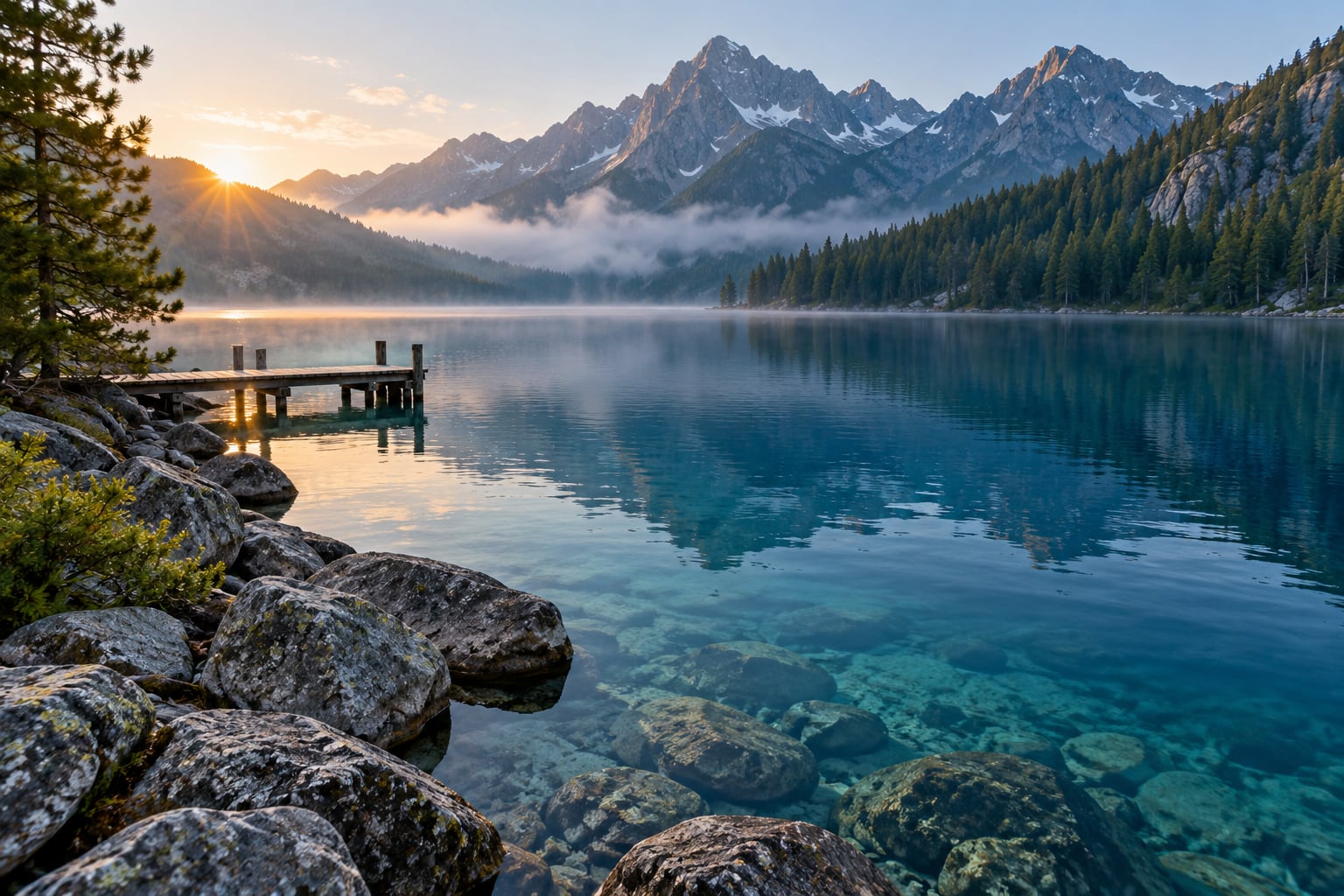
The clearest lakes on the continent usually combine a rocky or alpine watershed, low nutrient supply, cold water and a basin deep enough that fine sediment stays where it settled. Lake Tahoe is the familiar example: cold, deep, steep granite catchment, low nutrient input and short algal growing seasons. Crater Lake works for similar reasons on a volcanic scale, where the caldera walls shed very little soil into the water.
Alpine tarns are the purest version of the pattern. Forum descriptions of high-elevation lakes keep circling the same list: cold, low nutrients, low sediment, often still glacial, and surrounded by rock rather than farm fields. Lowland lakes in the same region, fed by agricultural or urban watersheds, are usually much murkier.
Citizen monitoring data shows a related geographic pattern. Across the Upper Midwest, clarity generally improved as you moved north, while lake size showed no consistent relationship with clarity at all. Depth of the basin and what drains into it matter more than how many acres of surface you can see.
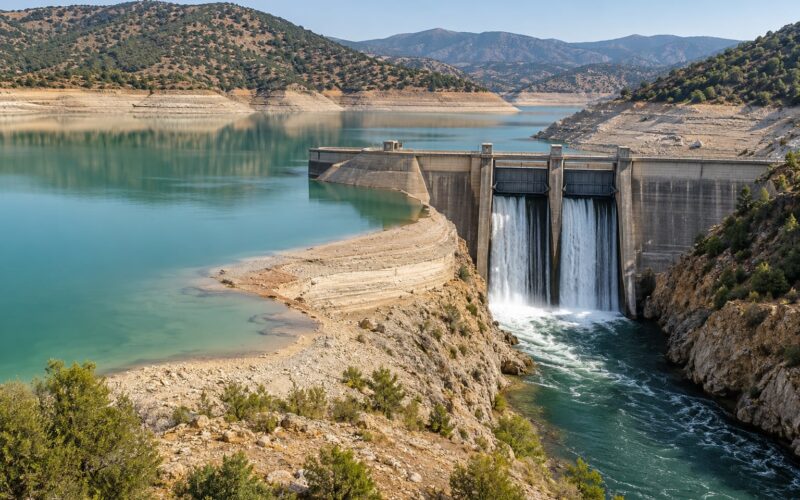
Flushing rate is the quieter factor. A lake with a strong outlet and short retention time moves water through fast enough to export suspended material and algae before either builds up. A lake in a closed basin with no outlet holds everything, which is why some shallow prairie lakes stay cloudy while nearby drainages stay clearer.
Does Depth, Temperature, and Wind Change Clarity?
Depth changes clarity twice over. A deeper lake gives light a longer path to travel, so anything suspended in it has more opportunity to blur the view. It also changes mixing: in summer, the warm surface layer sits above a sharp temperature break called the thermocline, and the two layers stop mixing.
That is good for clarity below the thermocline. Fine sediment that settles out in calm summer water stays down there, and algae stay near the light. When the season turns and the lake mixes fully, called turnover, material from deeper water and the sediment bed rises through the column and clarity drops for a few weeks. Spring turnover after ice-out is the classic example.
Seasonality is why the same lake can measure two very different Secchi depths in the same year. Anglers plan around it: clear in early spring after turnover, greening through July as algae peak, then clearing again as the water cools in fall. Checking a lake guide or report for the season, not just the lake, tells you what you are likely to find on the water.
How Do Algae, Plants, and Dissolved Organic Matter Affect Visibility?
Not everything green in a lake is an algae bloom. Rooted aquatic plants like pondweed and milfoil grow from the bottom and look worse from the boat than they do to the fish. Distinguishing them matters: a plant bed is a habitat, while a bloom is a nutrient event that can show up and vanish within weeks.
Then there is color that comes from neither. Tannins are organic compounds that leach from decaying shoreline plants, conifer needles and peat. They dissolve rather than float, staining water tea-brown to reddish-brown while leaving it transparent. You can often see the bottom clearly through tea-colored water, which is exactly why clarity and quality have to be judged separately.
Lake color and lake clarity are related but distinct. Blue comes from light scattering in nearly pure water and a lack of absorbing particles. Green means algae or plants. Brown usually means dissolved organics or sediment. Some lakes even run pink or red, called strawberry lakes, from a specific bloom of an algae that carries a red pigment. None of those colors tells you on its own whether the water is safe.
What Role Do Human Activities and Nearby Land Play?
Almost everything people do to a lake shows up first in its clarity. Fertilizer from yards, farm fields and golf courses carries phosphorus into streams and into the lake. Septic systems and wastewater add nutrients. Construction strips vegetation, and bare soil erodes. Stormwater picks up oil, silt and lawn chemicals and delivers them at the shoreline.
Ways people make a clear lake murkier
- Fertilizer and grass clippings entering the water, feeding algae directly.
- Eroding shoreline and bare banks dumping sediment into shallow bays.
- Septic seepage or wastewater raising nutrient levels in small lakes with poor flushing.
- Boat prop wash and wakes resuspending bottom sediment year after year.
- Shoreline hardscapes replacing plants that once filtered runoff.
- Dock lifts and canopies shading and disturbing shallow habitat.
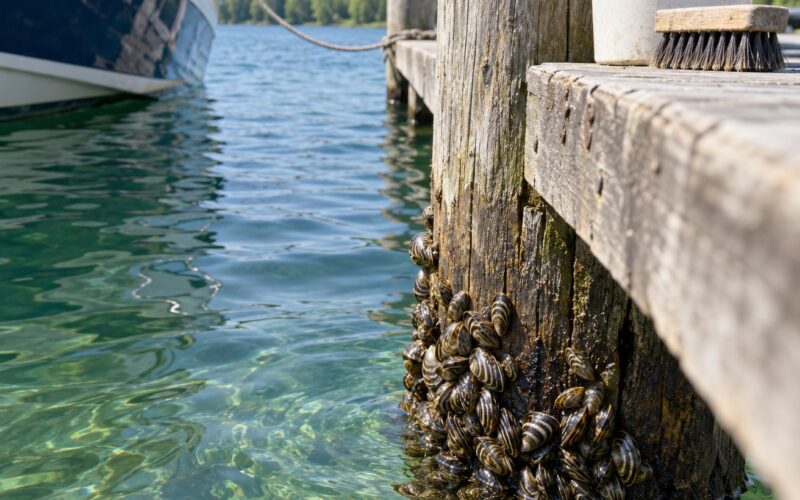
Invasive species can push clarity the other way, which is why anglers notice it. Zebra and quagga mussels filter large volumes of water and strip out suspended particles and plankton. The result is clearer water with less food in it. Monitoring of the lower Great Lakes confirmed dramatic reductions in turbidity in the years after mussel colonization, and anglers on regional forums describe the same trade in clearer water and fewer fish.
One useful caution: a lake can stay clear through all of this and still be unsafe. Clarity means light got through. It says nothing about pathogens, dissolved metals or algal toxins.
How Can You Tell Whether a Lake Is Clear or Polluted?
Start by separating the temporary from the persistent. Cloudiness that arrives with a storm and clears in a few days is sediment. Green water that peaks in mid-summer and fades is usually algae. A steady brown tint that never goes away, a shoreline odor, or scummy foam in a corner are reasons to check official records before you swim or fish.
Real assessment goes beyond appearance. State DNR volunteer programs, the EPA National Lakes Assessment and USGS records will tell you phosphorus, chlorophyll-a and any advisories for the lake, and many will share the trend line rather than a single reading. Where a local health department posts a beach advisory or a fish consumption advisory, treat that as the answer and not as a footnote.
Run a jar test
This is the fastest way to tell sediment from algae, and people run it on ponds and forums constantly. Fill a clear jar or bottle with lake water, hold it up to the light, then let it sit untouched for 24 to 48 hours.
Fine sediment settles into a thin layer of grit on the bottom and the water above clears. Planktonic algae stay suspended or gather as a green cloud, and the water above stays murky. If both happen at once, the lake is getting runoff and nutrients, which usually means the source is on land.
Take your own Secchi reading
Cut a disk from a white plastic lid or an old tabletop, mark alternating black and white quadrants, attach a marked line and take three readings across the lake, rotating the boat between them. Average the three. Do it at the same time of day in the same month each year and your own numbers become a trend line nobody can argue with.
That is exactly the practice behind the Secchi Dip-In program and the volunteer monitoring that produced the 3,251-lake dataset mentioned earlier.
Frequently Asked Questions
What lake has the clearest water in the US?
Lake Tahoe is usually named first, with Crater Lake and alpine tarns close behind. All of them share the same reasons: cold water, low nutrient input, a rocky catchment that sheds little soil, and a basin deep enough to keep fine sediment settled. Records change over time, and the EPA National Lakes Assessment does not rank lakes on clarity, so treat any single list as a starting point rather than a scoreboard.
Why are some lakes crystal clear?
A lake looks crystal clear when very little material is suspended in the water, so sunlight travels far without scattering. That happens when a lake receives few nutrients, drains from rocky or forested land with little erosion, flushes water through quickly, and stays deep enough that wind and waves cannot stir the bottom. Alpine tarns and deep granite lakes usually meet all of those conditions at once.
What factors can affect the clarity of water?
Six factors do most of the work: nutrient supply, incoming sediment, lake depth and mixing, flushing rate, shoreline geology, and living material such as algae and aquatic plants. Weather changes all of them at once. Rain erodes land and stirs the bed, wind resuspends silt, and temperature shifts mix warm surface water with cold deep water twice a year.
What makes a lake foggy?
Foggy water is almost always one of two things. Suspended sediment from rain, construction, erosion or boat turbulence scatters light and settles slowly, especially fine clay. Algae and cyanobacteria add green color and thickening that usually peaks in warm weather. A jar test settles the question: grit on the bottom means sediment, a green suspension that stays put means algae.
Is clear lake water safe to swim in?
Clarity alone tells you almost nothing about safety. Bacteria, dissolved metals and algal toxins are invisible, and clear water can carry all of them. Check your state DNR, local health department or the EPA National Lakes Assessment for advisories, avoid water after heavy rain near agricultural or construction land, and never judge by color. Pale blue water with no advisory is a reasonable go; bright green water is a skip.
Why does lake water look blue if it is so clear?
Water itself absorbs long wavelengths of light, so pure water at depth appears blue. Most lakes look blue only when they are clear enough for that scattering to dominate over algae and sediment. A murky lake looks green because algae pigments absorb the red and orange light. So the bluest water is usually the clearest, but color is a clue, not a measurement.
What to Do First When Comparing Lake Clarity
Check the watershed and the season first, because those two explain more than anything visible from the boat. A clear reading in May means something entirely different from the same reading in August.
Then look at the water twice, from the shore and out over the deep part, and note what the bottom looks like at three feet. That separates clear from shallow, and clear from merely blue.
Last, pull the official record. A state DNR page, the EPA National Lakes Assessment or a local report will tell you whether the lake has nutrient problems, advisories or a Secchi trend, and it will keep you from drawing a conclusion from one afternoon of good weather.