How zebra mussels affect lakes comes down to one strange trade: the water gets clearer and the ecosystem gets poorer. These small striped mussels strip plankton out of the water, smother native mussels, and glue themselves to every hard surface in a lake, including boat hulls, docks, pipes and anchors.
For anyone who fishes, boats or swims on an infested lake, the effects show up as fouled lower units, shell-covered beaches, and a slow decline in the fish that used to bite. This guide covers what is actually happening in the water, how to recognize it, and what you can do about it.
Table of Contents
- 1How Zebra Mussels Affect Lakes
- 2What Is a Zebra Mussel?
- 3How Zebra Mussels Spread From Lake to Lake
- 4What Happens to a Lake’s Food Web
- 5Effects on Water Clarity, Algae, and Oxygen
- 6Effects on Fishing, Boating, and Swimming
- 7How to Spot Zebra Mussels
- 8What You Can Do to Help
- 9Frequently Asked Questions
- 10Do zebra mussels make lake water clearer?
- 11Can zebra mussels hurt people or pets?
- 12Can I still fish or boat in a lake with zebra mussels?
- 13How quickly can zebra mussels spread to another lake?
- 14What kills zebra mussels on boats and docks?
- 15Should I report a suspected zebra mussel sighting?
- 16What to Do First
How Zebra Mussels Affect Lakes
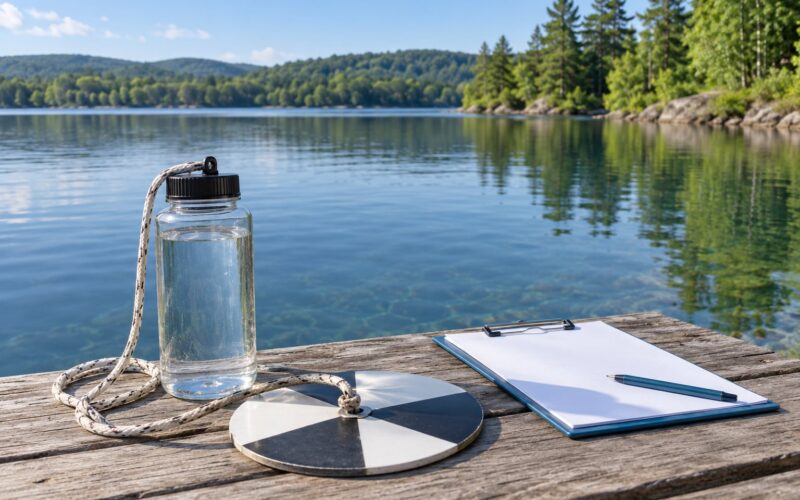
The clearest sign of a zebra mussel infestation is also the most misleading: a lake that suddenly looks like glass. That clarity is not cleanliness. It is the visible result of millions of tiny filter feeders removing the floating plant life that fed everything else.
A single zebra mussel can filter up to one litre of water per day, removing phytoplankton and suspended particles. Densities in established populations run into tens of thousands per square metre, so the math gets enormous fast. The impact-led list below is the short version.
- Clears the water. Plankton and suspended algae are stripped out, so visibility can jump from a few metres to well past ten.
- Crushes native mussels. Zebra mussels attach by the thousands to native freshwater mussels, smothering them and starving them of food.
- Alters habitat. Living colonies carpet rocks, shells, docks and submerged structures, changing what lives on the lake bottom.
- Removes the food supply. Young native fish and the invertebrates they eat depend on that same plankton, so growth and survival suffer.
- Clogs infrastructure. Water intakes, cooling passages, irrigation lines, buoys and hydropower screens plug with shell and byssal thread.
- Makes beaches hazardous. Waves break dead shells into sharp fragments along the shoreline, which cuts bare feet and paws.
- Skews the algae balance. Small edible algae disappear first while some inedible or toxic species face less competition.
Research groups including the USGS and the Minnesota AIS Research Center describe these impacts as lake-specific rather than uniform. Two nearby lakes with similar fishing can end up in completely different states, and the reason is usually water chemistry.
What Is a Zebra Mussel?
A zebra mussel is a small freshwater bivalve, Dreissena polymorpha, native to the Black and Caspian Sea region of Eurasia. It arrived in North America in ballast water on ocean-going ships in the late 1980s and was first confirmed in the Great Lakes and the St. Lawrence River soon after.
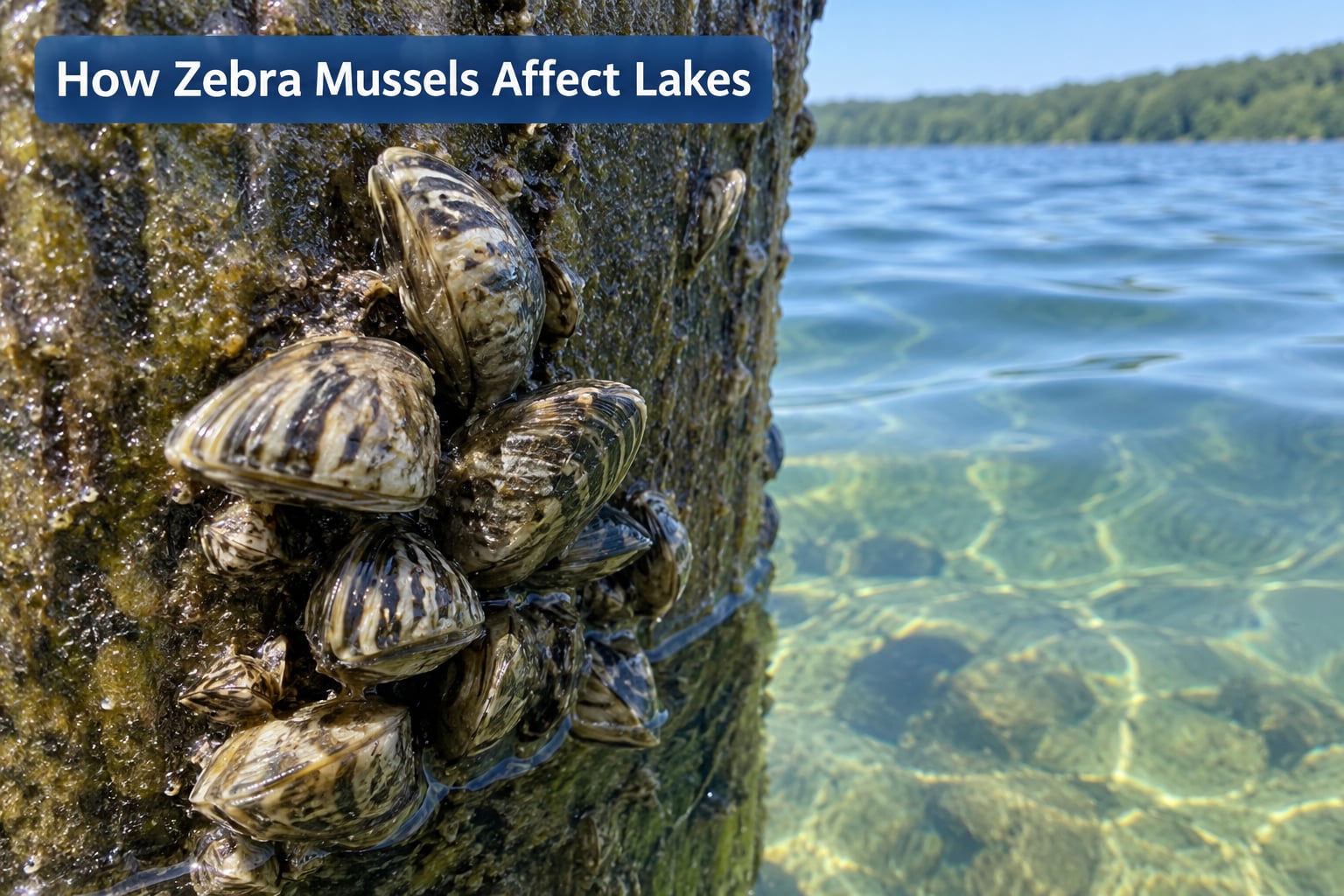
Adults are usually 2 to 4 centimetres long, wedge-shaped and flat on one side, with a shell that tapers to a point at the hinge. The classic name comes from the banding: irregular dark stripes running lengthwise over a cream, tan or pale background. Shells in low-calcium, turbid lakes are thin and fragile; shells in hard, clear water grow thick and heavy, which is one reason those lakes tend to hold far bigger populations.
They attach to hard surfaces with byssal threads, essentially a living glue they can re-secrete to move or to let go. Unlike native mussels, they do not burrow. Smothering colonies of freshwater mussels are heavy because the zebra mussels on top keep feeding while the mussel underneath starves.
The close relative to know about is the quagga mussel, Dreissena bugensis. It is rounder and flatter, with bands only on the posterior end, and it prefers deeper, siltier water than the zebra mussel’s rocky shallows. Where both exist, the quagga is usually the one that shows up in the deepest parts and pipes.
Microscopic veliger larvae are the other half of the story. They drift in the water for several weeks before settling, so a lake can be infested for months before anyone notices a single adult attached to a dock.
How Zebra Mussels Spread From Lake to Lake
Adults are poor travellers on their own. Zebra mussels move lake to lake on your equipment, and the routes that matter are entirely human-made.
- Boat hulls and trim tabs. Adults clamp on and hitchhike into a different basin on the next launch.
- Trailers, trolling motors and anchors. Shells latch onto metal and remain viable for a long time out of water.
- Live wells and bait buckets. Water with larvae is transported whole if you never drain it.
- Seagrass, lines and diving gear. Wading gear pulled straight from a fouled lake to an uninfested one is a common vector.
- Connected waterways. Canals, rivers and pipelines carry veligers without anyone launching a boat.
That last point explains why an inland lake far from any ocean can end up infested. Water moves between basins through the hydrology, and the mussel goes with it.
What Happens to a Lake’s Food Web
Every lake food web starts with phytoplankton: microscopic plants and algae that capture sunlight and convert it into edible biomass. Zebra mussels eat that layer directly, and they are efficient at it. What was a continuous supply becomes a thinner, deeper, less nutritious one.
Three things follow. First, juvenile native fish and the zooplankton that feed them lose the plankton base they were built on, so growth slows. Second, native freshwater mussels are outcompeted and physically smothered, which strips filter feeders and detritus processors out of the lake entirely. Third, the species that can live on whatever is left move in, so the community shifts toward simpler, often less diverse assemblages.
Anglers notice the results as a change in the fishery rather than a sudden collapse. The species mix shifts, fish hold in different structure, and individual sizes get smaller for a given species. Researchers studying Minnesota lakes have found mussel density is a strong predictor of these changes, though the size of the effect varies widely from lake to lake.
Effects on Water Clarity, Algae, and Oxygen
Because the effects are easy to conflate, this table separates what you see on the water from what is actually going on underneath.
| Signal on the water | What it means | How serious |
|---|---|---|
| Water suddenly much clearer | Plankton is being removed by dense filter feeding | Early warning that an infestation is established |
| Visible green or brown algae mats in shallows | Large algae that mussels cannot process are now uncompeted | Local nuisance and odour problems |
| Submerged plants and algae growing harder than before | Less shading and fewer grazers on plant growth | Changes habitat structure for fish |
| Shoreline shell litter, thick beaches | Wave action grinding on dense colonies | Cut risk for swimmers, children and dogs |
| Oily sheen or odour on the surface | Decaying algae and organic matter in low-oxygen pockets | Local water-quality nuisance |
| Sagging navigation buoys, blocked intakes | Biofouling on and in submerged equipment | Direct cost to boaters and utilities |
On oxygen, the honest answer is that it is not one-directional. Some research has recorded lower bottom-water oxygen in heavily infested lakes, and periodic fish kills there are usually blamed on the combination of a stressed fishery, blooming algae and low oxygen. That said, mussels can also raise hardness and alkalinity, and their filtered water goes in clear and well-oxygenated, so you should treat sweeping claims about the oxygen direction with caution.
Effects on Fishing, Boating, and Swimming
This is where the infestation reaches your wallet and your weekend.
Boats and motors. Shells on a hull foul the surface, hurt top speed, add weight, and can damage paint and gelcoat. Plugs in the cooling water intake of an outboard or inboard can block and lead to an overheating engine. On lower units, mussels can lodge in cooling passages and in the gearcase, which turns into an expensive teardown rather than a hose-and-flush job.
Trailers, docks and anchors. Docks lose freeboard as colonies build on the flotation, cleats and pilings. Shells on a trailer or trolling motor transfer directly to the next lake. Navigation buoys and channel markers gain weight until they sit lower, or sink outright.
Fishing. Live wells and bait buckets become transport vessels, so the rule at infested lakes is simple: drain them on the ramp. Because mussels attach to anything wet and hard, netting, waders, downrigger lines and anchor lines all carry risk out of the water.
Swimming and shoreline use. Zebra mussels are not a human health hazard. The problems at the water’s edge are mechanical: sharp shell fragments in the sand, and dense beds on shallow rock that you can cut yourself on when you climb out. Wear water shoes at shell beaches, keep dogs away from the shell line, and rinse gear before you leave.
Drinking water and irrigation. Household intakes, private wells drawing lake water, and intake screens can clog. Utilities and irrigation districts deal with screens, filtration and chemical treatment costs that all trace back to the same biology.
How to Spot Zebra Mussels
Identification at a boat ramp takes about a minute if you know what to look for. Check anything hard, rough and submerged near the surface first: dock pilings, rocks, the underside of a float, and your own boat.
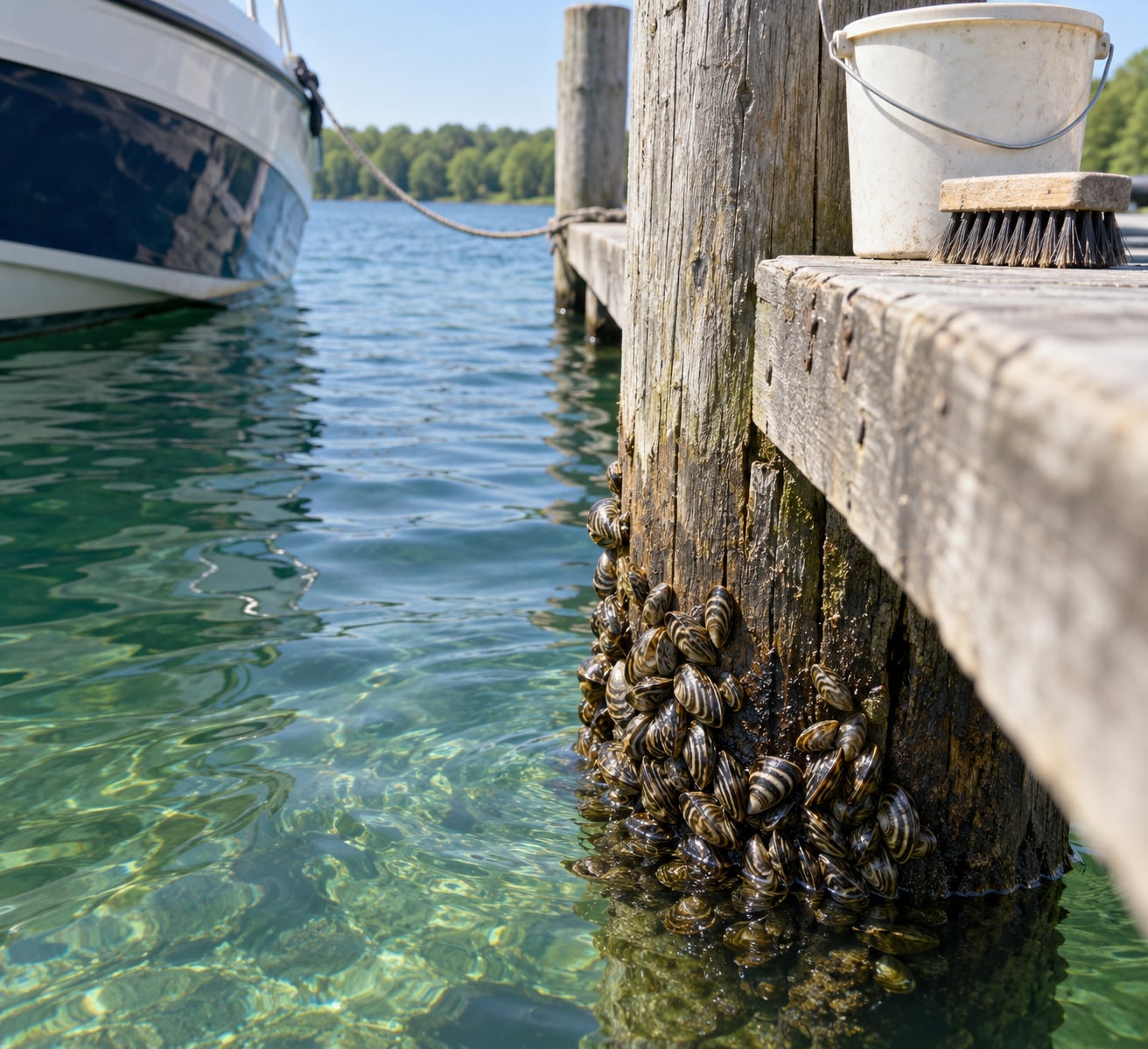
- Shape. Small triangular or wedge-shaped shells, pointed at the hinge, flat and ribbed on one face.
- Size. Adults run roughly the width of your little fingernail, but they cluster in dense, rough-textured masses.
- Colour and pattern. Pale cream, tan or yellow-green shells with irregular dark zigzag or striping bands running lengthwise.
- Grouping. They sit side by side by the thousand, forming a carpet you can feel with a fingertip.
- Habitat. They are found on rocks, shells, pilings, intakes and any hard surface in shallow to mid depths. They are not found in soft mud.
Quagga mussels look rounder and flatter, and their bands usually stop before the wide end of the shell. If you are unsure which species you have, photograph it with something for scale and send the picture in. You do not need to be right.
What You Can Do to Help

The protocol that state agencies and Cornell Cooperative Extension repeat everywhere is Clean, Drain, Dry. Treat it as a routine, not a suggestion, and it takes about ten minutes at the ramp.
Inspect. Before launching, check the hull, trailer, trolling motor, anchor and live well for anything attached. Look for adults on a boat ramp, in a swimming beach or on a fish sanctuary.
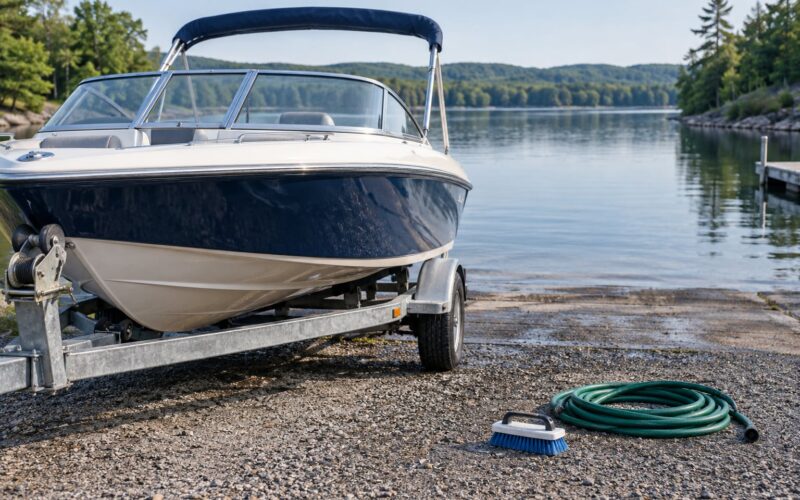
Clean. Wash the hull, trailer, ramp-contact surfaces and gear with hot water and a stiff brush before leaving the ramp. Mussels die reliably when they are wetted with water above about 50 degrees Celsius for long enough; where a heated unit or steam cleaner is available, use it. Dry the hull and trailer, and remove anything you can see sticking to the prop or lower unit.
Drain. Drain the live well, the bait bucket, the bilge, the trailer’s water system and any buckets. Never transfer lake water into a different waterbody.
Dry. Leave everything out of contact with water for at least five days if you can. Cornell’s widely cited standard is five days of drying as the minimum; longer is safer. If you need the boat sooner, the combination of heat and drying matters more than speed.
Dispose. Do not move live bait between lakes. If your lake bans bait from outside, follow the rule; the safest choice is locally sourced bait and a new bucket.
Report. Photograph what you found with scale, note the lake, ramp and date, and report it to your state or provincial aquatic invasive species program. Early reports are what make containment possible.
As for whether a lake can get rid of zebra mussels once they are established: in most large or connected lakes, no. Managers work toward containment and prevention rather than eradication. A small, isolated, low-nutrient waterbody can sometimes be treated with targeted chemical control or physical removal before the population is widespread, and anglers’ forums do contain occasional reports of successful eradications, but those are the exception, not the strategy.
Frequently Asked Questions
Do zebra mussels make lake water clearer?
Yes, and that is the most common early sign of an infestation. Zebra mussels filter out phytoplankton and suspended particles as they feed, so visibility can climb from a few metres to well over ten in an established population. Treat clarity as a warning rather than an improvement: the plankton they remove is the base of the lake’s food web, so the clearer lake is usually the more damaged one.
Can zebra mussels hurt people or pets?
No. Zebra mussels are not harmful to people, and there is no known health risk from swimming in, or eating fish caught from, an infested lake. The real hazard is physical: waves break dense colonies into sharp shell fragments along beaches, which cut bare feet and paws. Wear water shoes at shell beaches, supervise children and dogs near the shoreline, and rinse off after contact with lake water.
Can I still fish or boat in a lake with zebra mussels?
Yes, with a routine. The mussels will foul your hull, clog cooling water intakes and lodge in lower units, so inspect and clean before you launch and again before you come back up. Drain live wells and bait buckets on the ramp, dry the trailer and gear for at least five days, and avoid moving wet equipment between lakes. Fishing pressure on an infested lake is not what causes the damage.
How quickly can zebra mussels spread to another lake?
A single infested trailer can start a new population. Microscopic veliger larvae remain in any water left in a live well or bait bucket, and attached adults survive on hulls, motors and anchors. Larvae can drift for weeks before settling, so a new lake can be hosting mussels for months before anyone notices a shell. That is why the dry-out rule matters more than any single trip.
What kills zebra mussels on boats and docks?
Heat and drying do. Adult zebra mussels die when they are heated above roughly 50 degrees Celsius for long enough, and they cannot survive several days of complete drying out of water, which is the basis of the five-day rule. Cold water, pressure alone, and ordinary soap do not reliably kill them, and antifouling paint slows new settlement without removing an existing cluster, so scrubbing and hot-water rinse still come first.
Should I report a suspected zebra mussel sighting?
Yes, always, even if you are not certain. Photograph the shells with something for scale, note the lake, ramp or beach, the date, and send it to your state or provincial aquatic invasive species program, which is usually the state department of natural resources or the wildlife agency. Early reports trigger inspections and sometimes treatment, while unconfirmed reports cost you a minute. Never transport the specimens out of the area to hand them over.
What to Do First
Look at the underside of your dock or the rock at the end of the boat ramp. If there are hard, pale, striped shells in dense clusters, your lake has mussels and the clearer water means nothing good.
Then do the small thing that matters most: clean your gear, drain every bucket, and give the trailer five full days of dry before it goes near another waterbody. That habit, repeated at every ramp, is what keeps the next lake out of this article’s situation.