Launching a boat alone at a ramp works the same way every time: rig your lines before you back into the water, keep the truck hooked up until the hull floats free, then walk the boat to a cleat instead of handling it with your hands. A beginner can do this in about ten minutes on a shallow ramp with a tandem trailer and a properly working winch.
The part that trips people up is not the winching. It is releasing the boat and finding out where it went. Everything below is built around that problem.
Table of Contents
- 1What You Need
- 2Step-by-Step: How to Launch a Boat Alone at a Ramp
- 31. Inspect the Ramp and Position the Vehicle
- 42. Secure the Trailer and Prepare the Boat
- 53. Keep the Vehicle Attached Until the Boat Is Floating
- 64. Release the Winch and Boat Once Floating
- 75. Move the Boat Clear and Return to the Vehicle
- 8Common Mistakes
- 9Quick checklist before you touch the winch
- 10Frequently Asked Questions
- 11Is it safe to launch a boat by yourself at a boat ramp?
- 12How do I keep a trailer from rolling back while launching a boat?
- 13When should I release the safety chains during a solo boat launch?
- 14What should I do if the boat will not come off the trailer easily?
- 15How much water depth is needed to launch a boat at a ramp?
- 16Do I need to keep the vehicle attached to the trailer while the boat is floating?
- 17Conclusion
What You Need
Start in the staging lot, not on the ramp. Prepping the boat next to the water is the single most common reason a solo launch turns into a ten-minute blockage with three people waiting behind you.
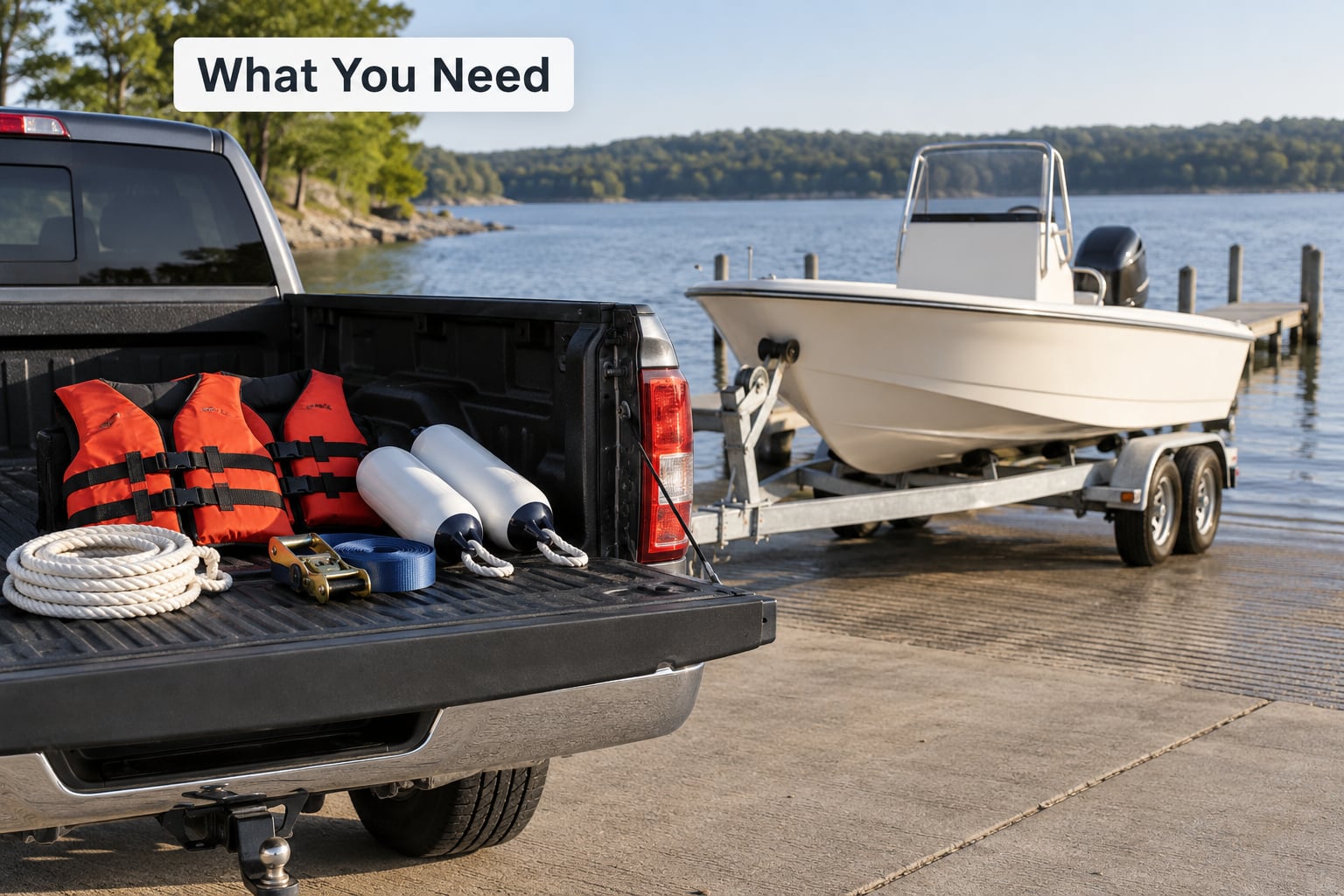
- A long line, 25 to 50 feet. Enough to reach a dock cleat or your own truck bed from the ramp with slack to spare. Cheaper than a winch remote and it works everywhere.
- Two cleats or a bow eye and spring cleat. One line can only do so much. The spring cleat at the trailer tongue is the ideal solo anchor point.
- Fenders if a dock is involved. Solo launches end with a boat thumping against a dock while you are not watching.
- A working winch and strap. Test it before you are in the water.
- Wheel chocks. Non-negotiable on any ramp with a grade.
- A properly fitted life jacket. You will be standing on a wet trailer tongue in moving water. Wear it.
On the trailer, confirm the coupler latches, both safety chains are crossed under the tongue, the transom tie-down straps are snug over the stern, and the drain plug is in. Check the winch strap for fraying and confirm the bow eye is not seized.
Skip the ramp entirely if it is steep, icy, or busy, if the wind is pushing across the lane, or if the boat is heavy enough that you cannot comfortably lift the bunks. Wind is the one condition experienced solo launchers agree on: wait for it to pass rather than improvising in a crosswind.
Finally, read your trailer and winch manual. Winch handles, strap types and brake designs differ enough that guessing is how fingers get hurt.
Step-by-Step: How to Launch a Boat Alone at a Ramp
1. Inspect the Ramp and Position the Vehicle
Walk the ramp before you drive down it. You are checking surface, slope, depth at the end, and how much room you have to straighten out.
Look down the ramp for other users, for submerged debris, and for a drop-off where the trailer could go deep fast. Then back in on the driver’s side so the trailer is slightly off-center in your mirrors, and stop when the trailer wheels are a foot or so into the water. You want the truck on solid ground and the trailer angled just enough to guide the boat off the bunks.
2. Secure the Trailer and Prepare the Boat
Set the parking brake, put the truck in park, and chock both rear wheels. With the parking brake set and the wheels chocked, the trailer has two independent things holding it on the grade.
Plug in the trailer lights to confirm they work while you can still see them, then unhook them before the stern goes under. Leaving a submerged trailer light connected is a burned socket and an unhappy ramp attendant.
Next, rig your line. This is the decision most solo launchers get wrong, because they rig it after the boat is in the water. Pick your method before you touch the winch strap.
| Method | How it works | Best for | Watch out for |
|---|---|---|---|
| Bow line to dock cleat | Long line from the bow eye to a dock cleat before backing in | Ramps with a dock and light traffic | Boat swings sideways to the dock, so start with the bow already pointed away |
| Spring cleat to dock | Line from the trailer spring cleat straight to the dock | No dock cleat in reach of the bow | Works only if the ramp runs roughly parallel to the dock |
| Long line to trailer or truck bed | Rope from the bow eye to your own spring cleat or bed cleat | Ramps with no dock at all, or busy ramps | Ties you to the truck, so back up in slow short pulls |
Whichever you choose, the line goes on while the trailer is out of the water. That is the whole trick to a dry solo launch.
3. Keep the Vehicle Attached Until the Boat Is Floating
Leave the coupler latched and the chains hooked. Once the boat is floating you want the truck acting as an anchor against the trailer sliding back up the ramp, and having to reconnect a coupler with soaked hands in a current is a bad afternoon.
Winch slowly until the bunks clear, watching that the boat tracks straight. If it starts to skew, stop the winch, shift the truck a few inches forward or back, and continue in small increments.
A few experienced solo boaters let the boat float itself free instead: they tie a 25-foot line from the bow eye to the winch cable, lock the winch in free position, unhook the strap, and back down until the hull simply rises off the bunks. It works, and it is faster, but do it only on a ramp you already know.
4. Release the Winch and Boat Once Floating
You know it is time when you can see daylight under the keel line and the transom is sitting level in the water. Unclip the winch strap and coil it aboard where you will not stand on it.
Take up the slack on your line with two or three steady pulls instead of yanking. Keep the bow pointed away from the ramp and away from your truck, and resist the urge to back down deeper for convenience. Deeper water with a floating trailer means more floating trailer to control.
Keep one hand on the line at all times. If the boat drifts toward the ramp, let it take the slack and walk with it. Do not try to muscle a hull back by grabbing the cleat.
5. Move the Boat Clear and Return to the Vehicle
Tie off to the dock cleat, the spring cleat, or your own truck, depending on the method you rigged. Now drive up the ramp slowly, watching your mirrors for the trailer coming out of the water.
Back into the parking lot, park, chock the wheels again if you are leaving the boat, and only then drop the bow line. Once the boat is secure and the trailer is out of the water, you are free to deal with gear at your own pace.
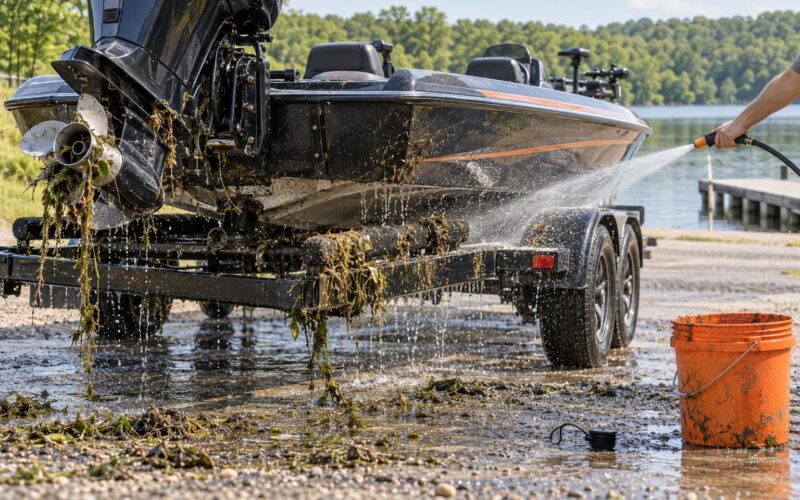
If the trailer surfaces with water and weeds on it, a quick rinse at the rinse station prevents the next launch from fighting you.
Common Mistakes
- Rigging the line after the boat floats. Once the stern is swimming you cannot reach the bow eye safely. Correction: every line goes on in the staging lot or at the top of the ramp.
- Standing downhill of the trailer on a steep ramp. If the rig rolls back, you are in its path. Correction: stay on the uphill side or beside the truck cab until it is chocked.
- Leaving the parking brake off. Automatic transmissions creep, and one inch of creep at the wrong moment is enough. Correction: brake, park, chock. All three.
- Walking the trailer tongue to reach the boat. The tongue is wet, narrow, and often algae-covered, and a slip there usually means a broken wrist or a shoulder you cannot use for the rest of the day. Correction: use a line, not your footing.
- Pulling the bow line in fast. A hard snap back can take a hand with it, and the boat following too fast up the ramp tangles the rope around the trailer frame. Correction: short pulls, rope coiled as you go.
- Removing the safety chains too early. The chains stay on through the entire launch and come off in the parking lot.
- Ignoring wind and current. A crosswind on a shallow ramp pushes the hull against the trailer or the dock. Correction: wait, change ramps, or get a hand.
- Forgetting retrieval is the harder half. Loading a boat alone by hand is the part that ends with a back injury. Correction: start the motor before you leave the trailer, or use a trolling motor to drive the boat up.
Quick checklist before you touch the winch
Coupler latched, chains crossed, brake set, chocks on. Line rigged and attached to a fixed point. Drain plug in, straps snug, lights unplugged. Life jacket on. Boat clear of the ramp and secured before you move the truck.
Frequently Asked Questions
Is it safe to launch a boat by yourself at a boat ramp?
It is safe for small and midsize boats on a shallow ramp in calm conditions, provided the trailer is chocked and braked, your line is rigged before the boat touches water, and you stay out of the trailer’s downhill path. Large vessels over about 30 feet, steep ramps, strong crosswinds, and current are good reasons to ask for a hand instead.
How do I keep a trailer from rolling back while launching a boat?
Use three layers: the transmission in park, the parking brake, and wheel chocks on the rear wheels behind the vehicle. Keep the tow vehicle attached to the trailer through the whole winching phase so the rig stays anchored. Never rely on the parking brake alone on a grade, since it can weaken over time and with heat.
When should I release the safety chains during a solo boat launch?
After the boat is floating, secured at a cleat, and the trailer is back in the parking lot with the wheels chocked. The chains and coupler stay connected while the boat is in the water and while the trailer is being pulled up the ramp, because the truck is doing the job of holding everything on the slope.
What should I do if the boat will not come off the trailer easily?
Stop and check the obvious first: drain plug still in the boat, transom tie-down straps tight against the bunks, bunks loaded with gear, or the winch strap tangled around a guide. Then back the rig up a foot, restart the winch, and try again slowly. If it still will not budge, pull the rig out and check in shallow water rather than forcing it.
How much water depth is needed to launch a boat at a ramp?
Enough that the trailer’s submerged length plus the boat’s draft clears, with a foot or two to spare for wave action. In practice, backing in until the trailer tires sit level with the waterline or slightly deeper usually floats a small boat free while keeping the trailer shallow. Deeper than necessary makes the trailer harder to control.
Do I need to keep the vehicle attached to the trailer while the boat is floating?
Yes. Keeping the coupler latched means the truck anchors the trailer against rolling back up the ramp while you handle the floating boat. Some experienced solo boaters disconnect and re-hitch later, but that only works on flat, shallow ramps, and reconnecting a coupler in moving water is a step you do not need to take.
Conclusion
Inspect and secure everything before the winch turns. Chock the wheels, rig the line while the trailer is still dry, and keep the truck hooked up until the boat floats and is tied off.
Practice once at a familiar low-traffic ramp on a weekday, and follow the instructions that came with your trailer and winch. The day solo launching stops making sense is the day you get a second set of hands, and nobody at the ramp thinks less of you for it.