Blue-green algae is cyanobacteria, a type of photosynthetic bacteria that lives in warm freshwater and can multiply fast enough to paint a lake pea-soup green or rust-colored overnight. To recognize blue green algae, you watch for a sudden color shift, a surface scum or foam mat, and a musty smell, then confirm with an official advisory or a home test. Appearance alone can tell you to stay out of the water. It can never tell you a bloom is safe.
This guide covers boaters, paddlers, anglers, swimmers, campers, and anyone traveling with a dog. Most of what you will read applies in summer and early fall, when water temperature is climbing and rain has washed nutrients into the lake.
Table of Contents
- 1What Does Blue Green Algae Look Like?
- 25 Common Warning Signs of Blue Green Algae
- 31. Water color changes with no obvious cause
- 42. Surface mats, streaks, or foam along the shore
- 53. A musty or swampy odor
- 64. Sudden accumulation in sheltered water
- 75. An official advisory, warning, or closure
- 8Blue Green Algae or Normal Algae: How to Tell the Difference
- 9Why Does Blue Green Algae Bloom at Lakes?
- 10How to Check Whether a Lake Has an Algal Advisory
- 11What to Do If You Suspect Blue Green Algae
- 12When Is It Safe to Swim, Fish, or Boat?
- 13How to Prevent Blue Green Algae Blooms
- 14Frequently Asked Questions
- 15Can you tell if blue green algae is safe by looking at it?
- 16Is blue green algae the same as blue-green algae?
- 17Can dogs swim in a lake with an algal bloom?
- 18Does blue green algae make fish unsafe to eat?
- 19What does blue green algae smell like?
- 20How long does a blue green algae bloom last?
- 21What to Do First at a Lake With a Suspected Bloom
What Does Blue Green Algae Look Like?
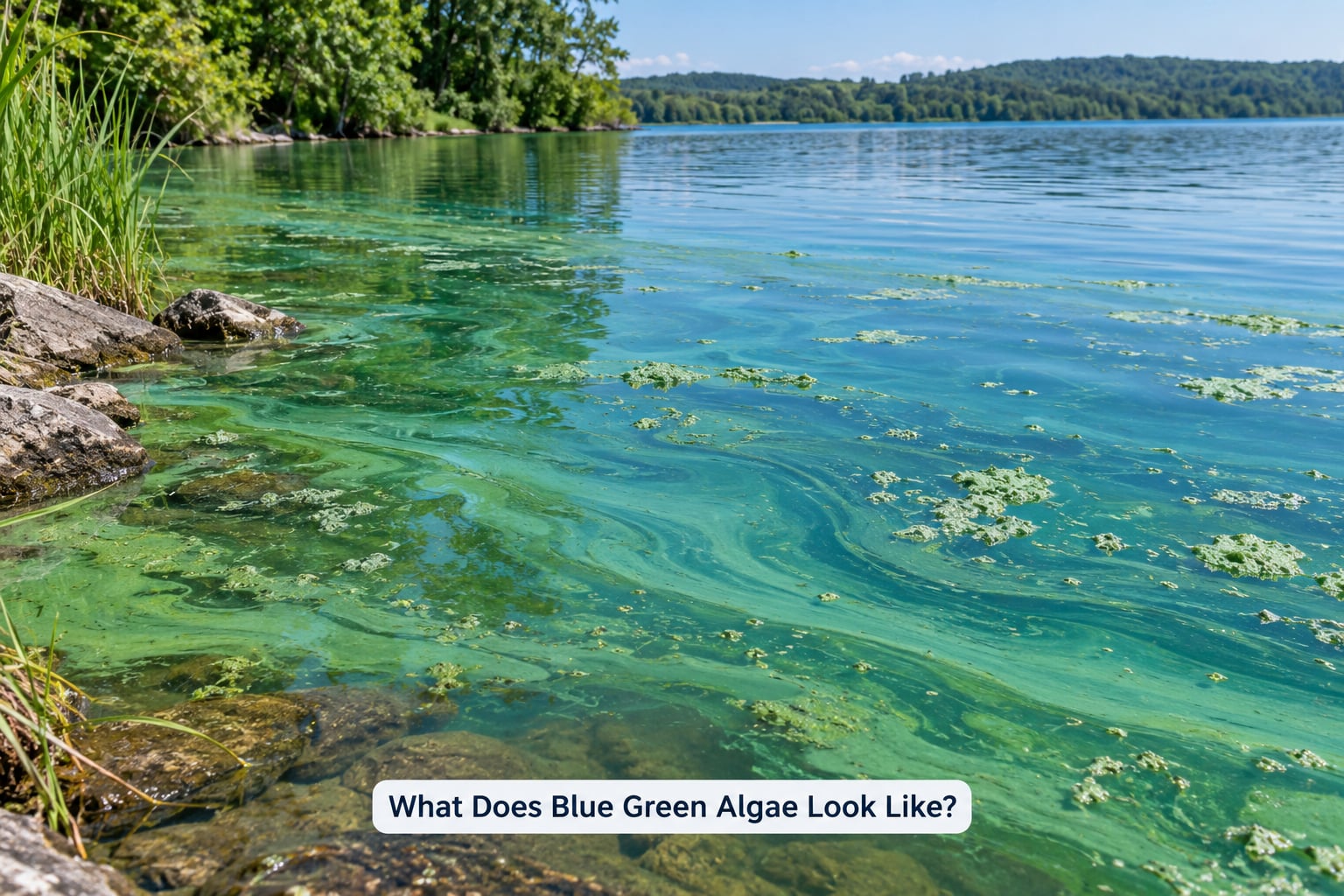
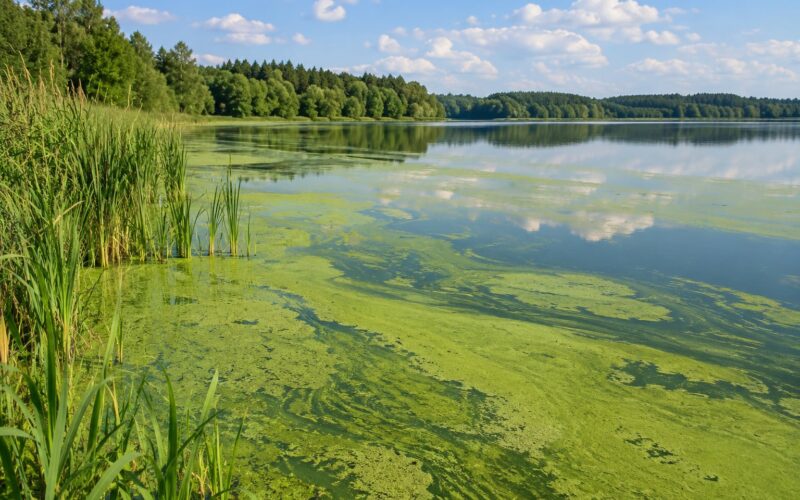
Cyanobacteria are not algae in the strict sense even though they photosynthesize like plants and green the water. When conditions suit them they float, clump, and form a visible surface layer. These are the signs most often reported by visitors, shoreline observers, and agency staff:
- Water that turned pea-soup or spilled-paint green within a day or two, with no rain to explain it
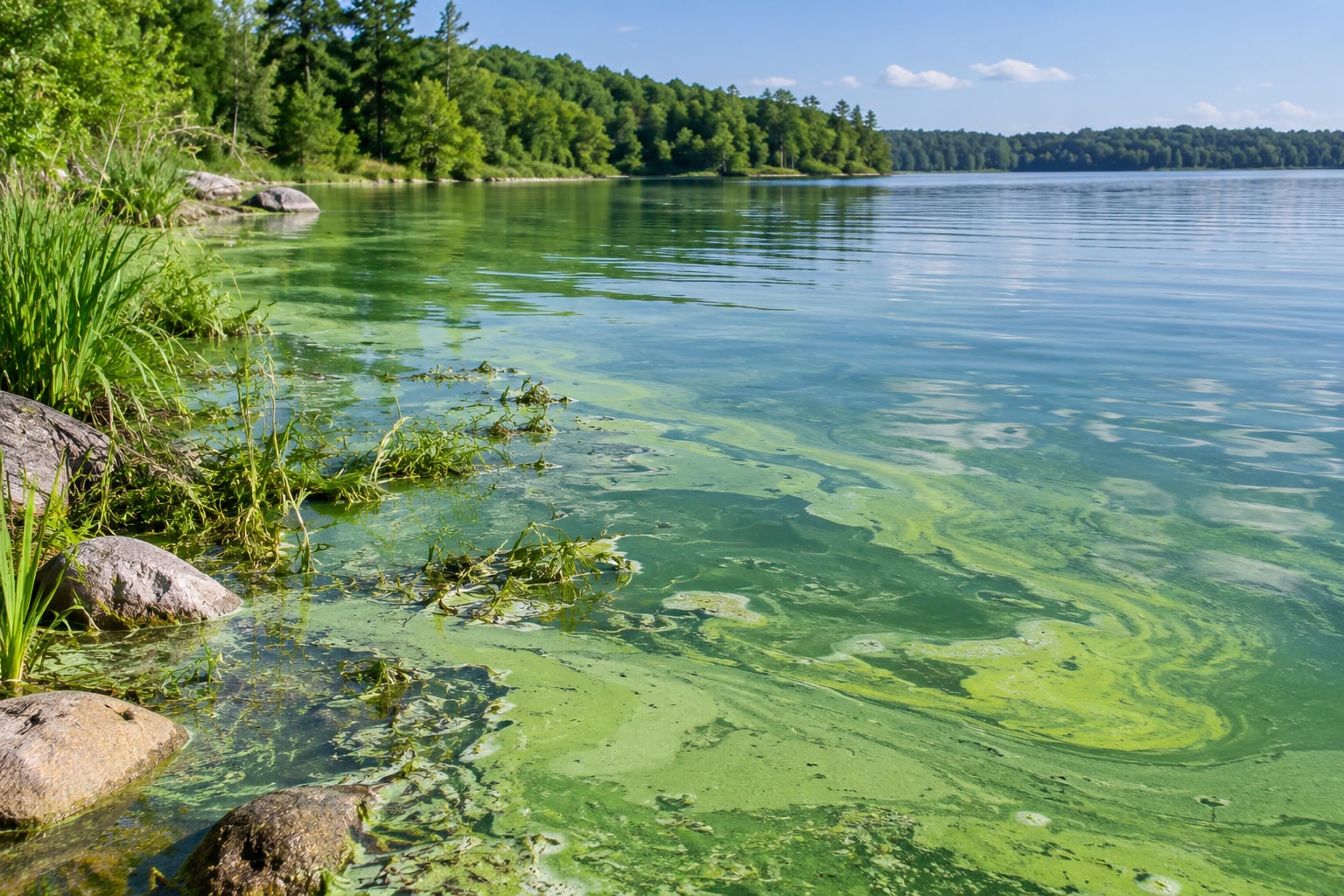
- Electric or neon green streaks on an otherwise clear surface, sometimes with faint iridescent edges
- Surface scum, mats, or paint-like patches that drift together in windy conditions instead of mixing into the water
- A thick foam or mat along the shoreline, especially in coves, bays, and boat launches where wind pushes material in
- Blue, brown, reddish-green, or even rust-colored water, which points to different cyanobacteria species rather than a harmless green alga
- Clouds of green suspended below the surface in water that looked clear from shore the day before
- A musty, swampy, or swamp-pool odor carried across the water on a warm afternoon
- A sharp change in clarity from the previous visit, with debris and dead fish collecting in the same bays
- Bloom conditions during heat, when water is above roughly 75°F, still, sunny, and rich in nutrients
Color tells you something changed. It does not identify the organism, and it does not measure toxin. That step takes a lab result or a current advisory.
5 Common Warning Signs of Blue Green Algae
The five signs below are the ones that recur most often. Each one suggests a bloom; none of them proves one, and a clear-looking lake can still carry dissolved toxins from a bloom that has already broken apart.
1. Water color changes with no obvious cause
Green, blue-green, brown, or reddish water appearing over hours rather than gradually is the clearest single clue. Rain runoff can turn water brown, but that looks like suspended sediment and settles. Cyanobacteria color tends to sit on top and follow wind and light rather than depth. What it suggests: a bloom is likely present. What it does not prove: the species, or whether toxins are being released.
2. Surface mats, streaks, or foam along the shore
When the cells float and clump, you get a layer that ripples, scatters, and re-forms. Wind drives it into the downwind side of the lake, so the worst of it is often at a specific beach rather than all around. Shoreline foam mats can form without any color change at all, which is why a clear-looking shoreline is not proof of safety.
3. A musty or swampy odor
Cyanobacteria produce the volatile compounds behind that smell. People describe it as musty, swampy, like a swamp pool, or occasionally like freshly cut grass. Odor is a useful trigger, but wind direction decides who smells it. Someone launching a boat at one end of a lake may notice it while another launch a mile away notices nothing.
4. Sudden accumulation in sheltered water
Blooms collect in shallow bays, coves, sloughs, reservoir arms, and behind dams where the water barely moves. The same lake can look fine at the main boat ramp and be thick with scum around the corner. Check the sheltered ends, not just the open water you pulled up to.
5. An official advisory, warning, or closure
This is the only sign that carries an agency’s judgment behind it. State health departments, environmental agencies, county parks departments, and drinking-water utilities post advisories when a bloom is confirmed or suspected, and they lift them when sampling says conditions have changed. If a notice exists for your lake, it overrides everything else on this list.
Blue Green Algae or Normal Algae: How to Tell the Difference
Most look-alikes are harmless plants or sediment, and telling them apart saves you from panicking over nothing. None of these distinctions is a laboratory test, and several cyanobacteria species look identical to a harmless alga until a sample is analyzed.
| What you see | Where it collects | Texture and smell | Context |
|---|---|---|---|
| Cyanobacteria bloom | Surface, drifting with wind; downwind shores and coves | Paint-like, streaky, or foamy; musty or swampy odor | Hot, sunny, nutrient-rich water; sudden color change |
| Duckweed | Still shallows, coves, marsh edges | Individual flat round leaves; no odor | Grows steadily, spreads over weeks, harmless |
| Chara (moss-like algae) | Shallow weedy areas, mostly under 3 feet | Stiff, branching, bristly; strong odor when crushed | Clear water, heavy aquatic weed growth |
| Filamentous green algae | Attached to rocks, docks, and submerged plants | Long slippery strings or mats; usually no odor | Fertilizer runoff, warm water, attached to a surface |
| Post-rain sediment | Whole basin, worst near tributary mouths | Cloudy brown; silty smell of wet earth | Follows heavy rain, clears in a few days |
Two practical tests settle most cases in the field. Crumple a piece of the suspected material in your hand. Chara snaps into stiff segments, filamentous algae smears, and duckweed flattens into tiny green discs, while a bloom tends to feel slick and stinky rather than fibrous. Then look at how it moves: duckweed drifts as distinct leaves, sediment clouds evenly through the water column, and cyanobacteria spreads in irregular surface patches.
Why Does Blue Green Algae Bloom at Lakes?
Cyanobacteria multiply quickly when three conditions overlap: warm water above roughly 75°F, plenty of sunlight, and low circulation. Nutrients are the accelerant. Phosphorus and nitrogen arrive from fertilizer runoff, manure, septic systems, wastewater discharge, and decaying vegetation along the shore, and they let a population that would normally stay invisible turn into a surface mat in days.
What you can actually observe matches that explanation. Blooms show up in shallow, warm bays before deep open water, in nutrient-rich lakes with agricultural or developed shorelines, and in late summer when the water has had time to heat up. Paddlers on regional forums have noticed a repeating pattern of the worst blooms in the week or two after the Fourth of July, when the water has just crossed that temperature threshold and a long holiday weekend pushes people into it.
Wind and rain decide duration. A steady breeze breaks up mats and can spread cells rather than remove them, and rain dilutes a small water body while simultaneously delivering fresh nutrients. Cool nights, a cold front, or a shift in flow can end a bloom quickly, which is one reason advisories are time-limited rather than permanent.
How to Check Whether a Lake Has an Algal Advisory
Run this check before you load the boat or let the dog off the leash, and again the morning of a trip. Four sources cover most of the country:
- EPA CyAN (Cyanobacteria Assessment Network) — a satellite-based map of cyanobacteria likelihood across the US, updated regularly. It shows conditions in the water rather than conditions at the beach, so treat it as a heads-up.
- USGS and local agency monitoring — real-time buoys and stations publish chlorophyll-a and temperature readings on some lakes. A buoyant reading of chlorophyll-a is the clearest sign a bloom is underway.
- Your state health or environmental department — this is the source that posts and lifts swimming advisories, and the one that takes a report from you. Search your state department plus the lake name.
- County parks and local news — where small lakes without state monitoring get covered, often with a phone number for reporting.
Interpret the wording rather than the color of the banner. No advisory means nothing has been reported or sampled, not that the water is tested and fine. An advisory generally means avoid contact with the water. A warning means the bloom is confirmed and contact should be avoided altogether. A closure means the area is off limits for recreation, sometimes for drinking water reasons.
Plenty of small and less-visited lakes are never sampled, and rules vary by state, county, and water body. Paddlers on regional forums make the point constantly: a home test is a prompt to check, never a substitute for a local closure.
What to Do If You Suspect Blue Green Algae
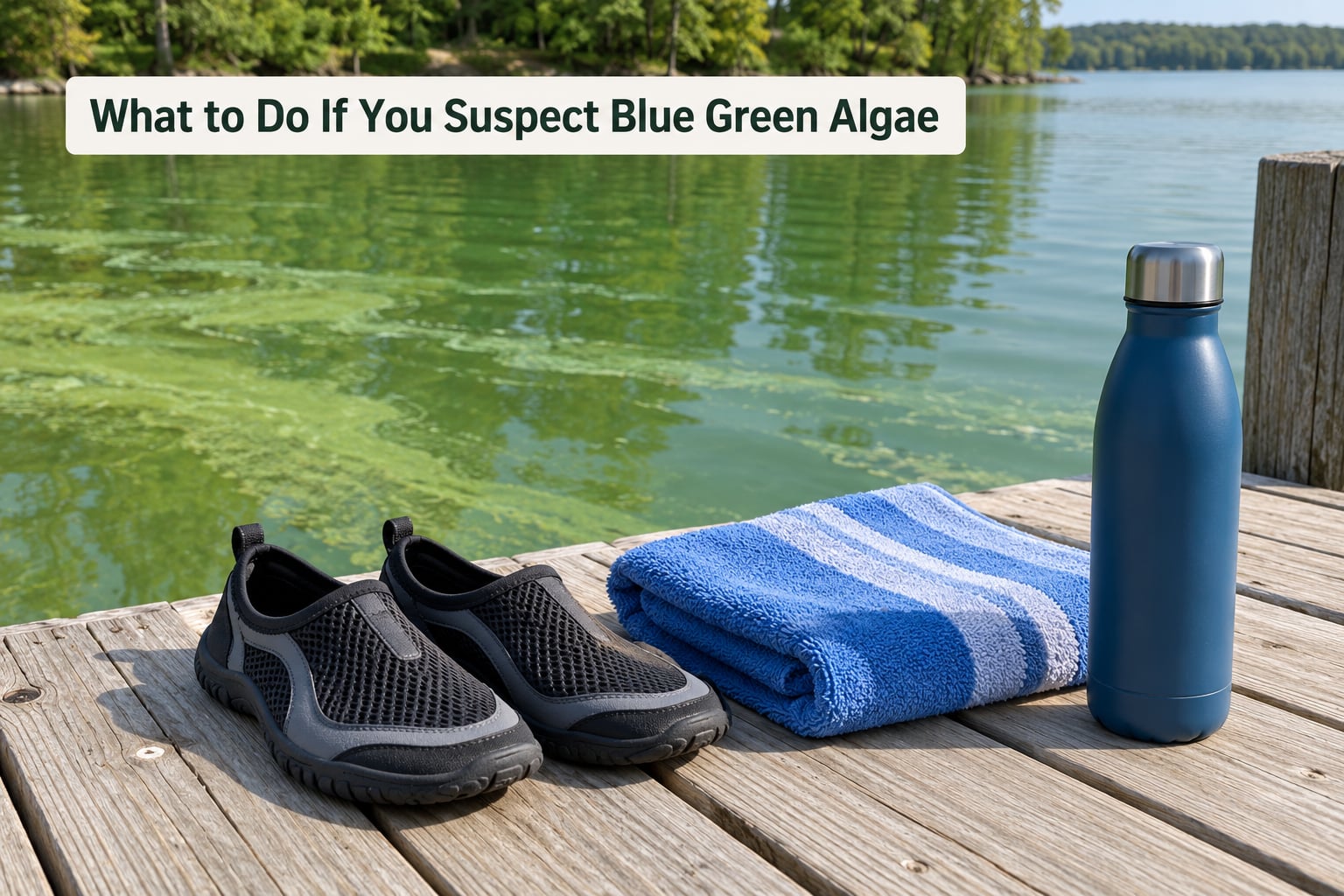
Keep people and animals out of the water, then clean up and check the advisory. Concretely:
- Get out of the water. Swim, wade, tubing, and paddleboarding put your whole body in contact with whatever is at the surface. Fishing from shore and boating above the scum line are lower risk but not zero.
- Keep pets out and leashed. Dogs drink lake water, nose through shoreline scum, and come out coated in it. Toxic blooms can affect dogs within 15 to 20 minutes, which is far faster than in people.
- Do not drink untreated lake water. Boiling does not destroy cyanotoxins, and standard home filters are not designed for them. Do not assume a campfire, a pitcher filter, or a water bladder makes it safe.
- Wash off with clean water and soap after any contact, including wetsuits, boots, and gear. Then wash dogs thoroughly and dry them.
- Check the local advisory for that specific lake. If it is unclear, treat the water as unsafe until an agency tells you otherwise.
- Report it. Take photos with the date and location and send them to your state health or environmental department or your county parks office. Reports often trigger sampling, which is how advisories get issued in the first place.
- Clean equipment before you move on. Drain livewells and bilge water on land, rinse the hull, trailer, trailer tires, and anchors away from the water, and dry everything. Never transfer lake water between lakes in buckets, bait tanks, or livewells.
Watch for symptoms after exposure. In people, effects typically show up within hours to a couple of days and include nausea, vomiting, stomach cramps, diarrhea, and headache. In dogs, watch for drooling, vomiting, weakness, staggering, pale or blue gums, and seizures. Contact a doctor or a veterinarian right away and mention that the water had an algal bloom. If someone has trouble breathing or loses consciousness, treat it as an emergency.
Health guidance here is general. A physician, poison control line, or veterinarian can give advice for your situation, and no page on the internet should replace that conversation.
When Is It Safe to Swim, Fish, or Boat?
Safety depends on the advisory and the kind of contact, not on how the water looks. Risk climbs sharply the closer you get to the surface layer, and dissolved toxins can persist after the visible color fades.
| Activity | Relative risk | Why |
|---|---|---|
| Drinking untreated lake water | Highest | Boiling and standard filters do not remove cyanotoxins |
| Swimming, wading, tubing, paddleboarding | High | Full body contact with surface water and scum |
| Kayaking, canoeing, sailing, wetsuits | Moderate | Lower exposure unless you capsize or fall in |
| Boating, wake sports, fishing from shore or boat | Lowest | Avoid contact with the surface layer and shoreline foam |
On fish, the useful steps are common sense: avoid the water while a bloom is active, discard guts and organs, and wait a week or two after the bloom ends before eating fish from that lake. Local advisories sometimes go further and recommend no fish at all, so read the notice rather than relying on the timeline.
Once an agency lifts the advisory, treat the water as open only after a few clear days with cooler weather and no rain. If the water has not visibly changed, keep out. People on paddling forums ask this question every summer, and the honest answer is that nobody can time it from shore.
How to Prevent Blue Green Algae Blooms
No visitor can reverse a bloom that is already underway. What a visitor can do is keep nutrients from moving between lakes, and shoreline residents and agencies can cut the nutrient input that starts blooms in the first place.
- Move your boat clean. Drain livewells and bilge water on land, rinse the hull, trailer, and gear away from the lake, and dry everything before launching somewhere else. This is the single most useful thing a boater does.
- Never move lake water. Not in buckets, bait tanks, fish bags, or livewells. It carries organisms, including cyanobacteria, into water that did not have them.
- Cut fertilizer and soil runoff on property you own. Skip application before rain, keep soil out of the water, and plant a vegetated buffer strip along the shoreline.
- Stop waste, pet waste, and nutrient discharge from reaching the lake. Septic systems and lawn clippings both add nitrogen and phosphorus.
- Follow local conservation rules for shoreline planting, mowing, and development near the water’s edge.
- Report what you see so agencies can respond early. Early sampling often keeps a notice at the advisory tier instead of escalating to a closure.
At the scale of a whole lake, nutrient reduction is the durable answer: less phosphorus and nitrogen going in means fewer blooms in the years that follow. Aeration and dredging can help specific situations, but they are decisions for local authorities, not for lake visitors.
Frequently Asked Questions
Can you tell if blue green algae is safe by looking at it?
No. Appearance tells you a bloom may be present, not whether it is making you sick. Most blooms are not toxic, but the toxic ones look exactly like the harmless ones. Clear water can also be unsafe after a bloom breaks up, because dissolved toxins remain. Check the advisory for that lake before you go in.
Is blue green algae the same as blue-green algae?
Yes, they are the same thing. The hyphen in blue-green algae is a spelling convention that matches the scientific name for the group. Both phrases refer to cyanobacteria, photosynthetic bacteria that are not true algae. Search results mix both spellings, so either one brings you to the same guidance.
Can dogs swim in a lake with an algal bloom?
No, keep dogs out of bloom water. They drink lake water, nose through shoreline scum, and come out coated in it, and a toxic bloom can affect a dog within 15 to 20 minutes. Signs include drooling, vomiting, weakness, staggering, pale or blue gums, and seizures. Rinse your dog and call a veterinarian immediately if any of these appear.
Does blue green algae make fish unsafe to eat?
It can, and the guidance depends on local advisories. While a bloom is active, avoid the water entirely, and if you do fish, discard guts and organs. Many agencies recommend waiting a week or two after the bloom ends before eating fish from that lake. Some local notices advise against eating fish at all, so read the notice for your water body.
What does blue green algae smell like?
People describe it as musty, swampy, or like a swamp pool, sometimes with a grassy note. The odor comes from volatile compounds the bacteria produce, and it is strongest on warm, still, cloudy days. Odor is a useful trigger to check the advisory, but wind direction decides who catches it, so a clean smell at one boat ramp does not clear the whole lake.
How long does a blue green algae bloom last?
It depends on weather. A bloom can peak within days of warm water, sunshine, and nutrient input, then fade after a cold front, a few days of cloud, or a shift in water movement. Visible color can disappear in a week while dissolved toxins linger. There is no reliable way to time it from shore, so wait for the local advisory to be lifted.
What to Do First at a Lake With a Suspected Bloom
Check the advisory for that specific lake before anyone gets wet, and keep people and pets out of the water while the water looks off. Photograph the color and the shoreline, send it to your state or county agency so they can sample it, and rinse off with clean water if anyone made contact. If a bloom is confirmed, staying out is the only reliable way to avoid it.