Lakes turn over in fall because cooler air chills the surface water, which grows denser and sinks until wind mixes the whole water column into one layer. That single event ends the summer’s warm-on-top, cold-on-bottom stacking, and it re-sends oxygen down to the depths where fish spent the summer squeezed into the coolest water available.
The whole thing comes down to one quirk of physics: fresh water is heaviest at 39°F (4°C). Warm water floats on cold water all summer, then in autumn the surface water approaches that density mark, matches the water underneath it, and stops floating.
For anglers and anyone else on the water in autumn, turnover matters because it changes where the fish are, how the water looks and smells, and whether a boat ramp is worth the mud that week.
Table of Contents
- 1What Does It Mean When a Lake Turns Over in Fall?
- 2Why Do Lakes Turn Over in Fall?
- 3What temperature does the water have to reach before it sinks?
- 4How Fall Turnover Changes a Lake’s Layers
- 5What Happens to Oxygen During Fall Turnover?
- 6How Long Does Fall Lake Turnover Take?
- 7Why Lakes Turn Over in Fall: Wind, Temperature, and Density
- 8What Does Fall Turnover Mean for Fishing?
- 9Does Every Lake Turn Over in the Fall?
- 10Can Fall Turnover Cause Harmful Algal Blooms?
- 11How to Observe Turnover on a Lake
- 12Frequently Asked Questions
- 13What does it mean when a lake turns over in the fall?
- 14Is fishing bad when a lake turns over?
- 15Why does lake water smell like rotten eggs during turnover?
- 16Why do fish die during lake turnover?
- 17When does fall turnover happen?
- 18Can summer storms make a lake turn over?
- 19Conclusion: Start with the Lake’s Changing Temperature
What Does It Mean When a Lake Turns Over in Fall?
Lake turnover is the moment a stratified lake loses its layers. Instead of a warm surface layer sitting on cold deep water, the entire column churns into one temperature and one oxygen level.
Limnologists call a lake that mixes this way twice a year, once in spring and once in autumn, a dimictic lake. Most of the lakes people fish in the United States fit that description, especially in the north and in the upper Midwest.
Two things are worth separating right away. Turnover is a physical mixing event driven by temperature and wind. An algae bloom is a biological event driven by sunlight and nutrients. They can happen in the same week and one can feed the other, but they are not the same thing.
Why Do Lakes Turn Over in Fall?
Five steps, and every one of them has to happen before a lake finishes mixing.
- Air and water both cool. Shorter days and colder air pull heat out of the surface layer.
- Surface water grows denser. Cold water is heavier than warm water, so the surface layer starts to lose its buoyancy.
- The layers reach similar density. Once the surface water is close to the same weight as the water beneath it, the floating stops.
- Wind does the mixing. A run of breezy days pushes surface water down and pulls deeper water up. One strong fall front can finish the job that a week of calm weather could not.
- The column evens out. Water temperature changes little from the surface to the bottom, and dissolved oxygen gets carried to depths that were starved all summer.
What temperature does the water have to reach before it sinks?
Cooling starts pushing the surface water downward somewhere in the low 50s°F on a typical dimictic lake, and mixing is generally complete as the surface approaches 39°F. The date matters less than the temperature, which is why anglers on the forums argue about degrees rather than months.
How Fall Turnover Changes a Lake’s Layers
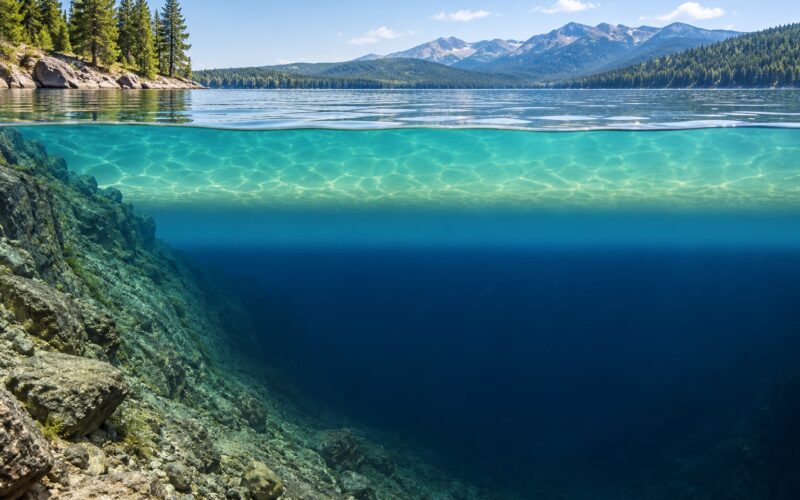
Before turnover, a deep lake in summer is stacked in three named zones. The epilimnion is the warm, sunlit, oxygen-rich surface layer that the wind and weather can stir freely. Below it, the thermocline is a narrow band where temperature drops fast with depth and mixing effectively stops. Under that sits the hypolimnion, the cold, dense bottom layer that gets cut off from the atmosphere all summer long.
After turnover there are no meaningful zones. A lake 25 feet deep can swing only a degree or two between its surface and its bottom, and a hand-held thermometer will show it.
That is also why depth matters. Lakes deeper than roughly 20 feet usually stratify. A shallow farm pond often never builds a real thermocline, so it mixes in a light way most nights as it cools and never stages the dramatic fall event.
Spring and fall turnover are the same physics run in opposite directions, which is why they behave so differently on the water.
| What happens | Fall turnover | Spring turnover |
|---|---|---|
| Trigger | Surface water cooling toward its maximum density | Ice and snowmelt cooling the surface from above |
| Surface temperature at the start | Low 50s°F and falling | Near 39°F, then a fast drop |
| Role of ice | None, the lake is open water | Ice cover holds the surface near freezing |
| Role of wind | The main mixing force, often aided by fall storms | Less wind needed, ice melt water is already dense |
| End state | Uniform column before ice-on | Uniform column, then rapid warming restarts layering |
| Typical look | Cloudy, tea-colored water, possible odor | Often clearer, fewer odor complaints |
What Happens to Oxygen During Fall Turnover?
All summer, the hypolimnion is sealed off. Whatever dissolved oxygen was down there when the lake stratified in spring gets used up by decomposing organic matter and by fish and invertebrates breathing, and nothing replaces it because no new water comes in from the surface.
By late summer those deep layers can hold very little oxygen. That is precisely why cold-water fish sit so tight against the bottom and in the cool spring-fed channels, and why warm-water species dominate the upper water instead.
Turnover is the reset. Wind-driven mixing carries surface oxygen downward and lifts some of the oxygen-poor bottom water into the air, where it re-equilibrates. The chemical effect is large and fast, which is why anglers notice fish behaving differently within days of a big fall front.
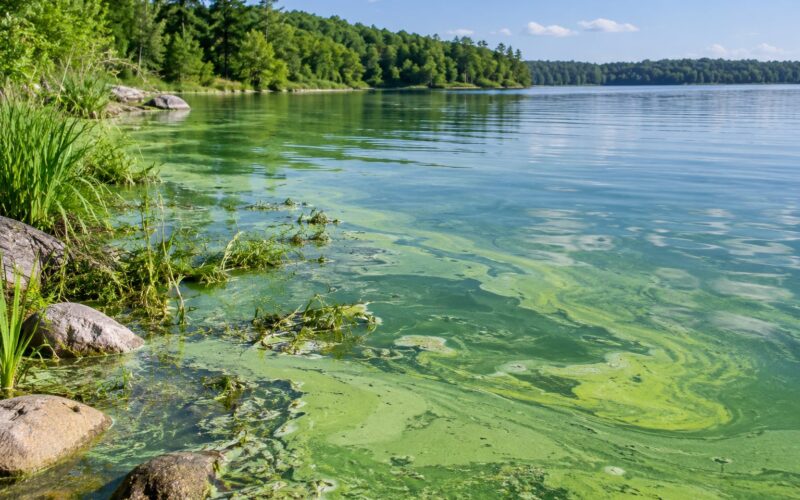
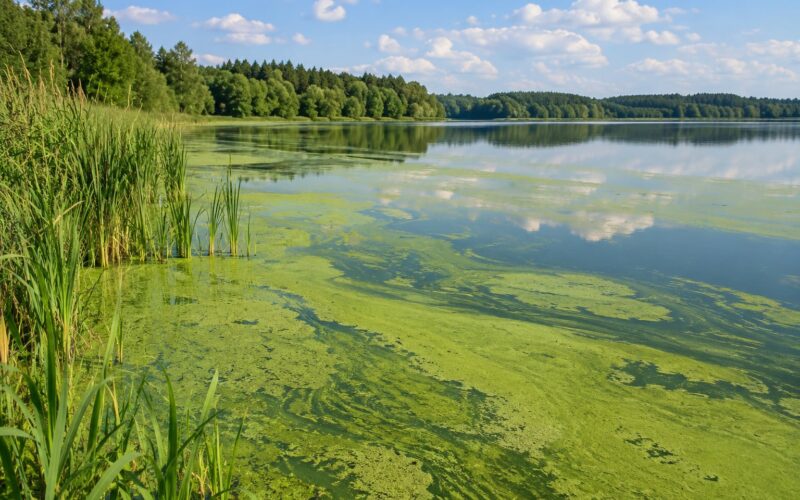
One more consequence produces the smell people complain about. When oxygen is scarce at the bottom, chemical reactions release phosphorus from iron compounds in the sediment. That phosphorus rides upward in the mixing water, and if the lake has plenty of sunlight left, the result is a green or rusty scum line that shows up a couple of weeks after the mixing, not during it.
How Long Does Fall Lake Turnover Take?
Most lakes spend somewhere between a few days and two or three weeks in an active mixing state. The blending itself can happen in a single windy afternoon, but the visible effects, including the cloudiness and the odor, tend to come and go over a couple of weeks as weather and biology sort themselves out.
Four variables move the date more than anything else:
- Latitude and elevation. Northern-tier lakes typically start mixing in late September or October; southern reservoirs often hold their warm layer well into November, and high-elevation lakes cool earlier than nearby lowland water.
- Depth. A deep lake keeps a cold cushion of dense water that takes longer to match the surface, while a shallow basin can mix and remix several times in the same week.
- Reservoir versus natural lake. Reservoirs receive inflow, drawdown schedules and dam releases that shift mixing dates, and a long reservoir may not mix at the same time along its whole length.
- Weather. A warm, calm October delays things. A strong cold front with wind behind it can complete the event in a day and a half.
Anglers who track this in the field say the useful number is the surface temperature, not the calendar. Two lakes in the same county can be a month apart.
Why Lakes Turn Over in Fall: Wind, Temperature, and Density
Three factors do the work, and it helps to know which one is doing what.
Temperature starts the process. Water transfers heat to the air slowly and loses it steadily once the air is colder, and the surface, with the most exposure, cools first.
Density is the hinge. Most substances are heaviest when they are solid, but water is heaviest at 39°F, which means water at 60°F floats on water at 39°F and water at 32°F also floats on water at 39°F. Once the surface drifts down toward that heavy middle point, the density difference that held the layers apart disappears.
Wind supplies the energy. Without moving air there is no friction to push water down and pull it up, so a calm autumn leaves a lake partially stratified right into winter. Wind also does most of the work in the deep lakes that never fully mix, stirring the upper portion while the bottom stays put.
The practical read is simple. Cooling alone creates the opportunity, density removes the obstacle, and wind does the stirring.
What Does Fall Turnover Mean for Fishing?
Fishing during turnover is not bad, it is just different, and the usual patterns stop working for a while. Anglers describe the same thing repeatedly on fishing forums: fish leave the cover and structure they held all summer and roam the lake at several depths, and they are slow to commit to a lure right as the mixing starts.
What that means on any given day is worth spelling out.
- Check surface temperature first. Below the low 50s°F you are in the window. Keep a cheap IR thermometer in the tackle box; it reads the surface film from the dock in seconds.
- Expect scattered fish, not schooling fish. Mid-transition is the hardest water of the year for that reason. Fronts, points, creek channels and the wind-exposed side of the lake tend to concentrate what is out there.
- Give it a few days after the mixing. Once the column settles, fish reorganize around new structure and the bite gets predictable again.
- Watch the water, not the date. Cloudy, off-colored water is the visual cue anglers most often report, sometimes obvious below a dam spillway.
- Fish the current when you can. Fish in the shallows and in flowing water are mostly unaffected, since current-fed water holds oxygen all year.
The same lake reads differently to boaters and swimmers. Water can turn the color of weak tea for a stretch, visibility drops, and the rotten-egg smell means hydrogen sulfide rising from the bottom. Managers generally report those levels as unpleasant rather than dangerous, but it is a reasonable reason to avoid an open-water swim until the water clears and to expect a film of silt on the boat ramp.
Does Every Lake Turn Over in the Fall?
No, and the exceptions explain a lot of the variation people notice.
Shallow ponds and small water bodies often never stratify properly. Without enough depth, wind keeps the whole column near the same temperature and there is no distinct hypolimnion to mix with the surface.
Warm monomictic lakes, usually deep lakes in warm or subtropical climates, only mix once a year. Their bottom water stays cold and low in oxygen all year, and what little mixing happens comes in the coolest part of winter.
Meromictic lakes are rarer. The salinity or density difference in the water keeps the bottom layer permanently separated from the surface, so it never gets fresh oxygen no matter the season.
Reservoirs often look like they never finish mixing, though the cause is different. Inflow, sediment and drawdown schedules can keep parts of the basin stratified, and a single boat ramp may tell you nothing about the far end of the lake.
Can Fall Turnover Cause Harmful Algal Blooms?
No, not by itself. Turnover is a physical process; blooms are biological. What turnover does is load the system with the fuel a bloom needs, so the two often appear in sequence and get mistaken for one cause and effect.
The chain looks like this: summer stratification starves the bottom of oxygen, low oxygen releases phosphorus from lake sediments, turnover carries that phosphorus up into sunlit water, and algae use it if the lake has enough nutrients and light. Bloom conditions also depend on inflow nutrients from runoff, which is why heavy rain in fall can produce a bloom with no mixing involved at all.
One thing shoreline reports regularly blur: turnover and a genuine summer fish kill are separate events too. A summer kill usually traces to a heat spell, an algal event or an overnight oxygen crash in shallow water, all of which happen while the lake is still stratified.
How to Observe Turnover on a Lake
You do not need lab equipment. Anglers and lake regulars use the same handful of signals.
- Surface temperature. Below the low 50s°F, mixing is either underway or close. Under 45°F it is usually done for the season.
- The forecast. A cold front with any wind behind it is the trigger. Calm sunny stretches stall it.
- Water color. Cloudy, off-white or tea-colored water on a lake that was clear in July is the most widely reported visual sign.
- Smell. A rotten-egg odor at the shoreline, especially near a bay or a drop-off, comes from hydrogen sulfide in the bottom layer.
- Birds. Gulls and cormorants working shallow flats and tributaries often signal fish moving in from the deep water.
- Local reports. Ramp and outfitter posts tend to call it before most anglers notice, because they watch the water daily.
Frequently Asked Questions
What does it mean when a lake turns over in the fall?
It means the lake’s summer layers break down and the whole water column mixes from the surface to the bottom. Surface water cools, grows denser, and sinks once it approaches the same density as the water below it. Wind finishes the job, and the lake ends up with one temperature and one oxygen level instead of three distinct layers.
Is fishing bad when a lake turns over?
It is different rather than bad. Fish stop holding tightly to summer structure and roam at several depths, which makes the transition the least predictable stretch of the fall. Once the column finishes mixing and settles, fish reorganize around new structure and patterns return. Watch surface temperature rather than the calendar.
Why does lake water smell like rotten eggs during turnover?
The smell is hydrogen sulfide gas bubbling up from oxygen-poor bottom water. All summer the deep layer is sealed off and its oxygen is used up by decay and by animals breathing. When turnover mixes that water upward, the gas escapes at the surface. Managers generally report these levels as unpleasant rather than harmful to people.
Why do fish die during lake turnover?
Most do not. Turnover adds oxygen to deep water rather than removing it. Fish kills are more common in small lakes with little moving water and in backwater creek areas where low-oxygen bottom water sits for long stretches. Genuine summer fish kills usually happen while a lake is still stratified, caused by heat, algae or an oxygen crash.
When does fall turnover happen?
It depends far more on water temperature than on the calendar. Mixing typically starts once surface water cools into the low 50su0026deg;F and finishes as it approaches 39u0026deg;F, water’s maximum density. Latitude, depth, local weather and whether the lake is a reservoir all shift that window by weeks, sometimes by a full month.
Can summer storms make a lake turn over?
Yes. A heavy thunderstorm or a sustained blow can strip the warm surface layer off a lake in the middle of summer and knock out the thermocline before the season is due. Anglers report seeing shallow, green water clear up overnight after a big storm, which is a partial mixing event rather than a true seasonal turnover.
Conclusion: Start with the Lake’s Changing Temperature
Lakes turn over in fall because cooling surface water reaches the temperature where it stops floating, and wind then blends the whole column. Cooler air chills the surface, the density gap with the deep water closes, and a few windy days finish the job, carrying oxygen back to the depths and nutrients back to the light.
Before you plan a trip, check the lake’s surface temperature with a handheld thermometer or a fishing app, look at the wind forecast, and glance at the water color and smell from the dock. That combination tells you more about what is happening under the surface than any date on a calendar will.