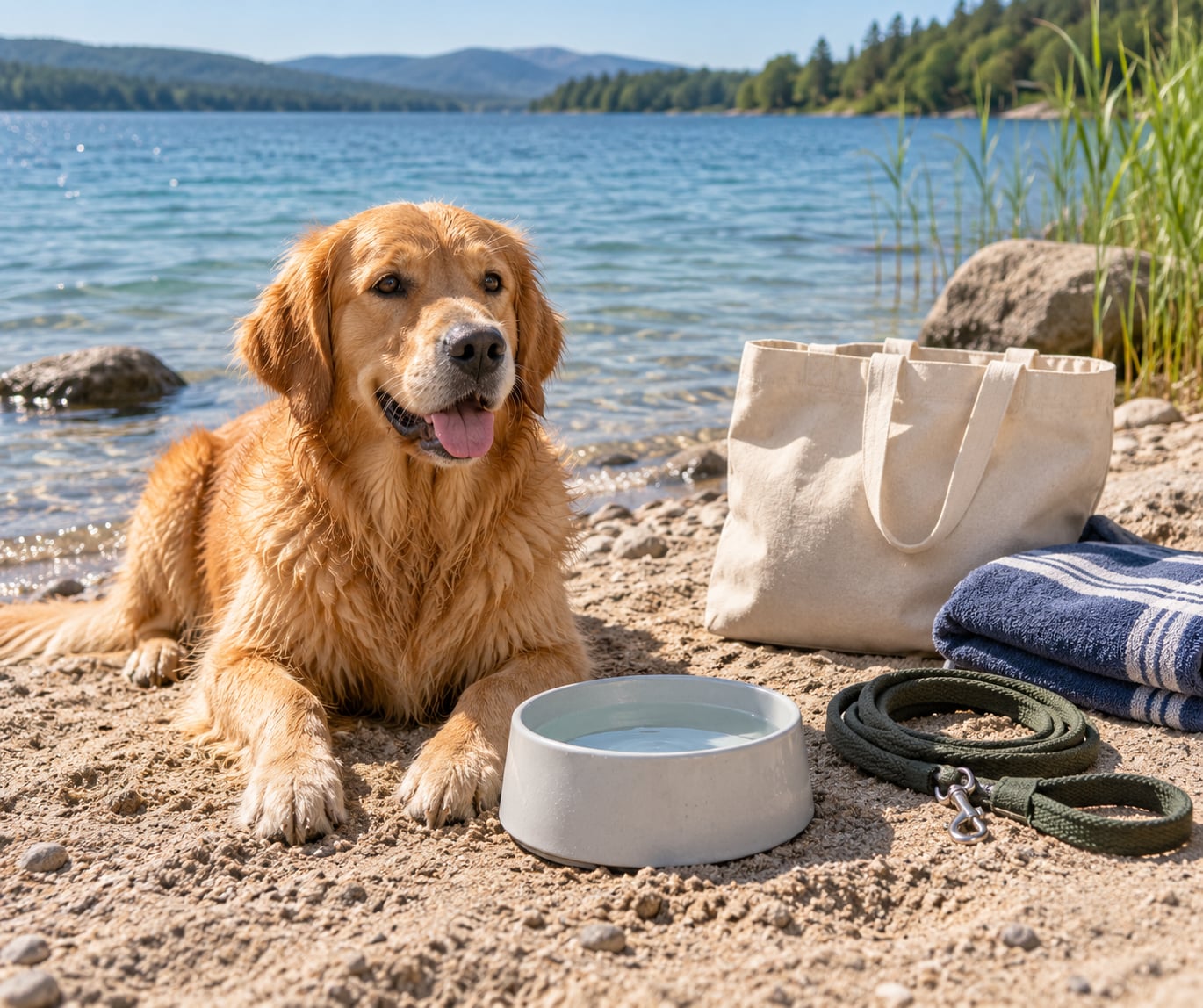
To protect dogs from lake algae, check your local harmful algal bloom advisory before you leave, keep your dog on a leash near the water, offer only fresh drinking water, and rinse your dog off after any time in the lake. Most algae that worries dog owners is blue-green algae, which is technically a bacteria, and you cannot confirm from the shoreline alone that a clear-looking lake is free of it.
The stakes move fast. Blue-green algae poisoning has no antidote, signs can appear within 15 minutes to an hour of exposure, and severe cases end in liver failure, seizures, breathing problems or sudden death. Everything below is built around one idea: you prevent this by managing exposure, because once a dog has swallowed the water, you are reacting rather than controlling.
A few things shape my advice here. Blooms run from late spring through early fall and spike during heat waves, after heavy rain, and following fertilizer runoff. The same risk exists in a suburban bird bath as in a county lake. And if your dog already swam in suspicious water this morning, the useful part of this guide starts at the rinse step, not at the prevention checklist.
This guide follows guidance published by the CDC, the EPA and veterinary teaching hospitals on pets and harmful algal blooms. Anything about your own dog, call a veterinarian about.
Table of Contents
- 1What You Need
- 2Step-by-Step: How to Protect Dogs from Lake Algae
- 3Check the Lake Before You Go
- 4Keep Dogs Away from Algae and Bloom Areas
- 5Stop Dogs from Drinking Lake Water
- 6Rinse and Dry the Dog After Water Exposure
- 7Watch for Signs of a Problem
- 8Common Mistakes
- 9Trusting Water That Looks Clean
- 10Ignoring the Advisory Because the Drive Is Long
- 11Unrestricted Shoreline Access
- 12Expecting Your Dog to Self-Regulate
- 13Postponing the Rinse
- 14Reaching for Human Medication After an Incident
- 15Frequently Asked Questions
- 16Is lake algae bad for dogs?
- 17Can my dog swim in a lake that looks clean?
- 18What should I do if my dog swims in green water?
- 19How fast do blue-green algae symptoms show up in dogs?
- 20How do I check for a harmful algal bloom advisory near me?
- 21Is there a treatment for blue-green algae poisoning in dogs?
- 22Conclusion
What You Need
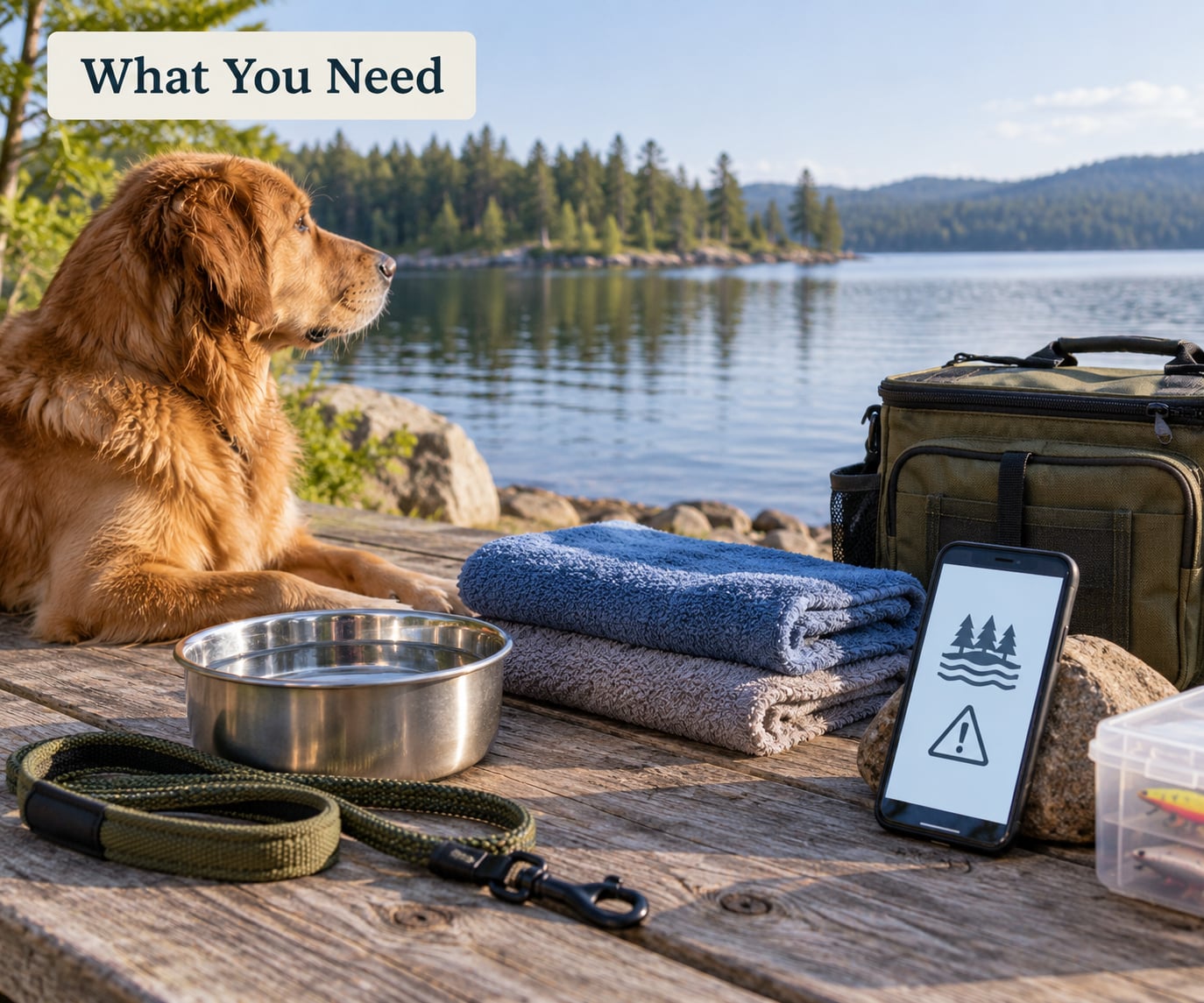
Bring the same kit whether you are stopping for twenty minutes or camping overnight. Most of it costs nothing and the whole setup fits in the back of a car.
- Fresh drinking water in a container your dog does not own. A bowl that sits in the bed is more reliable than a portable dish you have to keep refilling.
- A leash and a secure collar or harness, plus a second line you can clip to the boat or canopy while your hands are full.
- Identification with a current phone number, because dogs do get loose at boat launches and a lost dog near water is a bad afternoon.
- Two towels. One for the dog, one for the car seat, the handlebars or the picnic table you are about to sit on.
- A rinse plan: a shower at the boat ramp, a portable dog rinse station, a hose at the campsite, or a bucket and tap at home. This is the item most people leave out and the one that matters most.
- Current algae information on your phone, saved before you lose signal at the ramp.
- Gloves if your dog may have rolled in scum. You will be handling a wet dog that wants to be licked.
Step-by-Step: How to Protect Dogs from Lake Algae
Check the Lake Before You Go
Check the advisory and the water itself before you load the dog, because by the time you can smell the lake you are already at the riskiest part of the trip. Search for your state health department’s harmful algal bloom page and the county or park district site, then look at the water color from the parking lot or the boat ramp.
Green water, surface scum, a paint-like film, a rotten smell, dead fish or waterfowl, and posted warning signs all mean choose a different spot or stay ashore. Clear water is not a green light, and neither is water that looks clean at the ramp but green in the bay you are heading for.
Recent conditions matter as much as the current report. After a heat wave, a heavy rain, or a stretch of dry weather followed by storm runoff, re-check right before you leave rather than trusting a report from the morning.
Keep Dogs Away from Algae and Bloom Areas
Redirect your dog before it reaches the water, because the dangerous concentration is rarely in the middle of the lake. Blooms drift with the wind and collect along shorelines, in coves, behind boat docks, around culverts and in shallow bays.
That is exactly where dogs want to be: wading at the edge, digging in shoreline mud, drinking at the margin. A surface mat can sit a foot from open water and still carry the toxins concentrated along the edge of the pond or lake.
On a leash, redirect early and calmly. Turn the dog toward a dry, clear patch of beach rather than physically dragging it out mid-swim, which usually produces more splashing in the water you are trying to leave.
Stop Dogs from Drinking Lake Water
Offer fresh water on a schedule and treat any refusal to drink from the lake as a win, not a problem. Most dogs will drink lake water when it is the only water available, and drinking is one of the fastest routes to exposure.
A few things help. Offer a drink every 20 to 30 minutes of activity. Put your bowl down before your dog gets into the water, not after. On a hot day keep a second bowl in the shade near the picnic spot so the dog has a reason to come back to you.
Some owners carry a collapsible bowl on a tether to their own belt. It is the least glamorous item on this list and probably the most effective one.
Rinse and Dry the Dog After Water Exposure
Rinse your dog with clean water and dry them properly, even when you never saw a bloom. Veterinary guidance is unusually consistent on this point, and the reason is simple: clear-looking water can still carry toxin, and rinsing reduces what stays on the coat for your dog to lick off.
Work in this order:
- Get the dog out and away from the water, ideally onto a leash you can hold.
- Rinse the mouth, then the paws, belly, legs and tail. Algae settles low and in the places your dog can reach.
- Run clean water through the coat down to the skin. Surface rinsing alone leaves enough behind for a good lick.
- Dry thoroughly with a towel, then check the paw pads and between the toes for green or brown residue.
- Wash towels, the rinse bucket, the boat deck, the car seats and anything your dog rubbed against. Do not leave a wet, algae-tinted towel on the couch.
One caution worth repeating from CDC and EPA guidance: rinsing does not make swallowing lake water safe. It limits exposure after the fact. If your dog drank from suspicious water, rinsing is not a reason to skip the vet call.
Watch for Signs of a Problem
Watch your dog closely for several hours after any questionable exposure and call a veterinarian promptly if you see these signs.
- Vomiting or diarrhea
- Excessive drooling
- Weakness, unusual tiredness or a dog who is suddenly hard to rouse
- Loss of coordination, stumbling, muscle tremors or rigidity
- Difficulty breathing
- Confusion, disorientation or behavior that is plainly off for your dog
- Pale, blue or yellow gums, or yellowing of the eyes and inner ears
- Seizures
Timing varies. Signs often show up within 15 minutes to an hour, but liver effects from some toxins can take longer, and there are reports of animals with no obvious signs at all before sudden death. If you are unsure whether the exposure mattered, call anyway. A phone call is cheap and an emergency clinic can tell you in a minute whether your dog needs to come in.
If you do go in, have these ready: when the exposure happened, which water body, whether the dog drank or ate anything, whether they are still licking their coat, and what signs you have seen. That short list saves time at the counter.
Never give human medication, including anything left in a first aid kit, and never try to make a dog vomit unless a veterinarian tells you to do it. Also rinse your own hands and avoid touching your eyes or mouth while handling a dog straight out of the water.
Common Mistakes
Almost every lake dog accident traces back to one of a handful of assumptions. Here are the ones I hear most, with the correction.
Trusting Water That Looks Clean
Clear water is not a safety certificate. Cyanobacteria can be present below the visible threshold and can concentrate in pockets you never looked at. Use the advisory, use your nose, and when both are uncertain, skip the swim.
Ignoring the Advisory Because the Drive Is Long
The people most likely to skip the check are the ones with a three-hour drive planned. Check the day before, check the morning of, and check the state page rather than a five-year-old forum post. Local subreddit threads about a specific urban lake are useful as a heads-up and worthless as a clearance.
Unrestricted Shoreline Access
Off-leash dogs find the exact water you were hoping to avoid. A long line at the boat ramp, a solid recall on a beach, and keeping your dog away from the water’s edge in coves and behind docks covers most of the risk.
Expecting Your Dog to Self-Regulate
Dogs are terrible at this. Most will drink stagnant pond water, eat shoreline scum and lick algae off their paws without hesitation because none of it tastes obviously wrong to them. Assume a dog will do all three unless you stop them.
Postponing the Rinse
Rinsing ten minutes later is not the same as rinsing now. If you can rinse at the ramp, do it there. If not, do it the moment you get home, before you unload the boat or answer the door.
Reaching for Human Medication After an Incident
This one ends badly. Many over-the-counter painkillers and household remedies that seem harmless are seriously dangerous to dogs, and they do nothing for cyanotoxins. Call a veterinarian and let them decide what, if anything, to give.
Two smaller habits close most of the remaining gaps. Check the weather and recent rainfall in your planning, because blooms follow heat and runoff. And remember that standing water at home carries the same risk: a kiddie pool left a few days, a bird bath, a stock tank, a wading pool in the yard. Empty and refill those on a schedule rather than topping them up.
Frequently Asked Questions
Is lake algae bad for dogs?
Some kinds are, and you cannot tell by looking. The dangerous ones are blue-green algae, which are actually cyanobacteria that release toxins attacking the liver and nervous system. Blooms form in warm, slow, nutrient-rich water and often concentrate along shorelines. There is no home test and no antidote, so treat any suspicious water as off-limits.
Can my dog swim in a lake that looks clean?
Clean-looking water is not a guarantee. Toxin levels can sit below what you can see, and shoreline areas can be far worse than the open water you were watching. Check the local advisory, look for scum, foam, odor or dead fish, and keep your dog leashed near the edge. When in doubt, stay out.
What should I do if my dog swims in green water?
Get them out of the water, rinse the mouth, paws and coat thoroughly with clean water, dry them, and stop them licking their fur. Do not try to make your dog vomit or give any human medication. Then call a veterinarian or emergency clinic with the time, the location and what you saw.
How fast do blue-green algae symptoms show up in dogs?
Often within 15 minutes to an hour of exposure, though some liver effects take longer and there are cases with no obvious signs before collapse. Watch for vomiting, heavy drooling, weakness, tremors, poor coordination, breathing trouble, yellowing gums or confusion. If you are not sure, call a vet rather than waiting to see how it develops.
How do I check for a harmful algal bloom advisory near me?
Search your state health department site for harmful algal blooms or cyanobacteria, then add your county or local park district. Many states publish a dashboard with current waterway advisories and closures, and lake websites often post a notice banner. Check again on the morning you leave, since conditions change with weather.
Is there a treatment for blue-green algae poisoning in dogs?
There is no antidote for cyanotoxins. A veterinarian treats supportively, which can include intravenous fluids, managing seizures and protecting the liver and kidneys, and in severe cases hospitalization. Outcome depends heavily on how quickly the dog is treated and how much toxin was swallowed. Early calls make a real difference.
Conclusion
Four actions cover most of it. Check your state and local advisory the morning you leave. Keep your dog off the shoreline and out of any water with scum, odor, foam or dead fish. Bring fresh drinking water so lake water is never the easy option. Rinse your dog after any time in the water, even when nothing looked wrong.
If your dog has already had a swim in suspicious water, rinse now and call a veterinarian today rather than waiting to see how the evening goes. That phone call is the whole ballgame.