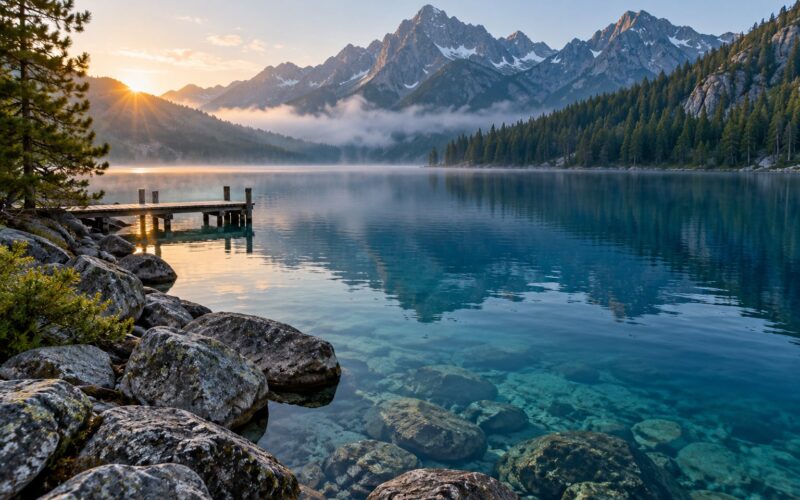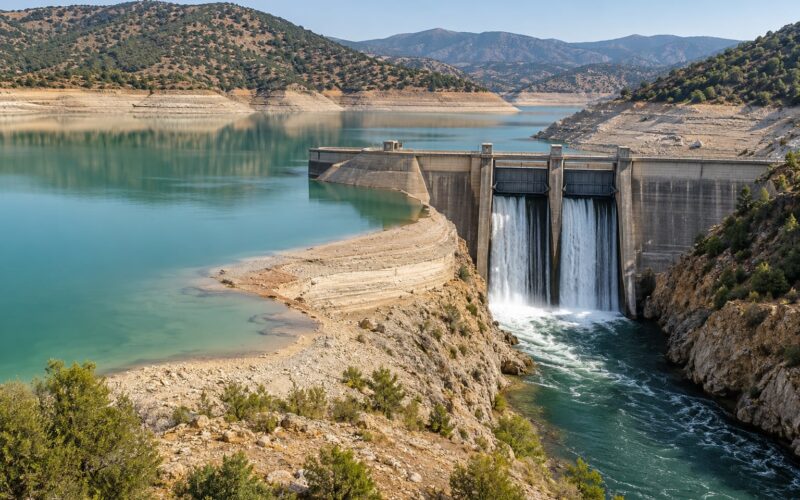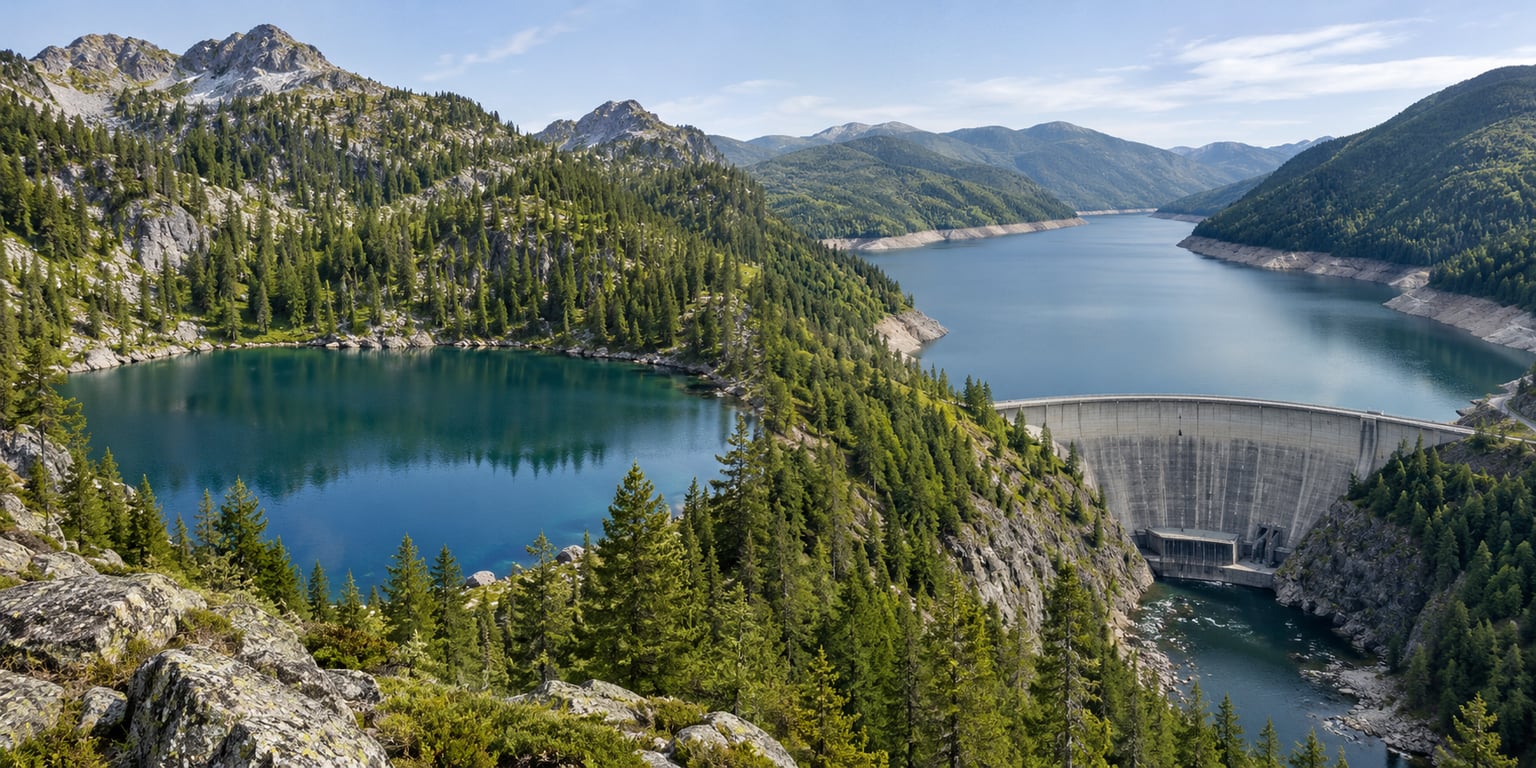
A reservoir is a man-made body of water created by building a dam across a river, while a lake is a natural depression filled with standing surface water. That origin split explains nearly everything else you notice on the water: how the level behaves, why the banks look the way they do, and who manages the shoreline.
Most of the confusion comes from names, not geography. Lake Mead is a reservoir. So is Lake Powell, Lake Havasu and Detroit Lake. Meanwhile Crater Lake and Lake Tahoe are the real thing. Knowing which one you are planning around matters, because a reservoir’s water level can move ten feet between June and September and take your boat ramp with it.
Here is how the difference between a lake and a reservoir actually works, and what it means if you fish it, paddle it or camp beside it.
Table of Contents
- 1Difference Between a Lake and a Reservoir at a Glance
- 2How Is a Lake Formed?
- 3Can a Lake Be Man-Made?
- 4How Is a Reservoir Created?
- 5Is Every Reservoir Made by a Dam?
- 6What Are the Main Differences in Water Level and Ecology?
- 7Why Are Some Reservoirs Called Lakes?
- 8Which Should You Choose?
- 9Difference Between a Lake and a Reservoir on the Water
- 10Frequently Asked Questions
- 11Is a reservoir always considered a lake?
- 12What is the simplest way to tell if a body of water is a lake or reservoir?
- 13Can a natural lake have a dam and still be called a lake?
- 14Why does a reservoir water level change more often?
- 15Are reservoirs better than natural lakes for fishing and boating?
- 16Does the difference between a lake and a reservoir affect water safety?
- 17Conclusion
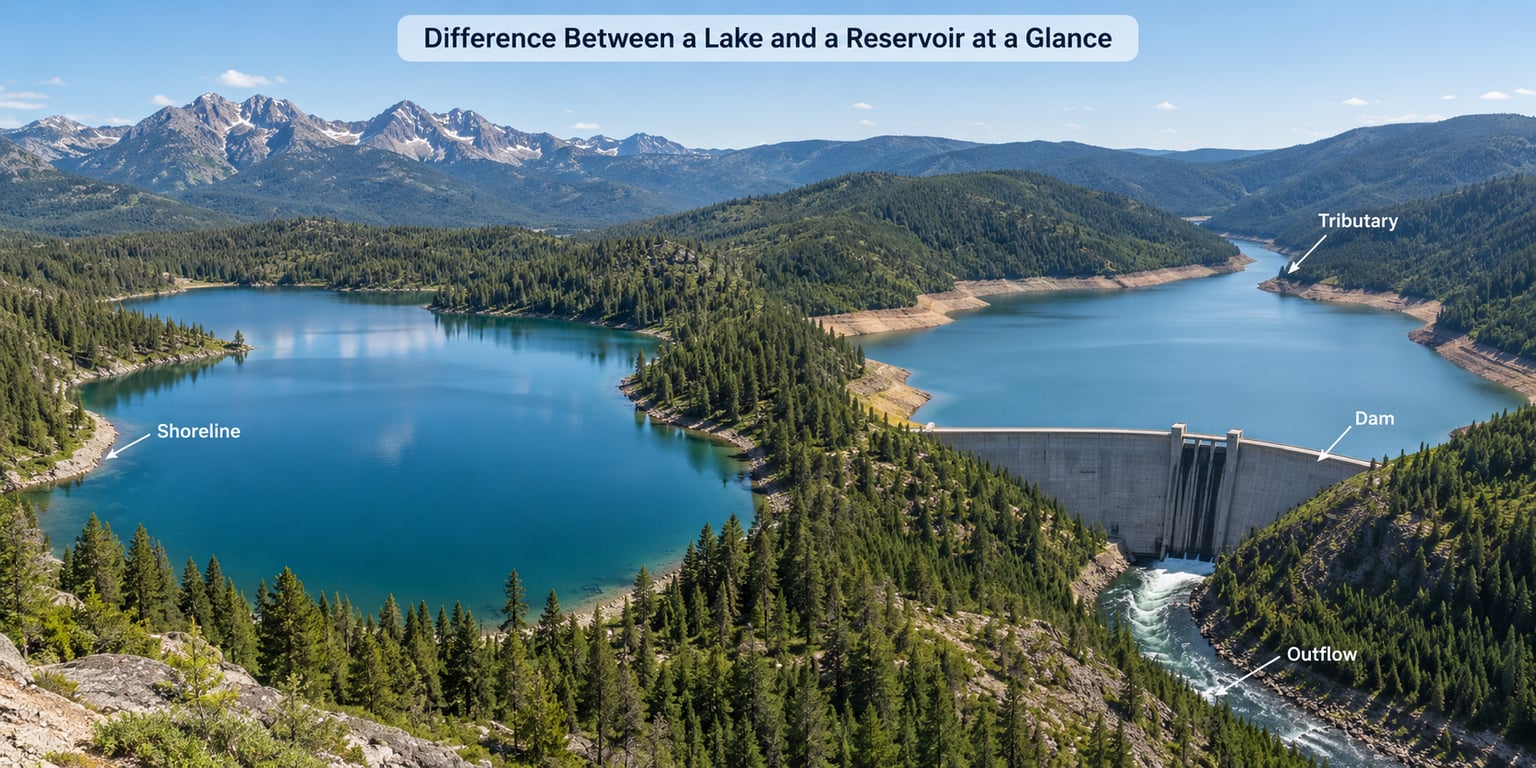
Difference Between a Lake and a Reservoir at a Glance
| Feature | Lake | Reservoir |
|---|---|---|
| Origin | Formed naturally by glaciers, volcanoes, tectonics or river cut-off | Formed by people damming a river or excavating a basin |
| Dam | No dam by definition | Usually has a dam, levee or barrier |
| Water control | Controlled by rainfall, snowmelt and groundwater | Released and stored on a schedule by an operator |
| Water level change | Slow, seasonal, fairly predictable | Fast and deliberate, set by releases |
| Typical shape | Rounded, basin-shaped, natural coves | Long, narrow, river-shaped with steep banks near the dam |
| Common uses | Natural habitat, recreation, fishing, shoreline homes | Drinking water, flood control, power, irrigation, plus recreation |
| How the name is used | Usually matches the physical origin | Often called a lake anyway, especially regionally |
How Is a Lake Formed?
A lake is standing water collecting in a natural depression, and it forms without anyone building anything. The depression is the whole point. Water only stays put when there is a basin below it that has no outlet, or an outlet so high the water has never reached it.
Five processes do most of that work:
- Glacial scour. Moving ice gouges a basin out of bedrock. The Great Lakes, Lake Tahoe and thousands of northern ponds all started this way, and their steep walls and cold water are glacial fingerprints.
- Volcanic collapse. When a magma chamber empties, the ground above it sinks and fills with rain and snowmelt. Crater Lake in Oregon is the classic case.
- Tectonic faulting. Plates pull apart or collide and the land drops along a fault, creating a long, narrow basin. Lake Baikal is the deepest example on Earth, and it is a rift lake.
- River cut-off. A meandering river abandons a bend and seals the old channel with silt, leaving an oxbow lake.
- Karst dissolution. Acidic groundwater dissolves limestone and leaves an underground void that fills with water.
Can a Lake Be Man-Made?
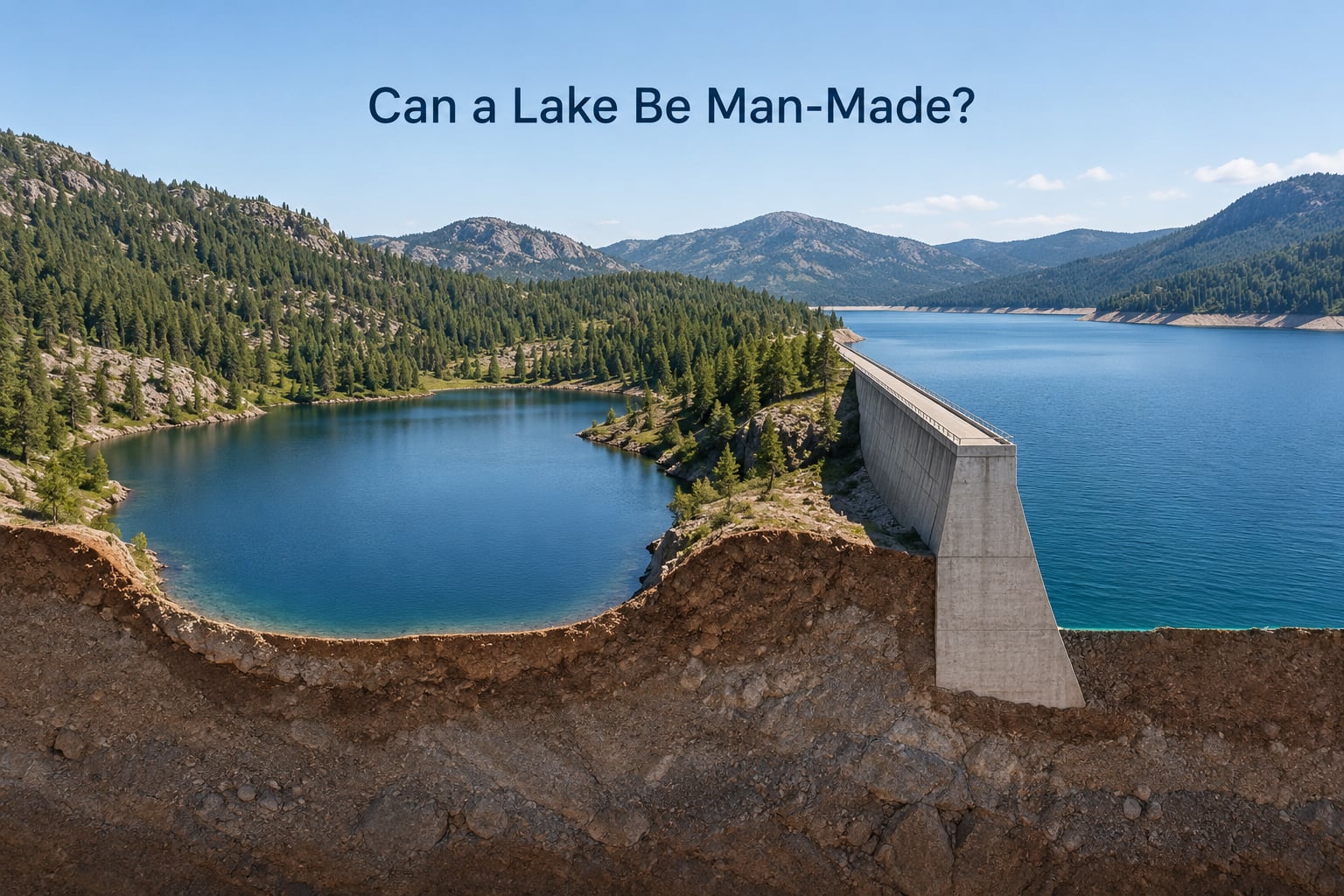
Not by definition, no. If people dig a basin and fill it with water, that body is a reservoir. The technical label follows the origin, not the appearance.
A natural lake does not stop being a lake because its level is managed. Natural lakes with outlet weirs or small control dams at the inlet still balance on the natural side of the line. The water body existed before the structure did.
How Is a Reservoir Created?
Most reservoirs exist because an engineer put a barrier across a moving river. Water backs up until it meets the dam, and the flooded valley behind it becomes storage. From there, the operator decides when to release and when to hold.
Four jobs cover nearly every reservoir in the country:
- Storage. Holding water for municipal drinking supply and irrigation through dry months. This is why a nearby city’s intake pipe can influence how full your favorite reservoir looks in August.
- Flood control. An empty pool is reserved capacity. Water rises and gets stored during a storm so downstream towns and farmland do not flood. Anglers describe this as a shock absorber.
- Hydroelectric power. Releases turn a turbine. The draft tubes sit at the dam, and the deepest water is usually directly upstream of it.
- Balancing. Small impoundments that hold back a short-term peak so a larger dam downstream can meet its own operating rules.
Lake Mead behind Hoover Dam and Lake Powell behind Glen Canyon Dam are storage reservoirs. Detroit Lake in central Minnesota is a good regional example of the same thing on a smaller scale.
Is Every Reservoir Made by a Dam?
No, and this is where the definition gets blurry for beginners. The stricter technical meaning is an impoundment, which needs a barrier of some kind. The broader everyday meaning covers any human-made body built to store water, including excavated basins that never had a river running through them.
Both readings land on the same practical point: the water body is an engineered storage feature, not something the landscape produced on its own.
What Are the Main Differences in Water Level and Ecology?
A lake’s shoreline develops slowly and on its own terms. Wetland plants creep in, beaches build from wave action, and the shallow littoral zone where light reaches the bottom spreads across a wide area. Water level tracks the weather: it climbs in spring, sags in late summer, and does not move dramatically overnight.
A reservoir works differently. Its level follows an operating plan, which means the drop can be fast, large and scheduled around things that have nothing to do with the weather.
Several consequences follow from that:
- Sediment. A reservoir traps what the river carries. Silt accumulates far faster than in a lake, filling the upstream end and lifting the bed near your favorite structure over the years.
- Density and cold water. Deep water near the dam can be tens of degrees colder than the surface in summer. That vertical gap, the thermocline, sends cold oxygen-poor water toward the bottom and pushes warm fish habitat into the shallows.
- Draw-down habitat. When the pool drops, stumps, rock, old road cuts and flooded timber are exposed. Good for fishing one season, hazardous for boating the next.
- Growth. Nutrients collect in a still, managed basin, which can fuel algal blooms. After heavy rain, suspended sediment can turn reservoir water cloudy fast, sometimes overnight.
On swimming, reservoirs carry extra reasons to check before you get in: variable water levels, submerged hazards, dam releases that can create fast currents far from the dam, and posted advisories after heavy rain. Check the local health or parks notice for the specific body. Natural lakes have their own hazards, including cold water and blue-green algae, so neither one is a free pass.
Why Are Some Reservoirs Called Lakes?
Names get set early and then stick. Lake Mead was named before the water existed, because the plan was always to impound the Colorado there and call it a lake. Once a name is on the map and in every fishing report, nobody reopens the question.
Regional vocabulary adds to it. Wisconsin users often say flowage for a dammed river impoundment. Elsewhere, impoundment and artificial lake get used interchangeably. None of those words is wrong; they just describe the same object from a local angle.
Official maps settle it if you need certainty. USGS and Bureau of Reclamation mapping labels these features as reservoirs and publishes pool elevations, which is also how you find out how full one currently is.
Which Should You Choose?
Neither is better in general. The terms describe origin, and your decision depends on what you want the water to do.
- Boating. Pick a lake when you want a dependable full pool all season. Pick a reservoir when you want open water, big fish and long runs, and you are willing to check the level before you leave.
- Fishing. Lakes give you consistent structure and a familiar seasonal pattern. Reservoirs put fish in deep water near the dam and along current seams, and the location shifts with the pool.
- Camping and swimming. Lakeside sites tend to be steadier and less exposed after a draw-down. Check posted advisories at either kind before swimming.
- Buying shoreline property. Ask who owns the stored water and what the water-access rules are. On many reservoirs, the pool level and the boat ramp belong to an operator, not to you.
Difference Between a Lake and a Reservoir on the Water
You can often tell from the launch ramp itself. Look upstream for a concrete structure. Follow the banks: reservoir arms narrow into a channel and rise steeply, often with a waterline stain marking where the pool has been full. Drowned timber, old road beds and a treeline that stops partway up the slope all point the same direction.
On the lake side, look for wetland fringe, sandy beach and irregular coves instead. If the pool can drop and rise, the ramp will sit well above the waterline, with a visible ramp length you should measure before you commit to launching.
Frequently Asked Questions
Is a reservoir always considered a lake?
Geographically no. A lake is a natural depression filled with standing water, and a reservoir is a body created or enlarged by people to store water. In everyday speech the two get blurred constantly, since Lake Mead and Lake Powell are reservoirs that everyone calls lakes. Check the official map label when the distinction actually matters, such as for pool levels or water rights.
What is the simplest way to tell if a body of water is a lake or reservoir?
Walk upstream and look for a dam. If there is one, or if the water narrows into a river channel with steep banks and drowned timber along the shore, it is a reservoir. A natural lake has no barrier, usually has a gentler basin shape with coves and wetland edges, and its level moves only with rain and snowmelt.
Can a natural lake have a dam and still be called a lake?
Yes. If the basin formed naturally first, adding a control structure later does not turn it into a reservoir. The label follows origin. Small inlet weirs and outlet controls on natural lakes manage flow without changing what the water body is, and plenty of naturally formed lakes keep the name Lake permanently.
Why does a reservoir water level change more often?
Because the level is a decision. Operators release water for water supply, flood control, irrigation and power generation, and they draw the pool down on a schedule that often runs opposite to what anglers want. Natural lakes also rise and fall with the seasons, but the change arrives with the weather rather than with a release schedule.
Are reservoirs better than natural lakes for fishing and boating?
It depends on the water body, not the label. Reservoirs can produce big fish and long open water, but structure moves as the pool moves and access can close when levels drop. Lakes usually offer steadier water and familiar structure, with more reliable ramp conditions through the season. Check the current pool elevation before you plan either trip.
Does the difference between a lake and a reservoir affect water safety?
Yes, in specific ways. Reservoirs add submerged stumps and old structures during draw-down, faster currents near dam releases, and posted advisories after heavy rain when sediment and nutrients spike. Natural lakes carry their own risks, including cold water and blue-green algae. Check local advisories for either kind before swimming.
Conclusion
The rule is short: a lake forms naturally, a reservoir is created or enlarged by people. Everything else follows from that. Lakes hold steadier water and build their shores slowly, while reservoirs move on an operator’s schedule, trap sediment faster and shift their habitat with the pool.
Names, though, follow custom more than physics. Lake Mead is a reservoir and Crater Lake is not, so check the map label before you trust a name to tell you what you are dealing with.