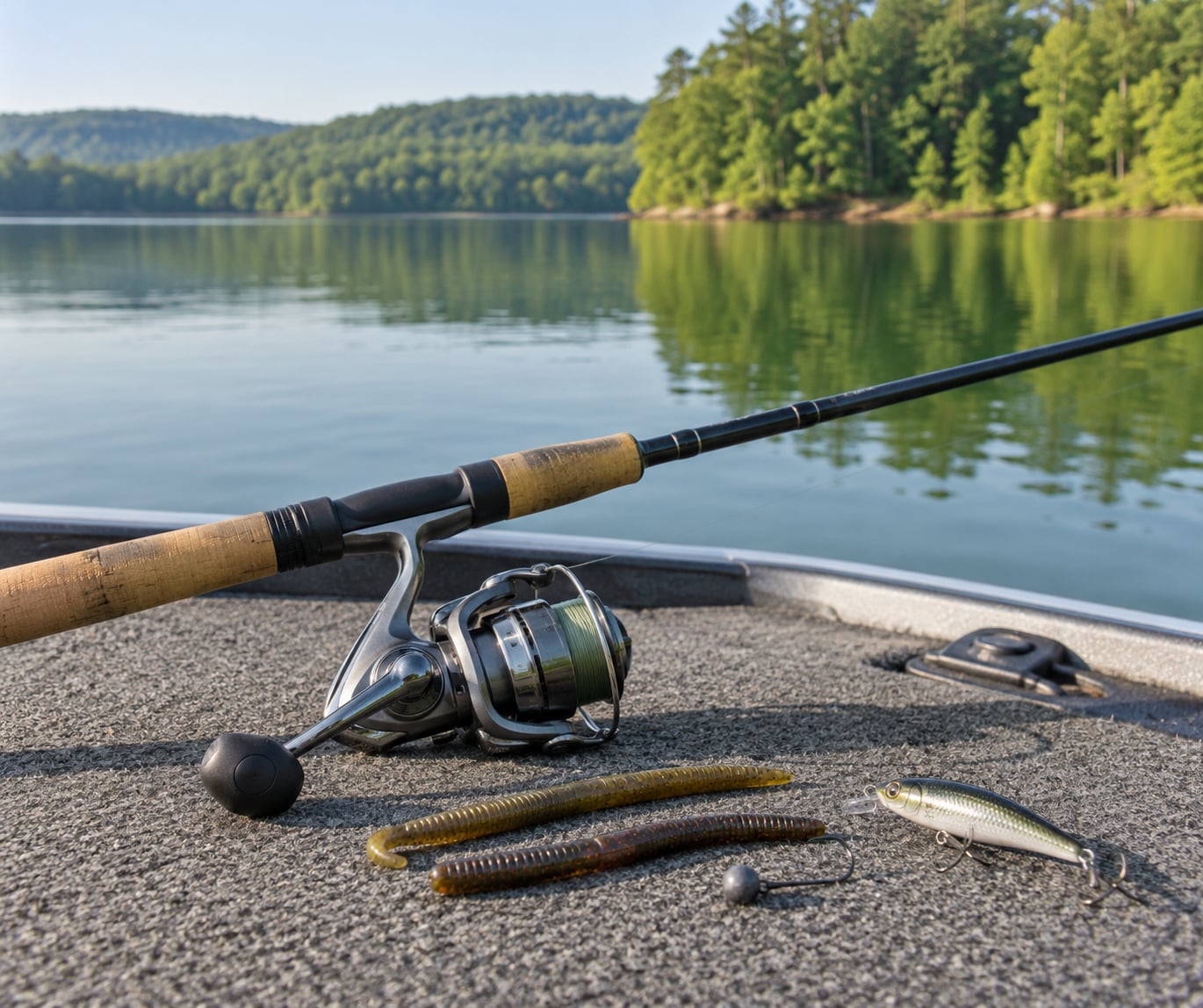
Learning how to catch bass in a lake for beginners comes down to four things: fish tight to cover, use a bait that searches on its own, cast it quietly, and set the hook when the line moves sideways. You do not need a boat, a boat ramp reservation, or a pile of lures to catch your first fish. Most beginners do best casting from a bank or a dock with a spinning rod, a soft plastic on a light rig, and about an hour of patience.
It takes most people two or three trips before the catching feels routine rather than accidental, and that is normal. A first trip where you land one or two bass is a good trip. Fish are also weather and water dependent, so there are slow days no technique fixes.
Table of Contents
- What You Need
- How to Catch Bass in a Lake for Beginners: Step-by-Step
- 1. Check the lake and the conditions
- 2. Find likely bass habitat
- 3. Bait choice: how to catch bass in a lake for beginners
- 4. Cast accurately and start the retrieve
- 5. Set the hook and bring bass alongside
- Shore, Boat or Kayak
- Where to Fish by Season
- How to Fish a Lake You Have Never Fished
- First-Trip Checklist
- Common Mistakes
- Frequently Asked Questions
- Conclusion
What You Need
The gear list for beginners is short, and the specifications below are the ones most often recommended for this kind of fishing. Spend here and nowhere else until you know what you like.
- Rod: 6.5 to 7 foot medium-heavy fast-action spinning rod. Medium-heavy holds a hook well, and fast action loads the line so you can cast accurately instead of flailing.
- Reel: a size 2000 to 3000 spinning reel. A size 1000 is too light for casting toward cover; a size 4000 is heavier than a beginner needs.
- Line: 10 pound monofilament or 10 pound fluorocarbon. Heavier line is harder for beginners to see and to cast. Fluorocarbon is less visible underwater, mono is cheaper and easier to tie.
- Hook: 1/0 to 3/0 extra-wide gap hook for soft plastics. The wide gap keeps the point clear of the bait’s body.
- Terminal tackle: a bullet weight or sinker, a few split rings, and soft plastic worms in one or two sizes.
- Small tools: line cutters or pliers, a landing net, and a spare hook or two on the line.
- Safety and rules: polarized sunglasses, a life jacket if you fish from a boat or kayak, sun protection, a valid fishing license, and a check of local bag and size limits.
A soft plastic worm package, a spinnerbait, and a shallow-diving crankbait will cover most of your first season. Buy the bait you will actually lose, not the biggest box you can carry. One thing worth spending on is a good pair of polarized glasses, because seeing a weed line or a drop-off edge through glare does more for your catch rate than any upgrade after that.
How to Catch Bass in a Lake for Beginners: Step-by-Step
The whole process fits in one paragraph: check the rules and the conditions, pick a piece of cover, cast past it, retrieve with control, and set the hook on a sideways pull. Here is each part in detail.
1. Check the lake and the conditions
Before you pick a spot, spend ten minutes on research. Look at the weather, especially wind direction and any front moving through, and check a recent fishing report for the lake if one is easy to find. Note the water temperature if you can, and look at whether water levels have risen or dropped, since flooded or drawn-down water changes where the fish hold.
Then read the local rules. Fishing license requirements, bag limits, size limits, and seasonal closures vary by state and by water body, and the state department of natural resources page for the lake is the place to confirm them. It takes a minute and it keeps a good day from turning into a ticket or a confiscated fish.
2. Find likely bass habitat
Bass are ambush predators that hold near something useful, not out in open water. From shore, your realistic list of targets is: dock pilings and the shadow underneath them, fallen branches and timber near the bank, rocky points, grass and weed edges along a shallow bay, creek channels where they run into the lake, and any drop-off that rises close to where you are standing.
Bass do not stay in one place all day. In cooler water they hold deep near structure and move up to feed as it warms; in hot water they retreat to shade and deeper structure during the middle of the day and feed again at first light and dusk. On a windless, bright afternoon you can work a dock piling and see nothing, then move two casts to a shaded bank and get a hit. Moving with the fish is a normal part of the process, not a sign you are doing something wrong.
3. Bait choice: how to catch bass in a lake for beginners
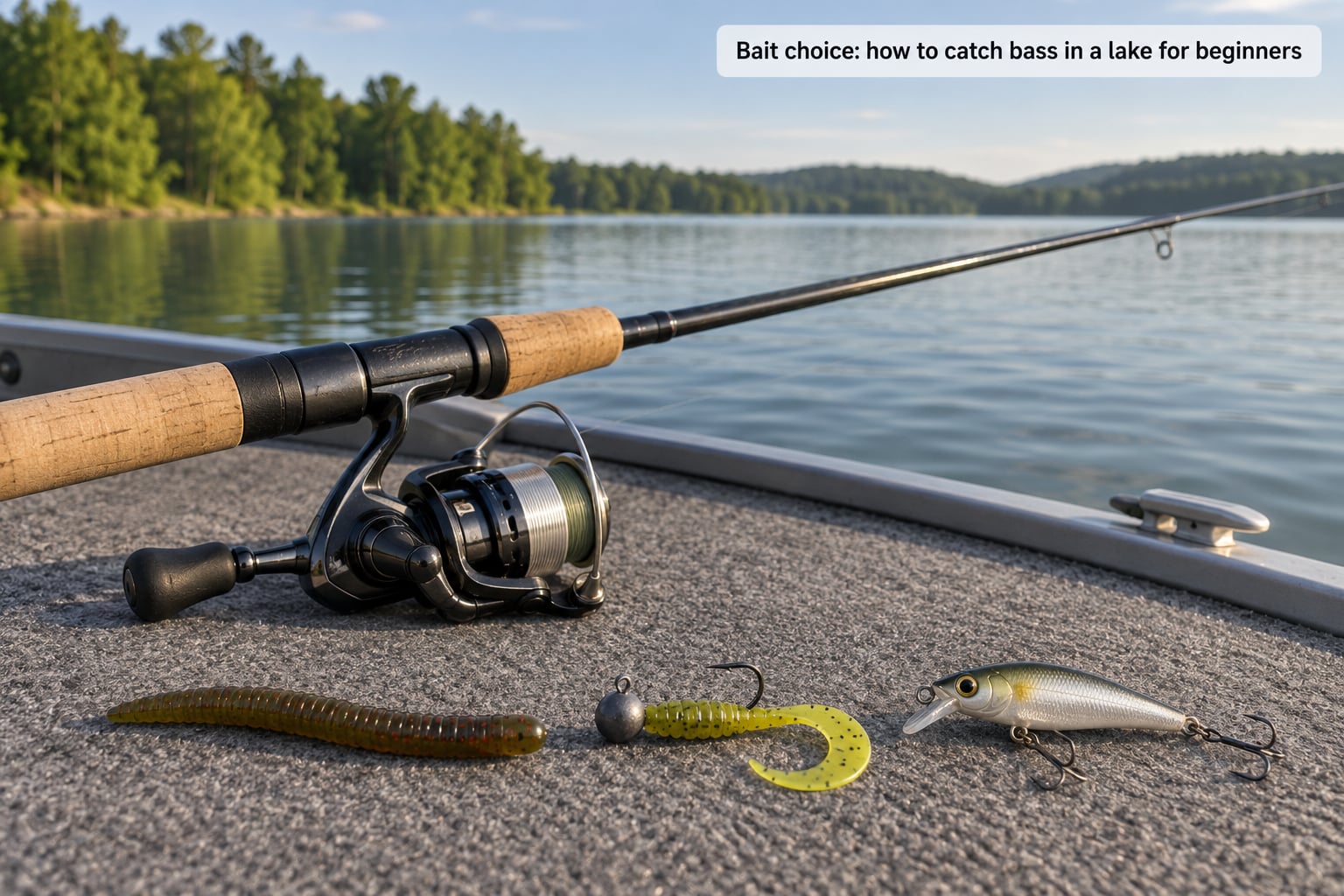
Three presentations cover almost every beginner situation, and how to catch bass in a lake for beginners comes down to picking one of them and learning it well.
Soft plastic on a light rig is the best all-round choice. Hook the worm straight-through or Texas-style, add a small weight, and let it sink. It bounces along the bottom, works weed edges without pulling you into them, and is forgiving. In clear water fish it slowly. In stained or muddy water, twitch it and let it sit.
A jig head with a curled-tail grub is the same idea with a wider, more visible body and a slower sink. It is a good first choice in murky water where you need the fish to feel the bait rather than see it.
A shallow-diving crankbait or minnow-style lure covers a lot of water fast and works best in spring when bass are active near cover in shallow water. It also has a tendency to dig into the bottom, so set your drag a little loose and learn to reel with the rod tip up.
Beginners do best with the soft plastic. You are searching for a bite, not picking a specific fish, and a searching bait covers more water per cast.
4. Cast accurately and start the retrieve
Aim past the cover, not at it. A soft plastic that lands on top of a dock piling, a worm that bounces across open water, or a lure that clatters on rock all cost you fish. Cast so the bait settles just past the near edge of the structure, then bring it back along the edge. Beginners who consistently mention the same thing in fishing forums say cast accuracy matters more than lure choice.
Keep light tension and watch where the line enters the water. That “spot” shows you when a fish picks up the bait, and it is how you tell a real bite from a snag. Start with a slow, steady crawl and let the bait do the work.
Change one thing at a time from there. Pause for two or three seconds and watch the line. Give two or three sharp twitches and pause again. Drag the bait a few inches and let it sit. In cold water, slow everything down and give it longer pauses. Beginners report the same failure constantly: retrieving too fast and feeling nothing but a taut line.
5. Set the hook and bring bass alongside
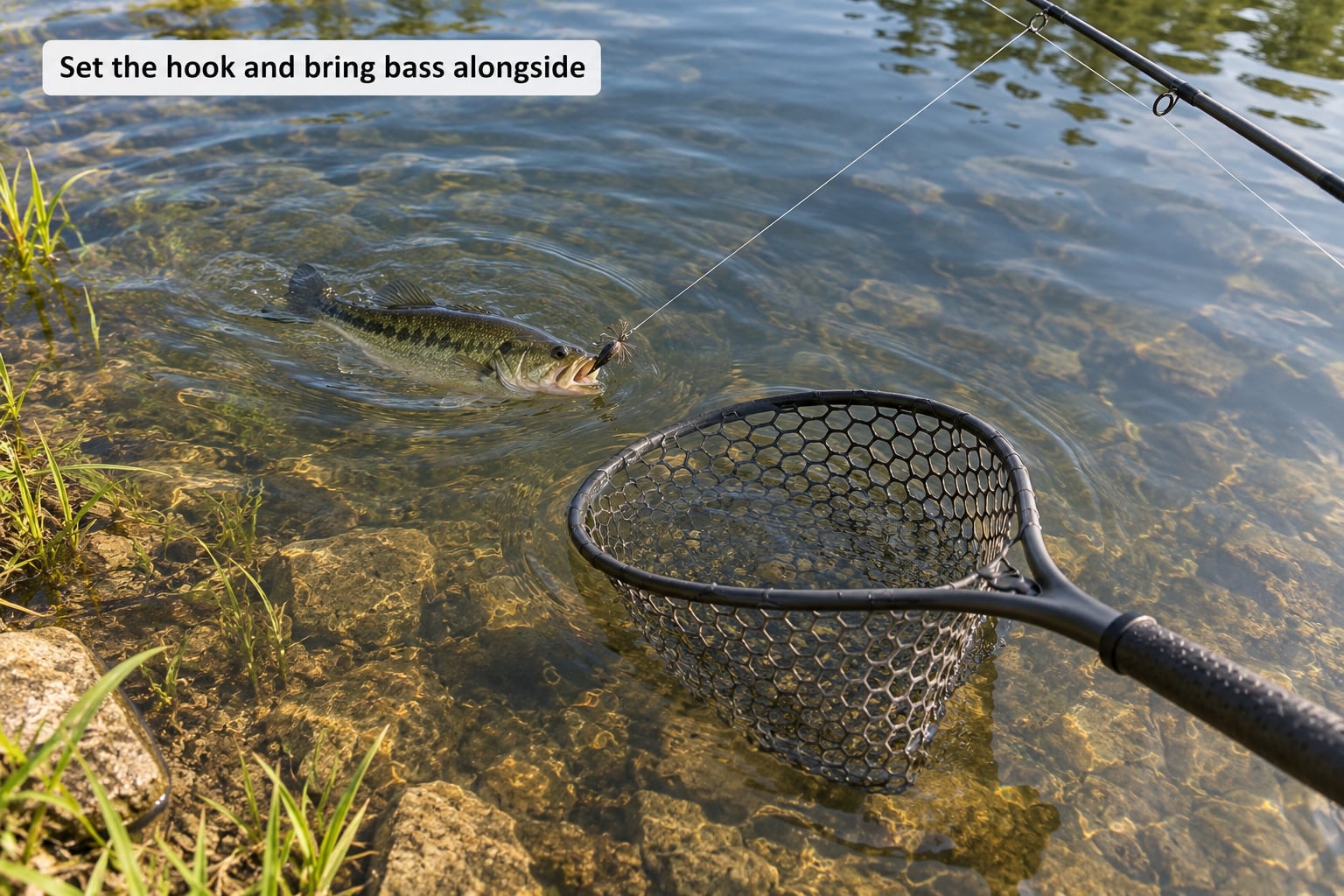
Your rod tip tells you what is happening. A fish picking up the bait and swimming off pulls the tip down and the line moves sideways. A fish moving toward you pulls the tip up. A snag pulls the line and stays there, heavy and lifeless.
When the line moves, sweep your rod to the side and set the hook with one firm motion. Do not jerk upward. If you cannot set the hook, keep the rod tip pointed at the fish and reel hard while lifting, which is a better second chance than a swinging miss.
From the bank, let a fish tire itself for a few seconds, keep the rod tip up, and lead it to the net. A net is kinder than bare hands and it releases the fish faster. If you hand-land it, wet your hands first, grip it just behind the mouth, and keep it in the water as much as possible. Bass that stays wet and shaded is a bass you can catch again, and the general rule on a catch-and-release trip is to keep the fish out of the air for as little time as you can.
Shore, Boat or Kayak
Fishing a lake for bass from the bank is the fastest way to learn. You cover less water, but you never have to worry about launching, weather on open water, or finding the fish. A spinning outfit and a soft plastic work well from a shoreline that has any structure within casting range.
A small boat or a kayak takes you to cover you could never reach from shore, which is the real advantage. The trade is more gear, more planning, and more attention to safety. Start on foot for a few trips, then move to a boat once you know roughly where the fish hold on that lake.
Where to Fish by Season
Bass follow water temperature through a fairly predictable annual pattern, and the shallow cover that works in April is close to worthless in July.
In spring, as water moves into the low 50s and 60s, fish push into shallow bays, creek channels, and spawning areas. Work a soft plastic or a shallow crankbait along the edges of those areas. In summer, when water passes 75 degrees or so, they move to deep structure, shade, and the tops of drop-offs early and late. A spinnerbait worked over grass in the morning, or a jig head allowed to sink slowly in the shade of a deep channel, fits the season better than a fast retrieve.
In fall, they chase baitfish along creek channels and over the tops of drop-offs, and a larger profile gets more attention as the water cools. In winter, they hold tight to deep creek channels, rock, and wood, in the deepest water the lake offers, and they want slow retrieves and small meals. Bass cannot go below the depth where the water still holds enough oxygen, which is one reason deep water in midwinter is not the same as deep water in April.
How to Fish a Lake You Have Never Fished
Research beats luck on an unfamiliar lake. Free bathymetric maps and depth data are widely available for most state lakes, and they narrow your choices to drop-offs, channels, and points in a few minutes. Local tackle shop owners are the other half of the answer; they usually know which spots produce fish this week and which access points are open.
A state fisheries biologist is a free source too, and most will explain a lake’s structure and stocking history. If you only do one thing before your first trip, look at the depth map. Half the beginner frustration on an unknown lake is simply casting into water that has no features in it.
First-Trip Checklist
In order: buy or borrow a valid fishing license for this water body. Check the bag limit, size limit, and any seasonal closure for the fish you are targeting. Pack the rod, reel, line, hooks, weights, two or three soft plastics, pliers, a net, and sunglasses. Add water, sun protection, and a life jacket if you are on a boat or kayak. If someone is already fishing the bank, give them room and pick your spot a little way along.
Common Mistakes
A knot you did not check. Poorly tied knots fail at the worst possible moment, and beginners often lose the fish and the tackle together. Tie the knot, then pull hard on the line with your hands. If nothing moves, it is good.
Carrying too much tackle. A tackle box with 40 lures guarantees you grab the wrong one. Bring two or three, and know what each one is for.
Casting into open water. You cannot catch a fish that is not near something. Every cast should end up on or beside cover, and if it lands in the middle of a flat, it was a wasted cast.
Retrieving too fast. A fast retrieve reduces your chances in almost every condition, and in cold water it produces nothing at all. Crawl it, pause it, and only speed up when you feel a fish.
Swinging at every hit. Every snag feels like a bite at first. Watch the line enter the water: a bite moves it sideways, a snag does not move at all.
Casting on top of the cover. Landing a bait on the rock or piling you were aiming for spooks the fish you came to catch. Cast past it and reel back.
Holding a fish out of the water for a photo. Wet hands, quick handling, shaded air time. A fish that spends a minute flopping in sunlight usually has reduced chances of surviving the release.
Two closing tips. Give a spot a fair run before you abandon it, because a slow bite pattern on a good piece of cover will still outfish a fast one on a bad one. And when a trip is going badly, change one variable at a time: the bait, or the spot, or the retrieve speed, never all three at once.
Frequently Asked Questions
Is live bait better than artificial lures for catching bass for beginners?
For most beginners, no. A soft plastic or a spinnerbait covers water faster, needs no live-bait handling, and survives a missed cast. Live bait such as a shiner works well and is legal in many waters, and it is a good backup when fishing is slow or the water is heavily pressured. If you do use a shiner, hook it through the lips and keep it about 30 inches below a bobber so it stays perky.
What is the best time of day to catch lake bass?
Early morning and the last hour before dark are the most consistent, because low light and cooler temperatures keep the shallows comfortable for both fish and anglers. Midday in summer is the hardest, since bass move to shade and deeper structure. The practical move is to fish whatever depth the fish are using at that hour: grass and points in the morning, deep structure and shade in the afternoon.
How do beginners find bass in a lake?
Look for the things bass eat behind: docks, fallen timber, rock, weed edges, creek channels, and the edges where a drop-off rises toward shallow water. Check a free bathymetric map for the lake before you go, so you know where the deep spots and channels are. From shore, work the closest accessible cover first and cast past it, then move along the bank. A local tackle shop owner is a fast, free source of current information.
Does rain help beginners catch bass?
It can, and the reason is worth knowing. A passing front usually raises the barometric pressure, and many anglers report good fishing as a front approaches. Overcast skies and light rain also let you get close to structure without the fish seeing you as clearly. Heavy rain and rising muddy water are a different story: the water may turn stained, and you should switch to a jig head with a soft plastic, which is felt rather than seen.
What should I do if I am catching no fish?
Change one thing at a time, and start with the presentation. Slow the retrieve down and add longer pauses, then move to a different kind of cover, then change the bait. If you are casting open water, cast to structure instead. Check that you are retrieving the bait all the way back, since a lot of missed bites happen after the lure passes the angler. And accept that a slow day is normal, especially early in the season or after a weather change.
Conclusion
Start with one reliable setup: a 6.5 to 7 foot medium-heavy fast-action spinning rod, a size 2000 or 3000 reel, 10 pound line, and a soft plastic on a light weight and a 1/0 to 3/0 extra-wide gap hook. Fish the closest accessible cover you can cast to, put the bait just past it, crawl it slowly with pauses, and sweep the rod when the line moves sideways. That is how to catch bass in a lake for beginners without spending a season learning it the expensive way. When it is not working, change one thing at a time.