
To split a lake house rental with friends fairly, agree on the total cost and the split method before anyone pays a deposit, then divide the all-in checkout total rather than the nightly rate in the listing. Get the numbers, the method and the payment deadlines in writing before the booking goes through.
Most groups get the arithmetic right and the timing wrong. They pick a house everyone loves, say yes out of excitement, and only then start working out who pays what. By then nobody wants to be the person pointing out that the cleaning fee and the service fee add several hundred to the number everyone had in their head.
The fix takes about thirty minutes and one group chat. Below is the whole process, in the order that keeps the conversation short.
Table of Contents
- 1What You Need
- 2Step-by-Step
- 3Step 1: Agree on the Total Trip Budget
- 4Step 2: Decide What Everyone Will Share
- 5Step 3: Calculate Each Person’s Fair Share
- 6Step 4: Collect Deposits and Final Payments
- 7Step 5: Put Shared House and Safety Rules in Writing
- 8Step 6: Review the Plan Before Everyone Arrives
- 9Common Mistakes
- 10Frequently Asked Questions
- 11Should I split a lake house rental by person or by household?
- 12Do cleaning fees and other fees get split on a rental?
- 13Who should pay the security deposit on a group rental?
- 14What happens if one friend cancels after the booking is paid?
- 15How do we split groceries and boat fuel on the trip?
- 16Conclusion
What You Need
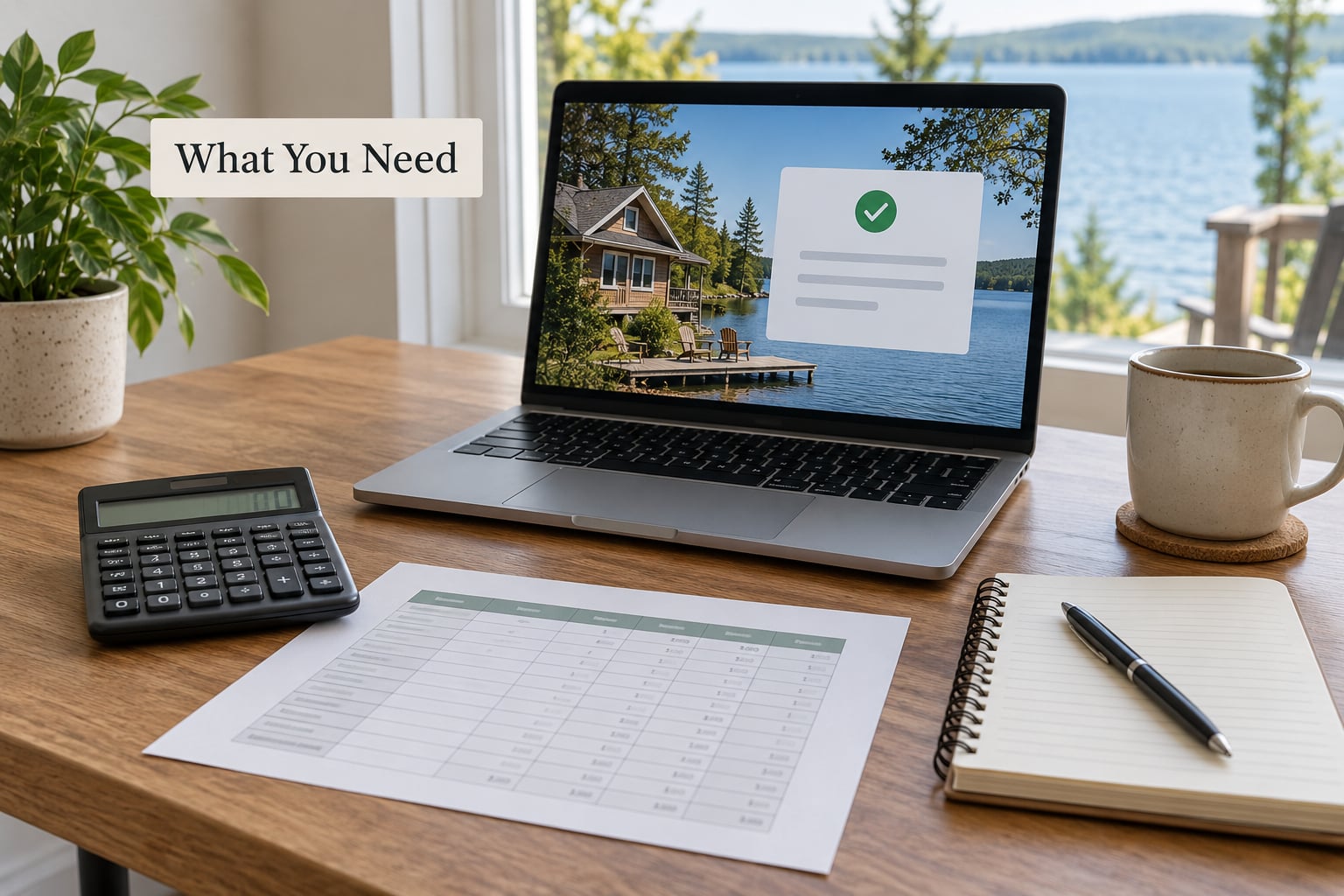
Gather four things before you talk about money: the booking page with the full fee breakdown, an accurate headcount, one shared ledger, and one agreed payment route. Without all four, the split turns into a running argument over receipts.
- The all-in checkout total. Scroll past the headline nightly rate to the final screen before payment, and screenshot it. That screen carries the cleaning fee, the service or platform fee, pet fees, taxes and sometimes a linen or damage-protection charge.
- Nightly rate and night count. Multiply them yourself so you can see whether the rate varies by day, which it usually does in peak season.
- The deposit and its deadline. Note the amount, whether it is refundable, and how long the hold stays on a card after checkout.
- Headcount and stay length. Write down who sleeps there for every night. Couples, kids, cribs and late arrivals all need a convention you agree on now.
- Bedroom count and what each room gets you. A primary suite with a lake view is not the same as a bunk room with a shared bath.
- One ledger. A shared spreadsheet works. A group chat with a photo of a handwritten note does not.
- One payment route. Pick a single method the whole group uses, and note the deadline for paying it.
A lake-specific piece of paperwork is worth adding: the rental’s own rules for the dock, boats and fire pit. Those rules decide what your shared costs look like later, so read them before booking, not on the driveway.
Step-by-Step
Step 1: Agree on the Total Trip Budget
Agree the number everyone is signing up for before anyone opens a listing. The most useful figure is the all-in total divided by headcount, and it is really a per-person-per-night number: divide the all-in total by people, then by nights. That is the number that tells you whether the house is viable for this group.
For a week costing 5,100 all-in among eight people, each person is paying about 91 per night. A group of ten paying the same 5,100 is looking at roughly 73 per night each. Those two numbers settle the debate faster than any argument about whether the lake is worth it.
Set a ceiling in the chat, something everyone can say yes or no to, then search inside it. Shoulder-season and off-peak weeks are the cheapest lever you have, because they shrink the number before anyone has to divide it. An early fall or late spring week often costs less than a peak summer week for the same house, and the lake is quieter.
Step 2: Decide What Everyone Will Share
Split every mandatory cost that buys shared space, and keep personal spending personal. Lodging, cleaning fee, service fee, taxes, pet fee if the group brings pets, and the security deposit belong in the total you divide.
Then decide, before booking, which of the lake-specific extras come out of the shared pot:
- Boat or pontoon rental and watercraft insurance, if you are renting one for the week.
- Fuel for the boat, which usually gets decided in the moment and gets argued about in the moment.
- Dock and launch fees if the lake or marina charges one.
- Fishing licenses for each person who plans to fish, since the license belongs to the person, not the house.
- Kayak or paddleboard add-ons when the rental bundles them per person.
- Firewood, beach or firepit permits if the property charges them.
Groceries, meals and souvenirs stay personal unless the group explicitly decides to run a shared food pot. Groups that split everything, order by order, keep the peace but flatten the record. Groups that run a food pot for shared meals and leave individual orders alone usually enjoy dinner more.
Step 3: Calculate Each Person’s Fair Share
The fair share is the all-in total multiplied by that person’s share of the agreed weight, then divided by the total weight. Everyone in the group gets a weight, the weights add up to the group total, and the method stays the same no matter how the trip is shaped.
Run one booking through four methods to see how much the choice matters. Seven nights, 4,200 for the house, 300 cleaning, 245 service fee, 355 taxes, so 5,100 all-in. Three households, eight people, five bedrooms: a primary suite, two doubles and two bunk rooms.
- Per person: 5,100 divided by 8 is 637.50 each. Simplest to explain, hardest on households of different sizes.
- Per household: 5,100 divided by 3 is 1,700 each. Fair when families are similar in size and budget, unfair when one household has four people and another has one.
- Per bedroom: price the rooms, not the people. Weight the primary suite at two shares and each of the four remaining bedrooms at one, giving six shares of 850. That puts 1,700 on the suite and 850 on whoever ends up in each other bedroom.
- Per night, for partial stays: each night divides among the people sleeping there that night. If one friend arrives two nights late, divide the nightly total among those present each night, then sum each person’s nights. Fees with no night attached, like cleaning and service, still split evenly among everyone who stayed at all.
You can also weight by income when budgets genuinely differ, and it works well if everyone agrees to it privately and nobody discusses the amounts afterward. The risk is not the math. It is that the person paying less becomes the guest everyone feels bad for.
Count couples and kids with a stated convention: a child needing a bed counts as a half share, an infant in a crib counts as zero, and a couple counts as two shares unless rooms are scarce enough that per-bedroom pricing handles it better. Write the convention down. An unwritten convention is just a memory, and memories differ.
Step 4: Collect Deposits and Final Payments
Collect money with a deadline, one method and a written record. Set the deposit date at least a week before the property’s cutoff, so a slow payer does not put the booking at risk.
Whoever books puts the rental on their own card and immediately becomes the collection agent. Say that out loud and pick a reimbursement date. If nobody pays by that date, the card holder covers the difference, and the plan should say so before the trip rather than after.
Use one route for everything. Splitwise or a similar expense tracker handles itemized shared costs and keeps an audit trail that a group chat never will. Venmo or a bank transfer is fine when the group is small and the amounts are round. Mixing two apps and a spreadsheet means no single place answers who still owes what.
Settle the remainder with as few transfers as possible rather than everyone paying everyone. One person who is owed money collects from the group; the group owes that person one number.
Also agree what happens if the host holds part of the deposit for damage. If someone breaks a window, the deduction is real money and it should be split in proportion to the method you already chose, unless the person who caused it agrees to cover it. Agreeing this before the trip keeps a bad afternoon from becoming a bad year.
Step 5: Put Shared House and Safety Rules in Writing
Money disputes and house-rule disputes are the same fight. Write the rules once, in one place, and everybody reads the same list.
- Arrival and departure: check-in time, check-out time, who has the keys, and who is authorized to collect them if someone arrives late.
- Quiet hours: many lake neighborhoods sit close together, and neighbors talk.
- Glass on the dock: a common house rule, and worth checking before anyone brings glassware outside.
- Swimming and water safety: life jackets for children on the dock and the boat, no swimming alone at night, and a designated adult watching the water when kids are in it.
- Boat use: who is authorized to drive it, whether a boating license is required, and where it parks. Boat parking and boat-lift slots are often limited.
- Pets: if pets are allowed, who cleans up after them and what the pet fee covers.
- Cleaning: whether the group cleans on checkout or leaves it to the cleaning crew, and what the refund looks like if there is one.
- Damages: report anything broken on the first day, not at checkout.
- Emergencies: the local emergency number, the address to give a paramedic, and who in the group is the named contact for the rental company.
Step 6: Review the Plan Before Everyone Arrives
Send one summary before departure day and let it settle for a few days so people can ask questions while they still have time to think. The summary should carry the address, arrival and departure times, who is driving and in what, each person’s payment status, the agreed split method, the room assignments, the house rules and the emergency contacts.
Ask for an explicit yes from everyone in the chat, not a thumbs-up buried in another thread. Silence on a summary you sent at 11pm is not agreement, and finding out who never read it at the gas station is worse.
Settle any remaining grocery and fuel money the day after the trip, while everyone still remembers what the boat fuel actually cost.
Common Mistakes
Almost every unpleasant money conversation on a lake trip traces back to one of these, and every one of them has a simple fix.
- Splitting the headline nightly rate. The rate in the listing is not the cost. Fix: divide the final checkout total, including cleaning, service, pet fees and taxes.
- Forgetting lake-specific extras. Boat rental, fuel, licenses and dock fees show up later and land on whoever is easiest to bill. Fix: name each extra and its payer before booking.
- Using three payment apps. Nobody can see the full picture, so the person who fronted the money has to reconstruct it. Fix: one route, one ledger.
- Leaving cleaning and damage vague. “We’ll sort it out at checkout” becomes a dispute with a cleaning fee already deducted. Fix: decide who cleans, and how deductions get apportioned, in writing.
- Mixing shared and personal spending. One person’s fancy grocery order ends up in the shared total and nobody remembers agreeing to it. Fix: separate the two from day one.
- Chasing repayments with no deadline. The card holder ends up covering the group for months. Fix: a payment date, and a stated consequence if it passes.
- Changing the method after booking. Once the deposit is non-refundable, the method is settled. Fix: pick it before the deposit, and change it only if everyone agrees in writing.
- Running the money talk on the dock. The worst possible venue: no privacy, no time, and everyone already spent money. Fix: settle the plan before anyone travels.
- Ignoring the planner’s labor. One person does the searching, the deposits, the host emails and the group updates, and nobody compensates them. Fix: name it in advance as a small coordination credit or assign the primary suite to whoever ran the booking.
One more worth flagging: great friendships are not automatically great travel partnerships. Travel magnifies habits. The friend who is reliable at home can be the one who blows up departure time, and the group needs to agree on schedules before booking, not on the driveway.
Frequently Asked Questions
Should I split a lake house rental by person or by household?
Split by person when households differ in size, since a family of four and a solo friend would pay the same under a household split. Split by household when everyone is a similar-size family with similar budgets, and the arithmetic stays simple. The method matters less than agreeing on it in writing before the deposit is paid.
Do cleaning fees and other fees get split on a rental?
Yes. Cleaning fees, service and platform fees, pet fees and taxes should all be added to the nightly total before you divide, because those fees buy shared space for everyone rather than one person. Leave the security deposit out of the permanent split, and agree separately how any damage deduction gets apportioned.
Who should pay the security deposit on a group rental?
Whoever books the house usually has to put the deposit on their own card, because most platforms require it. Agree in advance that this is a fronted cost, not a gift, and set a reimbursement date for the balance once the booking is confirmed. Also agree how any damage deduction gets split if the host holds part of the deposit.
What happens if one friend cancels after the booking is paid?
It depends on the property’s cancellation policy, which you should read before paying. Work out the non-refundable amount first, then decide as a group whether the person cancelling covers it alone or whether the group absorbs it in proportion to the split method. Agreeing this before booking prevents the worst version of the argument.
How do we split groceries and boat fuel on the trip?
The cleanest setup is a shared food pot for meals the group eats together, with individual orders and souvenirs staying personal. For boat fuel, agree a spending limit per person before the tank is filled, and settle it the same week. Anything beyond the limit becomes the individual decision of whoever approved it.
Conclusion
The whole method comes down to two things done in the right order: work out the full all-in number, and put the payment plan in writing before anyone pays a deposit or books anything.
Start with the number. Open the booking page, scroll to the final checkout screen, add up the cleaning fee, service fee, taxes and any deposit, and divide it by the number of people and nights. That gives you the per-person-per-night figure that decides whether the trip works. Once the group has agreed to that figure and to a split method, everything else, room assignments, house rules, fuel money, settles quickly.