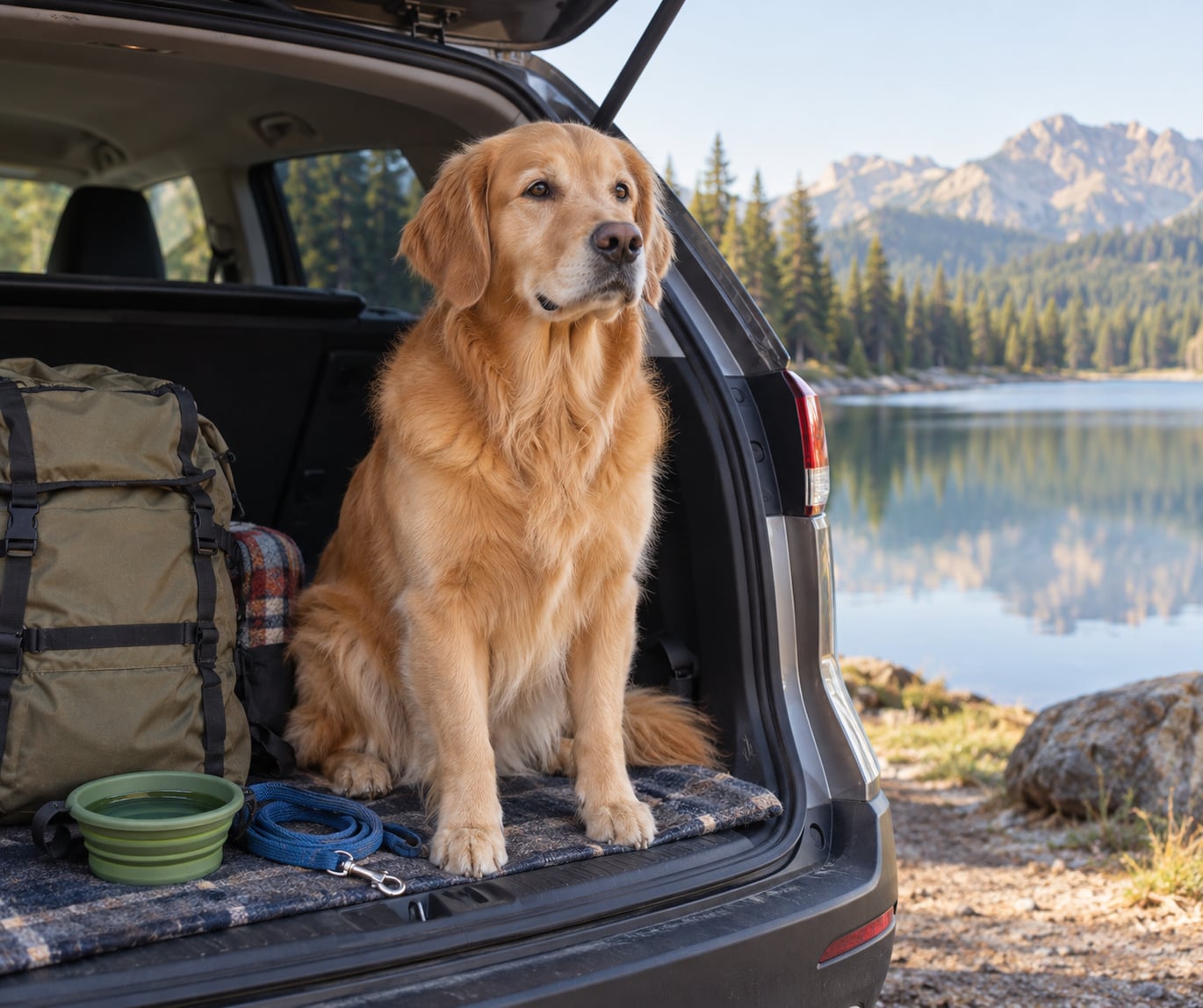
Most lake trips with a dog go fine. The ones that do not tend to fail in predictable places, and learning how to travel to a lake with a dog comes down to four stages: your dog is healthy and travel-ready, the lake and your lodging actually allow dogs, the drive happens with your dog restrained and broken up every couple of hours, and you handle heat, water, wildlife and local rules once you arrive.
None of that is complicated on its own. The timing is what catches people, because the risk lives in the transitions. The launch, the waterline, the cabin door, the drive home at dusk.
This guide covers the whole route, from paperwork the night before to the cool-down back at the cabin. A day trip needs about twenty minutes of preparation. An overnight cabin weekend needs an evening, and most of that is finding out whether dogs are allowed at all.
Table of Contents
- 1What You Need
- 2A restraint that holds in a crash
- 3Two forms of identification
- 4Water, and a plan for drinking it
- 5A canine life jacket with a grab handle
- 6A leash, a long line, and a non-slip surface
- 7A pet first aid kit in the car, not the cooler
- 8Documents and a backup plan
- 9Step-by-Step: How to Travel to a Lake With a Dog
- 10Plan the Route to the Lake and Check Its Rules
- 11Prepare Your Dog for the Journey
- 12Travel Safely and Make Frequent Breaks
- 13Set Up at the Lake
- 14Common Mistakes and How to Fix Them
- 15Frequently Asked Questions
- 16Can dogs drink lake water?
- 17How do I know if a lake is safe for my dog to swim in?
- 18What should I do if I take my dog on a boat for the first time?
- 19How hot is too hot for a dog on a boat?
- 20Should I bathe my dog after swimming in a lake?
- 21How long can a dog swim in a lake?
- 22Conclusion
What You Need
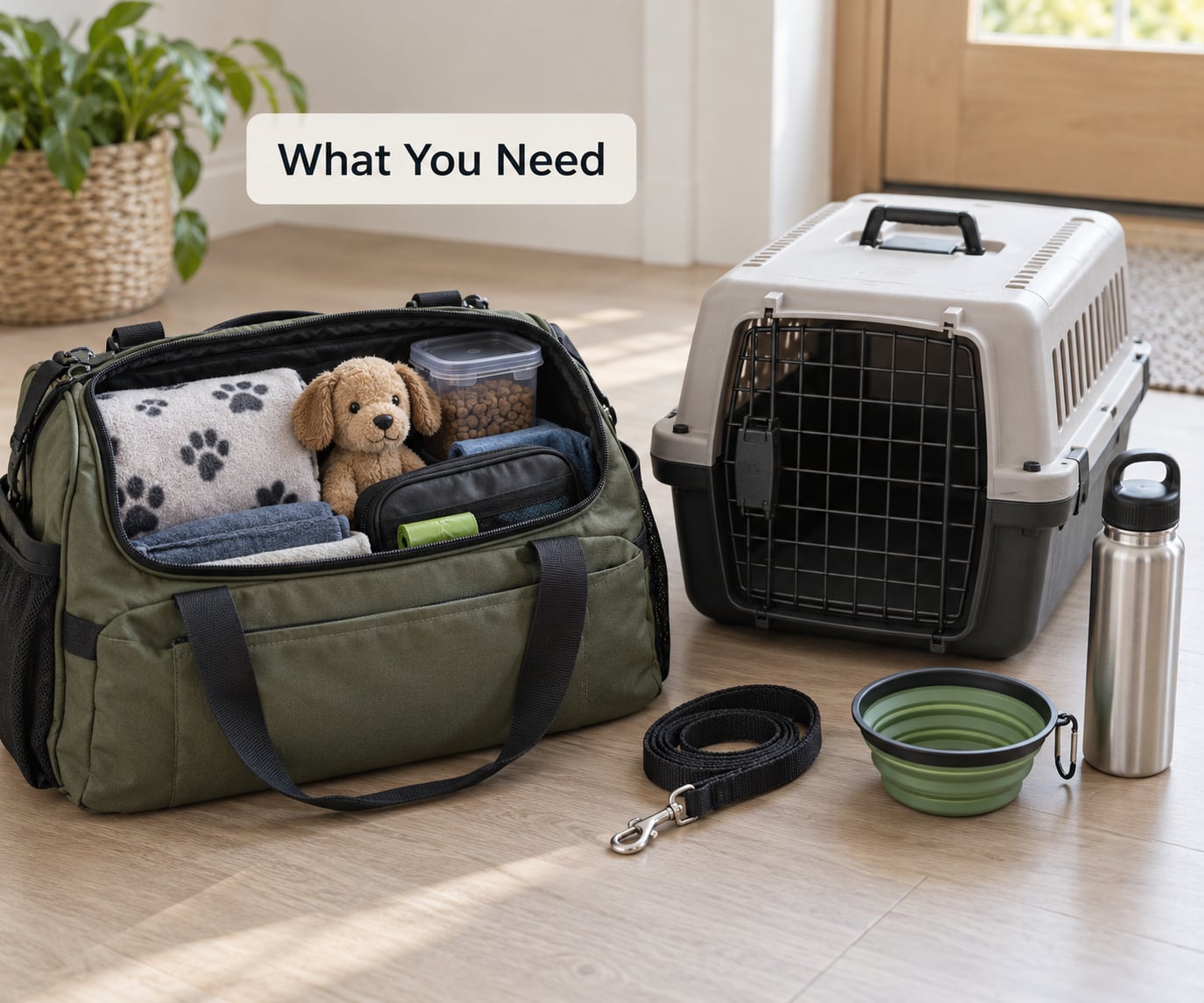
Most of this list is cheap, and every item on it exists because a trip went wrong without it. Gather it the night before, not in the dark at 5 a.m.
A restraint that holds in a crash
A crash-tested harness that clips into the seat belt, or a crate secured in the cargo area. The one setup to avoid is a seat belt attached to a collar, because a collar is not an anchor and in a hard stop the neck takes the load. A loose dog in the back seat is worse than no dog in the car at all.
Two forms of identification
A collar tag with a local phone number, not just your cell, plus a microchip with a current registry contact. Update the chip record before you leave if the number has changed. At a lake, a lost dog is often found two towns away from the boat ramp, and the tag is what gets the call made to you.
Water, and a plan for drinking it
Bring roughly one gallon of drinking water per dog per day, in a container that will not tip over in a car, plus a collapsible silicone bowl. Lake spigots, campground hydrants and boat live wells all disappoint, and giardia and leptospirosis travel in freshwater that looks perfectly clean.
A canine life jacket with a grab handle
Fitting is where most owners go wrong, and owners of broad-chested dogs report buying a large vest that still rides up over the shoulders. You should be able to slide two fingers under the chest strap, and the handle has to sit where your whole hand fits, because that handle is how you get a 70 pound dog back into a boat.
A leash, a long line, and a non-slip surface
A 6-foot leash for walks and a 10 to 15 foot long line for shoreline work and bathroom breaks where you cannot clip on. Add a non-slip mat for the boat deck and a folded towel you can spread as shade and a dry spot to sit on.
A pet first aid kit in the car, not the cooler
Anticoagulant rodenticide and antifreeze in the plumbing of a winterized cabin are the two things no owner expects to find. A kit with a muzzle, styptic powder, rolled gauze, saline, tweezers, a tick tool and a few dog-safe doses of any medication you can legally give without a vet on the phone prevents most of the small disasters.
Documents and a backup plan
Vaccination record, license where your state requires one, pet insurance card, the phone number of a veterinary hospital at the destination and one roughly halfway along the route, and a note in your wallet with the dog’s medications and health history in case you cannot speak for yourself. If the trip gets cut short, someone should already know who is boarding the dog.
Step-by-Step: How to Travel to a Lake With a Dog
Plan the Route to the Lake and Check Its Rules
Confirm the lake before you book a single night. State parks, federal recreation areas and county parks all publish pet policies, and they differ in ways that matter: leash length limits, whether your dog can be off leash at all, day-use fees charged per pet, whether dogs are allowed on the swim beach, and the hours the boat ramp is open. A private rental or a campsite booked through a site like Vrbo, HipCamp or Bring Fido will usually state a pet fee and sometimes a weight or breed restriction, so check before you pay, not after.
When you are booking a cabin, ask for a first-floor room at the end of a hallway, away from the road, and close to grass. It costs nothing to ask and it is the single most common complaint owners have about lodging with a dog.
Check two advisories the morning you leave. Heat advisories decide whether the dog is getting in the water at all, and blue-green algae advisories from your state health department decide whether anyone is swimming. Also note the nearest veterinary hospital and save its number offline.
Prepare Your Dog for the Journey
The night before, exercise the dog properly. A tired dog is a calm dog, and a dog that has burned off energy in the yard sleeps through the drive instead of singing the whole way.
Keep the feeding routine normal and avoid a heavy meal right before departure, then offer water as usual. Pack any regular medication in the original labelled container plus one extra day, along with the vet’s written dosing instructions.
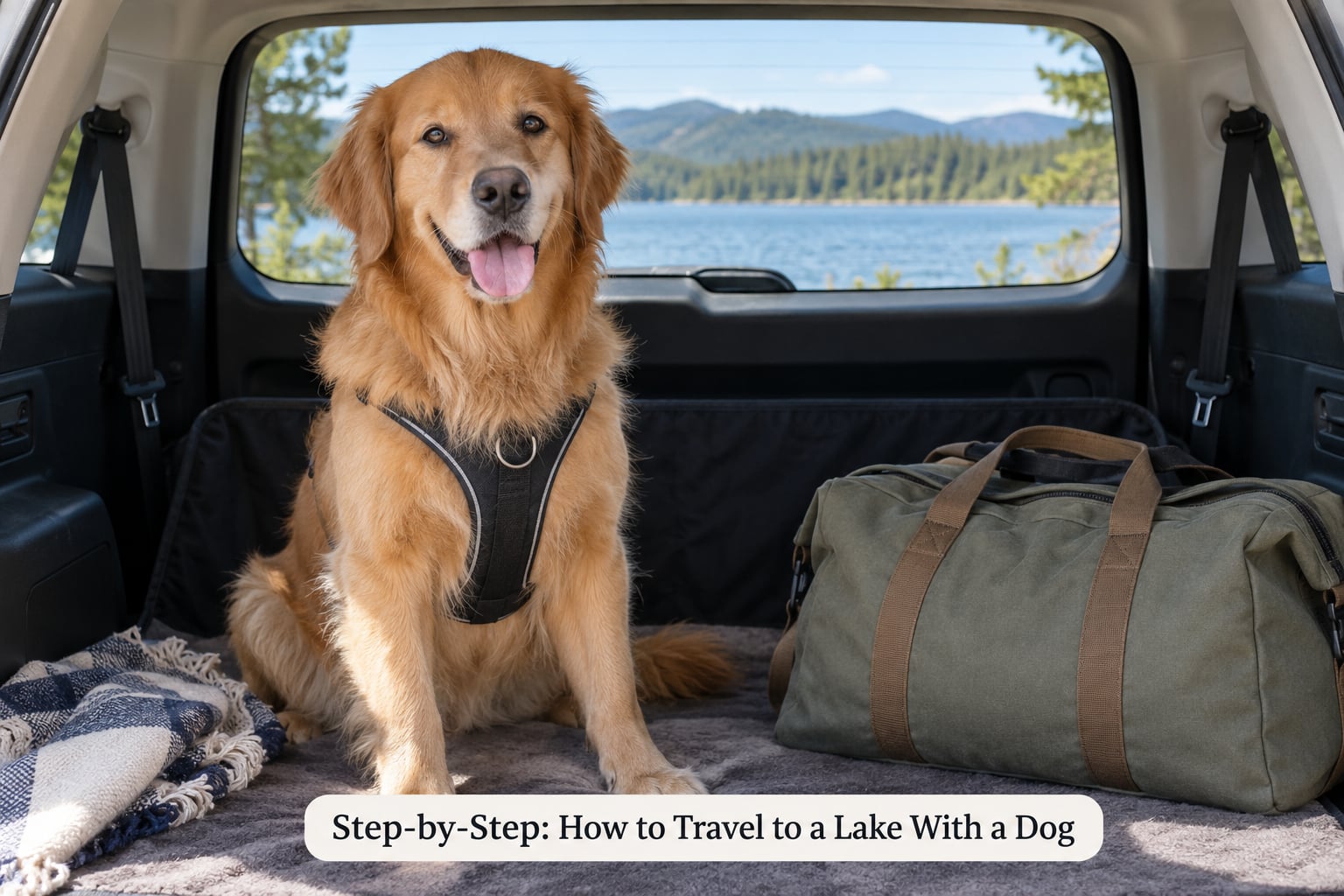
Fit the harness or crate before the trip and leave the dog in it for ten minutes with a treat so the car is not a novel experience. Toss the familiar blanket in the crate. A dog that has slept in one setup for a year will settle into a strange lake cabin much faster.
Travel Safely and Make Frequent Breaks
Stop every two to three hours, and more often for puppies, senior dogs and flat-faced breeds. Ten minutes of walking, water and a bathroom break is enough, and the benefit is that the dog arrives calm rather than wired.
Never leave a dog in a parked car, even with a window cracked and even for ten minutes. A car heats up fast in direct sun, and it is the most preventable heatstroke death in dog travel. If you need a break, take the dog with you.
Watch for the early signs of trouble: panting that does not settle, drooling you cannot keep up with, bright red or very pale gums, a wobbly gait, and a dog who seems confused or unusually quiet. Turn on the air conditioning, stop somewhere, offer small sips of cool water and get moving toward shade. For motion sickness, most vets advise asking ahead about an over-the-counter option; for now, keep the ride smooth, feed lightly, and use the ventilation rather than cranking the cold air straight at the dog.
Set Up at the Lake
The first sixty minutes at the site decide how the rest of the day goes. Clip the leash to the vehicle before you unload anything. A dog that gets free on a boat ramp while you are carrying a cooler is a bad afternoon for both of you, and ramps with water and steep banks are exactly the kind of thing that pulls a dog in.
Then read the shoreline before the dog does. Look for undercut banks, sudden drop-offs, submerged stumps and rocks, dead algae along the edge, and a green or musty surface anywhere in the cove. Green water, scum lines and a strong smell mean no swimming today, no matter how warm the day is.
Set up a base with shade available, water within reach, and a towel or mat. Once the dog has decompressed and had a lap of the campsite on a long line, introduce the water slowly: shallow water, standing alongside, a stick thrown a few feet out rather than across the whole bay. Watch for the classic mistake, a dog diving headfirst into shallow or cold water and hitting the bottom, and step in front the first few entries.
| Lake hazard | What it looks like | What to do |
|---|---|---|
| Blue-green algae | Green, grey or rusty scum; a musty smell; warning signs posted upstream | Keep the dog out entirely, rinse any coat that got wet, check the state advisory |
| Water intoxication | Long swim or fetch, heavy drinking, then wobbling, vomiting or a seizure | Cut the session short, offer fresh water on shore, call a vet right away |
| Current and boat traffic | Moving water, a narrowing channel, prop wash, a busy main channel | Use a life jacket, stay in the shallows, and pick a swim spot away from the channel |
| Steep or undercut banks | A drop the dog cannot climb out of, crumbling edge, sudden deep water | Long line on, wade in with the dog, choose a gradual-entry beach |
| Cold water | Shivering, hunched posture, slowing down in the middle of a swim | Limit the session, bring a warm towel, stop when the enthusiasm drops |
| Wildlife | Geese, deer, and a dog that suddenly goes silent and stiff | Short leash, no off-leash shoreline time, ignore the dog if you call it back |
If your dog swims on your lake, do not drink the water. A dog paddling happily for forty minutes can take in a surprising amount of lake water, which dilutes electrolytes and causes water intoxication. Ten to twenty minutes of swimming, then a break with fresh water, is plenty for most dogs.
Boarding a boat for the first time takes patience. Let the dog sniff a stationary hull with the engine off, treat on the boards, and wear the life jacket on shore first. Then use a ramp or a low entry point one dog at a time, and never lift or push a resisting dog into the hull. In a kayak or on a paddleboard, the dog’s size relative to the craft matters more than its breed.
If your dog fishes with you, hooks are a real risk. When a dog gets hooked, do not pull the hook. Cut the line, leave a visible tail of it so the vet can find the barb, and get to a clinic. A muzzle and a pair of pliers in the first aid kit handle the rest of the trip; most injuries happen to dogs nosing a bait bucket in a livewell.
Finally, run a decompression walk on arrival and again at the end of each day. A slow sniffy walk in a quiet place near the cabin or boat settles a dog down and lets them take in the surroundings without the adrenaline. It is also the fastest way to find out whether that new spot is actually as dog-friendly as the listing claimed.
Common Mistakes and How to Fix Them
Leaving the dog in a parked car for a quick errand. Not with the windows down, not for ten minutes, not on a mild day. Bring the dog, or leave one at home.
Belting a dog in with a collar. Use a crash-tested harness attached to the seat belt, or a secured crate. The collar fails; the neck pays.
Skipping the break schedule. Set a reminder for every two hours. Dogs that get one bathroom walk at the destination arrive overtired, and overtired dogs bolt, bark and swim badly.
Letting the dog swim unsupervised. A dog in water produces no visible distress signal. Stay within reach of the waterline or keep the long line on.
One long swim or fetch session. Break swimming into ten to twenty minute blocks with a fresh-water break between them. That single change removes the most common cause of water intoxication.
Skipping the life jacket on the boat. Boats have no rail worth the name, and a dog falling off a moving hull is not a rescue you can improvise. The vest with a grab handle is the difference.
Trusting tap water at the campground. Carry your own. It removes giardia, leptospirosis and a bad afternoon from the list of things that can go wrong.
Arriving without reading the leash and beach rules. Fines aside, the beaches that ban dogs are usually the ones with the current, and the off-leash areas are the ones with the wildlife.
Forgetting cabin hazards. Walk the property before the dog does. Look under the sink and in the utility closet for antifreeze and rodenticide, and check the shoreline of the lot for foxtails, burrs and porcupine quills.
One final tip that covers most of the list: the long line. Leashed at the campsite, clipped to the vehicle at the ramp, clipped to the table at the cabin, it is the difference between a bad moment and an emergency.
Frequently Asked Questions
Can dogs drink lake water?
Treat lake water as off limits, even when it looks clear. Freshwater can carry giardia, leptospirosis and the toxins from blue-green algae, and a dog that swallows a few mouthfuls on a hot day is the classic way to end a lake trip early. Bring your own water, offer it often in the heat, and rinse the mouth if your dog likes to gulp at the surface.
How do I know if a lake is safe for my dog to swim in?
Check four things before your dog goes in: the current and any advisory for the stretch of water you are using, the algae advisory from your state health department, the water temperature, and the bank itself. Steep drop-offs, undercut edges, submerged stumps and a green or musty smell all mean no swimming that day. When in doubt, wade the edge on a long line first.
What should I do if I take my dog on a boat for the first time?
Start stationary, engine off, on flat water. Let the dog sniff the hull, take a treat on the boards, and wear the life jacket on shore before it ever goes near water. Board through a low entry point or a ramp, one dog at a time, and never lift or push a dog that resists. Keep the first trip short, with nothing to chase off the boat.
How hot is too hot for a dog on a boat?
A hull with no shade and no airflow gets uncomfortably hot well before the shore does, and water reflects sunlight straight up onto your dog. Any temperature in the high eighties is risky for a flat-faced breed and a thick-coated dog. Watch for panting that will not settle, bright gums, weakness or a wobbly gait, and move to shade and water at the first sign.
Should I bathe my dog after swimming in a lake?
At minimum, rinse freshwater over the coat, especially after swimming near algae, and dry the ears. A full bath is usually only needed for long or double-coated dogs, because a wet coat holds heat against the skin. While you are drying off, check between the toes for foxtails and run your fingers through the coat for burrs. Never use human shampoo.
How long can a dog swim in a lake?
Ten to twenty minutes of active swimming suits most dogs, and long fetch sessions are how water intoxication happens: a working dog drinks far more lake water than it realises, diluting its electrolytes and sometimes causing seizures. Break swims into short blocks, offer fresh water on shore between them, and call it done when your dog will not come back on its own.
Conclusion
Start with the rules, then the identification, then the water. Check the lake’s pet policy before you book, make sure the microchip number and tags are current, and pack more water than you think you need. On the road, keep the dog restrained and stop every couple of hours. On site, leash first, read the shoreline second, and keep the swim in short blocks.
That order is the whole trip. Do those four things and the rest of the weekend is just a dog and a lake, which is the reason you are driving there in the first place.