To report a fish kill, photograph the scene, note the exact water body, date and conditions, then call your state fish and wildlife agency for fish and bird deaths or your state environmental agency for pollution, spills and algal blooms. The whole job takes about ten minutes with nothing but your phone.
A fish kill is rarely just dead fish. Something in that water changed fast enough to kill everything in it, and the only record of what changed is what you noticed that day. Anglers who report early give biologists a head start on water samples that would otherwise be gone by morning.
One caveat up front: reporting contacts change. State hotlines get reassigned, numbers get retired, and a number listed on a blog from three years ago may ring a dead line. Treat every number below as a starting point and verify it on your state’s official agency site before you rely on it.
Table of Contents
- 1What You Need
- 2How to Report a Fish Kill Step by Step
- 3Step 1: Check for Immediate Hazards
- 4Step 2: Document the Location and Conditions
- 5Step 3: Record the Fish and Surroundings
- 6Step 4: Contact the Right Reporting Authority
- 7Step 5: Submit a Clear and Timely Report
- 8Step 6: Preserve Evidence Only When Requested
- 9Common Mistakes
- 10Frequently Asked Questions
- 11Who should I contact to report a fish kill in the United States?
- 12Do I need to take a dead fish or water sample when reporting a fish kill?
- 13What information should I include in my report?
- 14Should I report a fish kill if the fish are on private property?
- 15Can I post photos of the dead fish on social media?
- 16How long will it take for an agency to investigate?
- 17Conclusion
What You Need
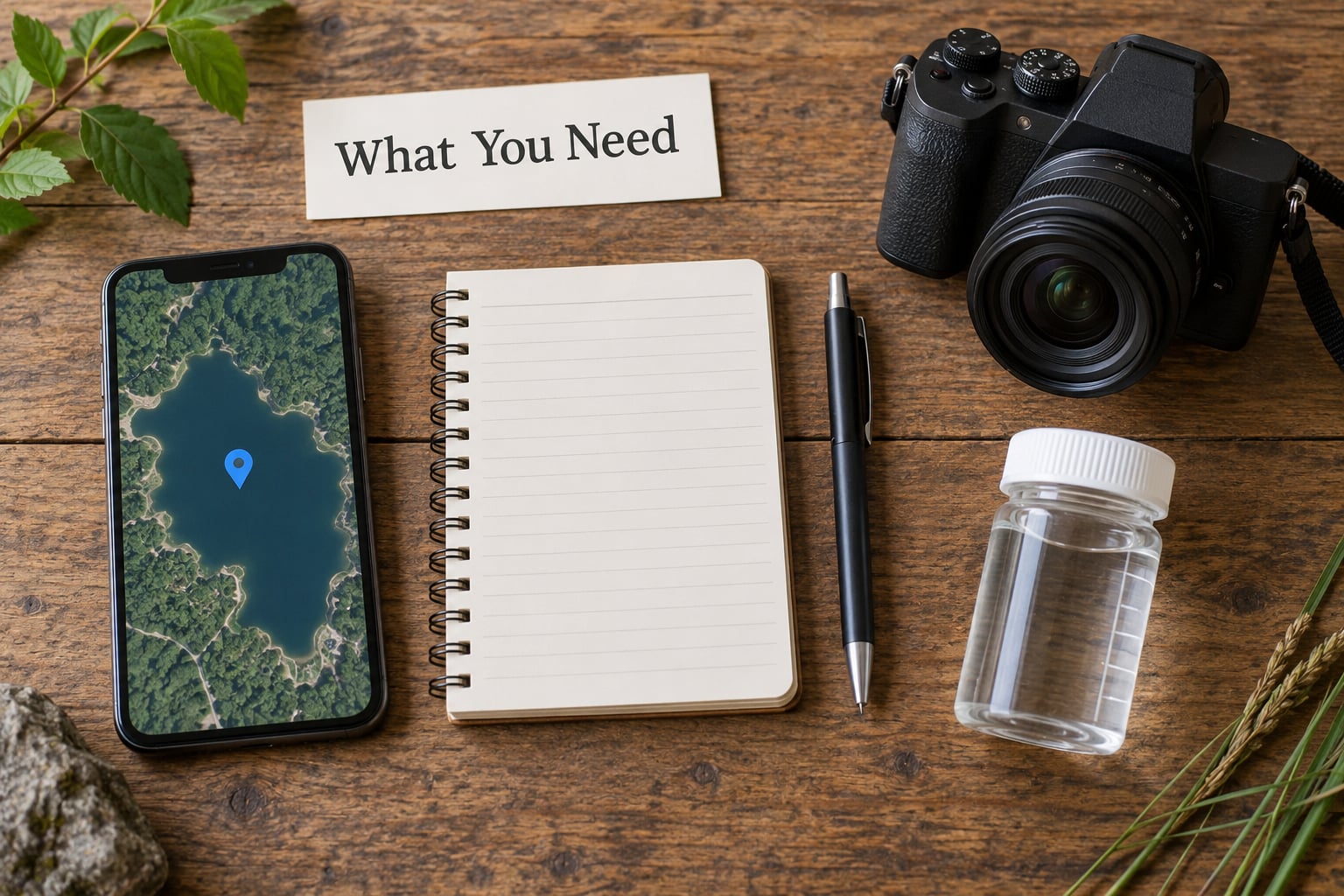
Most of what you need is already in your pocket. Agencies act on location, timing and conditions far more than on lab-grade proof, so the goal is a clear, honest record rather than a perfect sample.
- Your phone, charged, with location services on so photos and video get GPS coordinates attached automatically.
- The water body name, plus the specific boat ramp, beach, dock or road you are standing on. County names help too.
- Date and time, and the weather: air temperature, wind, and whether it rained in the last day or two.
- An estimate of how many fish, which species if you can tell, and where they are concentrated.
- Notes on the water itself: color, clarity, odor, foam along the bank, oily sheen, or a smell that hits you before you see anything.
- Any activity nearby: a farm or livestock operation upstream, a construction site, a discharge pipe, a boat ramp, or a wastewater plant.
- Disposable gloves and a bag, if you have them. If you do handle a fish, you will want both.
- Witnesses. Anyone else who saw it, with their name and how to reach them.
Leave water testing kits behind. A home test strip or a dissolved oxygen meter cannot tell you whether a water body meets a regulatory standard, and a result that looks reassuring is worse than no result at all. Agencies have the lab equipment for that.
How to Report a Fish Kill Step by Step
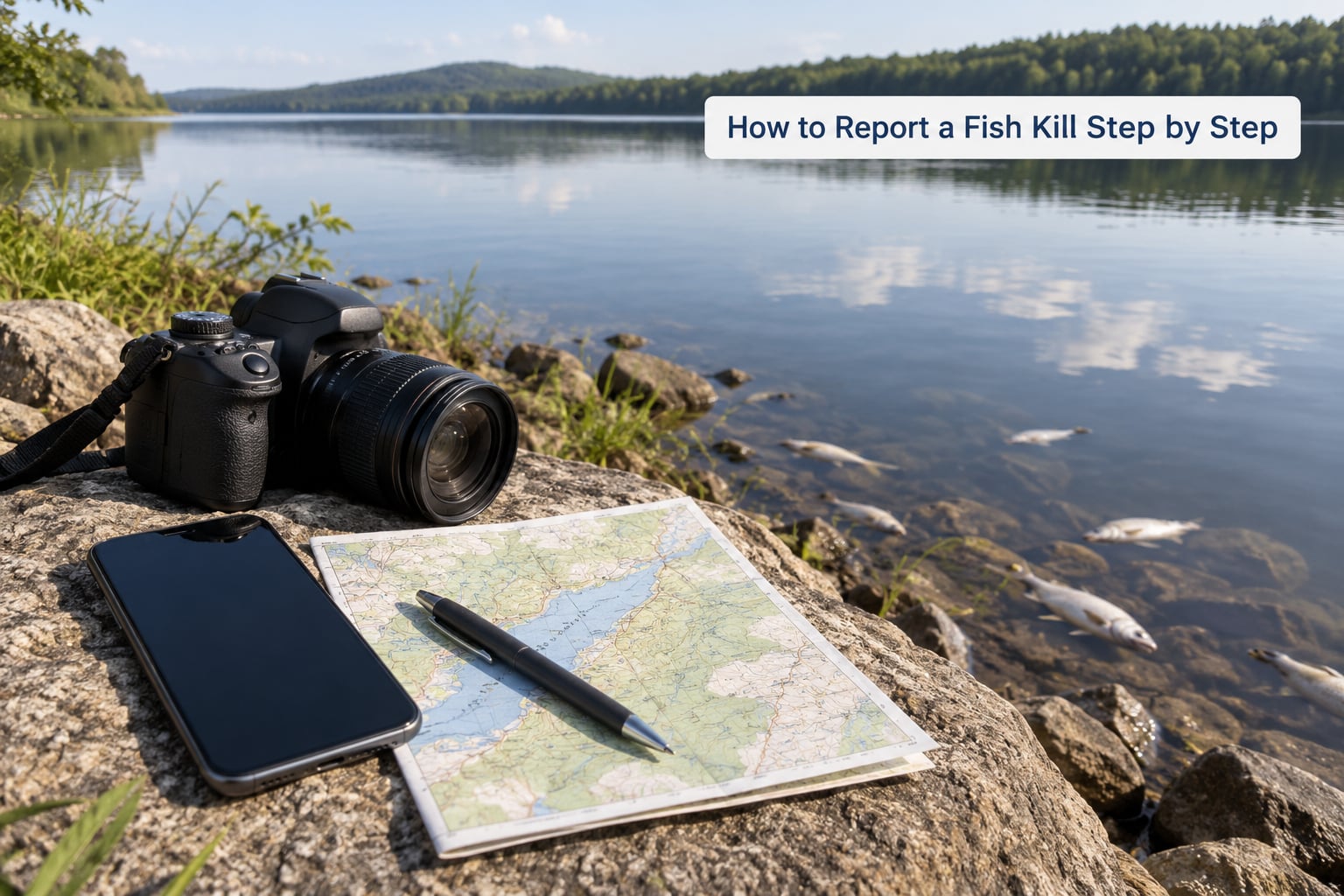
Step 1: Check for Immediate Hazards
Dead fish are a symptom, and the cause can hurt you. Before anything else, look at what you are standing near.
Do not wade into water that has an odor, a sheen or a strange color, and do not put a hand into water of unknown quality. Watch for unstable ice, submerged branches, broken glass, fishing hooks, and dead fish floating in water you would otherwise be swimming in. Keep children and dogs back from the shoreline, and remember that birds and pets may be drawn to a pile of carcasses.
If there is an active chemical release, a spill, or anyone in immediate danger, get clear and call 911 or the emergency number first. A fish kill report can wait an hour. A breathing problem cannot.
Step 2: Document the Location and Conditions
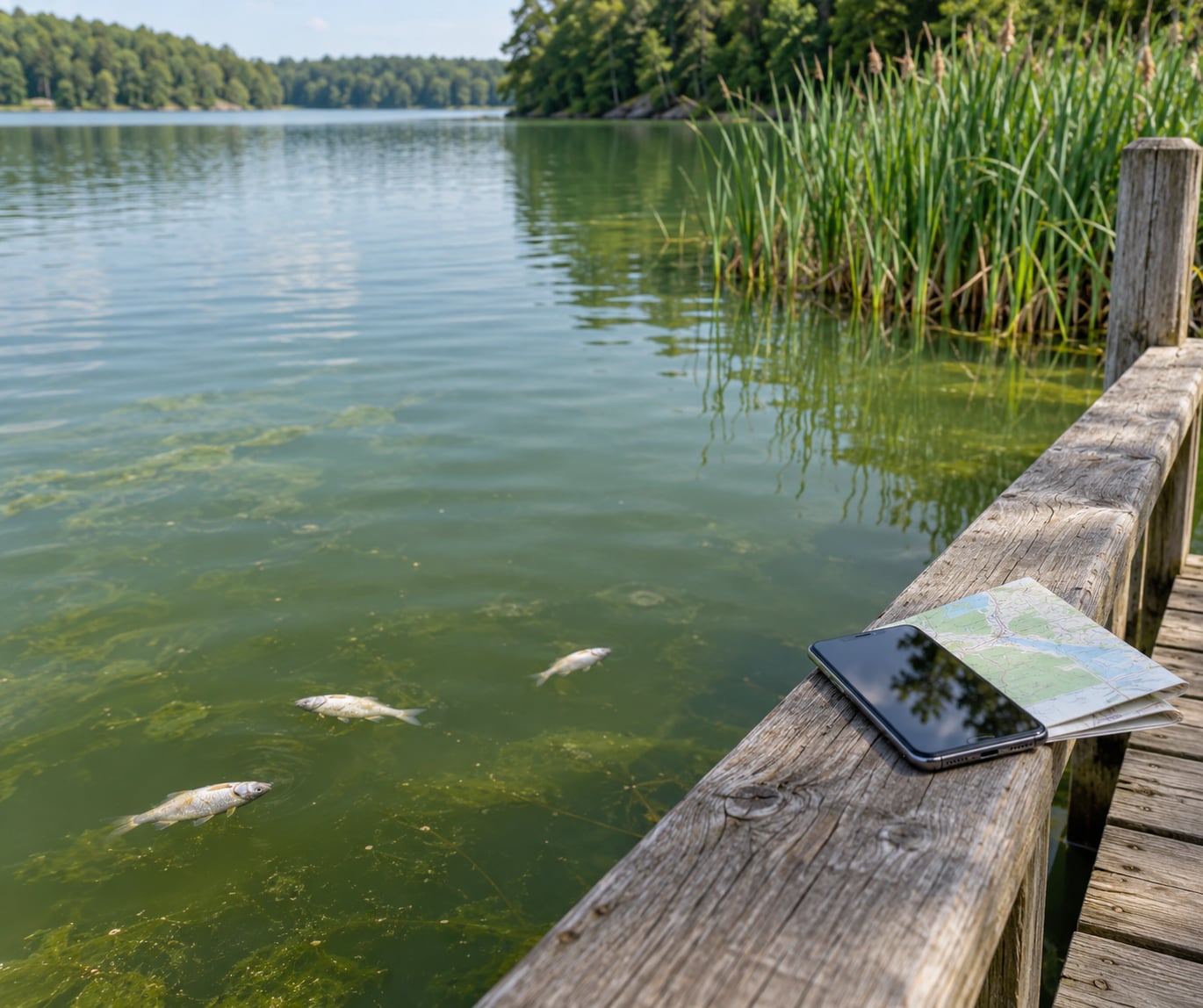
Pin the spot before you forget it. Open your maps app, drop a pin on where you are, and write down the coordinates in your notes. A boat ramp or state park name beats a vague “north end of the lake” every time.
Write a short conditions paragraph while it is fresh: how the water looked, what it smelled like, how far the dead fish extended along the shore, what the weather had been doing, and whether anything unusual had happened upstream in the previous day or two. Weather matters more than most people expect. A heat wave, a cold snap after a warm week, or three inches of rain can each explain a lot on their own.
If you have been at this water body before, note whether the kill is new. A lake that produces fish kills every August is a pattern, and patterns get investigated differently than a one-time event.
Step 3: Record the Fish and Surroundings
Count along one section of shore, then multiply. Pick a stretch of roughly 100 feet, count the fish, note the length of the stretch, and estimate the total from that ratio. Agencies understand the arithmetic and it takes under a minute.
Identify the species if you are confident. Small fish dying while larger game fish survive usually points somewhere different than a mixed-species die-off, and that difference is useful to a biologist.
Take photos from the shore, and take these specific shots:
- A wide shot showing the shoreline with dead fish spread along it, so the extent is visible.
- A medium shot at one dense cluster, showing density.
- A close-up of one fish, belly up, for species ID and condition.
- The water surface, color, foam and sheen in frame if any is present.
- The bank or access point, with a landmark like a dock post, picnic table or road number.
- Anything upstream that could explain the event, such as a discharge pipe, culvert, or farm field.
Shoot video walking the shoreline slowly if you can. Keep the original files with their timestamps and location data, and do not delete them after you post a version to social media.
Step 4: Contact the Right Reporting Authority
This is where most reports go wrong, because fish kills and bloom reports are handled by different agencies. The routing rule is simple: fish and bird deaths go to the state fish and wildlife agency, and pollution, spills and algae go to the state environmental agency.
| What you saw | Who takes the report | Typical contact route |
|---|---|---|
| Dead fish or dead birds in a lake, river, pond or coastal water | State fish and wildlife agency, or the fish and wildlife division of your Department of Natural Resources | 24-hour duty officer line, fish kill hotline, or an online reporting form on the agency site |
| Green, brown or scummy water, foam, suspicious algae | State environmental agency, such as the Department of Environmental Quality or the environmental division of the DNR | Environmental emergency hotline or a dedicated bloom reporting form |
| Chemical or petroleum odor, sheen or visible spill | US Coast Guard National Response Center | National 24-hour line, 1-800-424-8802 |
| Wildlife kill with no fish involved, such as birds or mammals | US Fish and Wildlife Service regional office, or the state wildlife agency | Regional contact list on the USFWS site |
| Possible contamination of a drinking water supply | Your state or county health department | Local health officer first, then the state environmental agency |
If you are not sure which door the report belongs in, call the environmental hotline when you suspect pollution, and the wildlife agency when you are simply looking at dead fish. When the cause is unknown, the wildlife agency is the safer first call.
Some examples of how states publish these routes: Minnesota directs pond and lake die-off reports to the state duty officer line; Missouri lists its Department of Natural Resources Environmental Emergency Response section for fish kills; South Carolina publishes a 24-hour response line for fish kills and chemical spills; Florida runs a separate fish kill hotline through its Fish and Wildlife Conservation Commission and a separate bloom line through its environmental agency. Verify each one on the agency’s own site.
Step 5: Submit a Clear and Timely Report
Report the same day if you can. Agencies often sample on a schedule, and a die-off that peaked on Tuesday may be untestable by the time a biologist can drive out on Friday.
Have this ready in one short paragraph: what you saw, where, when, how many, and what the water looked like. Something like, “About 200 fish along roughly a quarter mile of the north shore at [boat ramp name] on [lake], observed at [time] today. Water was brown and cloudy with a strong odor. No rain in the past three days. Photos attached.” That is a complete report.
Ask for a reference or case number before you hang up, and write it down. Anglers in local fishing groups describe the same frustration repeatedly: they report, nobody calls back, and they have no idea whether anything happened. The reference number is how you check later. Ask who owns the case and when you should expect to hear something.
Do not accuse anyone in your report. Describe what you observed and let the agency connect it to a discharge. Naming a farm or a facility in a phone call before anyone has verified it can derail an investigation that would otherwise move.
Step 6: Preserve Evidence Only When Requested
Leave the fish where they are unless an agency specifically asks you to collect something. Moving or bagging carcasses destroys the scene, and officials may want to sample water at the exact spot before it changes.
When sampling is requested, follow the instructions exactly. That usually means a specific container, a specific depth, a specific time, and often gloves and a cooler. Grabbing a handful of dead fish or a jug of water on your own initiative rarely helps and can contaminate the sample.
Keep your original photos, video, notes and the reference number somewhere that will not get cleared from your phone. If an environmental group or a lawyer gets involved later, that dated record is often the only independent documentation that exists.
Common Mistakes
Waiting a few days to report it. The cause is usually gone by the time people decide it is serious enough. Report the same day, even if you are not sure it counts.
Posting to a fishing group first and calling later. Angler groups are good for figuring out whose agency covers your water body, and bad as a substitute for the report itself. Make the call, then share what you filed.
Moving, bagging or throwing fish back in the water. This is the most damaging mistake. It erases the evidence and can spread contaminants along the shoreline. Leave everything in place.
Giving a vague location. “The big lake near my house” sends a biologist nowhere. Use the ramp name, the state park, or coordinates from your phone.
Guessing at the cause in the report. Saying “it’s the farm upstream” as a fact is worse than useless. Report what you observed: the odor, the sheen, the pipe, the pipeline of dead fish leading upstream from a discharge point.
Calling the wrong agency and giving up. If the wildlife agency tells you it is not their call, that is not the end. Ask them who it is, or call the environmental hotline yourself. In some states the two agencies share a duty officer.
One more worth naming: reporting and then giving up because no one called back. Agencies are stretched thin and many small die-offs never get a site visit. Your report still enters the record, and a pattern of reports from the same water body is exactly what triggers a formal investigation later.
Frequently Asked Questions
Who should I contact to report a fish kill in the United States?
For dead fish or dead birds, call your state fish and wildlife agency or the fish and wildlife division of your Department of Natural Resources. Report green, brown or scummy water, an oil sheen, or a suspected spill to your state environmental agency, and call the US Coast Guard National Response Center at 1-800-424-8802 for anything involving petroleum or chemicals. When the cause is unknown, the wildlife agency is the safer first call.
Do I need to take a dead fish or water sample when reporting a fish kill?
Almost never. Officials want the scene left as it is, because a water sample taken at the wrong depth or time is useless to them and moving the fish destroys the evidence. If a biologist asks you to collect something, they will tell you the container, the depth, the location and the timing to use. Do not bag dead fish or scoop water on your own initiative.
What information should I include in my report?
Location first: the name of the water body plus the boat ramp, beach or state park where you are. Then the date and time, an approximate number of dead fish, the species if you can identify them, the condition of the water including color and odor, recent weather, and anything unusual nearby such as a discharge pipe or land use upstream. Photos from the shoreline complete the report.
Should I report a fish kill if the fish are on private property?
Yes. Private shoreline, a farm pond, a gravel pit or a reservoir behind a gate still counts, and agencies frequently respond to ponds nobody else reports. Keep your own access lawful and stay on your property or public access. If the water is part of a commercial or aquaculture operation, notify the owner as well, since the cause may be on site.
Can I post photos of the dead fish on social media?
You can, and photos often help other anglers confirm what they are seeing. Make the official report first, though. Fishing groups are not a reporting channel, and posting accusations about a named property or facility before an investigation can create real legal trouble for you. Keep the tone factual: what you saw, where, when, and that you have reported it.
How long will it take for an agency to investigate?
It varies more than most people expect. A report with a chemical sheen or an active spill may bring a response within hours. A seasonal die-off with no visible pollution is often reviewed, logged and never visited at all, particularly outside summer. That silence usually means low priority, not that your report was ignored. Ask for a reference number and follow up in a week.
Conclusion
Stay safe first, photograph the shoreline from the bank, write down the water body, the ramp or access point, the date and the approximate count, and then call the right agency the same day. Dead fish are a symptom, and your report is often the first record that something changed in that water.
Ask for a reference number, follow up in a week, and leave the fish exactly where they are. If the same lake keeps producing die-offs, keep reporting each one. That pattern is what turns a quiet phone call into an investigation.