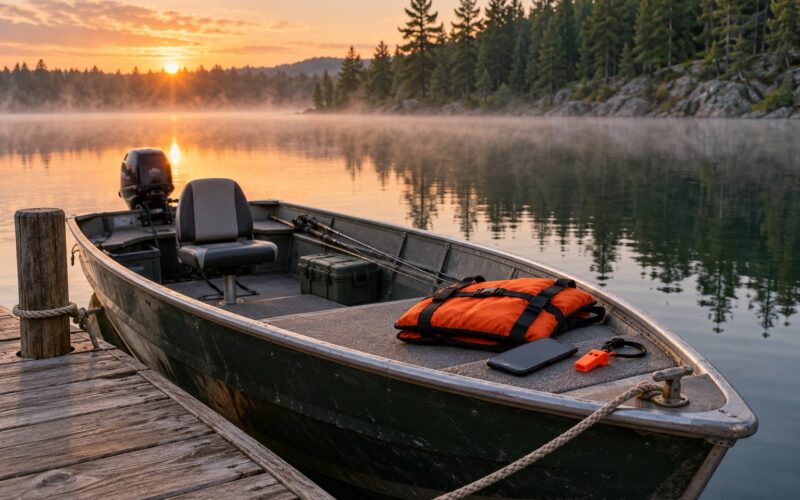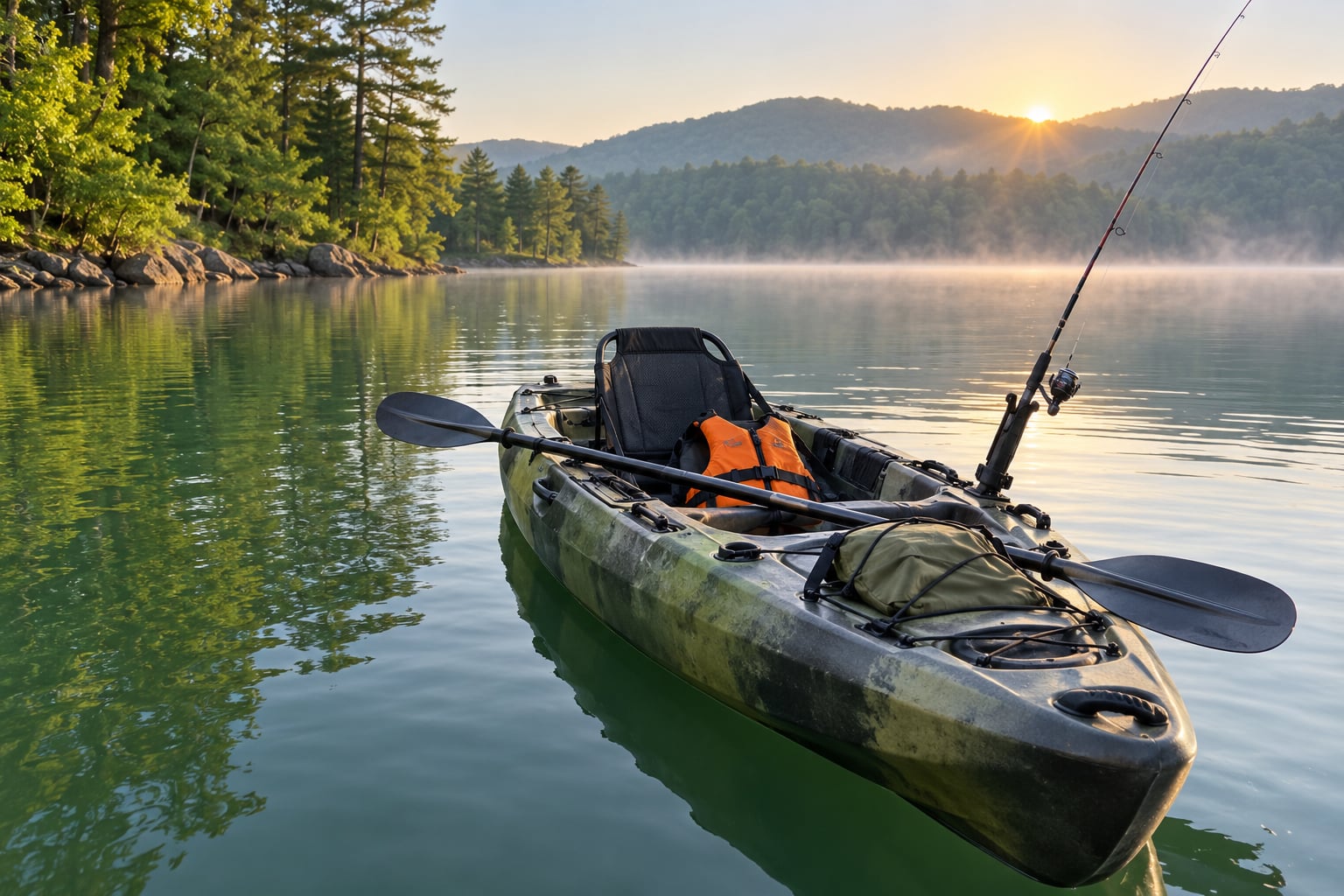
Yes, fishing from a kayak is safe for beginners — as long as you wear a properly fitted personal flotation device, check weather and water conditions before you push off, cast from a seated position, and practice getting back into a capsized boat before you need to. Most kayak accidents are not dramatic; they are a cold morning, a standing cast, and a paddle that floated away.
This guide covers the whole routine of how to fish safely from a kayak, from gear in the driveway to paddle back at the ramp. Most readers can work through the pre-launch and casting sections in an afternoon; the part that deserves a real hour is the wet-exit drill on calm, shallow water.
I have tightened a few things that show up again and again on paddling forums: paddle leashes, hooks in a confined cockpit, and what to wear when the air is warm but the water is not. Anglers who treat those three as routine come home tired instead of wet.
Table of Contents
- 1What You Need Before You Launch
- 2Step-by-Step: How to Fish Safely from a Kayak, Launch to Landing
- 31. Plan Your Route and Check the Weather
- 42. Put On and Check Your Safety Gear
- 53. Launch and Maintain Stable Positioning
- 64. Cast Without Losing Balance
- 75. Handle Fish and Keep the Kayak Stable
- 86. Return Before Conditions Become Unsafe
- 9Common Mistakes That Turn a Good Trip Into a Rescue Call
- 10Tips for New Kayak Anglers
- 11Frequently Asked Questions
- 12Do I have to wear a life jacket when fishing from a kayak?
- 13What is the 120 rule for kayaking?
- 14Can you stand up in a kayak to cast?
- 15What do you do if you fall out of a kayak while fishing?
- 16Is it safe to kayak fish alone at night?
- 17What is the leading cause of death for kayakers?
What You Need Before You Launch
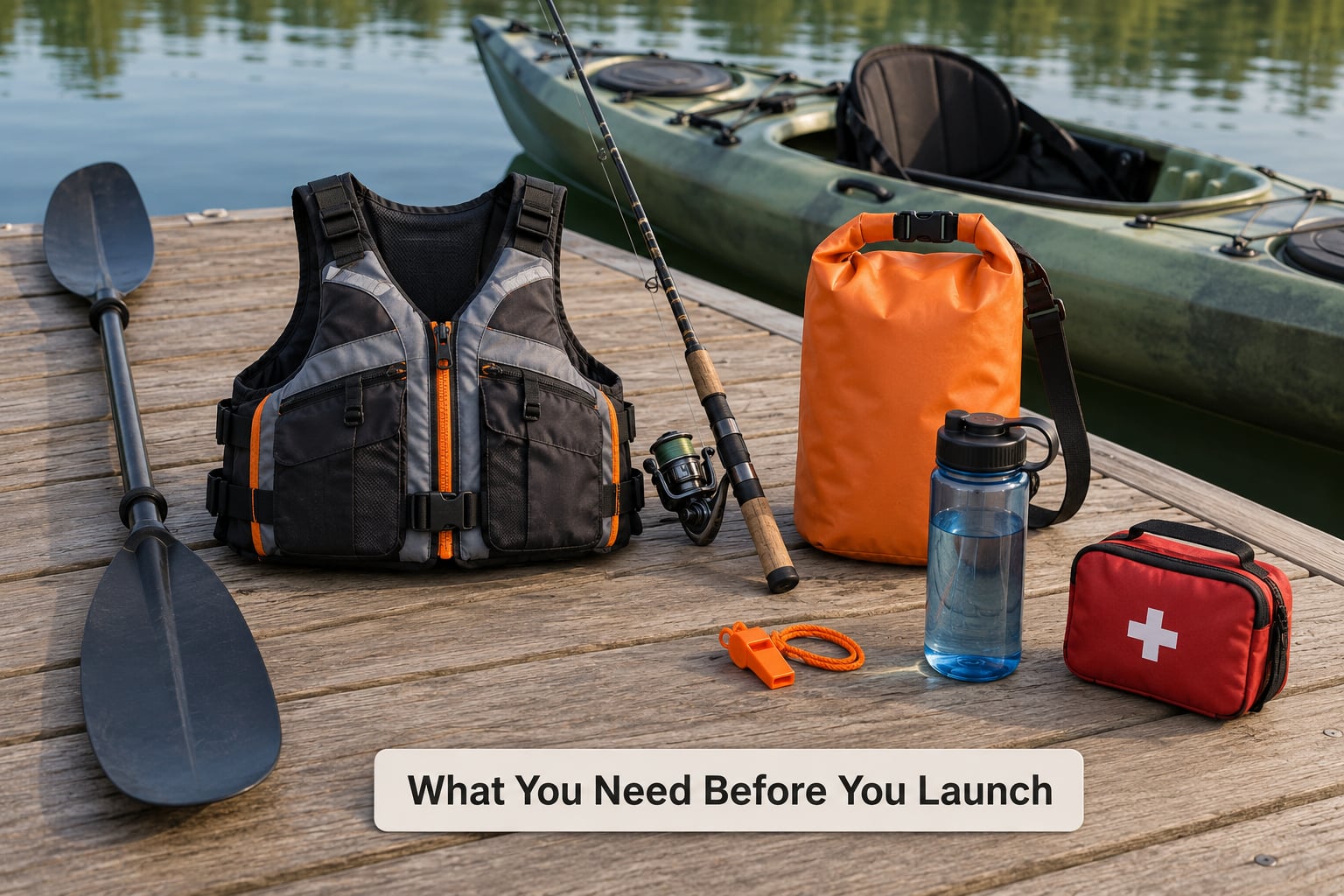
A safe kayak-fishing kit is short. Every item below has a specific job on the water, and the reason matters more than the brand.
- A USCG-approved PFD that fits. Try it on with the buckles and cinch straps done as you would while fishing, not as you would in a store. A loose PFD rides up over your ears when you are in the water.
- A paddle plus a paddle leash. The leash is the item people skip and then regret: after a capsize, a floating paddle is the difference between swimming to shore and staying with the boat.
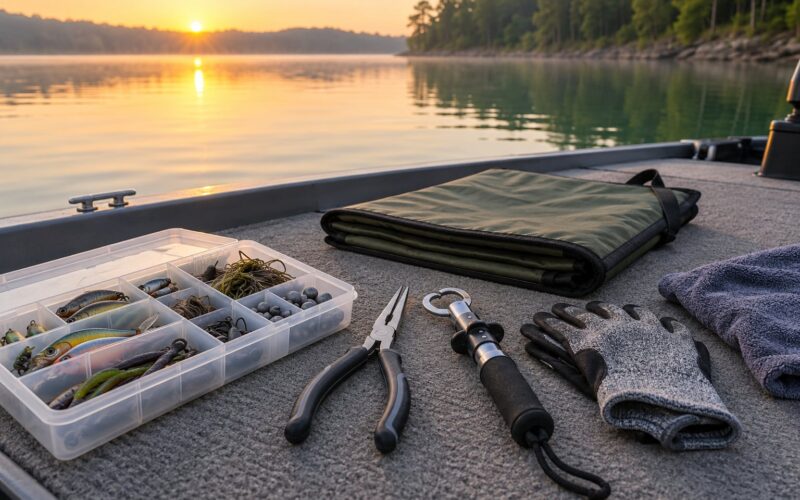
- A rod leash and a net or lip gripper. A hooked fish that takes your rod overboard ends your trip, and a lip gripper lets you work the hook one-handed.
- A whistle on your PFD, and a sheathed knife on the same strap. Both are cheap, both are reachable while you are in the water, and the whistle carries much further than a voice.
- A waterproof phone case with a lanyard. Strap it to your PFD or life ring. A phone in a kayak pocket is a phone you will watch sink.
- Dry bags for clothing, first aid and lunch. Soft gear that shifts as you move is a capsize waiting to happen; weight belongs low and centred along the hull.
- Dress for the water, not the air. Quick-drying layers, a sun hat, and a wetsuit or drysuit when the water is cold.
- Visibility gear. A bright clothing colour, a flag on a pole, and reflective tape on the hull or PFD. Motorboaters do not see kayaks early.
- Water and a snack. Fishing is sedentary and quiet, and dehydration sneaks up on you without the usual warning signs.
Add a marine VHF radio or a satellite messenger when the water is remote or you fish alone. A first-aid kit matters more than any gadget: include a CPR mask, blister care, antihistamine for stings and bee reactions, and any medication you personally need.
Step-by-Step: How to Fish Safely from a Kayak, Launch to Landing
1. Plan Your Route and Check the Weather
Decide your route and your turnaround time before you leave the truck. A written float plan tells a waiting contact where you launched, where you are fishing, when you expect to be back, and who to call if you are late.
Check three things in this order. Wind and storms, using a marine forecast rather than an inland one, since the two disagree often. Water temperature, which decides your clothing. Then water conditions — current, tide, launch site, and how much daylight you have.
A conservative call for beginners is winds under about 10 knots with no thunderstorm in the forecast, and staying inside sheltered water. Success looks simple: you know where you are going, when you are coming back, and what would make you turn around early.
2. Put On and Check Your Safety Gear
Put the PFD on before the boat touches the water, not after. Buckle it, pull the shoulder straps snug, then yank the front of it upward — if it rides above your chin, it is too loose.
Confirm the whistle and knife are clipped to a strap, not buried in a dry bag. Clip the paddle leash to your PFD or life ring rather than to the boat, so the paddle stays with you through a capsize. Check that the phone in its waterproof case is actually powered on.
Do one honest gear check: hull for cracks or seepage, hatches closed and latched, fittings tight, nothing loose in the cockpit. You are looking for a boat that floats level and a kit that is where your hands expect it.
3. Launch and Maintain Stable Positioning
Launch into the wind when you can, with the bow pointed into open water rather than broadside to the shore. Paddle straight out for a few metres before fishing so you are not practicing your casting in the reeds.
Once clear, sit centred with your knees relaxed and your weight low. Keep heavy items — anchor, tackle bag, cooler — along the centre line and down low. Small corrective strokes beat one big correction, and they stop you drifting into a windrow of reeds.
Pick a fishing position that does not require you to lean. Fishing beside a downed tree or against a rocky point looks productive, but you will eventually reach for the line, and that reach is where the boat rolls. Drift parallel to the obstacle rather than nose-in when you can.
4. Cast Without Losing Balance
Cast sitting down, every time. Standing up to cast is the most common capsize trigger among new anglers, and it is pure habit from shore fishing — on land, nobody falls over when they step back.
Keep the paddle in your hand or secured within reach, and use short casts with a manageable amount of line. A 20 to 30 foot cast covers most of the water a seated angler can work anyway. Long casts tempt you to lean or stand to clear the line, and both are unnecessary risks.
When the line snags, resist pulling hard. Break the line with your hands or a line cutter, then check the water, then your hands, before you do anything else. Retrieve your line looking down, not over the side — the coil is usually waiting on your lap.
5. Handle Fish and Keep the Kayak Stable
Net the fish first if you can. Netting is far safer for you, for the fish, and for the boat than hand-grabbing a thrashing fish in a cockpit.
If you hand-land it, use a lip gripper and keep your free hand out of the water. Stay seated through the whole sequence — landing, unhooking, photographing, measuring. Every task gets easier if your hips stay against the seat; every task gets dangerous if they do not.
Hooks, line and teeth share a very small space with your hands. Pliers or a hook remover beat fingers, a wet hand is far more slippery than a dry one, and long sleeves are not optional when a fish is still moving. Check that the hook is fully out and the barb is bent flat before the fish goes back in the water.
A useful forum-tested habit is tethering the lip gripper to the kayak so you can clip a fish and let it rest while you deal with tackle. If you are keeping fish, they go into a cooler or live well that is wedged in the hull, not loose in the cockpit.
6. Return Before Conditions Become Unsafe
Set your turnaround time when you leave the ramp and honor it. Being twenty minutes past your window is how a comfortable afternoon turns into a fight against a building headwind in failing light.
Start heading in when wind increases, clouds stack vertically, rain squalls arrive, your fingers and toes go numb, or you find yourself adjusting the same tackle for the twentieth minute. Also go in when gear breaks — a failed PFD buckle, a leaking hull seam, or a paddle with a crack in the blade is a reason to stop fishing and go in.
Choose your exit point on the way out, not on the way back, and identify a shoreline you can land on at a shallow angle. Strong paddling out against a rising wind beats a long flat paddle with a loaded boat. Leave the ramp with daylight to spare.
Common Mistakes That Turn a Good Trip Into a Rescue Call
Almost every avoidable kayak fishing accident traces back to one of a handful of habits. Here are the ones worth breaking, each with the correction.
- Skipping the flotation check or wearing the PFD loose. You cannot use it in an emergency if it has ridden up or is unfastened. Buckle it on shore and pull the shoulders snug.
- Overloading or over-stacking the boat. Gear piled high and to one side moves your center of gravity outside the hull. Load low, centered, and in soft bags that shift with you rather than under you.
- Standing up to cast. Sit. If you must stand for a sight cast, get a handhold on the gunwale, keep your knees bent and low, and never do it in current or chop.
- Fishing in weather you would not boat in. If a forecast would stop you going out in a motorboat, it should stop you in a kayak. Your boat is smaller, slower and far less visible.
- Leaving gear loose in the cockpit. A moving bait bucket is a projectile in a capsize. Secure it, and give the rod leash a tug test before you fish.
- Failing to plan a return route. Know your exit points and your paddling time back. On big water that is the difference between a long paddle and a ride.
- Leaving the paddle unsecured. If it floats away, you cannot steer or approach shore. Use a paddle leash every trip, not just in whitewater.
- Fishing past the cold water shock point. Cold water can take your ability to swim within minutes. Check the water temperature, not the forecast temperature, and dress for immersion if there is any real chance of going in.
- Working hooks with bare hands in a wet cockpit. Use pliers or a hook remover, keep your hands dry where you can, and treat a deep hook as a reason to cut the line rather than dig.
Tips for New Kayak Anglers
Start on calm, shallow water where you can touch bottom if you tip. Depth lets you relax, and relaxing is what you are actually training. Progress to deeper water and open lakes only once casting while seated feels automatic.
Practice the exit deliberately. Pick three feet of water, tip the kayak over on purpose, get out, and climb back in — with practice, not theory. Experienced paddlers on the forums recommend exactly this drill, and it is the single most useful hour you can spend before your first real trip.
Other habits that pay off quickly:
- Keep a hand on the paddle grip. It stops the twitch that ends in a swim.
- Tether electronics — fish finder, phone, action camera — so a knock does not cost you the item.
- Drift rather than anchor into a current when you are learning; anchoring in current takes real technique to hold and to release.
- Fish with one rod for the first several trips. Two rods means two line tangles and two more things to manage in a confined cockpit.
- Tell someone your route and your return time, and check in when you are back at the ramp.
- Watch your hands, not just the water. Geese, turtles and sudden boat wakes have put experienced anglers in the drink, and looking up is the cheapest safety habit there is.
One honest note about going solo: the gear list handles most of the risk, but not all of it. If you feel uneasy on open water, fish with a partner in a tandem or stay on water where help is close. Nobody has ever talked about that decision as a mistake.
Frequently Asked Questions
Do I have to wear a life jacket when fishing from a kayak?
In most US states it is not optional. Boating laws generally require a properly worn, USCG-approved personal flotation device for anyone in a vessel, and kayaks count, regardless of the length of the trip or how calm the water looks. Some states set different requirements for children and for specific waters, so check your state boating law. Beyond the legal minimum, wear a properly fitting flotation device every single outing — it is the only piece of gear that keeps your head above water when something goes wrong.
What is the 120 rule for kayaking?
The 120 rule is a simple water-temperature guide for immersion clothing. If the water is 60°F or colder, wear a wetsuit or drysuit. If it is 50°F or colder, wear a whitewater-rated drysuit. Most paddlers in cold water are not close to a fatal cold — it is the cold shock response in the first minute of immersion, the gasping and loss of control, that causes the drownings.
Can you stand up in a kayak to cast?
Standing in a kayak is possible on some stable boats, but it is the single most common capsize trigger for new anglers, especially in fishing kayaks with gear and rod holders around the cockpit. If you want a standing cast, use a boat designed for it with outriggers or stabilizers, get a handhold on the gunwale, keep your knees bent, and never do it in current or chop. Seated casting catches nearly as many fish.
What do you do if you fall out of a kayak while fishing?
First, keep your feet up and your head back — swimming to the boat is harder than it looks and your boat floats. Stay with the kayak, since it is flotation and a bigger target for rescuers. Find your paddle, which should still be attached to your leash, and use the paddle as a stirrer to work toward shore or call for help with the whistle on your PFD. Once ashore, dry out and get warm, because cold shock can hit well after the adrenaline fades.
Is it safe to kayak fish alone at night?
It can be, but night removes your main early-warning system — you will see an approaching boat far too late. If you go after dark, fish close to a lit shoreline rather than open water, wear a high-visibility light and reflective material, and carry a white strobe. Tell someone your exact spot and return time, and stay on water where help is close. Beginners are better off making their first night trip on a familiar pond with a partner.
What is the leading cause of death for kayakers?
Drowning after a capsize is the leading cause of death in kayaking and canoeing, according to Coast Guard and paddlesports organization reporting, and most of those drownings happen in water far too cold for a strong swimmer. Two habits flip the outcome: wearing a properly fitted flotation device, and staying with or getting back into the boat rather than swimming away from it. Cold exposure and hypothermia usually compound the drowning rather than acting alone.
If you only take one thing from this guide, take the PFD habit: fit it, buckle it on shore, and wear it on every trip. Next, sit down to cast, and practice the exit in shallow water once before you need it. Everything else on the list is detail.