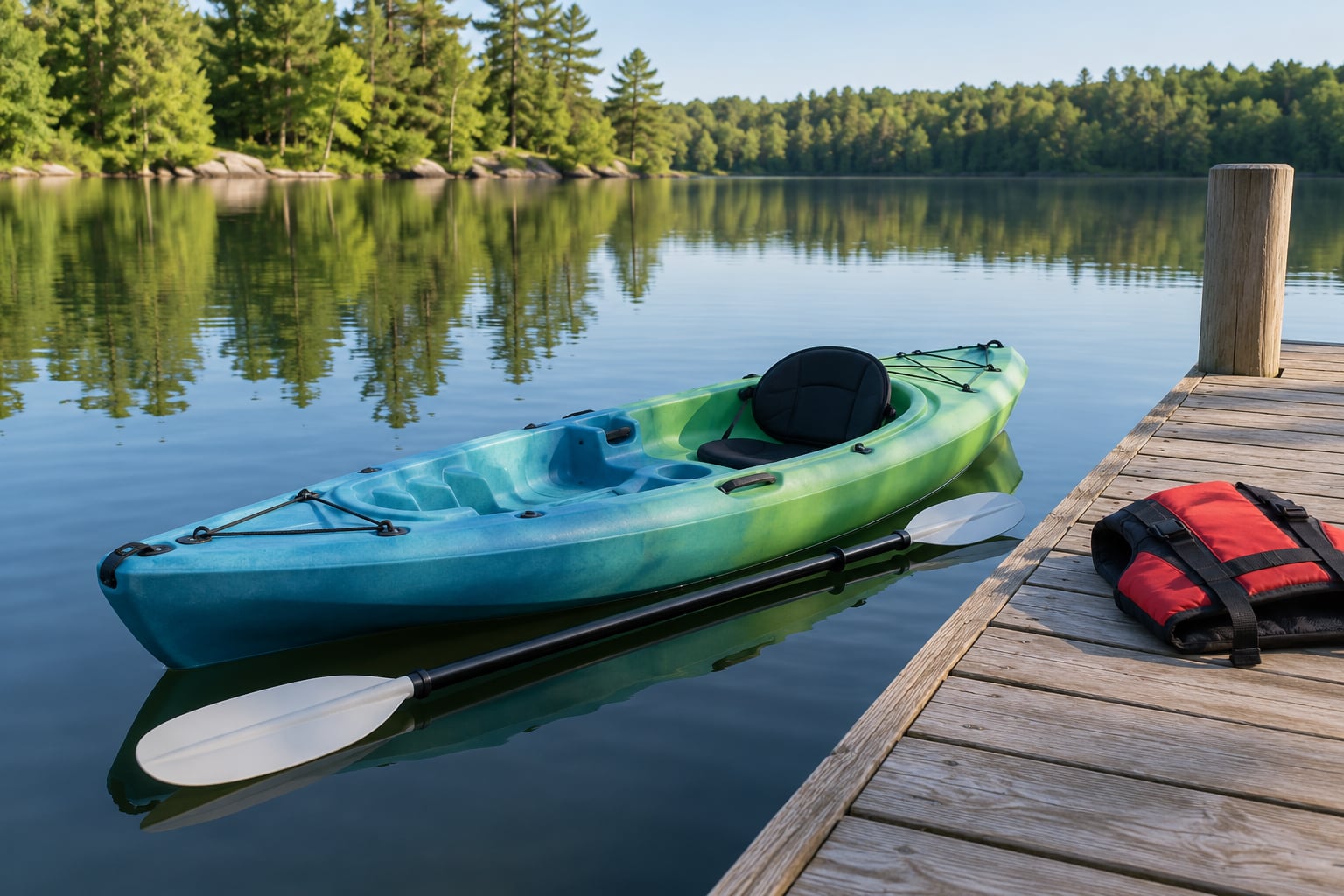
Learning how to get into a kayak from a dock comes down to four things: float the kayak parallel to the dock, lay the paddle across the water as an outrigger, keep your weight over your hands while you lower in, and sit down bum first with your feet following. Master those four and boarding stops being the scary part of the trip and becomes ten seconds of work you stop thinking about. A beginner usually needs a few calm-water sessions to make it automatic, and the whole move is far easier from a low dock than a high one.
This guide covers fixed docks, floating docks and anything in between, and it splits the technique for sit-on-top kayaks and traditional sit-inside boats because the cockpit changes the move. It also covers what to do when the water is choppy, when your knees are not what they were, and when you should just ask somebody for a hand.
Table of Contents
- 1What You Need
- 2How to Get Into a Kayak From a Dock Step by Step
- 3How to Get Into a Kayak From a Dock: Check the Conditions
- 4Position the Kayak Alongside the Dock
- 5Secure the Paddle and Plan Your Route
- 6Face the Kayak and Establish a Stable Stance
- 7Brace the Kayak With Your Hands
- 8Step Into the Kayak and Sit Down
- 9Get Into a Traditional Kayak From a Dock
- 10Common Mistakes
- 11Tips for Different Dock and Water Conditions
- 12When to Ask for Help or Choose an Easier Launch
- 13Frequently Asked Questions
- 14Is it harder to get into a sit-in kayak than a sit-on-top from a dock?
- 15How do I get into a kayak from a high dock?
- 16Do I need a helper to board a kayak from a dock?
- 17Can I launch from a dock when there is wind or chop?
- 18Should I put on my life jacket before getting into the kayak?
- 19What do I do if the kayak drifts away while I am getting in?
- 20Start With the Paddle and a Low Dock
What You Need
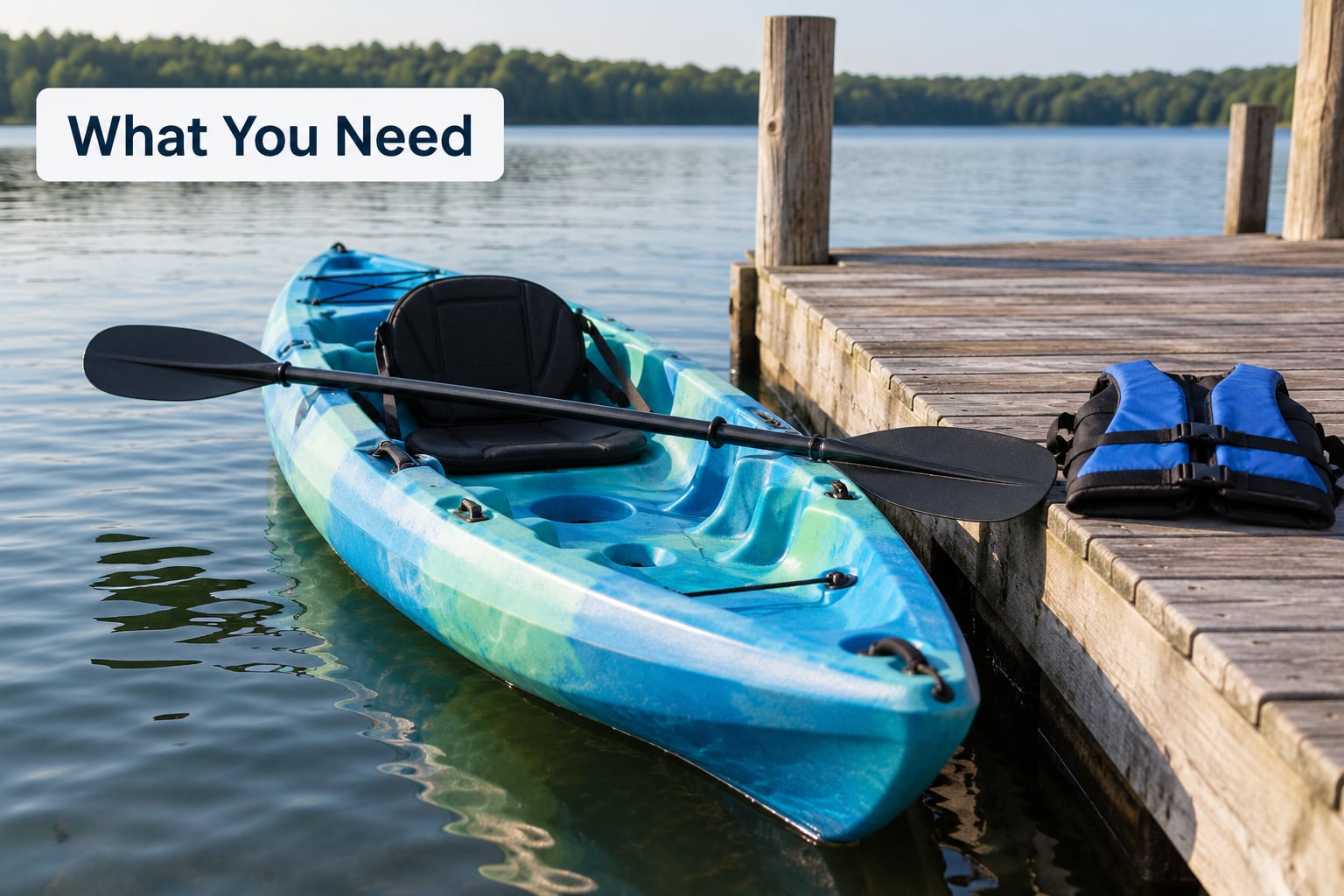
You need less than most people expect: the kayak, a paddle, a properly fitted personal flotation device, and a dock with a clean edge to sit on. That is the whole kit list.
- A fitted PFD. Put it on and buckle it before you touch the boat. Dock entry is where hands are busy and balance is thin, so wear the flotation device like a seatbelt rather than something stowed in the hull.
- A paddle with a blade you can reach. It becomes your third point of contact during boarding, so it needs to be the right length for you, not whatever is in the garage.
- Footwear with grip. Dock boards get wet, grow algae and turn slick in a morning. Shoes or sandals with a rubber sole beat bare feet on a wet plank every time.
- A grab line or bow handle. A short rope looped through the bow handle and clipped to a dock cleat keeps the kayak from sliding away while you climb in. It solves the single most common complaint I hear from beginners: the boat drifting off mid-entry.
- A dry bag for loose items. Anything in your hands during a transfer is a thing you drop in the lake.
Dock height changes the method more than any other variable. Up to about 18 inches above the water, you sit on the edge and lower straight in. Above roughly 30 inches, you are climbing down into the boat, and you want more help or a different technique. Floating docks ride the surface, so the drop is short and forgiving. Fixed docks hold a constant height, which makes them predictable but often taller than you expected.
One more thing to check before you load up: the water. A dock with a ladder, a boat lift or floating vegetation along the edge is workable. A dock with a two-foot drop to rocks is a different afternoon.
How to Get Into a Kayak From a Dock Step by Step
How to Get Into a Kayak From a Dock: Check the Conditions
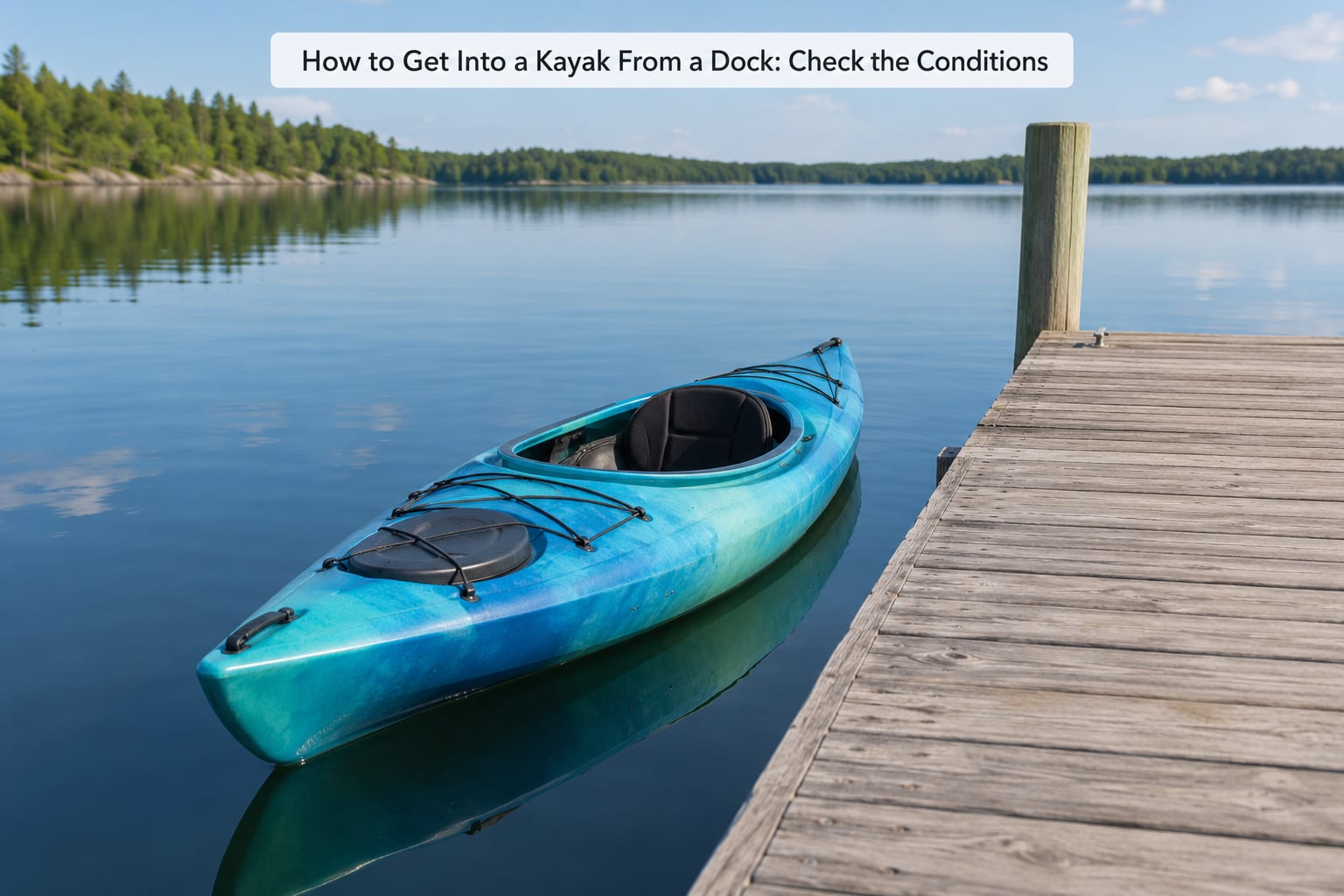
Check the conditions first, because a step that works on flat water at dawn can fail on the same dock at noon. Look at the gap between the boat and the dock, check that the hull floats level, and note where the wind is coming from.
Three questions decide whether you go now or come back later. Is the water flat enough to keep the kayak from sliding? Is there a crosswind pushing the boat away from the dock? And is the dock edge clean and dry enough to sit on?
Know the drop too. Count the distance from the dock edge to the water, because that is the fall you are planning for if something goes sideways. On a calm day it takes about a minute to check all of this, and it saves the kind of soaking you spend the rest of the day thinking about.
Position the Kayak Alongside the Dock
Push the kayak out and turn it so the hull runs parallel to the dock, not at an angle. Parallel gives you a long edge to sit against and stops the boat from swinging when you put weight on it.
Set the seat closest to the dock edge. You are boarding over the side of the kayak, so the seat you want first should be the one you can reach without stepping over anything.
Control the boat rather than chasing it. A bow grab line in one hand, or the paddle laid across the hull, keeps it still. If wind or current is running, position yourself on the up-current side so the water pushes the kayak toward you instead of away.
It worked when the hull sits about six to ten inches off the dock, sits level rather than tilted toward you, and the seat is directly beside where you are standing. If it is drifting, the fix is more contact, not more strength.
Secure the Paddle and Plan Your Route
Lay the paddle across the water next to the kayak, at right angles to the hull, with the blade floating and the shaft under your hand. That is the paddle outrigger, and it gives you a third point of contact while your weight is split between the dock and the boat.
The outrigger works, but it takes practice before you can trust it with your weight on it. Put the paddle on the side away from the kayak, so the shaft sits between the boat and the water without being in the way of your legs.
Stow everything else before you climb in. Rods, tackle bags, loose straps and the spare paddle all go in the hull or a dry bag on the dock. Both hands need to be free, and a boat half-packed with gear shifts unpredictably when you sit down.
Then look at your route. Decide where you are paddling for the first thirty seconds, because that is when the boat still feels strange and you want a heading, not a decision.
Face the Kayak and Establish a Stable Stance
Squat and turn so you face the kayak with your back to the dock, feet set shoulder-width apart and set back from the edge. A wide base and bent knees give you far more control than standing tall with straight legs.
Keep your weight low and centered over your feet. Rising onto your toes to see better is the first thing that goes wrong on a high dock.
Your hips should stay over your heels rather than drifting toward the water. If you are leaning forward before you have touched the boat, you are already half-committed to a move you cannot stop.
Anyone with reduced balance, a bad shoulder or a knee that will not bend fully should have a second person stand behind them, hands at the waistband, ready to steady rather than lift. A helper who pushes at the wrong moment causes more falls than no helper at all.
Brace the Kayak With Your Hands
Put one hand on the kayak’s gunwale or grab handle at the point closest to you, and the other on the dock edge. That gives you three points of contact: two hands and your feet.
Keep your hips between your hands and hold the boat steady without forcing it. You are balancing the kayak, not moving it, so no pulling, no shoving it away from the dock.
Feel the boat’s response before you commit. A kayak that shifts under your hand is telling you it is not stable enough yet, and the answer is to wait for flat water rather than to push harder.
Step Into the Kayak and Sit Down
For a sit-on-top kayak, swing one leg over the gunwale and down onto the footrest, then bring the other leg across. Never put both legs in at once, because half-sitting with one leg on the dock and one in the boat is where most beginners end up swimming.
Lower your weight onto your hands as your hips reach the seat. Weight over your hands means the boat carries you rather than tipping you, and it keeps your center of gravity low while the hull reacts.
Sit down bum first, then bring your feet up. Once your weight is centered, shift your hips forward until you feel the seat under you, and only then lift your hands off the dock.
Get Into a Traditional Kayak From a Dock
A sit-inside kayak needs a different order of operations because the cockpit rim sits above your hips. Sit on the dock edge first, feet hanging down into the cockpit, with the coaming behind you for support.
Use a foot brace or knee brace to plant one foot against the inside of the hull. That gives you something to push against and stops the boat from sliding away as you swing your hips in. A brace you cannot lock into is worse than none, so check the tension before you commit.
With that foot set, turn your hips and sit down inside the cockpit rather than lowering yourself in from above. Feet go in after you are seated, and you adjust the foot pegs once you are low.
Watch the coaming. Knees striking the cockpit rim on the way in is the commonest cause of the painful version of this move, and it usually happens when someone dives in rather than rotating in.
Common Mistakes
Nearly every dock entry problem comes back to one of a handful of errors, and each has a straightforward fix.
- Standing too high. Rising onto your toes or standing with straight legs raises your center of gravity. Fix: squat, keep knees bent, and let your hips sink as you descend.
- Stepping with both feet at once. You end up perched between two surfaces with nothing supporting you. Fix: one leg over, settle your weight, then the second leg.
- Leaning over the kayak to reach the seat. This tips the boat under your torso. Fix: move the kayak instead, or shift your position along the dock so the seat is in front of you.
- Using a loose paddle. A paddle floating free does nothing as an outrigger. Fix: lay it across the water perpendicular to the hull and keep one hand on the shaft throughout.
- Boarding in wind or chop. A boat with a following sea will swing away from the dock as you sit. Fix: wait, or board from the shoreline instead.
- Sitting before you are stable. Dropping into the seat while the hull is still moving tips you. Fix: hold the three points of contact until the boat stops moving.
- Loading up first. A boat full of loose gear behaves differently once you sit. Fix: stow everything before you climb in.
That is the whole method for how to get into a kayak from a dock: seven steps, four principles, and a set of habits that keep the boat under you instead of beside you.
Tips for Different Dock and Water Conditions
The technique adapts more than people expect. What changes is height, stability and how much help you have, not the sequence.
- Low docks, under 18 inches. The easiest case. Sit on the edge, feet in the seat area, hands on the hull, lower straight down.
- High docks, over 30 inches. You are climbing down rather than sitting down. Use a helper, face the kayak with your back to the dock, and descend facing the boat so your back is to the water. If the drop is more than about three feet, a wet entry or a shoreline launch beats a fall.
- Floating docks. The best option for balance, since the boat and the dock move together. Watch for the dock drifting and keep the kayak close so both surfaces travel as one.
- Fixed docks. Predictable height, but usually taller and often slick. Treat the surface as wet even when it looks dry, and expect a longer reach.
- Slippery surfaces. Wipe the board with your paddle blade or a towel before you set your feet down, and wear footwear with a rubber sole. Water and algae make a dock treacherous, and most falls at the dock happen before anyone touches the boat.
- Wind. Board from the upwind side when you can, and expect the hull to want to blow away from the dock. A crosswind of any real strength is a reason to wait or to launch from shore.
- Current. Position yourself upstream of the boat so the water pushes the kayak toward the dock. Strong current plus a fixed dock is a poor combination for beginners.
- Shallow water or a rocky edge. A drop you cannot see turns a stumble into a bruise. Move to a section with deeper water or a ramp.
- With another paddler helping. The helper holds the kayak by the gunwale nearest the dock and keeps it flat. They should not lift, pull or push down while you are moving, only hold.
One more condition deserves a mention: cold water. Water temperature drives your clothing decisions more than the air does, and a wet entry on a cold day turns a technique lesson into a hypothermia problem. If the water is cold enough to be dangerous in minutes, the answer is a drysuit or a warm water wetsuit, and boarding technique is a secondary concern.
When to Ask for Help or Choose an Easier Launch
Some boarding situations have a right answer, and the right answer is not always getting in the kayak from that dock.
Ask for a second person when the dock is above roughly 30 inches, when your balance has changed since the last time you paddled, when you are recovering from an injury, or when the boat is a tandem. The same applies if the water is moving more than you expected or if the kayak is heavier than you can control one-handed.
Choose a different launch when the dock is fixed and high with nothing below to step on, when there is no ladder or platform, or when you would have to climb down into the boat blind in a chop. A shoreline launch or a shallow ramp gives you a gentler angle and far more room to correct a mistake.
Switch to a different craft when boarding repeatedly fails in the same conditions. A sit-on-top kayak with a wide base is much easier to board than a narrow sit-in, and a pontoon, a canoe with a boarding platform, or a kayak with a transfer bench removes the transfer entirely for anyone with real mobility limits.
For people with limited mobility, accessible launches with transfer benches and handrails exist at many public docks, and adaptive programs run kayak sessions where helpers handle the boat entirely. You do not have to be self-sufficient to paddle. Ask the marina or park office what they have on site before you try to improvise.
If you capsize during entry, stay with the boat. It floats, it is easier to find than you are, and it is the platform you climb back onto. Get the PFD, get to the hull, and call for help if you are cold or injured.
Frequently Asked Questions
Is it harder to get into a sit-in kayak than a sit-on-top from a dock?
Yes, generally. A sit-in kayak puts the cockpit rim above your hips, so you have to rotate into the boat rather than lower onto a seat. A sit-on-top lets you swing a leg over the gunwale and sit down, which is why paddlers with bad knees or limited balance usually start there.
How do I get into a kayak from a high dock?
Face the kayak with your back to the dock, squat low, and have a helper steady the hull. Descend facing the boat so your back is to the water, brace one foot inside the hull if it is a sit-in, and keep your weight over your hands. Above about three feet of drop, launch from shore or a ramp instead.
Do I need a helper to board a kayak from a dock?
You do not need one on a low dock in calm water with a wide sit-on-top. You do want one on a high dock, in wind or chop, with a tandem kayak, or if your balance or joints are limited. A helper should hold the gunwale and keep the hull flat, not lift or push while you are moving.
Can I launch from a dock when there is wind or chop?
Flat water with light wind is fine. Launch on the upwind side and expect the hull to want to drift away from you. With a crosswind or a following chop, wait for calmer conditions or launch from shore, where you can back the boat into shallow water instead of climbing down into it.
Should I put on my life jacket before getting into the kayak?
Put it on and buckle it before you touch the boat. Boarding is the moment when your hands are full and your weight is unsupported, and a PFD only helps if it is already fastened. Wear it the same way in flat water as in rough water.
What do I do if the kayak drifts away while I am getting in?
Stop, sit back on the dock, and reset rather than reaching for it. A bow grab line clipped to a dock cleat stops drift entirely, and holding the paddle shaft across the water works too. If the boat keeps pulling away, the water or wind is too strong and you should pick a different launch.
Start With the Paddle and a Low Dock
Next time you are at the dock, clip a short grab line to the cleat, lay the paddle across the water, and get in exactly as described above on a calm morning before you test it anywhere harder. Everyone dumps the boat at least once learning this, so practice somewhere a dunk costs you nothing. Once you can board sitting down with your weight over your hands, the rest of the paddle becomes about the lake, not the kayak.