To use a generator at a campground politely, read the posted rules at check-in, run it only inside the permitted window (commonly 8 a.m. to 8 p.m.), keep it outdoors with the exhaust pointed away from other sites, and shut it down during quiet hours (often 10 p.m. to 6 a.m.). Most campers who follow those three habits never get a complaint.
It takes about fifteen minutes to set up correctly, and the difference between a good setup and a bad one is usually placement, cord safety, and knowing when to stop. This guide walks through the whole sequence, from what to pack to how to break the news to a neighbor who is already louder than you.
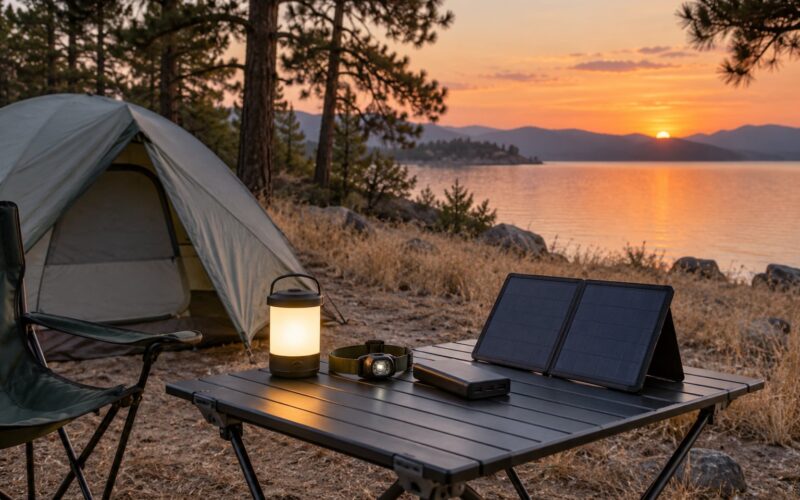
If your power needs are modest, a portable power station and a folding solar panel will quietly cover a phone-charging station and a coffee maker with no exhaust at all. But when you need an air conditioner, a microwave, or a medical device overnight, a generator is still the practical answer, and the rest of this guide is for that situation.
Table of Contents
- 1What You Need
- 2How to Use a Generator at a Campground Politely: Step-by-Step
- 31. Check the campground rules and your neighbors
- 42. Choose a safe outdoor location
- 53. Connect power safely
- 64. Start it and reduce unnecessary noise
- 75. Monitor the generator while it runs
- 86. Refuel, shut down, and leave the site clean
- 9Common Mistakes
- 10Frequently Asked Questions
- 11Can I run a generator inside my tent at a campground?
- 12How far should a generator be from my tent?
- 13Are quiet generators allowed at every campground?
- 14What time should I turn off my generator?
- 15Can a generator run in the rain?
- 16Start With the Campground Rules
What You Need
Gather this before you pull the unit out of the truck. Most of it is cheap, and all of it prevents the two problems that get campers asked to move: noise and fumes.
- A portable generator sized for your load. Add up the running watts of everything you plan to plug in, then pick a unit with roughly double that as headroom. A generator run near its maximum works hot and loud.
- Outdoor-rated extension cords. Look for cords marked for outdoor use with weather-resistant ends. The gauge matters as much as the length: a cord that is too thin or too long drops voltage and forces the engine to run harder than it should.
- A weather cover and a dry connection point. A generator-rated rain cover or a manufacturer-approved shelter keeps water off the engine. Do not wrap anything in a tarp while it runs, because a tarp traps exhaust.
- Sound-control materials. A purpose-built sound shield, a fitted enclosure with ventilation cut for the exhaust, or a heavy acoustic mat under the feet. Rubber isolation pads or a thick piece of carpet and rubber under the frame cut the hum you hear through the ground more than anything airborne.
- A fire extinguisher rated for flammable liquid. Gasoline vapor is the hazard at a campground, and an ordinary household extinguisher will not put out a fuel fire.
- A fuel can with a tight seal, plus a flashlight. You will refuel at night more often than you expect. Store fuel only in an approved container and keep it away from any ignition source.
- A decibel app on your phone. Any free sound meter app gives you a rough number at your own site. Measuring at your picnic table is how you learn whether your setup actually works, instead of guessing.
How to Use a Generator at a Campground Politely: Step-by-Step
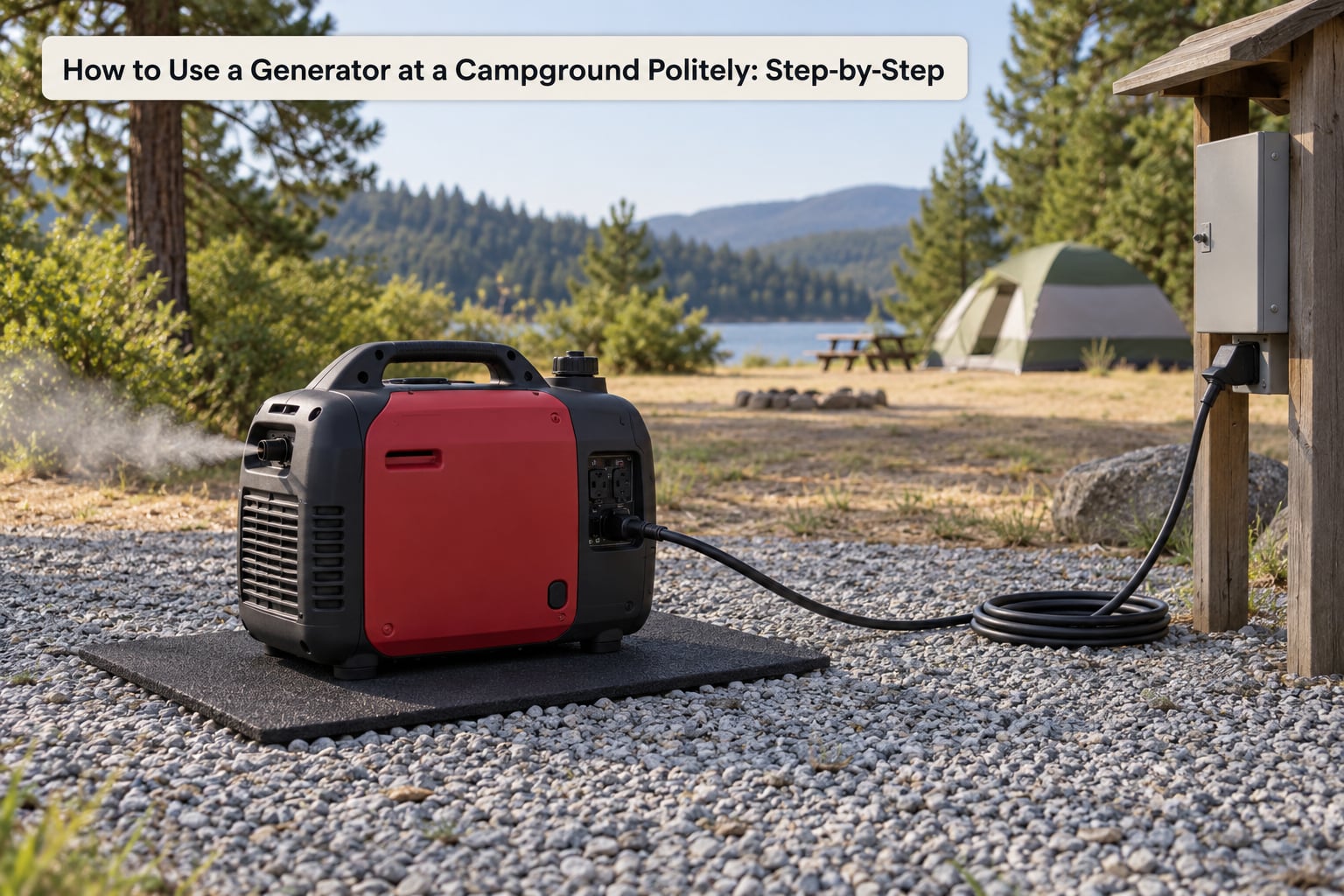
The sequence below is the order that matters. Rules first, then placement, then connections, then sound. Do them out of order and you will end up moving a running unit, which is loud and, near fuel, risky.
1. Check the campground rules and your neighbors
Start at the office or the posted sign board and find the generator-specific line, not just the general noise policy. Most campgrounds list permitted generator hours, whether the unit has to be registered at check-in, and whether there is a designated generator area or loop at the back of the campground.
Then look at who is around you. Note the sites on both sides and downwind, and whether anyone is sleeping off hours or has small children. If the family on the far side of the road is already running a contractor-style open-frame unit, you know the baseline noise at that campground.
How do you confirm the setup is compliant? You can say, out loud, which hours you plan to run and where the unit will sit. If nobody objects at check-in and the posted hours match what the office told you, you are fine. When the rules are unclear, ask for the quiet period in writing on your registration form so you have a record.
2. Choose a safe outdoor location
Run the generator outside. Never inside a tent, a camper van, a pickup bed with a canopy, a storage shed, or a vehicle, even with the doors open and windows down. A generator produces carbon monoxide, which is odorless and colorless, and the concentration right next to the exhaust port can be lethal long before you feel anything.
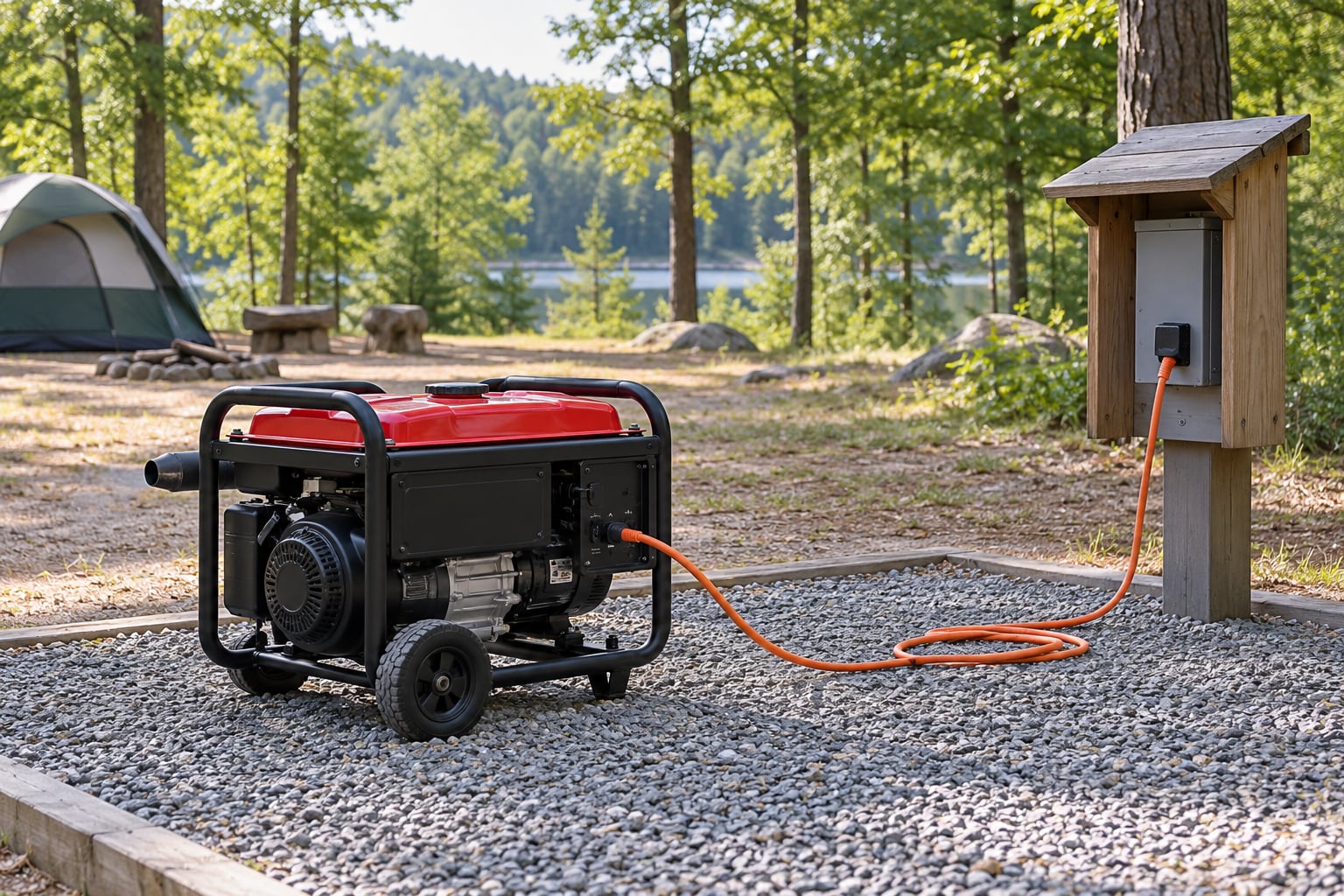
Choose a level, open surface with airflow on all sides. Keep it away from dry grass, leaves, tents, awnings, vehicles, picnic tables, and the water. The manufacturer’s clearance requirements in the manual take priority over anything else here, and campground guidance sits on top of that.
Point the exhaust away from the nearest occupied site, and think about wind. On a still evening the exhaust drifts; on a light breeze it carries in a predictable direction. Turn the unit so the hot air moves away from campers, not toward a row of tents. If the site offers a natural barrier, use it: a picnic table, a storage box, a bank of willows, or the back of a pickup between you and the next campsite all help.
Distance is the cheapest sound control there is. Twenty or thirty feet of clear space makes a real difference, and so does keeping the site boundary in mind rather than measuring from your own tent.
3. Connect power safely
Use cords rated for outdoor use, check that every plug and socket is undamaged, and confirm the cord gauge suits the load and the distance. Shelled-out insulation on a single conductor is the failure that causes most generator-related burns.
Never daisy-chain extension cords or use a splitter to reach a device that your first cord already struggles with. Plug appliances directly into the generator’s outlets where possible, and keep every connection off the ground where feet, a picnic table leg, or a wet floor can reach it.
Protect any connection that stays outside in weather with a weather-rated cover or an outdoor power distribution box, and keep the generator itself in the open. A covered connection is safe; a covered exhaust is not.
You know the load side is right if the generator starts without a tripped breaker and holds a steady pitch instead of surging up and down as devices switch on. If it bogs down, shut something off and restart rather than forcing the load.
4. Start it and reduce unnecessary noise
Follow the startup procedure in your manual. On a typical unit that means setting the fuel valve, closing the choke on a cold engine, pulling the cord or pressing the electric start button, then opening the choke once it fires. Do not improvise the sequence; fuel and choke settings vary between models.
Noise comes from three places: the exhaust, the vibration, and the load. An inverter generator is the quietest option because its output and engine speed vary with demand, so it can run at a lower RPM when you are only charging batteries. Use the low or eco mode your model offers, and avoid the generator when you do not need it. Every hour you skip is an hour nobody has to hear.
Keep the air intake and the exhaust end clear. A sound shield helps only when it leaves a generous gap around the running engine and the hot exhaust pipe; an enclosure with no airflow turns the quiet trick into an overheating problem.
Measure with your phone’s decibel app at the nearest site boundary. That number is the real test, not the sticker on the box.
5. Monitor the generator while it runs
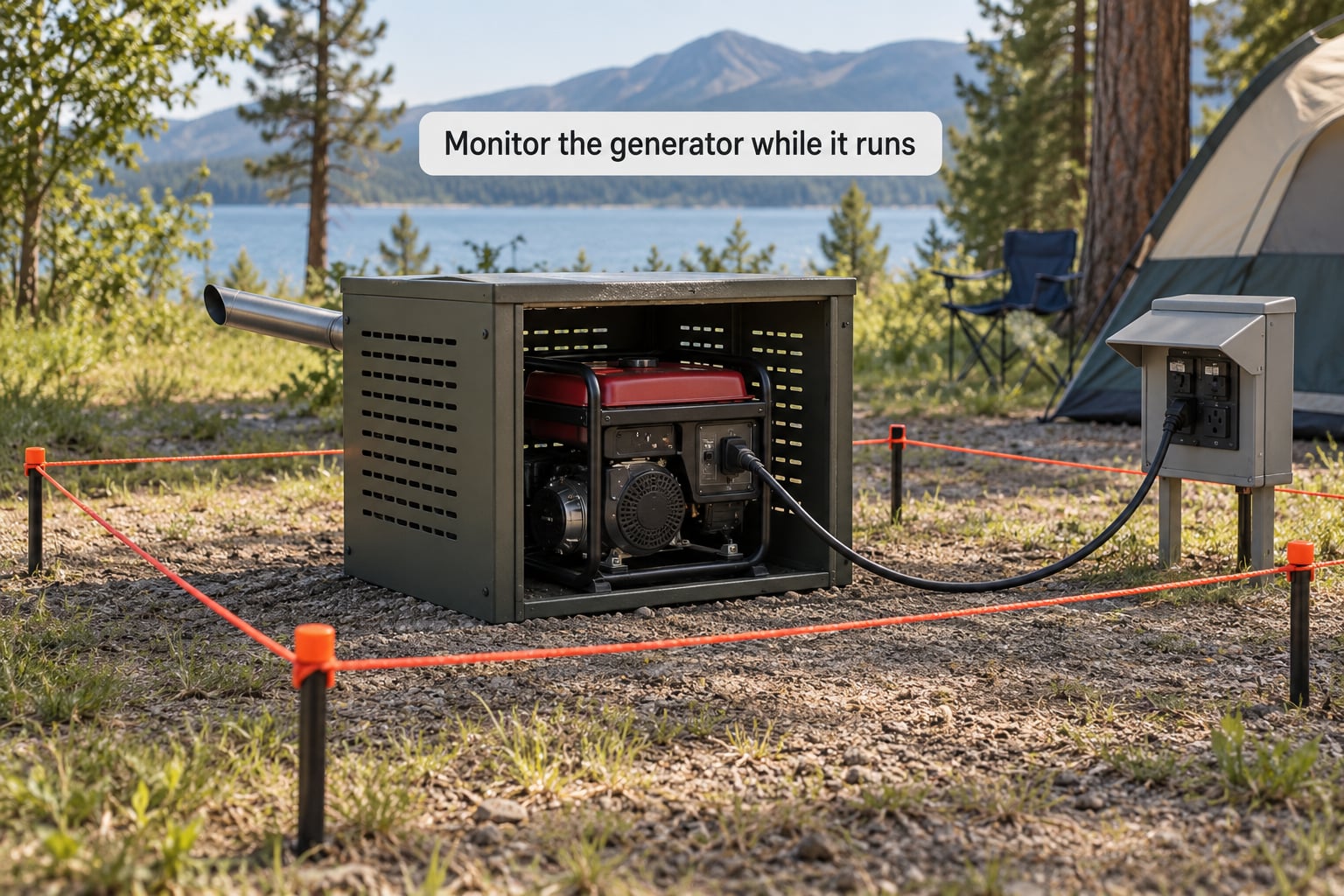
A generator running correctly sounds even and steady, with the same pitch whether a coffee maker is running or not. Slight vibration through the frame is normal. Anything else deserves a look.
Shut it down immediately and let it cool if you notice unusual vibration or a rattling sound, exposed or damaged wiring, a strong smell of fuel, smoke other than a light puff on startup, a very hot exhaust pipe, or a breaker that trips repeatedly.
Check on it every couple of hours while you are awake, and after any change in weather. A fuel smell in a campsite is a reason to move the fuel can away first and call the host if the smell persists after the unit is off and cool.
6. Refuel, shut down, and leave the site clean
Refuel only when the engine is off and cool. Hot fuel plus a hot engine is how campground fires start, so switch it off, give it the manufacturer-recommended rest, and pour slowly from an approved container with a proper funnel. Store the can upright, away from the generator, and never fill a container that is sitting on the generator.
Shut down properly instead of just killing the switch. Disconnect your loads, unplug the cords, then follow the manual’s shutdown steps so the engine and the fuel system are left the way the manufacturer intends. Do not leave a unit running unattended at your site while you walk to the shower house.
Before you drive away, pick up any cord clips, mats, and shielding you brought, wipe the pad under the unit, and walk your site once more. Leaving debris behind is the fastest way to lose the benefit of the doubt with staff.
Common Mistakes
Almost every complaint about generators comes down to one of these. Each has a simple fix.
- Running it inside a tent, camper, or vehicle. Open doors and windows do not make this safe. Fix: operate it outdoors only, with the exhaust pointed away from people.
- Parking it beside the tent because the cord is too short. Fix: bring the correct length and gauge of cord and set the unit at the far edge of your site with the exhaust facing out.
- Using indoor cords, daisy chains, or a splitter. Fix: outdoor-rated cords only, one cord per run, plugs matched and undamaged.
- Running through quiet hours. Fix: shut it down at the posted time and switch to the vehicle battery, a power station, or a battery pack for anything you need overnight.
- Assuming nobody can hear it. Fix: measure at the site boundary with a decibel app and adjust placement before the first complaint, not after.
- Overloading one outlet or circuit. Fix: spread heavy loads across separate outlets and stay under the running-watt rating.
- Refueling a hot engine. Fix: off, cooled, then fill, using an approved container.
- Thinking a canopy makes indoor use safe. Fix: a canopy traps exhaust; use a manufacturer-approved rain cover outdoors, or shelter the generator and leave the exhaust end open.
- Wrapping a running generator in a tarp or blanket for quiet. Fix: remove it. That setup overheats the engine and can ignite the covering.
A few etiquette habits finish the job. Say hello to the neighbors you can hear before you start, run only during the hours the campground allows, keep the unit as far from their site as your cords safely allow, and never route your exhaust toward someone else’s door. If someone knocks, thank them, shut it down, and fix the cause rather than negotiating volume.
Frequently Asked Questions
Can I run a generator inside my tent at a campground?
No. A generator produces carbon monoxide, which is odorless and can build to dangerous levels inside any enclosed space, including a tent, camper, vehicle, or pop-up shelter. Open doors and windows do not make it safe, and you may not notice the buildup. Run it outdoors on a level surface with the exhaust pointed away from occupied areas, following the clearance distances in the manual and the campground rules.
How far should a generator be from my tent?
There is no single universal number, so follow your manufacturer clearance requirements and the campground rules first, then maximize distance as far as your cords safely allow. In practice, twenty or thirty feet of clear space makes a noticeable difference. Account for wind direction, since a light breeze carries exhaust straight toward a nearby tent, and never rely on an open window or door to make a close placement safe.
Are quiet generators allowed at every campground?
Not always. A quiet or low-wattage model still has to run inside the campground’s permitted generator hours, in a designated generator area if one exists, and at a level of noise that does not disturb neighboring sites. Some campgrounds limit which fuel or generator types they accept, and several national and state parks publish separate rules. Ask at check-in rather than assuming a quieter unit means more freedom.
What time should I turn off my generator?
Shut it down when the campground’s generator window closes, which is commonly 8 p.m. or 9 p.m., and never run it during quiet hours, typically 10 p.m. to 6 a.m. Plan ahead: use a portable power station, vehicle battery, or battery bank for overnight needs such as a medical device or phone charging, and do the heavy charging or the air conditioning earlier in the day while the window is open.
Can a generator run in the rain?
Only within the conditions the manufacturer allows. Many portable generators are designed to tolerate rain, but none of them should run with a tarp or blanket over them, because the covering traps exhaust and heat. Use a generator-rated rain cover or a manufacturer-approved shelter that leaves the exhaust end open, protect every cord connection with a weather-rated cover, and shut the unit down completely if standing water or wind creates a hazard.
Start With the Campground Rules
If you do one thing differently, read the generator line on the posted rules before you unpack anything. Those hours, any registration requirement, and the designated generator area decide almost every other choice you will make.
Then set the unit up as far from your neighbors as your cords safely allow, point the exhaust away from people, run it only inside the permitted window, and shut it down cleanly. Use the quietest setup that actually covers the power your household needs, not the loudest one that could. That is the whole of how to use a generator at a campground politely.