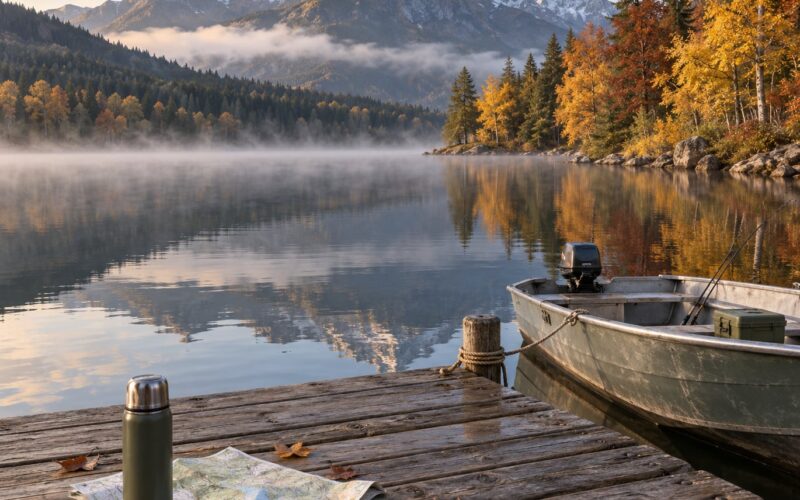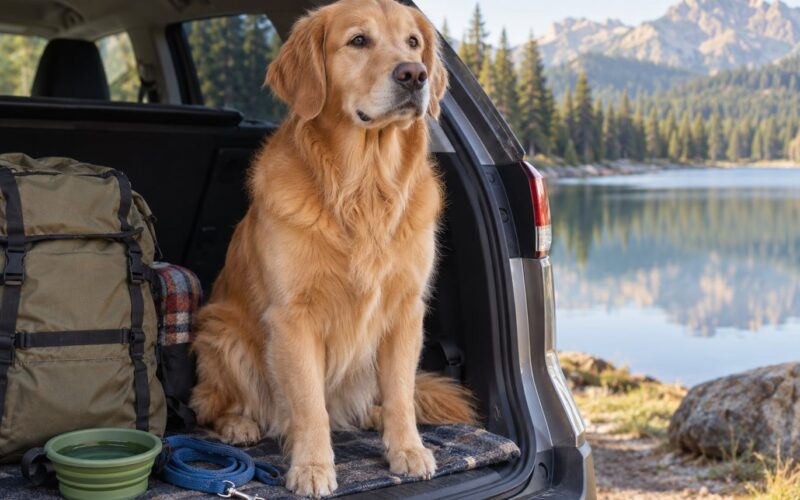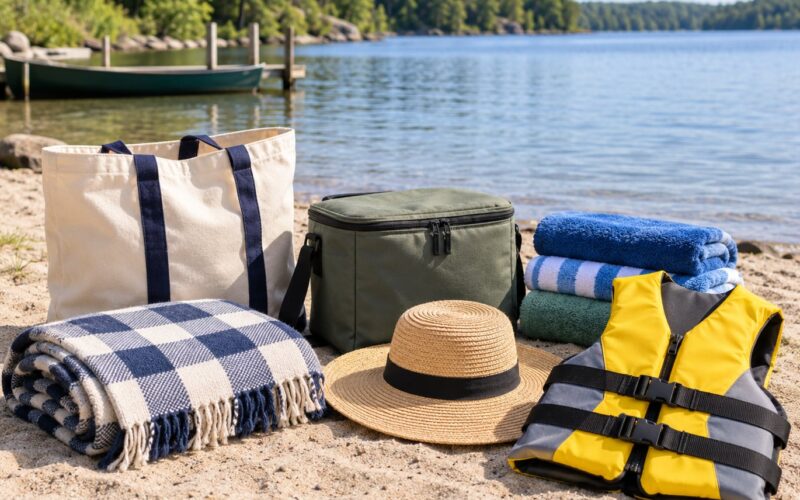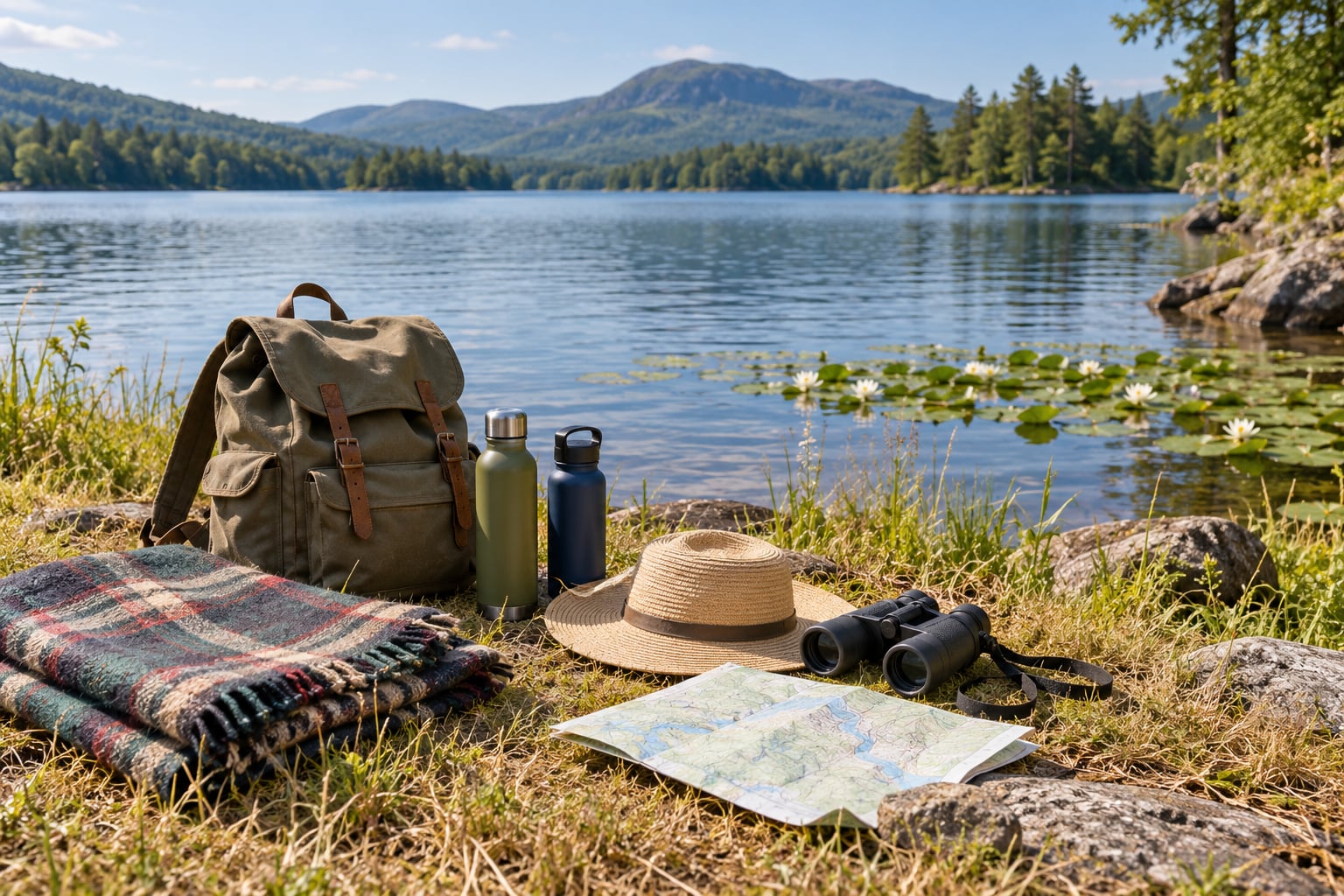
You can plan a lake trip without a boat by picking a lake with real shoreline access, choosing two or three shore-based activities, and packing a small day kit instead of boating gear. Fishing from a pier, swimming at a beach, picnicking at the waterline and hiking the shoreline are all boat-free, and most of the best lake memories happen within walking distance of a parking lot.
That is the part most listicles miss. They hand you ten activity ideas and stop. This guide walks through the actual planning sequence, from checking the lake’s rules before you drive out to packing the car the night before, plus what to do when the wind picks up and you have no engine to bail you into shore.
Most of the prep takes an evening of research and one trip to the store. The hardest part is choosing the right lake, not the gear.
Table of Contents
- 1What You Need to Plan a Lake Trip Without a Boat
- 2Information to confirm first
- 3Gear to bring
- 4Step-by-Step: Six Steps From Couch to Shoreline
- 5Step 1: Choose a Lake With Good Shore Access
- 6Step 2: Check Weather, Water and Local Conditions
- 7Step 3: Plan the Boat-Free Lake Day Around Shore-Based Activities
- 8Step 4: Pack Food, Water and Comfortable Gear
- 9Step 5: Get There Early and Know the Layout
- 10Step 6: End the Trip Safely and Leave No Trace
- 11Common Mistakes and How to Fix Them
- 12Frequently Asked Questions
- 13What activities can I do at a lake without a boat?
- 14Can I fish at a lake without a boat?
- 15What should I bring for a boat-free lake day?
- 16How do I choose a lake that is good for families without a boat?
- 17What should I do if the weather changes during a lake trip?
- 18Do I need a reservation or permit for a day trip to a lake?
- 19Conclusion: What to Do First
What You Need to Plan a Lake Trip Without a Boat
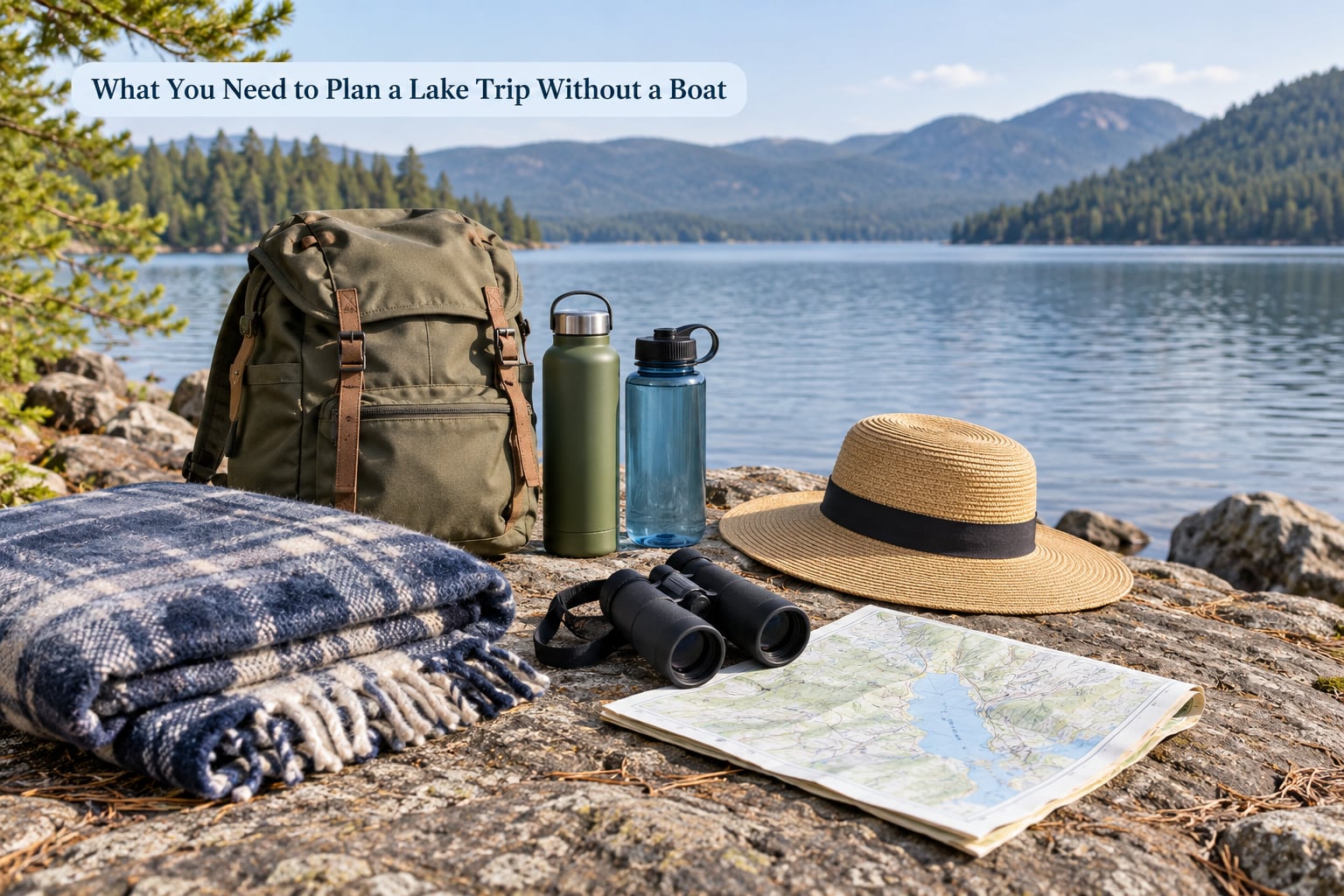
Split what you need into two piles: information you confirm before you go, and gear you carry in. The information pile does more work than the gear pile, because a lake with no safe shoreline access will spoil a day no matter how well you pack.
Information to confirm first
- Parking and access. How far the walk is from the car, whether the lot fills by mid-morning, and whether the shoreline is mowed lawn, gravel or a rocky bank. People with strollers, wheelchairs or a heavy cooler need to know before they arrive.
- Facilities. Restrooms, potable water, picnic tables, trash cans, and shade from trees or a shelter. Vault restrooms at many lakes are closed in the off season.
- Rules. Whether shore fishing is permitted, whether a fishing license is required, and whether bank fishing is restricted on sections of the lake. Some parks close specific stretches during spawning season.
- Advisories. Algal bloom notices, bacteria advisories and swim closures from the state health department or the park itself.
- Cell coverage. With no boat, your phone on the shore is your only lifeline. Check whether the specific access point has signal, not just the town nearby.
Gear to bring
Water, food, sun protection, and footwear you can get wet. Add a blanket or chair, a dry bag for electronics and extra clothes, a compact tackle kit if you plan to fish, and a rain shell. That is genuinely it for a day trip.
The gear mistake boat owners make is packing boat equipment for a boat-free day: no anchor, no bilge pump, no trailer straps, no fuel. You do not need any of it.
Step-by-Step: Six Steps From Couch to Shoreline
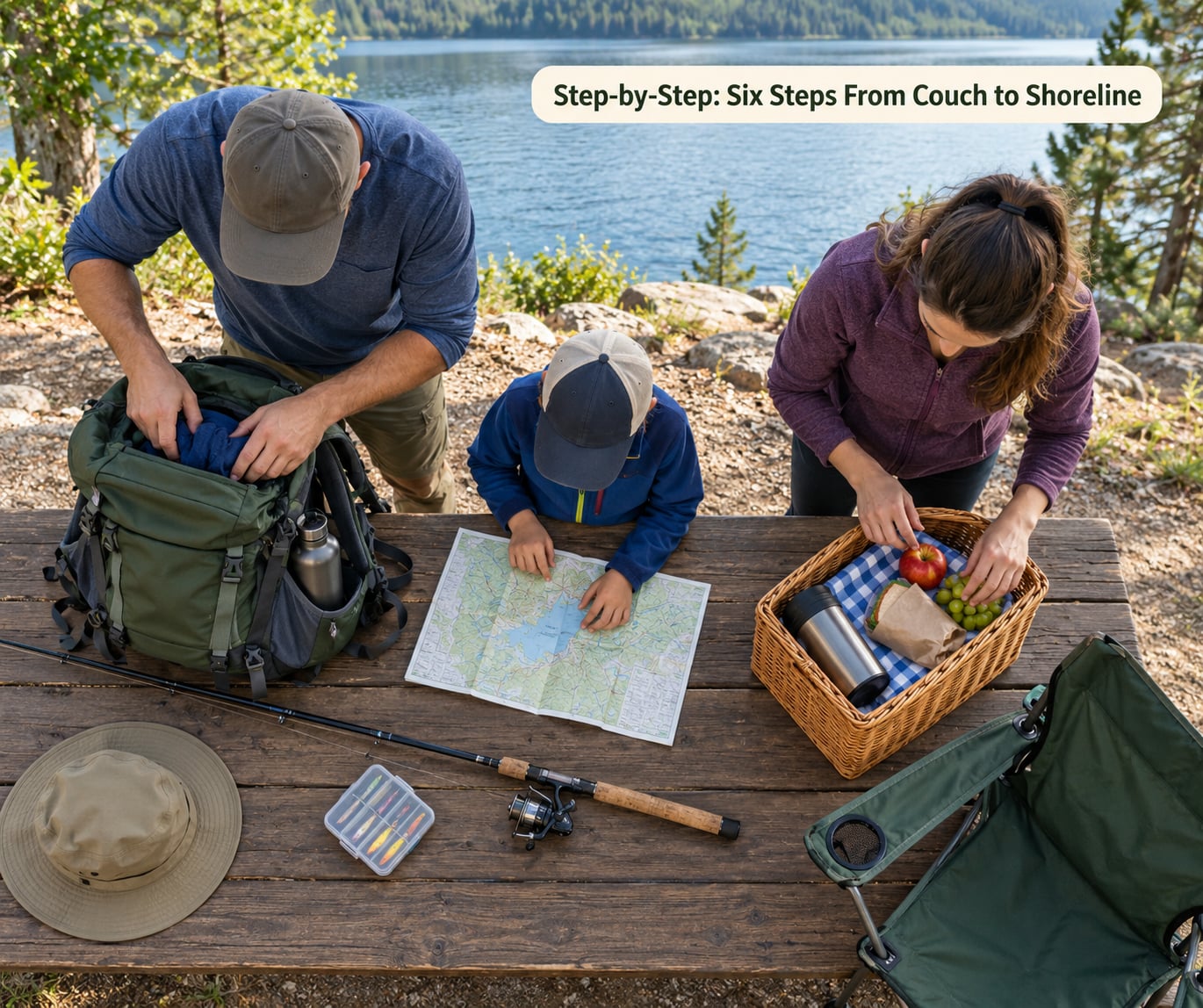
Work through these in order. Each step tells you what to do and how to tell it worked, so you can stop guessing once you get back to the car.
Step 1: Choose a Lake With Good Shore Access
Search for lakes with a state park, recreation area or forest service site on the water. Those almost always have parking, restrooms and a maintained shoreline. National park lakes tend to have fewer developed sites but better natural shoreline, so check the access page carefully.
Look at recent visitor photos rather than the marketing copy. You want to see what the bank looks like at water level, whether there is a beach or a rocky edge, and where the fishing spots sit relative to the parking lot.
For families, the deciding factors are simple: a restroom within a short walk, shade or a shelter, and water shallow enough for children to stand in. For anglers, check whether the park has a public fishing pier, since a pier reaches deeper water than any bank position will.
How to tell it worked: you can picture the day without guessing. You know where you will park, roughly how far the picnic table is from the car, and whether the group will manage the walk with coolers and gear.
Step 2: Check Weather, Water and Local Conditions
Check three things the day before and again that morning: the forecast, the wind forecast, and the park’s own notice board or website.
Wind matters more than rain for a boat-free trip. Boaters can run for shelter. You cannot. When the forecast shows sustained wind with gusts, a canopy becomes a sail and a sandy beach becomes a blaster. Days with light wind and some cloud are usually better than bright, still, hot ones.
Check for lightning risk too. Get off the water and out of the open when thunder is within the distance you can hear it, and do not shelter under an isolated tree.
Look for beach closure notices, algae advisories and fire restrictions. If the water is not swimmable, plan a day built on fishing, hiking and picnicking instead, and decide that before you leave the house rather than standing at a closed gate.
How to tell it worked: you have one backup activity ready that needs no water access. A trail loop, a covered picnic shelter, a nearby town with a museum, or a longer fishing session on the pier all work.
Step 3: Plan the Boat-Free Lake Day Around Shore-Based Activities
Pick two or three activities that share the same base spot. Everything within a five-minute walk of one good location means nobody spends the day doing supply runs, which is the single most common complaint from families trying this.
Strong combinations that work without a boat:
- Morning fishing, midday swim, evening picnic. Dawn and dusk fishing plus a midday break at the beach covers the whole day and uses the same shoreline twice.
- Shoreline hike and photography. Walk the perimeter trail in the cool of the morning, then rest in shade through the hot hours.
- Picnic plus pier fishing. Set up near a public dock so anglers can fish while everyone else eats and plays.
- Camping plus dawn birding. If you have an overnight site, the best lake activity happens at 6am, and it requires no boat at all.
Tie activities to the ages in your group. Toddlers do well with a shaded base and shallow water. Teenagers want swimming, games and music. Grandparents appreciate a bench, a short walk and a good view. Fishing from a pier with no boat is the activity that works for nearly every age at once.
A concrete family itinerary looks like this: arrive early for parking and a walk before the crowds, fish the pier from 8am, swim or play in the shallows from noon to 2pm when the heat peaks, eat under shade, then fish again as the temperature drops and stay for sunset.
How to tell it worked: everyone in the group has something to do at the same spot, and the day has one base rather than five destinations.
Step 4: Pack Food, Water and Comfortable Gear
A boat-free day needs less than most people pack. Build the load around water and shade.
- Water and food. Refillable bottles or a jug, plus food that does not need cooking. Sandwiches, wraps, fruit, crackers and a thermos beat a camp stove for a day trip.
- Sun protection. Broad-spectrum sunscreen, hats, sunglasses and a rash guard or light long sleeves for kids. Reapply at midday.
- Footwear. Water shoes or sandals for the shoreline, and closed shoes for the trail portion. Cut toes on rocks and lake bottoms are common.
- Comfort and shade. A blanket, folding chairs, a canopy or beach umbrella, and insect repellent. Check whether your site allows an umbrella; some beaches ban them for buried anchors.
- Safety. A first aid kit, a compact tackle box, life jackets sized for children if anyone will be on a dock, and a whistle.
- Water management. A dry bag for phones and keys, a spare dry layer per child, and two trash bags for your own rubbish and for a cleanup.
Adjust the load for who is coming. Families with young children carry more water, more snacks and more dry clothes. Older adults benefit from a chair with a back and a path that avoids roots and rocks. Beginners fishing for the first time carry less gear, not more.
How to tell it worked: everything fits in one trip to the car, and nothing in the bag belongs to a boat you do not have.
Step 5: Get There Early and Know the Layout
Arrive early. Popular boat-free access points fill up by mid-morning on summer weekends, and the best shore fishing happens in the first couple of hours after dawn. Early arrival also buys you shade, since picnic shelters and the best trees are taken first.
Before you unpack, walk the site for five minutes. Find the restroom, the picnic area, the trail route, the shoreline access point and the nearest road or highway for leaving quickly. Show children where the water meets the bank and where the boundary of the designated swim area sits, if there is one.
A quick arrival check goes like this: point out the restroom, point out the car, point at the shoreline and say who is watching whom near the water. Five minutes of that saves an hour of panic later.
How to tell it worked: you can answer “where is the nearest restroom?” and “how do we get back to the car?” without walking around to look.
Step 6: End the Trip Safely and Leave No Trace
Check the forecast again before you pack up, not just at breakfast. Afternoon storms build fast in summer, and the group that decided to stay for one more hour usually has to run.
Before leaving, secure coolers and electronics away from wildlife, pack out every scrap including fishing line, hooks and bait scraps, and keep off the shoreline vegetation where people walk through it to reach good fishing spots.
Respect other visitors on the water. Stay out of swim areas while fishing, keep noise down near campers, and do not wade into an area where people are swimming.
A low-impact departure is quick: rubbish bag full, gear loaded, site cleaner than you found it. That is how you confirm the trip worked.
Common Mistakes and How to Fix Them
Picking a lake built around boat launches. A ramp-access lake means parking is sized for trucks and trailers, and the shoreline may be boat ramp gravel rather than anywhere pleasant to sit. Check the map for a day-use area or picnic site instead.
Arriving at noon on a summer weekend. Parking fills, and by then the good shore positions are taken. Arrive an hour or two earlier, or shift the plan to a weekday.
Packing boating equipment for a boat-free day. Anchor, lines, life jackets sized for a vessel and towing straps all add weight for no reason. Pack a day kit instead.
Ignoring advisories until you arrive. Algal bloom notices and swim closures are published before you get there. Check the state health department and park pages the day before.
Counting on cell service. Standalone towers cover towns, not necessarily a boat ramp. Treat your phone as a backup and tell someone your plan and return time.
Mixing incompatible activities. A hard hike and a swim in the same afternoon leaves everybody exhausted. Choose one active anchor and one rest anchor per day.
Leaving food and rubbish behind. Pack out everything, including line and food scraps. Wildlife problems at a site usually start with one group’s leftovers.
A few planning tips that help more than any gadget: go early, stay near the car, keep one base location, and pack ten percent less gear than you think you need. Shade, water and a plan B will carry the day.
Frequently Asked Questions
What activities can I do at a lake without a boat?
You have the whole shoreline. Swim at a designated beach, fish from a public pier or the bank, hike the perimeter trail, picnic at the waterline, camp, watch birds at dawn, take photographs, play beach games, or rent a kayak, canoe or paddleboard by the hour for the stretches you cannot reach on foot. Sunset from a dock counts as an activity.
Can I fish at a lake without a boat?
Yes. Most lakes allow shore and bank fishing, and many state parks build public fishing piers that reach water too deep for wading. Bring a spinning rod and reel, target structure such as points, drop-offs and creek channels, and fish at dawn or dusk when light is low. Check bank-fishing rules, spawning closures and license requirements before you go.
What should I bring for a boat-free lake day?
Water, food that needs no cooking, sunscreen, hats, sunglasses, water footwear, a blanket or chairs, shade such as a canopy or umbrella, a first aid kit, a dry bag for electronics, spare dry clothes for kids, insect repellent, trash bags, and life jackets for children if you will be on a dock. A small tackle box covers fishing.
How do I choose a lake that is good for families without a boat?
Look for a developed site with parking close to the shoreline, restrooms, potable water, picnic tables and shade. A beach with a gentle slope lets children stand in water, and a shoreline trail keeps restless kids busy. Check recent visitor photos, confirm whether the lot fills by mid-morning, and verify cell coverage at the exact access point.
What should I do if the weather changes during a lake trip?
Move to the safest available shelter early rather than at the last minute. Get everyone out of the water and away from open ground if thunder is close, and stop using an umbrella or canopy in strong wind. If conditions deteriorate, pack up early rather than pushing on, since a shoreline gives you the option to leave that a boat does not.
Do I need a reservation or permit for a day trip to a lake?
Most day-use areas do not require one, but rules vary widely by state, county and specific lake. Some places charge a parking or entrance fee, some require a fishing license, and a few peak-season sites take reservations for parking or boat launches. Check the managing agency’s site before you drive out rather than assuming.
Conclusion: What to Do First
Planning a lake trip without a boat comes down to five moves: choose a lake with reliable shore access, check conditions before you leave, pick two or three activities that share one base, pack a light day kit, and keep one backup plan that needs no water access.
Start tonight. Pick two candidate lakes, read their access pages, and check the wind forecast for the weekend. That short exercise filters out more bad trips than any amount of gear shopping.