To plan a lake trip in the shoulder season, work backwards from the lake’s own off-season calendar. Find the last day the boat ramp and marina are open, the first frost date, and the average water temperature for your month, then choose dates that sit comfortably between them and book early.
On most US and Canadian lakes, the shoulder season runs from about April into May and again from September into October. The water is colder, the days are shorter and the services are thinner, but you get the lake without the traffic, and lakeside sites and cabins usually cost noticeably less than they do in July.
A weekend of planning covers this well. Two serious afternoons are enough, and most of the work is phone calls and checking dates rather than gear shopping.
Table of Contents
- 1What You Need
- 2Step-by-Step
- 31. Define the trip style and dates
- 42. Compare lakes by access and conditions
- 53. Check the weather and water forecast
- 64. Build a flexible daily itinerary
- 75. Reserve access and prepare gear
- 86. Estimate costs and confirm the final plan
- 9Common Mistakes
- 10Frequently Asked Questions
- 11What months are considered the shoulder season for lake trips?
- 12Is the water too cold to swim in September at a lake?
- 13Do boat ramps and marinas close in the fall?
- 14Do you need a life jacket on a lake in September?
- 15What should I pack for a shoulder-season lake trip?
- 16How do I dress for fall camping at a lake?
- 17Conclusion
What You Need
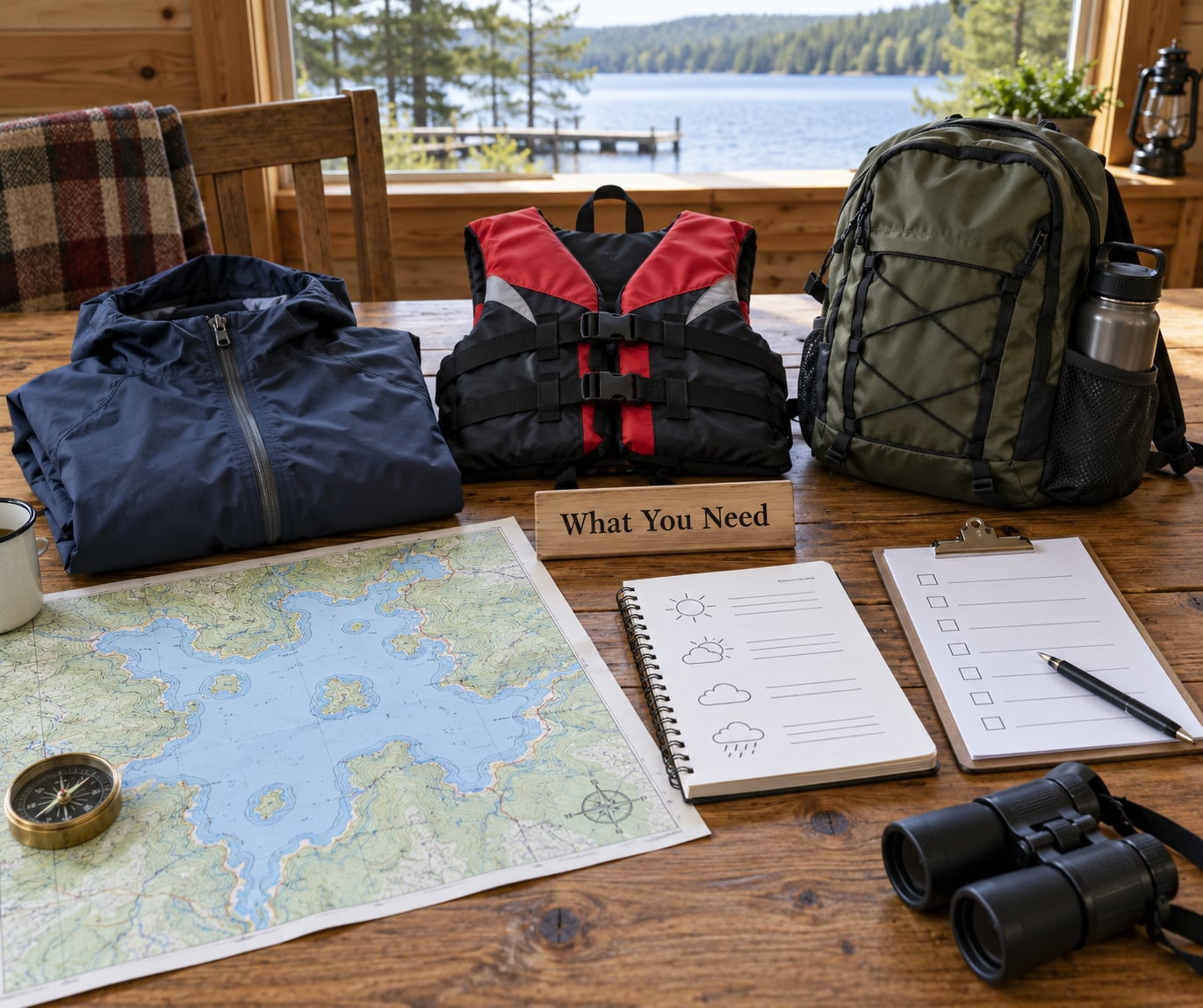
Most of what you need is information rather than equipment. Before you settle on a lake, gather the following so your dates are based on facts instead of hope.
- Lake logistics. Ramp hours, the season’s last open day, marina services, whether the launch needs a reservation or permit, and who to call when the gate is closed.
- Calendar data. Average first frost date for that elevation, typical low temperatures after sunset, average water temperature for the month, and sunrise and sunset times for your dates.
- Booking details. Whether the campground or cabin is reservable or first-come-first-served, plus the cancellation policy and the phone number of the managing office.
- Regulations. Fishing licence rules and any seasonal species closures, the state’s boating and PFD requirements, the fire ban status, and bear food storage rules for that forest.
- Documents. Photo ID, licence, boat registration and insurance, state park or forest entry permit, campsite confirmation, and a printed copy of the emergency plan.
- Gear that handles cold. A PFD for everyone on the water, a waterproof hardshell, a base layer, a midlayer, wool socks and a beanie, an insulated sleeping pad, a headlamp with spare batteries, and dry bags for anything that must stay dry.
- A backup plan. A second lake within an hour’s drive, a list of things to do in rain or high wind, and a plan for what you drop if the weather turns.
If you are camping rather than staying in a cabin, add the sleeping bag rated for the expected low, a 4-season or three-season tent, and a dry wood source you are allowed to use. Fire bans are common in the shoulder season, so check before you plan around a campfire.
Step-by-Step
The sequence below moves from the widest decision to the smallest one. Each step narrows the trip, so a bad weather day in step three never costs you money you already committed in step four.
1. Define the trip style and dates
Decide what the trip is actually for, because a fishing weekend and a family sightseeing weekend plan very differently. Angling means early starts, specific structure and licence questions. Boating means launch logistics and fuel range. Camping means cold ground and shorter nights. Family sightseeing means paved access, restrooms and weather-proof activities for people who do not want to be cold.
Then pick dates that flex. Midweek arrivals in late September or early October usually give you the best combination of open ramps and quiet parks. Avoid the shoulder-season holiday weekends, when campgrounds fill with the same people trying the same strategy you are.
2. Compare lakes by access and conditions
Shortlist two or three lakes and score each one on the same questions. How many paved boat launches does it have, and are they open on the dates you picked? Is there shoreline access for people without a boat? What is the last paved mile like, and does the county keep it plowed and graded after rain? Is water level high enough for your draft, or low enough that the ramp ends in mud?
Weather exposure matters as much as access. A lake ringed by high ridges gets wind and quick temperature drops after sunset. A sheltered southern lake is warmer but busier on sunny weekends. Add one backup activity that works in bad weather for each lake, so you are not deciding at 7 a.m. with a wet forecast.
3. Check the weather and water forecast
Read the forecast as a trend, not a promise. Look at the seven-to-ten day outlook for the shape of the trip, then the hourly forecast for the days you are there. Wind forecast is more reliable than temperature forecast and matters more for boating and paddling, since a 20 mph afternoon ends small-boat plans regardless of the sun.
Pay attention to the drop after sunset. Fall and spring nights can fall 20 to 30 degrees below the daytime high, which is what catches people out in summer clothing. Check average water temperature for the month too. Northern lakes often sit between 45 and 55 F in early spring and hold 50 to 60 F through early fall, so swimming is usually off the table well before the air gets cold.
Work out your daylight budget. Once the sun sets at 6 p.m., the useful part of a boating day shrinks, and paddling or hiking has to start earlier. Many experienced anglers plan to be on the water before sunrise precisely because of this.
4. Build a flexible daily itinerary
A three-day shoulder-season plan looks different from a summer one because you are borrowing time from the evening. Here is a shape that works for most lakes.
- Day one, afternoon. Arrive early, rig and launch or set up camp before the wind picks up, then do something low-effort near the vehicle. Check the ramp out so day two starts without a surprise.
- Day two, full day. This is your weather day. Put the on-water or hiking activity here, launch at first light, and keep a hard stop before dark unless you have a light and a route home you know well.
- Day three, morning. A short second session while the water is calm, breakfast, then pack and head out by midday before the afternoon wind and the drive home stack up.
Build one weather buffer into that plan. If day two gets rained out, you can move the on-water activity to day three morning and turn day one into the hike or the sightseeing stop. Whatever you do, avoid an itinerary where the only good-weather hour is the last one before you drive home.
5. Reserve access and prepare gear
Book in this order: the campsite or cabin first, then the launch, then any guided activity or equipment rental. Lake-side sites in October are the first thing to go at the good campgrounds, and reservable sites sell out to the same handful of repeat visitors every year.
On gear, resist buying a full winter kit for two nights at a car-accessible lake. Weight and volume are not constraints when the trunk is 20 feet away, so rent a cold-rated bag and pad from an outfitter near the lake, or buy them used from a gear shop. The cheap fix forum regulars keep recommending is a closed-cell foam pad under a summer inflatable pad, which adds meaningful ground insulation for a few dollars.
For clothing, a base layer of wool or synthetic, a fleece midlayer, a down or synthetic jacket, and a waterproof hardshell over the top will carry you through most shoulder conditions. Cotton is the one layer to leave at home when the temperature can drop near freezing. Pack one complete dry change of clothes for anyone in the boat, because a September wave over the gunwale is enough to soak a layer instantly.
Finish the prep with a navigation plan, a charged phone and a paper map, a fire starter and permitted dry kindling, a first-aid kit, and an emergency contact list that someone at home holds.
6. Estimate costs and confirm the final plan
Build a rough budget from the items that actually change in the shoulder season: the site or cabin, fuel for the drive plus the boat, launch or ramp fees, food, permits and licences, and any rental or guide you book. Off-peak rates help with the first two, and the boat and fuel lines often improve when you are not fighting traffic.
Then reconfirm. Call the ramp or marina a couple of days out to check it is open and note the last day of the season for your return. Recheck the hourly forecast, the fire ban status and the campsite confirmation. Send your contact plan to a person at home with your route, campsite number and check-in time.
If conditions have gone sideways, you now have a choice to make: shorten the trip, switch to the backup lake, or drop the on-water day and keep the trip. That decision is much cheaper on Wednesday than on Saturday morning at the ramp.
Common Mistakes
- Booking the campsite late. First-come-first-served sites fill up early in October, and a cancelled booking is not always refundable. Reserve first, decide later.
- Assuming the ramp is open. Seasonal closures are posted by the agency and change year to year. Call before you drive four hours with a trailer.
- Ignoring the wind. A sunny forecast with 20 mph gusts is a no-go for most small boats and open water. Plan a shore-based alternative in the same slot.
- Packing summer clothing. The gap between afternoon sun and post-sunset temperature is the defining feature of this season. Bring insulation even on a mild-looking day.
- Leaving out a PFD. Cold water reduces your ability to swim for a long time before it feels dangerous. Wear one on the water every time, and carry a throw bag on the boat.
- Forgetting daylight. With sunset near 6 p.m., fishing hours disappear. Start earlier and set a turnaround time before it gets dark.
- Failing to check fire bans. Many campgrounds restrict or ban fires in the shoulder season. Bring a permitted alternative and a stove fuel plan.
- Overpacking the activity list. Five things in one day means you do none of them well. Pick two anchor activities and let the rest follow the weather.
- Skipping the backup plan. Have a second lake and a bad-weather activity decided in advance, not improvised from a wet tent.
- Skirting wildlife rules. Late-season ticks and mosquitoes are still real, and bear country requires proper food storage and canister use where required.
Frequently Asked Questions
What months are considered the shoulder season for lake trips?
For most lakes in the US and Canada, the shoulder season runs from about April through May and again from September through October. Northern and high-elevation lakes lean later, so a May window there may still have cold nights and patchy snow, while southern lowland lakes can be comfortable in February. Check the lake’s own first frost date and ramp season dates before committing to dates.
Is the water too cold to swim in September at a lake?
In most places, yes. Northern lakes often hold between 50 and 60 F in early September and drop through the month, and shallow water warms faster than deep water. If you plan to swim or wade, check the local water temperature first, wear a suit, and stay in close to shore. Cold water makes immersion dangerous well before it feels cold.
Do boat ramps and marinas close in the fall?
Most ramps have a posted season, often ending between October and December depending on latitude and elevation, and some close for the winter with the gate locked and a notice posted. Marinas usually stop full services earlier than ramps do. Call the managing agency or check the state boating site for current dates, and confirm the ramp is open before you load the trailer.
Do you need a life jacket on a lake in September?
Most US states require a wearable flotation device for each person on the water, and many require children to wear one at all times, so rules apply even in warm weather. Wear it rather than stowing it in the boat. Cold water reduces your useful swimming time sharply, and a worn PFD buys you the extra minutes you need to reach the boat, the dock or shore.
What should I pack for a shoulder-season lake trip?
Pack for cold, wet and dark: a base layer, midlayer, insulating jacket, waterproof hardshell, wool socks, a beanie and gloves, an insulated sleeping pad, a headlamp with spare batteries, a PFD, a waterproof dry bag for electronics and a full change of dry clothes. Add a warm drink, extra food and a first-aid kit. Leave cotton at home and check the fire ban status.
How do I dress for fall camping at a lake?
Use three layers you can add and remove: a moisture-wicking wool or synthetic base layer, a fleece or synthetic midlayer, and an insulating jacket under a waterproof hardshell for wind and rain. Add wool socks, a hat and gloves for camp, and keep one dry outfit for sleeping. Rent a cold-rated bag and pad if your own are summer-rated.
Conclusion
To plan a lake trip in the shoulder season, start narrow. Choose the trip style, shortlist two lakes, compare their access and conditions, and read the forecast before you spend any money. Book the site, verify the ramp dates, pack for cold and wet, and keep one flexible day in the itinerary for the weather you did not order.
Do that and the shoulder season delivers what it promises: quiet water, low crowds, open campsites and the kind of light that summer never has.