To plan a winter lake getaway well, pick the lake around the activities you actually want to do, book a cabin that stays comfortable when the weather turns, and confirm ice and road conditions right before you leave. Most of the work happens two to three months out; the last 48 hours are about safety checks, not logistics.
The reason winter is worth the extra planning: the lake goes quiet. No boat traffic, no crowds, and cabin rates that typically sit 20 to 40 percent below a summer peak. You also get shorter days, faster-changing weather, and real ice conditions that most people underestimate.
Table of Contents
- 1What You Need
- 2Step-by-Step: How to Plan a Winter Lake Getaway
- 3Step 1: How to Choose a Winter-Friendly Lake Destination
- 4Step 2: Pick Dates Around Ice, Snow and Daylight
- 5Step 3: Book a Cabin With Winter-Ready Amenities
- 6Step 4: Work Out the Drive and Winter Road Plan
- 7Step 5: Pack Layers and a Dedicated Ice Safety Kit
- 8Step 6: Check Ice, Weather and Road Conditions Before Leaving
- 9Step 7: How to Plan a Winter Lake Getaway When the Weather Turns
- 10Common Mistakes
- 11Frequently Asked Questions
- 12Is winter camping at a lake a good idea for a first trip?
- 13What do I do if the weather turns during my winter lake trip?
- 14How far in advance should I book a winter lake cabin?
- 15Is it safe to walk on a frozen lake, and how do I tell?
- 16How do I bring kids or a dog on a winter lake trip?
- 17Conclusion
What You Need
Before you book anything, gather nine things. Anyone missing one of these usually ends up improvising in a snowstorm.
- Destination research. Two or three candidate lakes, how far each is from home, and whether the lake freezes reliably.
- Dates. Your target window, plus a backup window, and how much daylight you get there.
- Transportation. Route, drive time, fuel stops, and whether the last mile is a paved road or a seasonal track.
- Lodging. A cabin, cottage, yurt or warmed campground site with heat that works when the power dips.
- Cold-weather clothing. Layering you can adjust rather than one heavy coat.
- Ice safety equipment. Only if anyone will walk on the lake, and gear for everyone, not just the most experienced person.
- Emergency contacts. Someone off-site who knows your route and your cabin address, plus the county sheriff’s non-emergency number for the county you’re going to.
- Activity plan. One anchor activity per half day, so a storm costs you an afternoon instead of the trip.
- Budget. Lodging, food, fuel, activity fees and gear you don’t already own, with 15 percent held back.
The emergency contact item is the one people skip. Cell coverage drops fast on remote lakes, and a satellite messenger or a personal locator beacon costs less than a single night of the trip.
Step-by-Step: How to Plan a Winter Lake Getaway
Step 1: How to Choose a Winter-Friendly Lake Destination
Start with the activity, not the postcard. An angler wants a lake that freezes hard and early with access to a nearby launch. A family with two small kids wants groomed snowshoe trails, a plowed parking area and a town with a grocery store ten minutes away. A couple who wants to do nothing wants a sauna, a hot tub facing the water, and a cabin at the end of a quiet road.
Minnesota, Michigan and Wisconsin are the reliable core of US winter lake travel, largely because lake-effect snow bands keep the cold consistent and the lakes freeze for long stretches. In Minnesota, the Brainerd Lakes and Lake Vermilion areas give you groomed trail networks with fuel and food close by. Michigan’s Upper Peninsula around Eagle River and Torch Lake leans into snowmobile culture, and the Keweenaw gets serious lake-effect accumulation. Wisconsin’s Minocqua chain and Door County work well for families who want to walk on a beach in January without it becoming an ordeal.
Compare candidates on the same seven criteria, in this order:
- Freeze reliability. Ask the state DNR or the county extension, not the rental listing. Shallow, moving-water and south-facing lakes freeze last and thaw first.
- Access. Paved road to the cabin or a long seasonal track you would rather not do in a storm.
- Services. Gas, groceries, a hardware store and a hospital within a reasonable drive.
- Winter activities. Groomed trails, a snowmobile route, a harbor or a winter fishing report for the lake.
- Lodging depth. Do off-season cabins have reduced staffing and a real heating system, or a fireplace with a space heater for the rest?
- Distance. Most people who enjoy these trips want a lake two to three hours from home, not an overnight flight plus a rental car.
- Family fit. Bed count, bathroom count, stairs, and whether the shoreline is walkable in winter or a cliff.
Step 2: Pick Dates Around Ice, Snow and Daylight
Late November and early December give you the darkest skies and the least reliable ice. Mid-December through the holidays is the busiest and priciest booking window, and many destinations require a three- or four-night minimum then.
Mid-January through February is the sweet spot for hard ice, full snow cover and the lowest rates of the season. It is also when several operators close or shorten their winter staffing, so confirm that someone plows your road before you book a remote cabin.
March brings longer days and softer ice, which is lovely for walking and terrible for driving a portable shelter onto a lake. If your trip depends on ice fishing, January and February give you the safest version of it.
Whatever window you pick, check sunrise and sunset for your target dates. A lake at four hours of daylight per day is a different trip than one at nine, and it changes how many activities you can realistically fit in.
Step 3: Book a Cabin With Winter-Ready Amenities
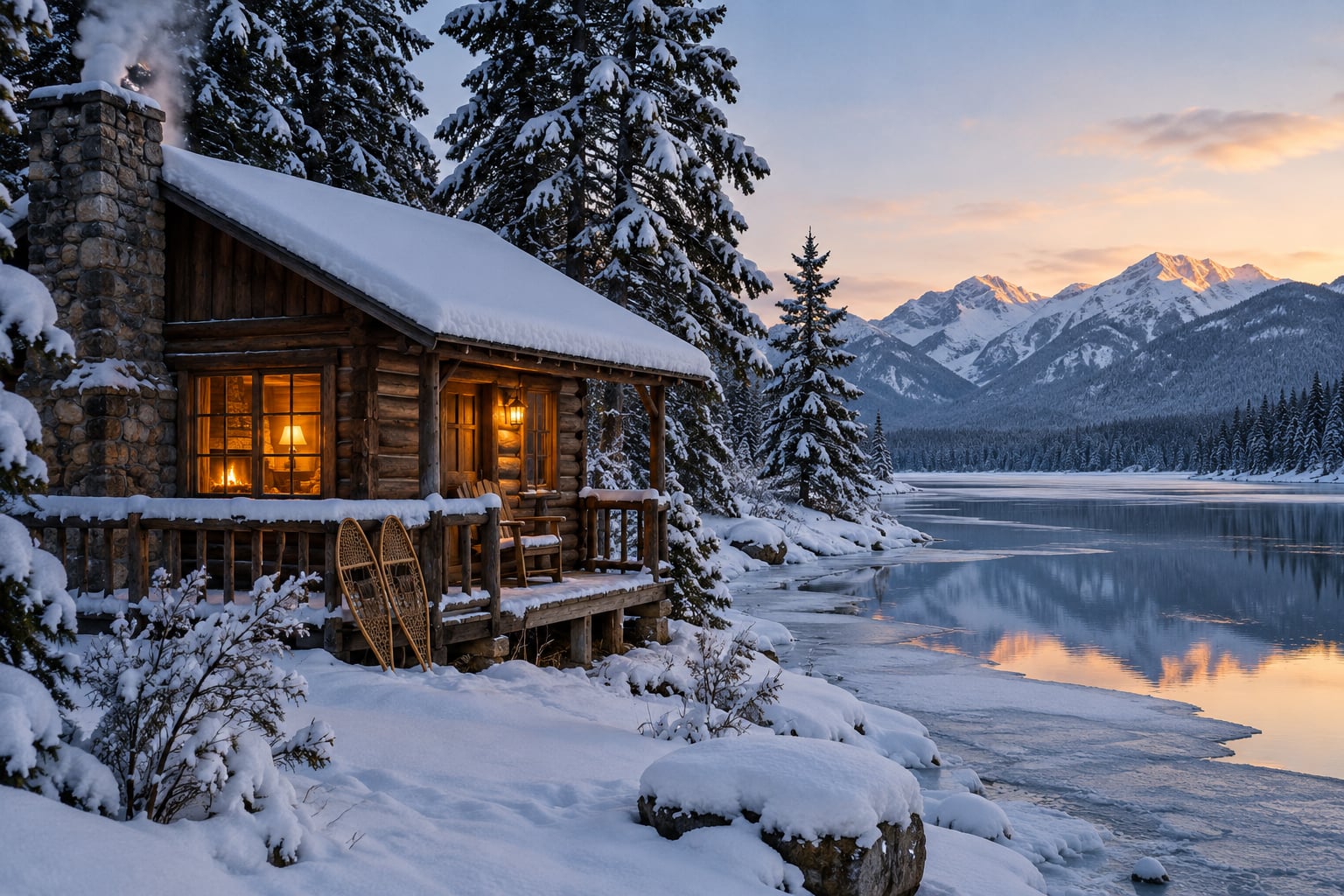
Winter cabins are not summer cabins with a blanket over the couch. Ask directly how the heat works, and whether a power outage leaves you with a working wood stove or nothing at all.
Useful amenities, roughly in order of how much they matter: a wood stove or gas fireplace, a hot tub or sauna, a fully equipped kitchen with a real oven, heated floors in the main bedroom and bathroom, a washer and dryer, and backup heat such as a generator or a second heat source in the bedroom.
An indoor pool matters more to families than any other single feature, because it is the activity that still works when the weather cancels everything else. Snowmobile trail access matters if you ride. Pet-friendly status matters more than the listing suggests, since many properties charge a fee and limit the number of animals.
On timing: reserve three to four months out for the December and New Year window, six to eight weeks for a standard midwinter weekend, and as soon as possible for a cabin with an indoor pool or a very remote drive, since those sell out first. Always read the cancellation terms. Winter storms are the most common reason trips get cancelled, and a cabin with a strict non-refundable policy turns bad weather into a real loss.
Step 4: Work Out the Drive and Winter Road Plan
Driving to a frozen lake is the step first-timers worry about most, and the worry is reasonable. Plan it as its own task, not as the tail end of the trip.
Winter tires, or at minimum all-season tires in good condition with plenty of tread, matter more than all-wheel drive. AWD helps you get moving; it does nothing for braking. If your vehicle has chain hooks, confirm whether chains are required on your route during a storm and practice fitting them once at home.
Check your state’s 511 road service before you leave and again the morning of departure. Look specifically at your last five miles, since county seasonal roads are often the last ones plowed and the first ones closed. Fill the tank in the last town with a station, download offline maps, and pack a scraper, a shovel, a blanket, jumper cables and at least a gallon of water in the car.
Tell someone your departure time, your route, and the cabin address. If you are driving alone, check in by text at each waypoint.
Step 5: Pack Layers and a Dedicated Ice Safety Kit
The rule veteran winter travelers repeat is simple: no cotton. Cotton stays wet and stays cold, so build every layer from synthetic or merino wool and keep waterproof shell pieces on the outside.
- Base layer. Merino or synthetic long underwear, one dry set per person per day on an overnight trip.
- Mid layer. A fleece or light synthetic jacket that you can add and remove without stopping.
- Shell. Waterproof jacket and insulated pants or bibs for ice fishing and long sits.
- Head, hands and feet. Windproof hat, insulated mittens rather than gloves, and insulated waterproof boots with good traction. Add removable cleats for ice.
- Sunglasses and sunscreen. Snow glare is real and burns are common this time of year.
Then the ice kit, which is a separate bag and not something you borrow from the person who knows what they are doing:
- A spud bar or ice probe to test thickness, and a shovel to clear snow.
- Ice picks for a self-rescue in a fall, worn on a belt, not in a pack.
- A cordless ice auger for fishing, plus a matched chisel for the last few inches.
- A personal flotation device or float suit per person. A float suit is not a substitute for a life jacket; wear the life jacket.
- A whistle, a headlamp with spare batteries, and a first aid kit.
- A satellite messenger or personal locator beacon for anywhere without cell coverage.
Step 6: Check Ice, Weather and Road Conditions Before Leaving
Ice thickness is not a number you look up for a lake. It varies across one lake, and it is true only for the current day. Check the state DNR ice report, then call the local ranger station or bait shop if you are going onto a lake you do not know.
The widely used threshold is at least four inches of clear, solid ice for walking, and most anglers want more than that for a vehicle or a portable shelter. Clear ice looks dark and blue-black in direct light and shows cracks you can see from a distance. White, snow-covered, or slushy-looking ice is weaker, and ice near a spring, a stream mouth, or a dam changes fast.
Check the forecast the night before and again in the morning of departure. Look at wind chill, not just temperature, because wind chill is what drives frostbite and hypothermia risk on an exposed lake. Set your own cancellation criteria before you leave: if sustained winds, a blizzard warning, or a road closure to your cabin appear in the forecast, change plans. That decision is much easier to make from your kitchen than from a closed highway.
Step 7: How to Plan a Winter Lake Getaway When the Weather Turns
Build the itinerary so every block has a warm fallback. One anchor activity per half day works well: snowshoeing in the morning, a wood stove and a book in the afternoon, ice fishing for a couple of hours, then a hot tub at sunset.
For the indoor backup, most rentals have a game room, a big screen, board games and a kitchen that actually works. Nearby towns usually keep craft breweries, distilleries and restaurants open through winter, and a Saturday afternoon tasting is a better storm plan than sitting in a cabin watching the ceiling.
Order groceries in the nearest town on arrival day, stock firewood if the cabin does not include it, and plan at least one meal you can cook without power. Keep the first day of a longer trip loose. The drive in is often the hardest part, and a group that arrives tired and cold is a group that makes bad decisions about the lake that afternoon.
Common Mistakes
Trusting a single weather forecast. A forecast four days out is a guess, and one taken the night before is better but still not a promise. Check three sources, watch the trend instead of the number, and keep a plan B that does not require a road.
Assuming the ice is safe because the lake looks frozen. Ice that looks solid can be a few inches over a deep channel. Test where you plan to walk with a spud, on the way in, not after you have stepped out. Clear ice at four inches is the minimum for a person on foot, and nothing on a lake is worth a cold-water rescue.
Overlooking the access road. The cabin can be perfect while the last three miles are an unplowed washboard that traps you for two days. Confirm plow coverage and closure history for the specific road before you book, not after a storm closes it.
Underpacking warm layers. Most cold complaints come from a mid layer that soaked through or boots that let water in during an ice-fishing sit. Bring more dry base layers than the forecast suggests and pack them in plastic so a spill does not take out your whole wardrobe.
Booking too late. Off-season does not mean infinite availability. Cabins with indoor pools, heated floors and snowmobile access go first, and they are exactly the ones that make a cold weekend survivable. Six to eight weeks is a floor, not a target.
Overloading the itinerary. Four activities in one day in January does not work. Daylight is short, distances are longer than they look, and everyone is tired. Two anchor activities with generous gaps beat a packed schedule nobody enjoys.
One last safety habit ties all of this together: never go onto lake ice alone, carry the safety gear even when the ice feels solid, and wear a properly fitted life jacket every single time you drill a hole. Experienced ice anglers are not careful because the ice is thin; they are careful because a good season can be ended in one minute.
Frequently Asked Questions
Is winter camping at a lake a good idea for a first trip?
Usually not, unless you have done it before. A winter site needs a four-season tent, a sleeping pad rated well below freezing, and a heater setup you have tested, and most public lake campgrounds close or reduce services after the first real cold snap. A winterized cabin with a wood stove gives you the same quiet lake experience with a warm floor and a working kitchen. If you want to try camping, make it a weekend close to home and go with someone who has done it.
What do I do if the weather turns during my winter lake trip?
Plan one warm fallback for every half day, and keep it within ten minutes of the cabin. A hot tub, a wood stove, a good kitchen and a nearby town with restaurants open through winter cover almost any storm. Order groceries on arrival day, stock firewood in advance, and keep one meal you can cook without power. Deliveries and rideshare coverage get unreliable in rural areas once roads close, so assume nothing is coming.
How far in advance should I book a winter lake cabin?
Six to eight weeks is a reasonable minimum for a standard midwinter weekend. Book three to four months ahead for the December and New Year window, when many properties require a three- or four-night minimum. Cabins with indoor pools, heated floors or snowmobile trail access sell out first, so those go even earlier. Read the cancellation policy closely, because a strict non-refundable booking turns a snowstorm into a total loss.
Is it safe to walk on a frozen lake, and how do I tell?
Ice thickness varies across a single lake and changes during a day, so there is no reliable website answer for your exact spot. The widely used minimum is four inches of clear, solid ice for a person on foot, and most anglers want considerably more for a vehicle or a portable shelter. Test where you plan to walk with a spud or probe, avoid white or slushy ice, and stay away from springs, inlets and dams. Never go alone, and wear a life jacket every time you drill a hole.
How do I bring kids or a dog on a winter lake trip?
For kids, book a cabin within a short drive of a town with a grocery store, confirm the shoreline is walkable rather than a steep bank, and pack hand warmers, spare mittens and dry base layers. Keep them off the ice entirely unless an experienced adult is testing every step ahead of them. For dogs, check the pet fee and any limit on how many animals are allowed, ask whether floors are heated, and bring a rubber bowl, since plastic freezes solid overnight.
Conclusion
A good winter lake trip comes down to four things done in the right order: a lake that suits the activities you want, a cabin that stays warm when the weather breaks, gear that handles real cold, and an honest read on ice and roads before you pull out of the driveway.
If you do nothing else, confirm the destination and dates first, then check current ice and road conditions for the specific lake and road you picked, then reserve a winter-ready cabin six to eight weeks out, then build the packing kit with a dedicated ice safety bag. Everything else on your list is decoration.