How to catch perch through the ice comes down to three things: a hole drilled on the edge of a drop-off, a baited tip-up set a foot or two above the bottom, and a small tungsten jig or spoon worked in short lifts right over that same hole. Perch bite softly and hold tight to structure, so light line and a dense lure matter more than power.
Here is the honest version: this is a fishing method, not a gear problem, and it takes an afternoon of patience to learn. Most beginners who fail on perch ice fishing are jigging too hard in the wrong place, not missing a secret lure.
The whole method below takes about two hours once you get to the lake, plus travel. Bring a partner, drill at least three holes, and expect your first fish to take an hour or more.
Table of Contents
- 1What You Need
- 2How to Catch Perch Through the Ice: Step-by-Step
- 3How to Choose a Safe Location
- 4Drill the Hole and Set Up
- 5Use the Right Perch Baits and Jigs
- 6Work the Jig So Perch Can See It
- 7Set the Hook and Bring Perch Up Safely
- 8Common Mistakes
- 9Frequently Asked Questions
- 10How much ice do I need to ice fish for perch?
- 11What is the best bait for ice fishing for perch?
- 12How far off the bottom do you fish for perch?
- 13What size jig should I use for perch through the ice?
- 14How do I jig so the perch notice?
- 15When should I move to a new hole?
- 16Conclusion
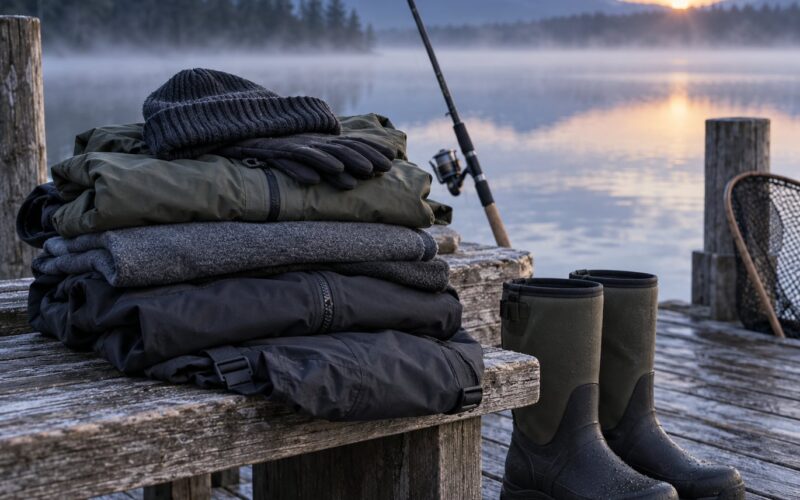
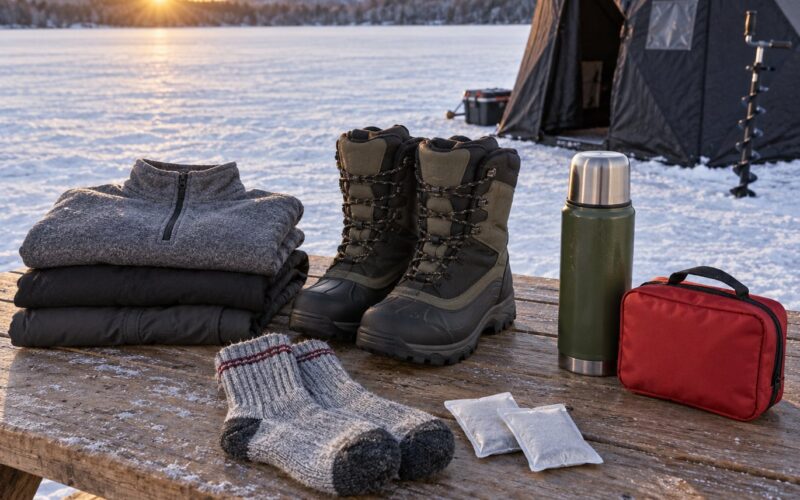
What You Need
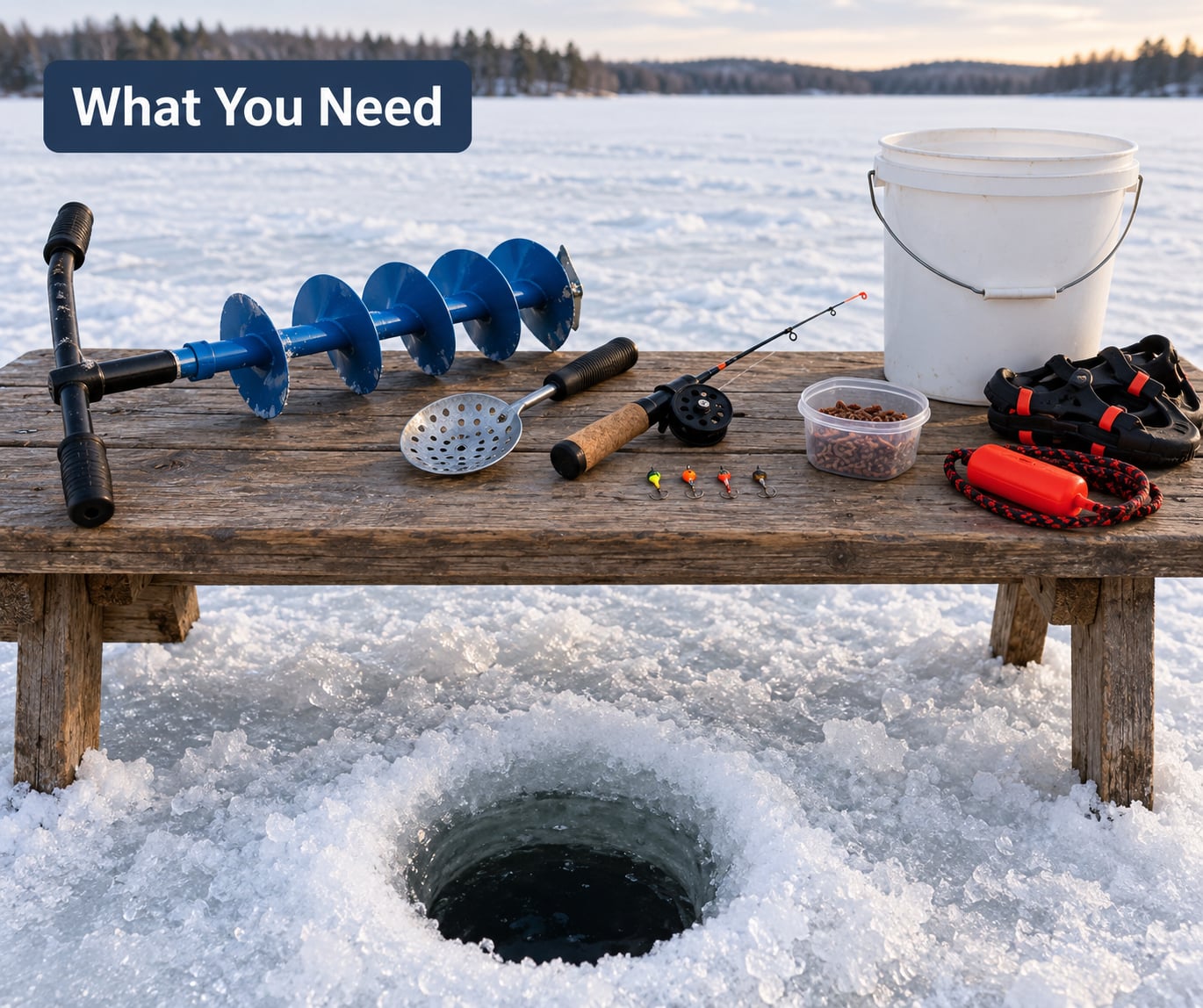
Half of this list is about keeping you on top of the ice. That is not a formality, because a fall through in a foot of water with a heavy bucket is how people drown.
- A spud bar or probe for checking ice. Do this before anything else, at several points, every single time you step onto a lake.
- Ice cleats or screws in your boot soles. Cheap insurance against a slide into slush.
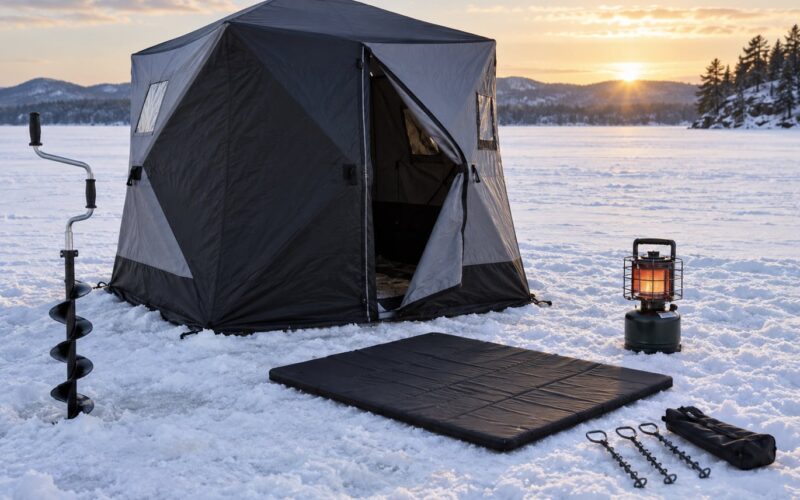
- A powered ice auger for beginners, or a Mora-style hand auger if you would rather not haul a battery. Drill on battery power and bring a hand auger as backup.
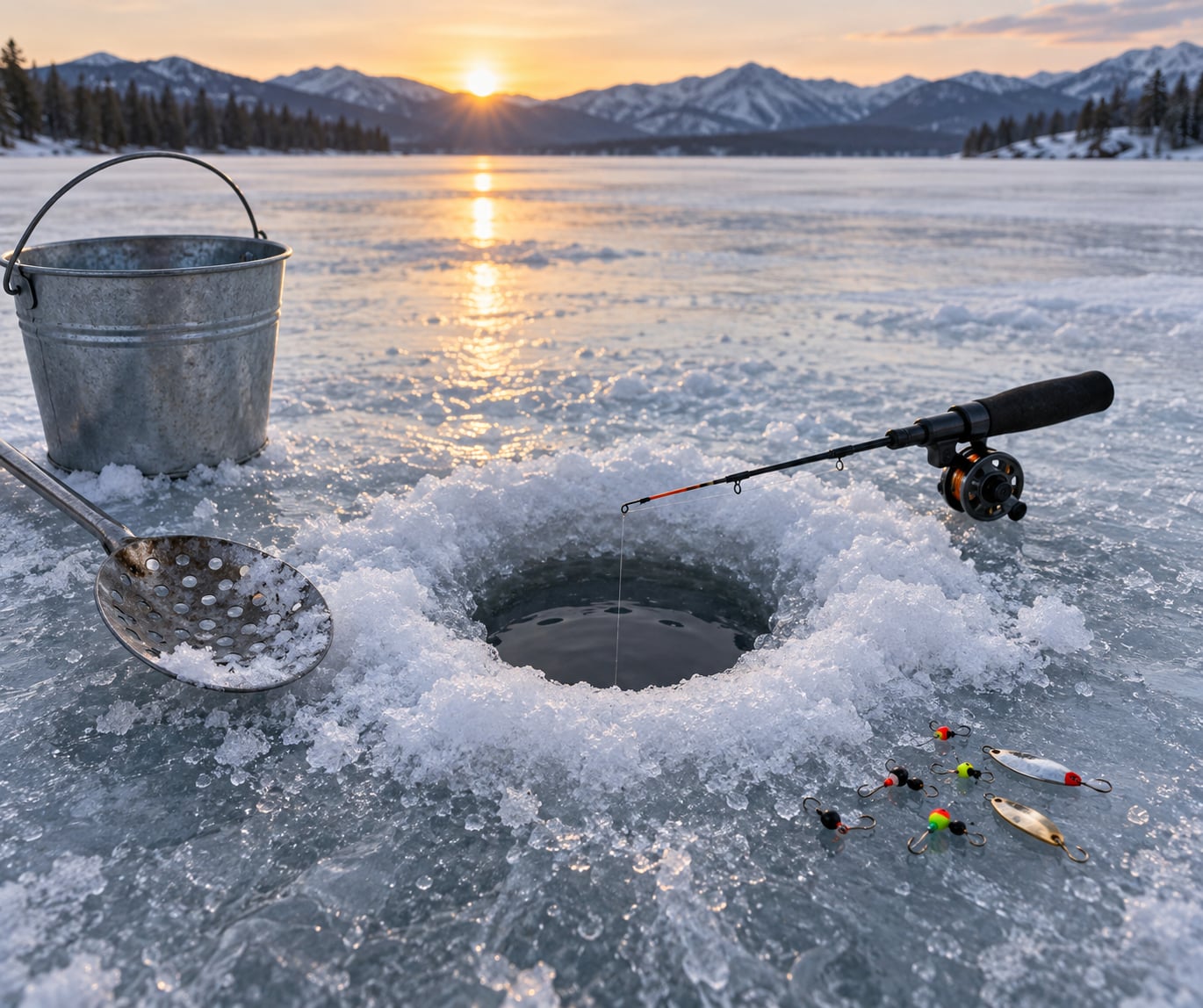
- A skimmer. Nothing ends more good ice-fishing holes than slush you cannot clear.
- A short ice rod, 24 to 30 inches, with a light spinning or ultralight reel. Spring bobbers are worth trying, so are regular bobbers, and the difference matters less than sensitivity.
- 4 to 6 pound monofilament as your default, or fluorocarbon if you are fishing clear water and steep structure. Below roughly 10 degrees, anglers often step up to braid because ice shaves it off easier.
- Jigs and spoons: small tungsten tube jigs, rattlespoons, and a couple of walleye-sized jigs for big fish.
- Bait: mealworms, maggots, spike and a small box of minnows or shiners.
- A bucket with a rope handle, one spud bar, and a whistle or charged phone for calling help.
Ice thickness guidance varies by region and anyone who publishes a single number for you is guessing about your lake. Most state DNR pages and local angler groups treat roughly four inches of clear, solid ice as a common minimum for walking and often recommend more. Check your own state or provincial ice report, plus the local club bulletin, the morning you go. Temperature, currents, snow cover and a warm week can all change a lake overnight.
The genuine upgrades, if you are spending money later, are a light ice rod with a sensitive tip, a real tungsten jig assortment, and a sonar or flasher unit to find the holding depth. The first trip does not need any of those.
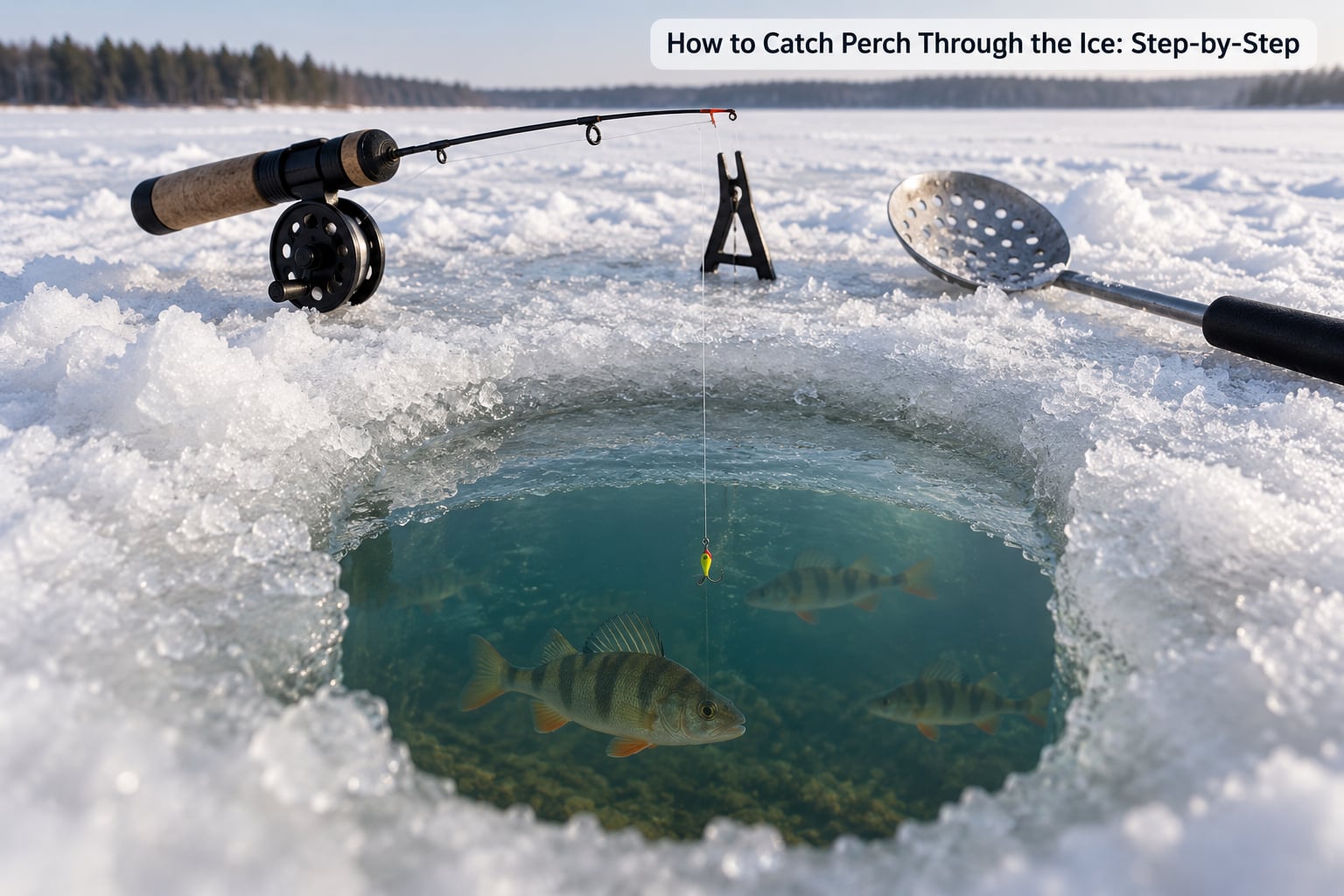
How to Catch Perch Through the Ice: Step-by-Step
How to Choose a Safe Location
Check the ice from shore with a spud bar, then check again in the middle of the area you want to fish. Four inches is not a rule you eyeball, it is a number you hit with a probe in several spots before you drill.
Stay away from pressure cracks and seams where the ice is thin, from moving water at inlets and outlets, and from anywhere a current runs under the ice. Avoid the ice right next to a bank if a stream empties there, and skip the strip where boats have repeatedly run through in summer. Those ruts freeze last and stay weak all winter.
Check local ice reports for the lake, talk to the bait shop or marina when you get there, and go with somebody. The buddy system is not a formality either: if one of you goes through, the other is the only one who can call for help. Carry a whistle, keep your phone charged in an inner pocket, and wear an inflatable life jacket if you are on thin early ice.
No auger comes out of the sled until the surface is confirmed safe. That rule holds even if the guy you saw two hours earlier was standing on it.
Drill the Hole and Set Up
Shovel a clear patch of snow about two feet wide. Snow insulates the ice and hides cracks, so drilling straight onto bare ice is faster and safer.
Set the auger straight down, not at an angle, and drill slowly. Let the blade do the work. A steady hole is worth more than a fast one, because a torn edge catches your line and skimmer.
Skim the slush out completely and keep doing it every twenty minutes or so. Clear water matters more than most beginners expect, since a hole that freezes over will part your line the moment a fish pulls.
Set your rod in a holder over the hole, tie on your lightest leader, and drop a weighted lure to find the bottom. Then bring it up a foot or two and mark that spot on the line with a marker or a bead. From then on you can reset to the same depth without guessing.
Use the Right Perch Baits and Jigs
Maggots, mealworms and small minnows are the workhorses. Trout worms and shrimp work in a supporting role. Tip a spoon or tungsten jig with a minnow head, hooked through the cheek with the skin on, and you have the most common perch presentation there is.
Bigger perch also feed on small perch belly skin, skin intact. That is an old Chicago trick from a 30-year veteran of Montrose Harbor, and it works because it smells like the real thing.
One useful rule from an experienced angler: the number of strikes is directly proportional to the amount of bait on your hook. If a spot is producing, add a second minnow head or a strip of jigging strip before you move.
Match the jig to the depth and the water. The contradictory jig-size advice out there resolves cleanly into a table.
| Depth of water | Jig or spoon weight | Presentation |
|---|---|---|
| Under 10 feet | 1/32 to 1/16 ounce tungsten tube jig | Short lifts with a long pause |
| 10 to 20 feet | 1/16 to 1/8 ounce tube jig or small rattlespoon | Steady lift-drop, tip on the drop-offs |
| 20 feet and deeper | 1/8 ounce jig or walleye-sized spoon | Minnow head or jigging strip on the hook |
Tungsten earns its reputation at depth. A tiny heavy body keeps the line taut at 15 feet and deeper, and a slack line kills the bite before you feel it.
On colour, perch respond to contrast and flash more than hue. Natural bronze and silver match stained water. Bright white, chartreuse and red show up well in clear water and low light, which is most of a January afternoon.
Work the Jig So Perch Can See It
Start your jig a foot above the bottom and work down rather than dropping straight to the lake bed. Big perch will hold a few feet off the bottom chasing baitfish, and you want to cover that water on the way down.
Short lifts work best in most situations. Raise the rod tip six to ten inches, let the jig fall, pause, and repeat. The pause matters as much as the lift, because a perch that has been jigged all afternoon will not chase a lure that never stops.
Quick jigging, fifteen or twenty fast pumps, is a search pattern rather than a steady technique. Use it when you arrive at a new hole to find the depth where they are holding, then drop back into slow lifts. Constant movement without breaks tends to scare perch off rather than draw them in.
A tip-up covers the same water from a different angle, and two of them at different depths let you fish both the near-bottom and the suspended fish while your hands stay on the jig. Keep your eyes on the line as well, since a rod you are actively working often picks up bites without the flag.
Set the Hook and Bring Perch Up Safely
Perch tap rather than pull. A real bite comes as light bumps, often three or four in a row, then a heavier thump. Bottom contact feels like a steady dragging lift that does not repeat. If the line twitches and stops, it is a fish. If the rod tip lifts smoothly and stays up, you are dragging the lake bed.
When the bumps come, lift the rod a few inches instead of snapping it. Perch hooks hold in their own soft mouths and most of them come off from over-excitement rather than a light set.
Once you are hooked, keep gentle pressure and bring the fish up slowly. Feed the leader into the hole by hand or with the skimmer rather than lifting the whole fish through the opening, which is how hooks find faces on the way up.
Slide the skimmer under the fish, lift it clear of the water, and remove the hook with pliers. Handle the hook itself with the pliers, not your fingers.
Common Mistakes
Assuming the ice is safe because it looks solid. Clear ice can be dangerously thin. Probe it, every trip, in several places, and check the local report.
Drilling too many holes. Four or five holes along one contour is plenty. A dozen holes is noise, a slush hazard, and a good way to push a school off the spot.
Using line that is too heavy. Six pound mono on a rod with no tippy action means you will feel nothing. Drop to 4 pound, and go thinner if you are on structure heavy with line.
Jigging too aggressively. Perch in a lake full of other anglers are not chasing a lure that slams the bottom. Slow lifts with pauses.
Holding the rod too high. Rod tip up means a slack line. Keep it low, near the ice, so the jig stays in contact with your rod tip.
Ignoring water clarity. Clear water calls for smaller, natural or bright lures and a longer leader. Stained water calls for flash and noise, like a rattling spoon.
Fishing without a skimmer. Slush fills the hole, ice forms on the line, and the fish you land has a broken jaw. Skim often.
Not watching the line. Set the rod down somewhere you can see it. A tip-up flag and a swinging rod both catch takes you would miss in your lap.
And when the bite stops, do not just pack up. Move sideways at the same depth. Perch schools move along a drop-off rather than deeper or shallower, so drilling a second hole along the same contour often out-produces drilling a completely different spot.
Frequently Asked Questions
How much ice do I need to ice fish for perch?
Most safety guidance treats roughly four inches of clear, solid ice as a common minimum for walking on a lake, and many state and provincial advisories recommend staying on the conservative side of that. Thickness is not the only factor: currents, snow drift, a warm week, and old boat ruts all change it. Probe the ice with a spud bar in several spots before you drill, check your local ice report the morning you go, and never fish alone.
What is the best bait for ice fishing for perch?
Maggots, mealworms, and small minnows or shiners are the three that do most of the work. Trout worms, dew worms, and shrimp work in a supporting role. Tip a tungsten jig or spoon with a minnow head hooked through the cheek, and consider a second bait when a hole is producing. For a dropper rig, use a heavy split shot on the bottom with the baited hook a foot or two above it.
How far off the bottom do you fish for perch?
Start about a foot above the bottom and work your way down. Perch usually hug the bottom over structure, but larger fish will suspend a few feet under the ice chasing baitfish, so the column above your jig is worth covering. Mark the depth on your line with a bead or marker so you can return to it without guessing.
What size jig should I use for perch through the ice?
Match the weight to the depth. Use a 1/32 to 1/16 ounce tungsten tube jig under 10 feet, 1/16 to 1/8 ounce in 10 to 20 feet, and a 1/8 ounce or walleye-sized spoon with a minnow head in 20 feet or deeper. Tungsten stays compact at the same weight, which keeps the line taut and transmits the light taps perch deliver.
How do I jig so the perch notice?
Lift the rod tip six to ten inches, let the jig fall, then pause before the next lift. The pause is as important as the movement. Use quick jigging as a search pattern when you arrive at a new hole, then go back to slow lifts once you find the holding depth. Keep the rod tip low near the ice so the line stays taut.
When should I move to a new hole?
Give a spot about ten minutes of steady jigging before moving. When you do move, go sideways at the same depth rather than shallower or deeper, because perch patrol along the edge of a drop-off and sand shelf. Drilling three to five holes along one contour usually beats jumping to a different area entirely.
Conclusion
Confirm the ice is safe first, every time, then drill one well-managed hole on the edge of a drop-off. Run a small tungsten jig or a spoon with a minnow head, jig it in short lifts with real pauses, and watch the line like it owes you money.
When the action stops, move sideways at the same depth instead of abandoning the spot. And keep safety ahead of the catch, because a fish you bring home is never worth a fall through.