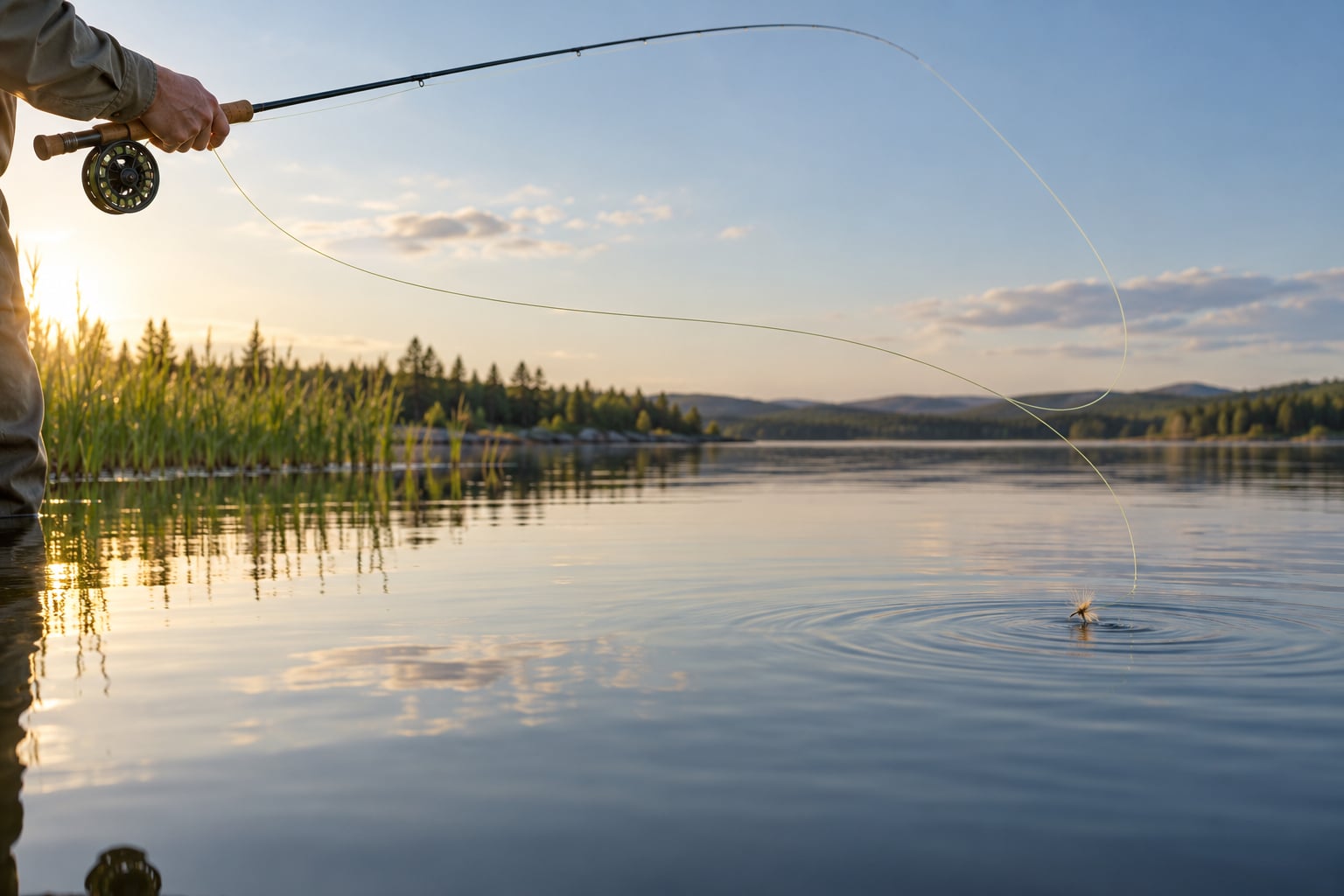
The easiest way to cast a fly rod on still water is one clean overhead cast: pick the line up, accelerate it back until the rod sits near 1 o’clock, pause until the line stops behind you, then drive forward and stop the rod so a tight loop unrolls and the fly touches down first. One good cast beats five false casts on a lake.
Still water changes the whole problem. In a river, the current carries your fly line and turns over the leader for you. On a lake or pond there is no help at all, so every part of the presentation is your cast. Get the loop narrow, let the leader fall slack-free, and the fish never knows you were there. Get it wrong and the splash alone ends the fishing.
Most beginners do not have a strength problem or a gear problem. They have a timing problem: they start the forward cast before the line has straightened behind them, and the loose line collapses into a tailing loop. The pause in this guide is the fix for almost everything that goes wrong.
Table of Contents
- 1What You Need
- 2Step-by-Step: How to Cast a Fly Rod on Still Water
- 3How to Set Up Your Rod, Reel, and Grip
- 4How to Make a False Cast on Still Water
- 5How to Control the Line During the Cast
- 6How to Cast a Fly Rod on Still Water and Present the Fly
- 7How to Fix Common Beginner Problems
- 8Common Mistakes
- 9Frequently Asked Questions
- 10What is the easiest fly rod cast for beginners on still water?
- 11How much fly line should I use when casting on a lake or pond?
- 12Should I use a backhand or forward cast on still water?
- 13How do I stop a fly line loop on command?
- 14What should I do if my false cast keeps tangling?
- 15Can I practice casting a fly rod without being on the water?
- 16Conclusion
What You Need
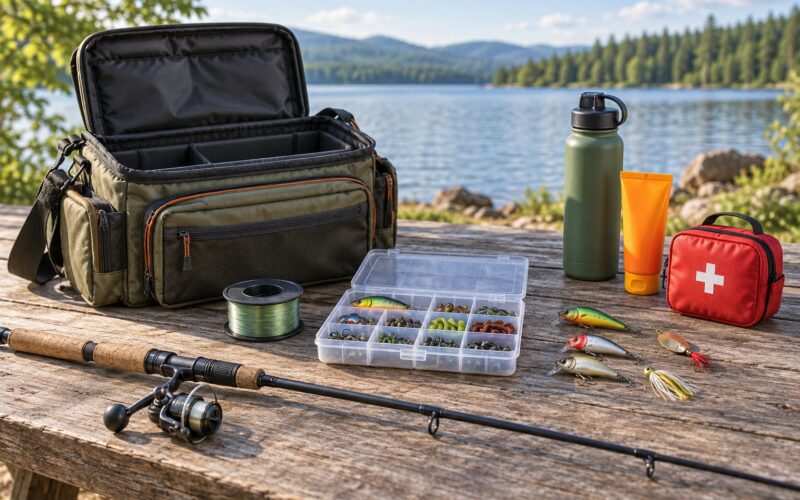
You need very little to practise this on flat water. A correctly sized rod, a line that matches it, and something soft to aim at will carry you through the entire sequence before you ever touch a lake.
A rod sized for the fly. For floating lines on a lake, a 9 to 10 foot rod in the 5 to 6 weight range covers most situations. Longer rods load more line and push a sinking line through the wind, which is why so many lake anglers move up to a 9 foot 5 weight or a 10 foot 5 weight as they get comfortable.
A matching line. A weight-forward floating line is the easiest to learn on and the easiest to see on the water. If you fish deep water with a sinking or intermediate line, a fast-action rod gives you the power to turn that line over without fighting it.
A leader you can turn over. Fifteen feet is a realistic starting point on still water, and long leaders make gentle turnover much easier. A strike indicator on the end means a longer leader still, so plan for it.
A target and open space behind you. A hang mat, a piece of carpet on grass, or a patch of lawn is enough for a first session. You need clear water or open ground behind your shoulders for the backcast, which is also why the roll cast exists.
Good conditions to practise in. Pick flat water with no people behind you and no strong wind for your first few casts. Check the forecast for lightning, and give other anglers room. If the wind is gusting above about 15 mph, go home and drill with a yarn fly instead.
You can practise with a short section of line. About 20 to 25 feet of line out, plus your leader, is a comfortable starting length for building a loop and landing on a target.
Step-by-Step: How to Cast a Fly Rod on Still Water
The sequence below is the standard overhead cast, broken into the parts you can actually feel. Work through it slowly with 20 feet of line until it stops needing thought, then add distance.
How to Set Up Your Rod, Reel, and Grip
Hold the rod in the hand you write with, thumb pointing straight up along the cork grip, index finger on top and slightly forward. The thumb is your brake and your reference point, so keep it in view.
Reel orientation matters. On a lakeside wind reel the spool turns toward you as you retrieve. On a classic trout reel the spool turns away. Neither is wrong, but the retrieve feels different, so set it up the way the reel was designed before you worry about the cast.
For your stance, feet about shoulder width, knees soft, weight forward on the balls of your feet. The most common early mistake is bracing rigid, which kills the smooth acceleration the cast needs.
How to Make a False Cast on Still Water
A false cast lifts the line off the water and back into the air without landing it, so you can reposition or check the drift. On a stillwater lake you should need it once, maybe twice. Slashing loops back and forth over pressured water spooks fish and tires you out, and every extra one is another chance to make a mistake.
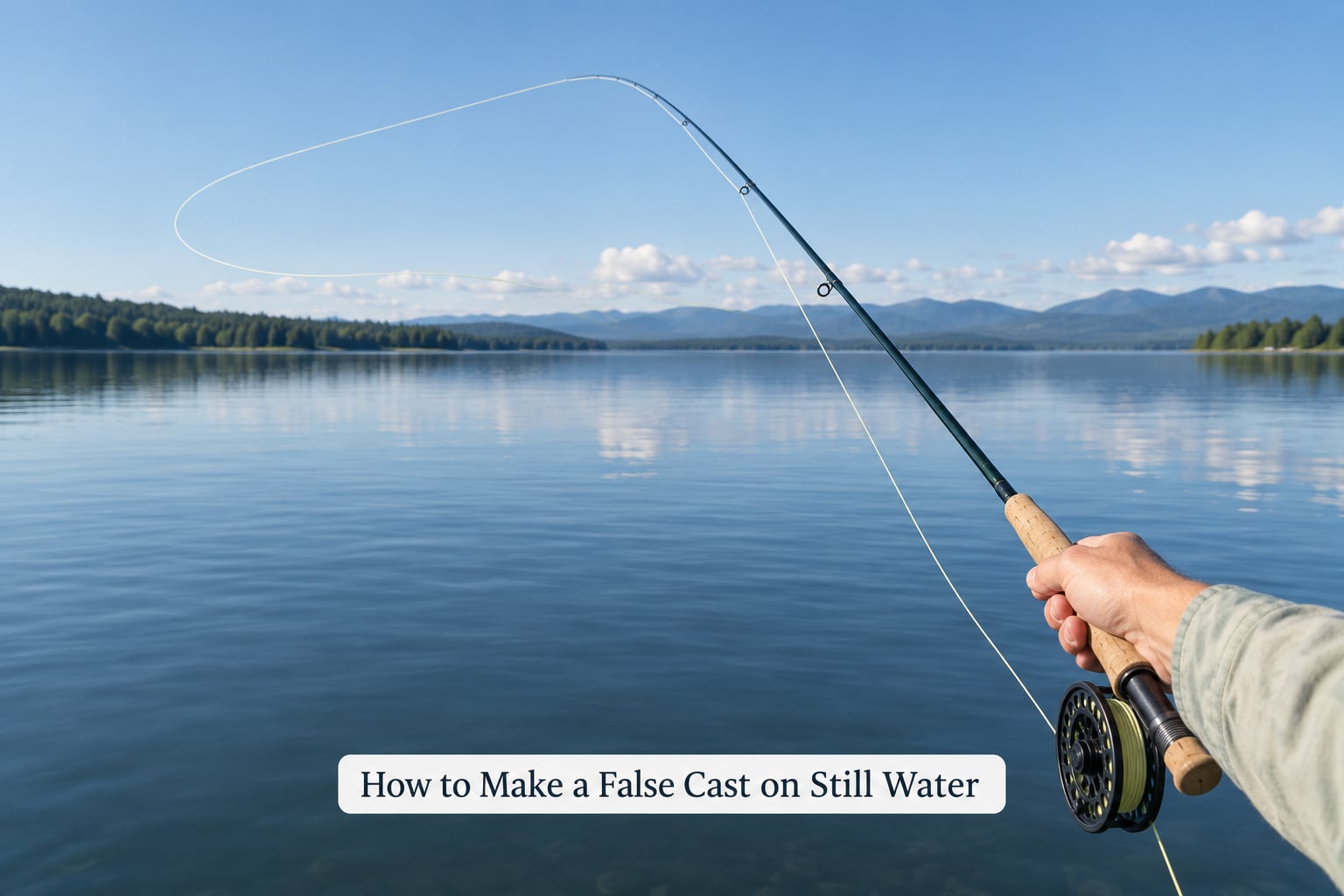
To make one, lift the rod tip and move it up and slightly back. The line peels off the water and shoots forward, forming a loop in the air. Keep the loop travelling as the rod tip reaches about the 10 o’clock position, then stop the rod abruptly and let the line extend.
The key is smooth acceleration. If you jerk the tip up, the line leaves the water in a straight path with no loop, and there is nothing to shoot forward on the next stroke. If the loop stays too wide, you are moving the tip too slowly.
Wait for the line to straighten behind you before you go forward. That wait is the pause, and it is the single most important part of the whole cast.
How to Control the Line During the Cast
Use the forward cast as your default on open water. The backhand cast is a good second option when the wind is at your back, when you are facing an obstacle, or when you want the line to land away from you rather than toward your boots.
Keep your line in check between casts. Lift the tip to pick it off the water, and if a section is lying in loose bends, strip it in with your free hand before you start. Slack on the water collapses on the backcast and drops the whole thing into a pile.
For distance, use a double haul. Pull the line down toward your waist before the forward cast, then release and push the rod forward. The double haul adds power without needing a bigger rod, which is why it works so well on a lake with wind on your face.
Watch how the line leaves the tip. Straight means you are lifting too fast. A narrow loop travelling above and slightly ahead of the tip means the timing is right. A loop that crosses over the tip or collapses below it means you moved the forward cast too early.
How to Cast a Fly Rod on Still Water and Present the Fly
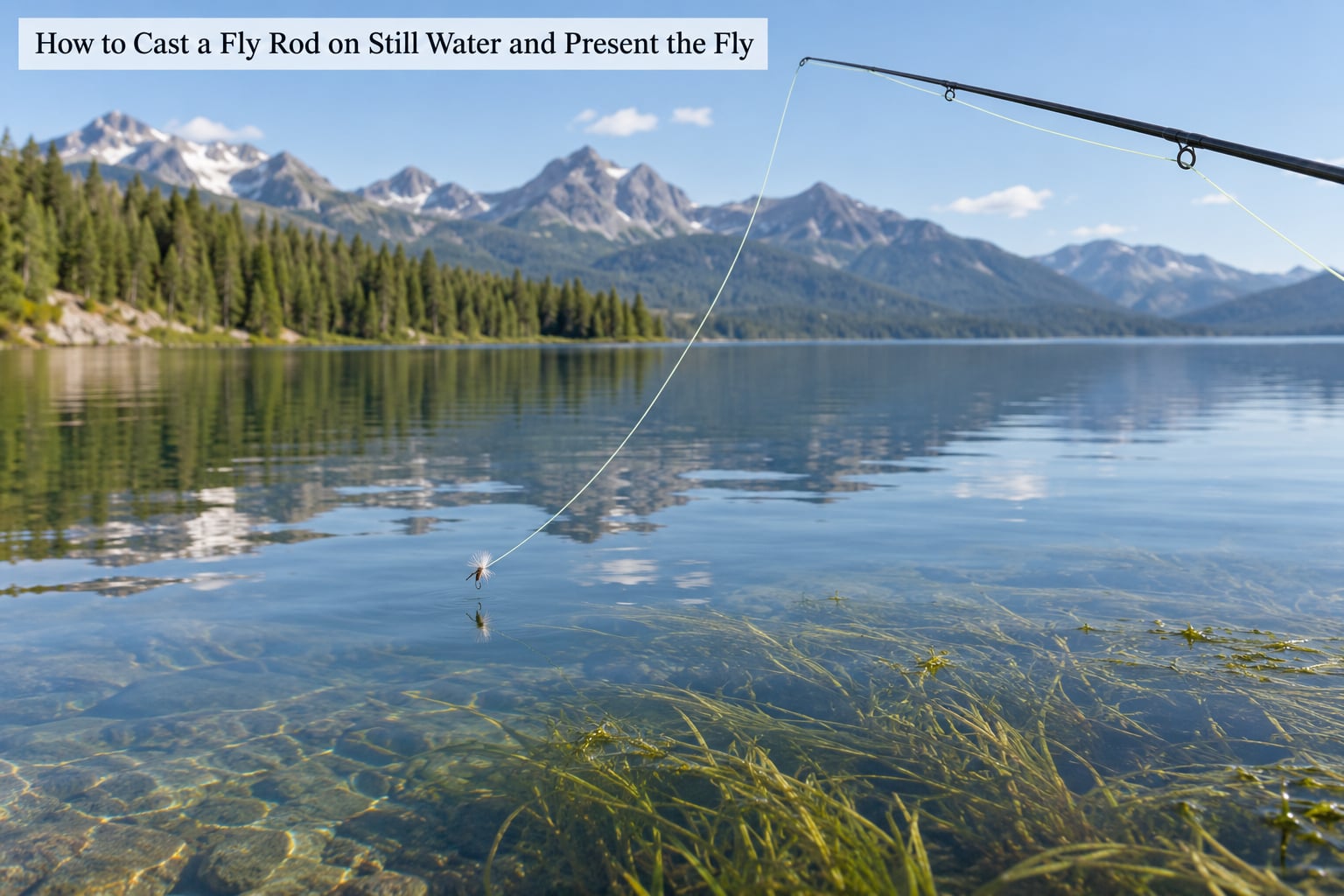
To present the fly, stop the forward cast firmly around the 1 o’clock position, then turn your wrist so the rod tip points down. The line shoots forward, forms a loop above the water, unrolls, and drops the leader onto the surface. Follow through by lowering the tip toward the fly line as it lands.
A soft presentation means the fly lands first and the leader follows without slapping. If the leader hits before the fly, you will hear a sharp slap and see the fly flip over. That usually means the loop was too wide or you stopped the rod with too much force.
Listen for two distinct plops on a still lake. One plop means the fly landed alone and you are fine. Two plops close together, or the fly and indicator landing in the same spot, means a tangle is almost certain. That happens when too little line is out or the leader is too short for the target.
On calm water, aim for 30 to 40 feet when you are fishing an indicator. Most lake anglers can reach 50 to 70 feet with a single false cast on an intermediate or sinking line, and that is plenty. Casting further just makes subtle takes harder to see.
How to Fix Common Beginner Problems
Most casting problems fall into five buckets, and each one has a specific correction rather than a general instruction to try harder.
Loops that are too wide and turn into tailing loops. You are starting the forward cast before the line has straightened. Pause and watch the line behind you, and do not move until it stops moving.
Line collapsing on the backcast. Too much slack in the water, or loose bends lying on the surface. Pick the line up cleanly and strip it in before the backcast.
A short cast that never gets anywhere. You are stopping the rod without accelerating first. Build speed smoothly through the backcast, then stop high, around 1 o’clock rather than at your shoulder.
Leader slap and a fly that lands upside down. The loop was too wide or too slow. Speed up slightly, keep the loop narrow, and turn the wrist over on the stop so the leader falls ahead of the fly.
A sunk line you cannot lift. Sinking lines on a lake sit low and the surface tension fights you. Roll cast to get the line moving, shoot out about 25 feet, and water-load the backcast from there. It takes a few attempts and then it becomes routine.
Common Mistakes
The fastest way to a clean cast is to stop doing the things that spoil it. These are the errors I see most often from beginners on their first few lake trips.
False casting on top of fish. Every extra loop over a rise ring or a quiet pocket is noise you do not need. Make your cast when the line is ready and fish the next drift.
Starting the forward cast too early. This is the big one. Until the line behind you is fully extended, you are throwing slack, and slack makes tailing loops.
Casting much further than you need to. A 90-foot cast across a lake puts your fly in water you cannot read. On still water, accuracy beats distance almost every time.
Ignoring the wind. Into a headwind, keep the loop tight and low, hold the rod slightly to the windward side of the target, and aim a touch high because the line will blow back at you. In a crosswind, position your windward shoulder slightly forward so the loop blows off to the side rather than across your line.
Forgetting to lower the rod tip after the cast. The follow-through is what lets the leader fall soft. Once the line is on the water, drop the tip and hold it low while the drift plays out.
Two practice drills speed this up more than anything else. First, the pause drill: cast on command from a partner, and they only say “go” when your line is fully extended behind you. Second, target casting: pick a soda bottle at 30 feet, land the fly beside it, and repeat until the misses feel obvious. If you can fish from a seated position in an anchored boat or kayak, practise that way too, because the balance and the rod angle are different from standing on shore.
Frequently Asked Questions
What is the easiest fly rod cast for beginners on still water?
The overhead, or single-haul, cast is the easiest and most useful on a lake because it uses the same motion for the backcast and the forward cast. Learn one clean cast before adding a false cast, a roll cast or a double haul. Angle, wind and the pause are the only variables.
How much fly line should I use when casting on a lake or pond?
Start with 20 to 25 feet of line out plus your leader. That is enough to form a tight loop and land on a target without the line going slack. Once it is smooth, one false cast should get you to 50 to 70 feet, which covers nearly all stillwater fishing.
Should I use a backhand or forward cast on still water?
Use the forward cast whenever you have open space behind you, which is most of the time on a lake shore. Switch to a backhand cast when the wind is at your back, when trees or brush are behind you, or when you want the line to land away from your position instead of toward you.
How do I stop a fly line loop on command?
Stop the rod by lifting the tip high, around 1 o’clock, and simply stopping your hand. Do not drop it and do not push past. Look through your casting thumbnail at the stop, hold everything still for a moment, and the line will shoot forward on its own and unroll into a loop.
What should I do if my false cast keeps tangling?
Shorten your line and slow down. Wide, slow loops tangle, so use less line out and accelerate more smoothly on the pickup. Check that the line is fully extended behind you before each forward cast, and keep the number of false casts to one if you are fishing over fish.
Can I practice casting a fly rod without being on the water?
Yes, and you should. Tie a length of yarn to the end of your leader and practise on grass or a hang mat, aimed at a soda bottle or a patch of lawn. A broomstick also works for feeling the rod load and straighten, and practicing somewhere with no wind removes one hard variable.
Conclusion
Pick the line up cleanly, accelerate the rod back, stop at about 1 o’clock, and wait until the line behind you stops moving. Then go forward, stop again, turn the wrist down, and lower the tip so the leader falls slack-free. Practise that sequence over grass with a yarn fly and a clear target, then repeat it on the water with 20 to 25 feet of line before you add distance. A soft, accurate presentation on a lake comes from timing, not power.