Line tangles are mechanical, not bad luck. Nearly every bird’s nest traces back to slack line with nowhere to go, line peeling off the spool faster than the reel can release it, or stored twist that uncoils like a spring the moment you go slack. Learn how to avoid line tangles when casting by controlling those three things before the cast, and the routine takes about 30 seconds a session. Most of it is setup you do once; the rest is a short pause between casts.
The odd part is how little equipment is involved. Nothing on this list costs real money, and everything works on a 15-year-old spinning outfit with a scratched-up ceramic rod guide. What matters is knowing which small failure you are actually dealing with before you start pulling line through the spool in the wrong direction.
Table of Contents
- 1What You Need
- 2Step-by-Step
- 3Step 1: Check and Organize the Line
- 4Step 2: Set the Correct Amount of Tension
- 5Step 3: Position the Rod and Line Before Casting
- 6Step 4: Use a Controlled Casting Motion
- 7Step 5: Retrieve Without Creating Loops
- 8Step 6: Pause and Check After Each Cast
- 9Common Mistakes
- 10Frequently Asked Questions
- 11Which fishing line is least likely to tangle while casting?
- 12How do I cast in wind without tangling my line?
- 13How do I fix a bird’s nest while I am on the water?
- 14What gear should a beginner buy to stop line tangling?
- 15Why does my line tangle on the very first cast?
- 16Conclusion
What You Need
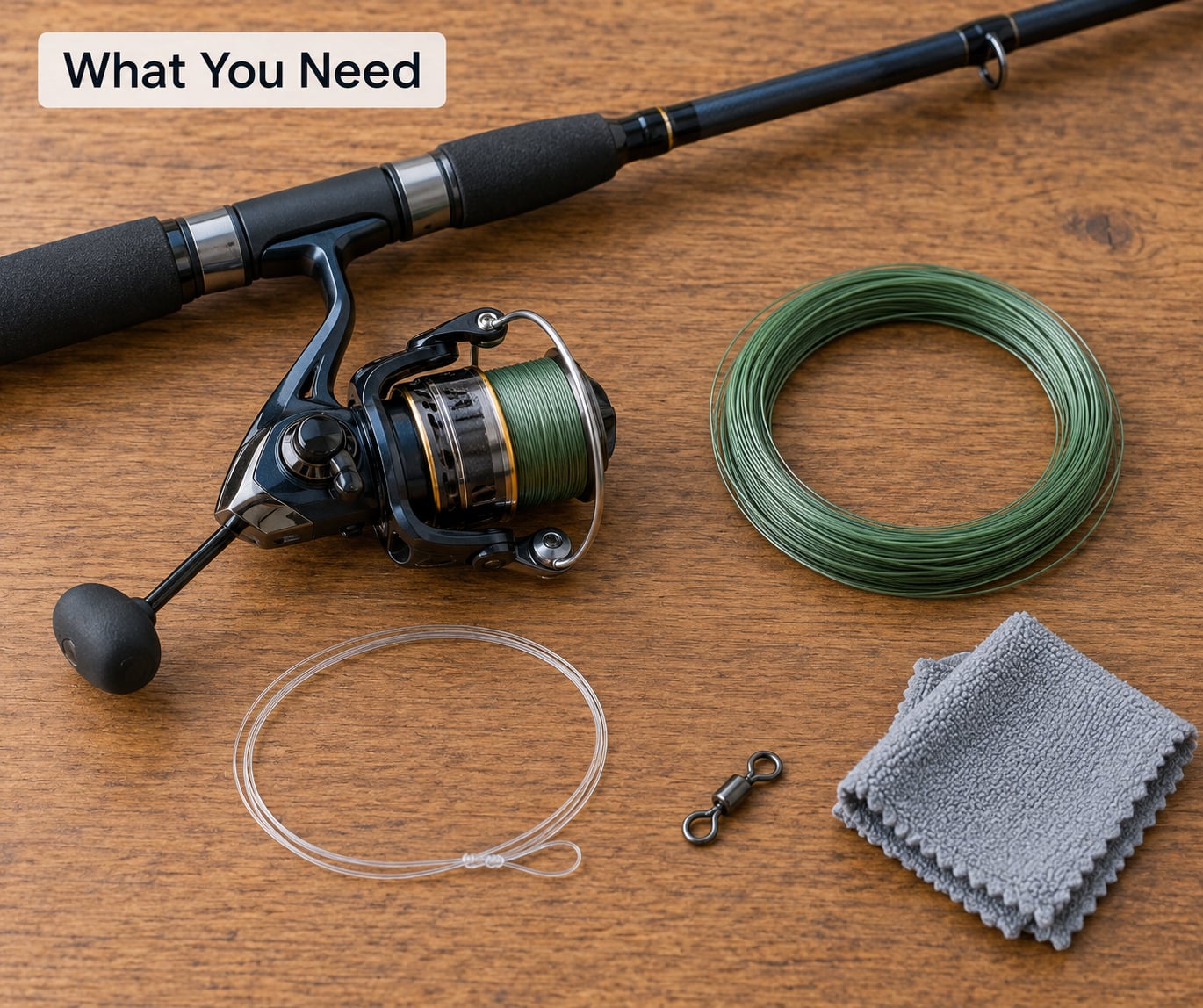
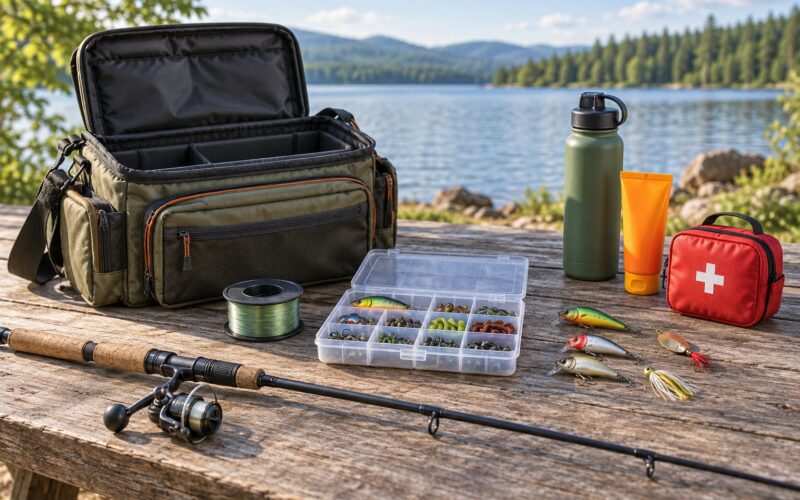
Start here. These are the five things worth checking before the first cast of the day, and most of them take under a minute.
Line in decent condition. Run the line between your fingers and thumb, pull it through slowly, and look for nicks, flat spots, fuzzy sections and hard coils. Monofilament and fluorocarbon stiffen and go cloudy with UV exposure; if the line resists bending and wants to hold a curl, it is going to tangle on its own schedule, not yours.
A correctly filled spool. Fill to roughly 1/8 inch below the spool rim. An overfilled spool has no controlled release path for line, so loops jump off the middle instead of peeling smoothly off the top.
A drag set light. Set the drag to the lightest setting that still stops a backlash from an errant rod lift. A drag set heavy and a hard cast mean an instant stop mid-flight, and an instant stop is how a loose line becomes a nest.
A bail that holds. Your bail should click open and stay exactly where you put it. A loose bail arm that swings shut mid-cast whips the line across the spool while the line is still moving.
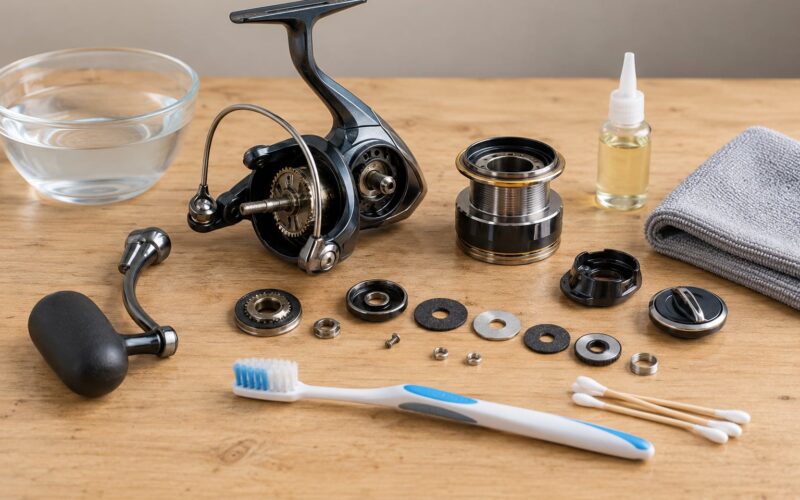
A free-turning line roller. Flick it with a fingernail. It should spin freely and stop smoothly, with no wobble and no gritty clicking. A rough, grooved roller adds a fresh twist to the line on every single retrieve, and 200 casts of that adds up fast. A drop of reel oil on the roller costs nothing.
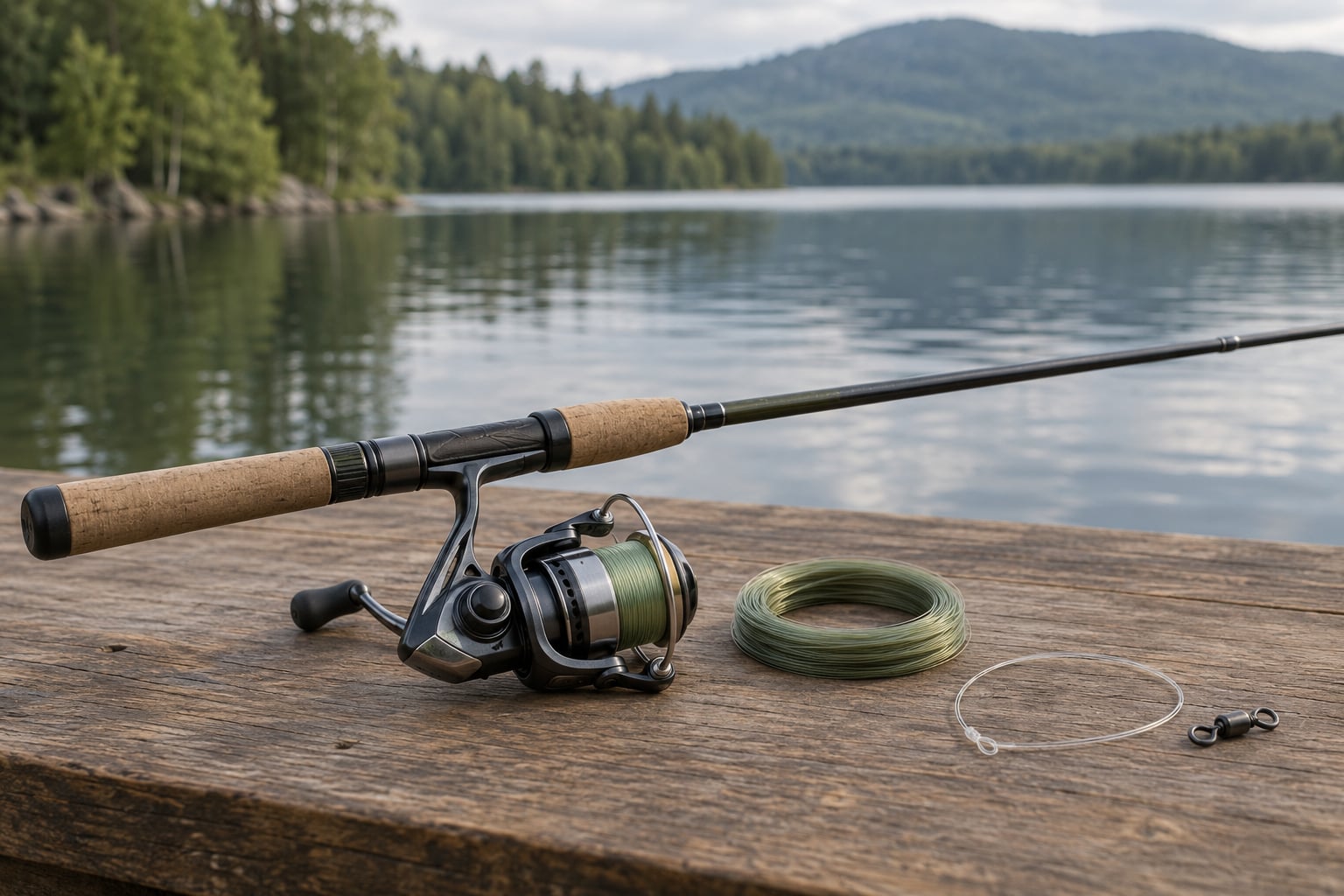
A barrel swivel above any lure that spins helps too. It keeps the leader from wrapping the running line when the lure turns under load.
Step-by-Step
Step 1: Check and Organize the Line
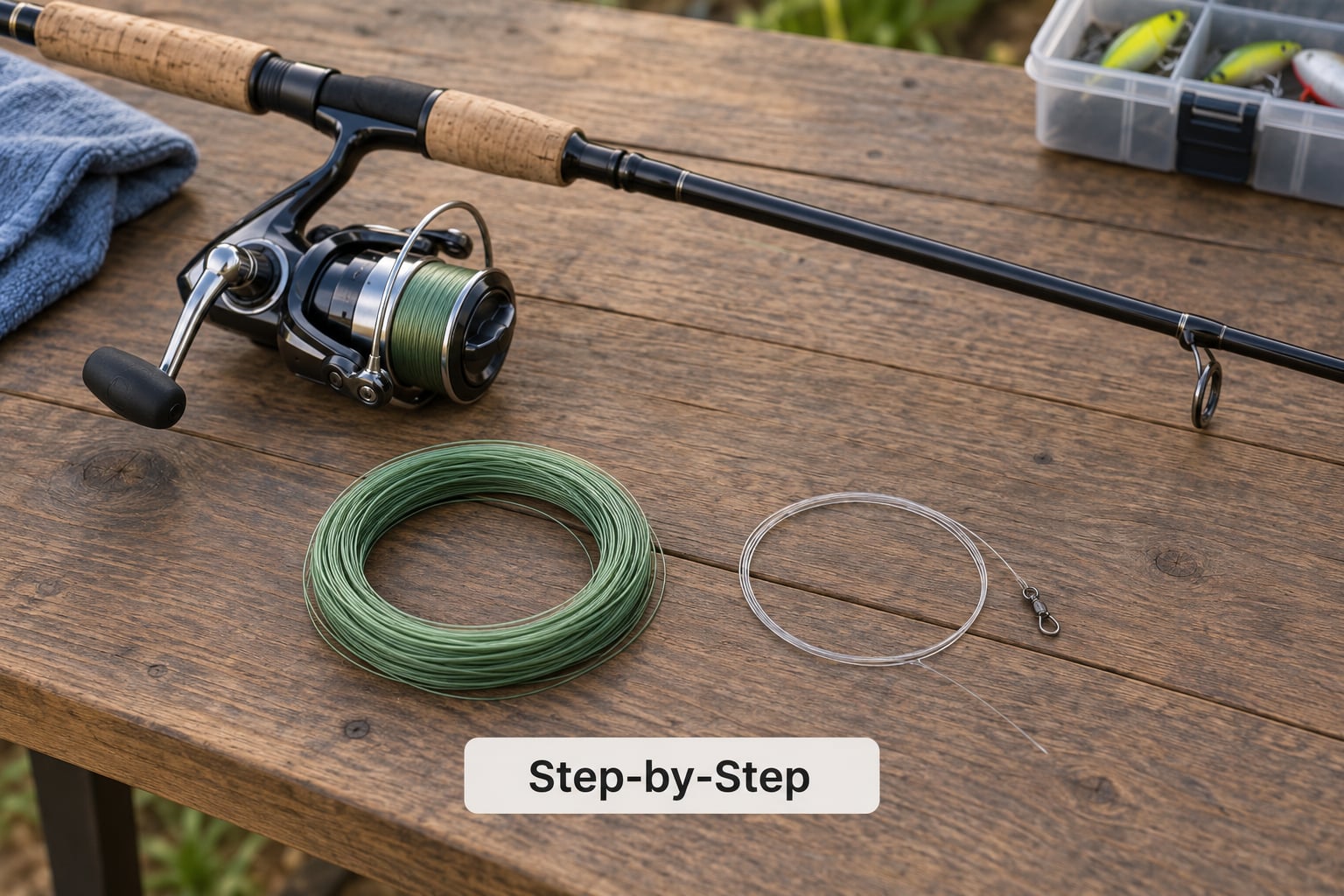
Pull 20 to 30 yards of line off the spool and inspect it before you ever attach the lure. Snip out any section with a visible nick, kink or flat spot rather than trying to fish through it.
Keep the leader separate from the running line. A leader draped across a loose pile of line is a knot waiting to happen, so coil the excess in your hand or behind you on the deck, never in a heap around your boots where a boot step can catch it. If you spool with cold line that has been sitting in a car, a bowl of warm water is a well-known trick for relaxing line memory before it goes on. Nobody can fully explain why it works, but it spools flatter.
Step 2: Set the Correct Amount of Tension
Tension is the single biggest lever you have. Before the rod comes up, make sure the spool tension adjustment on a baitcaster is set so the spool barely turns under your thumb, and on a spinning reel that the bail sits firmly against the line roller.
Set the drag light, reel the line down until there is no slack between the spool and the first guide, and hold the line lightly a few inches in front of the reel during the cast. A spool that is free to overrun is a spool that will dump line faster than the drag can stop it. Controlled tension, not brute tension, keeps the line in one lane.
Step 3: Position the Rod and Line Before Casting
Get the rod tip up and slightly behind your shoulder so the line runs straight from the spool through the guides to the lure. The line should never cross over the rod blank or hang in a slack curve in front of you.
Open the bail only as far as it needs to go, and check that the line is seated in the roller groove rather than riding up over it. A line sitting on top of the roller will jump off during the first part of the cast and land straight in the spool.
Step 4: Use a Controlled Casting Motion
Break the cast into four parts: loading, acceleration, release and follow-through. Load by bringing the tip back slowly. Accelerate with steady power rather than a rip, release around the 10 or 11 o’clock position, and follow through toward 12.
Close the bail with your free hand, not by turning the reel handle. Turning the handle adds one extra rotation of the spool each cast, and that rotation stores twist in the line, which releases as a loop the next time you go slack.
You will know the cast was too loose if the line lags behind the lure and seesaws on the way out. That means the rod accelerated before the line was tensioned, so slack went airborne. Slow the back half of the stroke down and the loops stop appearing.
Step 5: Retrieve Without Creating Loops
Point the rod tip at the lure as it lands, then take up the slack with the reel before lifting the tip. Lifting first and cranking second puts a loop of slack between rod and reel, and loose line wraps around a rod tip in about a second.
Keep the line running straight through the guides as you wind. If the line starts spiralling around the blank, you are lifting with slack present, which is the same mistake in a different position. On a spinning reel, wind fast enough to keep light tension and slow enough that the line lays down rather than bunching at the roller.
Step 6: Pause and Check After Each Cast
Every couple of casts, stop and lay the slack out on the water or on the deck so you can see the line. Look for visible coils and for line wound around the tip or the guides.
If the line hangs in a spiral, you have stored twist. Snap a heavy weight or a swivel on the end, hold the rod high and let the line hang for a minute or two, then wind it back on. Re-seat the line under the line roller and the bail, and start the next cast with the line pulled taut. That 10-second check is what keeps a bad afternoon from turning into a ruined one.
Common Mistakes
Almost every problem below has the same root: line is moving somewhere it should not be. The table matches the cause to the symptom and to the fix.
| Cause | What you see | Fix | Time to fix |
|---|---|---|---|
| Overfilled spool | Nest forms mid-cast, line jumps off the spool | Re-spool to 1/8 inch below the rim | 20 minutes |
| Stored line twist | Nest appears the moment the bail opens | Hang the line with a weight until it straightens | 2 minutes |
| Bail closed with the handle | Gradually worse tangling over a session | Close the bail by hand every cast | Habit change |
| Worn or grooved line roller | Line twists on retrieve, wraps under the spool | Clean and oil it, or replace the roller | 5 minutes |
| Loose spool tension or heavy drag | Sudden overrun, loops pile beside the spool | Tighten the spool knob, lighten the drag | 1 minute |
| Slack in the cast | Line seesaws behind the lure | Load slowly, accelerate smoothly | 2 minutes |
| Old or kinked line | Tangles in the same spot every session | Cut out damage, re-spool, or replace the line | 20 minutes |
Line wound around the rod tip. You lifted with slack in the system. Point the tip at the lure, reel the slack in, then lift.
The line unspooling as the lure lands. The spool is overfilled or the spool tension is too loose. An overfilled spool cannot feed line under control at any drag setting.
Tangling only on the first cast of the day. That is stored twist releasing the moment slack appears, not a casting fault. The hang-and-straighten reset above clears it.
Braid tangling where mono does not. Braid is thinner, stiffer and has almost no stretch, so a small loop tightens instantly instead of pulling itself out. Spool it tighter than feels natural, keep the bail closed by hand, and skip line conditioner, which only makes the surface slicker and easier for loops to slide past the roller instead of releasing.
Baitcaster backlash. On a conventional reel the fix is thumb control. Feather the spool with your thumb so it barely turns on the way out, and set the spool tension knob until the spool stops with a light tap from your thumb. Barbed line and heavy baits need both, plus a deliberate thumb check right before the lure lands.
Frequently Asked Questions
Which fishing line is least likely to tangle while casting?
Fluorocarbon is the least prone to line twist and coiling because it is stiffer and heavier than monofilament, so loops tend to fall away instead of winding themselves tighter. Monofilament is the most forgiving and the easiest to tangle when old. Braid tangles the most easily because it has almost no stretch, though a well-tensioned spool and a manually closed bail reduce it. Any line that has lost its softness will tangle on all three.
How do I cast in wind without tangling my line?
Wind blows loose line sideways, so the goal is to keep the line airborne and moving. Cast with slightly more power than usual, use a heavier lure than the wind calls for, and keep the rod tip moving through the wind rather than stopping it. Close the bail by hand every cast so nothing swings into the line. On shore, a high stance with your rod angled across the wind stops the line from draping behind you.
How do I fix a bird’s nest while I am on the water?
You can usually clear one without cutting line. Open the bail fully and hold the rod high so the nest hangs free. Find the loop that is locking the tangle and work your finger inside it, then pull the line out through the line roller slowly rather than tearing at it. If it will not release, wet the line and pull again. Cutting the damaged section and retying is the last resort, not the first move.
What gear should a beginner buy to stop line tangling?
Nothing special. A correctly sized spinning reel with a functioning bail, fresh line in reasonable condition and a rod with lined guides solves most problems. Spend the money instead on line conditioner for monofilament and a small pack of swivels. If you fish braid often, a reel with an adjustable spool tension knob is worth it. Entry-level gear handles fine once the setup is right.
Why does my line tangle on the very first cast?
The first cast is when stored twist releases, because it is the first time the line goes slack. If the spool was filled too loosely, or filled in the direction that stores rotation, that twist has been sitting inside the spool. Let the line hang under a weight until it hangs straight, reel it back on under light tension, and the first-cast nest usually disappears for the rest of the session.
Conclusion
Start with the spool. Pull the line off, look at it in the light, and reset the fill level to about 1/8 inch below the rim. That one check catches the most common cause of line tangles, and it takes a couple of minutes before you launch.
After that, two habits do most of the work: keep the line tensioned and organized so it never flies loose, and close the bail by hand on every single cast. Build the 10-second post-cast pause into your session and the tangles stop being something that happens to you. Anglers who keep a line condition reminder at the start of 2026 generally stop thinking about this topic entirely, which is the whole point.