To fish a crankbait in a lake, cast past a drop-off or rock pile with a lure rated for the depth you want to cover, then reel it back at a steady pace with the rod tip up so the bill holds it at that depth. Pause, change speed, or bounce the bottom off structure when nothing is happening, and set the hook the moment the line goes slack or you feel a thump.
A crankbait is the most forgiving lure in the box. You do not need to be precise about timing, and you do not need expensive gear. What you do need is a rough idea of how deep the water is where you are casting and what the bottom is doing down there.
This guide breaks the process into six steps, starting with gear and setup and ending with how to set the hook and land the fish. It takes about an hour to work through the method once, and a full trip of casting at a single spot takes twenty minutes before you should move.
Table of Contents
- 1What You Need to Fish a Crankbait in a Lake
- 2Rod and reel
- 3Line
- 4Crankbaits
- 5Terminal tackle and support gear
- 6Step-by-Step: How to Fish a Crankbait in a Lake
- 71. How to Fish a Crankbait in a Lake
- 82. Choose the Right Crankbait for the Water
- 93. Set Up for a Clear Retrieve
- 104. Cast Toward Productive Lake Cover
- 115. Use the Right Crankbait Retrieve
- 126. Set the Hook and Play the Fish
- 13Common Mistakes Beginners Make With Crankbaits
- 14Tips for Better Crankbait Fishing
- 15Frequently Asked Questions
- 16How are you supposed to fish a crankbait?
- 17Do you just reel a crankbait?
- 18What depth crankbait should I use on a lake?
- 19Do you need a sinker with a crankbait?
- 20What color crankbait works best in clear lake water?
- 21How often should I change lures when nothing is biting?
- 22Conclusion
What You Need to Fish a Crankbait in a Lake
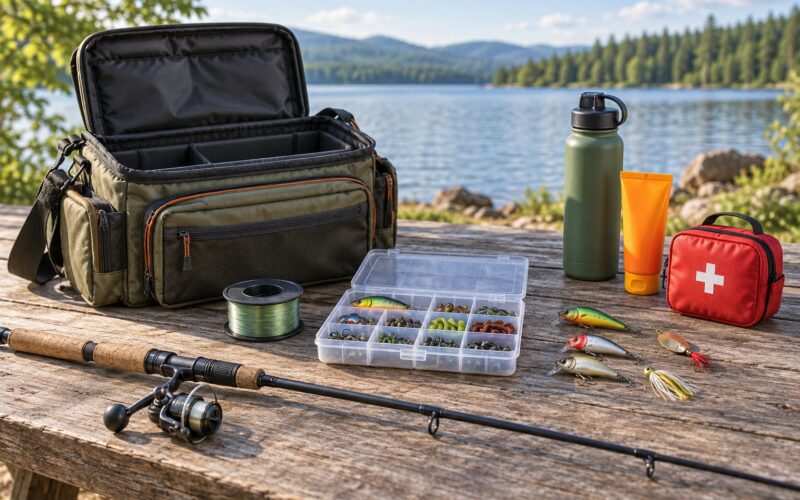
A beginner can get started with very little. The list below is what I consider the sensible minimum, plus a few things that make a long afternoon on the water easier.
Rod and reel
A moderate action rod between 6 feet 10 inches and 7 feet 6 inches is the right length for casting a crankbait from a boat or a bank. Moderate action bends through the retrieve so you feel bottom contact and the thump of a bite, but it still has enough backbone to set a hook into a bass that hits it hard.
Pair it with a low-profile baitcasting reel in a 1:1 or 1.2 gear ratio, or a spinning reel if you are new to baitcasters. A 1:1 baitcaster gives you the control to work a lure precisely along a rock ledge. Spinning gear is more forgiving with backlash, which matters more than anything else on a first trip.
Line
Fluorocarbon in the 10 to 12 pound range works well for deep lures where you want the line to sink and stay unnoticed. Monofilament in 12 to 17 pounds is more forgiving for shallow cover, and the stretch absorbs the shock of a fish that hits on the end of the cast and runs for the boat. Braid works for the first cast to a spot in heavy wind, but the lack of stretch makes it easier to throw hooks and harder to feel bites.
Most beginners do well with 15 pound mono and a moderate rod. It is the least likely to fail in the first hour.
Crankbaits
Start with three lures rather than a box of twenty. A shallow square bill running 3 to 6 feet, a medium round bill running 8 to 12 feet, and a lipless bait give you full coverage of a lake from the bank and from a boat. A deep diver running 15 feet or more is worth adding later when you know the lake’s contours.
Use a rattle-style bait when the water is stained or dim, and a silent bait in very clear water where fish spook easily. Anglers report that a plain or more natural finish does better in clear water, and a bright belly does more in deep, dark water.
Terminal tackle and support gear
Bring a variety of swivels and snaps so you can change leader length as the lure changes. A split ring pliers, line cutters, and a spare reel of each line type you use will save a trip. A depth finder is the single most useful item for lake fishing, and a small notebook for marking spots pays for itself on the second visit.
A soft plastic or a Texas-rigged worm makes a good backup for the times the crankbait is not producing, but keep it in the second plan.
Step-by-Step: How to Fish a Crankbait in a Lake
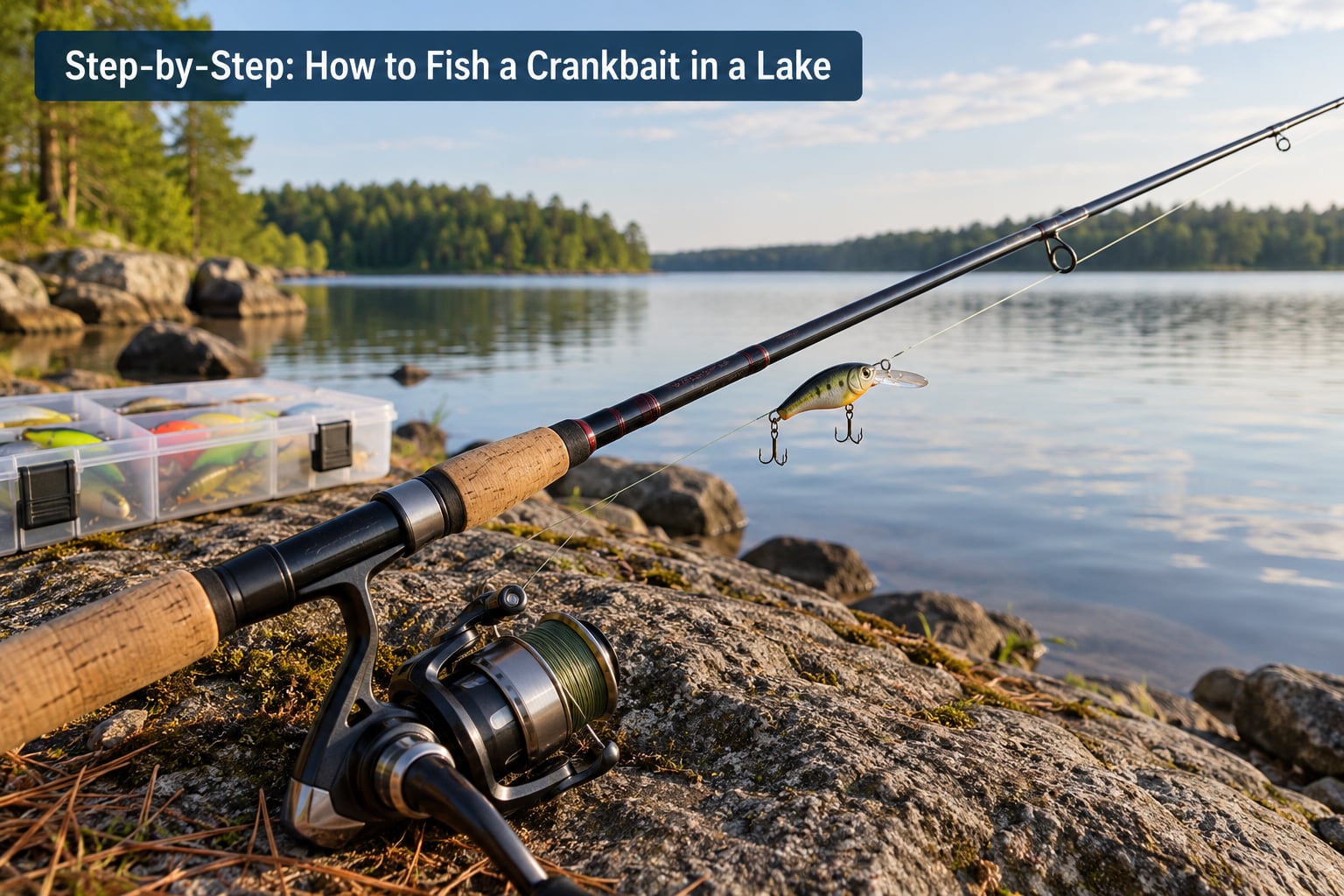
1. How to Fish a Crankbait in a Lake
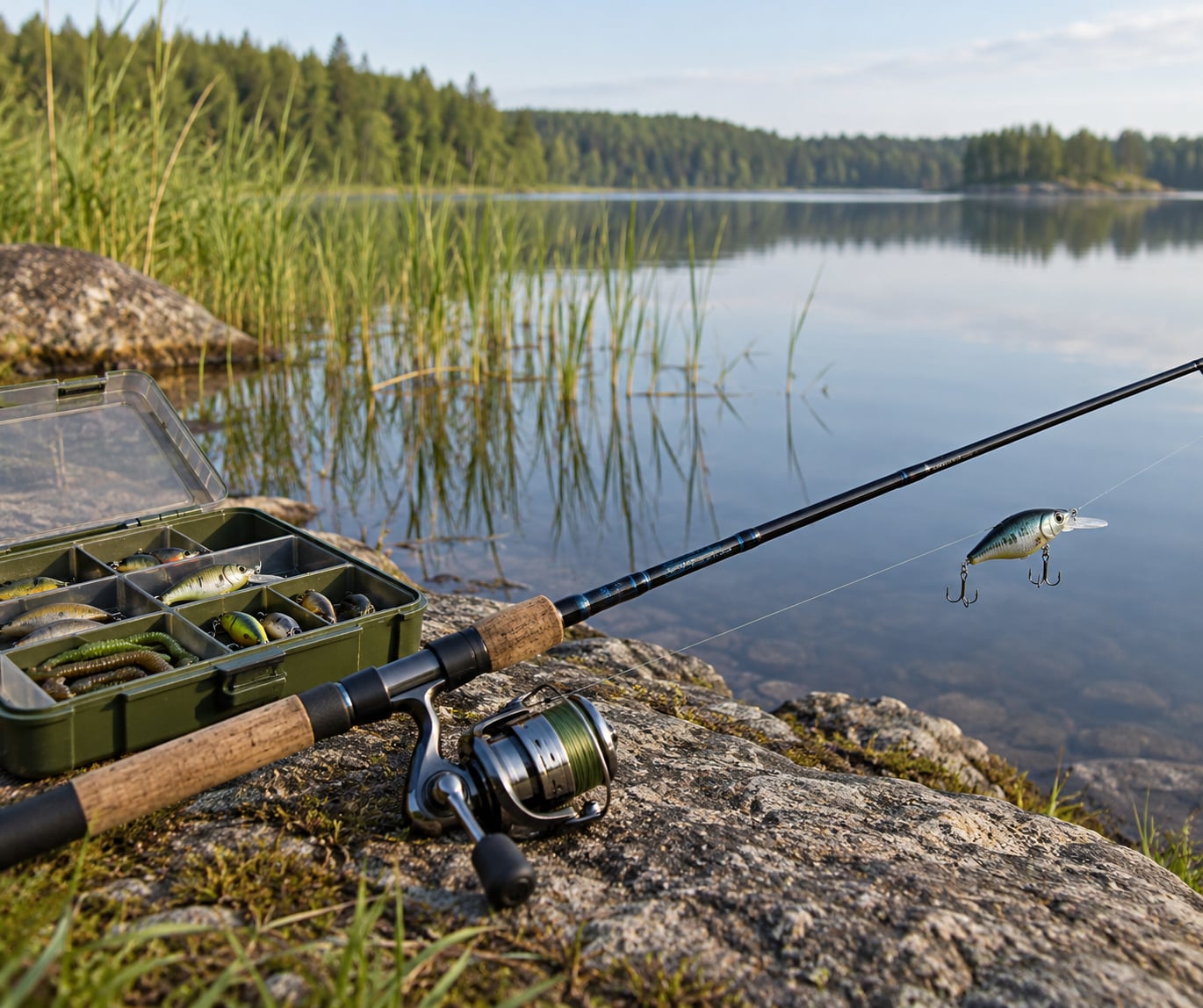
Learning how to fish a crankbait in a lake comes down to four decisions: which depth to run, where to aim the cast, how fast to retrieve, and when to set the hook. Pick a lure that runs at the depth you want, cast beyond the structure so the lure crosses it on the way in, and retrieve with the rod tip high enough to keep the lure off the bottom unless you want it there.
A steady, purposeful retrieve is the baseline. Everything else is a variation on that baseline. If the lure is getting hits and you are losing them, fix the hook set before you change the lure. If nothing is biting, change depth or location, not the color.
2. Choose the Right Crankbait for the Water
The bill on a crankbait determines how deep it runs. A small flat lip makes a shallow arc, a deep lip sends the lure almost straight down, and a lipless bait stays near the surface and works on the reaction of the vibration and the sound of the rattle rather than on depth.
| Crankbait type | Runs about | Lake zone it covers |
|---|---|---|
| Shallow square bill | 3 to 6 feet | Shallow gravel bars, grass edges, riprap along a bank, riprap dams |
| Medium round bill | 8 to 12 feet | Points, humps, ledges, second drop-offs in most lakes |
| Deep diver | 15 to 20 feet | Deep creek channels, summer ledges, rock piles in reservoir arms |
| Lipless | Surface to 3 feet | Dense vegetation, grass mats, shallow weed lines in summer |
Water clarity changes the choice as much as depth does. In stained or muddy water, pick a wide wobble and a louder rattle because fish rely on vibration. In clear water, go tighter in wobble and quieter, because fish see and spook before the lure gets close.
Water temperature matters too. Cold water slows fish down, so a slower retrieve and a smaller, tighter-wobbling lure usually do better. Warm water produces a fast, aggressive fish, and a wide wobble at a quicker speed is more likely to draw a reaction.
One trick that speeds up decision-making on the water: write the dive depth on the belly of the lure with a paint pen or a sharpie. Anglers use this so they can tell at a glance which bait runs to which depth without reading the box every cast.
3. Set Up for a Clear Retrieve
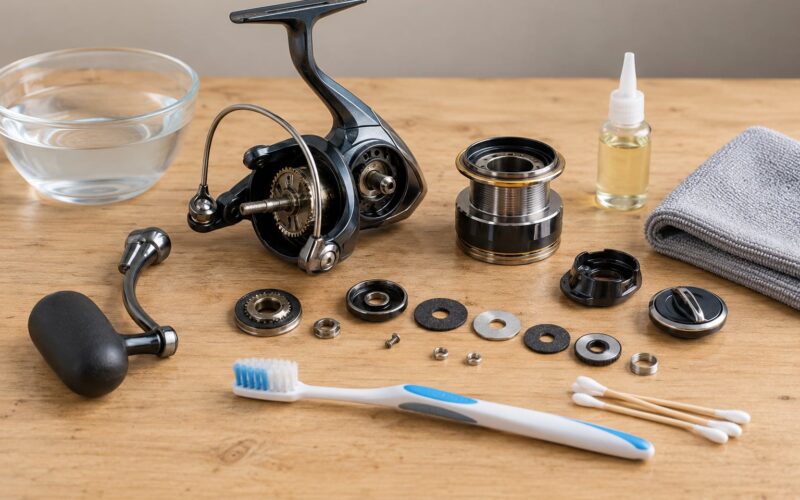
Set the drag so the spool gives line smoothly under steady pressure rather than jerking, and check that the drag washer is not dragging when the spool is released. Tie the lure to your leader with a snug knot, a Palomar or improved clinch, and leave enough slack to avoid cutting into the line on the cast but not so much that it tangles.
Check the lure running straight before you leave the dock. A bent hook or a lure that veers to one side means the eye tie is twisted, and that will show every cast.
Keep your rod tip high. The higher the tip, the shallower the lure runs; lowering the tip lets it dive deeper. This is the single control you have in real time, so make it a habit to start with the tip around 10 o’clock and lower it only when you want more depth.
4. Cast Toward Productive Lake Cover
Aim at structure where the bottom changes quickly, because that is where fish feed and where the plankton and the baitfish concentrate with them. Main lake points that run out into deep water, inside turns of a creek channel, drop-offs next to a flat, rock piles and riprap, and the edges of vegetation are the reliable targets.
Cast a few feet past the structure and let the lure work back across it. A cast that lands short of the drop-off keeps the lure in the flat all the way to the boat and wastes the trip.
From shore, the same logic applies with a shorter cast. Pick a point that runs out from where you stand, a creek mouth, or a bank with riprap below it, and cast along the edge rather than straight out. A 10 to 12 pound square bill with 12 pound mono reaches far enough and stays shallow enough to avoid the rocks near the bank. If you need to reach deeper water from the bank, run a crankbait on a Carolina rig with a weighted leader.
When you find a spot that produces, mark it. Note the depth, the water temperature, and how the spot is shaped, and come back to it on the next trip before you spend the whole day searching.
5. Use the Right Crankbait Retrieve
A steady retrieve is where you start, and most of your catching will happen on a steady retrieve. Hold the rod tip up, reel at a comfortable pace, and let the lure reach the end of the cast where it typically runs a little shallower before the lure settles back to its rated depth.
| Retrieve | What it does | When to use it |
|---|---|---|
| Steady | Keeps the lure at one depth with an even wobble | Default; covers the most water and finds the fish holding tight to structure |
| Stop-and-go | The pause lets a following fish catch up and strike | Clear water, colder water, and anytime a following fish is visible behind the lure |
| Burn and pause | A fast retrieve to the boat followed by a dead stop | When a fish is following but will not commit, or at the end of a cast near the boat |
| Yo-yo | Lift the rod and let the lure fall back toward you | Steep drop-offs, vertical structure, and fish that are looking up |
| Wake bait | A shallow, stop-and-go pattern walked on the surface | Surface activity early and late, or over a shallow flat in low light |
Stop-and-go often outproduces a straight crank on lakes. The pause is where the strike happens, because a fish that has been tracking the lure needs a moment to close the gap and commit. Anglers who switched from constant cranking to stop-and-go report the most reliable single change in their catch rate.
Match the retrieve speed to the water. Slow it down when the water is clear or cold, speed it up in stained water and in the heat of summer. If you feel bottom contact, take that as a cue to pause the lure and let it work off the structure, because contact often triggers the strike.
6. Set the Hook and Play the Fish
A bite on a crankbait feels like a thump, a jolt, or the sudden loss of tension as the fish takes the lure and swims away. The line going slack is the most reliable signal of all, and beginners miss more fish by reacting too late than too early.
When you feel it, sweep the rod to the side and lift it toward your waist, setting the hook with a firm, fast motion rather than a full overhead lift. The sideways sweep puts the hook through the fish’s mouth and pulls the line away from the lure’s belly, which keeps the hooks pointed away from the fish’s gills.
Once hooked, keep the rod bent and maintain steady pressure. Do not pump the rod up and down, because each lift gives the fish slack and each drop gives it a chance to throw the hook. Reel steadily, and when the fish nears the boat, keep the lure off the bottom so it does not gain line on a rock.
You will lose a few fish to treble hooks. That is normal, and it happens most when the fish is shallow-hooked. Keep the rod tip low during the fight so the hooks angle away from the fish’s mouth, and the number you lose drops noticeably.
Common Mistakes Beginners Make With Crankbaits
Almost every crankbait problem comes down to depth, speed, or attention. These are the six I see most often, and the fix for each.
Running a deep lure in shallow water. If your lure is diving 12 feet in a spot that is 8 feet deep, it is dragging on the bottom and your rod tip is bent over the whole retrieve. Either step up to a shallower lure or stop casting there. You cannot fish a lure shallower than the water it lands in without changing something.
Retrieving too fast for cold or clear water. Fish in these conditions are not moving much and they are watching carefully. Slow the retrieve down until the lure takes a full extra second to reach the end of the cast, and try a smaller tighter-wobbling bait with a single treble hook.
Casting into open water. A crankbait is a search bait, not a casting nut. If you are casting into the middle of a flat, you are not giving the lure anything to do. Move the boat or your position until a piece of structure is within throwing range.
Not reacting to a bite. Missing the hook set is the most common reason beginners think they are getting no bites when they are actually losing them. Sweep and lift the moment you feel weight, and do not wait for the fish to show itself.
Using the wrong line weight. Light line on a deep cast in wind will tangle, and heavy line in shallow cover will give you no warning bite. Match the line to the cast: heavy mono or fluoro for the deep stuff, lighter mono for the grass and the rocks.
Changing the lure every two casts. No bites in a spot usually means wrong depth, wrong speed, or wrong place. Give any change four or five full casts to show results before you move on, and keep a note of what you changed so you do not undo it by accident.
Tips for Better Crankbait Fishing
Log the water temperature every trip. It tells you more about where the fish are than any single lure choice, and a gradual warming across a month of trips will explain patterns that look random otherwise. The same goes for clarity: if the lake has turned green, lighten up the lure selection and lean on vibration and rattle.
Watch what is happening on the surface before you cast. Diving birds, a boil, or a school of baitfish holding over a hump tells you the depth you want to run before you ever turn the fish finder on. When the birds are working, a slow retrieve over the same area often produces a strike.
Give new spots a fair count. Most beginners report catching their first fish on a crankbait somewhere around the twentieth cast, and most of those early fish came from spots that looked too plain. A rocky point with nothing obviously special on it is exactly the kind of water that produces the first bite.
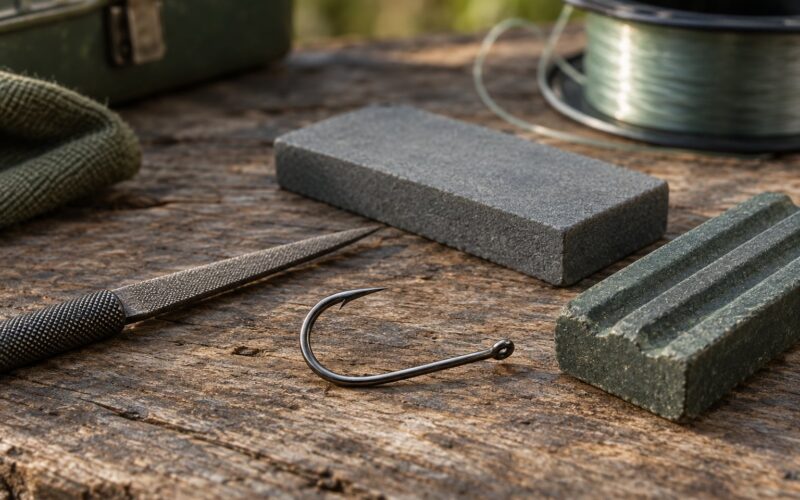
Tune before you fish. A rattle coming loose, a bent hook, or a lip that was tuned differently out of the box will change how the lure runs. The standard tuning order is to straighten the front hook, adjust the rear eye tie until the lure tracks straight, then check that the rattle sits tight against the body.
When the lake goes quiet in the middle of summer, work it slower and deeper. Fish often hold off the ledge during the heat of the day, and a deep crankbait worked along the ledge line with a pause at each rock gets more attention than a shallow cast at the same spot.
Frequently Asked Questions
How are you supposed to fish a crankbait?
Cast the lure past a piece of structure, hold your rod tip up so the bill keeps it at its rated depth, and retrieve at a steady pace. Pause occasionally or work it with a stop-and-go pattern so a following fish can commit. Feel for the thump of a bite and sweep the hookset sideways.
Do you just reel a crankbait?
A steady retrieve is where you start, but fishing a crankbait straight through every cast leaves a lot on the table. Alternate a few steady casts with stop-and-go, a burn-and-pause, or a change of depth at the end of the cast. Fish often decide to strike during the pause rather than during the movement.
What depth crankbait should I use on a lake?
Match the lure to the depth where you expect fish, not the deepest water in the lake. A shallow square bill at 3 to 6 feet works over gravel bars, grass edges, and riprap. A medium round bill at 8 to 12 feet covers most points and humps. A deep diver at 15 to 20 feet is for creek channels and summer ledges.
Do you need a sinker with a crankbait?
No, not when you are casting a diving crankbait, because the lip and the buoyancy of the body are what control its depth. A weight becomes useful when you fish a crankbait on a Carolina rig from shore or when you want the lure to sit still on a ledge instead of tracking forward.
What color crankbait works best in clear lake water?
In clear water, stay closer to what is actually there. Natural greys, greens, and shad-silver patterns work well, and a tight wobble with a single front treble hook does less to spook a fish that is looking at it. In stained or deep water, go brighter and louder, because the fish is reacting to vibration and flash rather than color.
How often should I change lures when nothing is biting?
Give any change four or five casts before you judge it, since a lure often needs part of a pass over the structure to trigger a fish. Change one variable at a time, starting with depth and then retrieve speed. If a spot has produced before, work it longer before moving, and change lures only after the location stops giving up anything.
Conclusion
Four things get a beginner catching fish on a crankbait in a lake. Start with a moderate action rod in the 6 foot 10 inch to 7 foot 6 inch range, a low-profile reel, and line matched to the depth you plan to fish. Then match the lure to the lake, casting shallow lures over bars and riprap and deep lures over creek channels and ledges.
Third, cast past structure instead of into open water, and hold the rod tip up so the lure runs at the depth you chose. Fourth, vary the retrieve before you vary anything else, and give every change five full casts before you write it off. Keep a note of what worked, because the second trip to a spot that produced is where a beginner turns into a regular.