Every paddleboarder falls in eventually, and the fall is only dangerous when you do it badly. To fall off a paddleboard safely: go off the side or off the tail, never toward the nose or the paddle, land flat on the water with your arms out, cover your head as you go under, and come up next to your board rather than away from it. Two minutes of rehearsal in waist-deep water removes most of the fear that stops beginners going out at all.
Most of that fear is about not getting back on. Paddlers who rehearse the climb-back in shallow water find the fall becomes boring, and boring is the goal. This guide covers the whole arc: preparing, falling, what to do in the water, how to remount, and what to do when the board is gone and you cannot get back on it.
It takes about ten minutes to practise properly and works on a flat lake, a slow river or a sheltered bay. The order below matters more than the words, so read it through once before your next session.
Table of Contents
- 1What You Need Before You Fall In
- 2Step-by-Step: How to Fall Off a Paddleboard Safely
- 3Step 1: Prepare Before You Fall
- 4Step 2: Move Away From the Paddleboard
- 5Step 3: Protect Your Head and Face
- 6Step 4: Enter the Water Calmly
- 7Step 5: Tread Water and Check Your Condition
- 8Step 6: Signal for Help and Recover
- 9Step 7: Get Back On Safely
- 10Common Mistakes to Avoid When You Fall In
- 11Safety Tips for Beginners
- 12Frequently Asked Questions
- 13Is it normal to fall off a paddleboard?
- 14Should beginners wear a paddleboard leash?
- 15What should I do if I hit my head after falling?
- 16How do I get back on a paddleboard from deep water?
- 17Can I safely fall forward off a paddleboard?
- 18Do I need to know how to swim to paddleboard?
- 19Conclusion
What You Need Before You Fall In
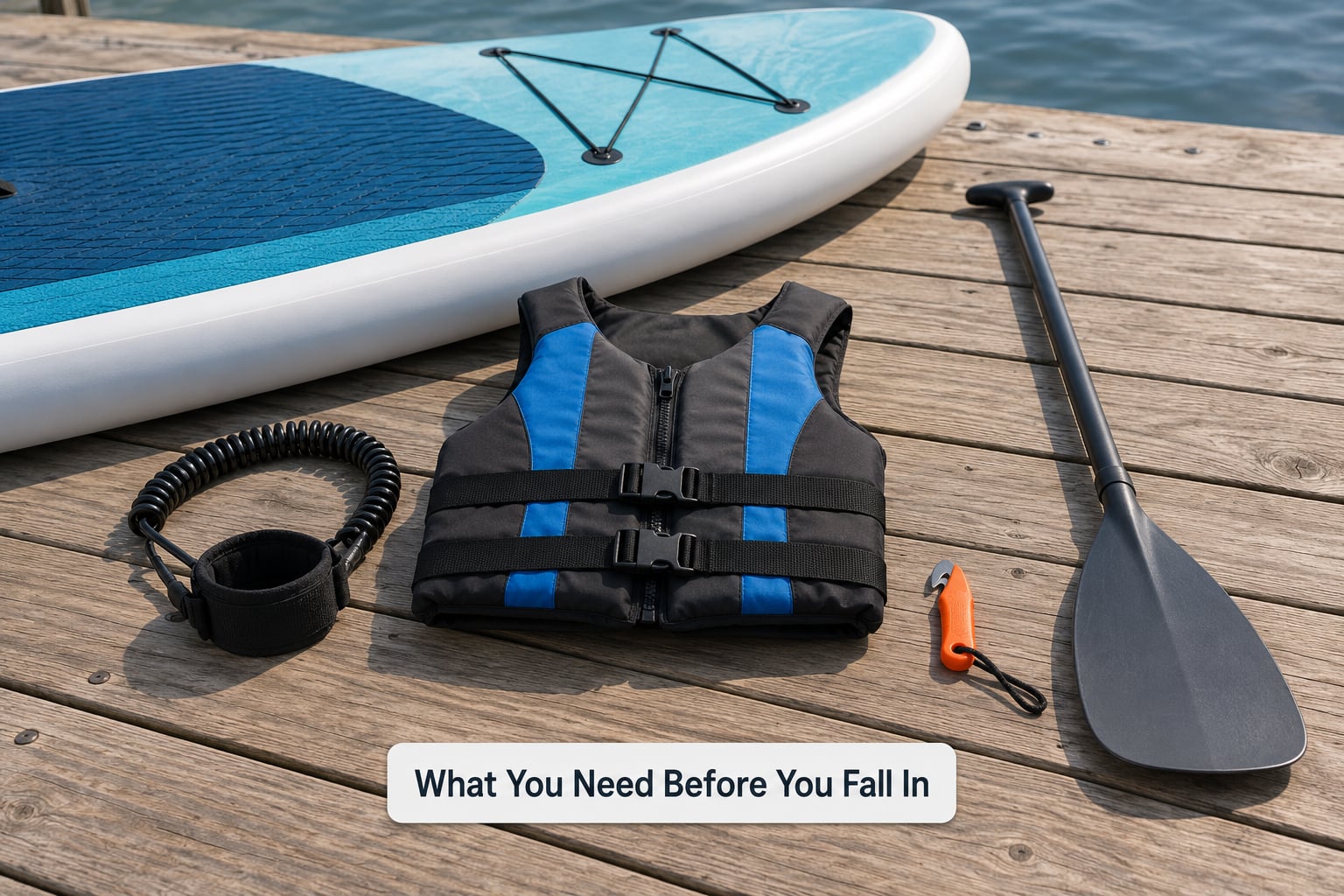
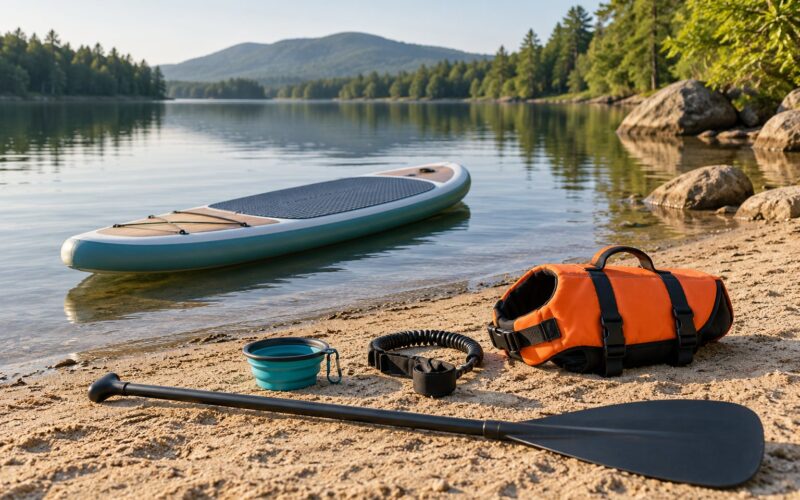
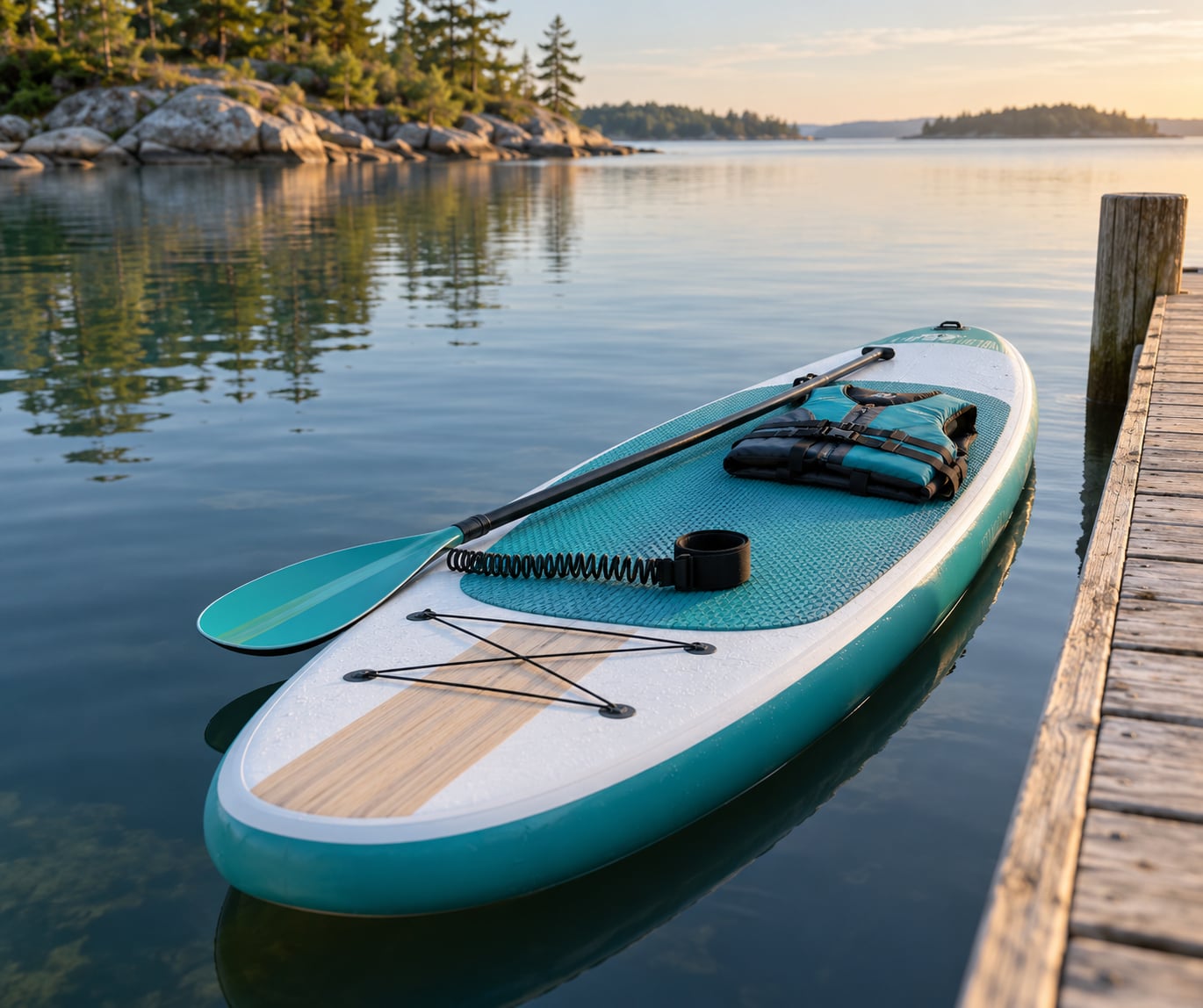
You need very little to fall safely, and most of it you should already be wearing. The list below is the minimum sensible kit for flat water on a warm day.
- A board with enough volume for your weight. A board rated well above your weight sits higher and takes a fall flatter, which means less of your body goes under. Inflatable boards are forgiving in a way hard boards are not.
- A correctly fitted leash. Coiled, attached to the D-ring at the tail, with the cuff sized so it stays snug above your ankle bone. A leash that drags in the water snags on everything it touches.
- A properly fitted PFD. Not a boat cushion, not a buoyancy belt on a big paddler, a buoyancy aid you can float in within seconds. Fasten it before you launch and check the strap has no slack.
- A paddle with a leash, or a spare. If you go in without a paddle leash, the board floats but your paddle does not stay with it.
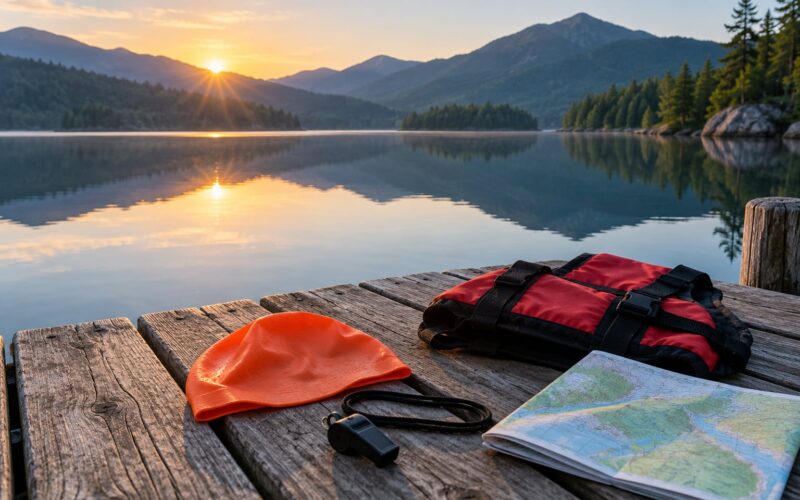
- A whistle on the PFD, not on the board. Board and rider separate; the whistle has to stay on your body.
- A safety knife, optional but cheap. Useful for cutting a snagged leash or line. Keep it on a lanyard around your neck or in a pocket, never loose.
Run a sixty-second check before you push off. Look at the water for swimmers, boats and motor traffic. Check the depth where you plan to paddle, and the bottom under it. Note the wind direction. Confirm the leash is on and the PFD is fastened. Then tell somebody where you are going and how long you expect to be out.
Dress for immersion, not for sunshine. A 22C air temperature with 14C water is a very different proposition from a warm lake in July, and you will have far more time in the water than you expect. If you are within a degree or two of water temperature you cannot tolerate for a minute, wear a wetsuit or a dry suit.
Step-by-Step: How to Fall Off a Paddleboard Safely
Step 1: Prepare Before You Fall
Choose flat water with no boat traffic for your first rehearsal, waist deep, in water you can touch bottom in. Anything else adds variables you do not need while learning a movement.
Check the bottom. Rocks, gravel, sticks, mussel beds and soft mud are what turn a harmless fall into a bruised back or a cut to the scalp. Launch sites are the worst spot on most lakes because that is where the sediment and the rocks are. If the water is shallow near shore, work your way out into deeper water before you practise, rather than practising in the danger zone.
Secure the leash exactly as the board and leash manufacturers instruct. Then know when to take it off. A leash becomes a hazard in a river, a fast tide, a weir, a strong current or anywhere there is submerged structure, because it can hold you under or pin you. If the board is going to drift and the water is moving, most instructors will tell you to paddle without it. Never improvise this on the day; decide before you launch.
Step 2: Move Away From the Paddleboard
Fall off to the side or straight back off the tail, and never toward the board. If you are going to go down, step off the edge with one foot and let the rest follow, rather than toppling forward over the deck.
Push the board away from you as you go, gently, with a flat palm on the deck. The board has about as much inertia as a large door, and it will swing back. Push it clear and it stays clear.
Let the paddle go with the board, or hold it out at arm’s length on the far side. Never leave the shaft lying across your body and the board together. That is how paddles end up across your ribs, or the shaft ends up trapped between your ankle and the leash, and it is the single most avoidable injury on this list.
Step 3: Protect Your Head and Face
As your feet leave the board, bring both forearms up over your ears and tuck your chin to your chest. This is the same instinct that protects you when you go off a bike or a skateboard, and it works here.
Land on your side or your back, flat, not on an outstretched hand. Locked arms on entry mean broken wrists, and a head hitting the surface or a submerged object means something much worse.
Do not dive. A forward dive puts your face into water you cannot see and gives your board a chance to land on top of you. There is one narrow exception: if you are going off a very high board into water you know is deep, a feet-first or head-up controlled entry is better than an uncontrolled topple. Every other time, fall flat.
Step 4: Enter the Water Calmly
In shallow water, step off and let your feet find the bottom, then check the water depth with a foot before you commit your weight. Sliding in seated, feet first, is gentler than a standing drop when you are unsure of the bottom.
In deeper water, slide off sideways and enter flat. Keep your chin up and your face above the surface from the moment you let go of the board, and exhale slowly through your nose as you go under so you do not hold your breath.
Stay aware on the way down. The three things that hurt people are the board itself, the fin, and whatever is underneath the water. Once you are in, surface looking for the board, the paddle and anyone nearby before you move.
Step 5: Tread Water and Check Your Condition
Your first job in the water is not to swim anywhere. It is to establish that you are all right.
If the water is calm and you feel fine, float on your back for ten seconds with your ears under and your knees slightly bent. That tells you two things: whether you are actually hurt, and whether you can relax. Beginners who have never done it tend to thrash, and thrashing uses more energy than the situation needs.
Look yourself over. Neck and back pain, headache, dizziness, blurred vision, nausea, confusion, ringing ears, numbness, chest pain, or any difficulty breathing are all reasons to stop paddling and get help. Do not write off a blow to the head as nothing; get out, and have someone look at you.
Call emergency services straight away if there is a loss of consciousness, confusion that does not clear, repeated vomiting, weakness on one side, slurred speech, severe neck pain, or trouble breathing. Anyone with a suspected spinal injury should be held still in a floating position and not moved until trained help arrives. Water safety guidance is general information, not medical advice; if you are unsure about a symptom, get it checked by a doctor or pharmacist rather than deciding at the lake.
Step 6: Signal for Help and Recover
Whistle three times, repeatedly. That is the international distress signal, it carries far further than a shout, and it works when your arms are tired. Wave the paddle above your head if the board is within reach; if it is not, wave anything that floats or catches light.
If the board has drifted away, stay in place and keep signalling before you start swimming. A drifting SUP is large, bright and visible. You are harder to see. If you are close enough to shore to swim and someone onshore knows where you are, swim along the shoreline rather than out into open water, and keep the board in sight the whole way.
Wait for trained assistance rather than attempting a remount when there are boats, surf, current, cold in you, or any injury to your shoulder, back or neck. A person with a bad shoulder will not get up a 12-foot board, and trying makes the injury worse. Floating on your back in a PFD while someone competent comes to you is a completely successful outcome.
Step 7: Get Back On Safely
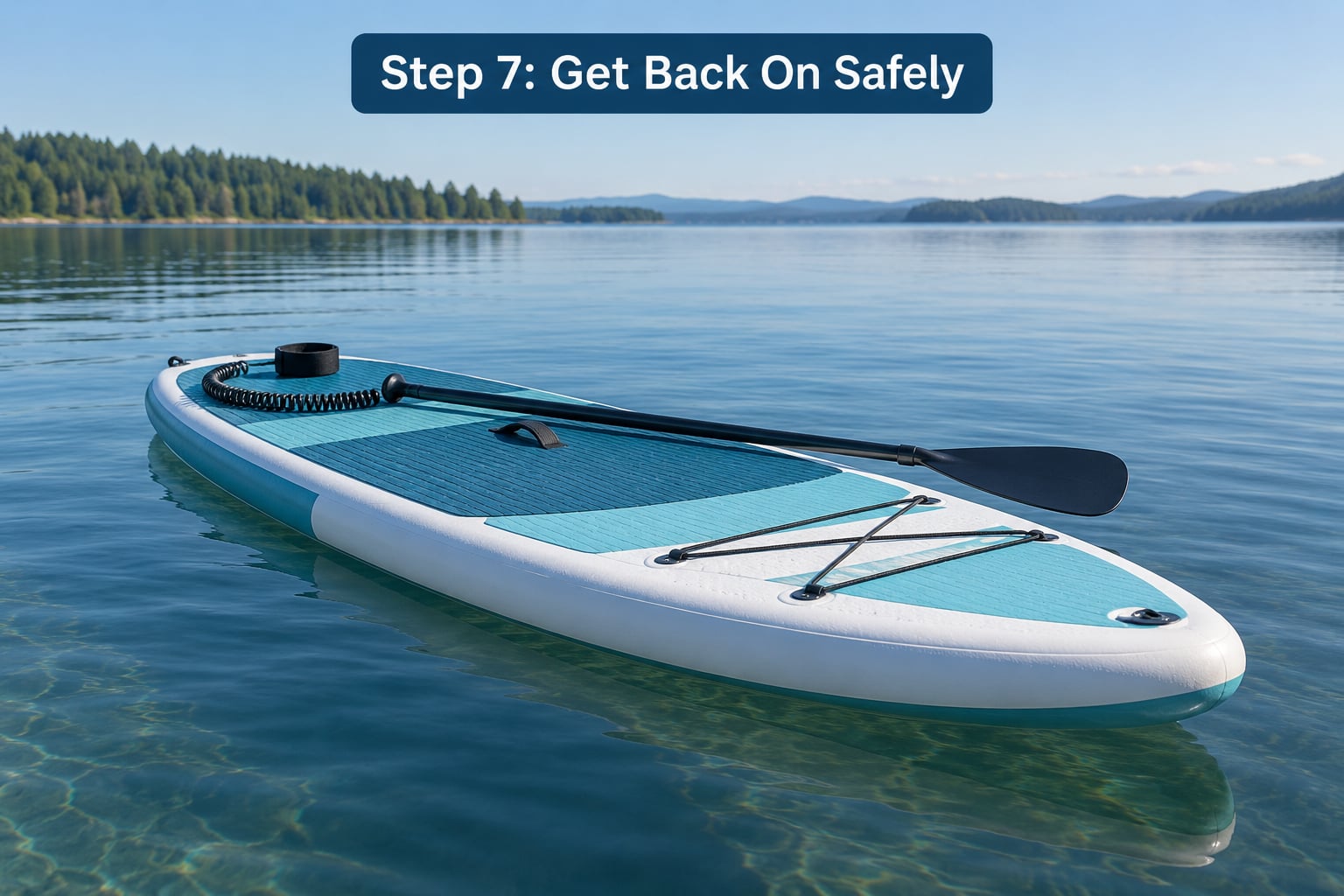
Only remount when the water around you is clear, the board is steady, and you have no injury that stops you pulling. Approach the board from behind the tail, since it is the lowest, widest and most stable point, and grab the carry handle if there is one.
Side remount: swim to the side of the board, hold the handle or rail with one hand and the deck edge with the other, keep the board flat and pinned to the surface, get your chest and hips onto the deck, then swing a knee up and roll onto your front. Stay prone, paddle back to shallow water, then bring your feet up one at a time and stand up with your knees bent.
Tail remount: swim to the tail, hold the end of the board with both hands, push down so the tail lifts slightly toward your chest, let the board come up onto your lap and roll it under you until your chest is on the deck, then work your feet around to a kneeling start and up.
Two practical warnings. If you are wearing a bulky front-mounted PFD or inflatable belt, check that it is not going to catch the deck edge as you roll over; tuck it in first or take it off at the rail before you commit. And do not try to stand immediately in waves, current, boat traffic or near other paddlers. Lying prone, paddling to safety and standing in shallow water is the correct order.
Common Mistakes to Avoid When You Fall In
Jumping forward. A forward jump from a moving board puts your face in unseen water and leaves the board free to hit you. Fall away instead.
Falling toward the board. Toppling nose-down is how boards strike heads. Push the board clear as you go.
Landing on locked arms. Straight arms at speed means a wrist fracture. Forearms over the ears, chin tucked, land on your side.
Leaving the paddle between you and the board. Let it go with the board or hold it out at arm’s length. Never let the shaft trap your ribs or ankle.
Holding the board too tightly. Crashing into it with your arms locked is the panicked version of the same mistake. Approach it the way you would approach a swimming pool ladder.
Ignoring weather and traffic. Most serious falls happen when a gust, a squall or a boat arrives unexpectedly. Check the forecast and the water before you launch, and come in when it changes.
Wearing the leash wrong. An oversized cuff, a leash wrapped around the wrist, or a slack line across the deck all create problems. A leash in moving water or around submerged structure is a hazard, so decide before you launch whether you want it on.
Remounting in conditions that make it dangerous. Chop, current, boat traffic and cold water all turn a simple climb-back into a fight. Paddle prone to safety instead, and stand up in shallow water.
Safety Tips for Beginners
Practise the progression rather than jumping to the hard version. Start in waist-deep water where you can stand, then shoulder-deep, then water you cannot touch bottom in. Do a deliberate capsize and climb-back at each stage, on flat water, on a day with no wind. Once the climb-back works in still water it will work in most small chop.
Check your PFD fit properly. A vest that is loose at the shoulders will ride up over your ears in the water, and a cushion PFD pushed down around your hips does nothing. Fasten it on land, pull the shoulder straps tight, and have somebody else check the chin strap. Rental operators rarely fit these properly.
Keep your distance. Paddle well clear of swimmers, anglers in small boats, personal watercraft and other paddleboards, and give windsurfers and kiters a wide berth because they are fast in a direction you will not see. Learn to read a wind gradient, too: offshore wind blows away from shore and often hides in the first few hundred metres, while an onshore wind pushes you back toward it.
Carry a whistle on your PFD and a phone in a waterproof case. The phone is a floating object first and a communication device second, which is the correct order of importance.
Check local rules before you go. Personal flotation requirements, leash rules and launch permissions vary by waterway, and some lakes and coastal areas enforce them strictly. Paddle with a buddy when you can, tell someone your route and your return time, and stay inside conditions you can handle. Beginners who get into trouble are almost never on water beyond their ability; they are on water that changed faster than they expected.
Frequently Asked Questions
Is it normal to fall off a paddleboard?
Yes. Experienced paddlers treat falling as a matter of when, not if, and the same is true on flat water. Losing balance usually comes from looking at your feet, catching a paddle stroke too late, or a gust of wind you did not see coming. Treat every fall as practice for the next one: push the board away, land flat, cover your head, then swim back and climb on.
Should beginners wear a paddleboard leash?
On flat lakes and slow water, yes. A leash keeps an inflatable board beside you so you can climb back on, and beginners routinely underestimate how far they drift in a light wind. Wear the cuff snug above the ankle and never wrap it round your hand. In a river, fast tide or near submerged structure, a leash can hold you under, so ask a local instructor or authority before launching.
What should I do if I hit my head after falling?
Get out of the water and get help, and do not get back in alone. Watch for headache, dizziness, nausea, confusion, ringing ears, blurred vision, weakness, slurred speech or trouble with balance. Call emergency services if the person lost consciousness, is confused, vomits more than once, has severe neck pain or is not improving. Even a knock that feels minor deserves checking by a medical professional rather than a guess at the lake.
How do I get back on a paddleboard from deep water?
Swim to the tail rather than the nose, because the tail sits lowest and is the most stable. Hold the end of the board with both hands, push down so the tail rises toward your chest, and roll the board over yourself onto your front. Alternatively swim to a side rail or the carry handle, pin the board flat, get your chest on the deck, then swing a knee up. Paddle prone to shallow water before you stand.
Can I safely fall forward off a paddleboard?
Usually not. A forward fall sends your face into water you cannot see and leaves the board loose enough to land on your head. The safe version is falling flat to the side or straight back off the tail, with forearms over your ears, chin tucked and elbows bent. Controlled entry only makes sense off a high board into water you have confirmed is deep and clear, and only when you are already comfortable falling flat.
Do I need to know how to swim to paddleboard?
Yes. Nobody who is going out on a paddleboard should be a non-swimmer. Even strong swimmers should treat the water as a hazard, because a PFD keeps your head above the surface but does nothing about a foot entangling a weed bed, a cold shock response, or an injury that stops you swimming. If you cannot swim comfortably, take a lesson before you go on your own, and use a buddy system on every outing.
Conclusion
Five things to remember, in order. Move away from the board and push it clear. Protect your head with your forearms and tuck your chin. Land flat and keep your face above the water. Surface calm and check for injury before you move anywhere. Signal for help first, then swim, and remount only when the water around you is clear.
Rehearse the whole sequence in waist-deep water on a flat day before you rely on it anywhere less forgiving. Once you have fallen in and climbed back on a couple of times, the fear drops away and the paddleboarding gets good. Updated for 2026, this guide reflects current guidance on cold water immersion and personal flotation from bodies such as the RNLI and national boating authorities; local rules always take precedence.