If lightning starts while you are boating, get inside a hard-topped boat or a fully enclosed cabin, close the windows and hatches, and keep your hands off rails, antennas and any electronics. Then get to the nearest safe landing, and stay sheltered for 30 minutes after the last thunder you hear.
Most boaters wait too long to move, and that is where the plan for what to do if lightning starts while boating usually falls apart. Water is a good conductor, and on an open lake your boat is often the tallest, most isolated object around, which is exactly the setup that makes a strike both likely and dangerous. The steps below take about two minutes to read and are worth memorizing before launch.
Updated for 2026.
Table of Contents
- 1What You Need
- 2What to Do If Lightning Starts While Boating: Step-by-Step
- 3Recognize lightning from thunder and visible strikes
- 4Tell everyone what to do if lightning starts while boating
- 5Head for the nearest safe shore or hard-topped shelter
- 6Avoid swimming, anchoring in the storm, and touching equipment
- 7If shore cannot be reached, keep the boat stable and make the boat safer
- 8Move away from the shoreline after reaching land
- 9Wait after the last thunder before heading back out
- 10Common Mistakes
- 11Frequently Asked Questions
- 12Is it safer to stay in the water or remain in a boat during lightning?
- 13Can lightning strike a fiberglass boat while everyone is inside?
- 14What should I do if lightning starts while fishing from a small boat?
- 15How do I keep children safe if lightning appears on a family boating trip?
- 16Is a covered boat or a hard-topped vehicle safe shelter from lightning?
- 17How long should I wait after hearing thunder before going back on the lake?
- 18Conclusion
What You Need
Lightning safety on a boat is mostly decided before the storm arrives. Ten minutes of preparation at the ramp beats any improvisation you can manage with dark clouds overhead.
- Personal flotation devices for everyone aboard, worn and zipped, not stowed under a seat. A boat under a strike can roll, and cold water shock sets in fast.
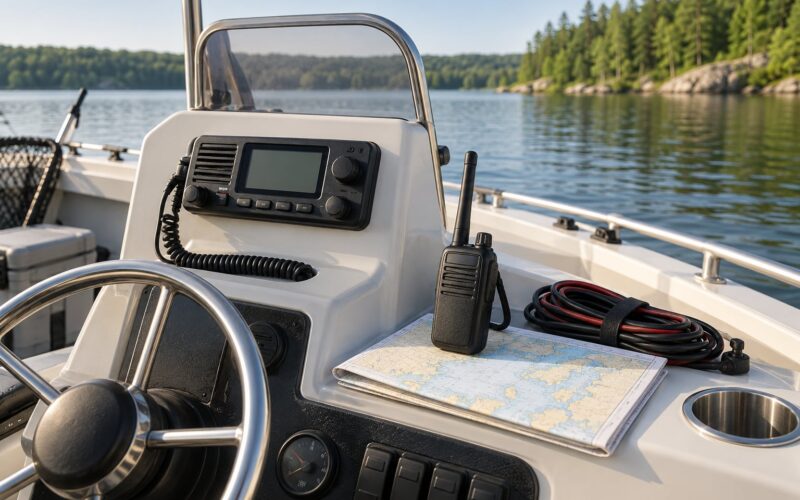
- A charged VHF marine radio plus a handheld. Cell coverage drops in a squall, and a radio is how you call a Mayday that someone hears.
- A NOAA weather radio for continuous marine and severe weather alerts, so warnings reach you on the water rather than at the ramp.
- A working anchor and enough rode to hold in a blow, with the rode ready to run rather than coiled on the deck.
- A first-aid kit and a fire extinguisher. Both are cheap, and both get used after a strike rather than during one.
- A float plan and a check-in person. Route, boat description, passenger count, and the time you expect back.
- A bow light and nav lights that work. Afternoon storms often arrive faster than daylight plans assume.
Add a bilge pump you trust, water and a windbreaker for everyone, and a note of your home and insurance contacts somewhere dry. My own rule is that anything I would be upset to lose goes in the dry bag at the dock, not the console.
One more system worth understanding: lightning protection on the boat itself. It is a main conductor leading to a ground plate, bonded to the through-hull fittings so current can leave the boat through the hull instead of through the cabin. It is worth having, and it protects electronics and wiring far better than it protects people. It does not turn an open boat into shelter, which is a common misunderstanding on the forums.
What to Do If Lightning Starts While Boating: Step-by-Step
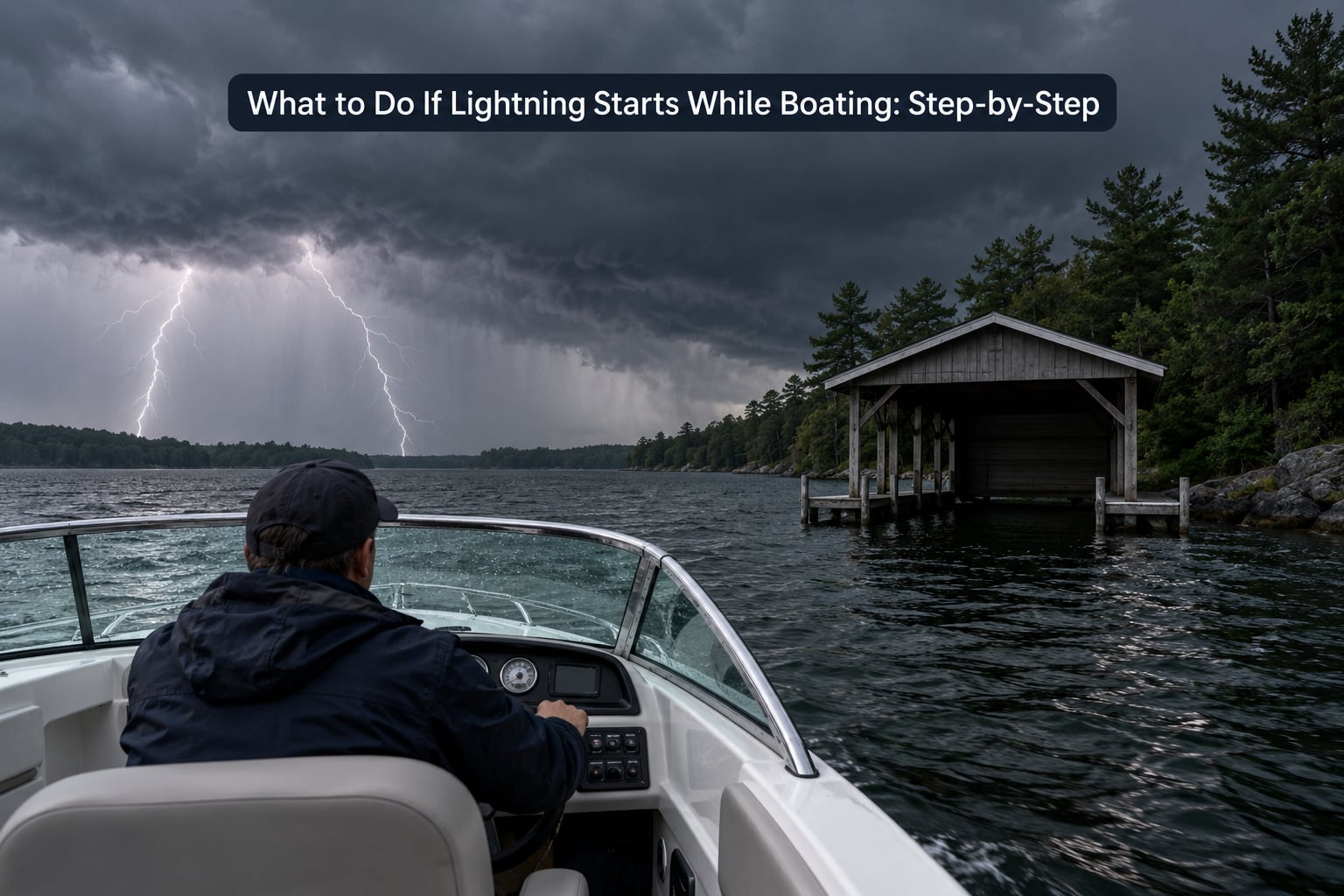
Recognize lightning from thunder and visible strikes
Thunder means lightning is close enough to hurt you, so treat any rumble as an instruction rather than background noise. You do not need to wait for a visible strike or for the rain to start.
To estimate distance, watch the flash and start counting seconds until the thunder arrives. Each count is roughly 1,000 feet of separation, so five seconds puts the strike near a mile away, and twenty seconds means about four miles. Boaters on thehulltruth.com and other forums call this simple version the flash-to-bang rule, and it is good enough for a lake.
Also watch for the other warning signs: towering white cumulus turning dark gray, a sudden shift in wind, static on the radio, and flat, glassy water under a lowering sky. Afternoon storms over warm lakes can build directly overhead with almost no build-up time.
Tell everyone what to do if lightning starts while boating
Say it out loud, once, clearly. Skippers often assume the crew is following along, and passengers often assume the skipper has a plan.
Call out three things: put on or hold your PFD, get below and inside, and do not touch metal. Then count heads. On a small boat it takes twenty seconds to count everyone, and that is far cheaper than a search in a rainstorm.
Keep passengers seated and holding on. Standing up in an open boat raises your profile and your chance of a fall into cold water, and an argument about whether the trip continues only costs time.
Head for the nearest safe shore or hard-topped shelter
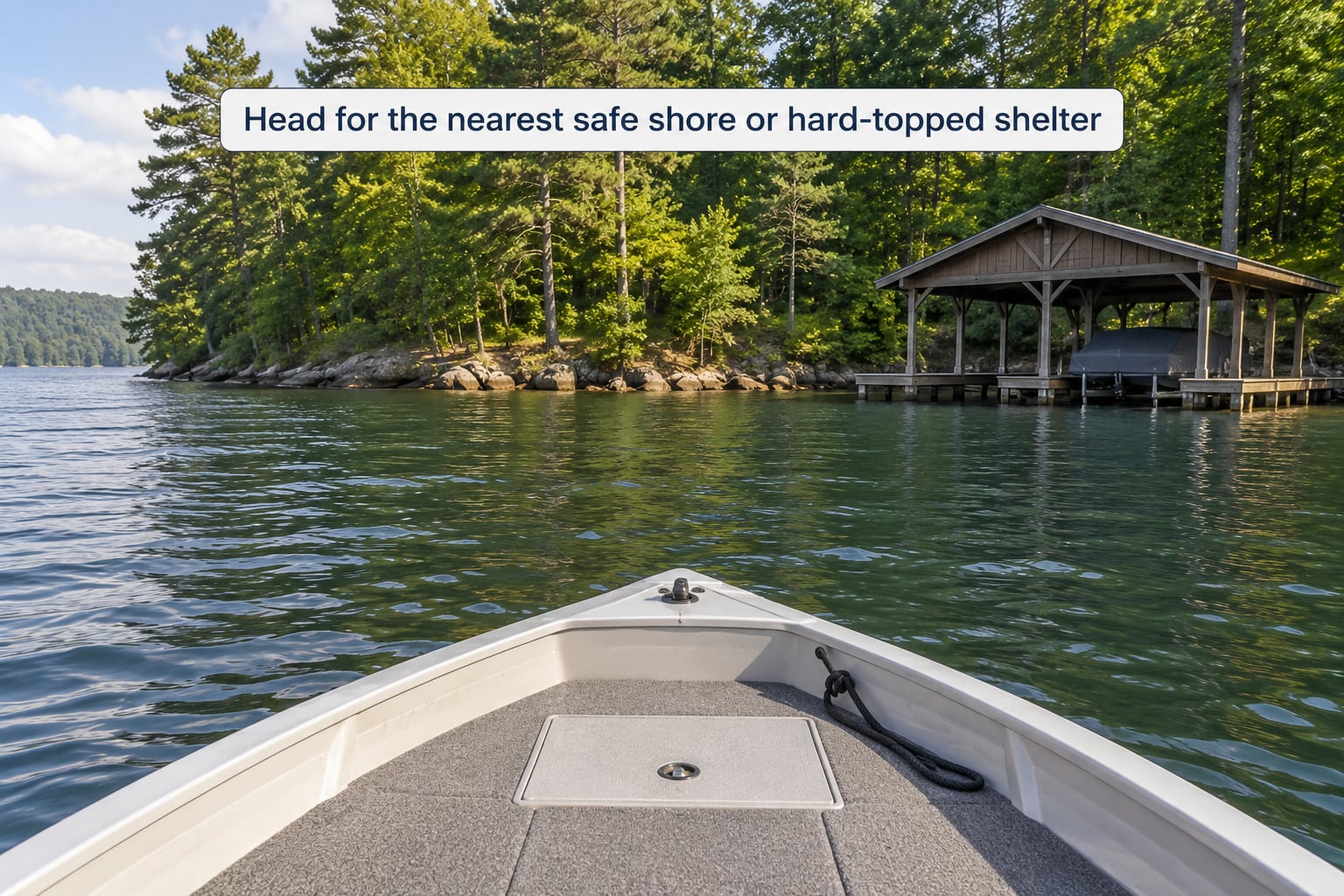
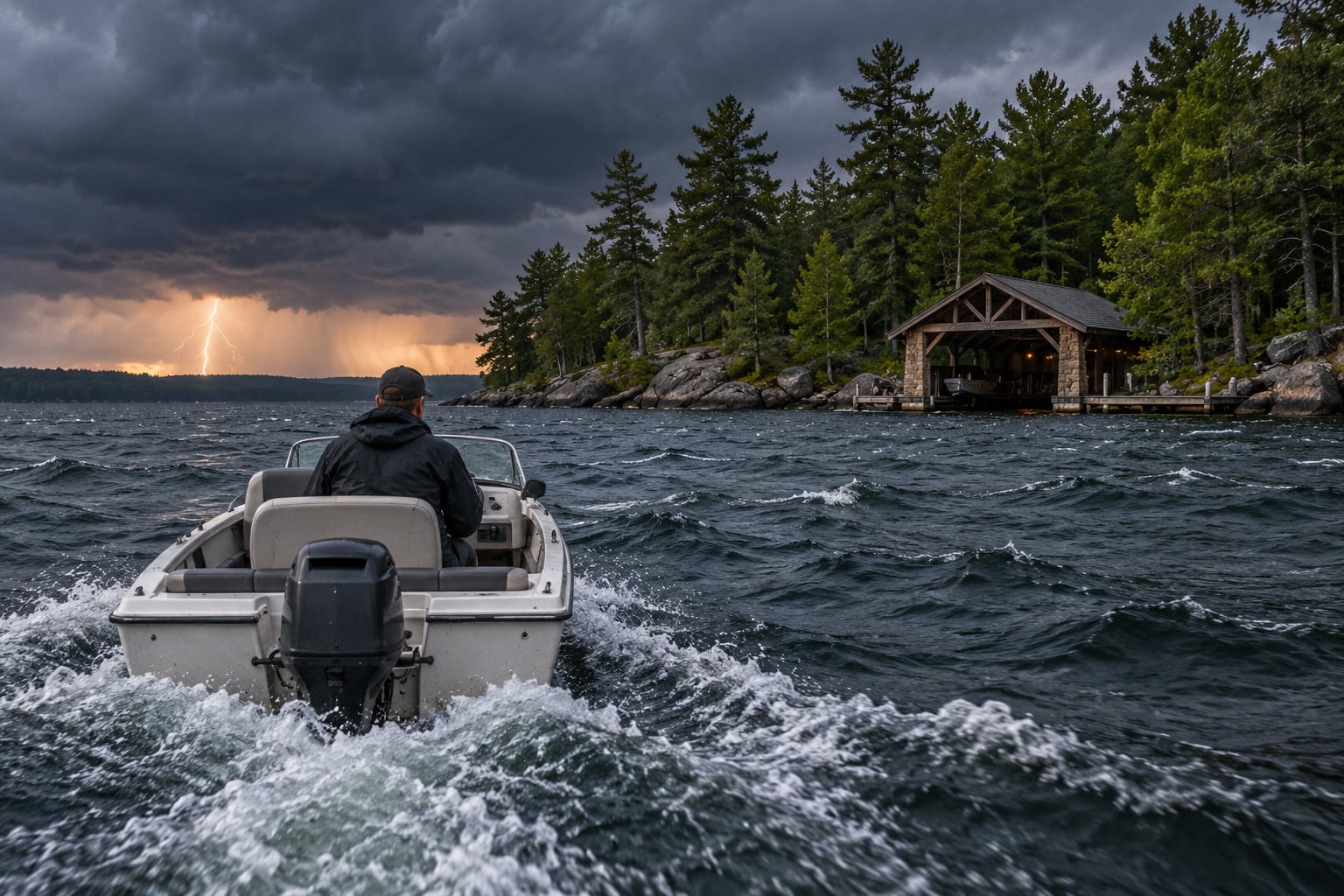
Make a calm, steady run toward the closest safe landing. Do not rush the throttle and do not tack wildly trying to beat the storm; a swamped boat at a dock is the same emergency as a swamped boat on the lake.
Aim for a substantial building or a hard-topped vehicle on land. Avoid exposed beaches with an open shelter, isolated tall trees, and busy launch ramps where many people, antennas and metal frames cluster together. Bridges are not shelter: power lines, concrete spans and the traffic on them create side-flash paths that put you between tall conductive objects.
Do not count on outrunning the weather. A boat that is alone on a large lake is the tallest thing for miles, and the odds only get worse when you are the only boat in the area.
Avoid swimming, anchoring in the storm, and touching equipment
Stay in the boat. A swimmer is separated from the hull, loses the protection the hull offers, and can be incapacitated by a strike or cramp with no one nearby.
Skip anchoring in open water during the storm. Holding a fixed position keeps you in one place, keeps you the highest object around, and commits you to a spot before you know where the storm exits.
Keep your hands off metal rails, cleats, the trolling motor, antennas, steering wheels with built-in electronics and any gear still plugged in. Grounding current follows the easiest path, and you do not want to be standing in it.
If shore cannot be reached, keep the boat stable and make the boat safer
Most lakes are small enough that shore is minutes away, so this is the offshore fallback. Stay with the vessel, which is safer than the water around it.
- Turn the bow into the wind and incoming waves at roughly a 45-degree angle, working slowly so you do not broach.
- Have one passenger watch the horizon for changes and call them out.
- Send a short distress or position message by VHF if your radio allows, and keep the channel monitored.
- Lower or secure a canopy, sail or outrigger only when it is safe to do so without anyone standing in the open.
- Keep everyone low and seated. Do not attempt any maneuver that would put the rail under water.
Move away from the shoreline after reaching land
Landing the boat is the halfway point, not the finish. Parking under a big tree, beside the water at an open ramp, or next to a marina fence can still leave people exposed.
Walk passengers to a substantial building or into a hard-topped vehicle, then keep a healthy distance from the shoreline, isolated tall objects and metal equipment such as cleats, fuel pumps and railings. Count everyone again at the shelter.
Wait after the last thunder before heading back out
Stay put until at least 30 minutes have passed since the last thunder. Every rumble resets that clock, because the cell can hold lightning well beyond the rain you can see.
This is the standard 30-minute rule used by the National Weather Service and boating groups, and it beats any guess based on how clear the sky looks. After the wait, recheck alerts, wind, waves and visibility, then make a decision about your actual conditions rather than the forecast from an hour ago.
Common Mistakes
Almost every boating lightning accident traces back to one of these. Each has a simple fix.
Waiting for rain. Lightning often arrives well before the rain does, and the tallest cumulus build overhead long before a drop falls. Fix: act on the first thunder.
Sheltering under a tree. Trees are the most common lightning fatality object on land, and a shoreline tree is the same hazard with a boat attached. Fix: go inside a building or a hard-topped vehicle.
Leaving the boat to swim ashore. You trade a protected platform for cold water and a long swim. Fix: stay aboard and call for help by radio.
Treating the beach as shelter. Open sand with a few umbrellas does nothing for you. Fix: walk to a building.
Standing up in a small open boat. Height and loose footing in a pitching hull are a bad combination. Fix: sit low, hold on, and keep the PFD on.
Grabbing metal gear in a hurry. Handrails, a stainless rod holder and a trolling motor are all connected paths. Fix: hands in your lap, or on a non-conductive seat or handle.
Restarting too soon after the thunder stops. Clearing skies can happen while the cell is still overhead. Fix: wait the full 30 minutes after the last rumble, then reassess.
Anchoring under a bridge. It reads as clever shelter, and it puts your boat beside power infrastructure and concrete spans while eliminating your ability to leave. Fix: pick an open stretch of shoreline instead.
Two more worth naming. Disconnecting electronics in a panic wastes time and rarely saves them, since sailors on r/sailing report that a struck vessel loses electronics and instruments regardless. And lightning protection systems, which bond through-hull fittings to a ground plate and a main conductor, help the boat and its systems while doing nothing for the person standing outside.
Frequently Asked Questions
Is it safer to stay in the water or remain in a boat during lightning?
Stay with the boat. The hull sits in conductive water and gives the current a path around you, while a swimmer is separated from that protection and can be stunned or cramp. Stay aboard, keep everyone low and holding on, and call for help by radio rather than attempting to swim to shore.
Can lightning strike a fiberglass boat while everyone is inside?
A strike can enter through an antenna, mast, rail or raised electronics, and fiberglass itself conducts some current, so the boat is not automatically safe. Inside a hard top or enclosed cabin with windows and hatches closed, stay off metal and electrical gear and keep your hands and feet off the deck and cabin sides. That is the safest position available on the water.
What should I do if lightning starts while fishing from a small boat?
Put rods down without holding them, have everyone put on a PFD, and move to the closest safe landing immediately. In an open skiff with no shelter, sit low with hands in your lap and avoid the trolling motor, rails and console. Get out of the rain and into a building on shore rather than fishing through the cell.
How do I keep children safe if lightning appears on a family boating trip?
Put life jackets on children first and keep them seated next to an adult, not standing on the deck. Move the boat to the nearest safe landing, then walk the group into a substantial building or hard-topped vehicle, well away from shoreline trees and metal railings. Count heads twice, and keep everyone there for 30 minutes after the last thunder.
Is a covered boat or a hard-topped vehicle safe shelter from lightning?
A fully enclosed cabin or hard top is good shelter, and a hard-topped vehicle is the best shelter available ashore because its metal shell carries current around the occupants. A soft boat cover or a canopy is not. A fiberglass hull is not a guaranteed shield either, so avoid open hatches, standing outside and touching metal fittings in any case.
How long should I wait after hearing thunder before going back on the lake?
Wait at least 30 minutes after the last thunder before leaving shelter, and restart that count every time you hear a new rumble. Clearing skies and quiet wind do not mean the cell has moved, because lightning can persist well beyond visible rain. Once the 30 minutes are up, check alerts, wind, waves and visibility before heading out again.
Conclusion
Thunder is the warning, not the danger. Put PFDs on, close the windows and hatches, keep hands off metal, and move at a steady pace toward the nearest safe landing. From there, treat the shoreline as still dangerous and walk into a building or hard-topped vehicle.
Then wait. Thirty minutes after the last rumble, with a fresh look at alerts, wind and waves, is what to do if lightning starts while boating next time. Learn it on shore and it will be automatic when the sky changes color.