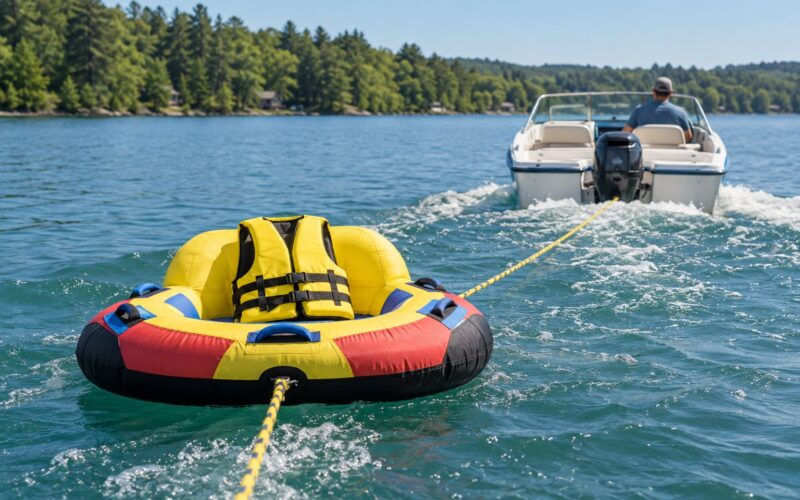
To teach someone to water ski, run a staged progression instead of dropping them straight behind the boat. Start them on a tube or kneeboard, rehearse the stance on land, then run a deep water start at about 10 mph while they hold a cannonball position and let the boat pull them up. Most beginners are gliding within two or three sessions.
Water skiing has a reputation for being harder than it is. The skill itself is balance, not strength, and the part that trips up nearly every new skier is a small chain of habits: bending the elbows, standing too early, then yanking against a slack rope. Fix those three and the boat does the rest.
Plan on a two-hour session, not a two-minute one. Realistically you are looking at one or two sessions before a first confident upright glide and closer to a full season before anyone is linking turns or crossing a wake.
Table of Contents
- 1What You Need
- 2The hand signals to agree on before anyone gets wet
- 3Step-by-Step
- 41. Start With a Dry-Land Lesson
- 52. Practice the Deep-Water Start
- 63. Find the Glide Position
- 74. Build Speed and Steering
- 85. Introduce Turning and Stopping
- 96. Move Toward a Full Run
- 10Common Mistakes
- 11Frequently Asked Questions
- 12What is the easiest way to teach someone to water ski?
- 13Do I need a specialized boat to teach water skiing?
- 14How old should a beginner be before water skiing?
- 15What speed should a beginner water ski at?
- 16How do I help a beginner rise from the water?
- 17What should I do if the skier falls?
What You Need
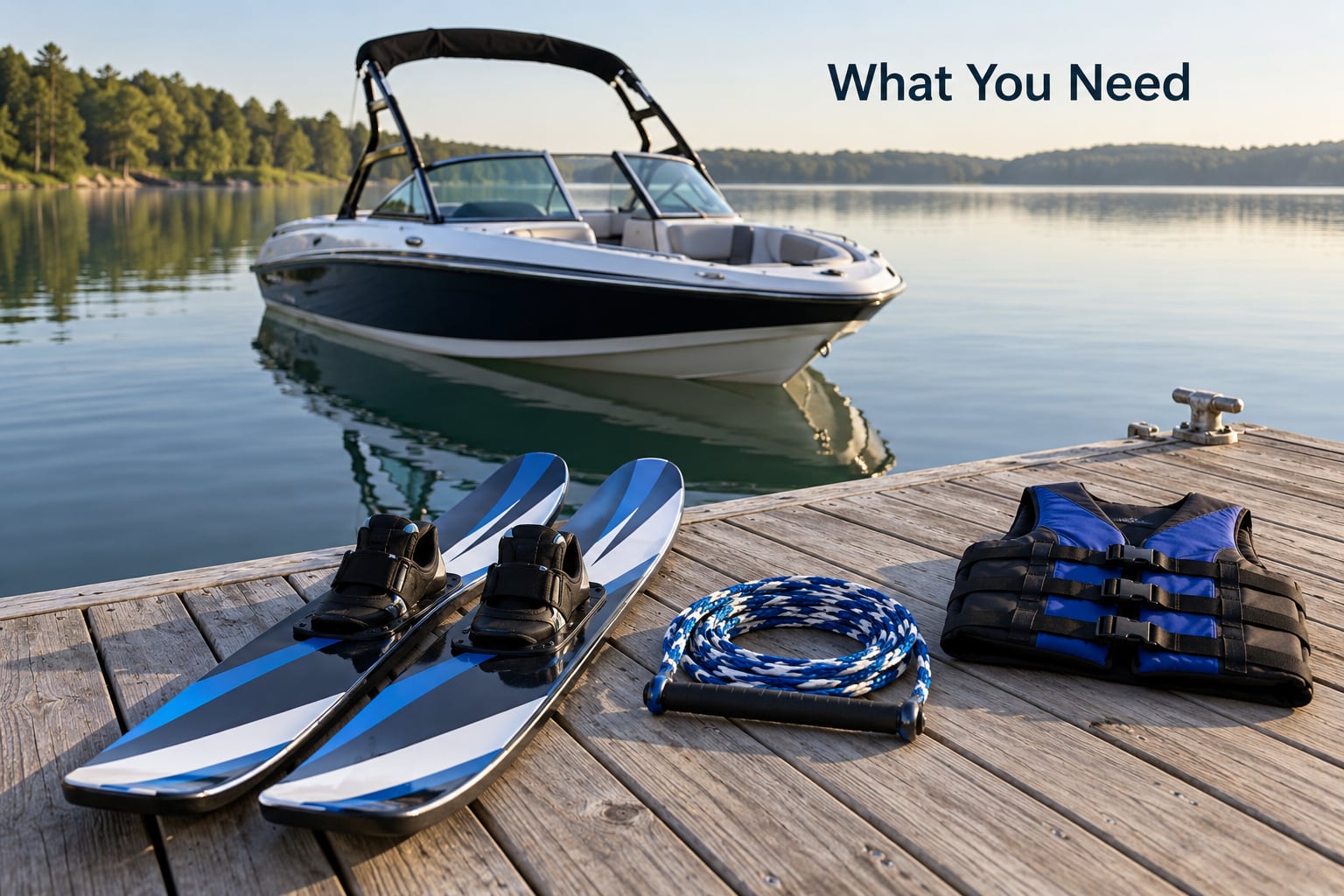
Three people make this work, and the jobs are not interchangeable. The driver runs the throttle and the throttle only. The spotter watches the skier and relays signals, because the driver cannot see well enough to judge a beginner. The coach gives the cues. For a nervous first-timer, you want all three roles filled.
A dedicated spotter is not optional here. The driver looking backward at a beginner is the most common reason a first session goes badly, so hand the watch job to someone who can call clearly and stay calm.
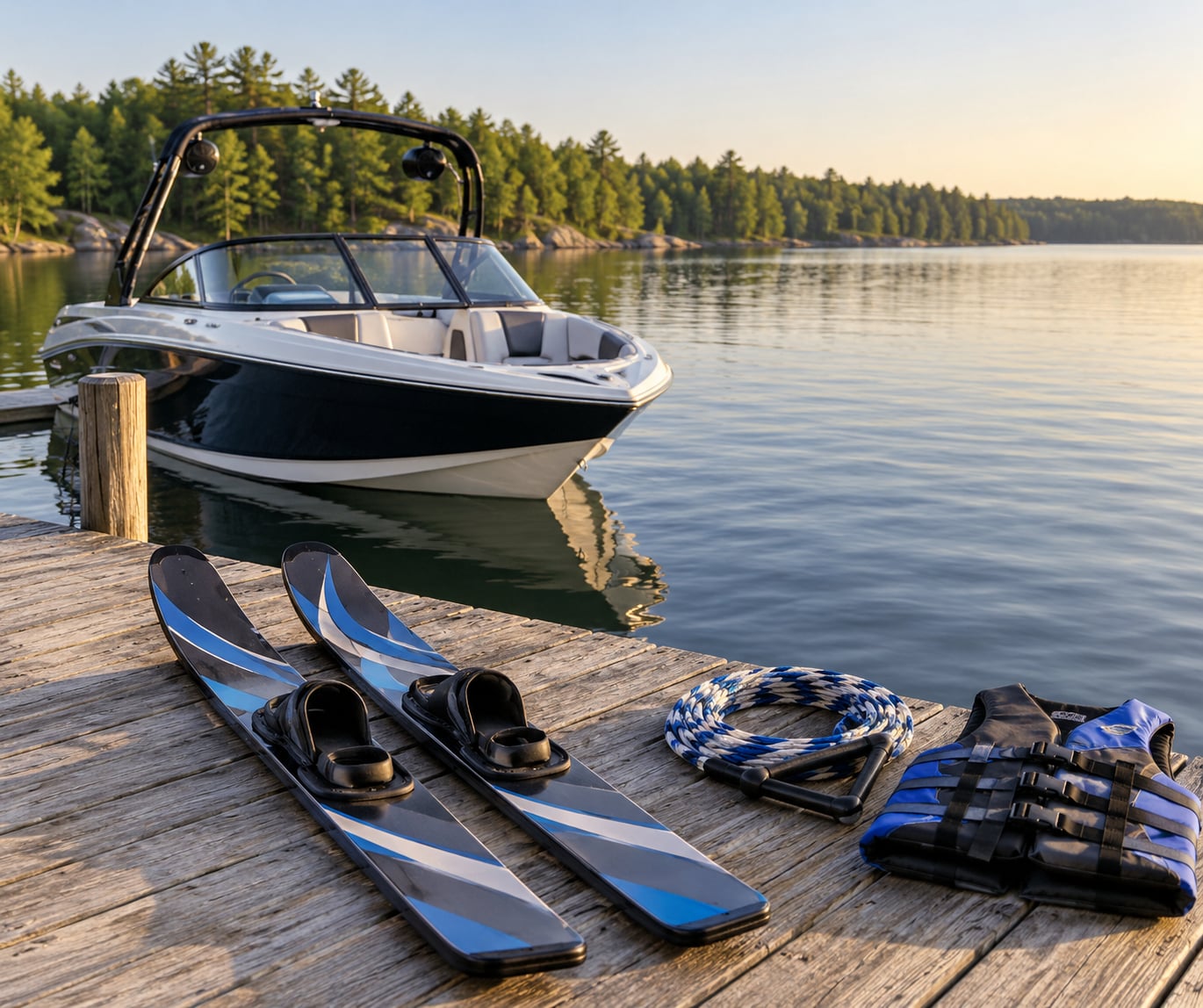
On the gear side, wide combo skis are the kindest first pair because they work on either two skis or a single ski. A standard 75 foot ski rope gives enough length for a proper glide without tangling, and a short starter rope is a good trick for kids so the driver can keep eye contact.
A USCG-approved Type III life jacket is the standard for watersports, fitted snug so it cannot ride up over the chin when the skier falls back. Add a ski flag on a short staff so other boats can see the skier standing in the water, plus hand gloves if the learner has any grip trouble.
Pick calm water, flat and free of wind, with a boat that gets on plane quickly. A low-horsepower boat or a heavy pontoon that struggles to accelerate is the reason a lot of deep water starts feel impossible, so engine size matters more than people expect.
The hand signals to agree on before anyone gets wet
| Signal | Meaning |
|---|---|
| Thumbs up, hand raised | Speed up |
| Open palm held flat, then waved down | Slow down |
| Closed fist raised over the head | Stop and circle back |
| Both thumbs up held high | I am OK, keep going |
| Tap on top of the head, then point toward the dock | Return to the dock |
| One ski lifted behind the head | Turn to that side |
Practice these on shore before the engine starts. Forum regulars on the Everything Skiing board and r/WaterSkiing repeat the same thing: the learner falls far less often when the spotter calls out the cues instead of leaving the skier guessing.
Step-by-Step
1. Start With a Dry-Land Lesson
Put the skis on the dock and walk them through the finish position before any water is involved. Knees bent, shins touching the front of the skis, arms straight out in front, hips sitting over the heels rather than back. The most useful version of this drill is to have someone pull the rope slowly while the learner stands up, so the body learns the motion with a manageable amount of resistance.
Two cues do most of the work here. Arms straight, and let the boat do the work. If they try to lift themselves with the arms on land, the habit follows them into the water.
2. Practice the Deep-Water Start
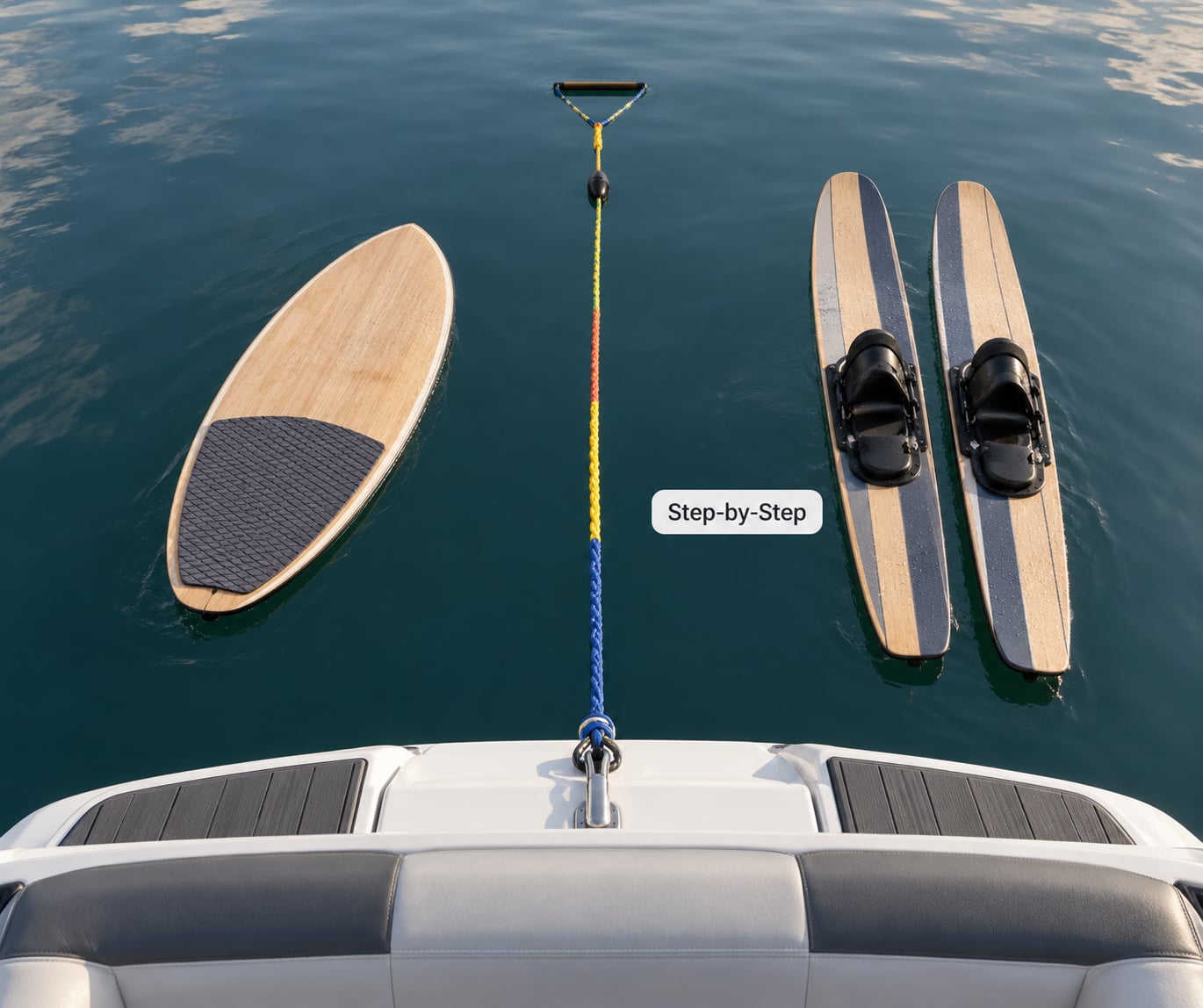
This is the standard beginner start because the learner never has to balance on a dock while the boat pulls away. They sit in the water facing the boat, knees pulled to the chest in the cannonball position, skis together and pointing up so the rope runs between them, handle held with the knuckles facing out.
The sequence matters more than the speed. The learner floats the handle to the back of the boat, gives the ready signal, and then holds absolutely still. The driver holds the boat at idle until the rope goes taut, then brings the throttle up slowly and steadily. Rushing the acceleration is what drags a beginner over backward.
A useful coaching trick from teaching pros is a rope with a handle at each end, held by a coach at the back of the boat instead of tied to a pylon. It gives far more control and lets the coach release instantly if the skier goes down.
3. Find the Glide Position
As speed builds, the skis plane and the drag lightens. That is the cue to rise, and the skier comes up through the chair position, sitting back briefly with weight on the tails of the skis, then stands into the finish position without pushing hard off the legs.
They should end up in a chair shape: knees bent and tucked, hips forward of the shoulders, arms relaxed and nearly straight. Coached correctly, the boat lifts the skier rather than the skier pulling against the boat. If the shoulders end up behind the hands, they have stood too late and are now fighting the rope.
4. Build Speed and Steering
Hold a slow, planing speed and let the first glides happen at a distance where nothing is approaching. Around 12 to 15 mph suits most adults and kids on two skis. On two skis, beginners rarely need anything past roughly 25 mph, and staying well under that makes turning far easier.
Steering starts as a small change of pressure across the ski edges rather than a big body swing. The spotter watches the skis and the rope, and calls corrections while the driver holds a straight line. Wide, slow arcs build the confidence needed for crosswise travel.
5. Introduce Turning and Stopping
Once a short glide is repeatable, the skier can move crosswise across the boat’s path, still on the same side. That one move is the gateway to direction changes, and it is where most of the real learning happens in the second session.
Stopping gets rehearsed on shore, on land, in order: let go of the handle, then raise an arm so the spotter sees it, then stay up and wait for the boat. Skiers who hold on after falling get dragged, and skiers who dive get hurt. A trainer bar or boom is a reasonable aid for a nervous learner because it gives the coach direct control of the angle, though it is not a substitute for a properly run deep water start.
6. Move Toward a Full Run
A full run combines four things: a clean start, a steady glide, one controlled turn and a planned finish. Pick a finish point before the pass, well clear of other boats, and have the skier cross back toward the same side of the boat rather than changing lanes mid-lake.
Wake crossing comes later. It is easier than it looks for someone who can steer, because the wake actually pulls the skier toward the center, but there is no reason to attempt it on the same day as the first successful start.
Common Mistakes
Almost every repeated fall comes down to one of four habits, and each has a specific correction. Watch the skis rather than the skier’s face, because the skis show the problem a second before the body shows it.
| What you see | Likely cause | Fix |
|---|---|---|
| Falls back on the start, dragged a few feet | Skier stood up as soon as the rope went tight | Hold the ball until the rope feels firm, then rise only when the skis start to plane |
| Falls sideways right after rising | Arms bent to close up slack rope, then forced to straighten late | Arms straight the whole time; push the handle forward instead of pulling it in |
| Constantly sitting back and sagging | Weight on the tails of the skis, hips behind the hands | Rise fully into the chair position and hold the handle out at arm’s length |
| Freezes at the start and refuses to rise | Fear, or a rope and driver who feel out of control | Start on a tube or kneeboard first, shorten the rope, and drive at idle speed only |
| Knees knock together, skis scissor | Bindings too loose or skis set at too wide an angle | Tighten the bindings and set the heels together for two-ski skiing |
| Falls repeatedly on the same side | Driver turning during the pass or gusty, uneven water | Driver runs a straight course and waits for flat water before asking for a turn |
The elbow-bend cascade deserves one more sentence because it is the single most cited beginner error in every forum thread on the topic. A skier feels the rope go slack, bends the arms to shorten it, then has to straighten suddenly once the rope tightens, and that sudden rotation is what puts them in the water. Straight arms mean a straighter, more forgiving ride.
Between sessions, the fix list is unglamorous and effective: grip work with a rolled towel or hand gripper, dead hangs, squats, and short balance holds standing on one leg with the eyes closed. Core and grip strength show up directly in the first ten seconds of a deep water start.
Teaching a child and teaching an adult are not the same session. Kids need a shorter rope, a slower speed around 10 to 12 mph, more tube and kneeboard time, and coaching aimed at not being left behind by the boat, which is usually the real fear rather than the water. Adults tend to overthink the start and lean back hard, so the coaching focus is a lighter body and letting the boat lift. Either way, stop the session while the skier is still having fun. A good five minutes beats a cold hour.
Frequently Asked Questions
What is the easiest way to teach someone to water ski?
Stage it. Put the learner on a tube or kneeboard first so they get comfortable behind the boat, rehearse the finish position on the dock, then run a slow deep water start. Hold the boat at idle until the rope is taut, accelerate smoothly, and have the learner rise from a cannonball only once the skis plane on the water.
Do I need a specialized boat to teach water skiing?
No. You need a boat that reaches planing speed quickly and holds a straight line, not a dedicated ski boat. A low-power outboard or a heavy pontoon that struggles to accelerate is the usual culprit when starts go badly. Keep the driver seated where there is a clear view, and keep the boat well away from swimmers, docks and other traffic.
How old should a beginner be before water skiing?
There is no hard rule, but most beginners get their first glide somewhere around age seven or eight, when they can follow multi-step instructions and handle a life jacket that fits properly. Younger children usually do better starting on a tube or kneeboard with a shorter rope and a lower speed, since balance and strength are still developing.
What speed should a beginner water ski at?
Start around 10 mph and hold a slow planing speed of roughly 12 to 15 mph for most learners on two skis. On two skis a beginner rarely needs to go beyond about 25 mph, and staying slower makes turning much easier. Speed up only after the skier is linking consistent glides and can steer without flailing.
How do I help a beginner rise from the water?
Have them float the handle to the boat, curl into the cannonball position with the rope running between the skis, and signal ready. The driver idles until the rope is taut, then accelerates smoothly. The skier stays curled until the pull lightens and the skis plane, then comes up through the chair position with arms straight, knees bent, and hips forward.
What should I do if the skier falls?
The skier lets go of the handle immediately and raises one arm so the spotter can see. The spotter signals the driver, who reduces throttle and makes a slow wide circle back to the skier from the side, keeping clear of the rope. Nobody puts the throttle down again until the skier is aboard. Keep the fall protocol short and calm, because it happens often.
Start this weekend with the part people skip: a dry land drill on the dock and a tube tow. Once the learner is willing to float the handle out on their own, the deep water start at 10 mph usually does the rest, and you can add turns from there. If you are teaching a complete beginner and want a faster path, a single session with a certified instructor at a cable park or a listed USA Water Ski or IWWF affiliated program is usually worth the money.