The moment a person goes off a boat, you have roughly the length of a single shout before everyone starts doing something different. Here is how to handle a man overboard situation: call it out loud, point at the person and never take your arm off them, throw flotation within a couple of seconds, kill boat speed, maneuver back to them slowly, and get them aboard without putting a propeller near anyone. Do those five things and you have handled a man overboard situation the way professional crews do.
Most of us will never need any of it, which is exactly why the steps feel unfamiliar until the water is cold and the adrenaline is doing the thinking for you. A MOB emergency is survivable far more often than not, but the margin between a good outcome and a bad one is usually the first sixty seconds.
One note before we start. On lakes and rivers, the water is often colder than the air suggests, the bottom may be a rock shelf or a soft drop-off that hides a second casualty, and most small boats have no crew, no swim platform and no ladder already in the water. Every step below assumes exactly that boat.
Table of Contents
- 1What You Need
- 2How to Handle a Man Overboard Situation: Step by Step
- 3Step 1: Shout Man Overboard, Point, and Alert Everyone
- 4Step 2: Throw an Easily Visible Flotation Aid
- 5Step 3: Keep the Person in Sight
- 6Step 4: Maneuver the Boat Safely for Retrieval
- 7Step 5: Retrieve the Person Without Endangering the Boat
- 8Step 6: Check Breathing and Begin First Aid
- 9Common Mistakes
- 10Frequently Asked Questions
- 11What should the boat operator do first after someone falls overboard?
- 12Can you safely throw a life jacket to a person in the water?
- 13How should the boat approach a person who fell overboard?
- 14What if you lose sight of the person in the water?
- 15What should you do after retrieving someone from the water?
- 16Should an untrained person jump in to help someone who falls overboard?
- 17What To Do First
What You Need
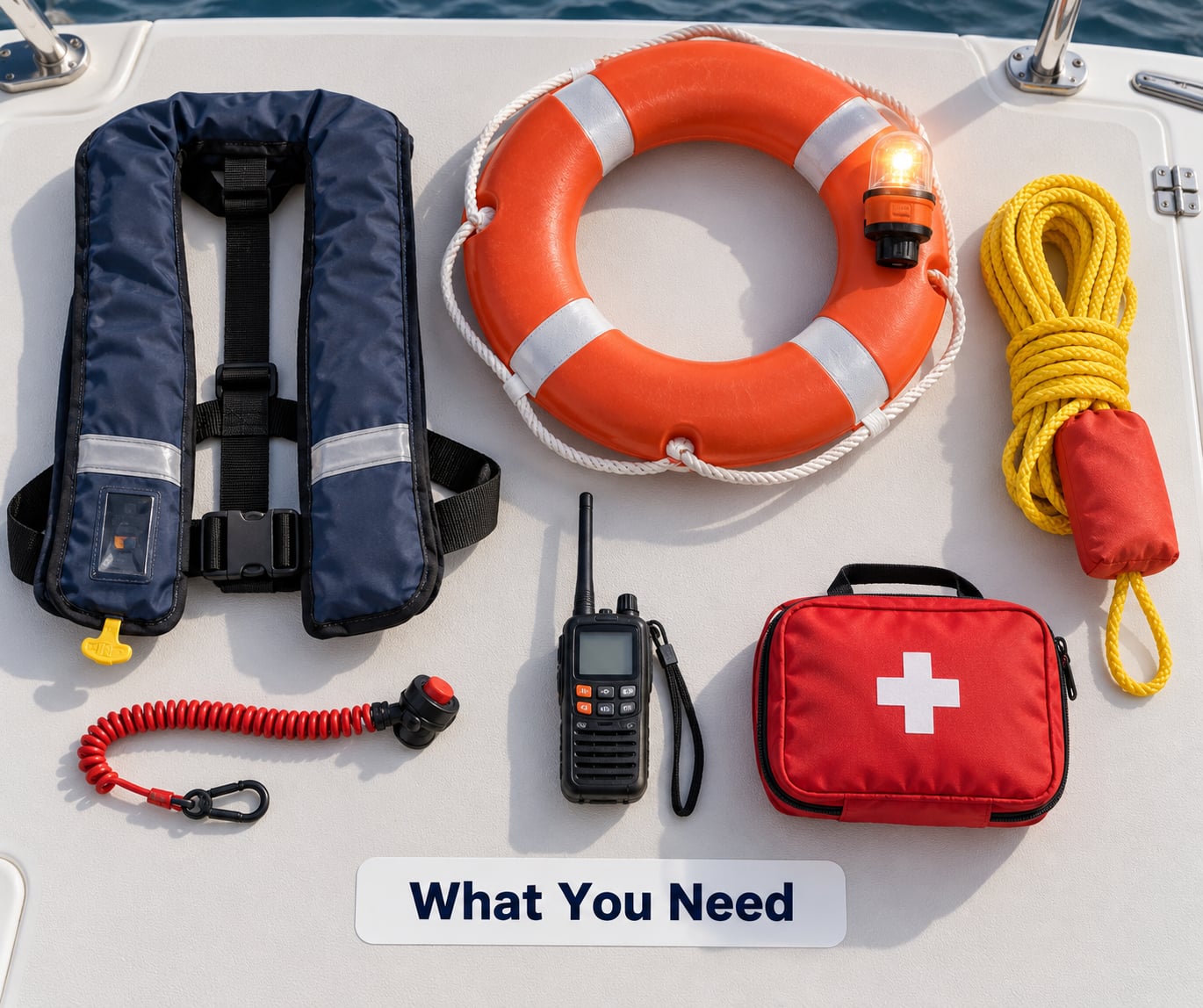
You cannot improvise your way through a man overboard situation with nothing aboard. This is the kit list, and it fits in a dry bag under a seat on a 16-foot fishing boat.
- A worn PFD for everyone on board. Not stowed in a locker, not strapped to the console. Worn. A life jacket is the single biggest factor in whether this ends well.
- Throwable flotation with a light and a line. A life ring with a whistle, a light and at least 15 feet of line attached to it, mounted where one person can grab it without turning around.
- A boarding ladder or swim platform. Decide now which one you are using. If it deploys, know the release and rehearse it.
- The engine kill-switch lanyard clipped to the operator. If the helm driver falls overboard, the motor stops instead of driving away on its own.
- A working VHF radio with DSC, and a phone in a waterproof case. A chart plotter or handheld GPS with an MOB button marks the position in a second.
- First aid supplies plus blankets or a heat wrap. Wet clothing drains heat fast, even in warm air.
- Visibility gear for dusk. A marker light on the flotation, glow tape on the deck edge, and a deck light rigged to run off the helm.
Add a throw line if you carry one: a coiled rope with a weighted end lands within a few feet of the casualty even from ten yards away. It is the difference between reaching someone and never quite getting there.
How to Handle a Man Overboard Situation: Step by Step
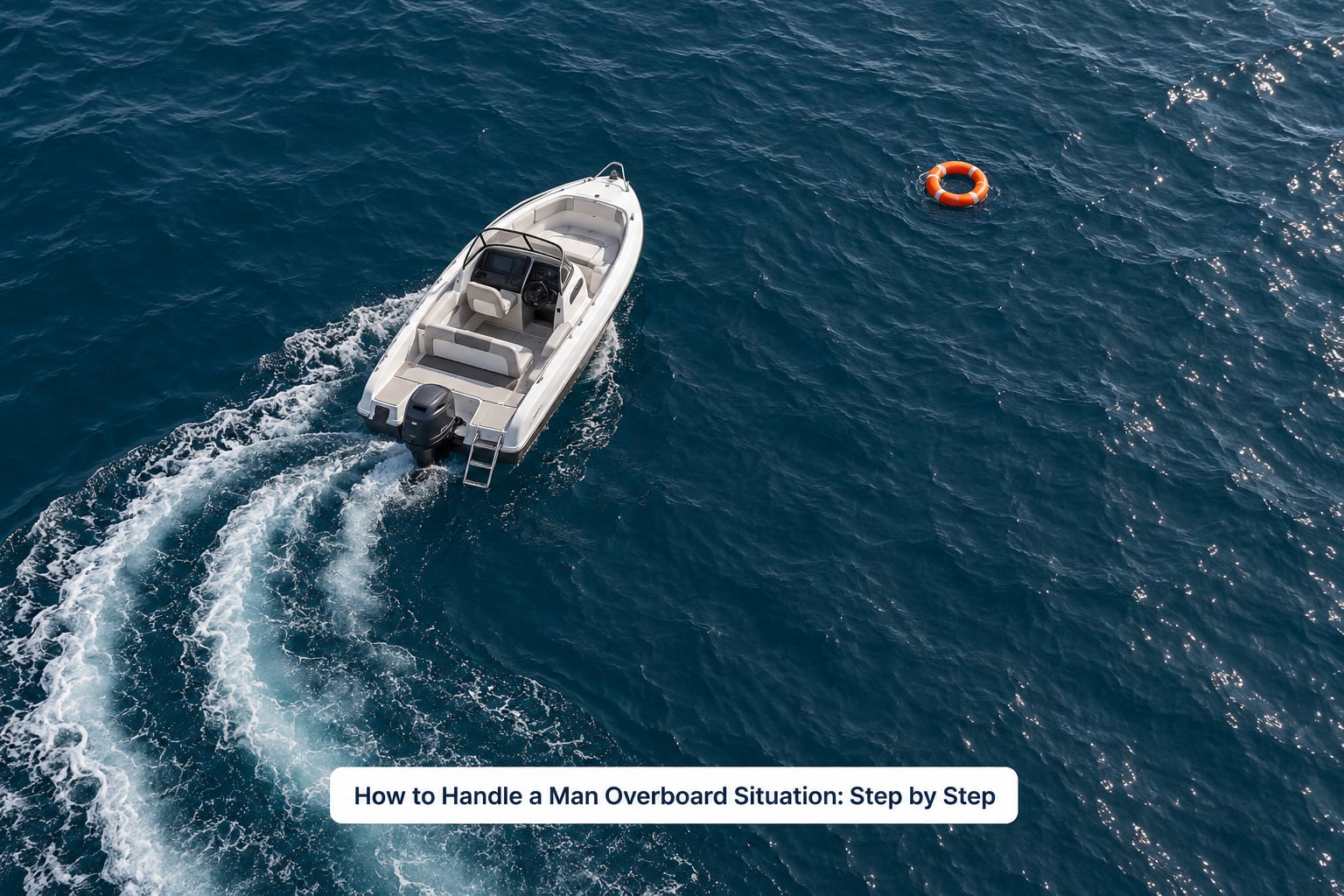
Work through these in order and resist the urge to skip ahead to the interesting part, which is the boat handling. The boring first three steps are what keep the person alive until the boat arrives.
Step 1: Shout Man Overboard, Point, and Alert Everyone
Shout “Man overboard!” so everyone hears where the person is, then point continuously at them. A pointing arm is a tracking device. Anyone else can take that job so your own attention is free for the helm and the throttle.
Keep one hand on the boat and one finger on the casualty. A MarineTalk thread on crew-overboard recovery kept circling the same point: on an untrained crew, people look at the water instead of the person, and the person stops being visible in under a minute.
Simultaneously, kill boat speed. Reduce the throttle to neutral and let way come off before you do anything else with the wheel. A drifting boat still runs and it still has a propeller.
Step 2: Throw an Easily Visible Flotation Aid
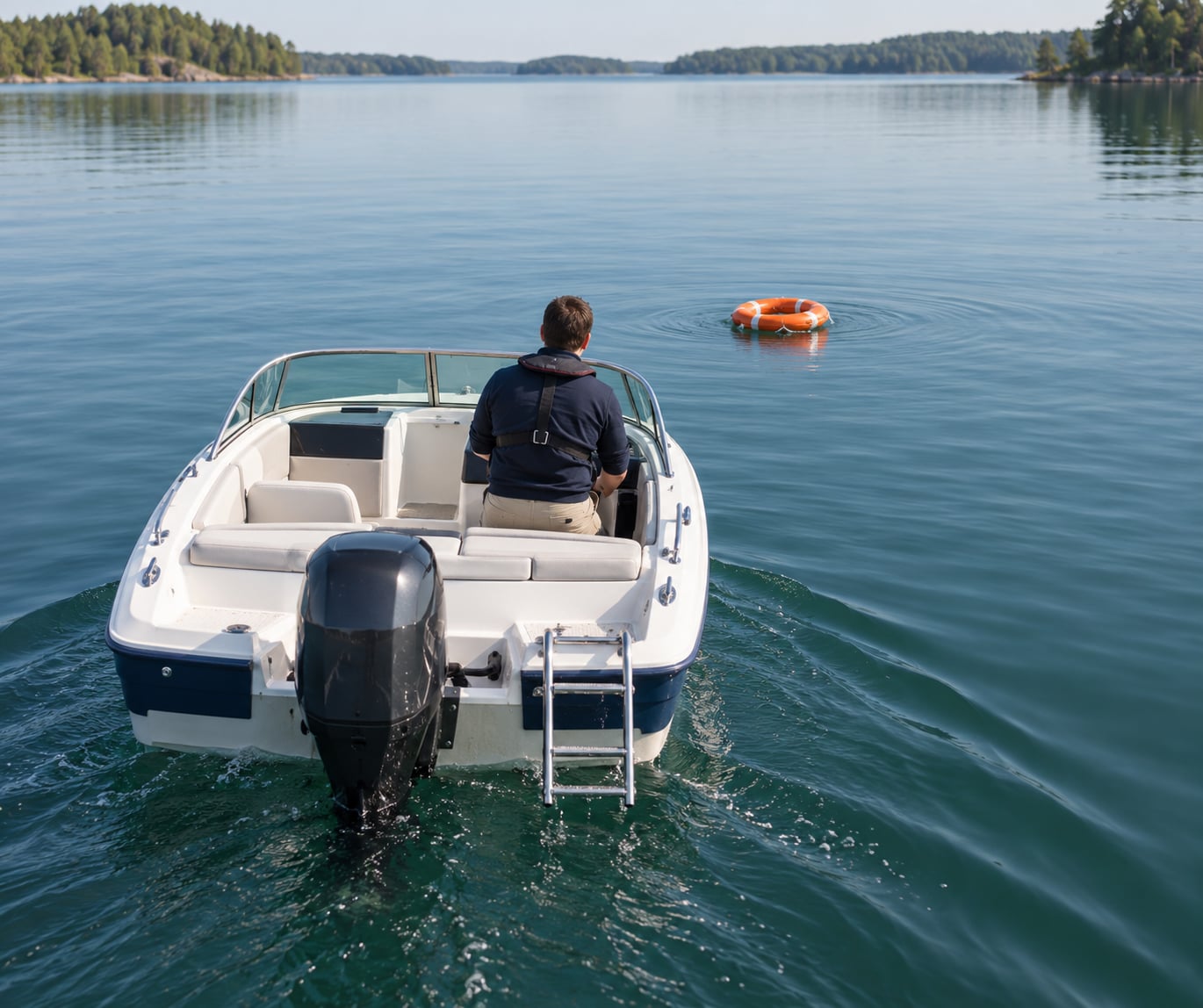
Grab the nearest flotation and throw it to within arm’s reach of the person. Aim low, past their chest, not at their head. Life jackets throw badly and a hard one can knock someone under, so lead it so it lands between you and them.
The National Park Service guidance for someone in the water is to float, not to fight: stay calm, keep the head above water and stop thrashing. Flotation makes that possible. A person wearing a proper PFD can hold a conversation; a person without one often cannot last long enough for a search to matter.
If the throw lands wide, throw again rather than sending someone in after it. A second accurate throw beats a well-intentioned jump.
Step 3: Keep the Person in Sight
Keep continuous visual contact until they are back aboard. Two people watching beats one person watching better, so hand off the tracking job explicitly out loud: “You keep pointing, I steer.”
Mark the spot on the plotter if you have one. Most units have a man overboard button that drops a waypoint and, on some, sounds an alarm and slows the throttle. Ten seconds spent pressing that button buys a position you can radio to anyone who shows up.
Losing sight is more common than anyone expects, even in clear, warm, flat lake water. Glare off chop, a whitecap, a wave crest, or their own head going under for two seconds is enough. If you lose them, circle back through the last known point at the slowest speed your boat will hold a heading, and shout continuously.
Step 4: Maneuver the Boat Safely for Retrieval
You want the person off your bow, never off your side or stern, and you want to arrive with almost no speed. The manoeuvre that gets you back to the last known point depends on the boat.
The Williamson turn is the sailor’s answer: put the helm over about 60 degrees to slow the boat to steerage way, keep turning while feeding in opposite rudder, reach a total turn of 180 degrees, then straighten up on the reciprocal course. On a motorboat it simply means a slow, wide arc that stops you near the casualty instead of blasting past.
The Anderson turn, sometimes called the single turn, is hard rudder one way, then hard over the other. It gets you alongside quickly and is the right choice at speed in an open area with no gear astern.
The Scharnow turn approaches the casualty stern first, which is exactly what you want when a ladder or swim platform does the recovering. The quick stop and the figure 8 are stopping techniques: reverse to kill way, or circle back to the low side. Neither is universally right. Testing with volunteers aboard found the quick stop halted one boat too abruptly, while the figure 8 built speed too fast on another.
Recover to the downwind side when you can. Less wave action, and the engine and propeller stay as far from the person as possible.
Step 5: Retrieve the Person Without Endangering the Boat
Approach at idle speed, no faster than someone could walk. Crew-overboard testing with volunteers recovered some people at speeds that would have drowned them, because a towing boat pulls a face underwater faster than a person can lift their head.
Neutral first, then kill the engine entirely for the last few feet. Tell everyone aboard where your propeller is and keep hands and lines well clear of it. On an outboard, angle the boat so the propeller is pointed away from the water you are working in.
Now get them aboard. Deploy the ladder or platform before you are alongside if there is anyone to deploy it. If not, throw the line short and have the strongest person aboard take the strain: the casualty holds the ring or the life jacket, not your wrist.
Pull from the legs and hips, not the arms. A cold, panicking person in the water will clamp onto anything, and an arm pulled from the shoulder can dislocate or break. Lean back with your hips, not your lower back. Count out loud so the haul is one smooth pull, not five frantic ones.
If the person has a line attached to them, leave the line to a running wrap. Let the boat pay it out rather than letting it snap taut and drag them under. If they are tethered to the vessel on a halyard, expect the roll to swing them like a pendulum and shorten the scope before you approach.
Step 6: Check Breathing and Begin First Aid
On deck, check the airway, then breathing and pulse, for no more than ten seconds. If they are not breathing normally, call emergency services, then start CPR and rescue breaths according to your training. If you are not trained, do compressions anyway and follow the dispatcher instructions.
Assume drowning happened even if they look fine. Anyone rescued from a submersion should be seen by a doctor, and the emergency number works from the water as well as from shore.
Then deal with cold. Strip off the wet clothing, wrap them in blankets or a heat wrap, give warm sweet drinks if they are fully awake, and keep them flat and still. Hypothermia creeps in after the cold shock, often an hour later when they feel warm again.
Log the time in the water, the time recovered, and what you found when you got them aboard. That record matters to doctors, and it is the thing you will not remember clearly an hour later.
Common Mistakes
Jumping in without flotation. Cold shock plus no life jacket plus a boat circling you is how one person becomes two casualties. Throw first, always.
Looking around instead of pointing. Eyes wander. An arm pointed at the casualty is the fix.
Circling at speed. Wide lazy circles sound logical and they build speed the whole time, because you are adding throttle every lap. Pick one approach and commit to it slowly.
Leaving the throttle engaged through the recovery. In gear with the prop still turning, a line or a limb can be caught without anyone noticing.
Approaching on the upwind side. Wave action throws the person at the hull and can push them under the chine. Come up on the sheltered side.
Deciding they are fine because they are talking. Someone can hold a conversation and still be going into shock. Dry, warm, and seen by a professional.
Frequently Asked Questions
What should the boat operator do first after someone falls overboard?
Call out man overboard loudly, point at the person, and keep them pointed at. Reduce the throttle to neutral immediately so the boat stops planing and the propeller is no longer turning in your wake. Then throw the nearest flotation device and alert the rest of the crew. Never jump in yourself before flotation is in the water and the boat has stopped.
Can you safely throw a life jacket to a person in the water?
Yes, and it should be the first thing you do after pointing. Throw it low and short so it lands between you and them rather than on their head. Aim for their chest and shoulders so it stays with them. A throwable ring with a light and a line is easier to land than a full life jacket, which is why small boats should carry one mounted within arm’s reach of the helm.
How should the boat approach a person who fell overboard?
Slowly, and on the sheltered, downwind side when you can, so the hull and propeller stay on the far side and wave action pushes the person toward you rather than under the boat. Come in at idle speed with the propeller angled away. Neutral first, engine off for the final few feet. Never approach fast, because a towing boat can pull a face underwater faster than a person can lift their head.
What if you lose sight of the person in the water?
Circle back to the last point where you saw them, at the slowest speed your boat will hold a steady heading, and shout continuously. Send a second person to the bow to keep looking low near the surface, where a head in wave troughs is easy to miss. Press the man overboard button on the plotter if you have one so you have a position to work from and to pass on. Mark the spot before you widen the search.
What should you do after retrieving someone from the water?
Check the airway, breathing and pulse within ten seconds and call emergency services before you need them. Assume drowning occurred and have them assessed, even if they seem recovered. Remove wet clothing, wrap them in blankets or a heat wrap, give warm sweet drinks if they are fully awake, and keep them flat and still. Write down the times you noted, because your memory will not be reliable.
Should an untrained person jump in to help someone who falls overboard?
No, not unless the person is within a few feet of a ladder or platform and wearing a life jacket. Entering cold water causes an involuntary gasp that can pull you under, and it puts a second person in the water for the boat to hit. Throw flotation instead, then recover them properly. Anyone who enters the water should be treated as a casualty too and kept as warm as the person you went in for.
What To Do First
If you only remember the order, remember this one: shout it, point at it, throw something at it, keep looking at it, then bring the boat to it slowly. Then get them warm and get them to a doctor.
Five words is not much of a plan, which is the real argument for writing it down. Put the sequence on a card and tape it inside the console lid, then run it once a season with everyone aboard. A Trawlerforum thread put it better than I can: nothing reveals a boat’s shortfalls like a man overboard drill, and it will surprise you how many there are.
Most of all, wear the life jacket. Every step on this page is harder, slower and less certain without one.