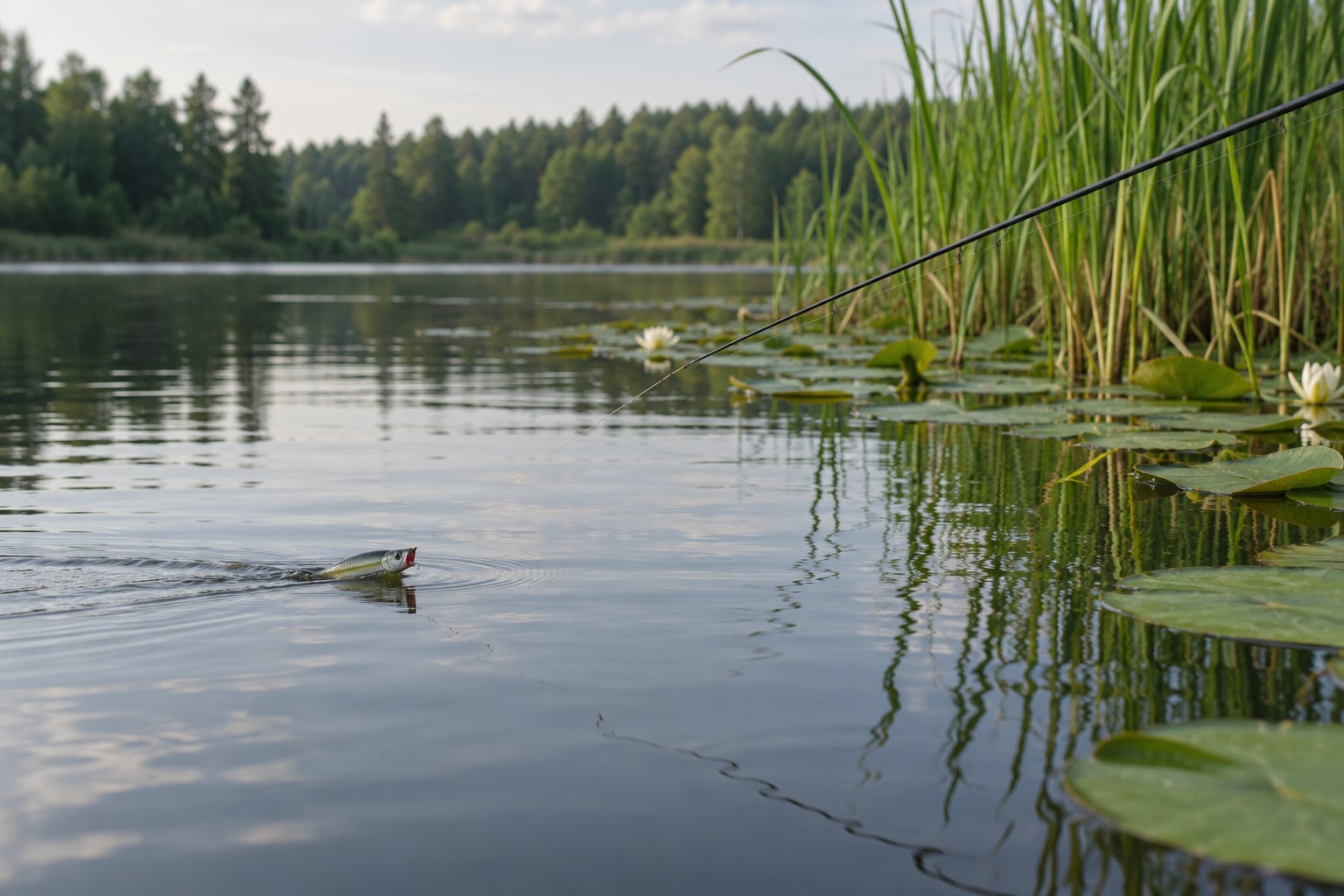
Working a topwater lure means controlling how it moves on and just below the surface. You do that with rod twitches, pauses, reel speed and rod height, imitating a baitfish that is struggling or dying. A sharp twitch or pop throws water and sound, then you stop and let the lure sit still, and that pause is where most strikes happen.
If you are new to it, the good news is that the mechanics take about an hour to learn. The harder part is patience. Bass feeding on the surface commit hard, then quit just as fast, and a lure that works perfectly at 6 a.m. can spook every fish on the lake by 9.
Below is the full process, in the order I like to work it: match the lure to the conditions, land the cast quietly, run a cadence you can repeat, read what the fish tells you, wait for weight, then adjust. Updated for 2026.
Table of Contents
- 1What You Need
- 2Rods, reels and line for working a topwater lure
- 3Lures and terminal tackle
- 4Situational information to read before you cast
- 5Step-by-Step
- 61. Match the Topwater Lure to the Conditions
- 72. Make a Quiet, Accurate First Cast
- 83. Work the Lure with the Right Retrieve
- 94. Read the Bump, Swirl, or Stop
- 105. Set the Hook and Keep Pressure On
- 116. Adjust the Pattern as the Bite Develops
- 12Common Mistakes
- 13Frequently Asked Questions
- 14What is the best retrieve for a topwater lure?
- 15When should I use a walking bait instead of a popper?
- 16Why do fish miss the topwater hook?
- 17How long should I pause on a popper?
- 18Can you catch fish on topwater in the middle of the day?
- 19Conclusion
What You Need
Rods, reels and line for working a topwater lure
A 7 to 7-foot-6 medium-heavy rod gives you enough tip to work a walking bait but enough backbone to set the hook when a bass head-shakes at the boat. Match the rod to the lure rather than the other way around: a light rod makes a 1-ounce walking bait skate, and a heavy rod makes a small popper impossible to work.
Line matters as much as the rod. Monofilament in the 14 to 17 pound range stretches enough to let a topwater sit still on the surface, and that stretch is what keeps a walking bait gliding rather than planing. Braid is more sensitive and casts further, but it cuts through the water, and most anglers who switch to it complain the same way: the lure stops floating so nicely. A short fluorocarbon leader of roughly 2 feet, tied with a loop knot, is plenty for a straight retrieve on a popper or prop bait.
Lures and terminal tackle
You only need a handful of shapes to cover most situations. A walking bait covers calm, clear water. A hollow-body frog covers grass and heavy cover. A buzzbait and a prop bait cover stained water and wind. A concave-face popper is the one that works in almost any condition, which makes it the safest first lure.
On hooks, single inlines beat trebles for two reasons. They are far kinder when a fish comes up in the boat, and they put more pressure on the lure’s cup and tail, which is what creates the noise and the walk. Before the trip, drag each hook across a fingernail. A hook that skates instead of biting is how you lose a fish in the first second of the fight.
Situational information to read before you cast
Four things decide whether you should be throwing a surface lure at all: water temperature, light, wind and water clarity. Bass feed heavily on the surface when water sits roughly between 65 and 80 degrees, in low light, and in water shallow enough (about 5 feet or less) to feel safe in.
Check the wind direction too. A steady breeze pushes both you and the bass into the thick cover on the upwind bank, and a blown-in mat on a windy afternoon is often better fishing than any open flat.
Step-by-Step
1. Match the Topwater Lure to the Conditions
Match the lure to what the water is doing, not to what you feel like throwing. On a calm, bright, clear morning, go small and quiet with a walking bait or a chug-style popper. On a stained, windy afternoon, a noisy prop bait or buzzbait is nearly impossible for a fish to ignore.
Where you cast matters at least as much as what you cast. Grass edges, lily pad borders, dock pilings, laydowns and the edges of wind-blown mats are the places ambush fish hold. Fish a different lake type differently, too. A clear northern lake pushes you onto structure and shade, a big reservoir sends you to points and feeder ditches, and a shallow grass lake lets you work open water over the tops.
On color, keep it simple: contrast beats matching. A white belly shows against dark water and low light, gold or silver sides flash in sun and stained water, and a dark or black body reads well against a bright surface on an overcast morning. Anglers on wayneswords.net still argue about whether clear-bodied lures fool a bass visually at all. The practical answer is that most strikes are triggered by movement and vibration, not by color matching.
| Condition | Lure to reach for | Where |
|---|---|---|
| Calm, clear, low light | Walking bait or chug popper | Grass edges, pad borders, shade lines |
| Overcast midday, mild wind | Concave-face popper | Points, drop-off edges, weed lines |
| Stained or muddy water | Buzzbait or prop bait | Upwind banks, blown mats, creek mouths |
| Heavy grass or timber | Hollow-body frog | Mat edges, inside the grass, laydowns |
| Clear water, heavy pressure | Small prop bait, long pauses | Deep near structure, off-color fish |
2. Make a Quiet, Accurate First Cast
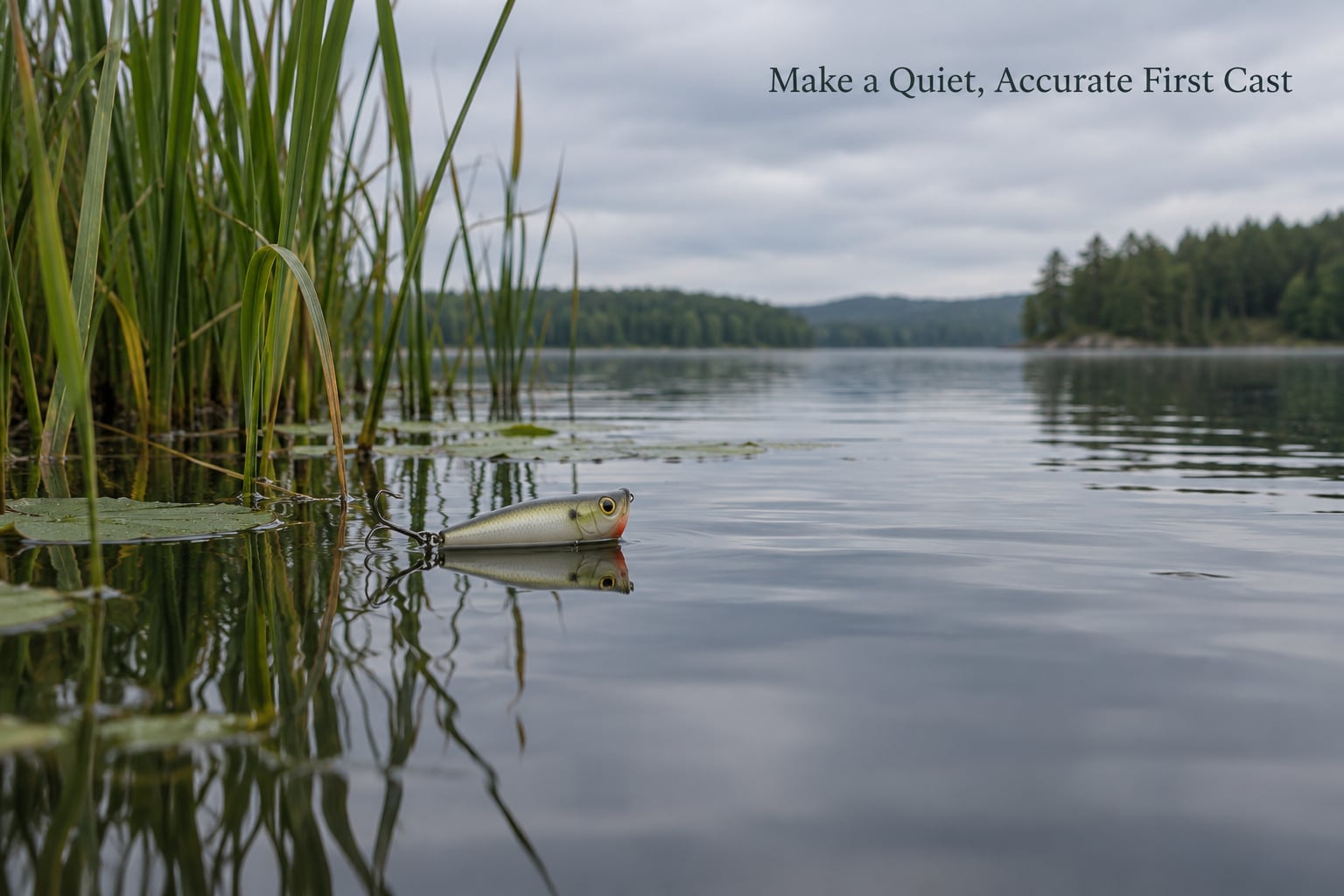
A good retrieve cannot rescue a bad cast. Most lost fish are lost to placement, not to how the lure was worked. Turn the reel’s sound down, turn the drag down, and pitch or flip the lure rather than booming it across the lake.
Aim at the near edge of the structure, not the middle of it, and let the lure land with a splash rather than a slap. If you are casting beside reeds or a mat, stop your cast short so the lure never crosses the cover before it stops. When the wind is up, a lure landing on the surface actually pushes water toward you, which makes the entry quieter than it looks.
3. Work the Lure with the Right Retrieve
Run a cadence you can repeat for the full length of the cast, and resist the urge to reel in early. Anglers waste more water giving two twitches and pulling the lure away than they do with any other habit. The rule I use: hold one pattern for 20 to 30 seconds before you change anything.
For a popper, the pattern is short and explosive. Jerk the rod tip, let the lure sit for 3 to 5 seconds, then reel it forward and repeat. For a walking bait, the pattern is a side-to-side glide. Give the rod tip a sharp downward twitch, reel slowly, then let the line go slack for a couple of seconds so the lure slides across the surface. A buzzbait just needs a steady medium-fast reel with a twitching rod tip to keep the blade chugging. A frog crawls at walking pace with a slight stop, and a prop bait works on a slow retrieve with long pauses, letting the tail do the work.
| Lure | Retrieve | Cadence | Wait before setting |
|---|---|---|---|
| Popper | Pop, pause, repeat | Twitch, then a 3 to 5 second pause | 1 to 2 seconds after weight |
| Walking bait | Twitch and glide | Twitch, 2 seconds of slack, slow reel | Count to one, then set |
| Hollow-body frog | Crawl with pauses | Steady walk, brief stop, walk | Half to one second |
| Buzzbait | Steady with rod twitches | Medium-fast, no long pauses | Immediately on weight |
| Prop bait | Slow retrieve | Reel, then a 5 second pause | 1 to 2 seconds |
4. Read the Bump, Swirl, or Stop
You get about half a second to decide what just happened, so keep the decisions simple. A bump or a boil that is smaller than your lure is a fish missing or bumping it, so keep reeling and give the lure a twitch on the next pass. A swirl that follows the lure and closes on it is a fish committing, so stop the lure in place. A full explosion with the fish leaving the water is a take, and now you wait for weight.
The instinct to react to the splash is what costs people the most fish. The bass often blows the lure out of its mouth on the surface and picks it up again underneath. If you set the hook at the noise, the lure is gone before the fish ever gets it.
5. Set the Hook and Keep Pressure On
When you feel weight, count to one or two, then sweep the rod to the side or down. Do not lift straight up and do not slam the rod; a sweeping motion puts the hook through the corner of the mouth, and a big upward swing can throw a surface hook straight into the air.
Once hooked, keep the rod low and the line tight but not screaming. A hooked bass on the surface will often jump, and every jump is a chance for slack line and a thrown hook. If the fish runs, give line rather than forcing the drag. If it heads down, keep light pressure and pump upward with the rod tip. When a fish is near the boat, lead it with a cupped hand rather than grabbing the line.
6. Adjust the Pattern as the Bite Develops
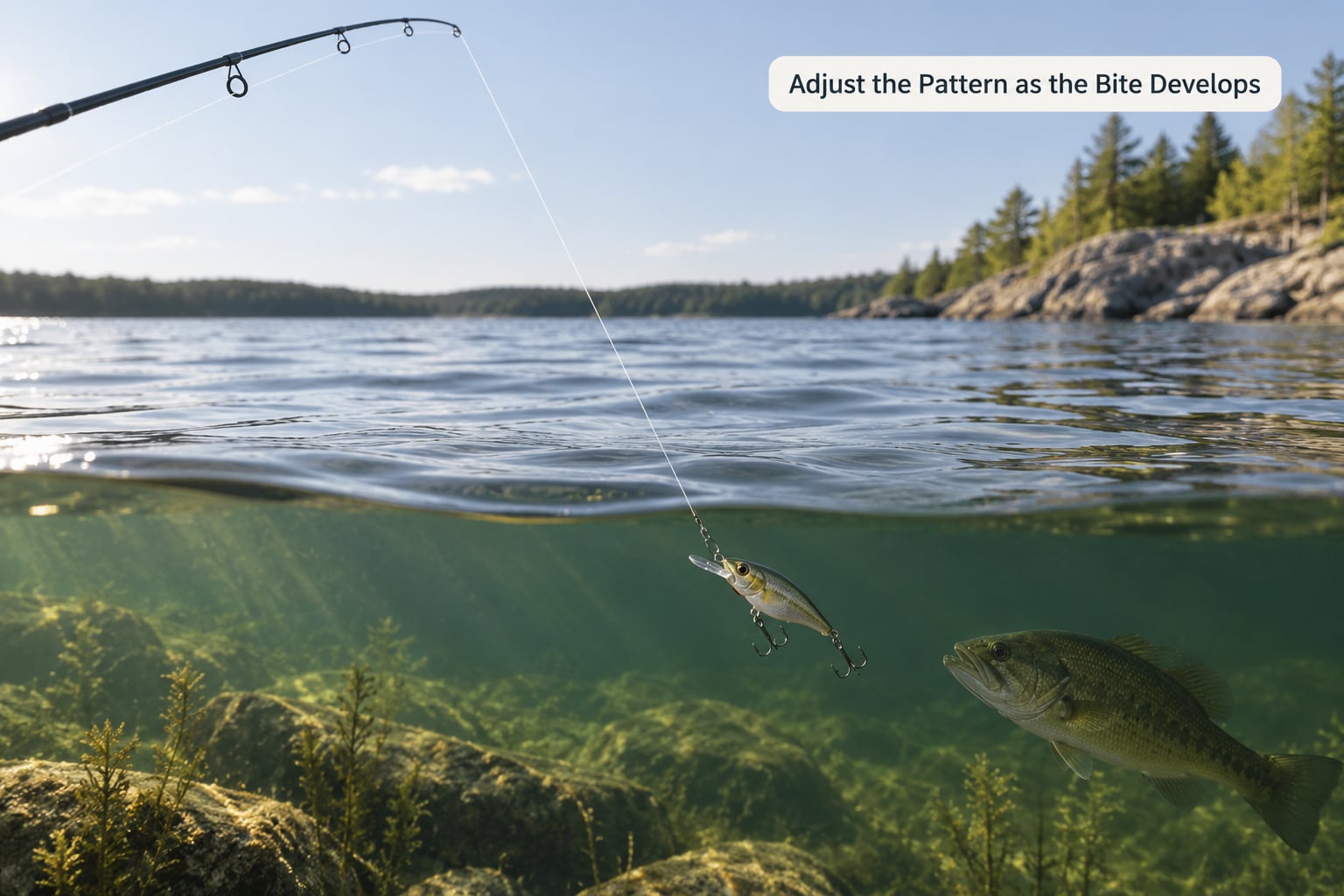
If fish are following the lure but not eating it, you are working it too well. Slow down, pause longer and cut the distance covered between twitches. If the fish are blowing the lure out at the surface, most of the time they are eating it shallow, so keep working it slower and lower the rod tip closer to the surface.
If you get a strike and nothing follows, tighten the knot and check the hook points, then work the same spot again with a longer pause. Short strikes and refusals on a popper usually mean the pause is too short. A fish that has been ignoring a walking bait for ten minutes will often eat a frog dragged over the same water.
Once you find fish that are eating, stay in that pattern and expand from it. Move the cast a foot at a time, change only one variable at a time, and have a soft plastic ready to cast into the same path where the surface bites were. Topwater tells you where the fish are; a soft plastic often puts a couple in the boat.
Common Mistakes
Working too fast is the most common error and the easiest to fix. Bass rarely eat a lure that is running away from them at full speed, so slow your retrieve down and let the lure sit in the strike zone longer.
Reeling in after two twitches ends the presentation before the fish has decided anything. Cover the full distance of the cast before you bring the lure back, and treat every cast as a complete retrieve.
Casting over the fish ends it before the retrieve even starts. Land the lure at the near edge of the cover and work it along the edge, and keep the splash small. Setting the hook on the splash is the classic beginner loss, so wait for weight and count to two. Pulling hard on taut line is another one: when you feel the bite, take up the slack instead of jerking.
Choosing the wrong lure for the conditions is the last big one. A quiet lure in noisy conditions disappears, and a loud lure on glass-calm water spooks everything on the lake. Match the noise level to the water, and drop the lure size when the fish seem to be looking but not committing.
| Walking bait will not walk | Why it happens | Fix |
|---|---|---|
| It glides straight | Rod too light for the lure weight | Move up to a medium-heavy rod |
| It planes on top or pulls under | Braid main line cutting the surface | Switch to 14 to 17 pound mono |
| It dies on every twitch | Too much slack in the line | Keep just enough tension to feel the tip |
| It will not stay on the surface | Too much line drag after the cast | Feather the drag, then check the knot |
| It walks only one way | Uneven tension or a tight loop knot | Re-tie with a loop knot and check both hooks |
| It looks stiff and noisy | Wind pushing the line and lure | Cast upwind so the wind helps the walk |
On r/Fishing_Gear, anglers make the same point repeatedly: cadence and patience make a walking bait work, not expensive hardware. The same threads describe trimming one rubber leg on a hollow-body frog to get a side-to-side walk, and the general agreement on r/bassfishing is to wait for weight before setting. That consensus has not changed in years of forum posts.
Frequently Asked Questions
What is the best retrieve for a topwater lure?
The pause-and-work retrieve wins for most anglers. Jerk the rod to pop or push the lure, then hold it still for 3 to 5 seconds on a popper or 2 seconds on a walking bait. That stop-start pattern imitates an injured baitfish, which is what a fish looking up at the surface is keyed into. Cover the full length of the cast before changing anything.
When should I use a walking bait instead of a popper?
Reach for a walking bait when the water is calm, clear and the surface is glassy, typically in low light or early morning. Its side-to-side glide and quiet push of water imitate a baitfish trying to escape without much noise. On a windy, stained or overcast midday surface, a popper, buzzbait or prop bait gives off the sound and spray those fish are looking for.
Why do fish miss the topwater hook?
Most missed strikes come from setting the hook on the visual explosion before the bass has turned and pushed the lure into its mouth. Watch for the fish to commit, keep the lure in place, and wait until you feel actual weight on the line. Then count to one or two and sweep the rod sideways. Setting the instant the lure lands leaves the hook in open air.
How long should I pause on a popper?
Start with a 3 to 5 second pause on a chug-style popper and a 1 to 2 second pause on a small concave-face popper in clear water. If fish follow but refuse it, lengthen the pause. If fish blow the lure out at the surface, work it slower and closer to the water with a longer pause between twitches.
Can you catch fish on topwater in the middle of the day?
Yes, on an overcast morning with a steady breeze, which is one of the better surface fishing windows of the summer. Midday sun on a clear, calm lake is the hardest condition, and fish usually stay deeper then. Wind is your friend: a breeze covers the surface, pushes fish into cover, and blows mats against the bank where bass feed on trapped food.
Conclusion
Start by matching the lure to the conditions: a quiet walking bait or popper on calm clear water, something noisy on a windy stained surface. Land the cast quietly at the near edge of cover, then work a pause-and-work retrieve all the way back without changing it for the first 20 to 30 seconds. When a fish commits, hold the lure still, wait for weight, count to two and sweep the rod. Adjust one variable at a time after that, and the misses usually stop.