To keep bait alive all day, control four things at once: cold water, plenty of dissolved oxygen, clean water with no chlorine in it, and enough room that the bait is not crowded. Get those right and minnows, shrimp, or nightcrawlers hold up fine from the bait shop to the last cast. Miss any one of them and you will fish with dead bait by noon.
Cold water is the quiet hero here, because it holds more dissolved oxygen and slows the bait’s metabolism at the same time. The fish breathes less, burns less energy, and produces less waste. Everything else in this guide is a supporting act for that one idea.
A complete setup takes about fifteen minutes and no more than a five gallon bucket, an air pump, and a few frozen bottles. It is not an aquarium project. Anglers on crappie.com and thehulltruth.com report the same cold-water-plus-aeration combination working for weeks when they need it to.
Table of Contents
- 1What You Need
- 2Step-by-Step: How to Keep Bait Alive All Day
- 31. Choose a Container That Protects the Bait
- 42. Prepare the Water Before Adding Bait
- 53. Add Oxygen and Circulation
- 64. Keep the Bait Cool and Out of Direct Sun
- 75. Feed the Right Amount at the Right Time
- 86. Change the Water and Inspect the Bait
- 9Common Mistakes
- 10Frequently Asked Questions
- 11What is the best way to keep bait alive all day?
- 12Should I use lake water or tap water for live bait?
- 13How often should I change the water in a bait bucket?
- 14Do minnows need to be fed during a fishing trip?
- 15How can I keep bait cool in a hot car or boat?
- 16What should I do if bait is gasping or lying on the bottom?
- 17How to Keep Bait Alive All Day: A Simple Final Check
What You Need
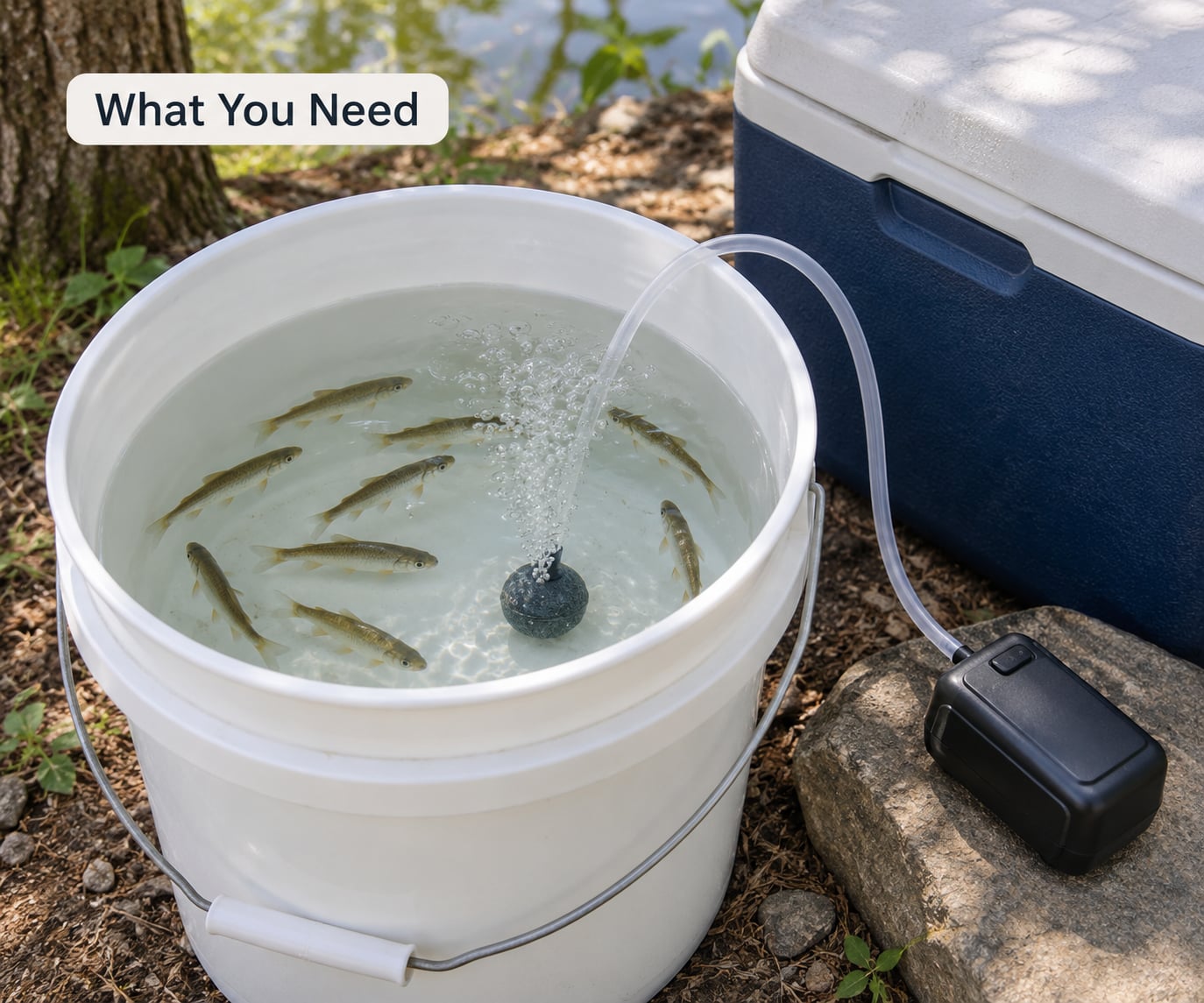
The list is short, and most anglers already own three quarters of it.
- A container. A five gallon bucket with a smooth interior and a bail handle is the workhorse. An insulated cooler works in summer, a flow-through bucket works from a dock, and a live well beats both in a boat.
- A water source. The lake you are fishing is the best one. Tap water needs treatment first, and bottled water is a last resort.
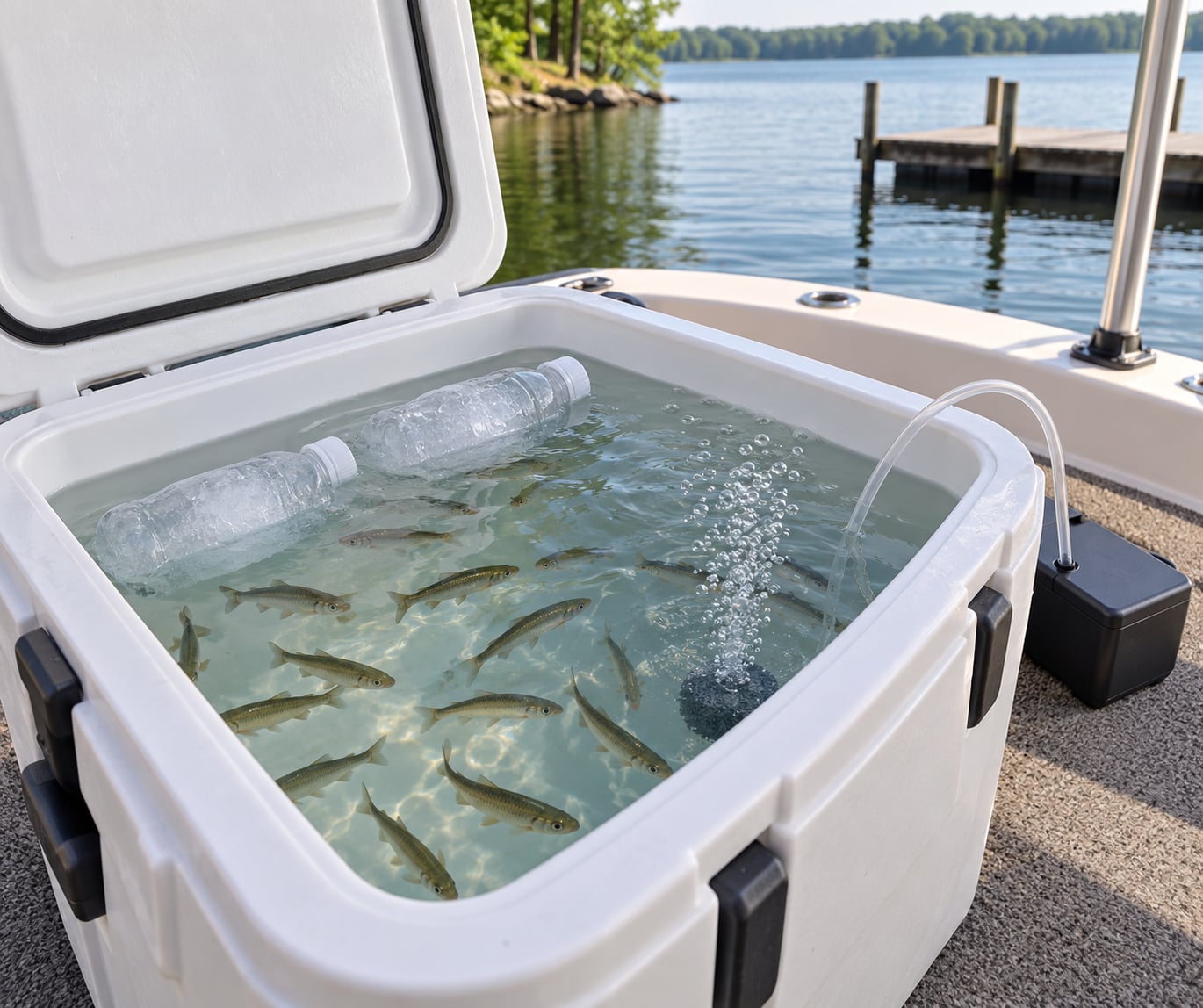
- Aeration. A small battery air pump with a fine diffuser handles a bucket. A 12V DC pump handles a live well. A flow-through bucket needs neither.
- Temperature control. Two or three frozen water bottles or gel packs, plus a towel or a shaded spot out of the sun.
- Food, if the trip runs long. A pinch of crushed flake or a small amount of frozen brine shrimp. Nothing more.
- A backup plan. A second bucket of already-prepared water, so a dead fish or a spilled load does not end the trip.
Match the container to the bait rather than to your ego. Shrimp need shallow water, plenty of cover and no baitfish anywhere near them, because a shrimp’s horn will kill minnows in a shared bucket. Nightcrawlers and worms want damp soil, not water at all, and belong in a bait box with a lid. Scale bait like pogies and herring need a rounded container because they swim in circles and will wear scales off against a square cooler corner.
Step-by-Step: How to Keep Bait Alive All Day
1. Choose a Container That Protects the Bait
Pick the container before you buy the bait, and size it to the number of fish, not the size of your boat. A common rule is roughly a dozen minnows per gallon for a day on the water. That number drops fast once the water warms up.
Rounded interiors are worth paying for. Bait fish circle the walls and pile into corners, and a sharp corner is where a fish gets stuck and dies. Smooth plastic buckets are fine for minnows. Coolers are fine for anything if you leave the lid cracked for air. Live wells are the best option in a boat, provided the pump circulates rather than churns.
Check drainage too, because you will want to exchange water without losing the bait. The perforated inner basket on a two bucket system is the easiest way to do this: sit the inner bucket in a few inches of lake water and lift the whole basket to swap water underneath.
2. Prepare the Water Before Adding Bait
Fill the container with water from the lake you are about to fish. Matching the source water means matching temperature, pH, and salinity all at once, and it removes most of the stress that comes from moving bait between water sources.
Tap water needs one extra step. Chlorine off-gasses if you let the water stand uncovered for a day or two, which is why anglers sometimes get away with filling a bucket the night before. Chloramine does not off-gas. It sits there and burns the gills, so if your utility uses it, you need a dechlorinator that neutralizes both, added at the label rate and mixed thoroughly before the bait goes in.
Temperature shock is the other trap. Bait coming out of a shop at 50 degrees dropped into 70 degree lake water will take damage even when both waters are clean. Temper the container slowly, or hold the bait in its original water and add your lake water a little at a time over 20 minutes. Saltwater anglers need this discipline more than anyone, because a shrimp or a pompano moved into the wrong salinity goes into shock fast.
3. Add Oxygen and Circulation
Fish breathe dissolved oxygen, not bubbles. What matters is how much oxygen the water holds and how easily it reaches the gills.
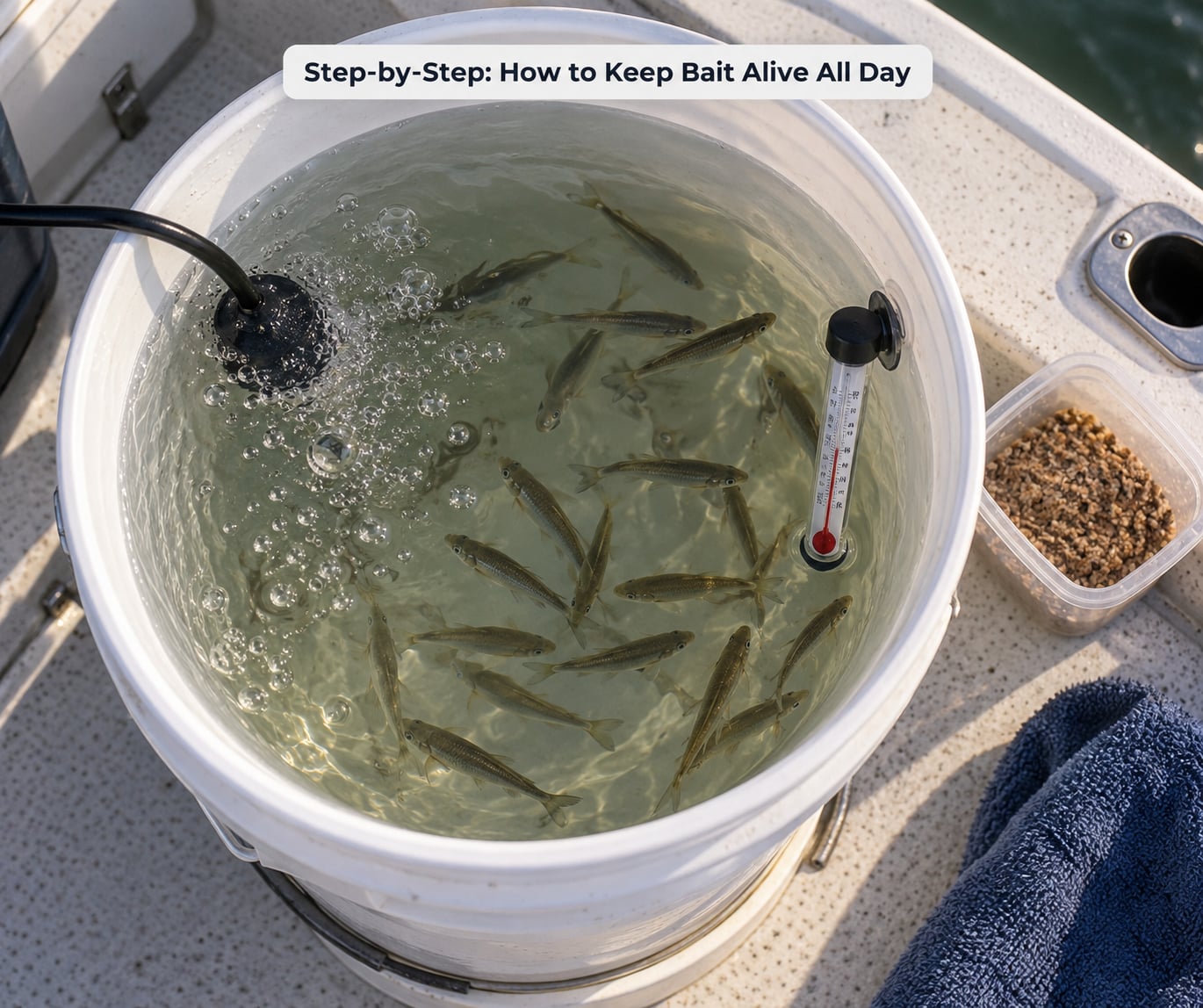
Small bubbles do more work than big ones. A fine ceramic diffuser or a low pressure bubbler produces a curtain of micro bubbles that rise slowly and dissolve completely. A cheap air stone throws coarse bubbles that dart to the surface and leave much of their oxygen behind. For a bucket of minnows the difference shows up in the afternoon.
Match the airflow to the load. A small pump pushing gentle bubbles into a five gallon bucket is right for a dozen minnows. A dozen fish in a twenty gallon bucket want more, and so does anything held overnight. Turn the air down before you think it is too high, though, because over-turbulence tires bait fish faster than still water does. The steady surface ripple of a light breeze is the target.
You can skip the aerator entirely in two situations. A flow-through bucket suspended in the lake water draws in cool, moving, oxygen-rich water for free, and it is the lowest-effort method there is while you are actually on the water. The limit is obvious: it only works while the bucket stays submerged. A live well with a recirculating pump works the same way, as long as the pump is moving water rather than just spraying it.
4. Keep the Bait Cool and Out of Direct Sun
Cold water carries more oxygen, so cooling your bucket does two jobs at once. Anglers on crappie.com describe holding minnows near 52 degrees in a bucket with frozen bottles, and the same approach shows up in almost every hot weather thread on the forum.
Use sealed frozen bottles or gel packs, never loose ice. Loose ice dilutes the water as it melts and drops the temperature fast enough to shock the bait. Two or three bottles around the outside of the inner bucket, refilled as needed, is the simple version that works.
| Water temperature | What happens | What to do |
|---|---|---|
| Under 50F | Bait is sluggish but well supplied with oxygen | Feed sparingly, check often, no heating needed |
| 50 to 65F | The comfortable holding range for most bait | Aerate lightly, one small meal a day |
| 65 to 75F | Metabolism climbs, oxygen demand climbs with it | Add ice bottles, increase airflow, thin the stock |
| 75 to 80F | Bait tires visibly by midday | Frozen bottles on a schedule, aerate hard, feed nothing |
| Above 80F | Fast die-off, often within two hours | Fish early or late, or skip live bait for that day |
Watch for the warning signs rather than the thermometer. Gasping at the surface, fish stacking in one corner, or bait that suddenly stops moving but does not look dead all mean the same thing. Either the water is too warm or the oxygen is gone, and both get worse within the hour.
Keep the bucket out of direct sun and off the boat deck, where reflected heat cooks it. Shade from the console, a canopy, or a damp towel over the lid all work. A towel also cools by evaporation, which is why a wet towel beats a dry one on a hot day.
5. Feed the Right Amount at the Right Time
Most bait needs no food at all on a single day trip, and feeding is the fastest way to ruin a bucket. Uneaten food rots, and rot eats oxygen that the live bait needs. On an all day trip, feed nothing.
For overnight holding, a small meal helps. Crushed flake in a ring around the edge of the bucket, or frozen brine shrimp thawed in a cup, will not foul the water if you keep it small and remove what is left after ten minutes. Worms and nightcrawlers want pre-moistened soil instead of feed, and a handful of nightcrawlers in a bait box will happily go a week if you keep the soil damp and cool.
Shrimp are the exception that surprises people. They will eat anything that moves, including their tankmates, so keep them alone and feed them a small amount of chopped frozen shrimp or krill once a day at most.
6. Change the Water and Inspect the Bait
Do a quick inspection when you are halfway through the trip. Pick the bucket up one inch and look for fish lying on the bottom that are not moving, then pull the dead ones out immediately, because a dead bait consumes more oxygen than a live one and poisons the water faster than anything else you will do all day.
Change water when you see a film on the surface, when the water smells, or when you have added any food. Use the two bucket method: lift the inner basket, dump and refill the outer bucket with prepared water at the same temperature, and set the bait back in. Never top off with straight cold tap water, because that is how temperature and chemistry shocks happen mid-trip.
At the end of the day, do not dump bait you intend to keep. Fill the bucket with cold water from the source, drop the temperature gradually, aerate overnight, and feed one small meal. For anything longer than a night, the community advice is consistent: build a float-and-sink receiver at your dock and let the bait live in the lake instead of carrying it home.
Common Mistakes
Almost every dead-bait trip traces back to one of these.
- Overcrowding the bucket. Two dozen minnows in a five gallon bucket on a hot day is asking for a die-off by noon. Fewer bait, more water, and you will fish better because the survivors are stronger.
- Using untreated tap water. Chlorine and chloramine burn gills no matter how good your aerator is. Let it stand for a day or two if it is only chlorine, or treat it if your utility uses chloramine.
- Leaving the bucket in the sun. Direct sun on a black bucket raises the temperature fast. Shade and a wet towel take a minute to arrange and fix most of the problem.
- Dumping loose ice in. Meltwater dilutes and chills the tank too quickly. Use sealed frozen bottles.
- Overfeeding. Leftover food is the leading cause of low oxygen. For a day trip, feed nothing at all.
- Handling bait with bare hands or dropping it. Oils, sunscreen, salt and chlorine on your hands burn the slime coat. Use a wet dip net every time, and dehook with pliers or a dehooker instead of fingers.
- Moving bait between very different temperatures. A slow, staged mix of the two waters prevents shock deaths.
- Mixing shrimp and baitfish. A hungry shrimp will spear a minnow. Use two containers.
- Leaving dead bait in the water. Pull them out as soon as you see them.
- Running the aerator flat out. Heavy turbulence tires bait faster than calm, well oxygenated water. Aim for a gentle surface ripple.
One last habit worth adding: check the battery or fuel before you leave the truck, not at noon. A single day of aeration can eat a set of cells in a long summer outing, and a bucket of minnows that quietly suffocates in the afternoon is a wasted morning.
Frequently Asked Questions
What is the best way to keep bait alive all day?
Cold water, oxygen, clean water and space are the four levers. Keep the bait in a shaded insulated container with a small air pump and sealed frozen bottles, use water from the lake you are fishing on, and hold no more than about a dozen minnows per gallon. Check for gasping fish and remove any that die before they foul the water.
Should I use lake water or tap water for live bait?
Lake water from the lake you are fishing on is better, because it already matches the temperature, pH and salinity. Tap water works if you prepare it: let it stand uncovered for a day or two if it only contains chlorine, or add a dechlorinator that handles chloramine, since chloramine does not off-gas. Never add untreated tap water straight onto bait.
How often should I change the water in a bait bucket?
For a single day on the water, you rarely need to change it, as long as there is no film on the surface and no food in the bucket. Change water after you have fed, or as soon as you smell anything off. When you do change it, use the two bucket method and refill with prepared water at the same temperature so the bait is not shocked.
Do minnows need to be fed during a fishing trip?
No. Healthy minnows can go several days without food, and a day trip gives them nothing to spare. Feeding adds rot to a small container, and rot is what actually kills bait. If you are holding them overnight, offer a small pinch of crushed flake around the edge of the bucket and remove whatever is left after ten minutes.
How can I keep bait cool in a hot car or boat?
Use an insulated cooler or shaded bucket, keep the container off the boat deck and out of direct sun, and add two or three sealed frozen water bottles or gel packs around the inside of the bucket. Never add loose ice, because the meltwater dilutes the water and the sudden chill can shock the bait. A wet towel over the lid adds cooling by evaporation.
What should I do if bait is gasping or lying on the bottom?
Pull dead bait out immediately, then work through oxygen and temperature first. Move the container into shade, drop in sealed frozen bottles, and increase the airflow to a gentle ripple. If the water is chlorinated or came from a different source, replace it slowly with matched, prepared water. If the stock is too heavy for the container, thin it out, because crowding cannot be fixed with more air.
How to Keep Bait Alive All Day: A Simple Final Check
Start with the container and the water, not the bait. Fill it with lake water, get it shaded, aerated and cold, and only then add the fish.
Before you leave: water matches the destination, temperature is close to the bait, air is running at a gentle ripple, and the stock is light for the container size. At midday: pull dead bait, check for gasping fish, add ice bottles, and top up the air if the bubbles stopped. Before you go home: cool the water gradually, feed one small meal, and aerate overnight.
Learn how to keep bait alive all day and the fish you buy or catch will still be swimming at the last cast, which is the only bait worth fishing with.