Most parents learn how to teach kids to wear life jackets the hard way: a lecture on the dock, a threat, and a tearful standoff at the boat ramp. It works when you break the job into four parts instead. Pick a Coast Guard-approved jacket that fits by weight, prove the fit with a shoulder lift test, rehearse the whole routine on dry land at home for a couple of weeks, then hold the same rule every single trip. That sequence is what this guide walks through.
The habit usually takes a few outings to stick, and resistance is normal rather than a character flaw. Most families get there by rehearsing the routine in short, playful sessions before they ever reach the water.
Table of Contents
- 1What You Need
- 2Step-by-Step: How to Teach Kids to Wear Life Jackets
- 31. Choose a Life Jacket That Fits Correctly
- 42. Start with Practice Sessions at Home
- 53. Practice Buckles, Straps, and the Safety Check
- 64. Test the Fit Before Every Boat Ride
- 75. Make Wearing It the First Step of a Familiar Routine
- 86. Practice on Dry Land Before Going Afloat
- 97. Reinforce the Habit Without Punishment
- 10Common Mistakes
- 11Frequently Asked Questions
- 12How do I know if my child’s life jacket fits properly?
- 13Does the law require adults to wear a life jacket too?
- 14Can children wear a life jacket while boating, fishing, or on a dock?
- 15How can I get a resistant child to wear a life jacket?
- 16Is a life jacket enough to keep a child safe around water?
- 17Conclusion: Start with One Short Practice Run
What You Need
You need four things, and only the first one costs anything serious. Everything else is setup.
- A Coast Guard-approved personal flotation device (PFD) chosen by the child’s current weight and chest measurement, not by age and not one size up to grow into.
- A jacket the child will actually agree to wear. Youth styles, bright colors and a less bulky cut remove a surprising amount of argument, especially with school-age kids and tweens.
- Storage aboard the boat that makes the jacket automatic. A compartment or bag that is opened on every trip, with the jacket in it, means nobody has to remember.
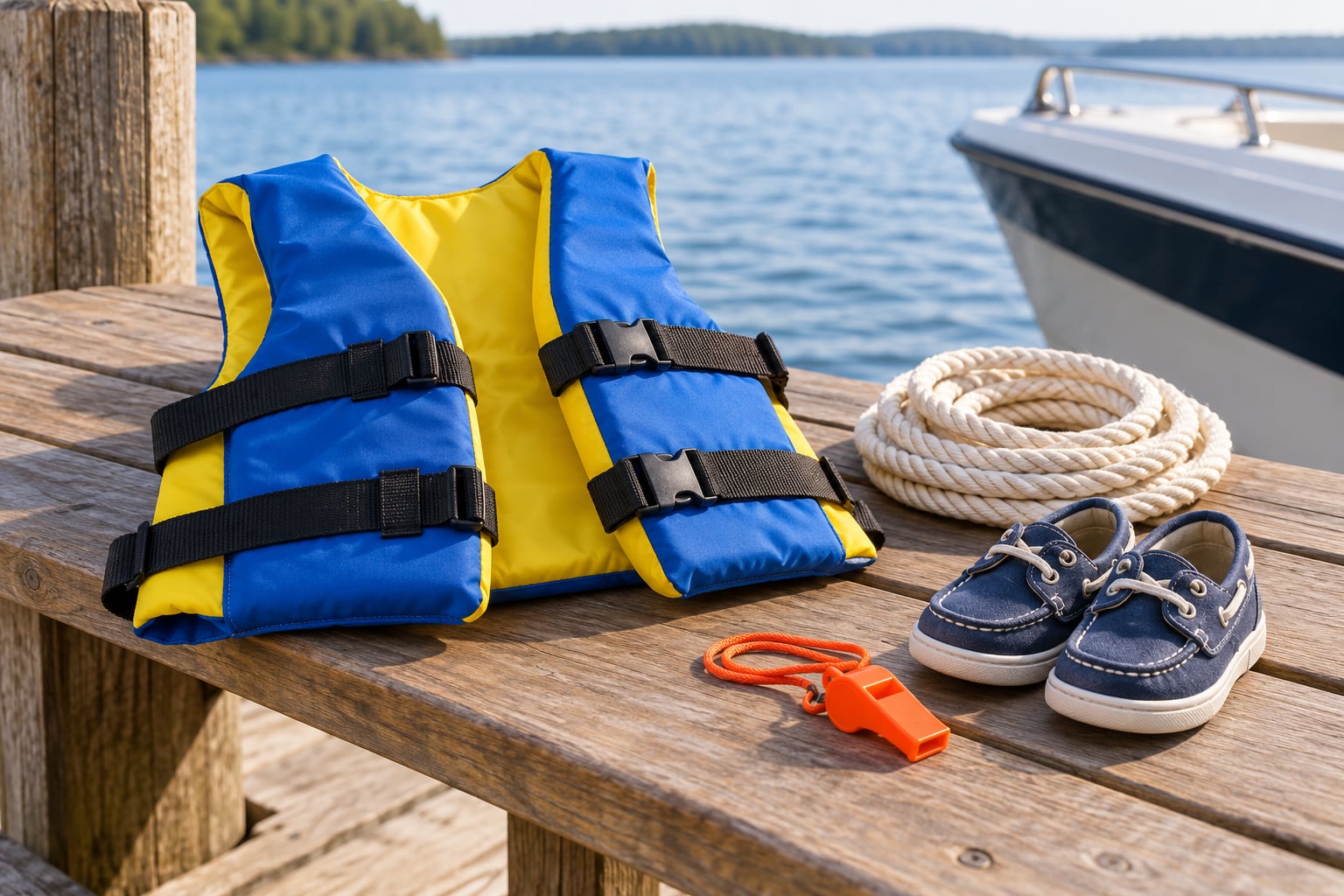
- Child-sized gear that fits. A Type III flotation aid with a crotch strap for anyone under about 30 pounds, a grab handle for retrieval from the water, and foam that does not ride up over the chin or ears when lifted.
Sizing by weight is the part parents get wrong most often. Every approved jacket carries a weight range on its label, and a child who falls outside it does not get better flotation, they just get a jacket that shifts, rides up and comes off. Lifeguards and Coast Guard guidance both point the same way: buy the size that fits today, replace it as the child outgrows it.
Step-by-Step: How to Teach Kids to Wear Life Jackets
1. Choose a Life Jacket That Fits Correctly
Fit matters far more than appearance, but the two are linked. A child who is stuck in a jacket that rides up past their ears will fight it every time, and that fight is about comfort, not defiance.
Check the manufacturer’s weight range and chest-size guidance, then confirm the jacket is approved for the activity you actually do. Performance Level 70 jackets are built for boating and general cruising, Level 100 for active use in rougher water, and Level 150 for offshore and high-speed towing. For a family on a lake, a properly fitted Level 70 jacket with a crotch strap handles the vast majority of days.
One rule to hold: never buy the next size up so the child can grow into it. A loose jacket will not lift correctly, will not keep the head positioned, and is the reason so many kids shrug the thing off two minutes after you buckle it in.
2. Start with Practice Sessions at Home
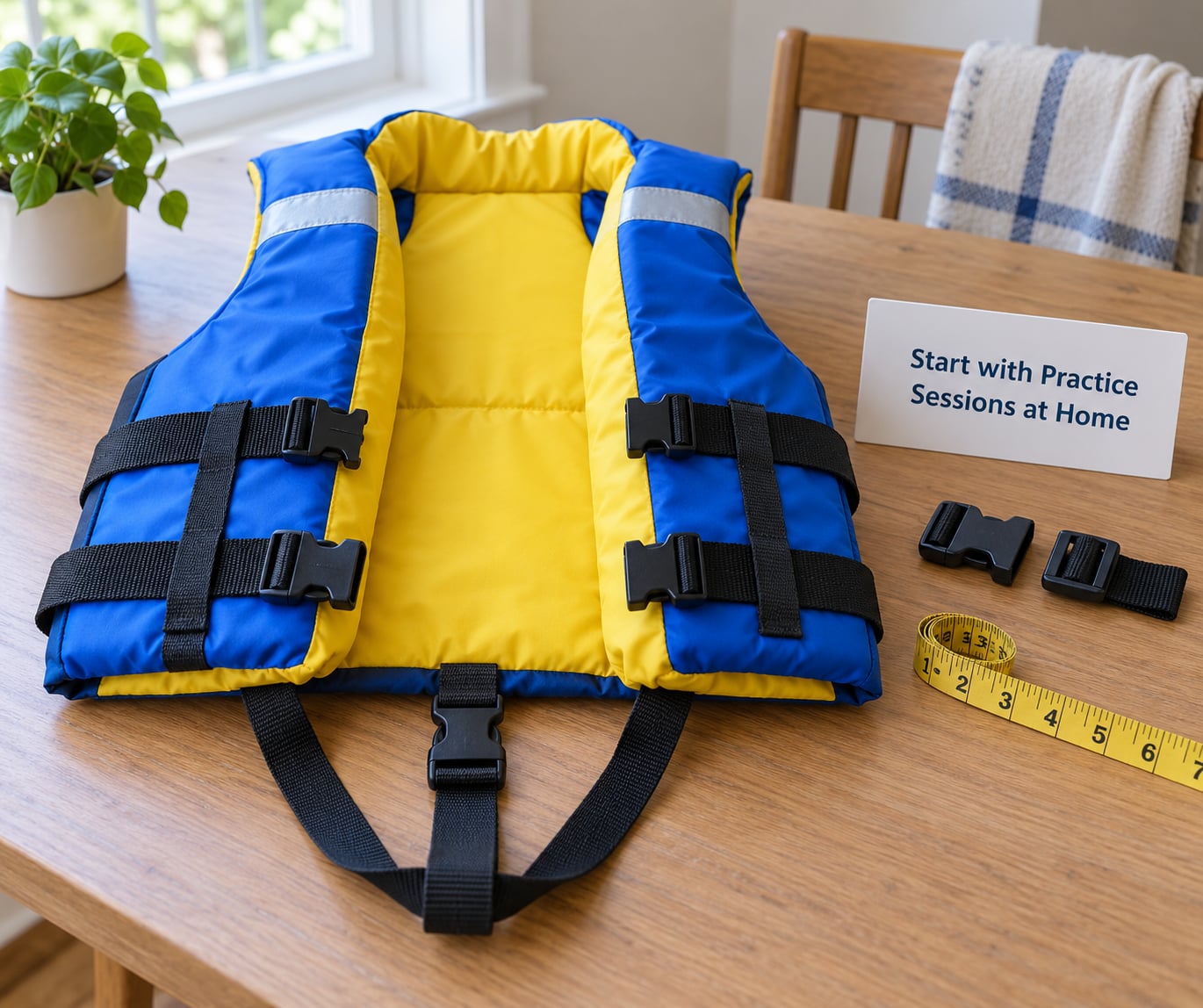
Home practice is where the work happens. Two weeks of short, five-minute sessions at home does more than an hour of arguing on a windy dock.
Keep each session boring and predictable. Put the jacket on, buckle it, tighten the straps, say the same words you will say on the boat, then take it off. Stop while it is still going fine. Children treat repetition as safety, and fatigue as a reason to quit.
Say plainly what the jacket does without overselling it: it helps keep your face above water if you fall in. Do not promise it makes drowning impossible. The American Academy of Pediatrics and the Coast Guard are both direct about that, and a child who later finds out the promise was false loses trust in the whole rule.
3. Practice Buckles, Straps, and the Safety Check
Teach the sequence the way you will perform it, then ask your child to do it back to you while you watch.
- Slide both arms through, front panel facing forward.
- Fasten every zipper and buckle, working from the bottom up.
- Tighten each strap until you can slide no flat hand between strap and body.
- Fasten the crotch strap for small children so the jacket cannot ride up over the head.
- Have your child state back that the jacket is on, snug and buckled.
Step five matters more than it looks. A child who narrates the check takes ownership of it, and a child who owns the check is far less likely to quietly undo it later. Return to the manufacturer’s instructions for the exact order on your specific jacket, since buckle layouts vary.
4. Test the Fit Before Every Boat Ride
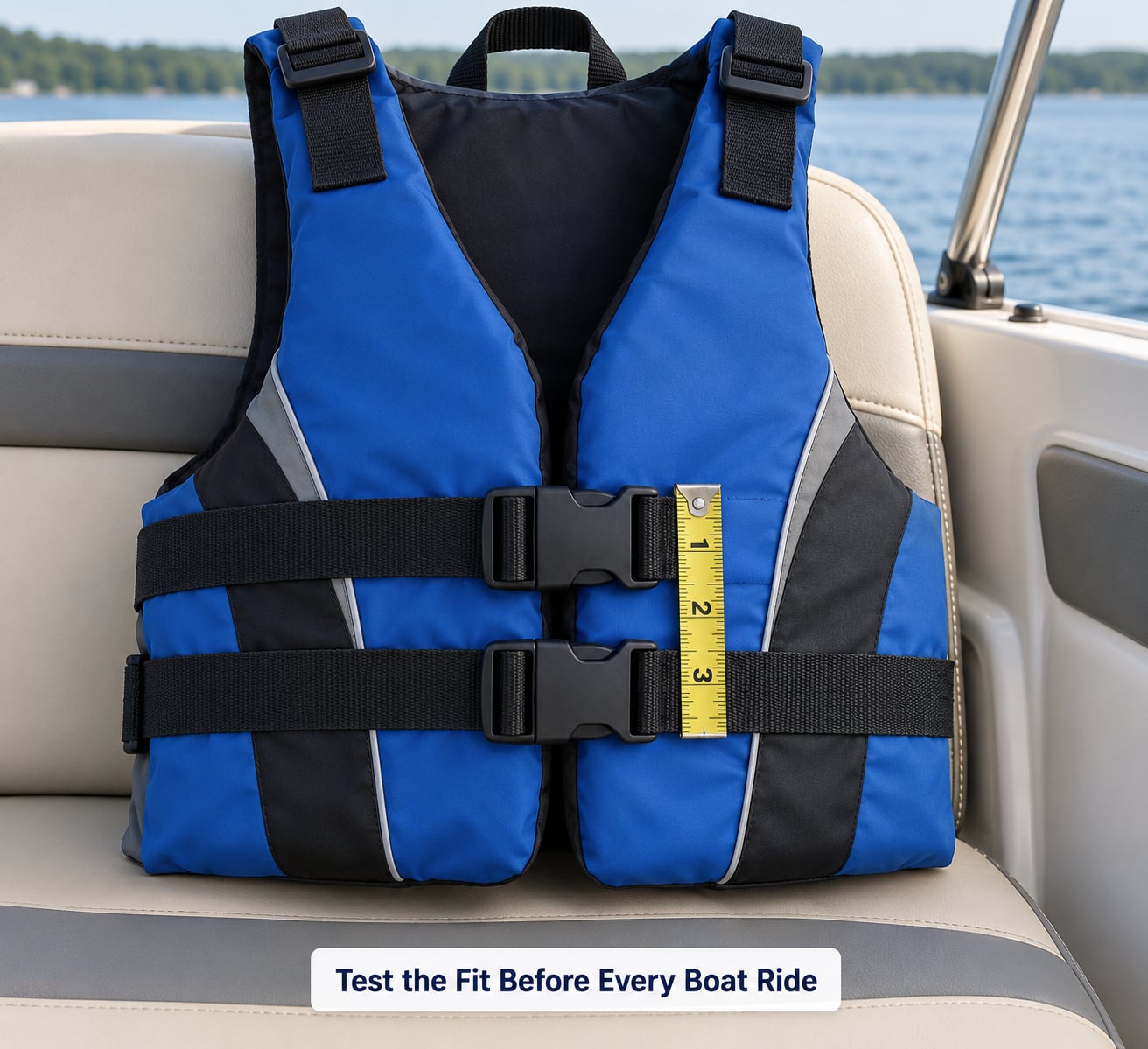
The shoulder lift test takes five seconds and catches almost every bad fit. Do it every time, on the dock, not just at home once.
- Fasten all buckles and zippers, tighten all straps.
- Slide one finger under each armhole at the shoulder. More than one finger means it is loose.
- Slide two fingers between the collar and the child’s neck. Less than two means it is tight.
- Lift the child gently by the shoulders of the jacket. The jacket should not ride over the chin or ears.
- Have the child raise both arms, bend forward and cough. If anything shifts or the jacket rides up, tighten and retest.
If the jacket lifts past the chin or ears, it is too big, no matter what the weight label says. If the child cannot raise their arms or cough comfortably, it is too tight. Both mean a different jacket, not more adjustment.
5. Make Wearing It the First Step of a Familiar Routine
Children resist what arrives without a script. Build one sequence and never vary it: jacket on, life jacket check, safety gear out, hand on the boat while boarding.
Use the same words every time. If it is always “jacket first, then the fun stuff”, then within a few weeks the phrase does the work on its own. The goal of how to teach kids to wear life jackets is not obedience in the moment; it is a rule the child runs without you. Practice the sequence while you rehearse at home, including the boarding step, so the dock version is familiar.
Adults have to hold the same rule. If grandpa, the boat neighbor or the older sibling skips the jacket, your child gets a clear message that the rule is negotiable. Brief every adult before the first trip, in one sentence: the jacket goes on before anyone puts a foot aboard.
6. Practice on Dry Land Before Going Afloat
Dry-land rehearsal is what competitors leave out and parents notice most. If you are still stuck on how to teach kids to wear life jackets, this is the step that decides how the next month goes. Run it in short blocks over roughly two weeks.
- Days 1 to 3: wear it around the house for ten minutes, mostly while you cook or clean.
- Days 4 to 6: buckle it on before screen time or a snack, same order every day.
- Days 7 to 9: put it on for the car ride to the store or the walk to the mailbox.
- Days 10 to 12: rehearse the boarding sequence, moving around the yard in it.
- Days 13 to 14: one short shallow-water session within arm’s reach, if conditions allow.
On the water, add two drills once your child is comfortable: staying beside the adult, and what to do after a fall into the water (float on the back, arms out, do not swim away from the adult). Keep them cheerful, never as a scare tactic.
7. Reinforce the Habit Without Punishment
Reward the process, not the obedience. “You checked the shoulder straps yourself before we left the dock” lands better than a vague good job, because it names what you want repeated.
Never make the jacket a consequence or take it away before the outing ends. A child who learns that the jacket comes off as punishment will fight it harder next time, and you end up losing the trip instead of gaining a habit.
Let your child inspect and adjust their own jacket with you watching. Some families let kids apply sunscreen first and buckle the jacket last, which puts the buckle in their hands. Participation that feels respectful is what turns a rule into a habit.
Common Mistakes
These are the errors I would correct first, each with the fix.
- Buying an oversized jacket to grow into. Fix: buy the current size, replace it each season as they outgrow it.
- Checking only the buckles. Fix: run the full shoulder lift test. Buckles can all be fastened while the jacket still rides over the ears.
- Practicing only on the boat. Fix: two weeks of dry-land rehearsal at home, five minutes a day.
- Using threats or ultimatums. Fix: state the rule once, neutrally, and hold it without negotiation.
- Bare feet and loose clothes on board. Fix: shoes on and laces tied, because footing on a wet deck is its own hazard.
- Skipping the routine on short trips. Fix: the same sequence every time, including the five-minute fishing trip.
- Leaving a child unsupervised near water. Fix: a life jacket adds a layer; it never replaces a responsible adult within arm’s reach.
One more correction worth making: water wings, floaties and puddle jumpers are not life jackets. Lifeguards are consistent about this. They keep a child’s head above water at the surface while it lasts, they do not hold the face up, and they do not do anything if a child is knocked unconscious. For boating, paddling and any dock activity, an approved PFD is the only answer.
Frequently Asked Questions
How do I know if my child’s life jacket fits properly?
Check three things in order. Fasten every buckle and tighten every strap, then slide one finger under each armhole at the shoulder and two fingers between the collar and the neck. Finally, lift the child gently by the jacket’s shoulders. If the jacket slides over the chin or ears, it is too big; if the child cannot raise their arms or cough, it is too tight. The child’s weight must also fall inside the label’s range.
Does the law require adults to wear a life jacket too?
Federal boating law requires children under 13 to wear a properly fitted Coast Guard-approved PFD while underway on a recreational boat. Adults are generally advised to wear one as well, and many states have separate adult requirements that are stricter than the federal minimum. Requirements for children on docks, swim beaches or shore fishing vary by state, so check your state boating authority for the rule that applies where you are.
Can children wear a life jacket while boating, fishing, or on a dock?
Yes, and they should. An approved PFD is appropriate for boating, canoeing, kayaking, stand-up paddleboarding, fishing from a boat or shore, and any time a child is on a dock, pier or swim platform. Pick the performance level to match the activity, with Level 70 suiting ordinary lake cruising and higher levels for towing or rougher conditions. A jacket works only when it is properly fitted and worn.
How can I get a resistant child to wear a life jacket?
Rehearse before the outing rather than arguing during it. Two weeks of short home practice, letting the child pick the color or style, using one consistent jacket-first sequence with the same words each time, and having every adult model the rule usually ends the standoff. Hold the line calmly and skip the trip rather than boating without the jacket. In the moment, reduce choices, stay low and calm, and let one adult buckle while another stays with the child.
Is a life jacket enough to keep a child safe around water?
No. An approved PFD buys time and keeps a child’s face above water if they fall in, which matters most for non-swimmers. It does not prevent a fall, does not keep a conscious strong swimmer from panicking, and does not help someone who is trapped, chilled or injured. Coast Guard and Red Cross guidance treat a life jacket as one layer alongside active supervision by a capable adult, a reachable rescue plan and basic swimming ability.
Conclusion: Start with One Short Practice Run
Do one thing today. Pick the correct approved jacket by weight, then drill the buckle sequence and the shoulder lift test on the living room floor for five minutes, with no water involved.
Add a jacket-first routine with the same wording on every trip, brief every adult who comes along, and give specific praise when your child checks their own straps. Do that for two weeks and the dock standoff usually resolves itself. A life jacket helps; it never replaces an adult watching the water.