A life jacket fits correctly when it sits snug and flat against your torso with every closure fastened, stays centered when you move, and cannot be lifted above your shoulders or toward your chin when you pull up on the shoulder straps. Knowing how to choose the right life jacket fit takes about five minutes and beats guessing from the size printed on the box. The U.S. Coast Guard sets the approval standard, UL does the testing behind it, and the manufacturer label tells you the weight and chest range a given personal flotation device is built for.
Fit matters most when the jacket is doing real work. A vest that rides up over your chin, ears, or face can hold your head in the wrong position or let you slide out of it, which defeats the one piece of gear you are relying on. Here is the process I use and the one experienced paddlers describe in the same terms: check the label, measure, fasten, tighten bottom to top, then lift at the shoulders.
Table of Contents
- 1What You Need to Choose the Right Life Jacket Fit
- 2How to Choose the Right Life Jacket Fit: Step by Step
- 3Step 1: Identify the Life Jacket Type and Intended Use
- 4Step 2: Measure Your Body Before Shopping
- 5Step 3: Check the Label and Construction
- 6Step 4: Put It On Over Your Usual Clothing
- 7Step 5: Fasten and Adjust Every Strap
- 8Step 6: Test Comfort, Movement, and Buoyancy
- 9Step 7: Replace or Adjust a Poor Fit
- 10Common Life Jacket Fit Mistakes
- 11Frequently Asked Questions
- 12How should a life jacket fit when it is fastened?
- 13Do life jackets come in different sizes for different body types?
- 14How loose can a life jacket feel and still be safe?
- 15How do I choose a life jacket for a child?
- 16Does wearing a life jacket over a jacket or hoodie change the fit?
- 17When should I replace a life jacket?
- 18Conclusion
What You Need to Choose the Right Life Jacket Fit
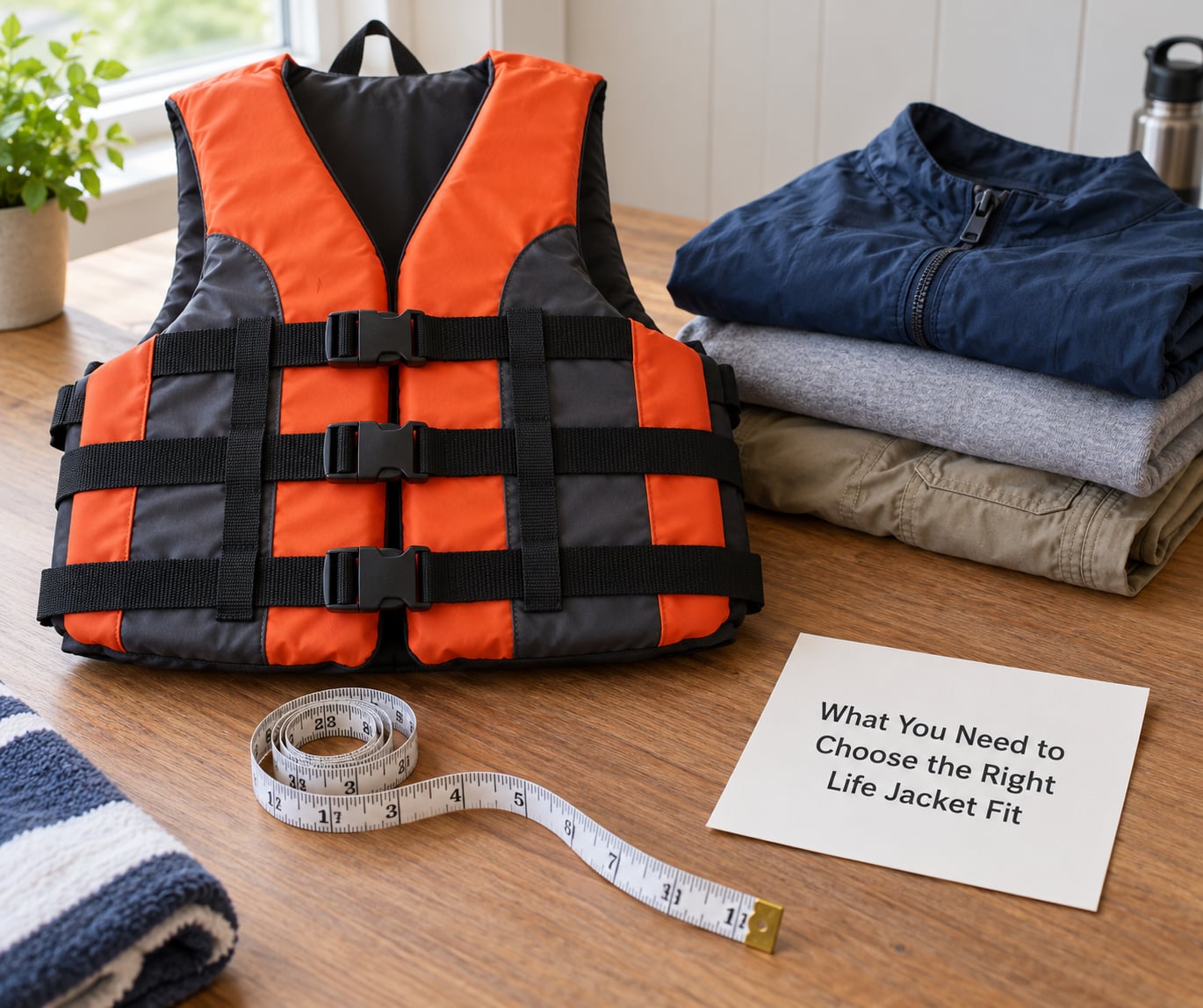
You need very little. Grab the jacket itself rather than trusting a photo on a listing, plus the manufacturer’s sizing chart if one is printed on the tag or the product page.
- The jacket and its inside label — the approval marking, type, weight range, chest range, and manufacture date all live on the tag inside the front panel.
- A soft measuring tape — chest width and, for some brands, torso length from the base of the neck to the waist.
- Your usual on-water clothing — the fit test has to happen over the thickest layer you realistically wear, not over a t-shirt in an air-conditioned store.
- A second pair of hands — for the shoulder-lift test, someone pulls the shoulder straps upward while you hang relaxed. Doing it to yourself tells you nothing.
- The state boating law where you boat — requirements for children, personal watercraft, and throwable devices differ by state, so check yours rather than assuming.
How to Choose the Right Life Jacket Fit: Step by Step
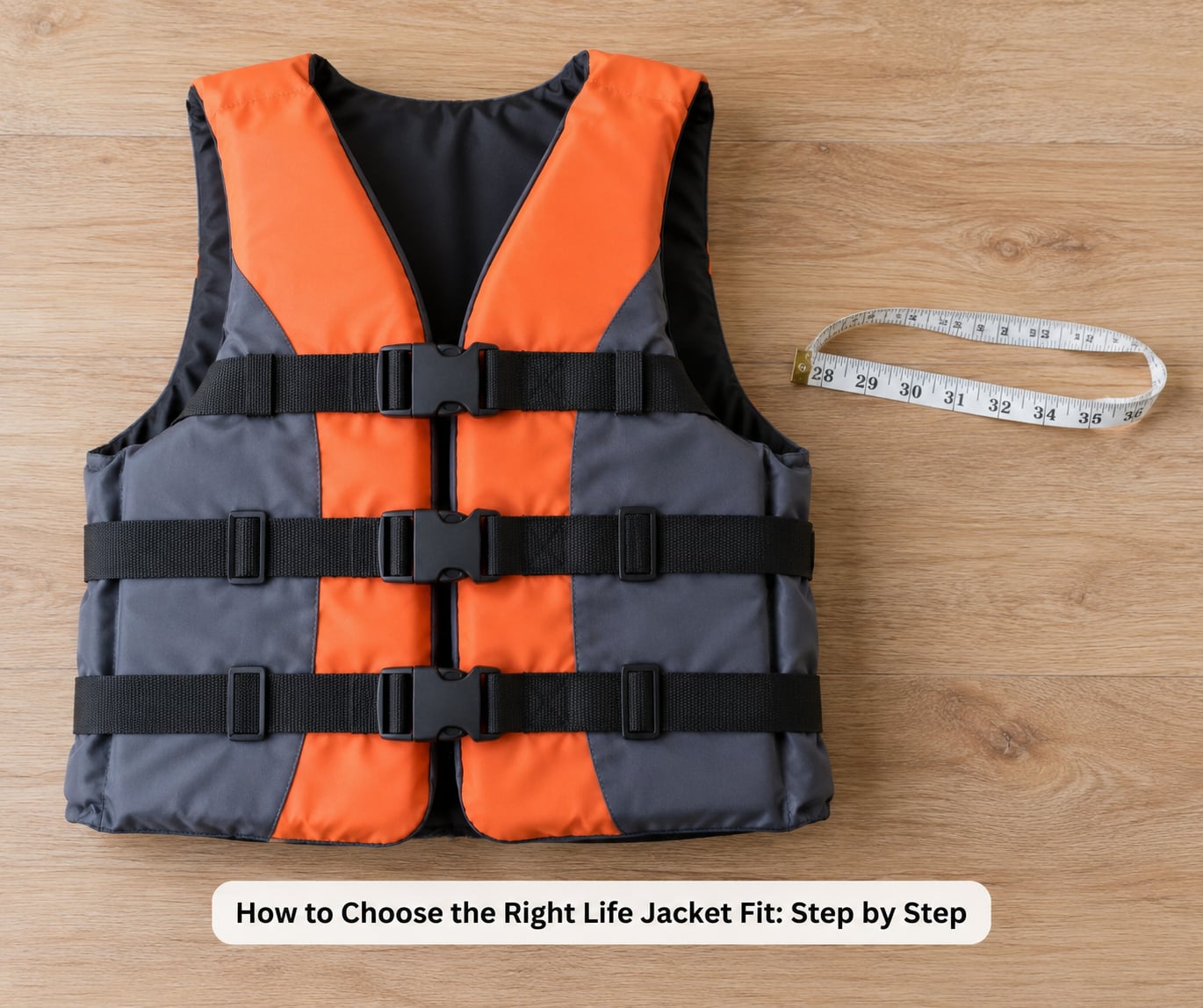
Step 1: Identify the Life Jacket Type and Intended Use
Fit depends on the job. An angler sitting in a boat needs something that stays put for six hours; a kayaker needs large arm openings for a paddle stroke; a child on a dock needs a collar and a crotch strap.
Wearables are buckled or zipped onto your body. Throwables are meant to be tossed to you and are usually not worn, so their fit matters far less. Start by matching the type to your water and your activity, then worry about size.
| Type | Intended water | Flotation behavior | Worn or thrown |
|---|---|---|---|
| Type I | Open water, offshore | Highest buoyancy, turns most faces up | Wearable |
| Type II | Near shore, calm water | Turns an unconscious wearer face up | Wearable or throwable |
| Type III | Inland, calm water, water sports | Keeps head above water, may not turn you | Wearable |
| Type IV | Backup only | No flotation for the wearer | Throwable |
Two categories sit outside this table. Buoyancy aids and impact vests are built for moving water and are explicitly not life-saving flotation devices, and inflatable models use a bladder rather than foam, which changes fit entirely and is not permitted for young children.
Step 2: Measure Your Body Before Shopping
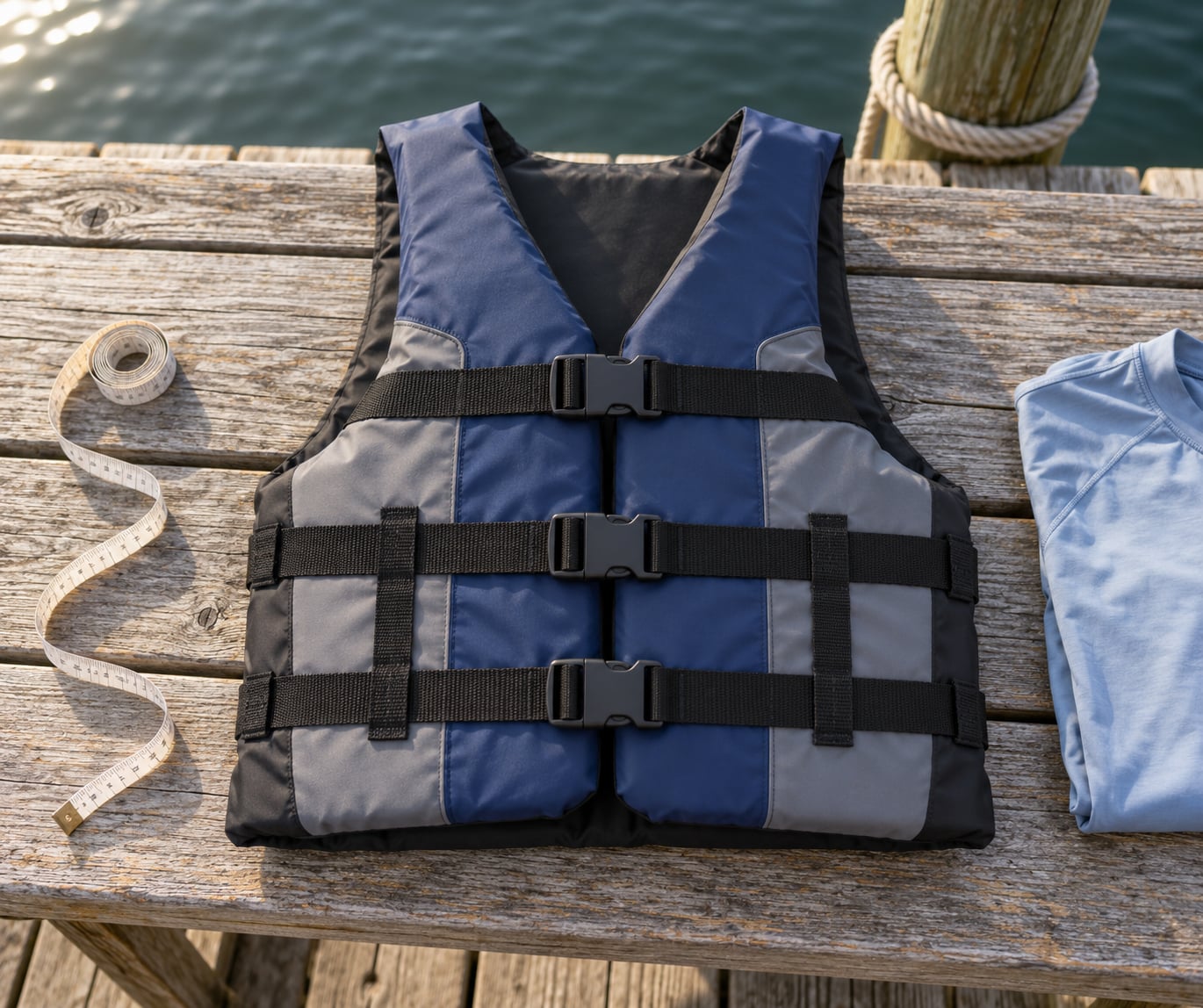
Measure while seated, which lets you find your true chest width instead of holding your breath and puffing out. Run the tape under your arms and straight across the fullest part of your chest, keep it level, and read it where it crosses. Some manufacturers also publish a torso length, measured from the base of your neck down to your waist, which matters far more for tall and short paddlers than chest width alone.
Compare your number to the chest range printed on the label, not to the letter size. The same Medium fits a 34-inch chest at one brand and a 40-inch chest at another, which is the single biggest source of frustration in paddling forums. Your weight should also fall inside the stated range; if you sit just above the top of the range, the vest was not tested for your mass.
Step 3: Check the Label and Construction
Before you try it on, read the tag. You want the Coast Guard Approved marking with the approval number, the type, the buoyancy level, the chest measurement range in both inches and centimeters, the weight range, and the manufacture date.
Then inspect the hardware. Pull both front buckles apart and confirm each one clicks back together cleanly, run the zipper up and down, and check that adjustment straps slide through their keepers without fraying. Skip anything marked as a swim vest, pool float, or trainer — those products carry no approval marking and no buoyancy rating, so they are toys, not flotation devices.
Step 4: Put It On Over Your Usual Clothing
Put the jacket on over the layers you actually wear on the water. Once it is wet, a puffy jacket compresses and a snug vest suddenly feels loose, so a vest adjusted over heavy insulation will disappoint you on the first real splash.
Check where the edges land. The foam should sit flat across your chest and stomach with no gap at the sides, the shoulders should rest on your shoulders rather than sliding off them, and the collar should support your jaw without pressing into your throat. If the jacket flares open at the sides, it is too big regardless of what the tag says.
Step 5: Fasten and Adjust Every Strap
Order matters. Zip or buckle the front closure first, then cinch the adjustment straps from the bottom buckle upward so the jacket anchors low on your body rather than being pulled up from the shoulders. A vest tightened top-down tends to ride.
Tighten until the foam is compressed evenly and you cannot slide fingers between the jacket and your chest. You should still be able to breathe normally, shrug your shoulders, and reach both arms forward. If you have to hold your breath to zip it, that is a sizing problem, not a tightening problem.
Step 6: Test Comfort, Movement, and Buoyancy
Now run the shoulder-lift test, which is the definitive test. Have someone grasp the shoulder straps and lift upward gently while you hang relaxed. A correct life jacket stays put or drops only slightly. If it slides up past your shoulders toward your chin or ears, it is too big or not tight enough.
Then move. Walk, sit into a boat seat, raise both arms overhead, and if you paddle, take a few full strokes. Check for four things: the jacket stays centered, it does not twist, your range of motion is unrestricted, and nobody has to stop what they are doing to adjust it. Sitting is the test most anglers fail, because a vest that bunches at the back when you sit leaves the shoulder straps loose.
Where conditions allow, a supervised second test in shallow, calm water tells you what a dry room cannot. Inflating or submerging the jacket should keep your ears and mouth above water without pulling at your neck. Never do this alone or in moving water.
Step 7: Replace or Adjust a Poor Fit
Loosen and re-tighten first, bottom to top, and re-run the lift test. If it still rides, try the next size down rather than tightening harder, because a jacket that only fits after aggressive cinching tends to loosen again once wet.
If two labels bracket your chest measurement, take the smaller one as the starting point and confirm with the shoulder-lift test; oversized gear is the more common and more dangerous error. If your torso is unusually short or long and no label range matches, look for brands that publish torso lengths or make Tall and Big cuts, since mainstream adjustable nylon vests often stop well before the sizes some paddlers need.
Retire any jacket with cracked foam, a buckle that will not click, a zipper that separates, faded or brittle webbing, or a manufacture date so old the foam has visibly yellowed and crumbled. Retire it rather than fixing it with tape or a bungee cord.
Common Life Jacket Fit Mistakes
Most bad fits come from the same handful of habits. Each has a straight correction.
- Buying by height or age instead of chest measurement. Kids in particular get sized by age on packaging. Measure the chest, check the weight range, and run the lift test on the actual body.
- Taking the next size up so a child can grow into it. A jacket that rides over the ears does not grow with anyone; it just fails on the first cold splash. Replace it when they outgrow it.
- Leaving the crotch strap unused. On small children and anyone in a kayak, a loose vest slides straight up the torso. Fasten it.
- Fastening only the front buckle. Every strap, buckle, zipper, and keeper is part of the fit. Skip one and the shoulder-lift test will show the ride-up.
- Testing fit over clothing you would not wear on the water. Fitting over a sweatshirt and then stripping it off on a summer morning leaves you unprotected. Fit it over the layer you will actually wear.
- Ignoring neoprene and nylon behave differently. Neoprene stretches and settles when wet, so fit it slightly snug and expect it to loosen; nylon does not stretch, so a nylon jacket that is snug dry stays snug wet. Neoprene also tends to run large, so compare charts carefully.
- Keeping a hand-me-down that no longer fits, or one with tired hardware. Buckles should click, stitching should look tight, and foam should be evenly shaped. If a strap is stretched out or a buckle is springy, it will not hold under load.
Frequently Asked Questions
How should a life jacket fit when it is fastened?
It should feel snug with all closures fastened, with no gaps at the sides and no space you can press through at the chest. Learning how to choose the right life jacket fit comes down to the shoulder-lift test: when someone pulls gently on the shoulder straps, the jacket should stay in place or drop slightly, never sliding above your shoulders toward your chin or ears. You should still breathe and move normally.
Do life jackets come in different sizes for different body types?
Yes, and the labels differ more than most buyers expect. Two jackets both marked Medium can cover a 34-inch chest at one brand and a 40-inch chest at another, so the letter means very little on its own. Look for the stated chest range in inches and centimeters, check that your weight falls inside the printed weight range, and confirm the type suits your water. Tall and Big cuts exist for longer or larger torsos.
How loose can a life jacket feel and still be safe?
Loose enough that you can slip a flat hand between the jacket and your chest is too loose. You want even compression across the foam with no gaps at the sides, and the jacket centered on your torso when you sit or raise your arms. The reliable check is the shoulder-lift test rather than how the fit feels in a shop, because fabric and neoprene both change once they are wet.
How do I choose a life jacket for a child?
Measure the child’s chest and weight, then check the label range for both, and confirm the jacket carries a Coast Guard approval marking. Fit it over the clothing they will wear, fasten every strap including the crotch strap, and lift them by the shoulder straps — the jacket must not slide toward the chin or ears. Never buy the next size up for growth, and keep young children out of inflatable models.
Does wearing a life jacket over a jacket or hoodie change the fit?
It does. Extra layers add width and depth, so a vest adjusted over a t-shirt will feel loose once you add a sweatshirt or rain shell. Try the jacket on over the thickest layer you expect to wear and adjust every strap bottom to top. Avoid bulky puffy coats: they compress when wet and can leave a snug vest floating loose on your body after a fall in the water.
When should I replace a life jacket?
Replace it when the hardware or foam fails, or when it simply no longer fits the body wearing it. Retire a jacket with cracked or crumbling foam, a buckle that will not click shut, a zipper that separates, or brittle frayed webbing. Replace a hand-me-down as soon as the wearer outgrows it rather than sizing up. Check your state boating law for any replacement intervals, and confirm the new jacket carries an approval marking.
Conclusion
Start with the label, then the measurement, not the size on the box. Check that it is Coast Guard approved and wearable, measure your chest while seated, put it on over the layers you actually wear, fasten every closure, tighten from the bottom buckle upward, and have someone lift you at the shoulder straps. If the jacket rides toward your chin or ears in that test, it is too big or too loose, and you adjust it or replace it. State boating law and local instruction set the legal baseline, so check yours before the first launch of the season.