An anchor drags when the pull on the rode gets steep enough to lever the anchor out of the bottom, and that pull steepens in wind. To anchor in wind without dragging, put out more scope than the calm-water number suggests, weight the bottom end of the rode with chain so the load stays low and horizontal, and confirm the hold before anyone goes below deck. On a small boat in 15 feet of water that usually means a hundred feet or more of rode, not the thirty it feels like at the cleat.
It takes maybe ten minutes per anchor if you already have the gear rigged right, and the whole thing matters more on a lake than most people expect. A freshwater squall can double the wind in fifteen minutes with no warning, and there is rarely open ocean to leeward to sort things out in.
Table of Contents
- 1What You Need
- 2Step-by-Step
- 31. Check the Wind, Depth, and Bottom
- 42. Choose an Anchor That Fits the Conditions
- 53. Use Enough Rope or Chain
- 64. Set the Anchor and Test the Hold
- 75. Add a Trip Line When Dragging Is a Risk
- 86. Respond to Wind Shifts and Increasing Wind
- 9Common Mistakes
- 10Why an Anchor Drags in Wind
- 11The Fix for Each Mistake
- 12Frequently Asked Questions
- 13How much anchor rope do I need for a boat?
- 14Why is my anchor dragging in the wind?
- 15Is chain better than rope for anchoring?
- 16How do I know if the anchor is holding?
- 17What anchor works best on a rocky lake bottom?
- 18Should I move my boat if the wind gets stronger?
- 19What to Do First
What You Need
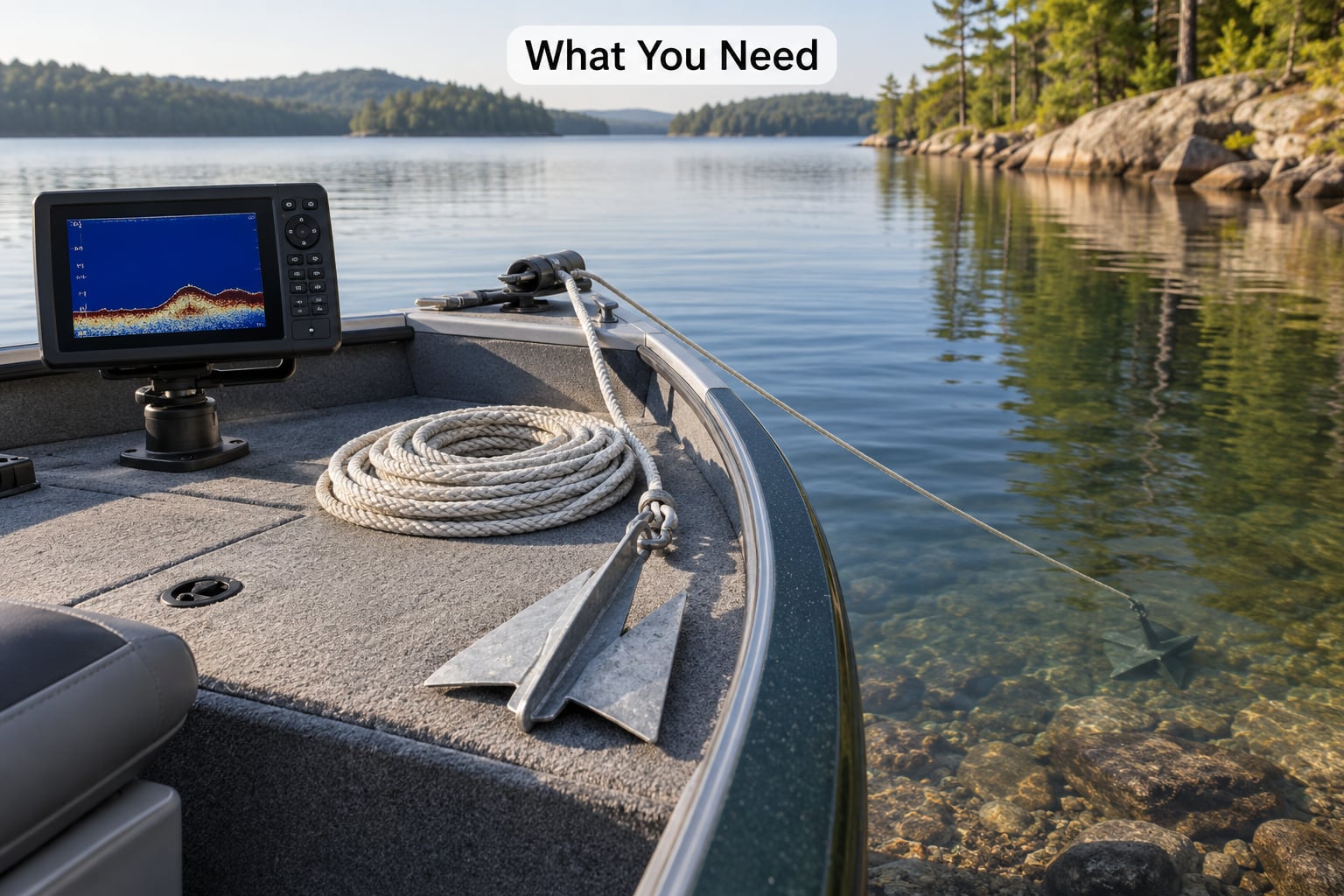
An anchor sized for your boat and the bottom you actually sit in, not the anchor that came with the boat. Most stock anchors are undersized by a wide margin once wind is in the picture.
Enough rode for your deepest spot at the scope ratio you need. People count the rode that came with the boat and stop, which is usually two or three times too little for an overnight in wind.
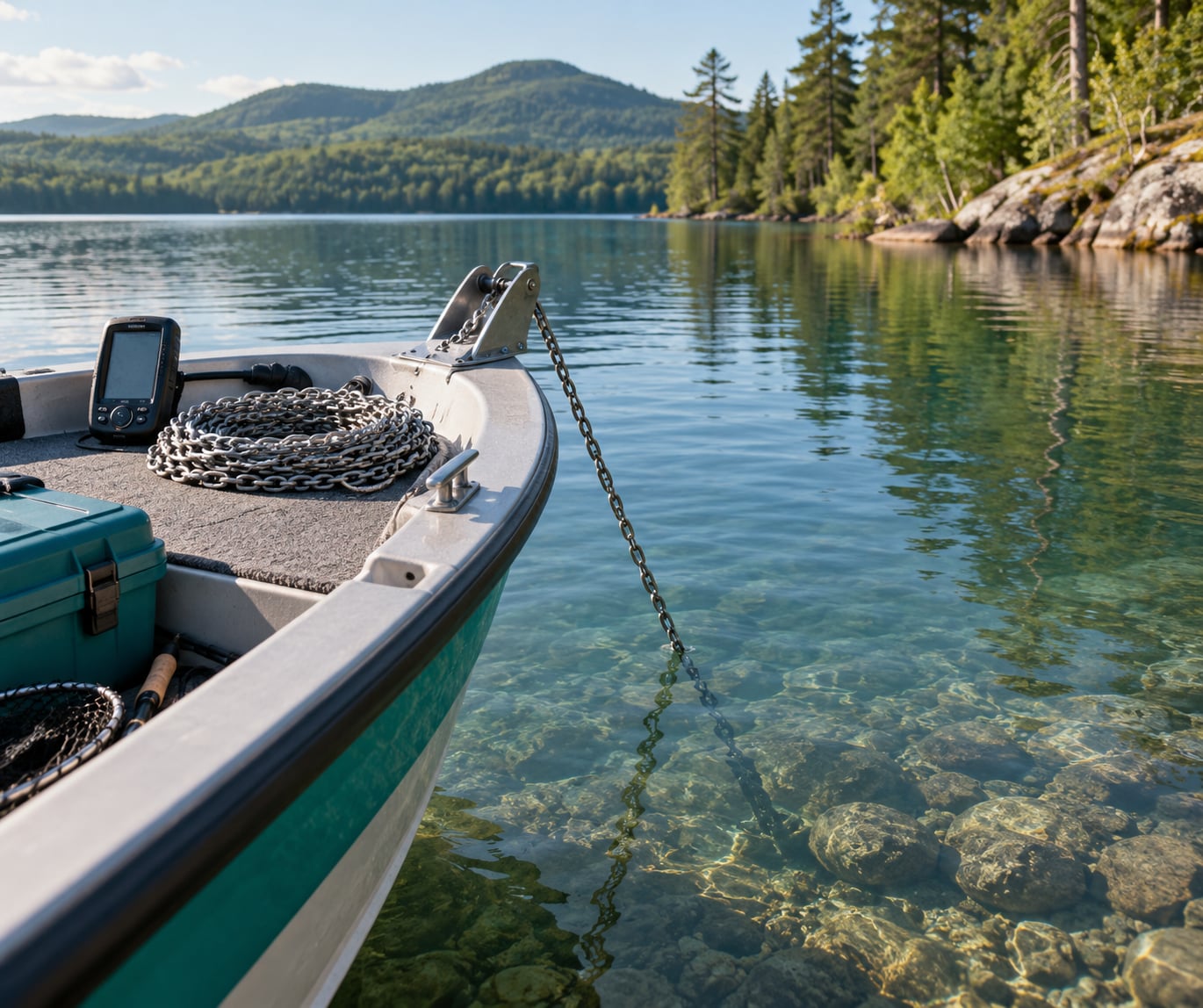
A length of chain for the bottom third of the rode, plus a shackle or thimble to join it to the rope. Chain sinks into the mud, keeps the load low, and survives being dragged across rock in a way nylon does not.
A trip line: a light line clipped to the shackle with a weighted end, running up to a cleat. It gives you a second way to free a buried anchor.
A depth sounder or handheld depth finder, a snubber line or three-strand nylon for shock absorption, and the usual safety kit. PFDs on, lights ready, and someone awake who knows what dragging sounds like.
Step-by-Step
The sequence below is the whole procedure. Work through it in order and the odds of a quiet night improve a lot.
1. Check the Wind, Depth, and Bottom
Note the wind direction and speed, then read the depth and work out what is underneath. Depth sounder readings tell you depth; the shape of the bottom comes from the chart, a fish finder, or a slow pass at a few depths.
On lakes the two features that cause most dragging are slopes and drop-offs. An anchor set near the top of a slope can hold fine for six hours and then walk down the incline all night as the wind loads it. Sound for a flat bottom of even depth before you commit.
2. Choose an Anchor That Fits the Conditions
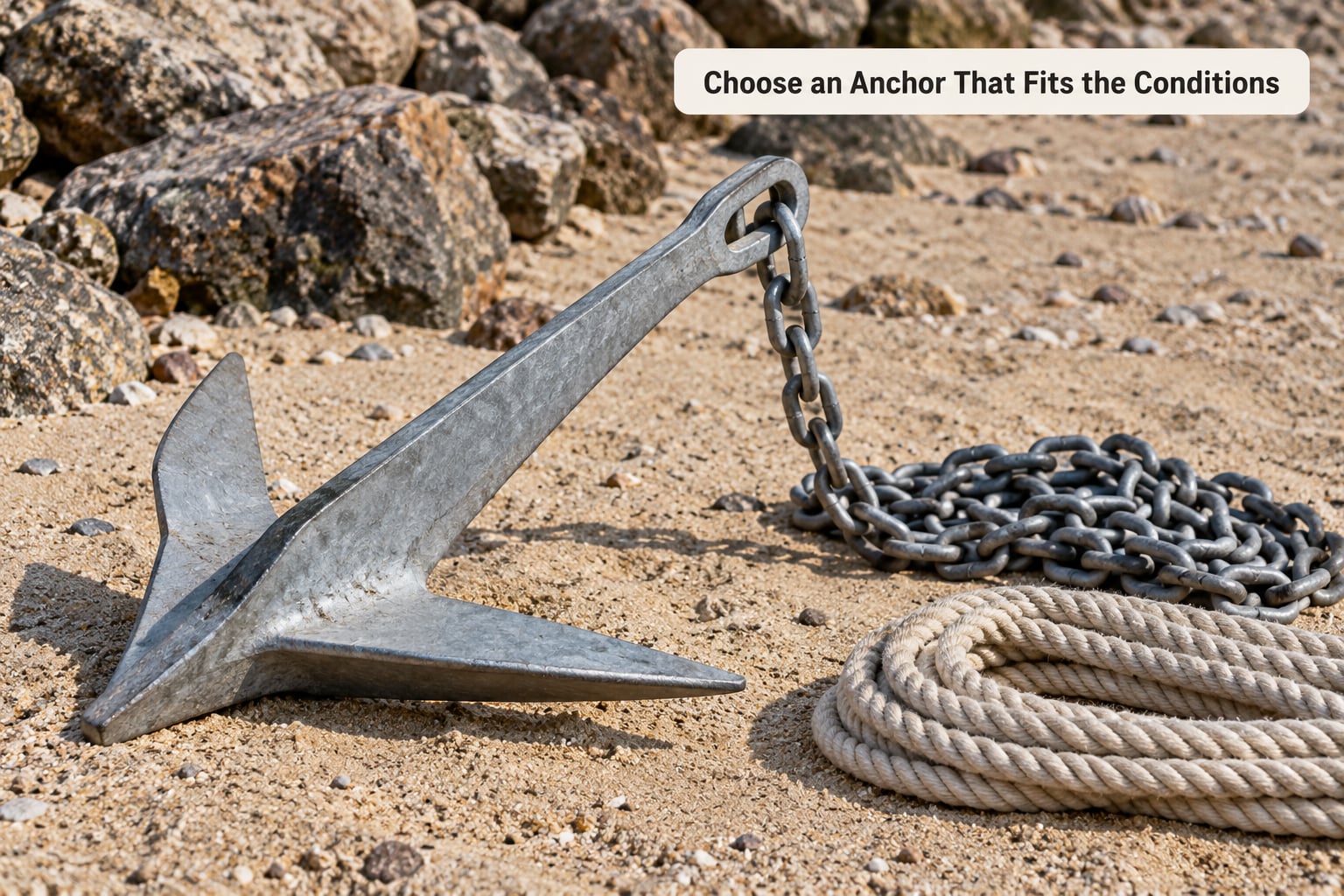
Match the fluke angle to what the anchor has to bite. The wider the material, the more open the fluke angle you can use.
| Bottom | Anchor shape that works best | Notes for lakes |
|---|---|---|
| Soft mud | Danforth, plow, or fluke with wide setting | Holds well but can be hard to raise; expect suction |
| Sand | Danforth or plow | The easiest bottom, and where sandbars sit |
| Rock or gravel | Plow or heavier fluke-style with a sharp point | Set hard and never drag chain over it lightly |
| Grass, weeds, or algae | Danforth or mushroom with a wide fluke | Weeds foul the shank and trip the trip line |
| Shallow pan or clay | Heavier plow or fluke | Holding is poor; use scope and extra chain to compensate |
A danforth handles grass and weed better than anything else and is cheap to replace when it bends. A plow holds on mud and sand and stays buried under a shifting load, but it buries so deep you may need the windlass to get it back.
3. Use Enough Rope or Chain
Scope is the ratio of rode length out to depth, and you measure depth from the bow roller or bow cleat down to the bottom, not from the waterline. That extra foot or two of freeboard matters in shallow water. In 10 feet of water with 4 feet of bow height, the effective depth is 14 feet, and 7:1 scope means 98 feet of rode.
| Effective depth (depth plus bow height) | 5:1 scope | 7:1 scope | 10:1 scope |
|---|---|---|---|
| 10 ft | 50 ft | 70 ft | 100 ft |
| 15 ft | 75 ft | 105 ft | 150 ft |
| 20 ft | 100 ft | 140 ft | 200 ft |
| 30 ft | 150 ft | 210 ft | 300 ft |
| 50 ft | 250 ft | 350 ft | 500 ft |
Now add the wind. This is the part most guides skip, and it is the part that answers the question.
| Wind speed | Minimum scope ratio | What changes |
|---|---|---|
| Under 10 knots | 5:1 | Standard overnight scope |
| 10 to 20 knots | 7:1 | Add all the chain you can carry; snubber on |
| 20 to 30 knots | 10:1 | Full rode, often two boat lengths of it |
| Over 30 knots | 10:1 plus bow-to-stern second anchor | Consider a different harbour entirely |
Put the chain on the bottom end. A third to a half of the rode in chain keeps the anchor pinned and absorbs shock, and the rule of thumb for a small boat is at least one full boat length of chain at the anchor end.
4. Set the Anchor and Test the Hold
Lower the anchor, never throw it. A thrown anchor lands in a tangle and can trip its own trip line or bury a fluke flat against the bottom.
Back the boat down over the anchor at idle speed so the hull drifts back and pulls the rode straight, then pay out line as the boat moves. Keep paying out until the anchor trips, then let it pull the last few feet so it digs in.
Set it with a short burst of reverse power, powering down rather than ahead, which is the consensus technique among cruisers. Then verify: take two fixed bearings ashore and check them again in five minutes, and set the depth sounder alarm for the depth you anchored at.
The hand tug test works too. Haul hard on the rode and a properly buried anchor answers with a firm, steady pull. A soft, moving one means it is not set.
5. Add a Trip Line When Dragging Is a Risk
A trip line is a light rope clipped to the anchor shackle or crown with enough weight on the far end to fall straight down. When the anchor drags across the bottom it catches the trip line, which pulls the anchor flat and back toward you, and you can usually raise it by hand.
It is worth rigging when you are in deep water, on a hard bottom, or where a fouled anchor would be a long swim. Skip it in heavy weed, where the trip line snags first and then takes your anchor with it.
6. Respond to Wind Shifts and Increasing Wind
A shift is easier to handle than you think, because the anchor is rarely the problem. The load simply arrives from a new direction and the boat yaws around the anchor, and that yawing tightens the effective scope and can trip a snubber or part a cleat hitch.
Give it ten minutes. If the rode stops groaning and the bearing check stays put, you are fine on the same anchor with the new wind. If the drag returns, reset: pull the anchor, motor downwind of the spot, and set it again into the new wind with more scope than you had before.
Move if the forecast is building past your anchor’s rating, if you are in an exposed spot with no fetch room, or if the holding bottom is rock you would hate to drag over. One boat on a forty-knot night can be replaced; a hull on a rocky shoreline usually cannot.
Common Mistakes
Why an Anchor Drags in Wind
It comes down to four causes. Not enough scope means the rode goes taut and the pull angle steepens, which levers the anchor out rather than down. Wrong bottom means grass fills the flukes or rock gives nowhere to dig. An undersized anchor means the load overcomes its holding power no matter how good the setup is. And a wind shift re-aims the whole load onto a weak point of the holding.
The sound of failure is distinctive. A rode that groans rhythmically under a gust is shock-loading and about to drag, and boaters have described 40-knot nights recognised by exactly that sound.
The Fix for Each Mistake
Too little rode. Add scope until you are at 7:1 minimum in wind, and add chain at the bottom rather than more rope at the top.
Wrong bottom. Move to even depth, away from weed beds, drop-offs and slopes. Sound before you set.
Ignoring underwater obstructions. Logs, rocks and old lines foul the anchor in ways a drag test never warns you about. A trip line catches some of it; nothing catches all of it.
Ignoring the wind. Check the forecast and the wind direction, not just the wind speed, and pick your spot for where the boat will swing in a shift rather than only where it sits now.
Checking for drag from the wrong place. Do not watch the boat. Watch the bearing to a fixed point ashore and the depth sounder readout, because the boat can move two feet and look fine from the cockpit.
Anchoring by the stern. Boaters on the forums keep coming back to this one. Waves come over the transom in a blow and can foul the rudder and prop. Bow first, or use two anchors off the bow and stern if you must.
Frequently Asked Questions
How much anchor rope do I need for a boat?
Measure from the bow roller to the bottom and multiply by your scope ratio. In calm weather 5:1 is normal; in 10 to 20 knots of wind use 7:1, and above 20 knots go to 10:1 or more. Remember to add your bow height to the depth, because the rode runs from the roller, not the waterline. In 10 feet of water with a 4-foot bow, 7:1 means 98 feet of rode.
Why is my anchor dragging in the wind?
Almost always because the pull angle got too steep, which means not enough scope for the wind you have. Other common causes are grass or weeds filling the flukes, an anchor too small for the boat, a soft mud or clay bottom that will not hold, or a wind shift that loaded the anchor from a new direction. Add scope and chain first, because that fixes the most cases.
Is chain better than rope for anchoring?
For the bottom third of the rode, yes. Chain keeps the anchor pinned to the bottom, absorbs shock loads that would part nylon, and resists abrasion when it drags across rock or shell. Rope or three-strand nylon still makes sense for the upper rode because it is lighter, stores shock, and is easier to handle. Most boats that hold well in wind use both.
How do I know if the anchor is holding?
Take two bearings on fixed points ashore when you set, then recheck them after five minutes and again later. Watch the depth sounder readout for a change in depth. Haul hard on the rode and a buried anchor pulls back firm and steady. A rode that snaps taut on every gust, yaws with the boat, or sounds like it is being dragged is telling you it is not set.
What anchor works best on a rocky lake bottom?
A plow or heavier fluke-style anchor with a sharp point and a narrow shank works best on rock, because it finds cracks and edges instead of ploughing. Set it hard with reverse power so it wedges, and keep chain off the rock if you can because dragging chain over a rocky bottom grinds it away fast. Choose a spot with sandy or silty patches nearby if the lake offers one.
Should I move my boat if the wind gets stronger?
Move early rather than at the limit. If the forecast gusts exceed what your setup can hold, if the spot is exposed with no fetch room, or if the bottom is rock you would rather not drag across, get under way before the anchor is loaded up. Moving in rising wind is hard; moving early is easy. Check the forecast before you settle for the night, not after.
What to Do First
Check the forecast and the depth before anything else, then work out your scope from the wind speed using the table above rather than from the calm-water number you remember. Put the chain on the bottom end of the rode, lower the anchor instead of throwing it, and set it with reverse power.
Before you go below deck, take two bearings ashore and set the depth sounder alarm. That one minute of checking is the difference between a boat that stays put and one that quietly moves all night. This guide was checked for 2026 anchoring season.