How to dock a boat in crosswind comes down to three things: choose your approach angle early, let the wind carry the boat sideways instead of fighting it, and keep the hull creeping forward with short bursts of throttle. Set the angle up at 20 or 30 feet out, not at the dock. Almost every bit of crosswind damage happens in the last few feet, when the operator is committed, slow to react, and a foot from somebody else’s quarter.
Here is the short version before the detail:
- Read the wind off the water and the marina mast before you turn toward the dock.
- Approach from the downwind side so the wind pushes you toward the slip, not away from it.
- Set a shallow angle early and let the stern drift downwind under control.
- Use brief bursts of throttle or the thruster to stop the swing and walk the boat in.
- Have fenders out and the bow and spring lines ready before the last 20 feet.
- Abort without hesitation if conditions are past what you can handle today.
It takes an experienced skipper a season to make this feel ordinary. Most beginners can do it competently in a handful of good days, provided they practice in light conditions first.
Table of Contents
- 1What You Need
- 2Step-by-Step: How to Dock a Boat in Crosswind
- 3Assess the Wind and Choose a Safe Approach
- 4Align Early and Set a Shallow Approach Angle
- 5Turn Bow-In and Control Drift with Gentle Motive Power
- 6Prepare Fenders, Lines, and the Dock Contact
- 7Secure the Boat and Confirm It Is Holding
- 8What Success Looks Like
- 9Common Mistakes in Crosswind Docking
- 10Simple Crosswind Docking Tips
- 11Frequently Asked Questions
- 12Should I dock bow-first or stern-first in a crosswind?
- 13How much throttle should I use when docking in wind?
- 14What is the easiest way to dock a boat alone in crosswind?
- 15How many fenders do I need when docking in a crosswind?
- 16What should I do if the wind shifts during the approach?
- 17When is it unsafe to attempt docking in strong crosswinds?
- 18Conclusion
What You Need
Crosswind docking asks more of your boat and more of your preparation than a calm-weather landing. Before the approach, work through this short list.
- A boat you can stop. A single-engine boat with a decent rudder, a twin-engine cruiser, or a sailboat with enough keel to resist leeway. Everything in this guide assumes you can make small corrections at low speed.
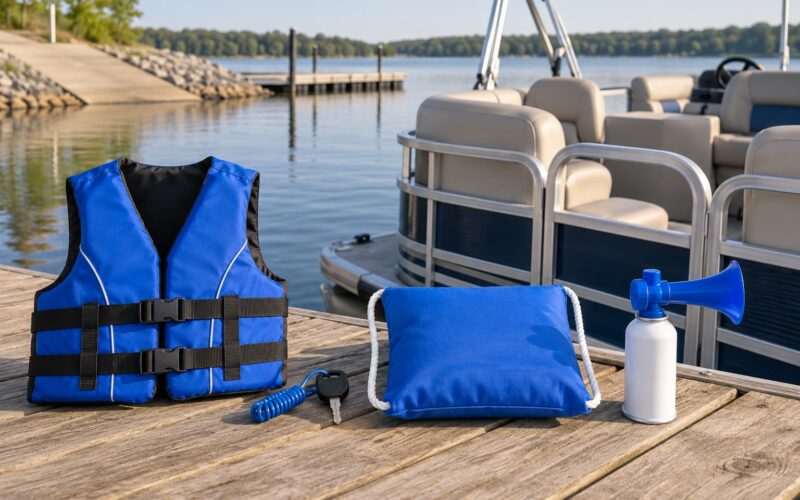
- A properly fitted life jacket. Worn, zipped, and buckled before the engine starts, not during the approach. Docking injuries happen to experienced hands in the last two feet.
- Fenders sized to the gap. Pick them for the vertical distance between your hull and the dock face, not for your boat’s length. Two fenders cover most single-engine boats alongside one dock face; three or four make sense for a longer slip approach or a wider beam.
- A bow line, a stern line, and a spring line. The spring is the one people leave behind. It is what stops a swinging stern once the boat is alongside.
- A wind indicator. A Windex on the marina mast or at the dock entrance beats guessing, and so does watching the surface texture of the water.
- A helper who follows hand signals. One person, briefed before the approach. Agree on “easy,” “hold it,” and “hull side” before the engine goes into reverse.
- Conditions inside your experience. Know what your boat can do and what you can do in it. If you have never done it in that much wind, either find a protected landing or wait.
If your boat has a bow thruster, check the battery or charger before you leave the ramp, not at the dock. Small electric units are commonly rated for only a couple of total minutes per hour, and a thruster that trips offline mid-maneuver leaves you holding nothing but prop walk and hope.
Step-by-Step: How to Dock a Boat in Crosswind
Assess the Wind and Choose a Safe Approach
Start by figuring out whether the wind is blowing onto the dock face or off it, and pick a landing that suits. A wind onto the dock will push the boat toward the pilings while you are still trying to set up, so you aim further off the dock than feels natural. A wind off the dock holds the hull off and gives you room to make corrections late.
Look at the water, not just the flag. Wind-driven ripple patterns, a telltale on a moored boat, or a plume of spray off a breakwater will tell you more than the wind vane at the ramp did twenty minutes ago. Feel it on the hull as you come out of the fuel dock, because wind behind a seawall can be much weaker than the open-lake reading suggests.
Then pick the slip, not the boat’s preference. A leeward corner on the downwind side of the basin gives you a landing the wind pushes you toward. If you can see that every exposed finger pier in the marina is throwing boats around, that is your answer: keep going and anchor out.
The decision rule is simple. If the wind is past what your boat and your hands can manage, or you cannot point the bow at the target slip and keep an escape route open behind you, you do not attempt the dock.
Align Early and Set a Shallow Approach Angle
Set your angle as soon as you leave the open water, which on most marinas means well before the dock is in reach. Crabbing at a wide angle under power just bakes leeway into the approach and leaves you no room to correct.
Approach from the downwind side with a shallow angle, roughly 15 to 20 degrees, bow pointed at the center of the target slip rather than at the dock face. That angle lets the wind do the work of moving you sideways while a kicker of forward throttle keeps the bow from being blown off line.
Keep the rudder amidships unless you need it. Small helm inputs of a few degrees at a time do the work, and sudden full-lock rudder at a crawl is how a boat ends up pivoting across its own dock line. Neutral and brief forward thrust keeps the boat gliding forward while the wind continues to slide it toward the slip.
You should be able to name the speed now: slow enough that a helper could step aboard, slow enough that a fender absorbs a bump without damage. Fast docking in a crosswind is a crash with better intentions.
Turn Bow-In and Control Drift with Gentle Motive Power
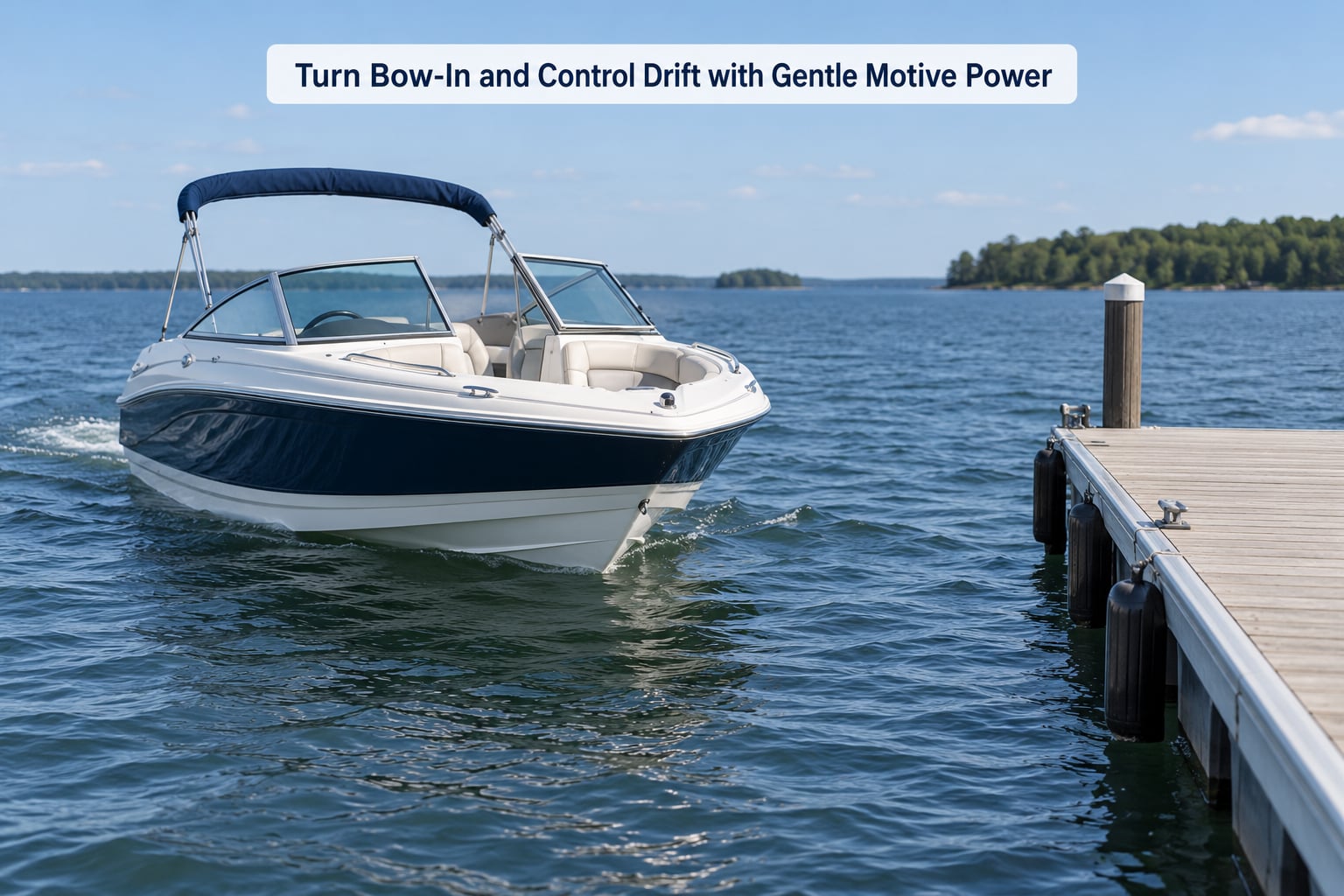
As you near the upwind piling, let the stern drift downwind on purpose instead of cranking it straight. The pivot point is the moment you cannot slide sideways anymore, and passing it with the boat under control is the whole game. Turn bow-in early, then hold the angle while the hull walks the rest of the way in.
Three tools do that work, and which one you use depends on the boat.
- Short ahead bursts. Momentary throttle nudges the bow off the wind and pushes the boat forward while the stern finishes its swing. Neutral between bursts so you can feel what the wind is doing.
- Walking the boat. On a twin-engine boat, ahead on one engine and astern on the other pivots the hull sideways without any thruster. Operators who own twins tend to value this precisely because it still works when the thruster does not.
- The bow thruster. Excellent for pushing the bow off a piling, useless for stopping forward headway. On a small electric unit, expect a duty cycle of only about two total minutes per hour and treat every burst as a limited resource.
On a single-engine boat with no thruster, prop walk becomes the tool. Go astern and the prop pushes the stern one way, which swings the bow the other. Skippers who learned to read prop walk early tend to be far less frustrated in wind than those who only ever practised with forward thrust.
Boaters on r/boating and thehulltruth describe the same moment of panic repeatedly: the stern starts to go, and the skipper hesitates between backing out and pushing in. Hesitating is what loses you the dock. Pick one and commit.
Prepare Fenders, Lines, and the Dock Contact
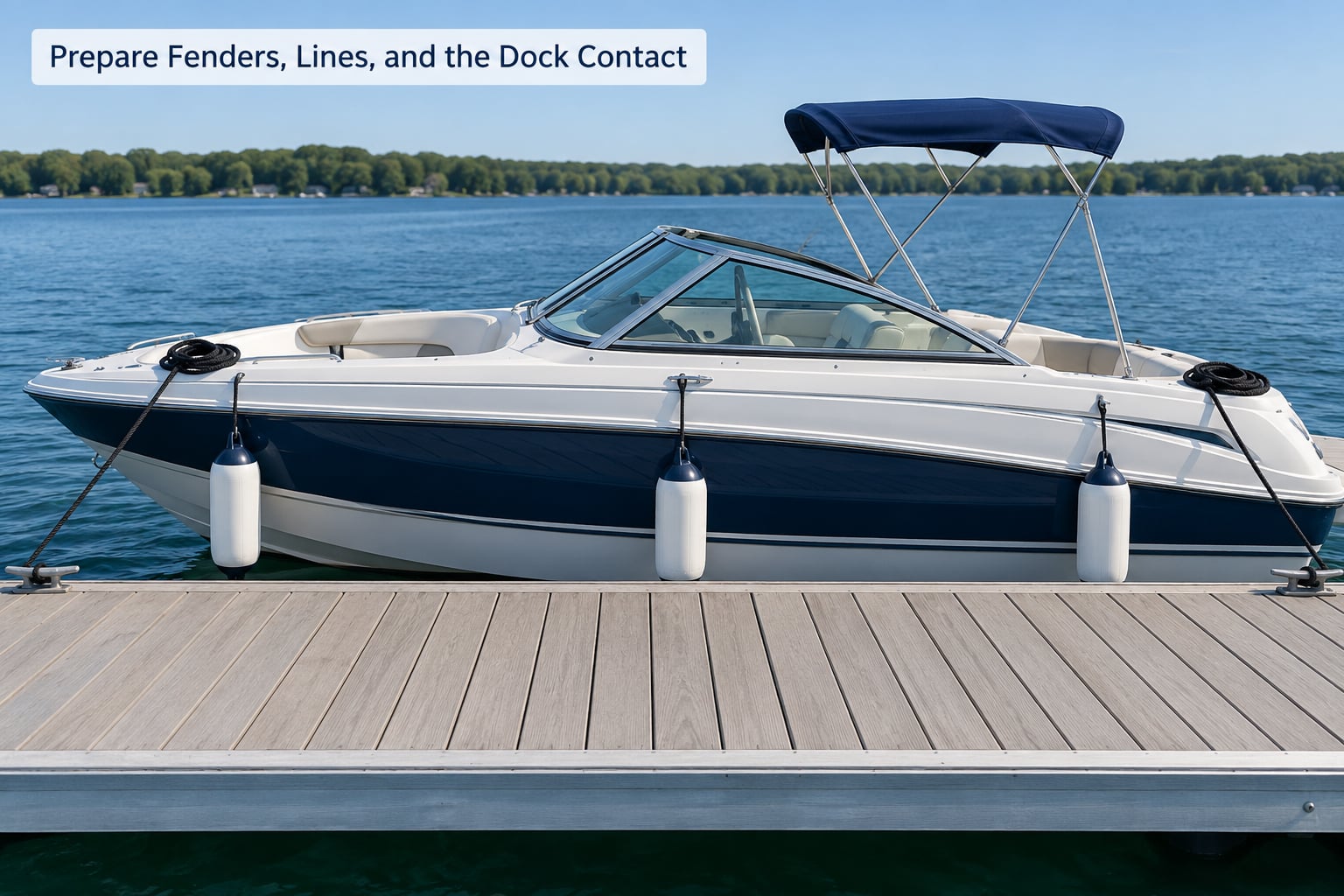
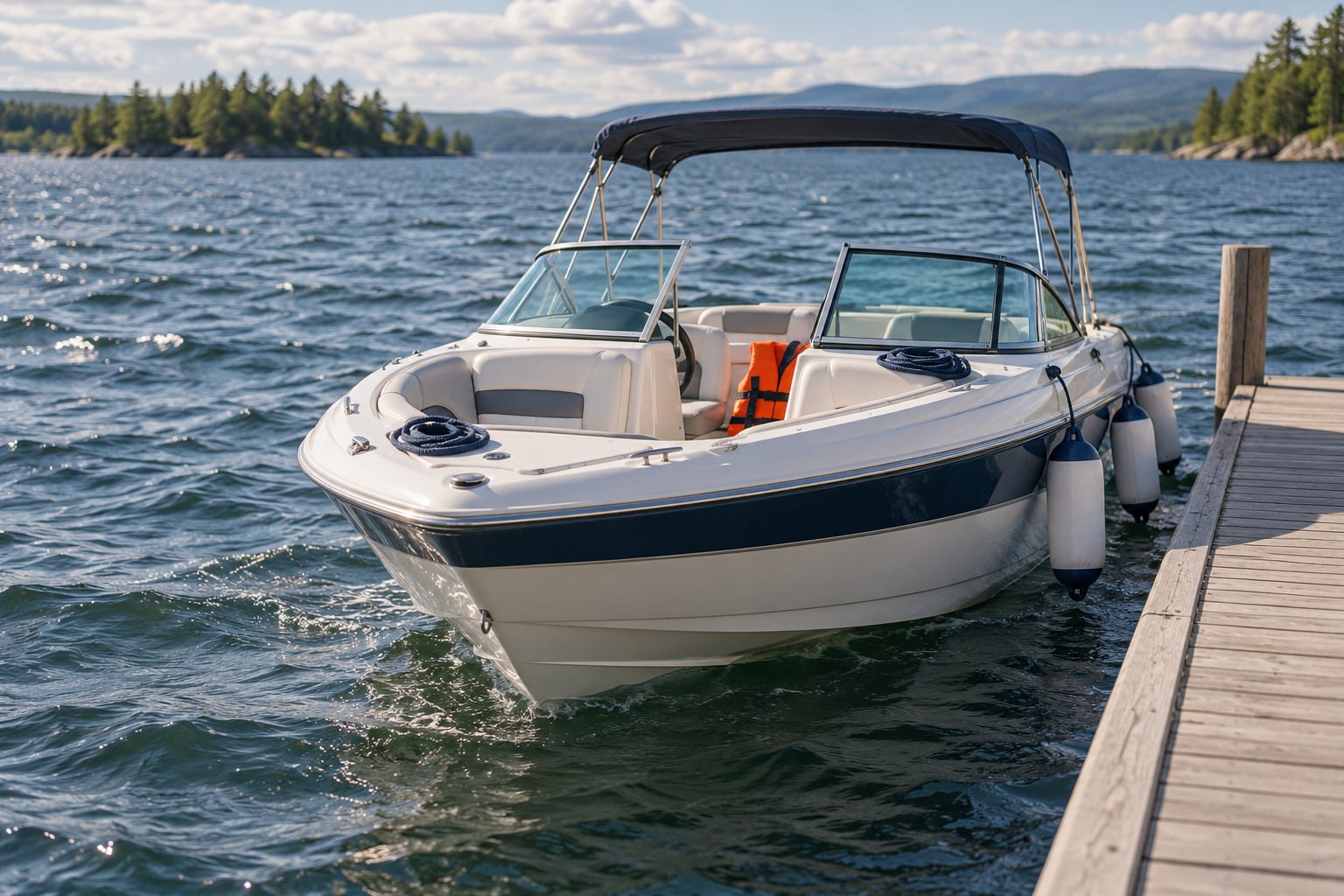
Fenders go out before the final approach, not at the moment of contact. Hang them at bow, midships, and stern on the dock side, check that the lanyards are tied to strong points on the boat rather than to the dock, and confirm the height covers the hull at the dock face.
Your helper should be in position with the bow line coiled and ready, and the stern line clear. Brief the signals before you move: one hand flat and held still means hold position, a flat palm pushing down means easy, and pointing toward the hull tells you which side is coming in.
As you close the last few feet, put a line ashore early if you can reach it safely. A bow line to the forward cleat takes the worst of the fore-and-aft movement while you finish positioning, and the spring line crossing to the opposite quarter is what stops a swinging stern once the boat is alongside.
Bring the boat in slowly enough that a fender would compress rather than burst. Most hull and dock contact at this stage is a light kiss, and the difference between a kiss and a crack is about a third of a knot.
Secure the Boat and Confirm It Is Holding
Attach the bow and stern lines to strong points on the dock, and hand-tighten them so the boat can still move slightly. A crosswind docking produces tension that comes and goes, and rigidly tied lines either go slack or pull your cleats sideways in a gust.
Leave a little fore-and-aft movement where the dock allows it. A boat that can shift a few inches along the dock face rides out a gust better than one tied up like a package, and your fenders can still absorb the excursion.
Check the spring line tension, then watch for a gust cycle before you call it done. If the lines tighten, ease them a hand-width. If the boat drifts along the dock, take up the spring rather than the bow and stern lines.
Shut the engine down only once you have felt a gust with the boat on its lines. If the fenders stay centred and the lines stay quiet through a shift, the boat is holding.
What Success Looks Like
A good crosswind landing has five observable signs, and you should be able to check each one.
- Speed stayed under walking pace from the moment you turned toward the dock.
- No hull touched wood. Contact happened through fenders only.
- Fenders stayed roughly where you hung them rather than bunching at the bow.
- Line tension stayed manageable, and you could place a hand on a line without it going rigid.
- The boat had enough room to stay put and still take a boarding or a cooler over the gunwale.
If three of those five are true, you landed it. Most skippers judge a dock by whether the fenders were hit hard, which is a harsher and more useful test than whether anything touched.
Common Mistakes in Crosswind Docking
These are the errors that show up in nearly every beginner’s first attempts.
- Fighting the crosswind at the last second. Full throttle against a strong wind adds leeway and closes the escape route. Fix: decide the angle far out and hold to it.
- Approaching too fast. Speed feels like control, but it is the opposite here. Fix: idle or a barely-on kicker until you are alongside.
- Trying to pull the whole boat straight at once. One hard correction at distance throws the stern past the slip. Fix: small, early inputs, then let the wind finish the work.
- Fenders placed late. You cannot hang a fender with a hull already on the dock. Fix: fenders out at 20 feet out.
- Relying on a dock cleat that does not match your hardware. Thin line on a small cleat parts under a gust. Fix: use chocks and the strongest points your boat has.
- Overusing the thruster. Small electric units overheat and trip. Fix: budget the duty cycle, and learn walking or prop walk as the backup.
One last trap deserves its own mention: dead calm can be harder than a light crosswind. With no wind to steer by, small helm inputs compound and the boat fishtails in the slip. If the water is flat, go slowly and expect to make more corrections.
Simple Crosswind Docking Tips
Small refinements make the difference between a landing you repeat and one you re-learn each time.
- Practise on a calm day first. Make five boring approaches in no wind before you make one in fifteen knots of crosswind.
- Pick a fixed visual reference, a piling or a lamp post, and hold it at the same spot in the windshield the whole way in.
- Keep the hull as straight as practical. Every degree of crab you build up has to come back out before you get to the slip.
- Give one command at a time. Two shouted instructions at once is how the boat ends up broadside.
- Re-check the wind after every attempt, not every hour. Gust direction at a slip mouth can differ from the direction at the basin entrance.
- Leave room in your approach. Reversing out is easy early and almost impossible late.
Frequently Asked Questions
Should I dock bow-first or stern-first in a crosswind?
Bow-first works best for most powerboats because the bow thruster and forward thrust hold the bow off a piling while the stern drifts down. Sailboats with deep keels often do better stern-first, since the keel resists leeway more than a displacement power hull does. On a pontoon, bow-first is standard because the deck layout makes a stern-first landing awkward.
How much throttle should I use when docking in wind?
Less than you expect. Use idle, and short ahead bursts only when the bow needs pushing off the wind or the stern needs to stop swinging. Between bursts, return to neutral so the wind is the dominant force again. If you find yourself holding steady throttle to fight the crosswind, you have added leeway instead of removing it.
What is the easiest way to dock a boat alone in crosswind?
Approach from the downwind side on a shallow angle and let the wind carry you sideways while a kicker of forward throttle keeps the bow in line. Rig the fenders before you leave the dock area, and throw the bow line from the helm if your boat allows it. Solo docking is far easier in a light wind than in a gusty one, so pick a sheltered wall slip.
How many fenders do I need when docking in a crosswind?
Two covers most single-engine boats running alongside one dock face, and three or four suits a longer slip approach or a wide beam. Choose fender size for the vertical gap between hull and dock face, not for boat length. Rig them to the boat, not to the dock, so a shifting wind cannot slide them out of position at the worst moment.
What should I do if the wind shifts during the approach?
Abort the approach, put the bow back into the open water, and take a moment to re-read the flag, the water texture, and nearby boats. Then reset with a new angle rather than trying to salvage the old one. Once the pivot point is passed a shift is very hard to recover from, which is why early shifts are cheap and late ones are not.
When is it unsafe to attempt docking in strong crosswinds?
Abandon the dock when the wind is past what you have practised in, when you cannot hold a fixed angle, or when the wind is gusting well above its steady reading. Anchor out, raft with a friend, or take a guest dock instead. No dock is worth a hull, and a boat that has drifted past its pivot point no longer has an escape route of its own.
Conclusion
Assess the wind first, because everything after that depends on it. Approach from the downwind side at a shallow angle, set the angle early, and use brief powered bursts to stop the swing rather than to overpower the wind. Have fenders and both lines rigged before the last 20 feet, come alongside slowly, and take up the spring line before you call it done. When the conditions are past your experience, anchor out and try again later. A skipped dock costs an evening; a crushed hull costs a season.