Cold, not a lack of fish, is what ends most ice-fishing days early. The way to stay warm ice fishing all day is to keep moisture off your skin, seal out wind and slush, protect your hands, feet, head and core, and treat a shelter or heater as backup rather than your only plan.
Wet skin sheds heat roughly 25 times faster than dry skin, which is why a single cotton layer or a soaked pair of socks does more damage than the thermometer does. Everything below is built around one idea: manage moisture, then layer for air, then move and eat on a schedule.
Table of Contents
- 1Ten Ways to Stay Warm on the Ice
- 2What You Need
- 3Step-by-Step: How to Stay Warm Ice Fishing All Day
- 4Dress in Three Manageable Layers
- 5Protect Your Head, Hands, and Feet
- 6Set Up Shelter and Heat Management
- 7Keep Moving Between Fishing Actions
- 8Eat, Drink, and Take Warm Breaks
- 9Watch for Signs You Are Getting Too Cold
- 10Common Mistakes
- 11Frequently Asked Questions
- 12What should I wear to stay warm ice fishing all day?
- 13Are hand warmers enough for an all-day ice-fishing trip?
- 14Is a propane heater safe inside an ice shelter?
- 15How often should I take a warm break while ice fishing?
- 16What should I do if I start shivering uncontrollably?
- 17Can cotton clothing work for ice fishing?
- 18Conclusion
Ten Ways to Stay Warm on the Ice
- Wear a moisture-wicking base layer, never cotton.
- Add an insulating mid-layer you can zip and vent.
- Finish with a windproof and waterproof shell over bibs or an ice suit.
- Protect your feet first: wool liner socks plus a waterproof insulated boot.
- Use flip-top mittens over thin liner gloves so you get both warmth and dexterity.
- Cover your head, neck and nose, which lose heat fast and go numb first.
- Position a portable shelter so the wind is behind it, not across the hole.
- Stand, walk and stamp your feet every 30 to 60 minutes of sitting.
- Eat protein and drink warm fluids on a timer, and skip the alcohol.
- Leave the ice the moment shivering becomes uncontrollable or your fingers go numb and white.
What You Need
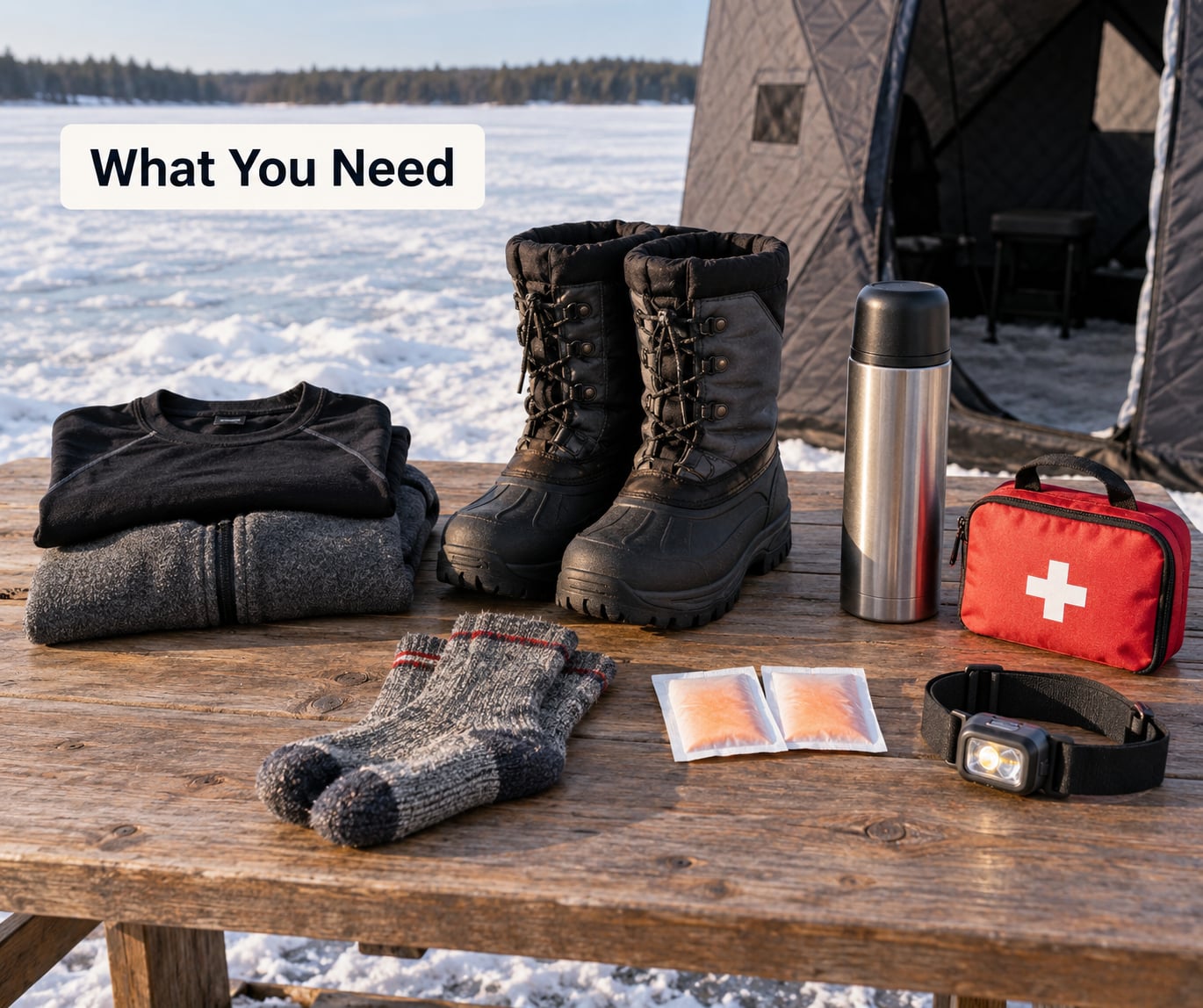
The full kit is bigger than most first-timers expect, and every item on it earns its place by solving one of four problems: keeping you dry, trapping warm air, protecting extremities, or giving you an escape from the wind. Here is what goes in the truck.
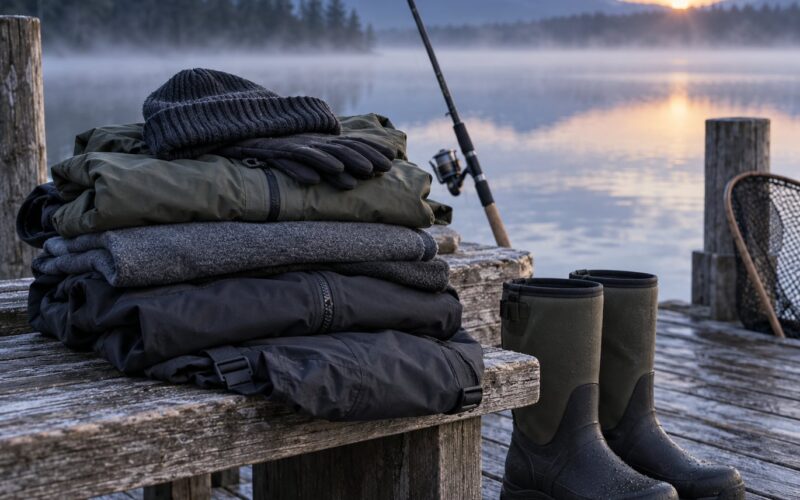
- Clothing: one wicking base layer set, one fleece or puffy mid-layer, one windproof waterproof shell, and suspender bibs or a one-piece ice suit with built-in flotation.
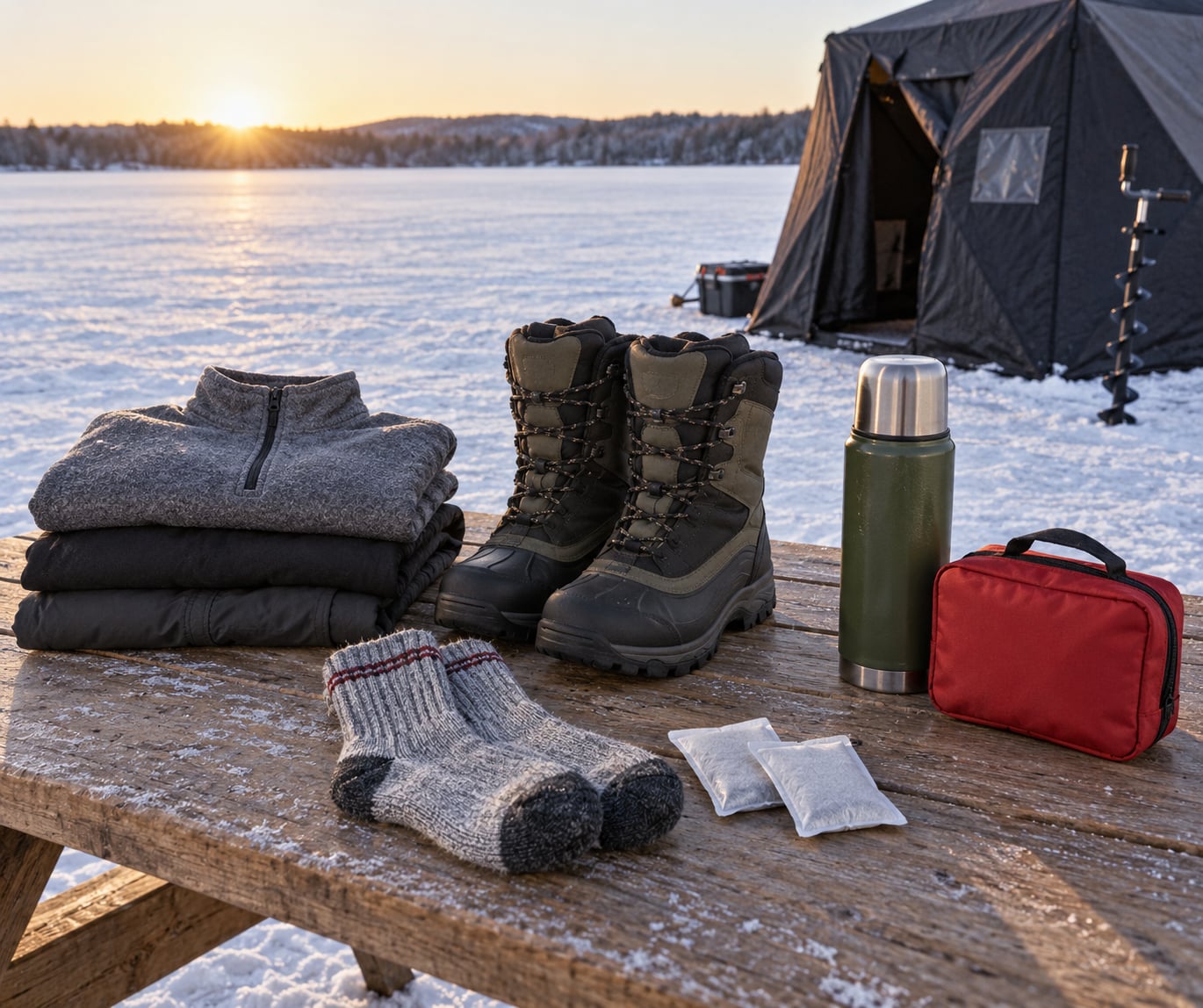
- Extremities: a beanie or balaclava, a neck gaiter, liner gloves, insulated flip-top mittens, wool or synthetic liner socks, and waterproof insulated boots rated well below the forecast low.
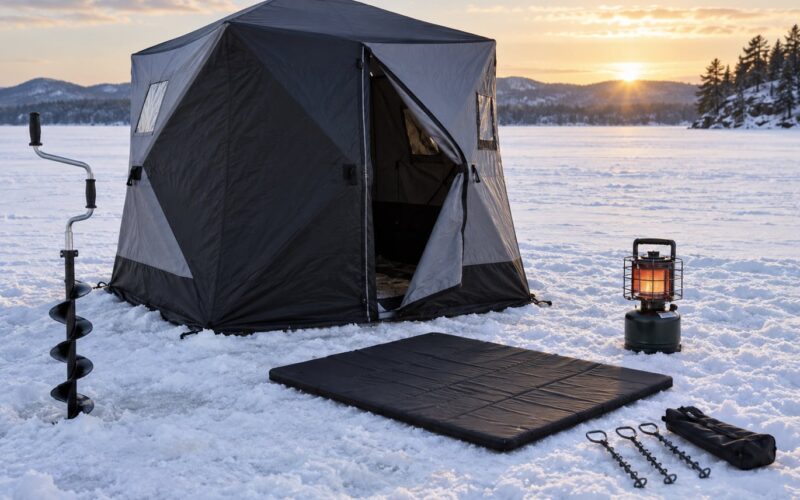
- Shelter and heat: a portable hub or flip-over shelter, a shelter skirt, a stove or heater used only per its manufacturer instructions, fuel, and a battery or clip-on carbon monoxide alarm if you plan to run any combustion heat.
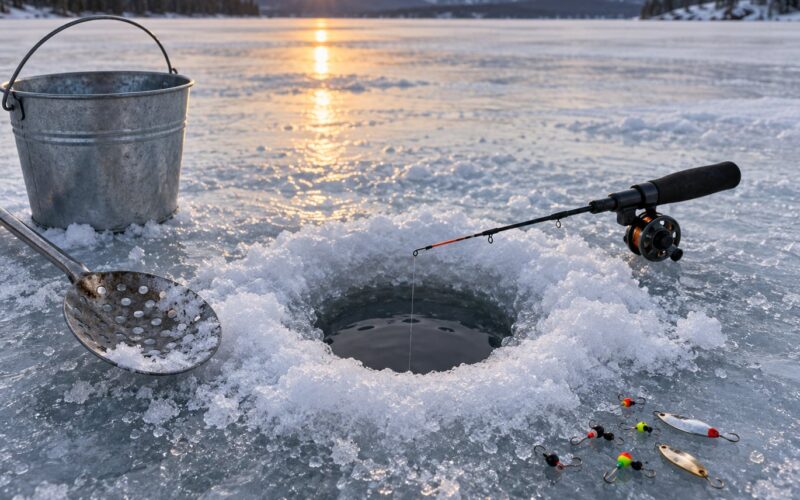
- Ice-fishing gear: an auger, a spud bar for breaking ice ridges, a scoop, an ice chisel, a rod holder, a small stool, and traction such as ice cleats.
- Warmth extras: chemical hand warmers, toe warmers, a hot water bottle for shelter and truck breaks, and polarized sunglasses to cut glare off ice and snow.
- Food and drink: a thermos of a hot non-alcoholic drink, a high-calorie lunch, extra snacks, and more water than you think you need.
- Safety: a first-aid kit, ice picks or a cleat on a cord around your neck, a charged phone, a whistle, a headlamp, and a buddy who knows your plan.
Step-by-Step: How to Stay Warm Ice Fishing All Day
Dress in Three Manageable Layers
Three layers work because each one does a separate job, and you can add or drop a layer as the day moves. A cotton sweatshirt is not a layer, no matter how warm it feels at 8 a.m. in the truck.
The base layer wicks sweat off your skin and dries fast. Merino wool or a synthetic blend works; both keep roughly 70 percent of their insulating ability when damp, which cotton cannot manage at all. The mid-layer traps still air against your body, so fleece or a light puffy that you can unzip or roll up to vent excess heat is the right choice. The outer shell blocks wind and slush, which is where most of the heat loss happens on an open lake.
Over all three, bibs beat pants because they cover your chest and back with a windproof layer and stay put when you kneel to drill. If you sweat heavily in the first hour and then feel chilled once you sit down, you have one layer too many, not one too few.
Protect Your Head, Hands, and Feet
Hands and feet are the two places cold wins first, and both are cheap to fix. Anglers keep repeating the same setup: liner gloves under insulated mittens for fishing, then bare hands or thin liners whenever you are walking or drilling.
Flip-top mittens are the version most people settle on because they give you warmth when you are sitting still and fingers when you need them to tie a knot. In deep cold, avoid thin gloves alone, since they lose far more heat than a mitten with the same insulation.
For your feet, start with a wool or synthetic liner sock, add a thicker insulated sock over it, and finish with a waterproof insulated boot with room for a thick sock without squeezing your toes. Baffin, Muck, Stag and similar pac boots are popular because they rate down to around minus 20 F and keep slush out. Skip leather on a wet day, take boots off at breaks to dry the socks, and expect the second and third trip of the season to be colder and wetter than the first.
Set Up Shelter and Heat Management
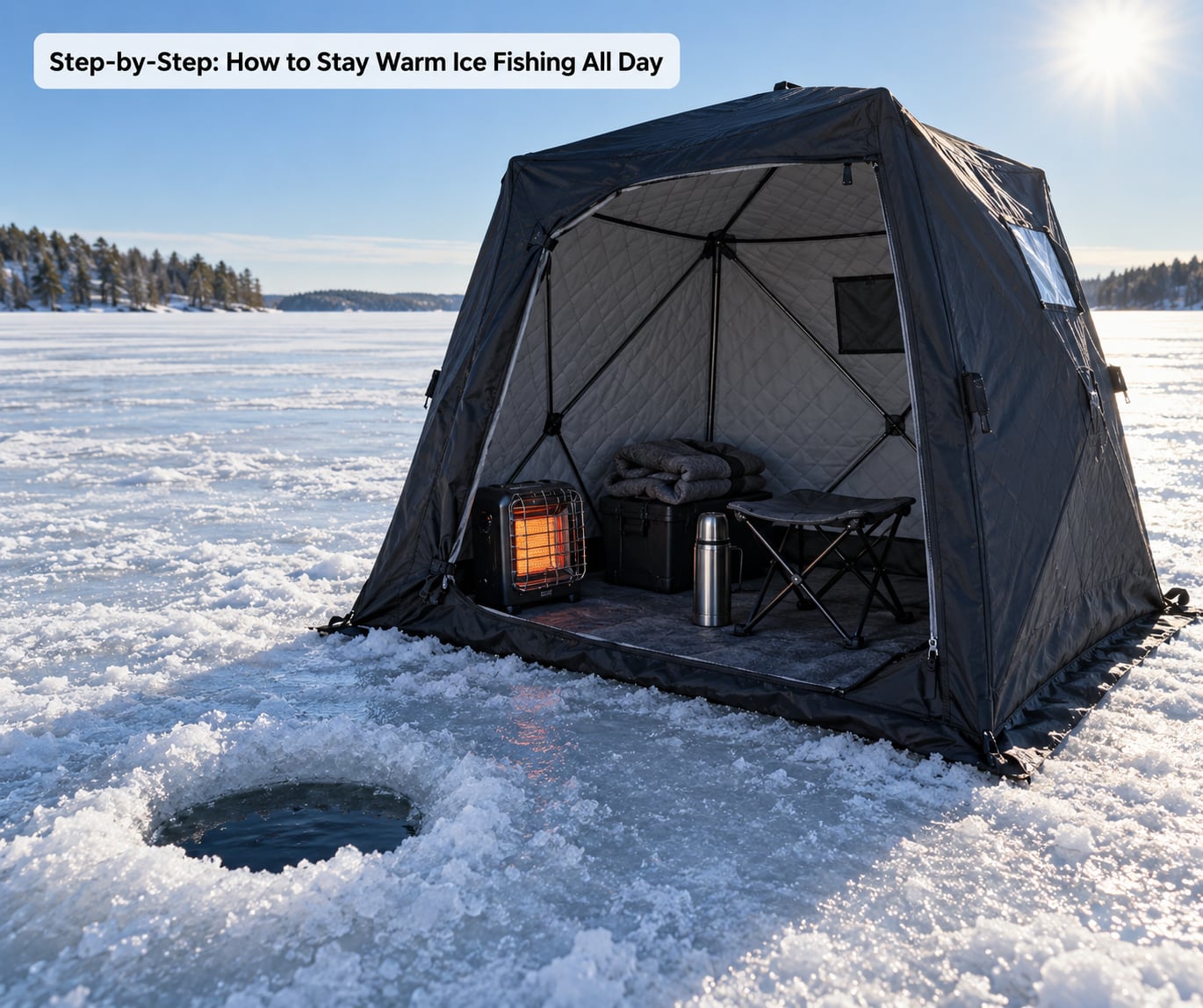
A shelter does more for an all-day angler than any single piece of clothing, mostly by removing the wind chill sitting in front of you. Set it so the prevailing wind hits the back panel, weight the corners, and pull the skirt tight around you or you lose the heat you brought in.
Use a stove or heater exactly as its manufacturer describes, and never improvise combustion heat with a grill, a charcoal brazier or an unvented can near your face. Carbon monoxide does not care how cold you are. Run an alarm if you use fuel-burning heat, keep a clear ventilation path, check fuel connections before you light anything, and shut it down before you leave the shelter.
There is a real trade-off here that experienced anglers talk about honestly: a warm shelter is comfortable, but comfortable keeps you stationary, and stationary gets cold in a different way. Use the shelter as the place you recover between active stretches rather than the place you live for eight hours.
Keep Moving Between Fishing Actions
The body heat you generate while moving disappears the moment you sit still, which is the quiet problem of a tip-up day. Change position, change holes and change your posture on a regular rhythm rather than waiting until you feel stiff.
Simple tactics that work: stand up and do ten knee bends every half hour, walk a slow loop around the shelter, stamp your feet and wiggle your toes while you watch the tip, flex your fingers inside the mittens, and swing your arms. Drilling a fresh hole every hour or two is the version anglers recommend because it forces you to move and doubles as a warm-up ritual.
On thinner ice, keep your walk-and-gun loop short and test as you go. Most state DNR guides treat about 4 inches as a minimum for a person on foot and around 12 inches as a common threshold before a pickup goes on a lake, and a vehicle heater in the truck is a legitimate warm-up break when the ice is rated for it.
Eat, Drink, and Take Warm Breaks
Your body burns more energy staying warm, and cold suppresses thirst so dehydration sneaks up on you without you noticing it. Eat a real protein and carbohydrate meal before you leave, then set a timer for food and drink every 90 minutes rather than waiting until you feel hungry.
Practical choices travel well: a sandwich, bagels with nut butter, trail mix, jerky, a banana, or a thermos of soup or cocoa beside your regular hot drink. Water, coffee and tea count, and so does electrolyte mix if you are out from dawn to dark.
Leave the alcohol at home. It thins the blood vessels, so you feel warm for a while and then lose heat faster, which is the opposite of what you need at minus 10 F. If you are drinking a beer with a partner on a warm early-ice afternoon, keep it small and save it for the drive home.
Watch for Signs You Are Getting Too Cold
Frostbite and hypothermia are different problems with different clocks, and both start quietly. Frostbite hits skin and tissue first, mostly on fingers, toes, earlobes and the tip of the nose. Hypothermia is a core temperature problem, and by the time you feel properly cold it has been building for a while.
Frostbite warning signs: skin that is white, pale, waxy or unusually hard, a dull or aching feeling that turns into numbness, and blisters after rewarming. Get the area warm gradually in lukewarm-to-cool water, never in direct high heat, and do not rub it. Get medical help for numbness that does not come back within a few minutes, or for any change past the skin surface.
Hypothermia warning signs: persistent shivering, then shivering that stops while you still feel cold, slurred speech, stumbling, confusion, clumsy hands with no fine motor control left, unusual fatigue, and a hard time buttoning a coat or zipping a pocket. That sequence matters, because shivering that suddenly stops is not an improvement.
At the first sign of uncontrollable shivering, clumsiness or confusion, stop fishing, get out of the wind, get dry, add a warm layer and drink something warm. If symptoms keep worsening, get off the ice and call for help rather than trying to walk it off. Stay with your buddy, stay off the ice alone, and treat any fall through the ice as an emergency: get out, remove wet clothing, wrap in whatever is dry, and call 911.
Common Mistakes
Almost every early exit traces back to one of a handful of fixable mistakes. These are the ones I would correct first, whether I am heading out with a beginner or with a guide who has fished 20 seasons.
- Overdressing. If you are sweating at the first hole, you will freeze by the third. Start lighter than you think and add the mid-layer for the sit-down stretches.
- Wearing cotton. Denim, cotton sweatshirts and cotton socks absorb sweat, then hold it against your skin. Swap them for wool or synthetic at the base and for insulated bibs over the top.
- Ignoring the wind. A shelter set up casually instead of anchored and skirted loses the warmth you are trying to keep, no matter how good the heater is.
- Overheating with fuel heat. Too much heat makes you sweat, and the sweat chills you the moment you step onto the ice. Run moderate heat, vent the shelter, and open a layer before you feel flushed.
- Skipping meals and water. You will not feel thirsty in the cold, and your energy drops before your judgment does.
- Ignoring early numbness. Numb fingers and a stiff jaw are not something to tough out. Get warm now, because that is the cheapest moment to fix it.
Two habits cover most of the rest: dry your gear overnight rather than stacking it wet, and check on your partner. Cold is quiet, and the angler who is having trouble is often the one least able to say so.
Frequently Asked Questions
What should I wear to stay warm ice fishing all day?
Wear three layers: a moisture-wicking base of merino wool or synthetic, an insulating mid-layer such as fleece or light puffy, and a windproof waterproof shell over bibs or an ice suit. Add a beanie, neck gaiter, liner gloves under insulated mittens, wool liner socks and a waterproof insulated boot rated below the forecast low. Skip cotton and denim entirely, because wet cotton pulls heat off skin roughly 25 times faster than wet wool.
Are hand warmers enough for an all-day ice-fishing trip?
Hand warmers are a good supplement, not a substitute. They keep fingers working between hole changes, which helps with cold, clumsy hands, but they do nothing for your core, feet or head. Use them inside mittens or in a pocket, and pack toe warmers as well. If your hands still go numb after an hour, the fix is usually better mittens and a shell that blocks wind, not more warmers.
Is a propane heater safe inside an ice shelter?
It can be, if you follow the manufacturer’s instructions and treat ventilation as non-negotiable. Never use a grill, charcoal brazier or improvised burner inside a shelter, and never leave a fuel-burning heater running unattended. Run a carbon monoxide alarm, keep the vent path clear, check fuel connections and hoses before lighting, and shut it down before you leave the shelter. Set the shelter so exhaust and wind vent away from your face.
How often should I take a warm break while ice fishing?
Take a short warm break roughly every 90 minutes, and move for a few minutes every half hour even without a full break. On a tip-up day that means standing, walking a loop, flexing your fingers and toes, and drinking something hot. A longer break every two to three hours to check your feet, dry your socks and refuel keeps you fishing all afternoon instead of packing up after four hours.
What should I do if I start shivering uncontrollably?
Stop fishing. Shivering that will not stop is your body losing the ability to make its own heat, and staying on the ice makes it worse. Get out of the wind, get dry, change out of any wet layer, add warm layers, and drink something warm. Watch for the signs that follow: slurred speech, clumsiness, stumbling, confusion, and shivering that suddenly quits. If any of those show up, get off the ice and call for help.
Can cotton clothing work for ice fishing?
No. Cotton is a poor choice on the ice at any temperature. It absorbs sweat and slush, dries very slowly, and pulls heat away from skin about 25 times faster than air does. Wool and synthetic base layers stay warm even when damp, and cotton socks have no place in a cold boot. If your current kit has cotton against your skin, replacing the base layer is the cheapest warmth upgrade available to you.
Conclusion
Before you walk onto the ice, do four things: replace anything cotton against your skin, put on wool liner socks and a waterproof insulated boot, pack the shelter skirt and a wind layer, and set a timer for food, water and movement. On the ice, keep the wind at your back, move every thirty minutes, and treat the shelter as a place to recover rather than a place to sleep through the afternoon.
The day ends early when something small fails: a wet sock, a sweaty base layer, a shell that lets the wind through. Fix those early, and cold stops being the reason you pack up.