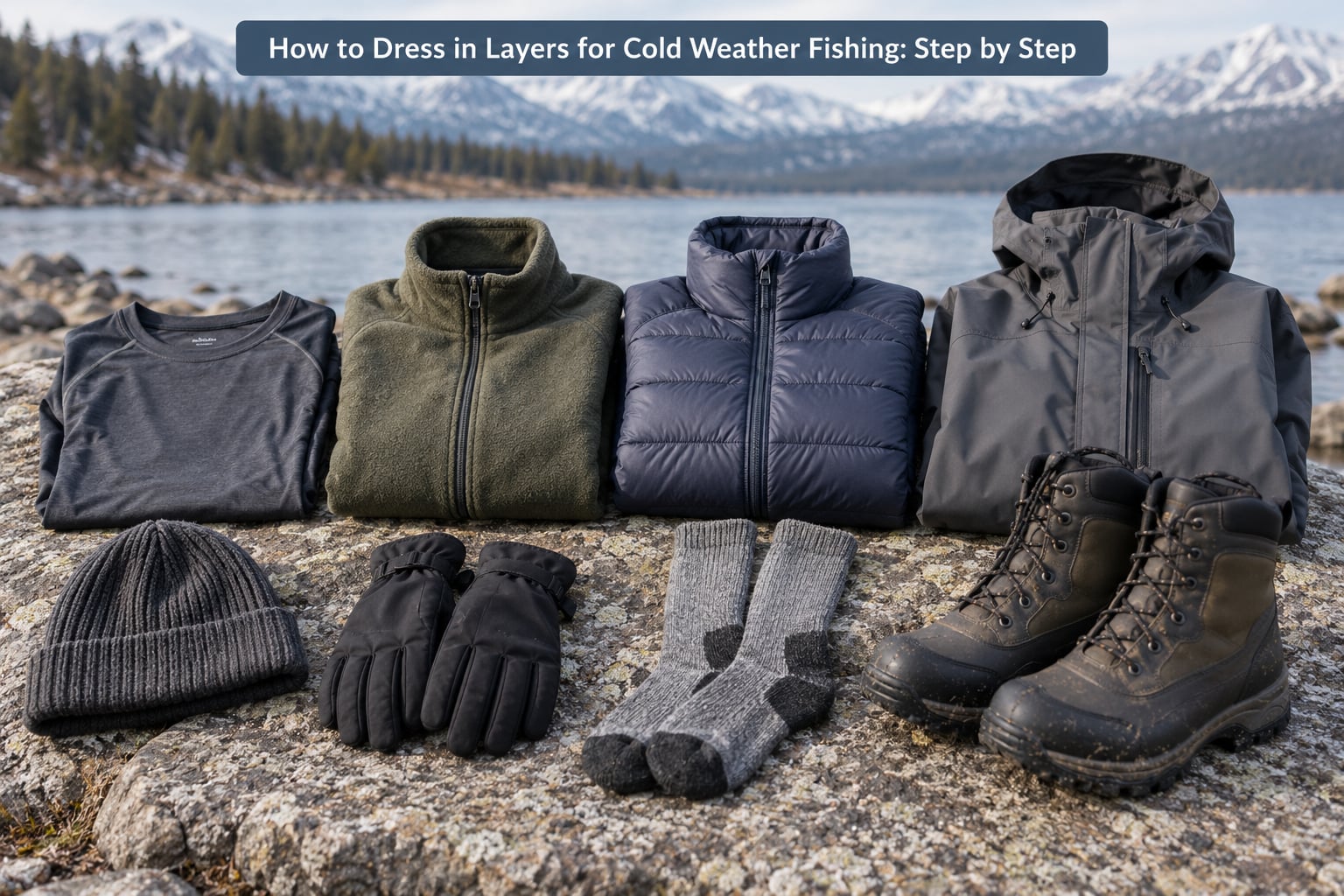
How to dress in layers for cold weather fishing comes down to three jobs: move sweat off your skin, trap the heat your body makes, then block wind and water. A thin moisture-wicking base layer, a fleece or synthetic mid layer and a waterproof shell cover those jobs, and warm socks, gloves, a hat and a neck gaiter handle the parts you cannot unzip.
Most anglers who get cold did not underdress. They overdressed while moving, sweated through the stack, then cooled fast the moment they sat down to fish. That switch from generating heat to sitting still is the whole problem, and a good layer system is built around it.
Your hands, head, neck and feet are where the heat actually goes, and they are where anglers on forums like r/flyfishing and pnwflyfishing.com complain most. Those four areas deserve the same attention people give to a new jacket.
Last updated: October 2026
Table of Contents
- 1What You Need to Dress in Layers for Cold Weather Fishing
- 2How to Dress in Layers for Cold Weather Fishing: Step by Step
- 3Step 1: Start With a Moisture-Wicking Base Layer
- 4Step 2: Add an Insulating Middle Layer
- 5Step 3: Finish With Windproof and Waterproof Layers
- 6Step 4: Protect Your Head, Hands, Feet, and Neck
- 7Step 5: Adjust Layers for Cold Weather Fishing During the Day
- 8Common Layering Mistakes Anglers Make
- 9Frequently Asked Questions
- 10What should I wear under a fishing jacket in cold weather?
- 11Are cotton clothes suitable for cold weather fishing?
- 12How many layers should I wear when fishing in the cold?
- 13Should I wear gloves for cold weather fishing?
- 14What should I do if my clothes get wet while fishing?
- 15Conclusion
What You Need to Dress in Layers for Cold Weather Fishing
Eight categories cover almost any cold-weather fishing trip, and you can build a working stack from any of them. Skip the marketing and think about the job each piece does instead.
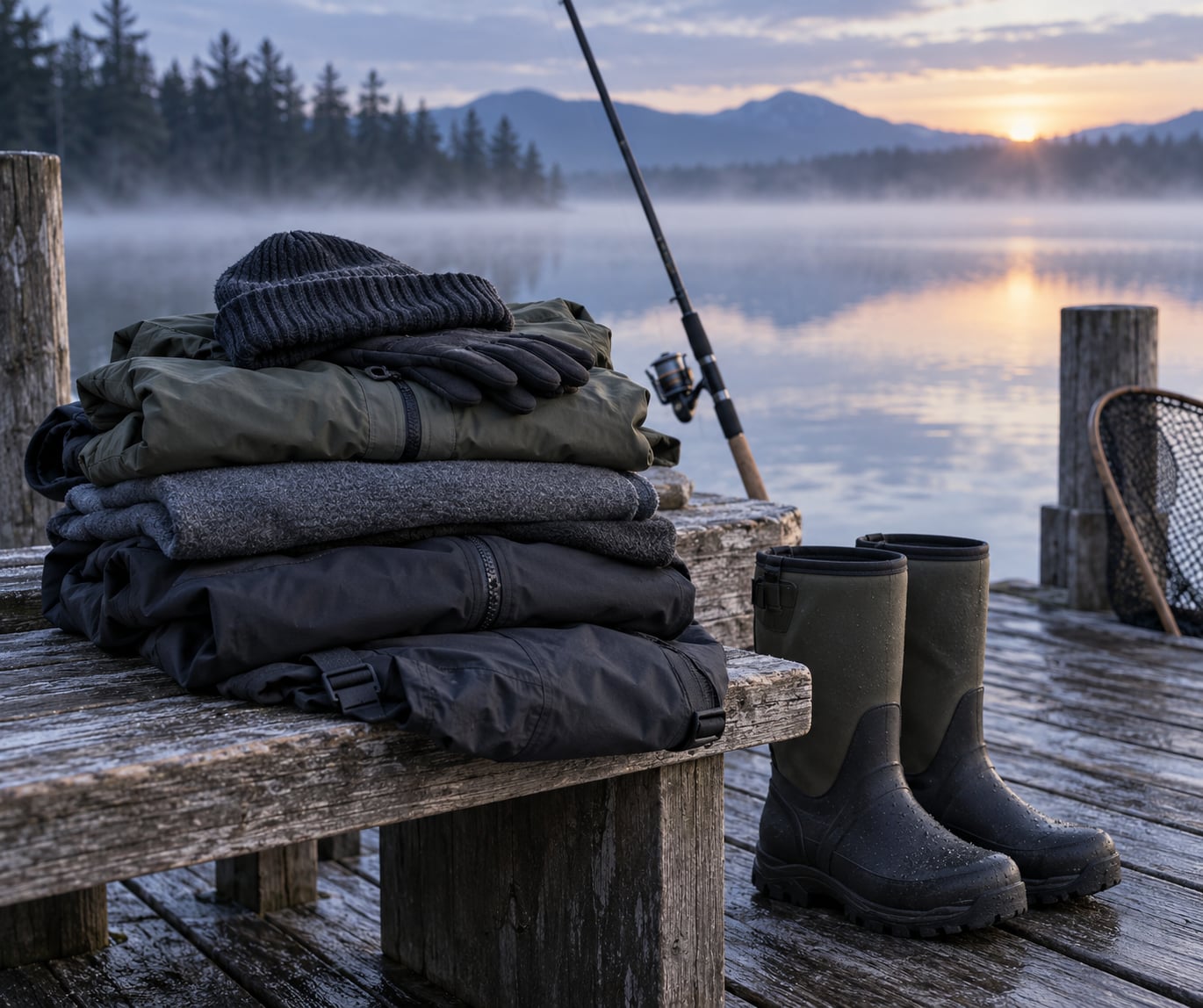
- Moisture-wicking base layer. A thin long-sleeve top and leggings that pull perspiration away from your skin so it evaporates instead of soaking your torso. This is the layer that decides whether you stay warm or wet.
- Insulating mid layer. Fleece, grid fleece, a synthetic puffy or a wool mid that traps warm air against your body. It is the layer you add or strip during the day.
- Windproof and waterproof outer layer. A shell jacket and rain pants or bibs that stop wind, spray and drizzle from reaching everything underneath.
- A second dry base layer. Packed flat in your bag, not worn. Wet cotton and wet merino both stop working, and a dry top is the fastest way back to comfort after a spill.
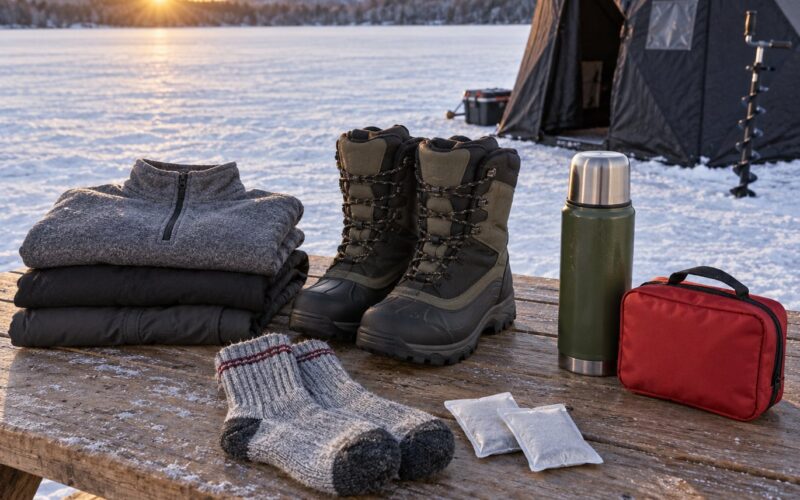
- Warm socks and spare pair. Wool or synthetic crew socks that stay warm when damp. One dry spare pair in the boat or sled is worth more than any jacket upgrade.
- Gloves that allow dexterity. Liner gloves plus insulated shell gloves, or mittens with a flip-top cover that you open to tie knots and work a lure.
- Hat and neck protection. A warm hat plus a neck gaiter or buff. Covered head with bare neck is one of the most common ways heat escapes all afternoon.
- Waterproof footwear or waders. Lace-up wading boots, insulated waterproof boots, or breathable waders with neoprene booties for shallow cold water.
The three layers themselves are simpler than the shopping list suggests:
| Layer | Job | What to look for | Common mistake |
|---|---|---|---|
| Base layer | Moisture management | Thin, breathable merino or synthetic, close fit, flat seams | Wearing cotton, which holds sweat against your skin |
| Mid layer | Insulation | Fleece or synthetic, zip or vest so it opens for venting | Choosing a bulky parka that blocks casting |
| Outer layer | Wind and water protection | Waterproof shell, taped seams, adjustable cuffs, hood | Relying on a windproof jacket with no waterproof layer |
Wear your flotation device over the insulation rather than under it, so it stays where it should be if you go in the water. Cold-water shock and hypothermia are emergencies, and a soaked layer stack makes both far more likely.
How to Dress in Layers for Cold Weather Fishing: Step by Step
Step 1: Start With a Moisture-Wicking Base Layer
A base layer has exactly one job: keep sweat away from your skin. Once perspiration soaks through to your body, evaporating it pulls heat out of you, and no amount of insulation on top reverses that.
Look for a thin layer in merino wool or a polyester synthetic blend, sized close to the body without binding. Long sleeves matter more than most people expect in an open boat, and long underwear bottoms are worth owning for anything below about 40F.
Leave cotton out of the equation entirely. It absorbs water, dries slowly and loses its insulating ability once damp, which is the opposite of what you need in changing conditions.
Step 2: Add an Insulating Middle Layer
The mid layer traps the heat your body produces. Fleece and grid fleece are the usual first choices because they keep working when slightly damp and they are quiet on the water, which matters if you are casting near clear shallows.
Down is warmer for its weight, but it collapses when wet and takes a long time to recover. Synthetic insulation handles damp better and dries faster, which is why many anglers carry a lightweight synthetic puffy instead and save the bulkier down for stationary sessions.
Fit matters more than brand. An insulated vest is a good compromise because it keeps your arms free for casting, and a mid layer with a full zip lets you dump heat the moment you start to sweat.
Step 3: Finish With Windproof and Waterproof Layers
Windproof and waterproof are different jobs, and open lake wind will drive the cold straight through a jacket that only blocks water. On a typical morning the difference shows up immediately: 40F air with 15 mph of wind feels closer to the upper 20s, so a shell often beats a heavier coat.
Look for a hood that fits over your hat, cuffs that close over your gloves, and a hem that does not ride up when you bend forward to work a lure. Vents or a pit zip let you dump heat without taking the whole jacket off.
Add waterproof rain pants or bibs. Most anglers who get soaked sitting in a boat do it from the waist down, and wet bibs over cold water are hard to recover from.
Step 4: Protect Your Head, Hands, Feet, and Neck
Your head and neck lose heat fast, and a covered head with a bare neck is a hole in the system. Wear a warm hat and a neck gaiter or buff that you can pull up over your chin when the wind turns.
For hands, the honest problem is that warmth and dexterity fight each other. Glove liners plus insulated shell gloves work well for most lake fishing, and mittens with a flip-top cover are the answer when it turns seriously cold, because you open the cover to tie a knot and close it while you wait for a bite.
Feet are where most trips end early. Merino or synthetic socks, waterproof insulated boots and a spare dry pair in the boat cover nearly every case. If you wade, breathable waist waders with neoprene booties are the usual freshwater setup, and layering thin merino under them beats one thick pair.
Step 5: Adjust Layers for Cold Weather Fishing During the Day
Cold-weather fishing rarely stays at one temperature for a whole day. Dawn on a lake can start near freezing and calm, then turn windy and ten degrees warmer by mid-morning, which is how you end up sweating in a stack that felt right at the truck.
Use this mapping as a starting point and adjust for wind, wetness and how much you will be moving:
| Air temperature | Mostly stationary (boat, dock, ice) | Active (wading, hiking to a spot) |
|---|---|---|
| Around 50F | Base layer, light fleece, windproof shell | Base layer, shell only |
| Around 40F | Long underwear, fleece or puffy mid, waterproof shell | Base layer, light mid, shell |
| Around 30F | Long underwear, fleece plus puffy mid, bibs and shell, neck gaiter | Long underwear, fleece mid, shell, gloves |
| Around 20F | Two base layers, heavy fleece, down or synthetic puffy, full waterproof shell and bibs | Two thin base layers, puffy mid, shell, mittens over liners |
| Below 20F | Full deep-cold setup, electric hand warmers in pocket, face coverage, spare dry base layer | Same cold protection, one less mid layer, expect to strip layers often |
Learn the signs of overheating early. Shivering is obvious, but damp fabric, a flushed face and clammy hands show up minutes before you feel cold, and stripping a layer at that point is much cheaper than trying to warm up later.
Vent from the top down. Open the shell first, then unzip the mid layer, then peel off the mid layer, and only then think about the base. Piling on at the start of a trip is the most reliable way to end it shivering.
Common Layering Mistakes Anglers Make
- Starting with cotton. It soaks, dries slowly and chills you. Switch to merino or synthetic as your first layer.
- Overdressing at the truck. Dress for how you will feel while casting or wading, not while standing still in the parking lot. You can always add a layer later.
- Trusting one thick coat. A single heavy jacket traps sweat and cannot be vented. Three light layers that open in sequence will keep you warmer.
- Ignoring wind chill. Wind makes a moderate temperature feel much colder. Check the wind forecast, not just the thermometer, and plan a shell whenever it is blowing.
- Leaving the neck, hands and feet exposed. A hat alone is not enough. Add a gaiter, glove liners and warm socks, and pack one spare dry pair of socks.
- Getting wet with no backup. Carry a dry base layer sealed in a plastic bag. Wet insulation stops working within minutes in cold air.
- Wearing too many thin layers with no insulation. Three thin layers that are all breathable can leave you colder than one warm mid layer under a shell, because there is nothing trapping air.
- Wearing bulky mid layers. Heavy insulation through the arms and shoulders causes casting fatigue long before the cold becomes a problem. Look for articulated sleeves or a vest.
- Skipping care. Wash fleece and merino without fabric softener, and reactivate a DWR shell with about twenty minutes in a medium tumble dryer so water beads instead of soaking through.
A final tip: put your warmest gear on in the order you will remove it. The layer that goes on last should be the first one you open, which keeps the venting simple when you start working in the boat.
Frequently Asked Questions
What should I wear under a fishing jacket in cold weather?
Wear a thin moisture-wicking base layer top and, below about 40F, long underwear bottoms in merino wool or a synthetic blend. Add a fleece or lightweight synthetic mid layer between the base and your shell. Skip cotton, since it holds sweat against your skin and loses insulation once damp. Keep a second dry base layer packed so you can change after getting splashed.
Are cotton clothes suitable for cold weather fishing?
No. Cotton absorbs perspiration and spray, dries slowly and loses most of its insulating ability when damp. In cold air that trapped moisture pulls heat out of you quickly, which is why cold-weather anglers wear merino wool or polyester synthetic instead. You can still get away with cotton on a warm, dry shoulder-season day, but below roughly 50F it is a liability.
How many layers should I wear when fishing in the cold?
Three functional layers is the working baseline: a moisture-wicking base, an insulating mid and a windproof waterproof outer. Add a fourth only for genuinely deep cold, such as a second thin base layer below 20F, or during stationary ice fishing where you are not generating much heat of your own. Fewer, adjustable layers beat more layers you cannot vent.
Should I wear gloves for cold weather fishing?
Yes, but choose them for dexterity, not warmth alone. Liner gloves plus insulated shell gloves handle most lake fishing in the 20s and 30s. Below that, mittens with a flip-top cover keep your hands warm while still letting you open them to tie knots or change lures. Wet gloves lose their insulating ability fast, so carry a spare dry pair in your bag.
What should I do if my clothes get wet while fishing?
Get the wet layer off and put on the dry one you packed, starting with your socks and base layer. Loosen or remove the mid layer so trapped moisture can escape, and keep the waterproof shell on to stop more water coming in. Change again before you get back in the truck, since damp insulation against cold air will chill you on the drive home.
Conclusion
Dressing in layers for cold weather fishing is one formula repeated three times: move sweat off your skin, trap the heat your body makes, block wind and water. Add warm socks, dexterity-friendly gloves, a hat and a neck gaiter, and you have a stack that works from a calm dawn on the dock to a windy afternoon run.
Start tonight by checking the forecast for wind, not just temperature, and pack a dry base layer you never plan to wear. Dress for the fishing you will actually do, then adjust from the top down as the day warms up.